Even when weather is more typical for the local climate, many types of flowering apricot, Prunus mume, bloom during winter. Flowers seem to be a bit more resilient to wind, rain and frost than those of flowering cherry that bloom a month or so later. Nonetheless, they are delicate and share their white or pastel pink color with wintry landscapes only briefly.
Although many garden varieties of flowering apricot are fruitless, some, particularly feral trees, produce fruit. Some of such fruit is desirable to those who utilize it. However, most is unpalatable without specialized processing. Flowering apricot works as understock for a few related trees, so occasionally grows from the roots of such trees after their removal.
Flowering apricot is quite rare locally, which is why it seems to be so unseasonable as it blooms so early. Like flowering cherry and plum, it blooms on otherwise bare stems prior to generating new foliage for spring. Copious bloom of garden varieties is nicely fragrant. Flowers are nearly an inch wide. Mature trees are about ten to more than twenty feet tall, and almost as broad.
Unseasonable warmth and dryness has been great this winter. Such weather is often an advantage of this locally mild climate. Chill never gets too harsh. Rain does not continue for too long. However, even by local standards, the weather has been unusually dry and warm for quite a while. Although appealing to people, it can get disruptive horticulturally.
Obviously, a lack of rain eventually becomes a lack of moisture. Some evergreen plants, potted plants, ground cover plants and lawns may already need watering. Although rain, or lack thereof, does not affect availability of water from municipal sources, it determines when irrigation with such water becomes necessary. It will be sooner than later this year.
Obviously, warmth accelerates this process. It draws moisture both from intact evergreen foliage and the soil below. (Dormant deciduous plants still do not lose as much moisture without foliage.) Unseasonable aridity (minimal humidity) and wind intensify the effect of unseasonable warmth. Desiccation is not the worst consequence of the weather though.
Unseasonable or premature warmth might stimulate premature spring bloom and growth. This can be very disruptive for plants that rely on sustained chill to maintain their minimal dormancy requirements. Peonies that are marginal where they normally experience their minimal chill requirements might be dissatisfied with inadequate chill through this winter.
Even for plants that do not require much or any chill, premature bloom can be vulnerable to normal aspects of wintry weather if and when it resumes. Flowering cherry trees might bloom during sustained warmth. Such bloom would be quite susceptible to damage from resuming winter rain. Resumed chill might stall premature magnolia bloom until it molds.
Prematurely developing fruit, accelerated by unseasonable warmth, is also vulnerable to resumption of wintry weather. Heavy rain, which is still possible through the remainder of winter, can dislodge freshly pollinated flowers, or small fruit as it begins to develop. More developed fruit is vulnerable to rot or mold during cool and damp weather prior to spring.
If there were lawns and fences in this neighborhood, the grass would likely seem to be greener on the other side of the fence. In this situation, the greenhouse probably seemed to be more comfortable than being left out in the storm. This tall Douglas fir tree dropped in to find out. It did not go well. What remains can be seen in the middle of the picture above, just to the right of the fallen fir, and in the close up of the picture below. Miraculously, the two coastal redwood trees that caught and guided the fir to a direct hit on the greenhouse also prevented it from destroying the associated house. Well, at least the redwood on the left did. There would have been less damage if the fir had fallen farther to the right. Regardless, a deck was crushed, an eave was destroyed, but the rear wall…
What is this? It looks more like hail now. It was softer and squishier when it fell out of the sky only an hour or so before this picture was taken. There was a slight bit of snow up on Summit above Los Gatos. It will probably melt as quickly as the clouds clear to let the sunlight through. Snow sometimes appears on the higher peaks around the region, but is rare in lower elevations. Forty three years ago from today, on February 5 in 1976, snow fell in the Santa Clara Valley. It was about half an inch deep in some areas, an inch and a half in others, and was the last snow to fall there.
It may not look like much, but before all the rain started, the San Lorenzo river was shallow enough here to walk across. The water was clear and barely flowing. It is impossible to guess how deep it is now. It looks like cafe au lait, and is certainly flowing better than it had been. The watershed is less than a hundred and fifty square miles, so all this water is not coming from very far away. The first picture above, of the San Lorenzo River flowing south to Santa Cruz and the Monterey Bay, was taken from the western of the two windows on the south side of the Felton Covered Bridge. Experts believe this to be the best of the four windows. My Mother has an old black and white picture of my older sister, my younger brother and I looking out from this window when were just…
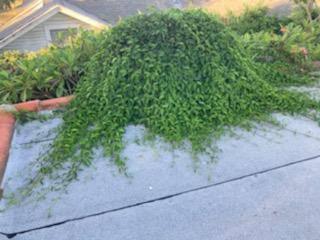
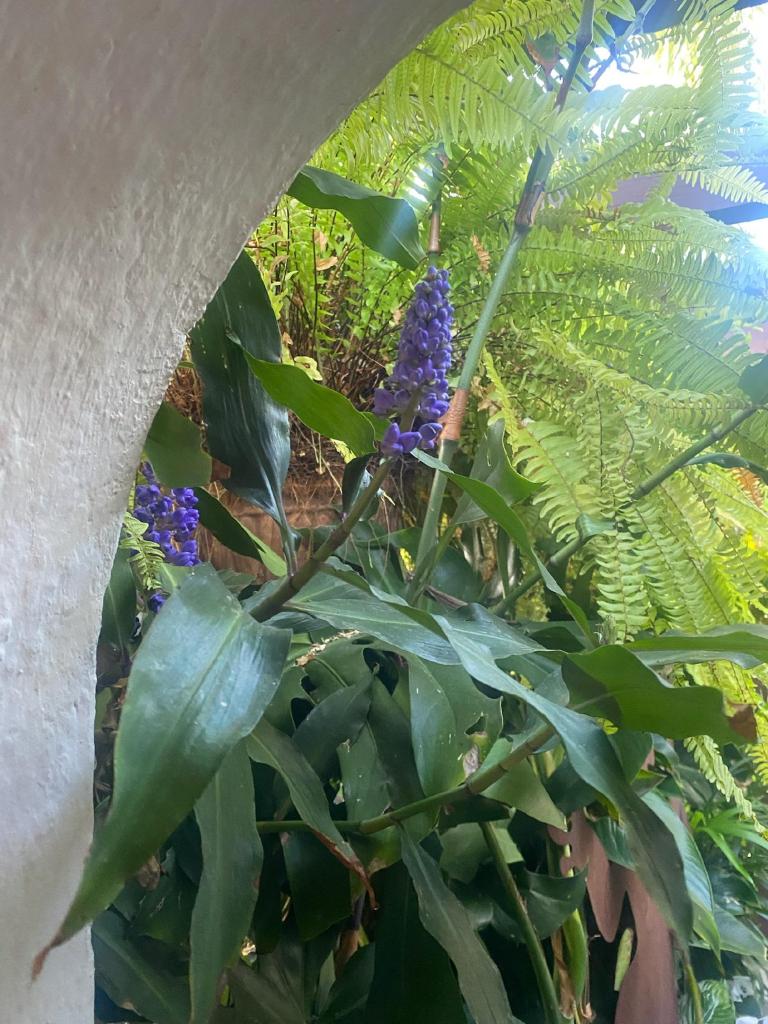
Esperanza and poinciana (pride of Barbados) seed that Crazy Green Thumbs sent to me earlier have not yet been sown, as I said they would be last week. Therefore, there are no pictures for them yet. Instead, I shared six of the countless pointless pictures that Brent, my colleague down south, sends to me as if I have nothing better to do than to download his countless pointless pictures and pretend to be impressed by them. They are different shapes and sizes, and some are quite small, but that is how I get them. Some are months old. Try to be impressed.
1. This California pepper tree is the only important subject of Brent’s otherwise pointless pictures. He planted it in this median when his daughter was born twenty-one years ago.
2. Poinsettia, cyclamen and a wreath on the gate at Brent’s front porch indicate that this picture was taken prior to Christmas, and that Brent’s garden is in need of a weed eater.
3. This is a better example of the overgrown vegetation. This flame vine spreads out over the roof and sometimes reaches the opposite side. I cut it back to bare cane a few times.
4. Brent’s older brother’s best friend grew up in this home in Leimert Park, and still lives here. He believes that this ‘saucer’ magnolia is a ‘Japanese’ magnolia. He is an idiot also.
5. This might be a red ginger, and it might be right outside of the dining room at Brent’s home. It is difficult to identify a location with all the overgrown and crowded vegetation.
6. Blue ginger is neither related to real gingers, nor fragrant like real gingers, but sure is pretty. This could have been right outside of the front porch gate, prior to the picture #2.
As a companion plant, candytuft hides the less appealing lower growth of roses; or it can cascade from mixed planters.
Most roses that are grown for cut flowers are not very appealing in the landscape. They look better behind shorter perennials or shrubbery, with their taller flowering stems standing higher above. Mounding herbs like lavender, lavender cotton or rosemary, or small hedges of boxwood, dwarf hebe or Indian hawthorn obscurer their thorny undergrowth nicely. Candytuft, Iberis sempervirens, is a small perennial that gets just high enough to give a neat edge to a row of roses.
It gets gets about a foot deep, and can very slowly but eventually spread over a few square feet. The tiny, narrow and dark green leaves are less than an inch long. Inch wide trusses of minute white flowers resemble those of sweet alyssum, although lack fragrance. Sloppy plants can be restored by getting pruned almost to the ground.
Roses should be pruned before the end of winter. Here where winters are so mild, they can get pruned early.
Just like most of the modern fruit trees that were bred over the past few centuries to produce unnaturally large and abundant fruit, almost all modern roses have been bred for unnaturally large flowers. Production of such large flowers takes quite a bit of work. An excess of these large flowers is more than overgrown rose plants can keep up with. This is why roses should be pruned so aggressively while dormant in winter.
Pruning should be done before buds start to swell at the end of winter. Some people prefer to wait until the end of February. However, because winters are so mild here, buds are already starting to swell, and some are even beginning to grow. I actually prefer to prune early, as soon as roses are dormant and most of the foliage falls off easily when disturbed.
The objective of pruning is to remove as much superfluous growth as possible, in order to concentrate growth into fewer but more productive stems and flowers. Without pruning, roses naturally develop into rampant thickets of abundant but less productive stems. It is also good horticultural hygiene to remove all foliage from last year, since that is where fungal and bacterial pathogens overwinter. Leaves should be plucked from stems and raked from the ground.
Hybrid tea roses get pruned severely so that there are only three to six canes about two feet high. Healthy canes that grew from the base last year are the best. They should have fresh green bark, and preferably lack branches below where they get pruned. Older canes that are developing striations (rough bark texture) should be pruned out. Most floribunda roses can get pruned almost as severely, so that they have only five to a dozen canes.
Some grandiflora roses are allowed to get significantly taller. They develop most new canes on top of canes that were pruned during the previous winter, instead of from the base. Consequently, some stems can get quite old and tall before new basal canes develop to replace them. Climbing roses are likewise pruned less aggressively, since new canes grow from old canes.
Like most fruit trees, most roses are grafted. Therefore, ‘suckers’ (shoots from below graft unions) must be removed. Tree roses should not be pruned below the graft unions on top of their main trunks. Most carpet roses are not grafted, so do not develop suckers; but then, they do not require such specialized and aggressive pruning either.
Okay, we get it; someone really hates trees. That’s fine. Trees are not for everyone. Just cut it down. Put it out of it’s misery. Take away the useless lodgepole stake and strap along with it. Maybe those Canary Island date palms that look like the home of SpongeBob SquarePants in the background will recover from their own form of abuse to compensate for the loss of this seemingly unwanted goldenrain tree.
Apparently, it is not that simple. This goes beyond a dislike of trees, or a mere desire to kill them. This tree seems to have been tortured by someone who enjoys it WAY too much. There were others that were similarly disfigured in this same parking lot in the north of San Jose. They were not pollarded. They were not pruned. There were mutilated, but kept alive for more of the same. What is worse is that someone…
For millennia, olive, Olea europaea, dutifully produced oil and edible fruit for civilizations of the Mediterranean region. During the last several centuries, it migrated to do the same in other regions of similar climate throughout the World. At least two centuries ago, it got to California, and became a major agricultural commodity. Now, it lives in home gardens.
The abundant and oily fruit that justified cultivation of olive trees for thousands of years is ironically a potential nuisance for home gardens. Few people harvest and process them. Olive fruit can stain pavement and attract rodents. Fruitless or mostly fruitless cultivars of olive, and dwarf cultivars, have been increasingly popular for only the past few decades.
Olive trees are not big, but slowly develop grandly sculptural trunks. Some might be little more than twenty feet tall when mature. Few get more than forty feet tall. Most have a few leaning trunks, which become furrowed and distended with age. The narrow and grayish evergreen leaves are about two or three inches long. Olive fruits are about an inch wide.


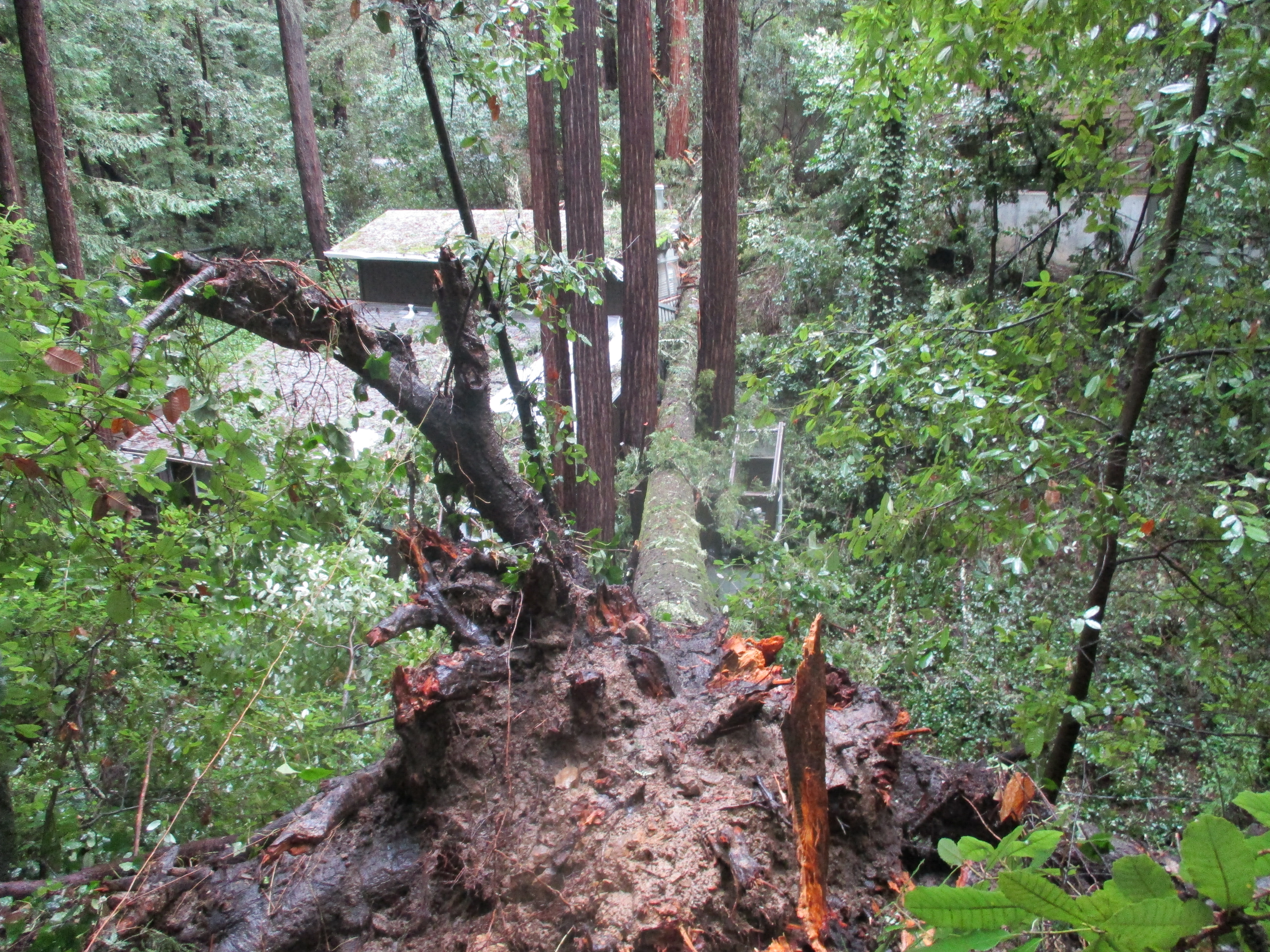 If there were lawns and fences in this neighborhood, the grass would likely seem to be greener on the other side of the fence. In this situation, the greenhouse probably seemed to be more comfortable than being left out in the storm. This tall Douglas fir tree dropped in to find out. It did not go well. What remains can be seen in the middle of the picture above, just to the right of the fallen fir, and in the close up of the picture below.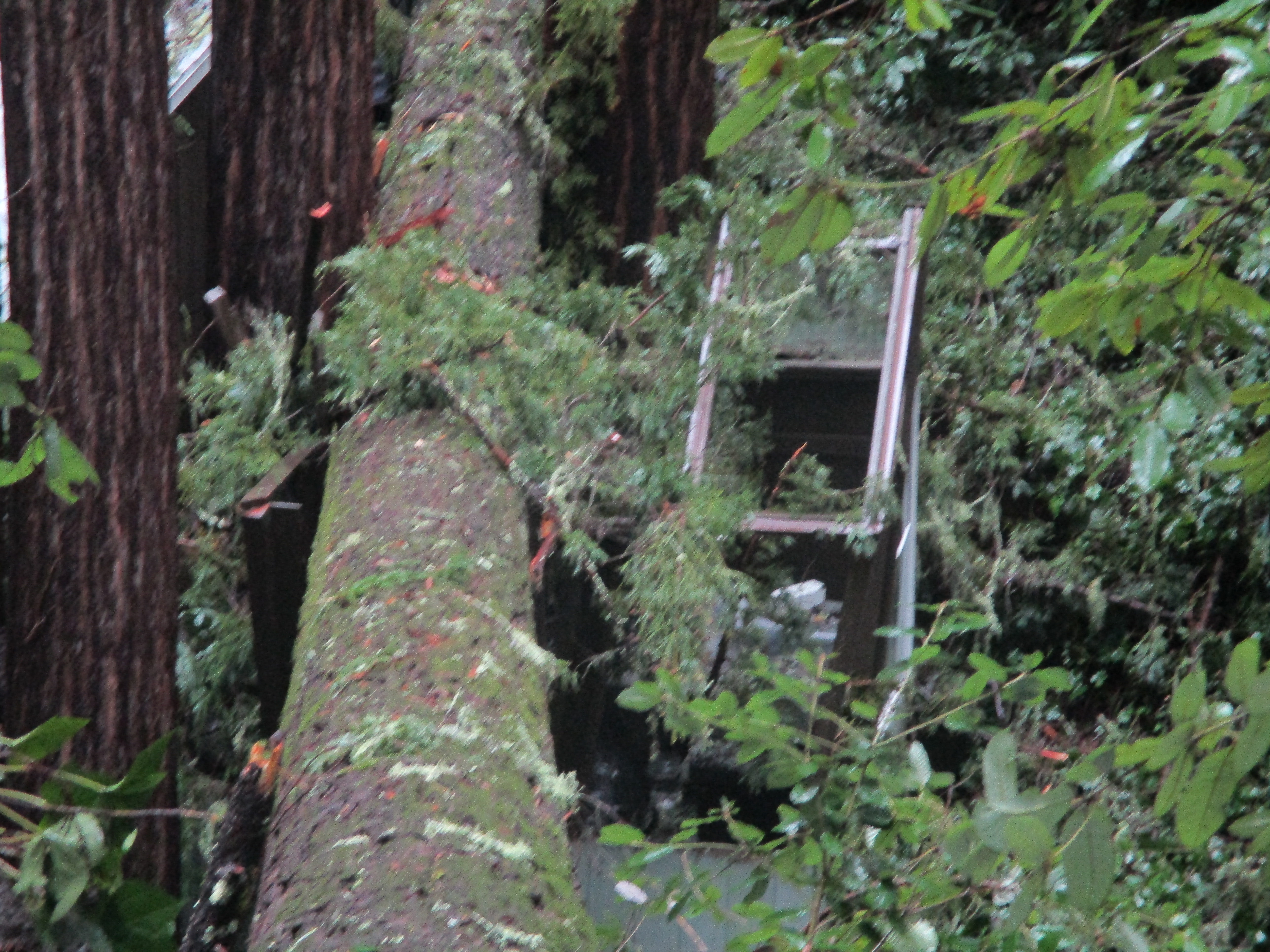
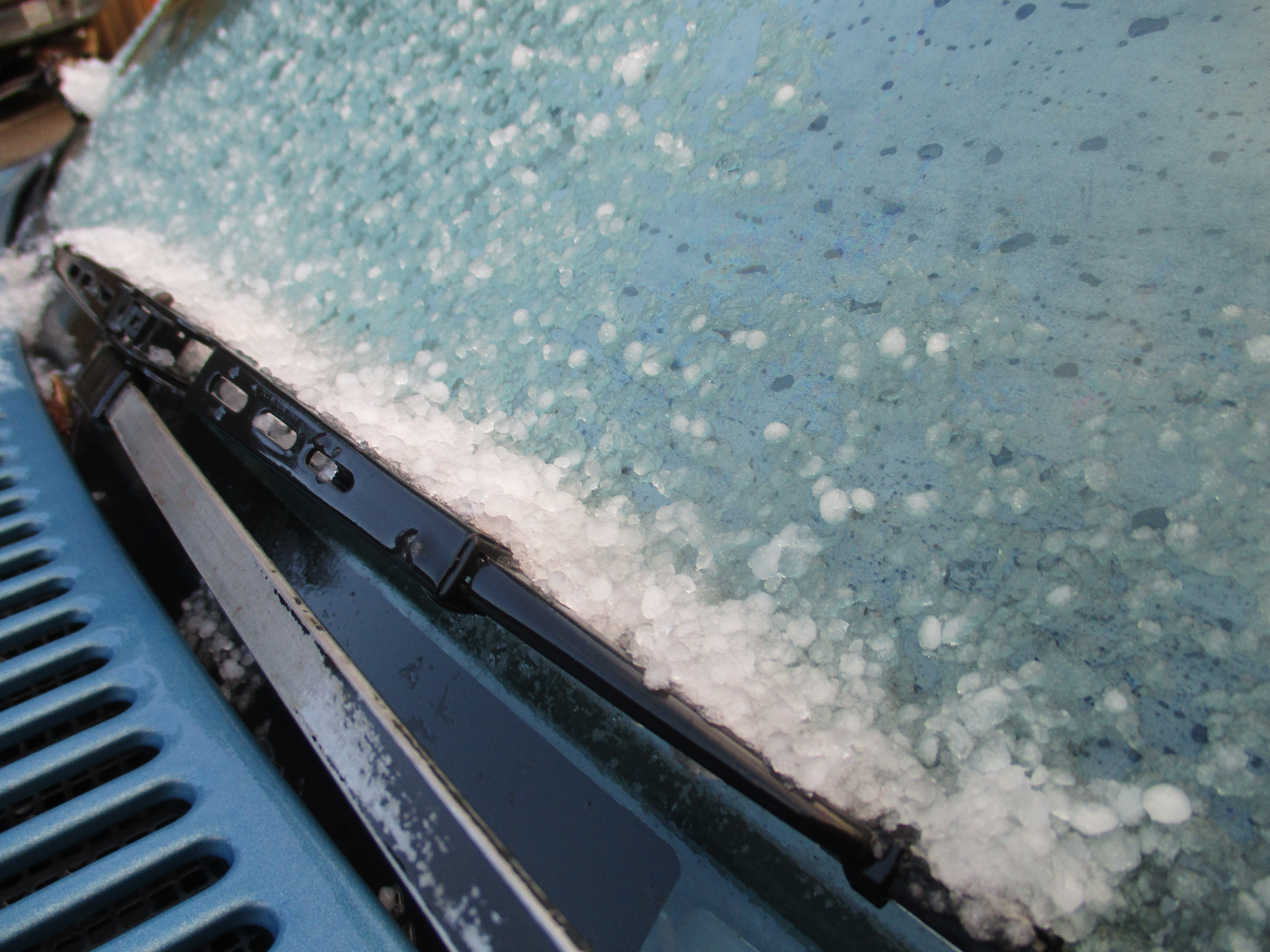 What is this? It looks more like hail now. It was softer and squishier when it fell out of the sky only an hour or so before this picture was taken. There was a slight bit of snow up on Summit above Los Gatos. It will probably melt as quickly as the clouds clear to let the sunlight through. Snow sometimes appears on the higher peaks around the region, but is rare in lower elevations. Forty three years ago from today, on February 5 in 1976, snow fell in the Santa Clara Valley. It was about half an inch deep in some areas, an inch and a half in others, and was the last snow to fall there.
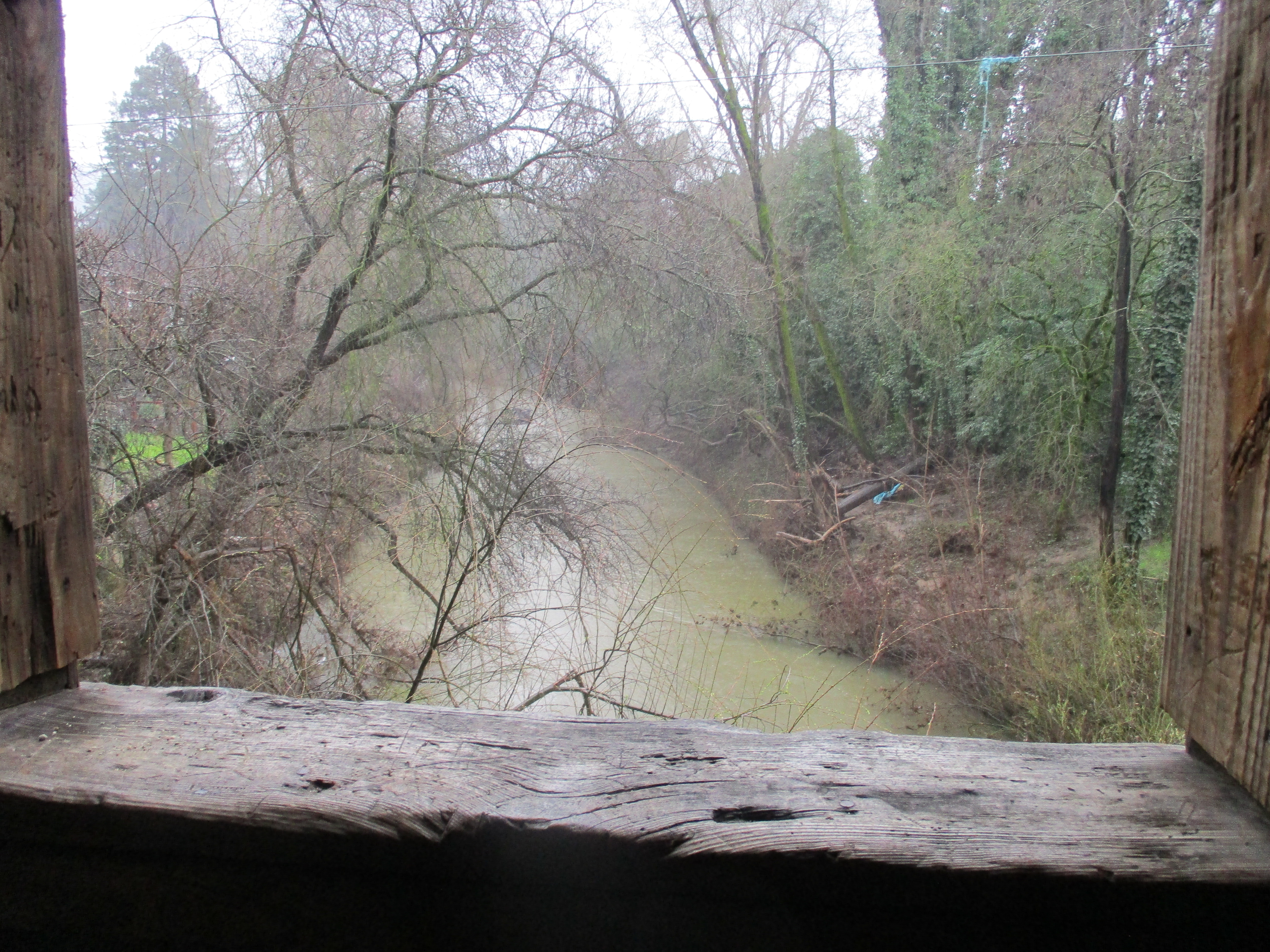 It may not look like much, but before all the rain started, the San Lorenzo river was shallow enough here to walk across. The water was clear and barely flowing. It is impossible to guess how deep it is now. It looks like cafe au lait, and is certainly flowing better than it had been. The watershed is less than a hundred and fifty square miles, so all this water is not coming from very far away.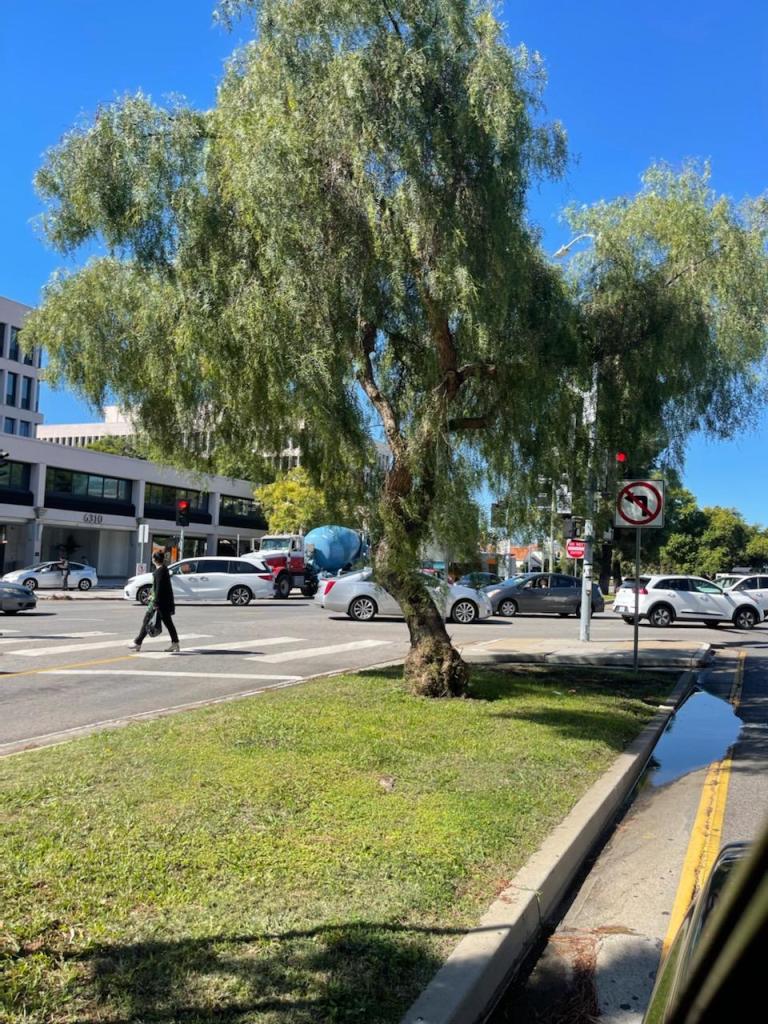





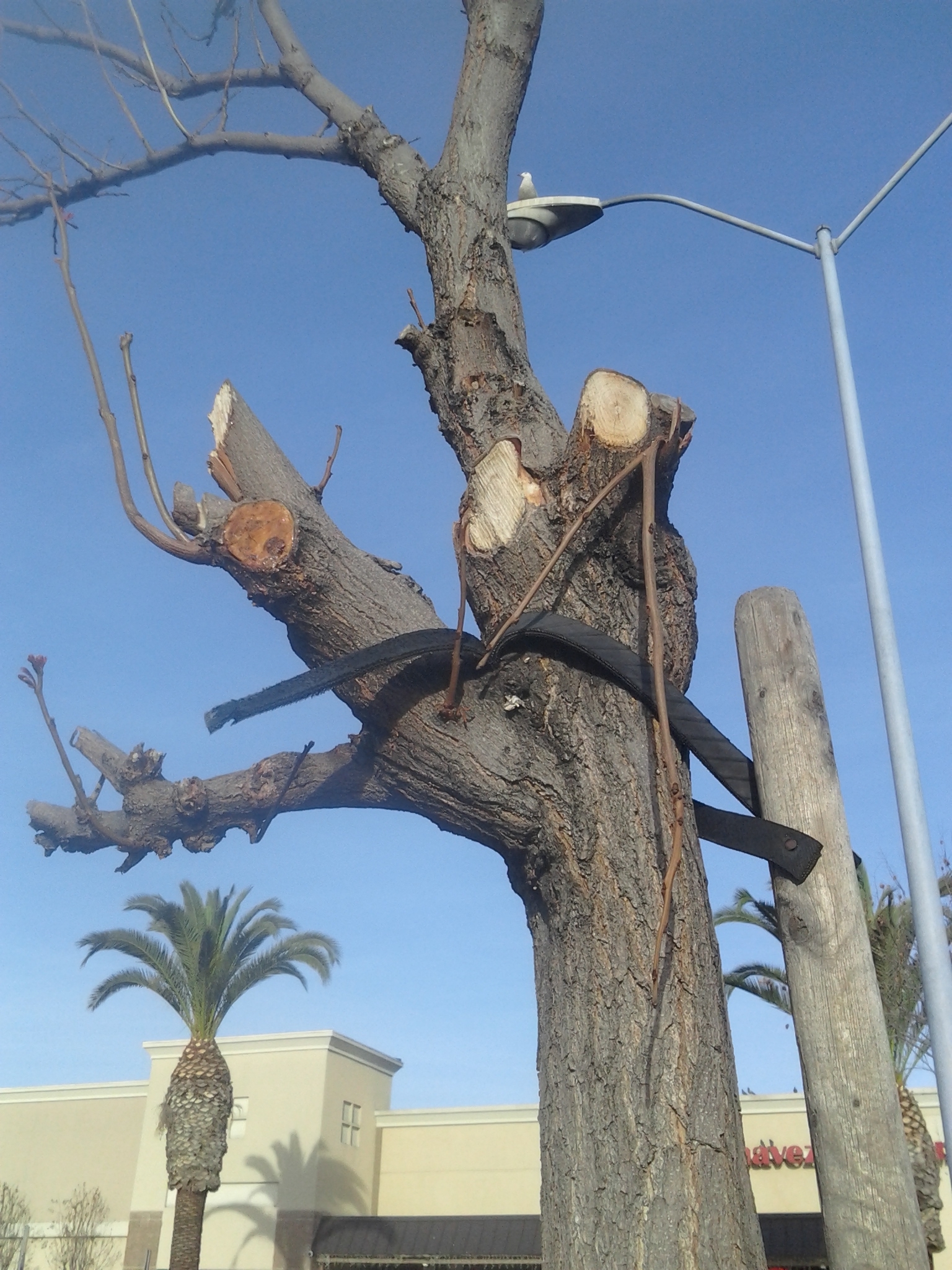 Okay, we get it; someone really hates trees. That’s fine. Trees are not for everyone. Just cut it down. Put it out of it’s misery. Take away the useless lodgepole stake and strap along with it. Maybe those Canary Island date palms that look like the home of SpongeBob SquarePants in the background will recover from their own form of abuse to compensate for the loss of this seemingly unwanted goldenrain tree.
 Tony Tomeo