It is a way of life in much of California. Many of us grew up with it, or at least believing in it. Many of us never heard the end of it. That is how it lost its meaning.
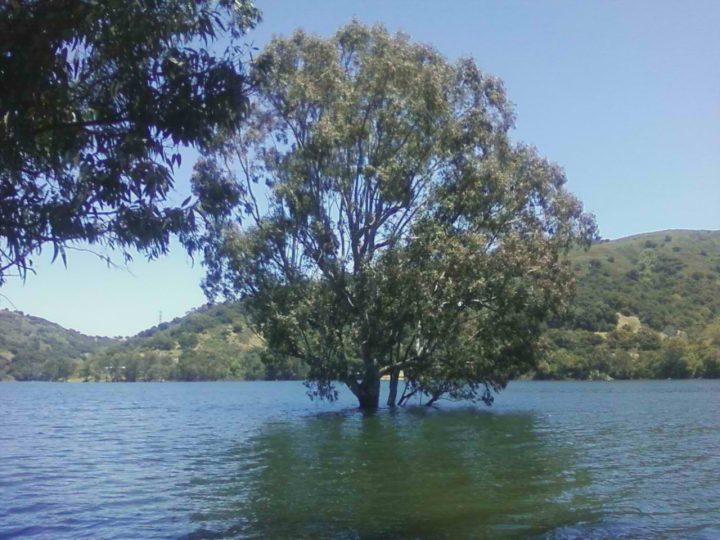
Drought is a weather condition. It might last one year or a few. Drought can even continue for several years. For us, it entails less than normal rainfall through winter, only because winter is when rain is supposed to fall here. As a weather condition, drought is not permanent. There have been a many during the past few centuries of recorded history here, and a few of those have been in just the last half century that I can remember. They happen frequently enough that I can not remember the exact years that were drought years, although I can remember a significant drought in the middle of the 1970s. No drought…
It is the ‘ivy’ of ivy league schools. Nonetheless, Boston ivy, Parthenocissus tricuspidata, is neither an ivy, nor indigenous to Boston. It is from eastern Asia, and is related to grape vines. It is related to Virginia creeper too, which is actually native to Boston, Virginia and the eastern half of North America. It has become popular locally for freeway sound walls.
Boston ivy is an aggressive clinging vine that can climb to the top of a ten story building. Unfortunately, there are a few problems with that. It ruins wooden or painted surfaces, so can only climb concrete or masonry. It climbs over windows if it gets the chance. Thicket growth is difficult to remove if it is too high to reach. On rare occasion, mice can nest in it.
Otherwise, Boston ivy works well on freeways. Although deciduous, its vines discourage graffiti. Even while bare, its texture helps to muffle sound. Its exquisite autumn foliar color might begin to develop as early as late summer, and lingers until frost. Boston ivy is quite resilient to neglect. Shabby plants generate fresh new growth after major winter pruning.
Plants notice it before people do. They respond accordingly. Vegetative growth slows or stops completely. Most remaining bloom does likewise. Fruit and seed finish developing. Less fresh produce is available from the garden. Boston ivy and Japanese maples might already be changing color. They all know that the days are shorter and nights are cooler.
Warm season produce gets less abundant as summer ends because most is fruit, which contain seed. Most plants naturally finish with seed production prior to autumn. Most cool season produce is truly vegetative and lacking seed. It naturally grows during autumn or winter, with the (‘fruitless’) intention of blooming and fruiting during the following season.
It seems as if warm season vegetables were replacing cool season vegetables from last winter only a few months ago. Perhaps they were. That process began about half a year ago, but never completely stops. Various phases of various vegetables start and finish at various times. Now, some warm season vegetables might continue to produce until frost.
Corn is of those warm season vegetables that remain productive. Seed for the last phase would not have been too late if it got into the garden two weeks ago, but will take time to produce. Broccoli seed sown at the about same time could be the first of the cool season vegetables in the garden. However, it is likely more practical to plant seedlings a bit later.
Seed for cabbage and cauliflower can go into the garden now. Alternatively, it should do as well in flats or cell packs, for later planting. This procedure delays their occupation of garden space, which might still be occupied by late warm season produce. Besides, it is easier to defend tiny seedlings in flats or cell packs from slugs, snails, birds and insects.
For big and leafy cool season produce, it may be more practical to purchase seedlings in cell packs rather seed. Since only a few seedlings of each type are needed, they are not too much more expensive than seed. However, confinement to cell packs disfigures root vegetables, such as beets and carrots. Their seed can get into the garden in two weeks to a month.
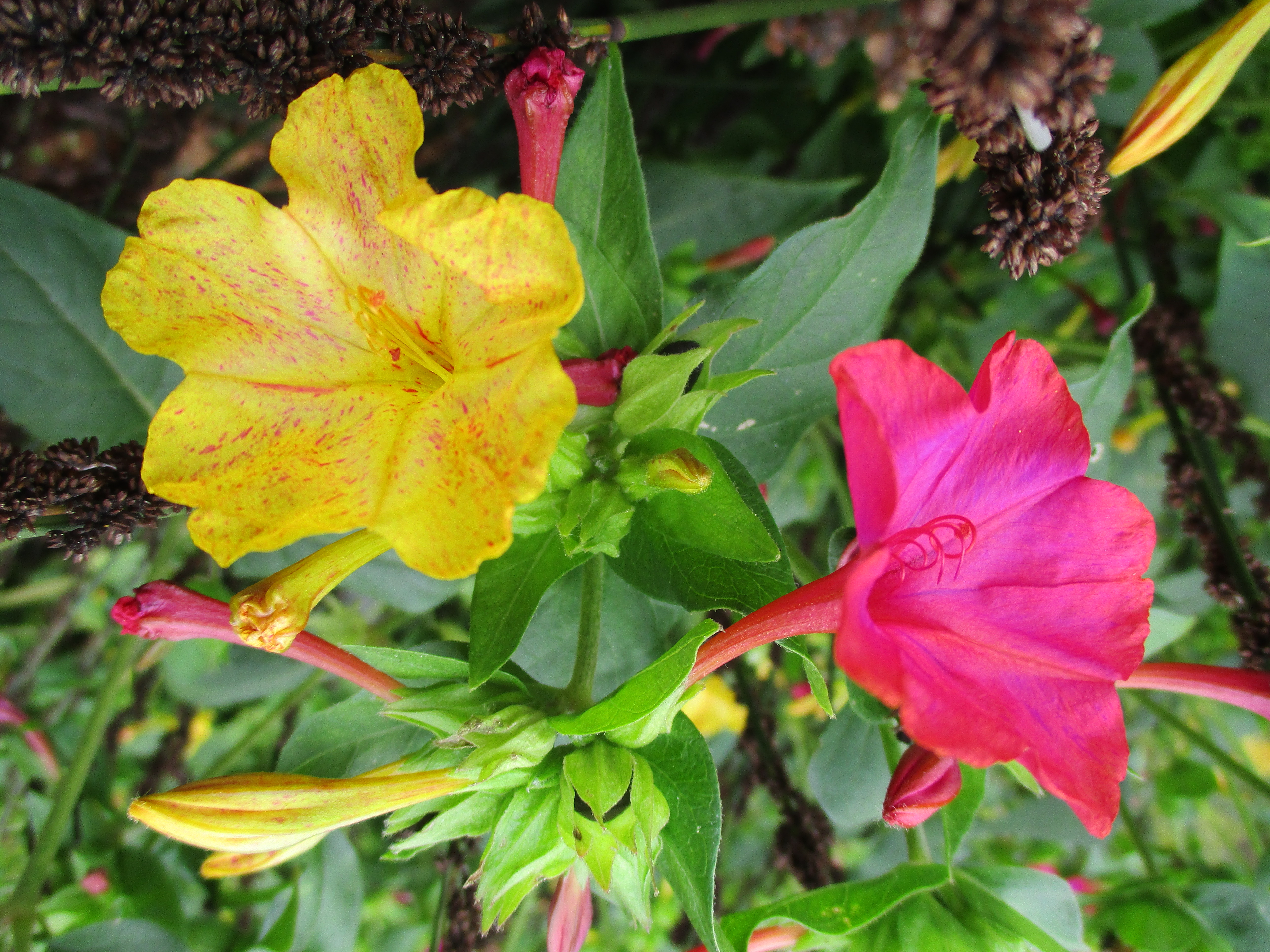
If the flower on the left is a four o’clock, is the flower on the right a five o’clock, or perhaps a three o’clock? Is one a.m. and the other p.m.? What about the flower of the same species that I featured twelve hours ago? What about those in another picture that I will share next Saturday?
Of course, only the colors are different; not the name . . . or the time.
What is odd about these two seemingly different flowers is that they are on the same plant. In fact, they are on the same stem, separated only by a few inches.
Four o’clocks can be odd that way. Individual plants typically bloom with exclusively pink, red, white, yellow or orange flowers. The shades and hues of these colors are variable, but are typically homogeneous throughout each entire plant. Some plants bloom with flowers of one color that…
Today, September 1, was the Feastday of Saint Fiacre, the Patron Saint of gardeners. I would not have known if I had not earlier seen this very thorough and informative article written by Doctor David Marsh of the Gardens Trust;
In all my writing, I had mentioned Saint Fiacre only once, and only in regard to garden statuary. I described how Saint Francis, who happens to be the patron saint of animals, is popularly believed to be the patron saint of gardeners because his statue is so popular in gardens, often in conjunction with statues of frolicking animals, but that statues of Saint Fiacre are very rare.
Besides the Feastday of Saint Fiacre, this September 1 also happens to be the first year anniversary of my blog. I have now been posting articles from my weekly gardening column, as well as other elaborations, for an entire year. With the…
Spring is the favorite season among the majority of those who enjoy gardening. I do not really have a favorite season though. Dormant pruning is perhaps my favorite chore, which happens in winter. Stone fruits, which are perhaps my favorite, ripen in summer. I so enjoy the foliar color of autumn. Well, it is still too early for autumn foliar color. In the meantime, the flowers of late summer are blooming. Compositae is the ruling family for a while. It is not too late for the last few roses. Japanese anemones, although locally rare, bloom also.
1. Sunflower should be the grand finale; but I could not get a sufficiently good picture, without the utility cables above and the sun in the background. Nonetheless, it exemplifies late summer.
2. Rose is the one flower of these six that has been blooming all summer, so is not actually limited to late summer. It is a cheap carpet rose, which I loathe, but happens to provide pretty color.
3. Chrysanthemum landed in the landscapes after getting left behind from an event. It was formerly a fancy ‘potted mum’. Now, it is unrefined and rustic, but blooms reliably for late summer.
4. Marigold is one of many annual bedding plants that I can not figure out. Is it a warm season annual that really could bloom all summer, or is it actually limited to late summer and autumn?
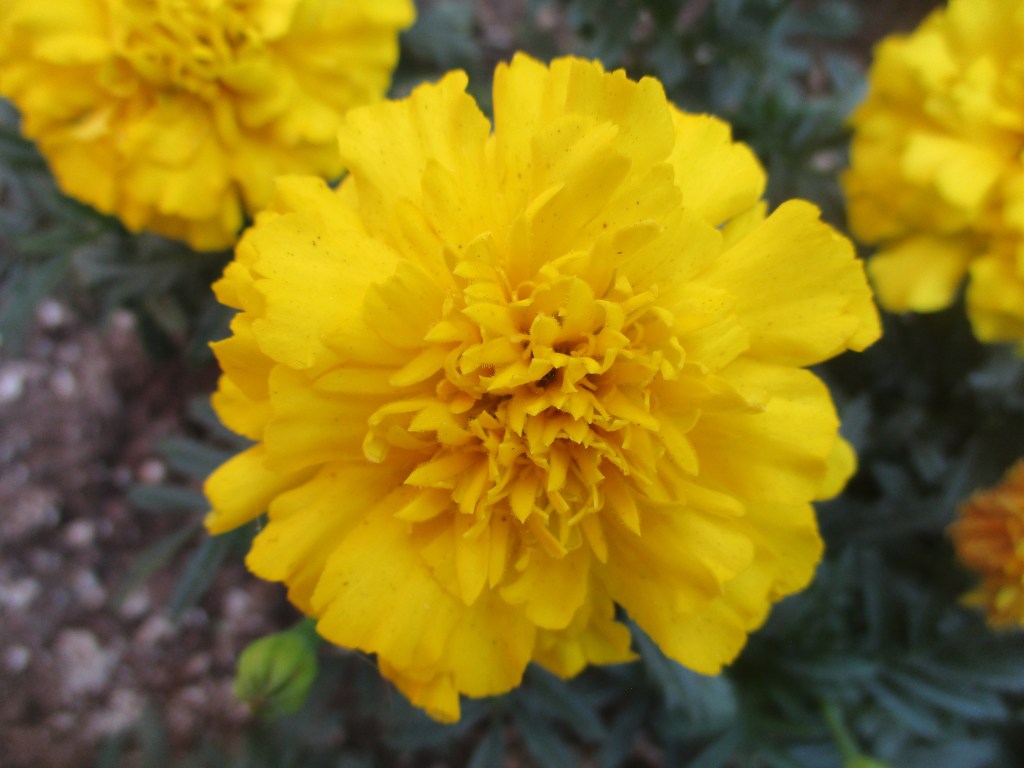
5. Marigold exhibits a limited color range of yellow, orange, rusty red, almost brown and very pale yellow that is described as white. We got only yellow, as seen above, and this simple orange.
6. Anemone, or more specifically, Japanese anemone, is a rather mundane pale pink. I would prefer it to be either clear white or a more blatant pink. I like it though, because it is what we got.
This is the link for Six on Saturday, for anyone else who would like to participate:
While so many flowers are finishing their bloom and leaving their drying foliage behind, naked lady, Amaryllis belladonna, is just beginning to bloom, naked of any foliage. Clusters of a few to several bright pink flowers stand on bare stems about two feet tall. Individual flowers are about two and a half to three and a half inches long, and resemble lily flowers. Foliage only appears after flowers deteriorate, and lasts only until weather gets warm late in spring. The strap shaped leaves are about a foot to a foot and a half long. Through summer, the two or three inch wide bulbs are dormant and bare, and seem to be dead with their tops visible at the soil surface, but retain fleshy roots below. They should therefore only be dug and divided if they get too crowded or need to be moved.
Pruning should not leave bark of inner stems exposed during such warm weather.
For gardening, this is one of those in between times of year, when summer chores are under control, but it is a bit too early for much of the work that will need to be done in autumn. Automated watering systems have already been adjusted for the longest and warmest days of summer, so will only need to be adjusted the other way as days eventually get cooler and shorter. Growth of most plants slows; and some of the plants that will later be the earliest to show fall color begin to fade from bright green to paler green.
The last of the summer fruits should be gone, leaving the trees that produced them looking somewhat tired. The weight of large fruit, particularly peaches, might have pulled stems downward where they may now be obtrusive. Pruning a few minor stems should not be a problem. However, trees are still too vascularly active for major pruning. That needs to wait for dormant pruning while trees are bare in winter.
A few plants with sensitive bark are susceptible to sun scald if pruned to expose too much bark on interior stems while the sun is still high and warm. This is not so likely to be a problem if pruned during winter because the sun is lower and cooler, and foliage grows back before the following summer. Actually, that is why English walnut and various maples are able to defoliate during winter, even though their smooth bark needs to be shaded.
Pruning of plants that are potentially sensitive to frost should likewise be delayed. Otherwise, pruning is likely to stimulate development of tender new growth that will be even more sensitive to frost during winter. Besides, new growth develops slower this time of year, so plants look freshly pruned for a longer time than if pruned late in winter, just prior to spring.
Some types of pittosporum are more susceptible to disease if pruned in late summer or autumn because their open pruning wounds heal slowly and stay open to infection during rainy winter weather. However, slow recovery from pruning can be an advantage to formally shorn hedges that are not so sensitive to frost or disease, such as the various boxwoods, or glossy or wax privets. If shorn now, they might stay trim until spring.
The dried foliar remains of any summer bulbs that are finished blooming can now be plucked and disposed of. Gladiolus and montbretias that are still green can be deadheaded (pruned to remove deteriorated flower stalks), but should be allowed to turn completely brown before getting plucked. Watsonias are not so easy to pluck without also pulling up the bulbs, so should instead get their dried foliage pruned off.
Weeds outside of landscaped areas may not seem to be a problem, but many are now producing seed that gets blown into the garden. Even if such weeds do not need to be pulled, their flowers and seeding stalks should still be cut off and removed if possible.
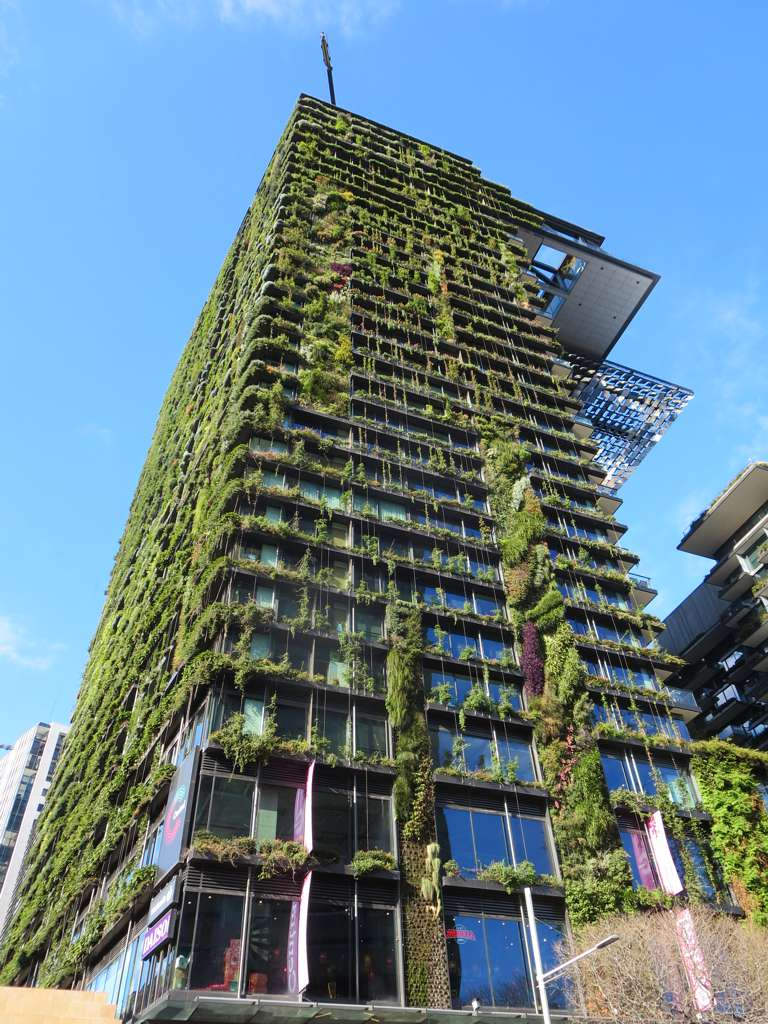
Skyscrapers are already very efficient. They fit more usable floorspace into their ‘footprint’ than any other type of building does. They conserve energy that gets used for heating and cooling by exposing less of that floorspace to the outside weather. For all that usable floorspace, they need only a single roof. Think about it. A relatively short ten story building contains as much floorspace as ten single story buildings that occupy the same area individually, but collectively occupy ten times as much area! Nine of those stories loose heat during cold weather, and collect heat during hot weather, only around the exterior walls. Only the top floor loses and collects heat through the roof, and only if there is not an upper utility ‘attic’ floor that insulates it. Ten single story buildings of the same area are all exposed on top, as well as all the way around. Of course…
Although it shares the same common name, Hypericum beanii is not the same sprawling Saint John’s wort that is now so aggressively naturalized within some local ecosystems. It is shrubbier and much more docile. Mature specimens get no more than three feet high and wide. It should be evergreen here, but can get sparse through cooler winter weather.
Bloom begins in the middle of summer and continues at least to early autumn. Cheerfully bright yellow flowers are two inches wide, with five rounded petals around fuzzy centers. The light green and oblong leaves are about two inches long. Stems are rather wiry, and can eventually get shabby. Coppicing as winter ends stimulates fresher vigorous growth.
Saint John’s wort prefers sunny and warm exposure. It is otherwise not very demanding. Regular watering enhances bloom. Yet, established plants can survive without watering. Where coppicing (cutting back to the ground) in late winter is not a problem, Saint John’s wort performs well as a low hedge, or unshorn border. Frequent shearing inhibits bloom. Rust is a potentially bothersome fungal disease.

 It is a way of life in much of California. Many of us grew up with it, or at least believing in it. Many of us never heard the end of it. That is how it lost its meaning.

 If the flower on the left is a four o’clock, is the flower on the right a five o’clock, or perhaps a three o’clock? Is one a.m. and the other p.m.? What about the flower of the same species that I featured twelve hours ago? What about those in another picture that I will share next Saturday?




 Skyscrapers are already very efficient. They fit more usable floorspace into their ‘footprint’ than any other type of building does. They conserve energy that gets used for heating and cooling by exposing less of that floorspace to the outside weather. For all that usable floorspace, they need only a single roof.
 Tony Tomeo