The tufts of small branches that so often develop where limbs were pruned from the trunks of a coast live oaks are sometimes referred to as ‘tumbleweeds’. They are about the same size as an average tumbleweed. By the time the get any larger, most of the smaller stems have subordinated and died out, leaving only a few more defined dominant stems, which will continue the process until even fewer or a single new branch dominates. Such tumbleweeds, as well as stems that originated from such growth, are weakly attached to the main trunks. They often get pruned off for the same reason that the limbs that were there before got pruned off, or because they are expected to be weakly attached. If they remain long enough, they can of course develop into new limbs.
Tufts of the same sort of growth on sycamores or other deciduous trees are known…
Is this Armillaria mellea, the dreaded oak root rot fungus? I really do not know. All the elements are here. The stump is that of a coast live oak. Bellow the stump there are the remains of roots. Those necrotic roots are undoubtedly decomposing as a result of rot. That rot is undoubtedly associated with this fungus. Furthermore, it fits the description of oak root rot fungus. The toasted spots were probably caused by weathering as the mushrooms started to develop while the weather was still warm and dry.
Now that the soil and rotting wood are damp from rain, this fungus is really proliferating. The individual mushrooms within the soccer ball sized mass were only about as big as those at the lower left margin of the picture just prior to the rain. They do not last long, and might become gooey black slop after only a few…
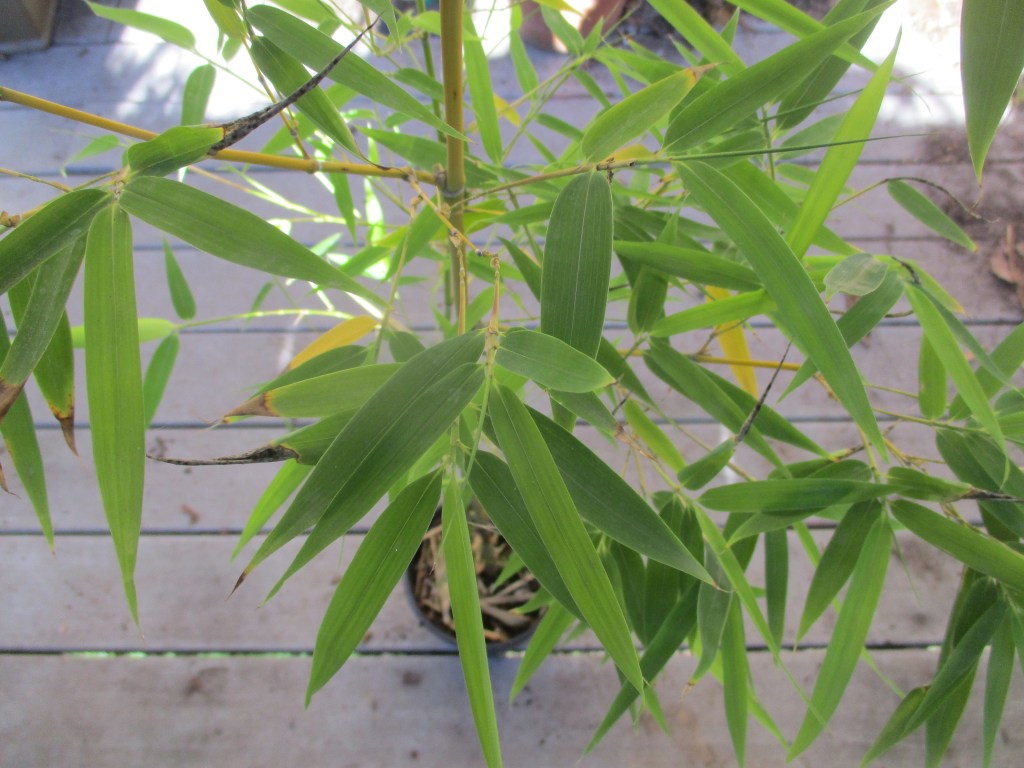
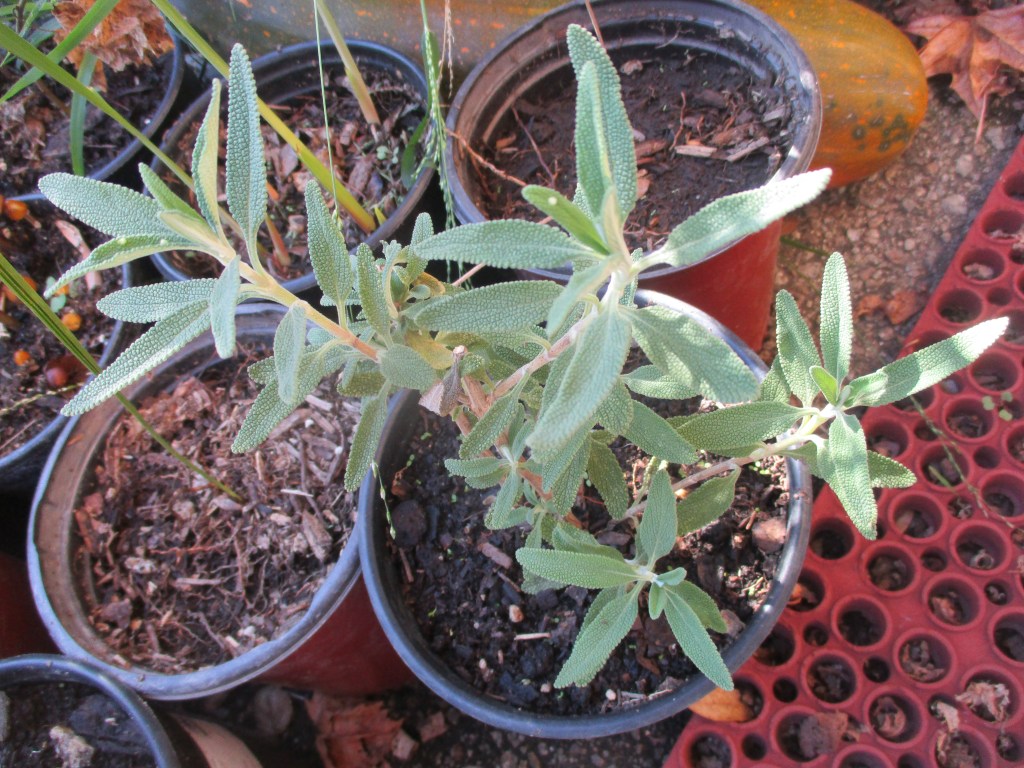
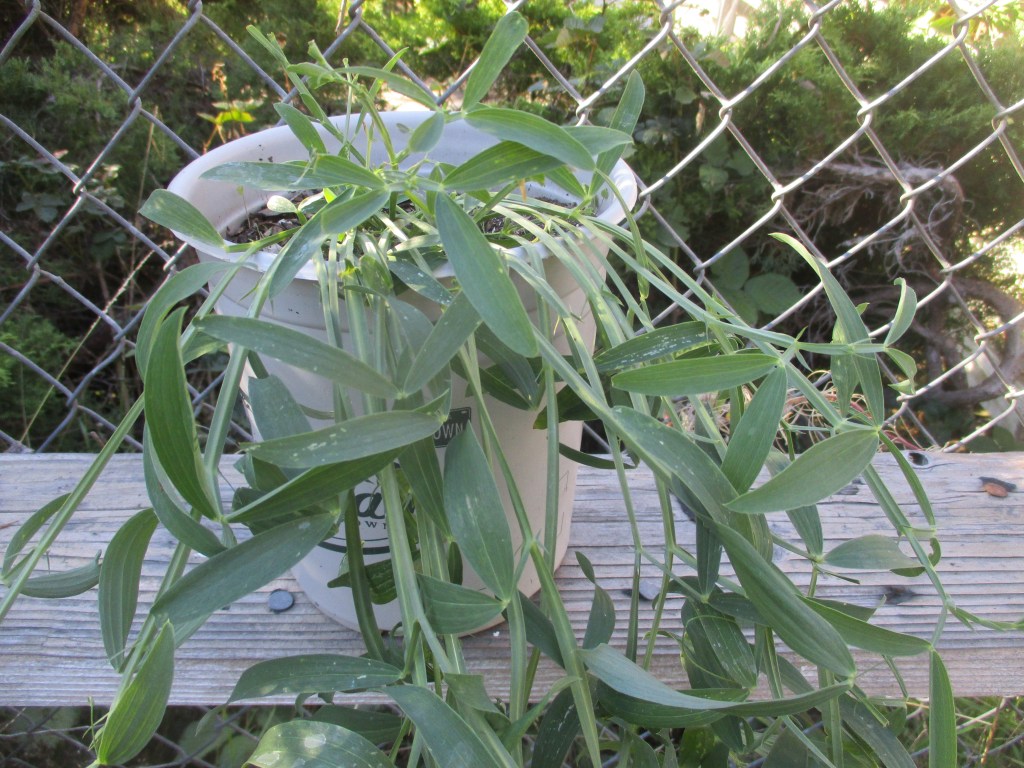
This is the season for digging and relocating crowded or redundant plants. Most of them get recycled directly back into other landscapes, so that there is no need for the extra work of canning and storing them. Most of the daylily (#1) were simply relocated with only a few leftovers for canning. Bamboo (#2) and perennial pea (#4) were actually canned earlier in the year. Ponderosa lemon (#5) is a rooted cutting (which is ungrafted and therefore ‘on its own roots’) that I grew from a pruning scrap. I have no idea of what to do with it. I really should limit all these recycling projects to plant material that is actually useful.
1. Hemerocallis, daylily, migrated too aggressively, so needed to be removed from under benches and other perennials. More of another cultivar got dug where an old sewer pipe was replaced.
2. Phyllostachys aurea, golden bamboo, appeared within an unrefined landscape, and wasted no time migrating. It should have been killed and discarded rather than canned live for recycling.
3. Salvia mellifera, black sage, layered a few copies from an original specimen that was planted intentionally. It is native here, but unpopular. Some find the foliar aroma to be a bit too strong.
4. Lathyrus latifolia, perennial pea, is a persistently and invasively naturalized exotic species. In other words, it is a weed. I canned this and three copies of another, because they bloom white.
5. Citrus x pyriformis, ‘Ponderosa’ lemon, is not really a lemon, but is a weird hybrid of pomelo and citron. The fruit might weigh five pounds. What can I do with just one five pound ‘lemon’?!
6. Felis catus, Darla, only allowed me to get this picture by zooming in from a distance. She tolerates Rhody, but hates me. She protects cuttings and seedlings from rodents and perhaps birds.
This is the link for Six on Saturday, for anyone else who would like to participate:
This tropical hibiscus was found in Oklahoma, where it needs shelter from frost.
This humongous six inch wide tropical hibiscus, Hibiscus rosa-sinensis, looks like it might be from Hawaii or Florida, but was actually found in K and K Nursery and Landscape of Norman, just south of Oklahoma City, where winter nights are already seriously cold by our coastal California standards. It is happy to bloom so impressively only because it is in a greenhouse. Even here in our pleasantly mild climates, tropical hibiscus are happiest where sheltered above from frost, by eaves or evergreen shade trees that are high enough to also allow warming sunlight through. In the cooler spots, even sheltered plants occasionally get damaged by frost, and need some time to regenerate after winter.
Some of the classic tropical hibiscus that typically have smaller flowers can grow above single story eaves if not pruned down. Most modern varieties with larger or ruffly double flowers rarely reach the eaves, and many stay less than six feet tall even without pruning. The evergreen foliage has an appealing glossy sheen, which is an ideal backdrop for the red, pink, white, yellow or orange flowers.
Hibiscus, bougainvilleas, philodendrons and so many of the tropical and subtropical plants that we can enjoy in our gardens can only survive through winter in greenhouses in most other climates in America. Many of our tropical houseplants though, seem to be the same everywhere. Houseplants are generally grown in our homes not because they can not survive in our gardens, but because they ‘can’ survive in our homes.
Yes, houseplants are merely any plants, tropical or otherwise, that we grow in our houses. Yet, most and perhaps almost all of the plants that are best adapted to surviving as houseplants happen to be tropical plants. Tropicals do not need the seasons that they would get outside. Because many are native to dense and very competitive tropical forest environments, they are adapted to the sort of shade that they get in our homes, and survive on minimal volumes of soil that they have available while potted.
Nonetheless, they miss their tropical lifestyles. They only tolerate dry interior air, but would prefer more humidity. They would likewise prefer to be rinsed of dust more often than they can be in indoors. A regular supply of fresh organic debris to supply nutrients would be nice. However, if merely fertilized instead, tropicals are sensitive to salts and other toxins that eventually accumulate in the soil.
This is why some of the more resilient houseplants like to be brought outside for a gentle rinsing during a mild rain. As long as it is not too cool or windy, gentle rain rinses dust from the foliage and toxins from the soil. Plants can be brought out in the morning and brought in late to get as much time out in the rain as possible, but should not be left out overnight when it may get too cool. Even though they do not need any more moisture, plants can be watered by hose a few times to allow water to rinse freely through the soil.
Plants in overly decomposed potting soil are easier to repot with fresh soil while they are outside. Those that do not need to be repotted might still like getting grungy and potentially toxic mineral deposits scrubbed from their pots and drainage pans.
This is a recycled picture that still annoys me. There was another that I did not want to use because it happens to be from a landscape that I sometimes work in.
The picture that I did not use shows a variety of annuals in a half wine barrel that is set on cobble stone that fills a square that is about five feet by five feet that was cut out of an asphalt paved area.
So:
The area was paved to function as a patio.
A square was cut into the pavement perhaps because there was too much pavement.
The square was filled with stone because there was too much exposed soil where there should have been pavement.
A half wine barrel of various annuals was installed on top of the stone as if a square filled with stone was not adequately in the way. The half wine barrel…
It is unfortunate that most live Christmas trees grow too large for compact home gardens. Japanese black pine, Pinus thunbergii, which is very rarely available as a live Christmas tree, does not get much taller than twenty feet locally. Although it can slowly get about as broad, its sculpturesque branch structure adapts to pruning for containment if necessary.
Japanese black pine is a notably versatile pine. Most pines are excurrent (with a primary central trunk) or develop another similarly uncompromising form. Few are as cooperative with such casual form and relatively contained size as the Japanese black pine is. In the wild, it grows taller than a hundred feet. Yet, it is also very popular for bonsai and niwaki.
The evergreen foliage is richly deep green. The paired needles are about four and a half inches long, and perhaps stiffer than they appear to be. The cones are about two or three inches long, and nicely symmetrical. Fresh foliage and fresh or dried cones are useful for home decor. Even young trees have handsomely flaky bark, which darkens with rain.
Poinsettias, Christmas cacti, cyclamen, various forced bulbs and several other seasonal potted plants are again becoming popular. It happens annually prior to Christmas. Heath, heather, rosemary, English holly with berries, and delightful compact conifers have been gaining popularity for many past years. Seasonal potted plants are increasingly diverse.
Unfortunately, few survive for long after Christmas. Forced bulbs exhaust their resources. Cyclamen are likely to rot after a month or so. Very few retire to a garden. Poinsettia gets too lanky in the garden to be a favorite. Most seasonal plants simply succumb to neglect. After their primary performances, they are no longer interesting enough to justify tending.
In reality, some of these seasonal potted plants are little more than cut flowers with roots. These roots allow them to live longer than cut flowers, but their ultimate fate is the same. Wreaths, garlands and various seasonal cut greenery likewise serve a purpose, but only temporarily. Without roots, it all lacks any potential to retire into a garden after Christmas.
Christmas trees are really not much different. Although there are several different sorts of Christmas trees, they fit into similar categories as cut foliage and seasonal potted plants. Obviously, they are seasonal. They need not last much longer than Christmas. Although, some have a potential to do so, few survive or function for more than a few Christmases.
Contrary to popular belief, and their expense, cut Christmas trees are generally the most practical Christmas trees. They are essentially a very substantial sort of cut foliage. They grow on farms like any other foliage and vegetables. After such a tree serves its purpose, it resigns to compost or green waste recyclery. A freshly cut tree can replace it next year.
Large potted Christmas trees may seem to be more practical, but require maintenance to remain as appealing as they are now for another year. Despite the expense, few last that long. They want to get out of confinement, so that they can grow as trees. Pre-decorated small trees are Italian stone pines. They grow much too big for contained home gardens.
It can be annoying to write such pleasantries about a species that I am none too keen on. Actually, we recently added one to our landscapes, and will be adding several as street trees where height is limited by utility cables.
It is certainly not my favorite small tree. Actually, in most situations, I rather dislike it, which is why I sometimes accidentally spell it without the first ‘e’. It is a cop out; a micro tree that too often ends up where a larger and more respectable tree would be more appropriate. They are not shade trees. They are not not big enough for freeway landscapes or to be street trees on wide boulevards. They are not immune to diseases and insect infestations; and they commonly drop honeydew from aphid or scale infestation, and lose their bloom to powdery mildew. They are not ‘low-maintenance’, and really should be pruned more than they are, but will get you in trouble with the neighbors if you prune them as aggressively as they should be pruned. They are popular because of their potential for remarkably flashy bloom, and because they do not get…
We do not get much frost here. This picture of the view through the windshield of one of the work vehicles was taken more than a week ago, while the humidity and the temperatures were still quite low. The sparse and angular pattern of the frost on the windshield is a result of the minimal humidity. There will be more frost later in winter, although there will not be nearly as much as most other climates get. After a cool Monday morning last week, the weather got a bit warmer, or really just less cool. Rain started about midnight between Tuesday and Wednesday, and continued through the day and into the night. More rain is predicted to start after noon next Tuesday, and continue through Thursday. There will be no frost during this weather pattern. Frost happens here only between rainy weather. One might think that since we do not…

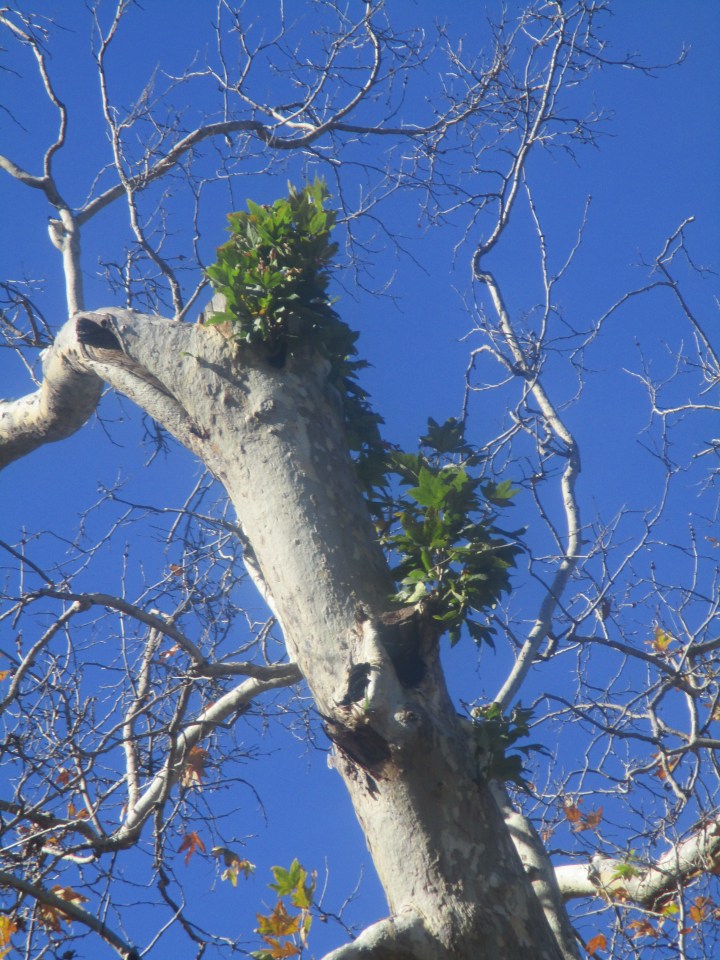 The tufts of small branches that so often develop where limbs were pruned from the trunks of a coast live oaks are sometimes referred to as ‘tumbleweeds’. They are about the same size as an average tumbleweed. By the time the get any larger, most of the smaller stems have subordinated and died out, leaving only a few more defined dominant stems, which will continue the process until even fewer or a single new branch dominates. Such tumbleweeds, as well as stems that originated from such growth, are weakly attached to the main trunks. They often get pruned off for the same reason that the limbs that were there before got pruned off, or because they are expected to be weakly attached. If they remain long enough, they can of course develop into new limbs.
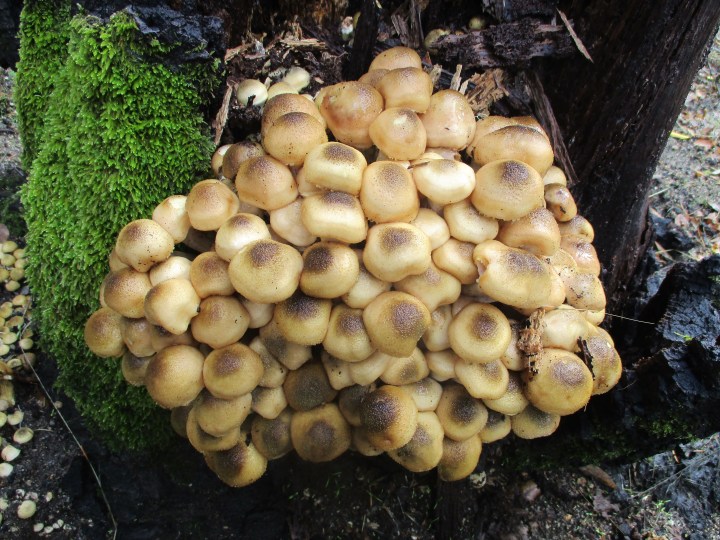 Is this Armillaria mellea, the dreaded oak root rot fungus? I really do not know. All the elements are here. The stump is that of a coast live oak. Bellow the stump there are the remains of roots. Those necrotic roots are undoubtedly decomposing as a result of rot. That rot is undoubtedly associated with this fungus. Furthermore, it fits the description of oak root rot fungus. The toasted spots were probably caused by weathering as the mushrooms started to develop while the weather was still warm and dry.


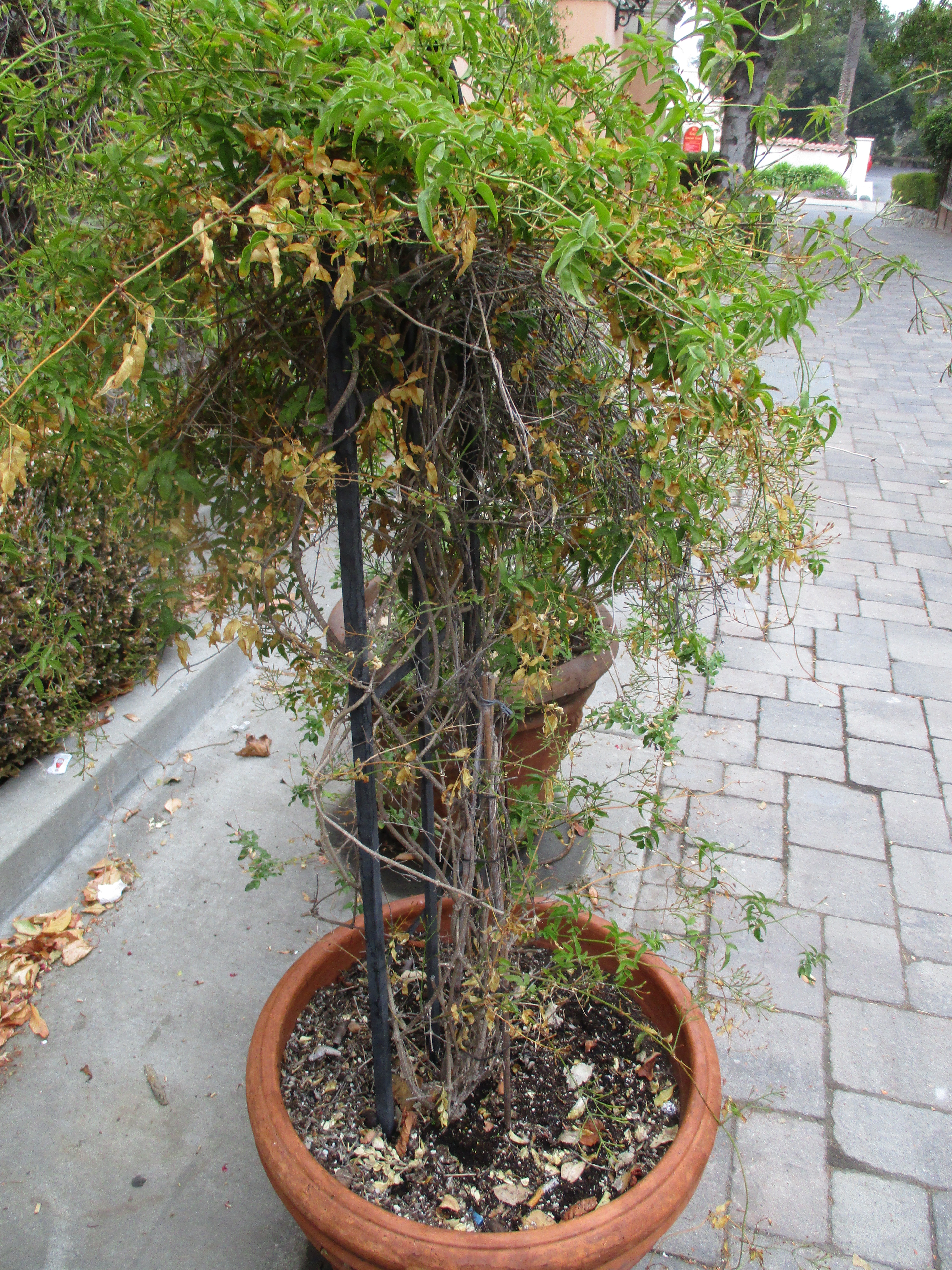 This is a recycled picture that still annoys me. There was another that I did not want to use because it happens to be from a landscape that I sometimes work in.
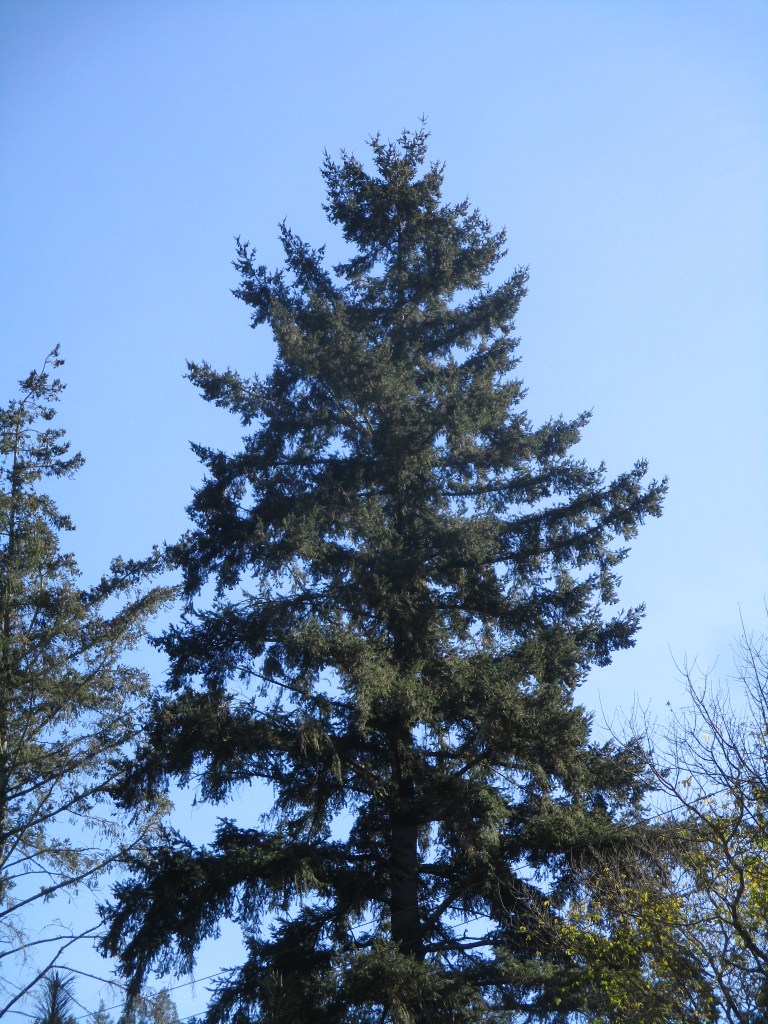
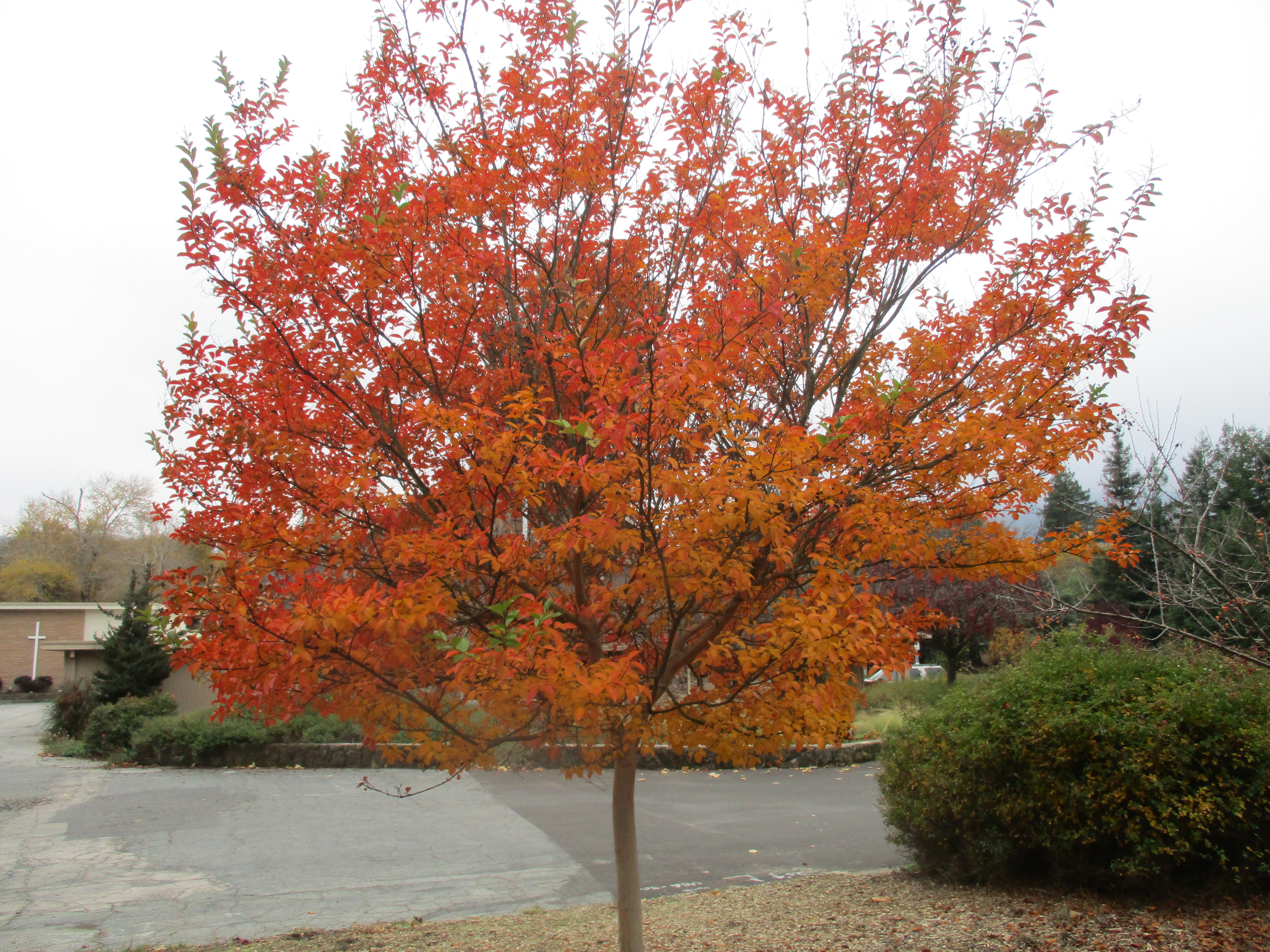 It is certainly not my favorite small tree. Actually, in most situations, I rather dislike it, which is why I sometimes accidentally spell it without the first ‘e’. It is a cop out; a micro tree that too often ends up where a larger and more respectable tree would be more appropriate. They are not shade trees. They are not not big enough for freeway landscapes or to be street trees on wide boulevards. They are not immune to diseases and insect infestations; and they commonly drop honeydew from aphid or scale infestation, and lose their bloom to powdery mildew. They are not ‘low-maintenance’, and really should be pruned more than they are, but will get you in trouble with the neighbors if you prune them as aggressively as they should be pruned.
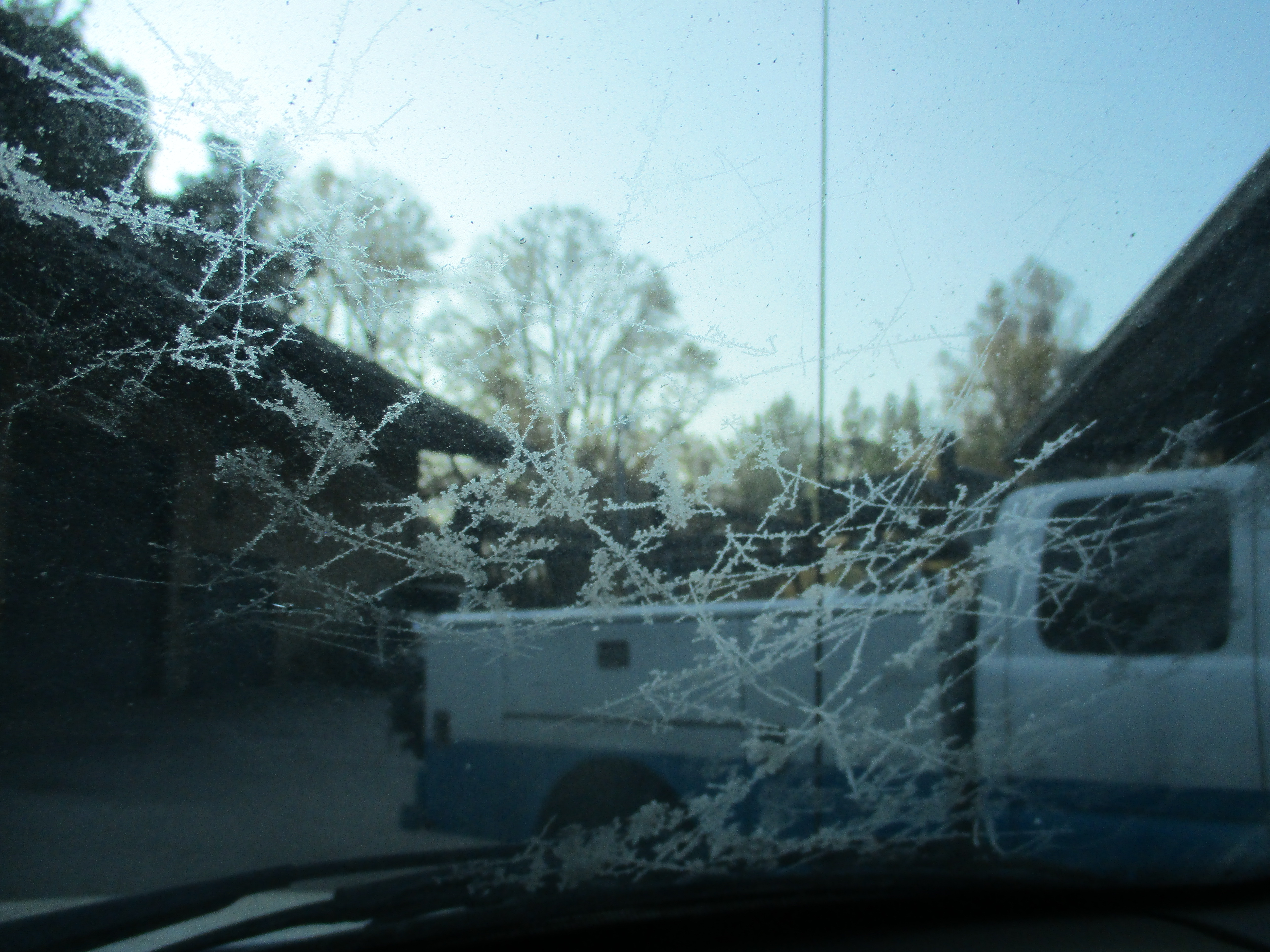 We do not get much frost here. This picture of the view through the windshield of one of the work vehicles was taken more than a week ago, while the humidity and the temperatures were still quite low. The sparse and angular pattern of the frost on the windshield is a result of the minimal humidity. There will be more frost later in winter, although there will not be nearly as much as most other climates get.
