Six on Saturday: Plebian

Refined gardens are interesting. They are pretty also. Many are impressively colorful. It is easy to understand why refined gardens are as popular as they are. However, they innately lack quite a bit. Furthermore, they demand more attention that what would naturally grow wild. We are very fortunate here, that the refined components of our landscapes are rather minimal, and must conform to the unrefined components of the surrounding forests. We occasionally add a few new plants, including annuals. Much of what grows here now was once refined, but has gone wild. They are the plebian of horticulture.

1. Zinnia were just recently planted for summer. They are some of the most refined flowers now. There are not many annual bedding plants here, and none live in big beds. These are in a row.

2. Alyssum were planted as summer annuals sometime in the past. These were likely planted about a year ago, and survived through winter. They would likely be white if they grew from seed.

3. Alstroemeria are too aggressively perennial. They were planted intentionally, but overwhelmed the mixed perennial bed they were in. We tried to remove them, but a few continue to bloom.

4. Geranium, or zonal geranium, which is just a rather mundane Pelargonium, was plugged as cuttings and left to go wild. It happens to be one of my favorites because I have always grown it.

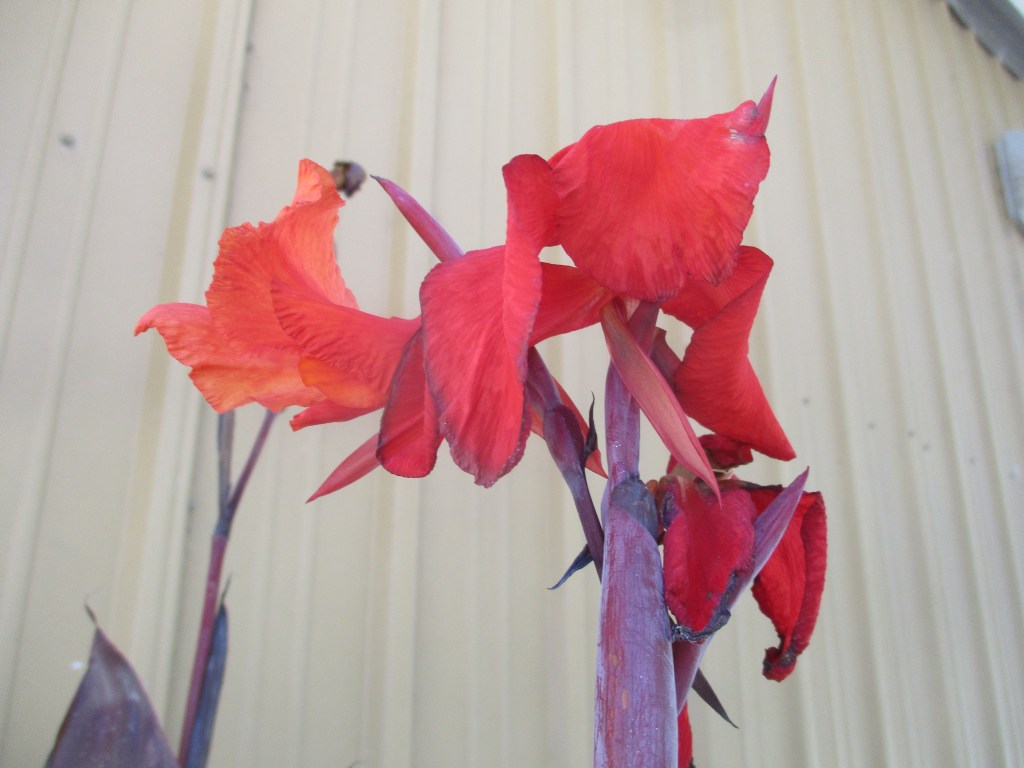
5. Calla must have been planted intentionally somewhere and sometime in the distant past, but was dug up and dumped with what became fill dirt here. It now blooms on the side of the road.

6. Poppy, or more specifically, California poppy, which is the Official State flower of California, grows wild, of course. They are some of the least refined flowers now, but also, among the best!

This is the link for Six on Saturday, for anyone else who would like to participate:

https://thepropagatorblog.wordpress.com/2017/09/18/six-on-saturday-a-participant-guide/

Oleander

Oleanders add color to the commute.

As long as freeways have been getting landscaped, oleanders have been contributing their profuse white, pink and red bloom. Heat, exposure and lack of moisture do not seem to bother them. They have become less common recently only because of new diseases that had never before been problematic. The diseases do not necessarily kill all oleanders everywhere, but are serious problems where the nurseries that grow most oleander are located.

The largest oleanders can get more than fifteen feet tall, and can be pruned up as small trees with multiple trunks. Oleander trees with single trunks almost never stand up straight, and do not want to give up their stakes. Because flower clusters develop at the ends of new growth, frequent exterior pruning or shearing inhibits bloom. Dwarf cultivars that are naturally proportionate to their space will bloom better than larger types that need to be pruned for confinement.

Oleander flowers are about an inch or two wide, with five petals, although some have ruffly ‘double’ flowers. Unfortunately, double flowers tend to hang on as they deteriorate after bloom. Some oleanders are slightly fragrant. The name ‘oleander’ is derived from the similarity of their leaves to those of olive trees (‘Olea‘), although oleander leaves can get three times as long.

Be Careful With Toxic Plants

Toxic plants can be quite appealing.

Plants are so much more intelligent than they get credit for. Many use color, fragrance and flavorful nectar to get insects and animals to disperse their pollen for them. Some provide fruit for animals that inadvertently take and disperse their seeds. Others use barbs or sticky substances to attach their seeds to unknowing animals that take them away. Plants have all sorts of techniques for exploiting those who are more animated than they are. After all, immobility has certain disadvantages.

Because plants can not get away from the animals and insects that eat them, many have developed techniques for being unappealing. Plants that live in deserts where edible foliage is relatively scarce are famous for their nasty thorns and spines, like those of cacti and agave. Hellebore and poinsettia have caustic sap that make them unpalatable. The naturally aromatic foliage of many edible herbs, like rosemary and lavender, is actually intended to repel grazing animals with sensitive noses.

Some plants unfortunately rely on toxicity for protection. Many plants are only partially toxic. For example, apples are intended to be eaten safely by animals that disperse the seeds within, but their seeds are toxic enough to avoid getting eaten by rodents after dispersal. Potato, tomato, rhubarb, asparagus and elderberry plants all produce edible fruits or vegetables, but also have poisonous parts. Some edible fruits and vegetables, like grapes and onions, are edible to humans, but toxic to dogs.

Foxglove, angels’ trumpet, morning glory, yew, rhododendron, azalea, oleander and castor bean are some of the more notably toxic plants often found in home gardens. Wisteria, holly and ivy produce toxic seeds and fruits. Dieffenbachia is a popular but very toxic houseplant. Although mostly safe, toxic plants can be a problem where young children might put things into their mouths, or where puppies are in that chewing phase.

O

Horridculture on Wednesdays used to be about aberrations of horticulture. I would contend that this recycled article could potentially conform to that tradition; but that is because I find disruptive wildlife to be objectionable. I suspect that most would disagree. It seems that everyone likes Kenny. https://tonytomeo.com/2018/09/16/kenny/

tonytomeo's avatarTony Tomeo

P80530

‘O’ is for ‘opossum’. That it the proper common name for the familiar North American critter who lives in or near many home gardens where fruit, vegetables or pet food are available. When a similar critter was found in Australia, it was given the same name by someone who did not spell it properly, hence ‘possum’. It is marsupial, and therefore related to many familiar Australian critters like koalas, kangaroos and the most terrifying of all, wallabies. Well, if the North American name can be applied to an Australian critter, it only makes sense that the Australian name can be applied to the North American critter. Thought technically and correctly ‘opossum’, many of us know them simply as ‘possum’, without the preceding ‘O’.

Opossums have a vast native range in North America. They can live anywhere that does not get too cold for them. They have likely always lived in…

View original post 285 more words

California Buckeye

California buckeye resembles related horse chestnut.

Chaparral climates are not easy without irrigation. The long summers are warm and arid. California buckeye, Aesculus californica, knows what to do if it can not stay hydrated out in the wild. It simply defoliates. Yes, it goes bare right in the middle of summer. If it does it early enough, it refoliates after rain resumes in autumn, only to defoliate again for winter.

This ‘twice deciduous’ characteristic is likely why California buckeye is not more popular for unirrigated landscapes of other natives. Shade is an asset through warm summers. In coastal, riparian or irrigated landscapes, the original spring foliage lasts through summer to defoliate in autumn, like that of most other deciduous plants. It may get shabby though. 

Nonetheless, California buckeye is a delightful small tree, typically with a broad and low canopy suspended by a sculptural branch structure. Not many get more than twenty feet tall, although some get twice as tall. Bark is strikingly pallid gray. The elegant leaves are palmately compound. Six inch long trusses of tiny white flowers are sweetly fragrant in spring.

Roots Prefer To Roam Freely

Some yuccas are unhappy in pots.

Roots are innately mysterious. They consume much of the resources that plants require. They stabilize the stems above them. Few plants can survive without them. Yet, roots are very secretive about their work. Almost all are invisibly subterranean. Consequently, they get minimal consideration. A lack of consideration is a root cause of many root problems. 

Every plant species has distinct environmental preferences. Some plants require full sun exposure. Others tolerate or prefer partial shade. Some are more discerning than others. Similarly, plants that naturally disperse their roots extensively dislike confinement of their root systems. Small plants and some riparian plants are more adaptable to confinement.

Annual bedding plants and many small perennials perform well within pots, planters and small spaces because they do not need to disperse their roots extensively. Some woody plants with fibrous root systems, such as azalea, boxwood and andromeda, can adapt to confinement also. Occasional pruning can keep them proportionate to their root volumes. 

Most of the popular succulents perform remarkably well in confinement. Some types that disperse their roots extensively if necessary will adapt to confinement by dispersing their roots only as far as they must. If they get all they need within a pot, they need not go any farther. However, succulents that are endemic to dry desert regions are not as adaptable. 

Desert plants can survive warm and dry summers because they disperse their roots very extensively. They can not do so within the confinement of pots and planters. This should not be a problem that systematic irrigation can not compensate for. Unfortunately though, these same plants are too susceptible to rot if their roots are damp during warm weather.

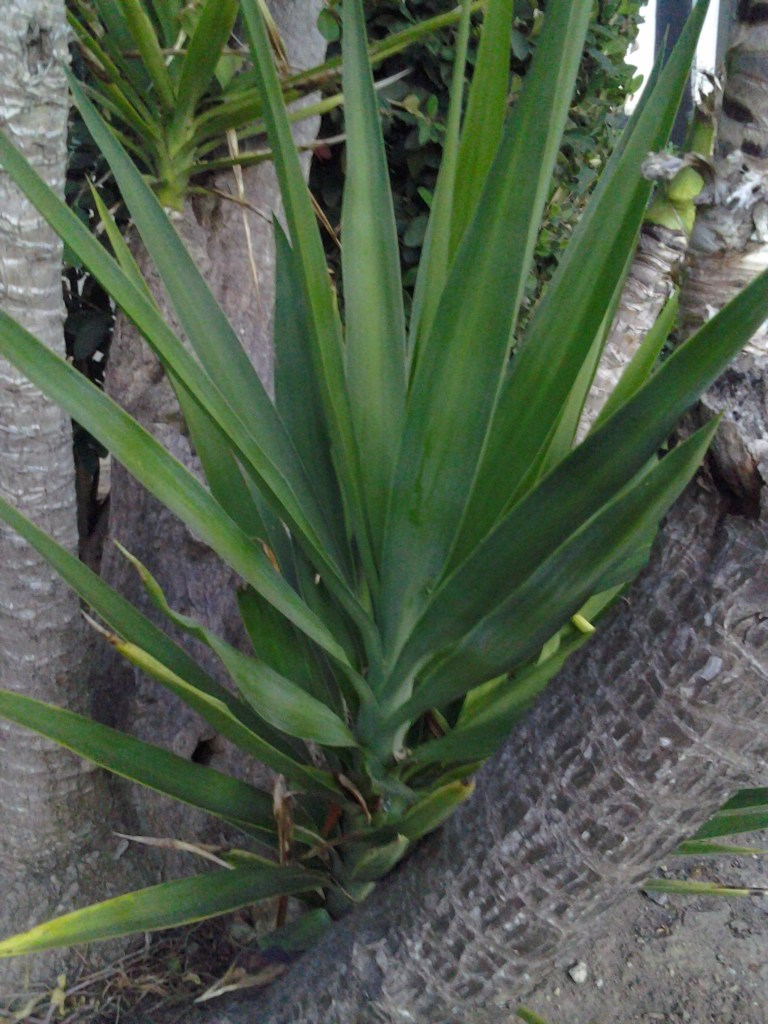
So, some plants that are the most resilient in the ground are the least resilient in pots. Of course, this is not an absolute rule. Yuccas from tropical and temperate climates perform well either in the ground or in pots. Those from desert climates are likely to rot in pots. In general, drought tolerance and container gardening are two fads that are not compatible. 

Not So Fruitless Cherry Trees

Three years after this presently recycled article posted, these trees have not yet been cut down. They must be very soon. They got to bloom one last time (again), but are unable to support the weight of their own trunks any longer.

tonytomeo's avatarTony Tomeo

P80520The ‘politically correct’ designation for them now is ‘flowering cherry’. We all know what it means, but it is not quite as accurate. After all, they all flower. Fruiting cherries can not make fruit without flowering first. The old fashioned designation as ‘fruitless cherry’ is more accurate, but not so appealing. Besides, after half a century, the work of these two deteriorating old fruitless cherry trees has not been in vain.

We are not certain what cultivar they are. I think of them as ‘Akebono’ because that is what I am familiar with. However, those who have been acquainted with them longer know them as ‘Yoshino’. The tree structure seems to be more similar to that of ‘Akebono’. The bloom seems to be more similar to that of ‘Yoshino’. My Mother happens to like ‘Akebono’, so if she ever asks, I know what to say. However, I would tell my…

View original post 614 more words

FLUX

This recycled article might seem like it would conform to the ‘Horridculture’ meme for Wednesday, but is merely about a disease that looks worse than it actually is.

tonytomeo's avatarTony Tomeo

P80523This unhappy native white alder, Alnus rhombifolia, had been deteriorating for quite a while. White alders do not last long even in the wild. A few nearby have already been removed. This one is next. They were nice and shady when the landscape was new. Nicely maturing sycamores and a bigleaf maple can take over for this one now.

As bad as it looks, this nasty stain had nothing to do with the imminent doom of this tree. It developed only recently, and very quickly. It is not nearly as bad as it looks. If the tree were not to be removed, it could survive with this problem for quite a while. Other healthier trees can live with it for many years or indefinitely, and some actually recover.

It is ‘flux’. More specifically, it is slime flux, which is also known as bacterial wetwood. The obvious symptoms are this…

View original post 180 more words

Six on Saturday: Jive Turkey

Every once in a while, I accumulate a few random but perhaps interesting pictures that do not conform to a common theme. ‘Six on Saturday’ is an ideal venue to avoid wasting such pictures. I could have gotten six more pictures of rhododendrons like I did last week, but that would have been mundane. I happen to both like and dislike the miniature rose in picture #3, and wanted to show it off. The conjoined roses are just wrong. The removal of the exemplary California lilac was wrong too, but could not be avoided.

1. Rhododendron are mostly finished with bloom. This pinkish watermelon red bloom was still quite garish when I got this picture about a week and a half ago. A few are still blooming today!

2. Rhododendron are abundant, which is why I share too many pictures of them. I will not do it this season. After the Six last week, and the one above, this yellow blushed white one is the last.

3. Rose blooms on the edge of the most prominent of our landscapes, but we did not plant it. No one know where it came from. We can not remove it because it is likely important to someone. 

4. Rose aberration that I mentioned two weeks ago blooms just across the road. I believe that these are Iceberg and Burgundy Iceberg grafted together on the same rose standard (tree). Gads!

5. California lilac might be a common Ceanothus thyrsiflorus. This is an exemplary specimen, but grew where it overwhelmed an important star magnolia. It finished bloom, and is gone now.

6. Turkey chicks are just a few of a big herd of a dozen or so! It is a long story. Momma Turkey ran off after a random jogger, and left them staring at me for answers. She fortunately returned.

This is the link for Six on Saturday, for anyone else who would like to participate:
https://thepropagatorblog.wordpress.com/2017/09/18/six-on-saturday-a-participant-guide/

Golden Pfitzer Juniper

Fresh new shoots are most colorful.

Of the several junipers that were too common decades ago, the golden pfitzer juniper, Juniperus X pfitzeriana ‘Area’, was the one outfitted with cheery, bright yellow new foliage each spring. Similar but more compact varieties that are more popular now were rare back then, or simply not yet invented. Contrary to the stigma, golden pfitzer juniper is a very tough shrub, which is why so many from decades ago remain in older gardens, and new plants can sometimes be found in nurseries. Once established, they need very little water, or none at all. A bit of partial shade is tolerable, but inhibits color. Angular branches radiate outward, with the finely textured foliage drooping only slightly at the tips. Mature plants get wider than six feet, and taller than four feet. Crowded plants can stand taller than six feet. Golden pfitzer juniper can technically be shorn as hedges, but are so much more appealing if selectively pruned to maintain their natural form. They are at their best where they have space to spread out naturally without pruning.