Because I sometimes go to Brent’s jobs sites while in the Los Angeles area, people sometimes ask me if I see many famous actors. Well, I try to stay out of everyone’s way, so rarely see anyone at the sites. If I see anyone famous about town, I would not know it. I do not watch enough television or movies to recognize many of them.
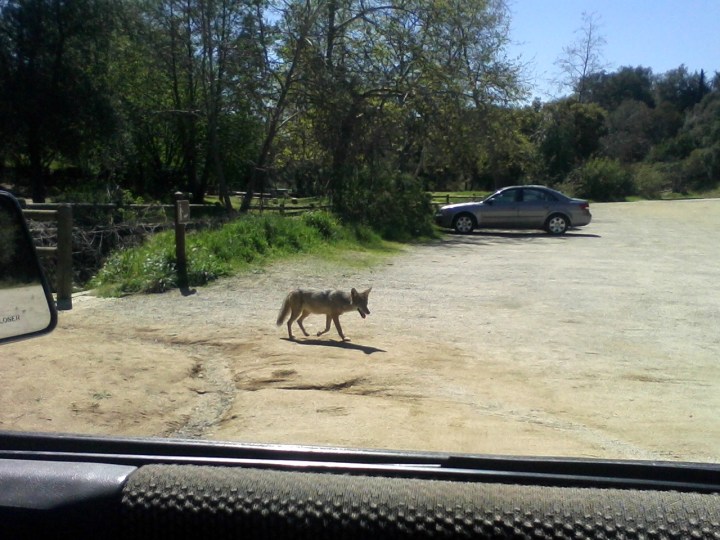
However, I did recognize this famous actor from my childhood as the renowned Wile E. Coyote of Looney Tunes. He was just out for a stroll in Franklin Canyon Park in the Santa Monica Mountains above Beverly Hills. It happens to be one of my favorite places in the Los Angeles Area, and has an interesting history.
Even those who have never been to Franklin Canyon Park might have seen it on television and in movies. Franklin Canyon Reservoir was Myers Lake on which Opie…
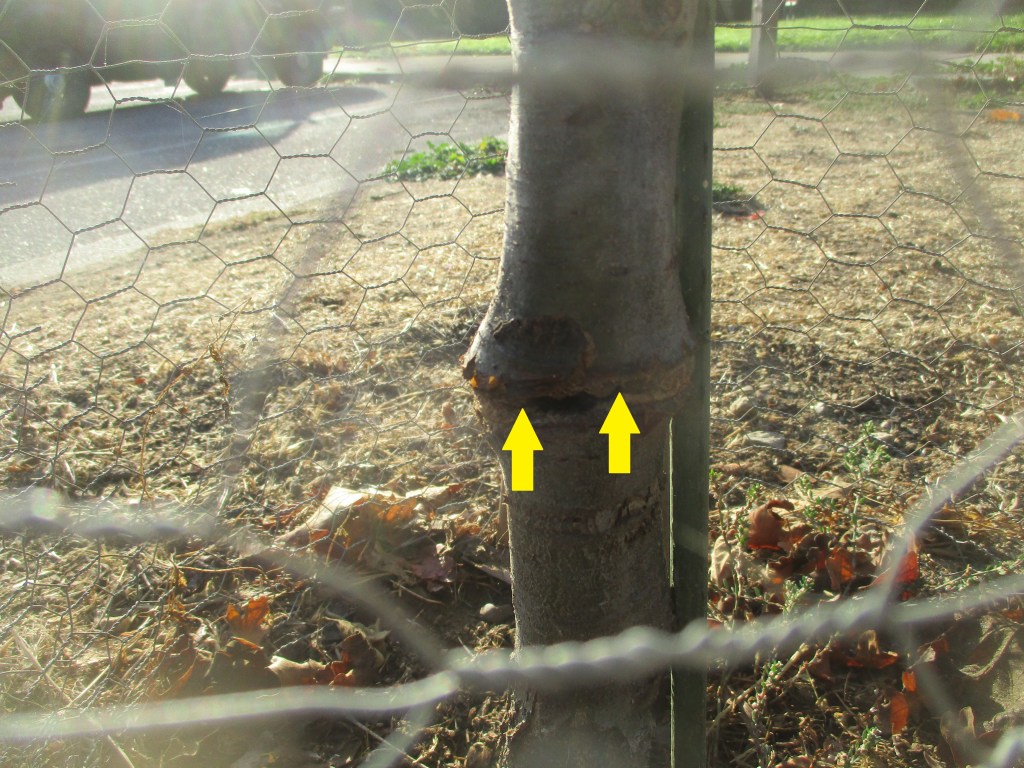
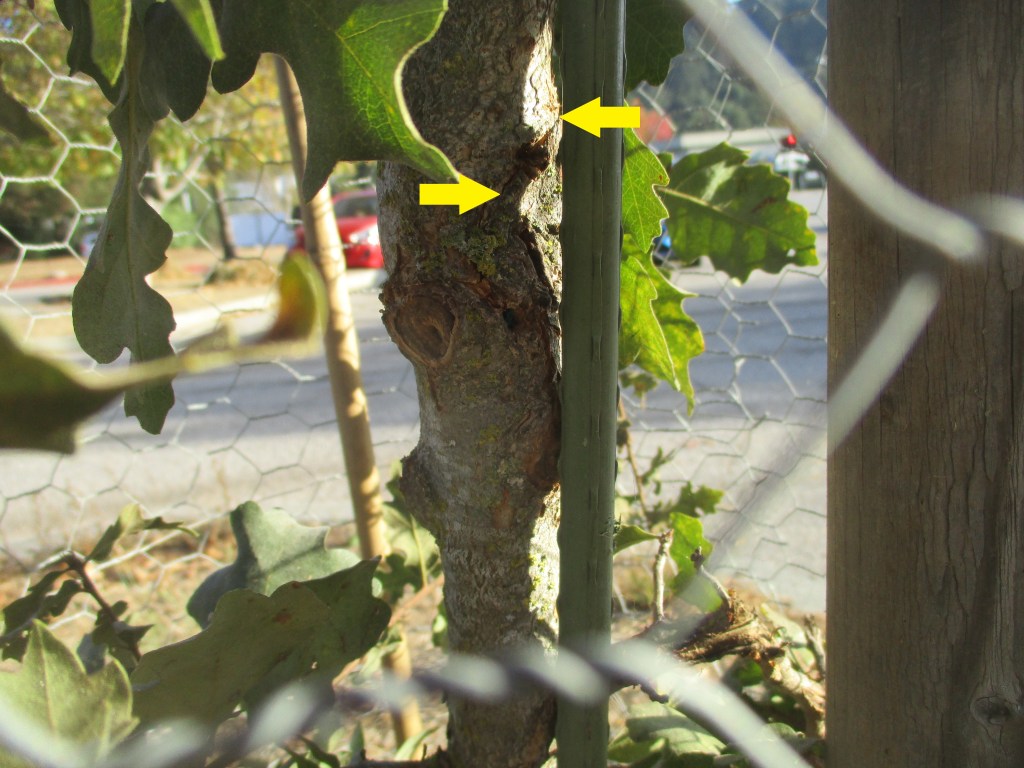
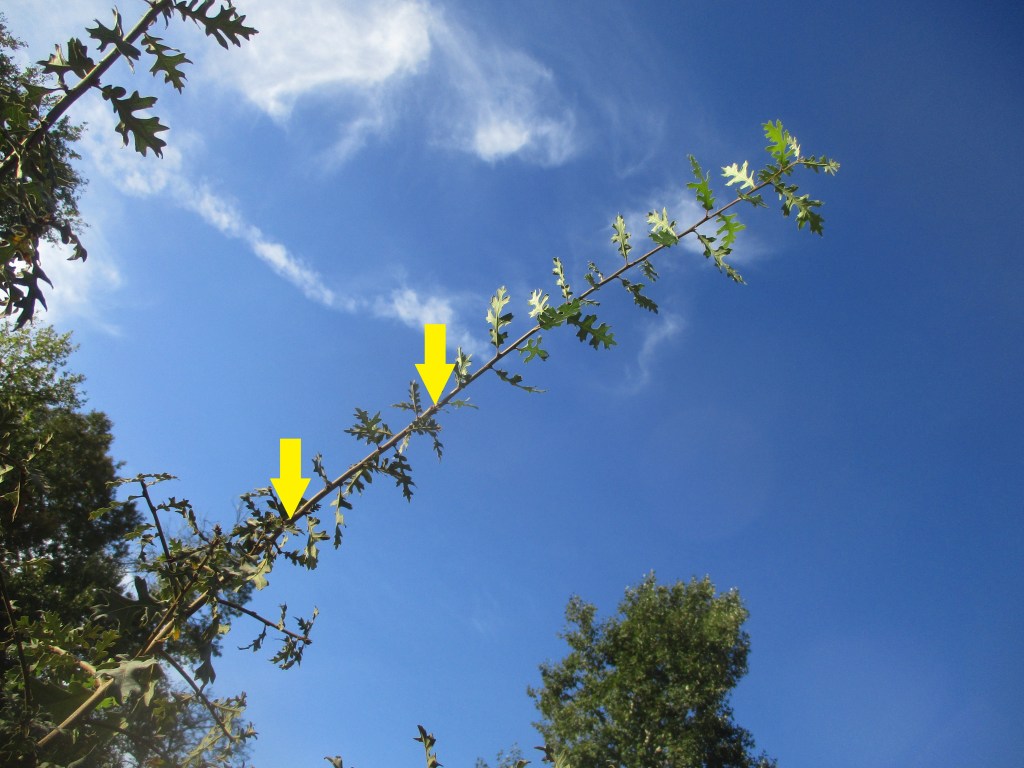
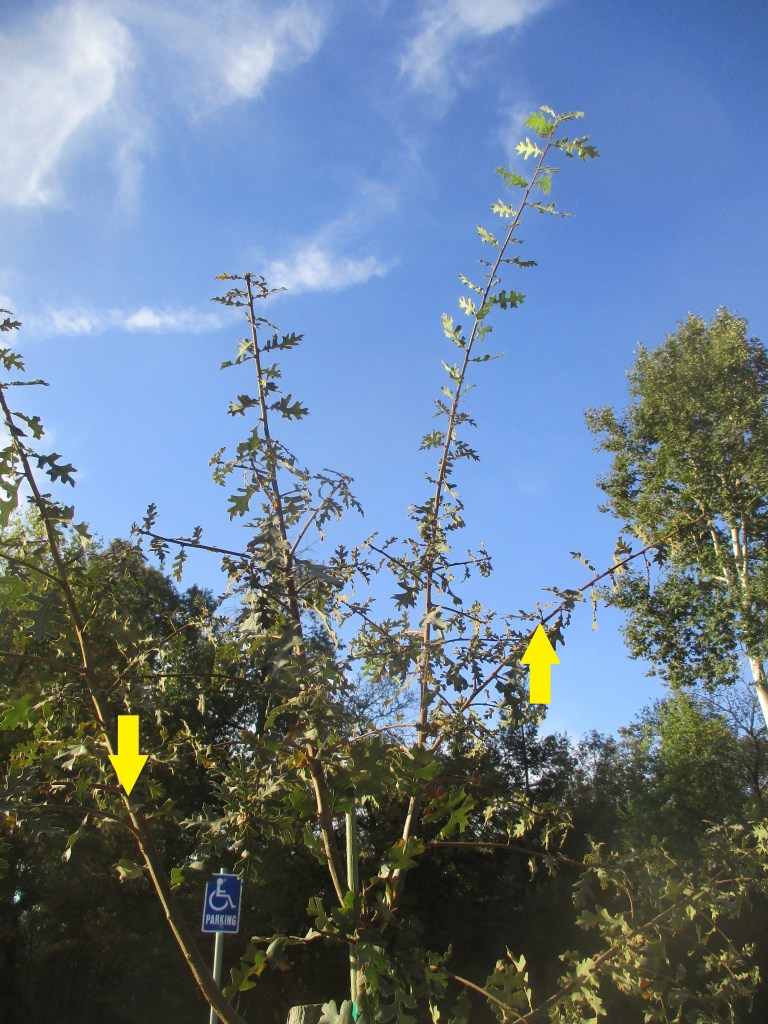
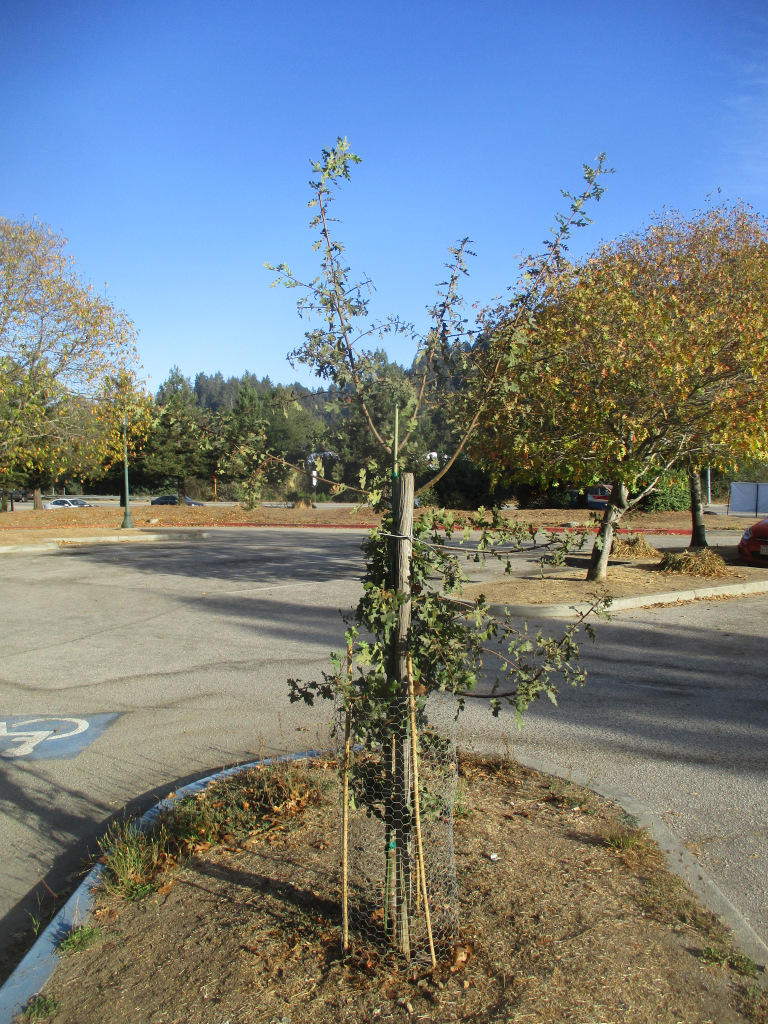
These pictures are from a similar article with the same name at Felton League, which was linked to here last Wednesday. They demonstrate how efficiently the Memorial Tree is recovering from vandalism four months ago. Pointer . . . ‘thingies’ were added to more precisely identify what some of the pictures illustrate. The other two linked-to articles provide more information.
1. A gardener at Felton Covered Bridge Park installed this chicken wire cage around the Memorial Tree after it was vandalized. The protection is minimal, but the gesture is very thoughtful.
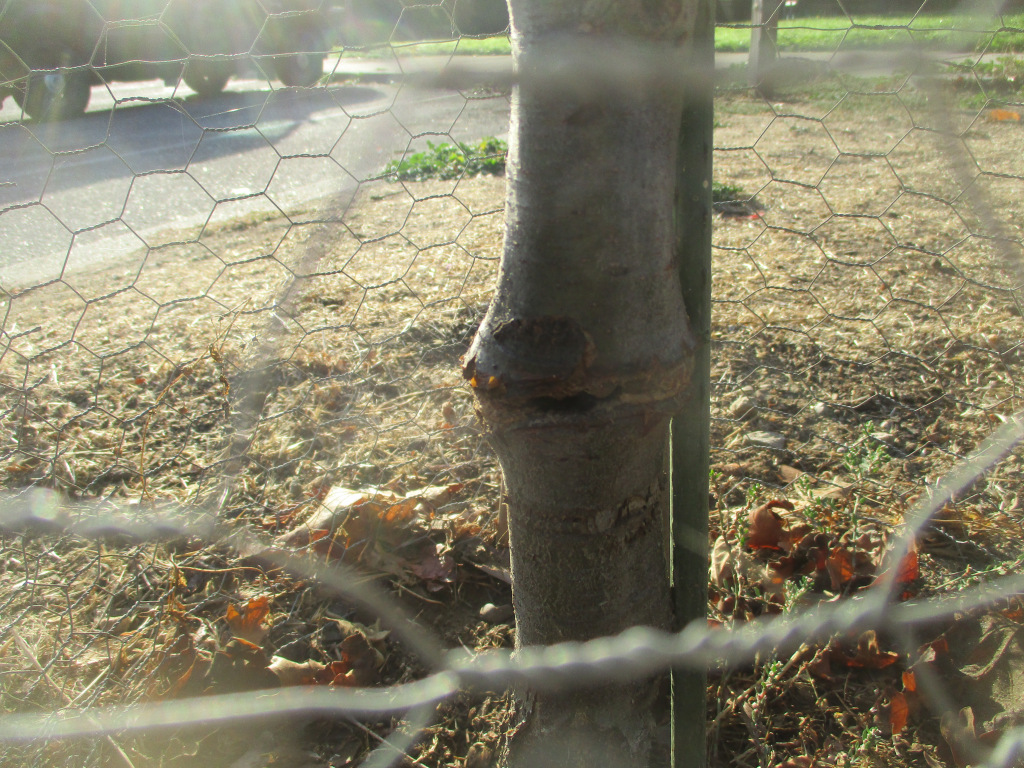
2. This now minimal damage is all that remains of of the formerly major vandalism. The worst of the damage to the left and right was very efficiently compartmentalized in just four months.
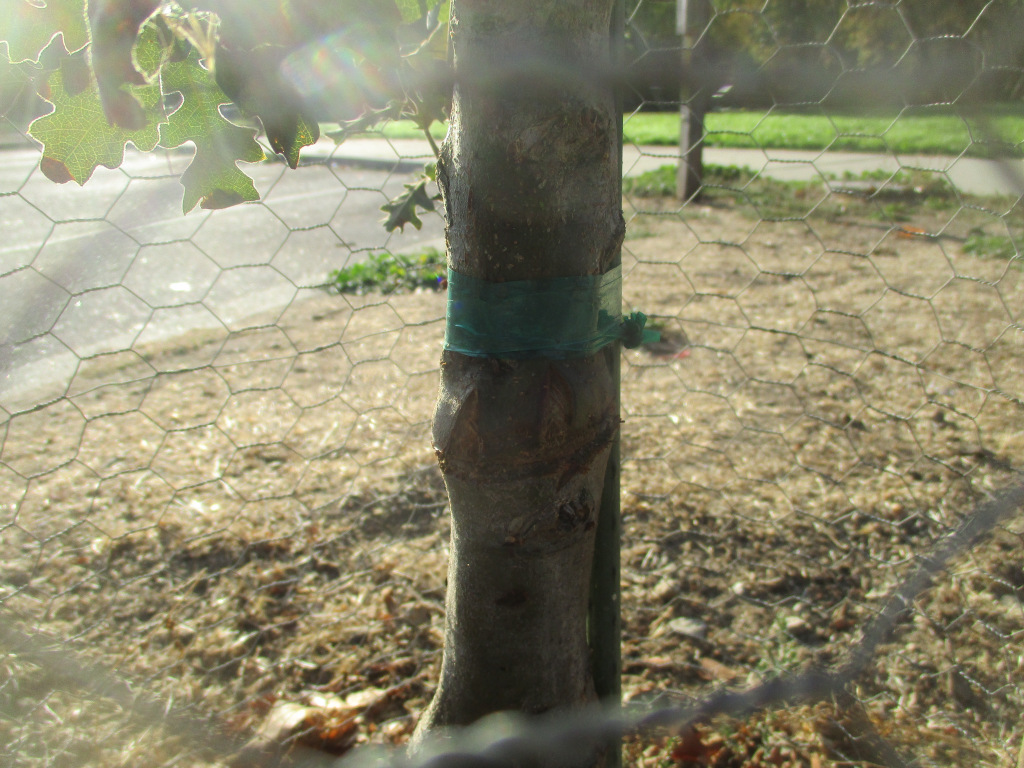
3. This scar is all that remains of formerly major damage. It is now completely compartmentalized. Growth above not only continued, but was unusually accelerated for so late in the season.
4. This damage was compartmentalized so efficiently that the scar is barely visible. Actually, I am not even certain if this is a scar. I remember only that the trunk was sliced in three places.
5. Growth for the season was adequate prior to the vandalism. The marker to the lower left shows where growth started early last spring. The marker to the upper right, near the center of the picture, shows where growth was decelerating and expected to blind out by the middle of summer. However, growth accelerated vigorously past that, as if stimulated by the vandalism.
6. Growth was unusually vigorous, especially for late summer. During winter, the stem designated by the marker to the left should be removed so that it does not develop into another major trunk. The stem designated by the marker to the right should probably be pruned back so that it does not compete with the two upper stems that are developing into the main lower limbs.
This is the link for Six on Saturday, for anyone else who would like to participate:
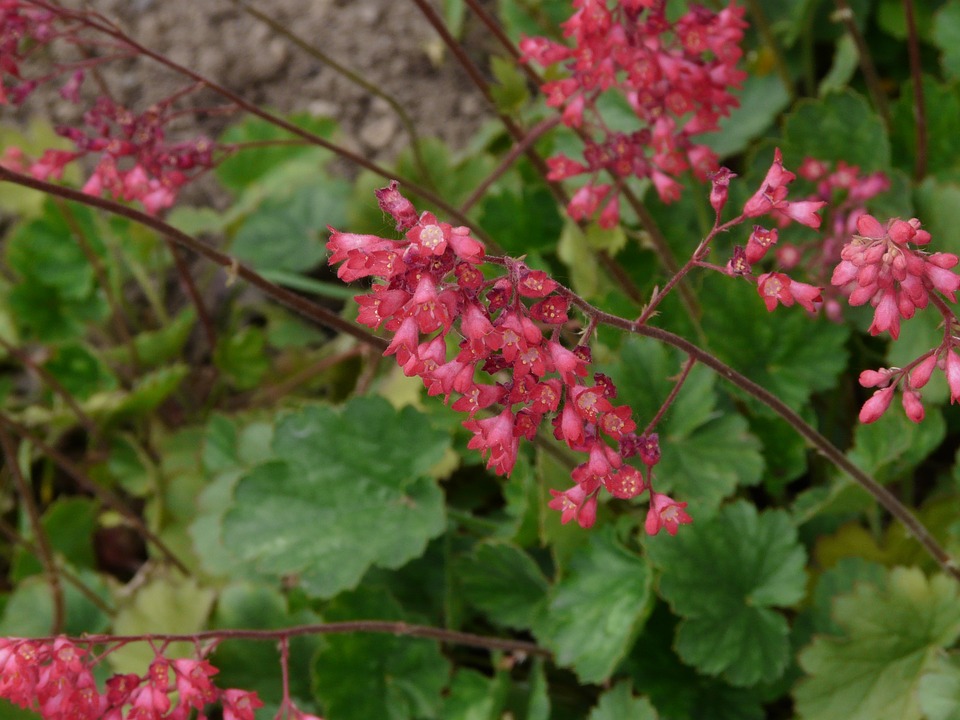
Coral bells can bloom again in autumn. (This is not my picture.)
From Santa Barbara to Vancouver, and also in central Idaho, the humble native coral bells, Heuchera micrantha, is not much to look at, with compact rosettes of relatively small and bronzy rounded leaves with weird tomentum (hairs). In spring and early summer, and sometimes again in autumn, sparse trusses of minute brick red flowers hover about a foot above on wiry and slightly fuzzy stems. Old plants that get bare in the middle can be divided into several small plants in spring or autumn.
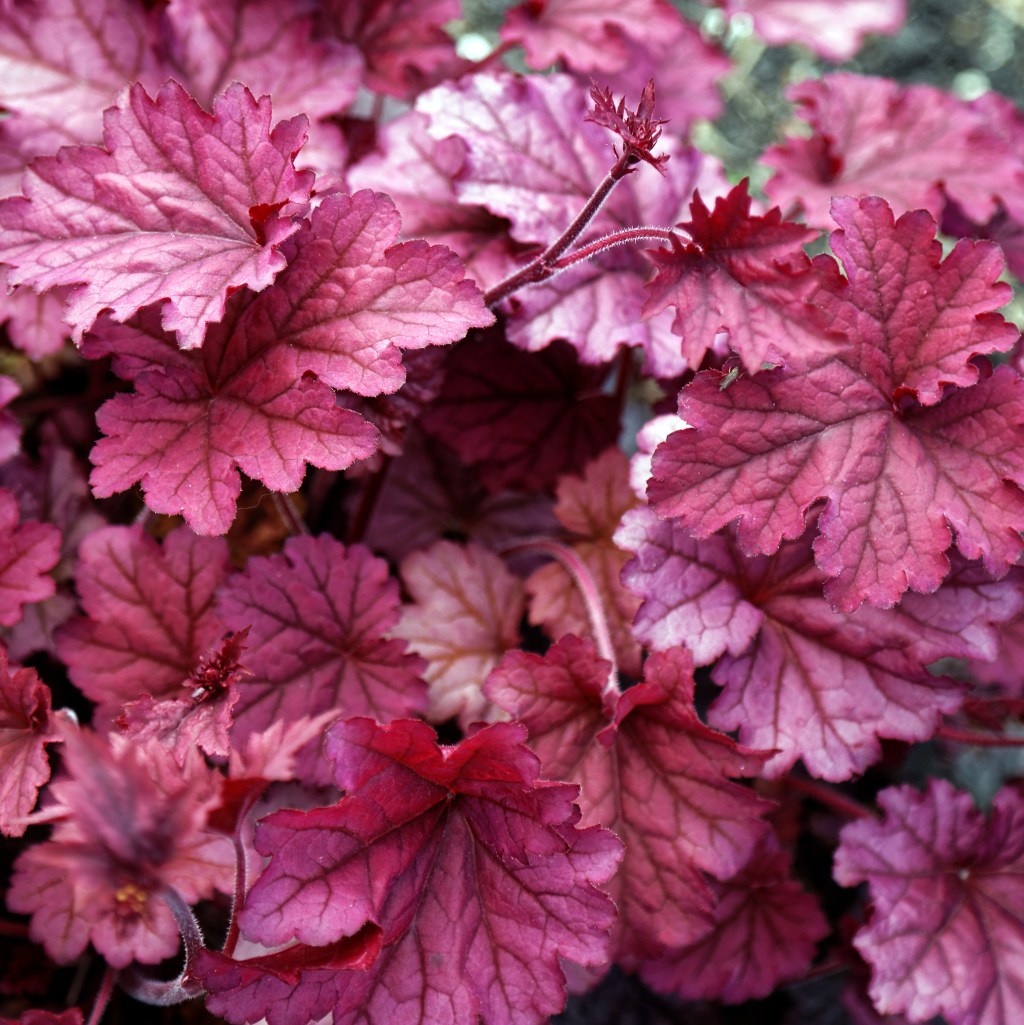
Modern cultivars are considerably more interesting, with more substantial foliage in various shades of green, gold, tan, brown, bronze and purplish bronze. The larger and variably lobed leaves can be two inches wide or slightly wider. The flowers stand as much as two feet high, but lack color. Most are pale greenish white. ‘Palace Purple’ has deep bronze or almost purplish foliage. ‘Ruffles’ has deeply lobed and ruffled green leaves. Unlike undemanding wild plants that can grow in cracks in exposed stone, modern cultivars like rich soil. Harsh exposure can scorch foliage, so a bit of partial shade is preferred.
Most coral bells are grown more for their colorful and low foliage than for their bloom. (Both pictures here were obtained online. I can not find my pictures.)
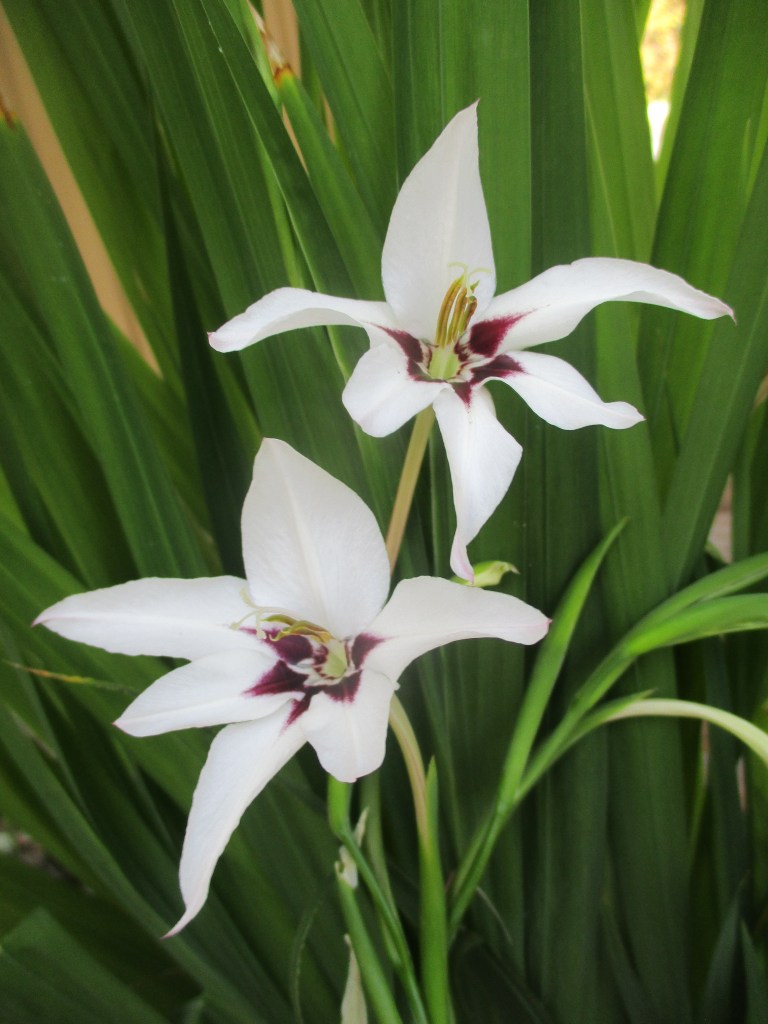
Peacock orchid bloom late, but eventually succumbs to frost and must be groomed.
Here on the west coast, autumn and winter weather is so mild that the native coral bells are already starting to develop new foliage on top of the old foliage from this last year. Technically, they are evergreen, so the old foliage does not need to be shed; but if it is not too much to ask, some types look better with a bit of grooming.
Other perennial plants that are from climates with stronger seasons and colder winters are not quite so evergreen. Many shed all of their foliage and are completely bare for at least part of the winter. Only a few, like cyclamen, are at their best through autumn and winter.
Dried watsonia foliage should be removed now if it has not been removed already. It is not so easy to pluck off like gladiola foliage is, so it should be cut off with shears. Because new foliage for next year develops before the old foliage of this past year is completely brown, it is often necessary to cut the old a few inches above the ground in order to avoid damaging the new.
The so called ‘evergreen’ daylilies can be even messier. New foliage is rather delicate, so it is easily tattered by the removal of old foliage. The ‘deciduous’ types may seem to be less appealing because they are bare for part of autumn and winter, but are so much easier to groom by simply removing all of the deteriorating old foliage as soon as it separates easily from the roots.
Deteriorating flowers can be removed from cannas; but their lush foliage can stay until it starts to deteriorate later in winter. Even if it survives winter, it should eventually be cut to the ground as it gets replaced by new growth in spring.
The many different iris have many different personalities. Most should be groomed sometime between summer and late autumn, although Dutch iris were groomed much earlier. Bearded iris that do not get divided can be groomed simply by plucking off big old leaves to expose smaller new shoots below.
Some dahlias bloom until they get frosted. Most though, are already finished. They do not need to be cut back all at once, but can be cut back in phases as leaves and stems dry and turn brown.
Even If I had time to write an article for today, which I do not, I would like to share this article from my other blog at Felton League. It is a surprisingly pleasant update regarding an unpleasant incident that involved a Memorial Tree in Felton Covered Bridge Park. It incidentally complies with the ‘Horridculture’ meme for Wednesday.
The Memorial Tree in Felton Covered Bridge Park was not expected to survive damage inflicted by a vandal last June. However, it recovered with unexpected efficiency and vigor, at a time of year when growth should have been decelerating prior to autumn. It is as if the vandalism never happened.
The worst of the damage is nearly healed.
After unsuccessfully attempting to poison the Memorial Tree with salt, the vandal sliced more than half way through the trunk in three places. The worst of these three slices in nearly healed. Another has already healed over. The third is so efficiently healed that the scar is barely visible.
This damage is already healed over.
A gardener who maintains Felton Covered Bridge Park installed a cage of chicken wire around the lower portion of the trunk to hopefully dissuade the vandal from attacking the Memorial Tree…
Incense cedar produces delightfully aromatic wood.
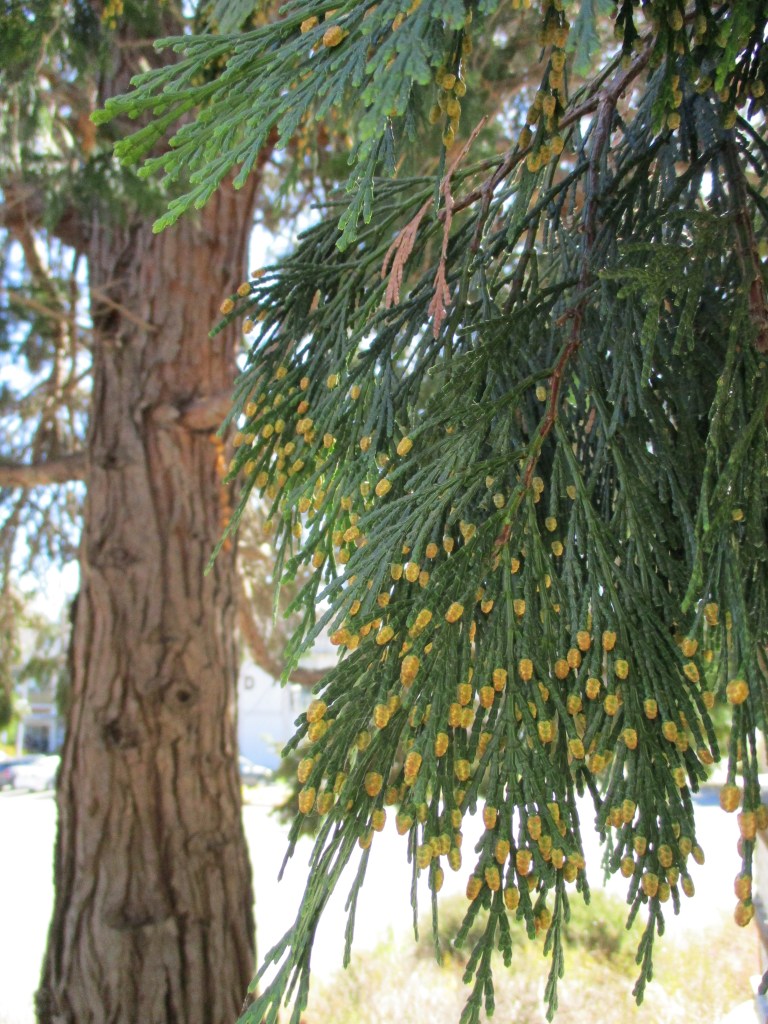
Nowadays, the delightfully aromatic foliage is familiar primarily in garlands at Christmas time. Most of the foliage of old trees is too high up for direct contact. Young trees with low foliage are rare. Incense cedar, Calocedrus decurrens, is unfortunately not as popular as it was a century ago. At that time, it was as utilitarian as it was appealing for spacious but minimally irrigated landscapes.
Incense cedar wood made good shingles and laminate for closets and cedar chests. The wood is aromatic enough to repel moths from woolens and furs, which were still popular then. It was less expensive to import than Eastern red cedar. It grows wild relatively nearby, in the Sierra Nevada and Cascade Mountains. Incense cedar fence posts might resist decay as well as redwood posts.
If the wild, where they compete with other trees for sunlight, old trees can get almost two hundred feet tall. However, well exposed old trees in Victorian gardens are less than half as tall after more than a century. Their canopies are generally conical. Large limbs can curve upward like extra trunks. Flat foliar sprays resemble those of arborvitae. The deeply furrowed bark is cinnamon brown.
Forests lack gardeners. In the wild, there is no one to rake fallen leaves or blow them away. Foliage falls from trees and onto the ground, where it stays as it decomposes. It is the natural process. Raking and blowing leaf litter away is unnatural. It deprives the soil and organisms that inhabit it of significant organic matter that they crave. It also interferes with insulation and moisture retention.
Of course, there are some natural processes that are not so desirable in home gardens. After all, that is why raking and blowing is standard procedure. It is not practical to leave leaf litter on lawn, ground cover, pavement or roofs. Raking and blowing removes leaf litter from where it is unwanted, or at least moves it to where it is less visible. Leaf litter seems to be so useless and unwanted.
However, other procedures are necessary to compensate for the lack of leaf litter. Mulching insulates soil, retains soil moisture, and inhibits weed growth. Watering adjusts to deficient moisture in exposed soil. Weeding eliminates weeds that germinate and grow where there is nothing to inhibit them from doing so. Herbicide may be more practical. It is all so contrary to natural processes.
It is somewhat obvious why deciduous plants defoliate through autumn and winter. They do not need their foliage as much while days are shorter and sunlight is less intense. Also, they do not want to be battered by winter wind, or collect heavy snow. Yet, their desire to mulch their own soil is not so obvious. Evergreen plants do it also. They just do it slower, and generally throughout the year.
In fact, many evergreen plants are more efficient with their mulch than most deciduous plants are. Leaf litter of eucalypti, camphor, bay and nearly all conifers actually has a preemergent herbicidal effect. It inhibits germination of seed that can reach the soil. It can be a disadvantage for wildflowers, or an advantage for weed control. Incidentally, coniferous leaf litter is likely to be combustible.
Leaf litter, composted or left to its natural processes, is natural.
Standin’ on the corner in Winslow, Arizona, specifically on the corner of West Second Street and North Kinsley Avenue, there was this bronze statue of someone famous. I am still not certain who he was. A statue of Glenn Frey was added nearby later, and might have replaced this one, but I could not find much news about it. The new statue does not look anything like this statue, which was the only one there when we stopped to get our picture taken there five years ago on our way to Oklahoma.
We did not plan the trip very well. We did not plan it much at all. We were in a less than ideal situation at home, so loaded up a tired old Blazer and went on our way. I sort of planned on staying for a few days or maybe two weeks, and then returning alone to Felton…
The main complaint about this Remembrance Garden is that there is no garden. Two steel girders from the destroyed World Trade Center stand vertically on pedestals within a concrete slab shaped like the site of the World Trade Center. The pedestals are set within squares of stones that correspond to the outlines and locations of the of the World Trade Center Twin Towers #1 and #2 within the World Trade Center Site. The outlines and locations of the other buildings of the World Trade Center are designated by darker concrete within the slab. There is no real synthetic landscape. Only a few ash, cottonwoods, pines and junipers are scattered about.
This might be the most perfect landscape I have ever seen.
Please don’t get me wrong. I appreciate good landscapes that do what they were designed to do. Most of the prettiest are designed to make spaces more appealing. They…
The CZU Lightning Complex Fire started two and a half months ago, and finished five and a half weeks ago. I was already away in the Santa Clara Valley when the region here was evacuated ahead of the fire, and could not return for several days, but found that the fire got no closer than a mile and a half from here. Smoke from other fires continued to darken the skies for weeks.
Life here is very different is some ways, but surprisingly unchanged in others. I had managed to avoid two of my properties that are within the burn zone. I finally saw them last week. They are completely undamaged. However, some of the homes in the neighborhood are completely gone. It is so disheartening. There was nothing to lose on my properties, but they did not burn.
One of the properties is unused. It is inhabited by a circular clonal colony of redwoods, a few solitary redwoods, a few tan oaks, and very few miscellaneous trees such as bays and madrones. All of the trees that are not redwood should have been harvested for firewood. Vegetation management on a much larger scale decreases combustibility of formerly clear cut forests like this.
The other property is naturally inhabited by several mature tan oaks and many of their offspring, as well as a few bays, very few canyon live oaks, and only a few big redwoods. Exotic plants were added because it is a good place to grow them before relocating them to other gardens. I would prefer to harvest all trees that are not redwoods, for firewood, as for the other property.
With proper vegetation management, this second parcel could be used to grow bare root commodities, such as sycamores to be planted as street trees in Los Angeles. Fourteen or so fig stock trees already live there. They provide cuttings for propagation. A few are culturally significant cultivars of the Santa Clara Valley. A few species that I brought from Oklahoma live there too.
Nonetheless, these six pictures show a bit of how the neighborhood appears now. There is certainly not much remaining to see. Actually, there was not much to see prior to the fire. It is easy to see the forest, but not the trees. (That sounds backward.) I posted these pictures because a few readers had asked about the situation here. There is too much missing now for six pictures.
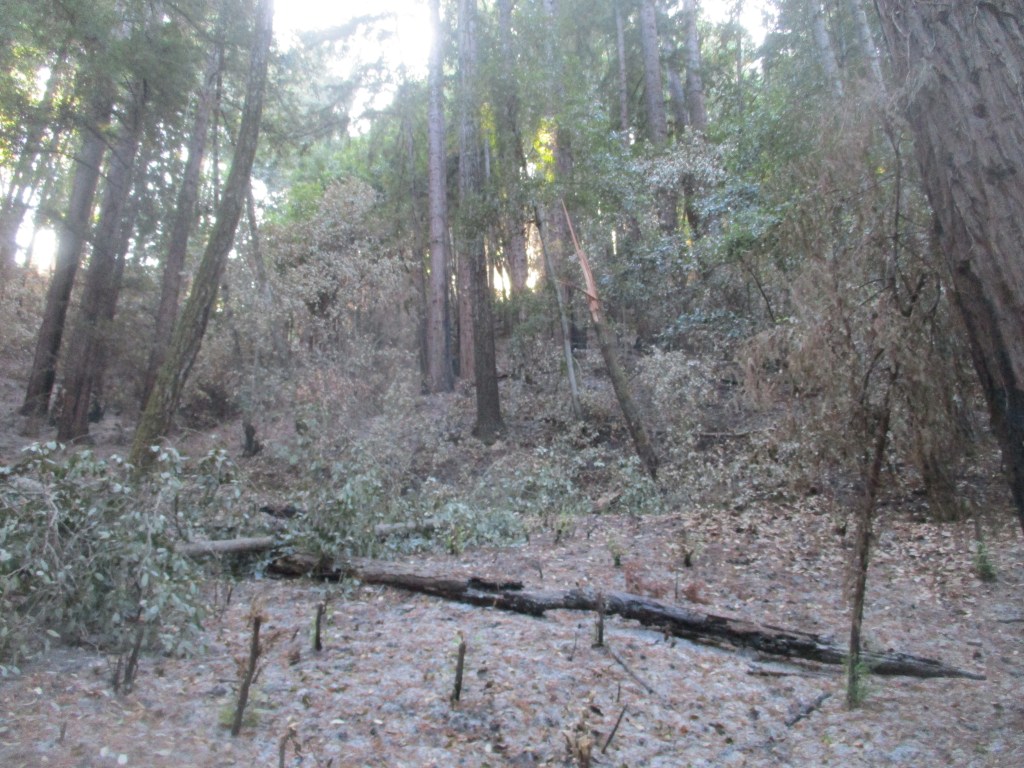
1. Below the middle of this picture, a road is barely visible. The parcel in the foreground burned. The foliage to the lower left is that of a tan oak that broke and fell across the road afterward. The scrawny stumps remain from burned tan oak saplings. I do not know who cut them, or why they were cut already. My property across the road did not burn, but is very ashy and gray. A home that was up on the ridge in the distant background, about where the sun shines through, is now gone. I do not know the condition of several homes beyond that. I did not go up there.
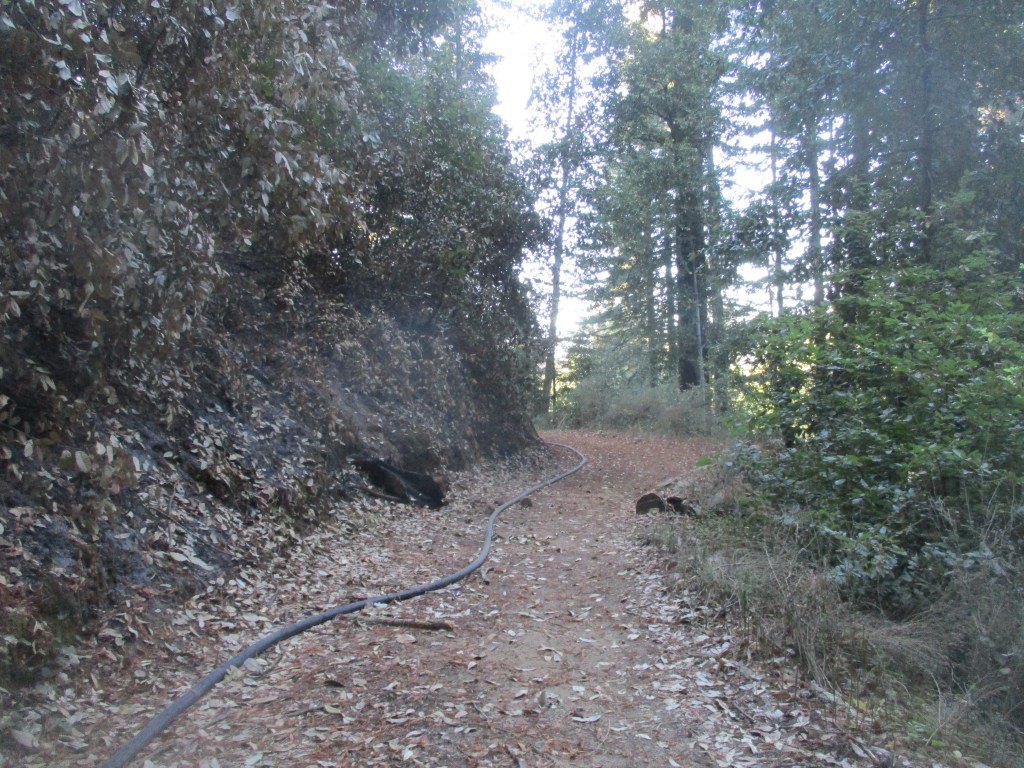
2. Tan oak saplings to the left were roasted but not incinerated as bramble burned below them. My property to the right did not burn. Only the rhubarb, which my great grandfather gave to me before I was in kindergarten, is missing. It might have been trampled by firefighters, or whomever installed these odd flexible water pipes that deliver water to surviving homes. Original pipes and associated infrastructure were damaged. If the rhubarb will not regenerate, I can get copies of the same from other gardens. This is the sunnier property where I can grow things.
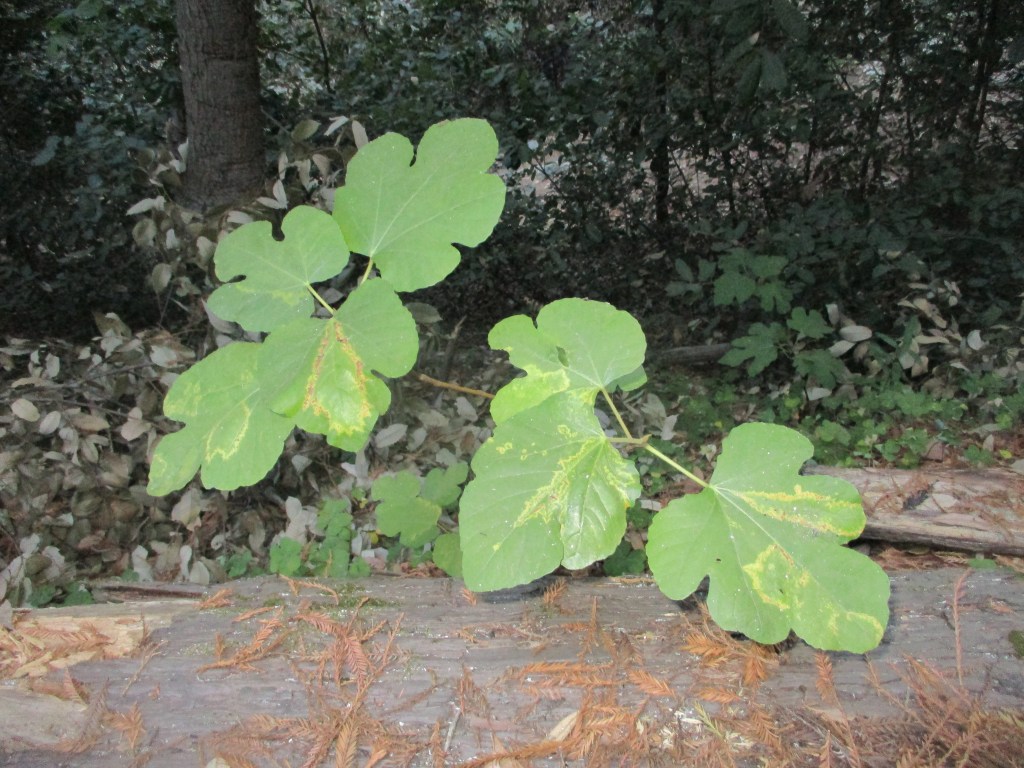
3. Fig stock trees did not even wilt! The stock tree in the background to the right is one of the culturally significant cultivars of the Santa Clara Valley. I believe it is a ‘Honey’ fig of some sort. I should remove all the tan oaks and their many offspring from this site, both to decrease combustibility, and also to increase sunlight for the stock trees and other desirable vegetation here.
4. Stumps of burned tan oak saplings are already regenerating on another property. They do so very efficiently after fire. They will be combustible before the end of fire season of next year.
5. A neighbor lived here. Ironically, all that remains of his home is the unburned firewood to the left. Because the home was an old non-compliant lumberjack’s cabin, replacement is unlikely.
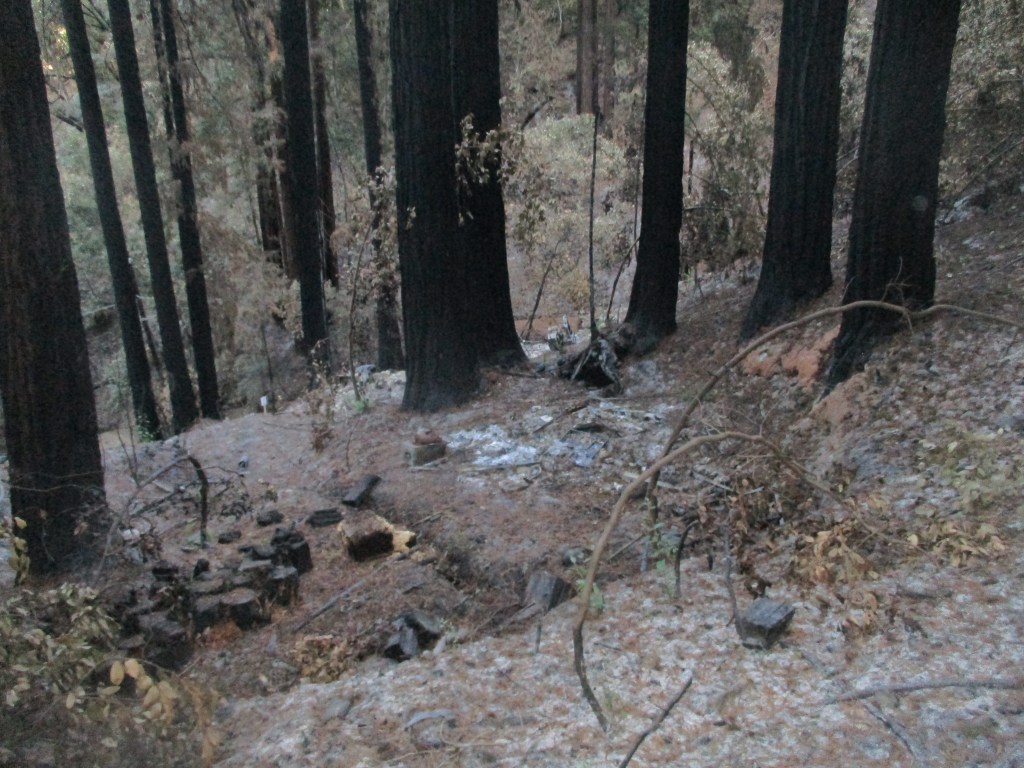
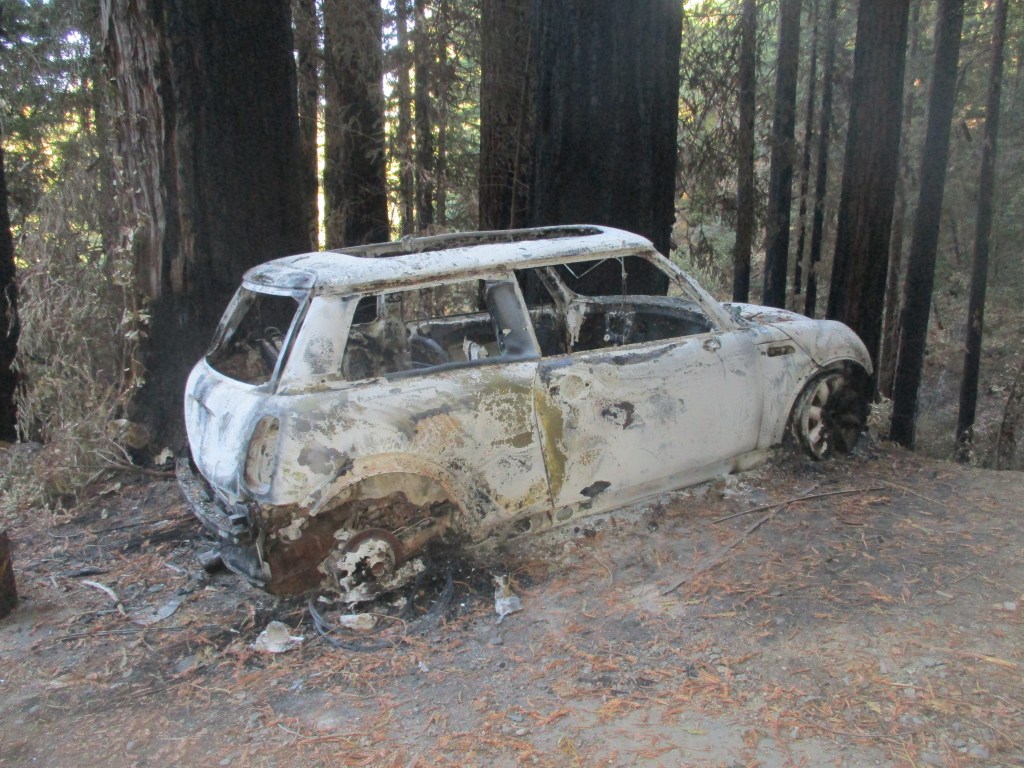
6. This is what remains of the same neighbor’s car. He must have been away prior to evacuation, like I was, but without the car. This was directly across the road from unburned vegetation.
This is the link for Six on Saturday, for anyone else who would like to participate:

 Because I sometimes go to Brent’s jobs sites while in the Los Angeles area, people sometimes ask me if I see many famous actors. Well, I try to stay out of everyone’s way, so rarely see anyone at the sites. If I see anyone famous about town, I would not know it. I do not watch enough television or movies to recognize many of them.


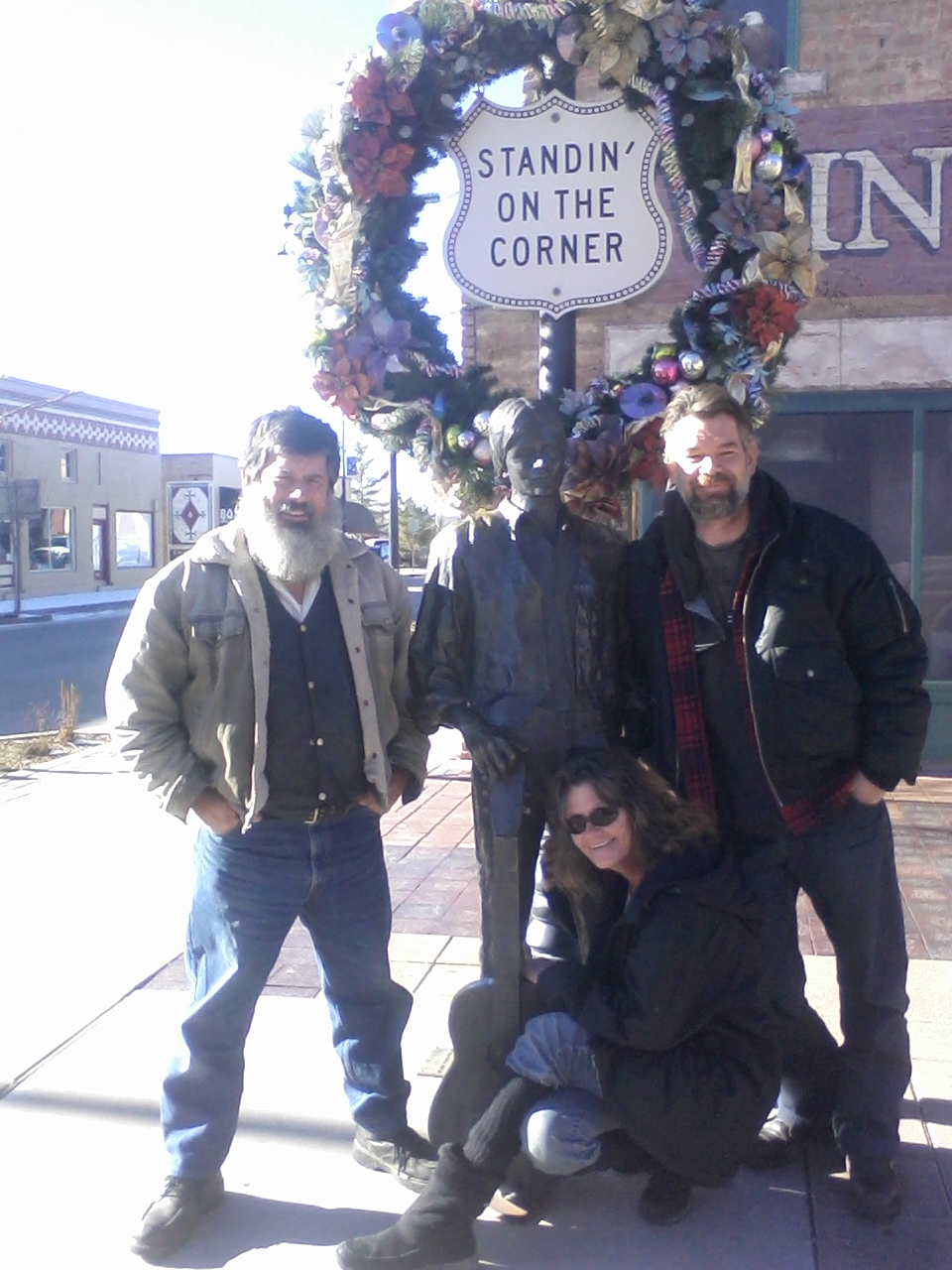 Standin’ on the corner in Winslow, Arizona, specifically on the corner of West Second Street and North Kinsley Avenue, there was this bronze statue of someone famous. I am still not certain who he was. A statue of Glenn Frey was added nearby later, and might have replaced this one, but I could not find much news about it. The new statue does not look anything like this statue, which was the only one there when we stopped to get our picture taken there five years ago on our way to Oklahoma.
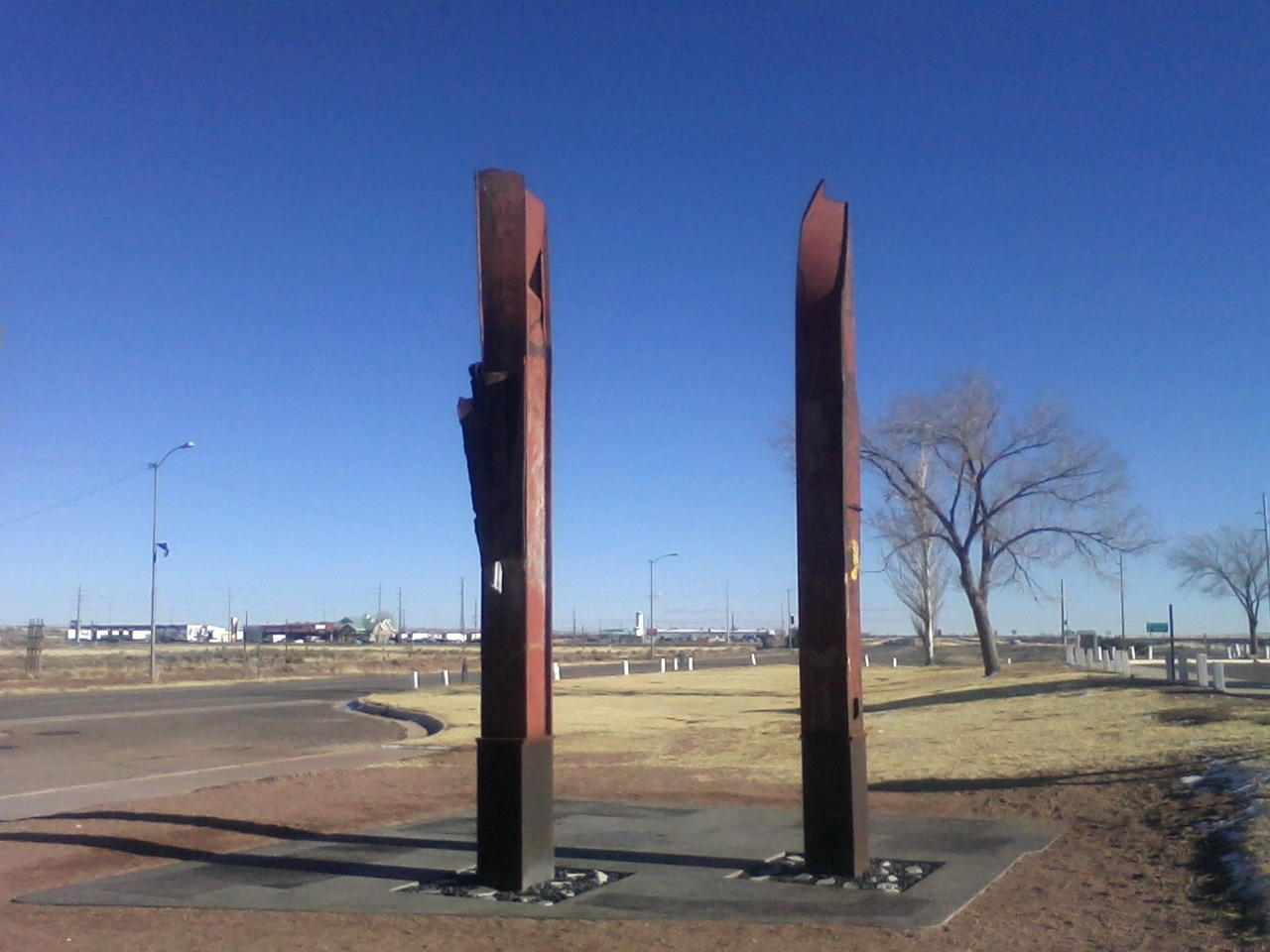 The main complaint about this Remembrance Garden is that there is no garden. Two steel girders from the destroyed World Trade Center stand vertically on pedestals within a concrete slab shaped like the site of the World Trade Center. The pedestals are set within squares of stones that correspond to the outlines and locations of the of the World Trade Center Twin Towers #1 and #2 within the World Trade Center Site. The outlines and locations of the other buildings of the World Trade Center are designated by darker concrete within the slab. There is no real synthetic landscape.