Blue Ribbon

This will be the first year in which I will not compete in the Jam & Jelly Competition at the Santa Cruz Mountains Harvest Festival. With all that has been happening (and preventing me from writing) I have been unable to cook any jelly and jam. Besides, there will be no Harvest Festival this year. Such crowds are not allowed; and Boulder Creek is only beginning to recover from the CZU Lightning Complex Fire.

via Blue Ribbon

What Is Killing The Box Elders?

Most of the box elders that died back when this article posted are rotting on the ground by now. Those that survived are doing will (although presently defoliating very prematurely because of the weather). Necrosis has been minimal for quite a while. Nature can be confusing.

via What Is Killing The Box Elders?

Six on Saturday: Urban Flight


The CZU Lightning Complex Fire continues to burn. Consequently, I had been unable to return home until just a few hours ago. My garden survived the abandonment better than expected. I will get pictures for next week. These pictures are from where I was in the Santa Clara Valley. I noticed a few features that I forgot that I disliked about urban situations. Of course, Rhody found something to appreciate about our situation there. He was in no hurry to return home.

1. Breeze in the silver maple should be appreciated on a warm day. While the fires are burning in the Santa Cruz Mountains just several miles away, an absence of breeze would be preferred.

2. Raindrops should likewise be appreciated. Unfortunately, there were no more than a few, and certainly not enough to slow a fire. They only indicated that more dry lightning was possible.P00829-2

3. Smoke was thicker over the Santa Clara Valley than I can ever remember. All those utility cables crowded by too many trees are normal though. I thought this picture was rather artistic.P00829-3

4. Fences are a bother too. This one shades lower branches of a nearby pear tree, that grew up with a shorter slat fence. The neighbor’s garage shows how close the homes are to each other.P00829-4

5. Soil is fortunately as awesome as it has always been in the Santa Clara Valley. It is unfortunate that so few of the more than a million who live here now will never bother to experience it.P00829-5

6. Rhody expressed his opinion of my request that he stay off of the sofa while here. Does the floral pattern of the upholstery qualify this as a horticultural subject? We all want to see Rhody! P00829-6

This is the link for Six on Saturday, for anyone else who would like to participate:

https://thepropagatorblog.wordpress.com/2017/09/18/six-on-saturday-a-participant-guide/


Coffeeberry

50826
Coffeeberry must be and ‘acquired’ taste. (Ick!)

Before the 49ers of the Gold Rush discovered that the seeds of the native coffeeberry, Rhamnus californica (or Frangula californica), make a nice uncaffeinated coffee substitute, the native American Indians were eating the fruit and using the leaves and bark herbally. The black berries supposedly make good jelly, but do not last long, and are too bitter while still red or greenish.

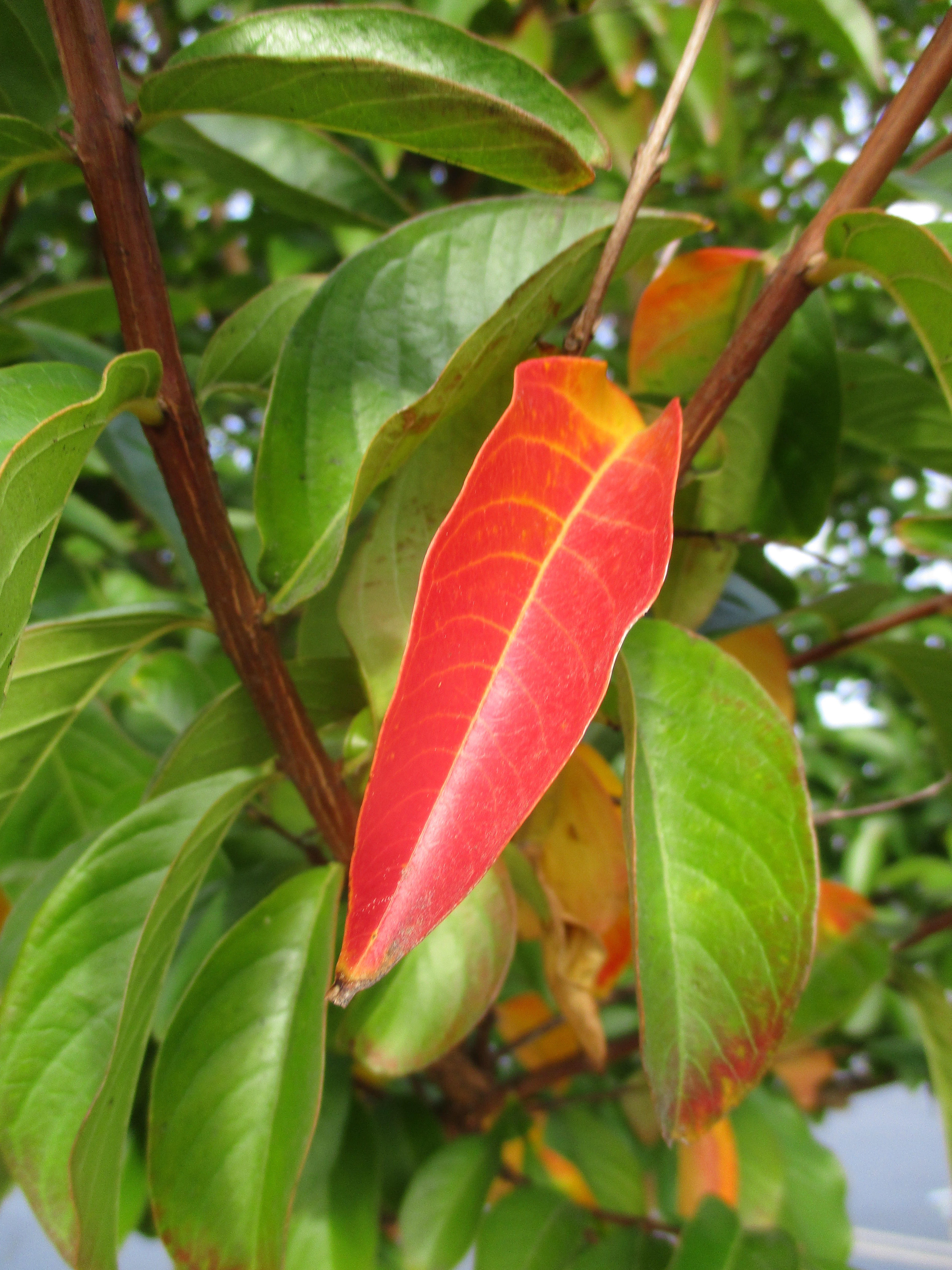
Before the birds get them, the quarter inch wide berries are somewhat colorful, but are not very abundant. The small clusters of tiny greenish yellow flower that bloom in spring are not much to look at either. The army green evergreen foliage is the main appeal. New stems are somewhat ruddy. Old stems and main trunks have smooth gray bark.

Large coffeeberry plants in the wild can get more than ten feet tall, with relatively open branch structure. Garden varieties stay smaller, with compact branch structure. ‘Eve Case’, which is probably the most popular variety, stays less than six feet tall, and is densely foliated. ‘Mound San Bruno’ is even more compact, with smaller leaves. ‘Seaview’ is a groundcover.

Jellin’ Like A Melon

50826thumb
This is one way to make the fruits of summer last.

Jelly and jam made from garden grown fruit affords more prestigious bragging rights than merely growing the fruit. Using unusual or disregarded fruit makes it even more interesting. It is not too much work, but involves a different kind of creativity. So many of us who are proficient in the garden are not so proficient in the kitchen.

Apricot, peach, plum, grape, blackberry and raspberry are the most familiar choices for jelly and jam. Nectarine can substitute for peach. Prune works like plum. Strawberry is rare only because not many gardens produce enough for a batch of jam. Sweet cherry is not as tasty as tart types, but is sometimes made into jam because it is relatively common.

Apple and pear are not often made into jelly because they have such mild flavor. However, they are sometimes mixed with other fruit to blend flavors, and because they can provide pectin. Quince has a richer flavor, and makes a traditional jam known as membrillo. Crabapple likewise makes a classic jelly. Apple can be made into apple butter.

Pectin is what puts the jell in jelly. Many fruits are naturally equipped with it. Apricot, peach and cane berries do not have enough. Plum, prune and grape initially have enough, but it breaks down as the fruit ripens, which is why jelly recipes without added pectin often designate that fruit must be firm or just ripening. Otherwise, pectin must be added to get jelly or jam to jell.

With added pectin, pomegranate, fig and rhubarb (which is actually a vegetable) can be made into jelly and jam. Orange and lemon marmalades do not need to be cooked as much with extra pectin. Sweet oranges (which is what almost all oranges are) lose flavor with cooking. (Sour oranges for marmalade are very rare here.)

Pectin also makes it possible to make jelly and jam from some rather unconventional fruit that may not be useful for much else. Elderberry, hawthorn, thimbleberry, rose hips (some varieties), Hottentot fig (the larger fruited type of freeway iceplant) and even coffeeberry and manzanita are all worth trying. Indian hawthorn and Catalina cherry have enough pectin to jell on their own.

Cucumber

00902
Cucumber can ripen in summer too.

Is it a winter vegetable or a summer vegetable? Technically, like many vegetables, cucumber, Cucumis sativus, is actually a fruit. It dislikes the locally arid warmth of summer, but also is intolerant of winter frost. It performs best through spring and autumn. Seedlings grown as winter ends should be ready for transplant after the last frost. Vines grown now produce a bit more before first frost.

However, in some gardens, some varieties of cucumber can remain productive all summer. Discolored older foliage is more unsightly than detrimental. Newer growth cascading from above might obscure some of it. Vines can climb trellises or over shrubbery. If vines sprawl over soil, the fruit will stay cleaner if set on leaves or newspaper. Regular harvesting promotes continued production.

Most cucumbers are classified as slicing, pickling or seedless cucumbers. There are many varieties within each classification. The most popular are only a few inches long, and harvested before maturity. The largest cucumbers are as long as two feet, and as wide as four inches! Hot weather unfortunately causes cucumbers to be bitter. Rich soil and regular irrigation promote better flavor.

Winter Vegetables Start In Summer

00902thumb
There are vegetables for every season.

It seems to be much too early for cool season vegetables while the weather is still so warm. Summer vegetables, which are also known as warm season vegetables, are still at their best. Most will continue perhaps until frost. Yet, months ago, they also started prior to their growing season. At that time, cool season vegetables, which are also known as winter vegetables, were still producing.

Although it really is too early for winter vegetables to grow in the garden, it is time to plan for them. Those of us who prefer to grow varieties of winter vegetables that are not likely to be available in nurseries should get their seed now. In only a few weeks, it will be time to sow the first phase of seed for carrots and beets directly into the garden. By October, it will be time to sow seed for peas.

Broccoli grows slowly from seed. Whether it goes directly into the garden, or into flats for later transplant, broccoli seed should get sown by about now. If the preferred gardening style allows for it, seed for winter vegetables can be sown below old summer vegetable plants. The seed for winter vegetables can germinate and start to grow as summer vegetables finish and vacate the garden.

Cauliflower and cabbage seed want to germinate and start growing shortly after broccoli, within the next few weeks. However, seedlings of the more popular varieties of cauliflower and cabbage, as well as broccoli, will be available in nurseries for later planting. Lettuce, spinach and kale do well from late seedlings, or seed sown after cauliflower and cabbage, along with carrots and beets.

Root vegetables, like carrot, beet, radish, turnip, rutabaga and parsnip, grow from seed, sown directly.

Eventually, some of the warm season or summer vegetables will need to relinquish their space to winter vegetables. Most will finish by that time anyway. Those that stay long enough will succumb to frost. Summer vegetables can stay latest where subsequent phases of winter vegetables will later (not yet) replace an early phase. Subsequent phases begin production as early phases finish.