Indian Hawthorn

00422
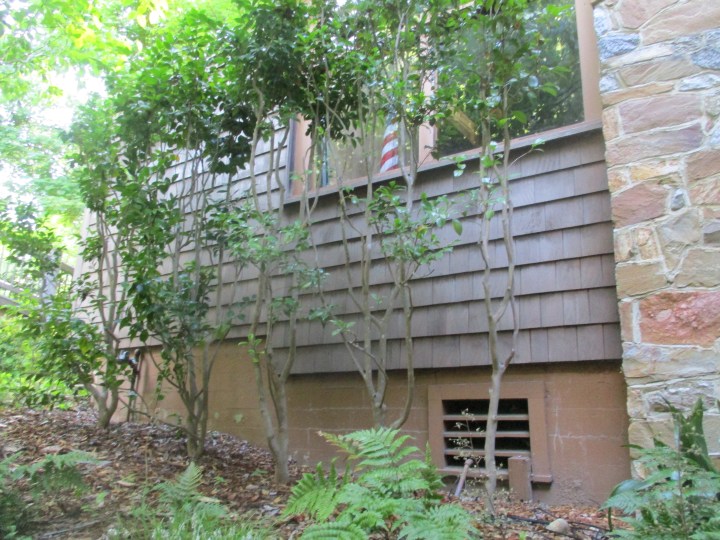
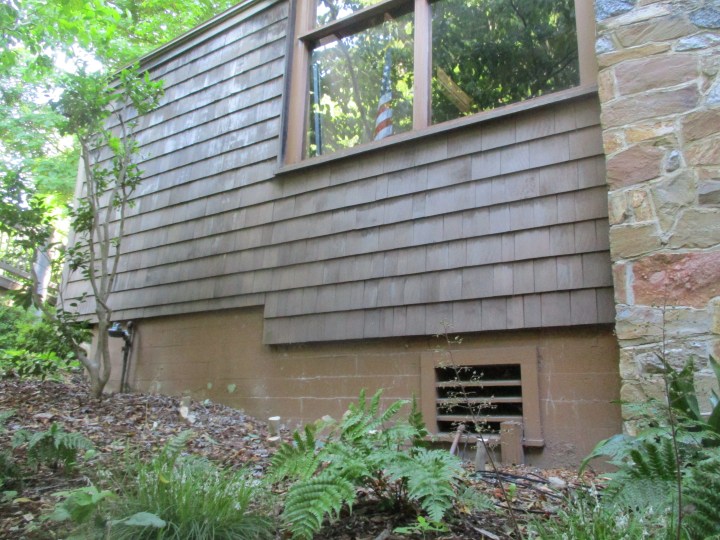
Indian hawthorn is an early bloomer.

Here on the West Coast of California, Indian hawthorn, Raphiolepis indica, was formerly popular as a foundation plant. The compact hollies that were used as such in the East never became very popular here. Back when rain gutters were prohibitively expensive, foundation plants diffused water as it fell from roofs. This limited erosion, and also inhibited splattering onto lower parts of walls.

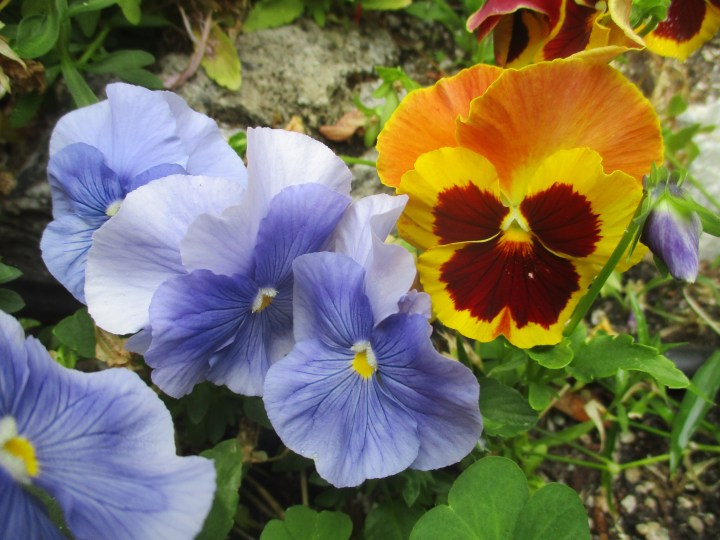
Modern Indian hawthorn cultivars are now appreciated elsewhere in landscapes for profuse pink bloom in late winter or early spring. Sporadic bloom might continue through summer, with a minor secondary bloom phase in autumn. The most compact cultivars display slightly richer pink bloom, followed by mildly bronzed new foliage. At least one cultivar exhibits barely blushed white bloom.

‘Majestic Beauty’ is a cultivar that might be a hybrid with loquat. It can grow as a small tree more than ten feet high and wide. Other cultivars do not get half as big. Most get less than four feet high. They work nicely as low and plump hedges, but should be shorn after bloom. Full sun exposure and occasional irrigation should be sufficient. They are popular, because they are so undemanding.

Cultivar Is A Cultivated Variety

00422thumb
Most cultivars need to be cloned.

A plant ‘variety’ is a group within a species that exhibits distinguishing characteristics. A ‘cultivar’ is simply a cultivated variety. The first five letters of ‘cultivated’ merged with the first three letters of ‘variety’ to form the word ‘cultivar’. A variety should be self perpetuating to some degree, and may be naturally occurring. A cultivar perpetuates by unnatural means, and would go extinct otherwise.

Of course, the distinction between variety and cultivar is not always so obvious. Varieties of nasturtium were selected from plants that displayed desirable qualities. Seed of these varieties grows into plants that display the same qualities. However, without continued selection, some varieties eventually revert to a more feral state in only a few generation. They are not truly self perpetuating.

Most hybrid tomatoes are unable to perpetuate themselves naturally. Their seed is either not viable, or is very genetically variable. Genetically variable seed grows into plants that are very unlikely to produce fruit that is comparable to that which produced their own seed. Nonetheless, hybrid tomatoes grown from original (primary generation) seed are generally varieties rather than cultivars.

The distinction might be that they grow from seed. A plant that is cloned rather than grown from seed is a cultivar. Cloned plants can be grown from cutting, layering or grafting onto understock, but are genetically identical to the original. Some rare camellias grown now are genetically identical copies of original cultivars that were developed centuries ago. Their seed would not be the same.

Some cultivars developed from selective breeding. Others were random but appealingly distinctive plants in the wild or even in landscapes. Many originated as ‘sports’, which are mutant growths of otherwise normal plants. For example, some plants, on rare occasion, produce stems with variegated foliage. Cuttings taken from such variegated stems became popular variegated cultivars.

Seed from a variegated cultivar is very unlikely to produce more variegated plants.

Gopher It!

P00412
Honey badger don’t care. Neither does the gopher who did this.

Deer do not eat all plants. There are a few that are toxic to them. There are more that deer simply dislike. With a minimal bit of research, it is not difficult to find a few lists of plant species that deer are supposed to avoid. The problem with such lists though, is that deer do not read them. Only toxic plants are reliably safe from deer.

It would not be so bad if only deer were a bit more cooperative. They would be welcome in gardens if they ate only weeds that no one wants anyway. We all know that they can eat weeds, they just choose not to do so while they are in our gardens.

For that matter, gophers would not be such a problem if they ate only weeds, and aerated only soil that needs it. Instead, they seem to target the most important plants they can find, and excavate primarily in lawns. There is no effort to cooperate.

For as long as people have been growing vegetation, whether as agricultural commodities or in landscapes, people have been competing with wildlife of one form or another, or several others. Wildlife is no more cooperative now than it was many thousands of years ago. Some animals are even less cooperative than their ancestors were. Some are downright defiant!

Gophers have been known to push traps out from their tunnels, without springing the traps. Some will emerge from their subterranean tunnels to step over the tops of root cages that are designed to exclude them, just to get to the roots within. The gopher associated with the excavation seen in the picture above was not so defiant, but was certainly undeterred.

The foliage at the center of the picture is gopher purge. Although not planted here intentionally, it used to be planted around vegetable gardens to deter gophers. It has a caustic sap that is very irritating to gophers if they try to excavate through the roots. However, the picture clearly shows excavation to the left, to the right, and behind the gopher purge.

Getting Behind

P00328-6
Rhody misses his work. (This picture is from two weeks ago.)

All this time off from so much of my work has been great! I am developing a new vegetable garden where there had been only trash and bramble. I get to plant grapevines and a few fruit trees. When finished with that, I will work on grooming all the canned stock in the storage and recover nursery.

I do miss work though. It is also a bummer that while the landscapes are at their best and most prolific with bloom, there is no one here to see it.

Furthermore, there is concern with how the landscapes are neglected. Fortunately, most of what is out there does not even know that it is being neglected. Also fortunately, someone is allowed to mow the vast lawns, since they are the majorly important features that would not survive neglect for long.

Other facilities that I am not involved with are more important now. There is less wear and tear without anyone here. Consequently, there is less need for maintenance. Nonetheless, issues come up. The most important issues get dealt with. Some of the more minor issues get deferred.

Some of the guys of the Maintenance Crew come by occasionally as they work on projects around their homes. Some use the tools here. Some just drop of trash. Of course, Rhody thoroughly exploits such opportunities to catch up on some of his neglected work. He is very career oriented, and takes his work very seriously. The crew helps him with his tasks any way they can.

There is an old whiteboard in an office that has not been used since a system that uses telephones was adopted a long time ago. The tasks listed (below) for Allan were there more than two years ago. Jim’s tasks were completed and erased prior to that, but not added to . . . until recently. The guy who previously used the column to right no longer works here. It is Rhody’s now.

P00411K
We all have quite a bit of work to catch up on.

Six on Saturday: TWIGS!


The Belmont Rooster posted pictures of red mulberry that really got my attention back on February 15. The trees are native on his farm, but not here. I only remember them as decoy trees that provided berries to distract birds from other fruit as it ripened in the orchards. Of course, those that I remember were planted. I neglected to get seed or cuttings from them while in Oklahoma. I have been craving them since.

1. $8.85! The Belmont Rooster spent some major funds to get this package to me. It must be important. I already know it is very important to me! I have been wanting this for seven years. P00411-1

2. TWIGS! I got two bundles of twigs! These are not just any twigs though. They are from red mulberry, Morus rubra. One bundle is from a female tree. The other is from a male pollinator.P00411-2

3. Cuttings were processed from the twigs. There are a dozen female cuttings, and sixteen male cuttings. These are male. I was informed earlier that the female twigs were starting to foliate.P00411-3

4. Plugged cuttings are not much to look at. Rooting hormone was applied, but is not visible on the bottom ends. Only a few popping buds are barely visible in the female cuttings to the right.P00411-4

5. White mulberry was the only mulberry that I was growing here. I got the cuttings for it from a client’s tree. I do not know what cultivar it is. I have not been very impressed with it so far.P00411-5

6. The Belmont Rooster sent these cuttings from Missouri, just to the left of the center of this picture. All of Missouri is within the native range of red mulberry, which is designated by green.P00411-6

This is the link for Six on Saturday, for anyone else who would like to participate:

https://thepropagatorblog.wordpress.com/2017/09/18/six-on-saturday-a-participant-guide/


Aleppo Pine

50408
Aleppo pine thinks it is native.

From coastal regions around the Mediterranean Sea, the Aleppo pine, Pinus halepensis, came to be right at home on and near the coast of California. Once established, it can survive quite happily on rainfall. Trees that get too much water can actually get too heavy with foliage, and may eventually get disfigured if limbs break.

Shade under an Aleppo pine is not too dark. The light and sometimes yellowish green foliage is rather wispy, comprised of thin paired needles that are about three inches long. The sculptural trunks almost always lean to one direction or another, and often divide into multiple trunks once they grow out of reach. Bark is light gray with light brown striations.

Young trees can get big rather fast. They tend to be somewhat conical, or at least upright, until they get to be about forty feet tall. Then, they tend to shed lower stems and develop irregular branch structure with rounded tops as their growth rate slows. Only a few old trees in ideal situations slowly get to seventy feet tall. Seedlings sometimes appear where they are not wanted.

Evergreen Trees Have Their Place

50408thumb
Evergreens are sometimes the best choice.

Deciduous trees that were bare all winter are now foliating and making shade. They sure will be appreciated when the weather gets warmer through summer. They will defoliate next autumn, in time to let warming sunlight through while winter is cool. Their lifestyles are naturally compatible with those of the people who live with them. They really have the system down.

Evergreen trees are good at what they do as well. They obscure unwanted views and provide privacy all year. If given adequate space and located far enough away from the home and neighboring homes, their shade should not be a problem. Like any other feature in the landscape, properly selected and strategically placed evergreens are quite functional.

There are certainly more to evergreen trees than the coniferous (cone-bearing) evergreens like pine, spruce, cypress, cedar and juniper. Any tree that retains foliage throughout the year is evergreen, including camphor, Southern magnolia, carob, California pepper, coast live oak, fern pine, all palms and all eucalypti, just to name a few. There are really too many to list.

Larger modern homes on smaller parcels are a bit more challenging to evergreen trees than more traditional homes that have more space around them. Average fences do not maintain privacy for upstairs windows that are too close to neighboring homes. However, there is less space and sunlight for trees, and additional shade can be a bother for lower windows.

It seems that smaller trees are often the best fit for bigger homes. Sometimes, a large evergreen shrub, like one of the various pittosporums, can do the job of an evergreen tree, but fits better where space is limited. As silly and passe as they seem to be, Italian cypress are narrow enough to fit into tight spots, at least until they get too big.

Contrary to popular belief, most evergreen trees are messier than most deciduous trees. They drop only minor volumes of foliage, but they do so throughout the year. Deciduous plants drop most or all of their foliage within a limited time about autumn. Only those that drop flowers, fruit or both in spring and summer are messier than evergreens.

Horridculture – Going To Pot

P00408-1
Would these hanging potted plants even be noticeable if they were not circled?

Container gardening is overrated. Perhaps not so much now as it had been while it was more of a fad a decade or so ago, but it is still overrated nonetheless. Most plants are happier in the ground than they are in confinement. They want to disperse their roots freely to where the goodies are, and not contend with the unnatural temperature fluctuations of contained medium.

There are only a few exceptions for which containment of potted plants is an advantage. Houseplants are the most obvious exceptions. Also, plants that are sensitive to frost can be relocated to sheltered situations for winter if contained. Potted orchids and other flashy bloomers can be prominently displayed while blooming, and then returned to utilitarian locations as they finish.

The justification for the hanging potted plants in the picture above escapes me. Does anyone besides me even notice that they are there? They are hung too high for anyone on the sidewalk to appreciate them, or actually see the flowers that are visible from above. Those on the opposite sidewalk can see them, but only at a great distance across all those lanes of El Camino Real.

Those in cars on the road see less of them than pedestrians. Even those who happen to look up while riding past in convertibles with the tops down will see only the undersides, and only at significant speed. These potted plants would be in the way of the sidewalks if they were lowered to be more visible. No matter where they are, they are not proportionate to the broad road.

Maintenance of the flowers in these many hanging pots was quite a bit of work. The annual flowers needed to be replaced a few times a year, or more if ruined by the weather. Without automated irrigation, someone needed to manually water them, which left puddles on the sidewalks that were more noticeable than the highly hung pots above.

As if all these hanging pots were not already tacky enough, the flowers within were eventually replaced with . . . fake flowers, as seen in the picture below.

P00408-2
Just when it could not get any tackier; they are fake!

Broom

00415
French broom seems to be indestructible.

Shortly after silver wattle finishes blooming up high, any of four species of broom begin blooming down low. Brooms and silver wattle often naturalize together. All bloom with the same delightfully brilliant yellow. The four brooms are French broom – Cytisus monspessulana, Scotch broom – Cytisus scoparius, Portuguese broom – Cytisus striatus and Spanish broom – Spartium junceum.

Sadly, none are desirable species. All are exotic weeds. They are only a topic for gardening because they are so aggressively invasive. Not only do they overwhelm and displace native species, but they also enhance soil nitrogen to promote the growth of other exotic weeds! They are unpalatable to deer, and are not bothered by insects or disease. Furthermore, brooms are combustible!

It is best to enjoy their cheery bloom from a distance, where they grow wild where they really should not. The various species tend to dominate distinct regions, with some degree of mingling. Big specimens can get eight feet tall, but do not live long as they are replaced by herds of seedlings. French broom is the only evergreen species; but any can defoliate in response to hot dry weather.

Exotic Species Can Become Naturalized

00415thumb
Naturalized Himalayan blackberry is detestably aggressive.

Every palm tree in local landscapes is exotic. Simply put, all palms are originally from somewhere else. The desert fan palm, the only palm that is native to California, came from isolated colonies in desert regions many miles away. In fact, most plants in common landscapes are exotic. Landscapes composed of Californian plants likely include some plants from other regions of California.

With few exceptions, exotic plants are not a problem. However, some of those few exceptions have become very serious problems. Himalayan blackberry, blue gum, silver wattle, pampas grass, giant reed and broom are some of the more notorious examples. They naturalized to become prolific and aggressively invasive weeds. Some are more common than natives in many situations.

Naturalized exotic plants such as these are problems for local ecosystems, even if they do not affect refined landscapes. They compete with native plant species for limited resources, space and pollinators. A lack of pathogens from their homelands can be a distinct advantage. They alter the lifestyles of some of the native fauna. Some enhance the combustibility of the forests they inhabit.

The justifications for importing exotic species are as varied as the species themselves are. It might have been for lumber, forage, fruit, or vegetable production. Giant reed might have arrived here as packing material for cargo from southern Asia. Nonetheless, most naturalized exotic species, including the most aggressively invasive, came here simply for home gardening and landscaping.

Realistically, of all the countless exotic species that came here during the past few centuries, very few naturalized. Fewer are now aggressively invasive. Some with potential to naturalize may not have yet been able to escape the urban situations they inhabit. The problem now is that there are so many more exotic species readily available from all over the World than there has ever been!

Online marketing facilitates procurement of exotic and potentially invasive plant species from other regions, with minimal regard to regulation of such commodities.