Six on Saturday: Perks


It has been two year since I started my ‘part-time temporary’ job. I work here only three days weekly, and only if I can. That is what makes it ‘part-time’. After two years, I am not sure if it still qualifies as ‘temporary’. I do intend to eventually return to my normal work. However, this part-time temporary job will not be easy to leave. It is so excellent in so many ways! Besides, there are so many incredible perks!

1. Scenery is incredible. The redwoods in the background to the left are on the other side of a deep ravine where Bean Creek flows through. All the scenery here could not fit into one picture.P00208-1

2. Native flora in the forest is incredible. Most of what is in the landscapes is native flora too, or garden varieties of native flora. There is no transition between the forests and the landscapes.P00208-2

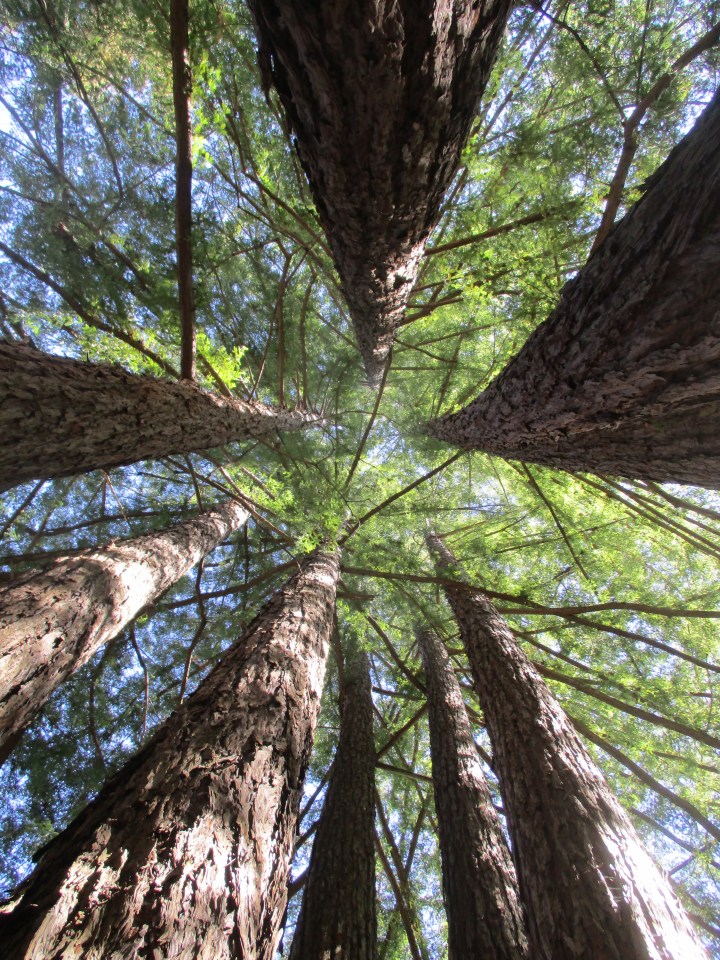
3. Redwoods are incredible. What is not obvious in the picture is that these grand wild redwoods with wild bay laurels to the right, are just beyond the landscaped perimeter of a vast lawn.P00208-3

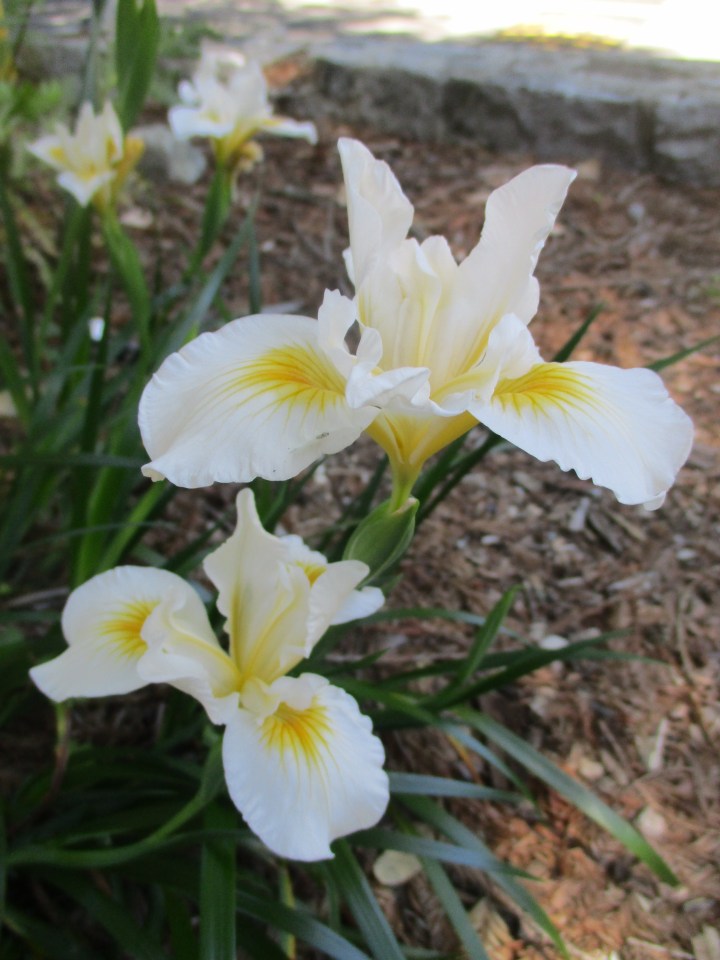
4. Exotic flora is incredible too, but compatible with native flora. The simple landscapes are both horticulturally correct and environmentally sensible. Daffodil naturalize but are not invasive.P00208-4

5. Redwoods are incredible. Did I mention that yet? They really are grand. That is why they are the Official State Tree of California. They never get old, but they live for thousands of years.P00208-5

6. The crew that I work with is the most incredible perk. I should write an article about them. Oh, I already did. I have no picture of them. There are too many for Six on Saturday anyway.P81010

This is the link for Six on Saturday, for anyone else who would like to participate:

https://thepropagatorblog.wordpress.com/2017/09/18/six-on-saturday-a-participant-guide/


Orange Clock Vine

50204
It is time for orange flowers.

Since it rarely gets cold enough here to freeze the foliage and stems, clock vine, Thunbergia gregorii, provides very orange flowers throughout the year, and will bloom more profusely in summer. It is very similar to the more traditional black-eyed Susan vine, but the flowers lack the prominent black throats. Relative to most vines, orange clock vines is rather docile. The wiry vines are happy to climb to the height of first floor eaves, but do not go much farther. Without support, the vines grow as small scale ground cover.

New plants prefer full sun exposure, even if they later choose to spread into partial shade as they grow. Shade inhibits bloom. Once established, orange clock vine does not need much water, and can actually survive in abandoned landscapes. Overgrown or neglected vines can get weedy in spots, especially if not regularly watered. Fortunately, they are easily renovated by severe pruning at the end of winter. Even if pruned almost to the ground, vigorous vines regenerate very efficiently.

Deciduous Fruit Trees Need Pruning

00122thumb
Dormant fruit trees will bloom soon.

Deciduous fruit trees have no business in a low maintenance landscape. They need as much specialized pruning while dormant in winter as roses need, and on a much larger scale. Neglected trees get disfigured by the weight of their own fruit. Disease proliferates in their thicket growth that develops without pruning. Overgrown trees produce most of their fruit where no one can easily reach it. Fruit that can not be harvested attracts rodents.

Of course, deciduous fruit trees are certainly worth growing if they get the specialized pruning that they need. Pruning concentrates resources so fewer but better fruits develop. Fruit bearing stems are better structured to support the weight of their fruit, and lower so that the fruit is easier to reach. Pruning also promotes more vigorous growth, which is less susceptible to disease and insects.

Now that it is February, and the weather has been unusually warm, deciduous fruit trees that have not yet been pruned will need to be pruned very soon. They will be sensitive to such major pruning once they start to bloom. The pruning is too specialized to explain here in just a few sentences. Fortunately, Sunset publishes an very detailed book about “Fruit Tree Pruning” that explains how to prune each of the different fruit trees. Pruning will be more extensive each year as trees grow, but also becomes more familiar.

Stone fruits like apricots, plums, prunes, nectarines and peaches (that have hard seeds known as stones), need the most severe pruning. Their fruit develops on stems that grew last year. These stems should get cut short enough to support the weight of the fruit expected to develop next year. The ‘four Ds’, which are dead, dying, damaged and diseased stems, should get pruned out as well. Cherries and almonds do not get pruned as much because their fruit is so lightweight; and out-of-reach almonds simply get shaken down anyway.

Apples and pears are pomme fruits that need similar pruning, but also produce on stunted ‘spur’ stems that should not be pruned away. Spurs may continue to be productive for many years. Figs, persimmons, pomegranates, mulberries and grapevines all need their own specialized styles of pruning.

Horridculture – Skipping Ahead

January 17 is as far as I have gotten with the backlog of articles from blogs that I follow. I am now two and a half weeks behind schedule. Articles are old news by the time I see them. I have been trying to catch up for weeks or maybe months, but have instead been getting farther behind. The video above is from the article I posted back then. There has been no rain since then.

The video also looks like what I feel I am doing to that backlog of article while I skip ahead to current articles beginning with February 5. Flushing them like this seems so negligent. I feel so obligated to read the articles of blogs that I follow. That is why I follow them. However, if I do not flush the backlog, articles that are current now will also be old news by the time I get them.

I have been reading some of these blogs so regularly that those who write them sometimes include notes to me within the contexts of their articles. Sometimes they comment on something that they think I would be particularly interested in. Sometimes they ask questions that they think I might know the answers to, or just ask for a bit of advice. Flushing all that is just wrong.

I have no choice. I have no time for it all. I write my brief gardening articles for more small newspapers than I can keep track of. I still work at a part-time and temporary job that involves maintenance of landscapes and small scale arboriculture because I can not bear to leave! I intend to eventually return to work at nursery production, but have been too overworked to do so.

Meanwhile, former clients and clients of former clients continue to contact me in need of services that I can no longer provide. I can find no one to refer them to for comparable services. All of the best arborists and horticulturists are retired, deceased or too busy (compensating for the lack of those of us who are retired or deceased) to accommodate more work. It is saddening.

On top of all that, I am supposed to be canning cedar trees and plugging sycamore cuttings for street trees in Los Angeles a few years from now . . . and maybe working in the garden?!?!

California Sycamore

00212
California sycamore is a stately native.

California sycamore, Platanus racemosa, is a riparian species that wants to be a chaparral species. It seems to passively mingle with valley oaks and coast live oaks in chaparral regions. Yet, it stays close to rivers, creeks, arroyos, or low spots where water drains from winter rain. California sycamore does not follow waterways far up into forests though, as if it dislikes the deeper shade.

In urban situations, California sycamore is best for large scale landscapes, such as parks or medians of broad boulevards. It is complaisant enough for smaller landscapes, and tends to disperse roots too deeply to damage pavement. However, it grows so fast and so very big. Mature trees get to a hundred feet tall. Massive trunks are picturesquely irregular, with mottled tan and gray bark.

All the deciduous foliage generated by such large trees is generous with shade for summer, but stingy with color for autumn. Defoliation starts early and continues late, so is messy for a long time. Foliar tomentum (fuzz) is irritating to the skin, and much worse if inhaled. Anthracnose often deprives trees of their first phase of foliage in early spring. Although harmless, it makes another mess.

Pollarding And Coppicing Appall Arborists

00212thumb
Pollarding is disturbingly severe but effective.

Very few arborists in America condone the extreme pruning techniques known as pollarding and coppicing. Both techniques essentially ruin trees, and deprive them of their natural form. Affected trees likely require such procedures to be repeated every few years or annually. Otherwise, they are likely to succumb to resulting structural deficiency. Restoration of such trees is rarely practical.

Pollarding is severe pruning to remove all except the main trunk and a few or perhaps several main limbs. Coppicing is even more severe, and leaves only a stump. Both are done while subjects are dormant through winter. Most or all new growth that develops is spring is concentrated around pruning wounds of the previous winter. Some coppiced stumps generate growth from the roots.

If pollarded or coppiced annually, all growth that developed during the previous season gets pruned cleanly away to where it grew from since the previous procedure. Distended ‘knuckles’ develop at the ends of pollarded limbs or coppiced stumps as the pruning is repeated for a few years. ‘English’ pollarding leaves a well oriented stub of any desired length to slowly elongate each knuckle.

Pruning wounds should be as flush to each knuckle as possible, without intrusive stubble. The many small pruning wounds left on each distended knuckle will compartmentalize (heal) efficiently as new growth develops during the following season. Pruning below a knuckle might seem to be more practical, but leaves a single but big wound that could decay before it gets compartmentalized.

Delaying pruning for a few years creates bigger wounds, and allows innately structurally compromised stems to get heavy.

Pollarding and coppicing were developed a long time ago to produce kindling, fence stakes, cane for basketry, and fodder for livestock, as well as silkworms. Nowadays, it is done to contain big trees, enhance the size and color of leaves, produce juvenile foliage, produce colorful twiggy growth, or prevent unwanted bloom or fruit. Not many trees are conducive to such severe techniques.

SODS?

P00202
Flagging (sudden necrosis of distal foliage) used to indicate the beginning of a sudden end.

Phytophthora ramorum is the pathogen that initiates Sudden Oak Death Syndrome, which is known simply as SODS. Monarthrum scutellare, which are known as ambrosia beetles, and are the secondary pathogen associated with the syndrome, infest and kill tanoak and coast live oak that are infested with Phytophthora ramorum, about as quickly as symptoms are observable.

Hypoxylon thouarsianum is a tertiary but merely opportunistic pathogen associated with the syndrome. By the time it gets established within galleries excavated by the ambrosia beetles, the affected trees are almost completely necrotic. That first ‘S’ in SODS is there for a reason. It is an efficient process. Death occurs too suddenly for affected trees to drop any of their leaves!

Each of these three pathogens causes distinct symptoms. Phytophthora ramorum causes trees to bleed black tar-like fluid, and causes tanoak to exhibit foliar flagging as seen in the picture above. Monarthrum scutellare expels finely textured frass from the galleries it excavates into infected trees. Hypoxylon thouarsianum produces distinct small and black fruiting structures.

In the past several years though, Sudden Oak Death Syndrome has often been a bit less than sudden. There are a few tanoaks here that have exhibited foliar flagging for a few consecutive years, without any bleeding from the trunk or infestation by ambrosia beetle. Some coast live oaks have exhibited minor bleeding, but likewise have not become infested by ambrosia beetle.

It is as if the ambrosia beetle is no longer proliferating as it had been. It actually seems to be rather scarce. Trees that were expected to succumb suddenly to ambrosia beetle infestation are succumbing slower to infestation of only Phytophthora ramorum. The process is variable, so might have potential to kill some trees rather suddenly, but may take a few years to kill others.

Could some possibly survive?

Vegetation Exploitation

P00201K
If a tree falls in a forest, . . . it might get recycled.

Exploitation of the vegetation here involves so much more than collecting seed from old bloom, dividing overgrown perennials, or processing cuttings from pruning scraps. It goes beyond the reassignment of lauristinus, canna, African iris, deodar cedar and perhaps others that I wrote about earlier. Flowers, fruits, vegetables and herbs are mundanely obvious assets.

The landscapes and forests here do so much more than beautify and provide shade. When a tree falls in a forest (and makes a sound even if no one is there to hear it), it might get processed into firewood or lumber. Some of the foliage that falls in landscaped areas goes to the compost piles. Even debris that gets removed from here gets recycled as greenwaste somewhere else.

Of course, we can not recycle, reuse, repurpose or otherwise make use of everything that falls out of the forests and landscapes. There is simply too much of it. That is how the ecosystems of the forests recycle naturally. Exotic plants in the landscapes do not know that they are exotic, and try to behave as they would within their respective ecosystems. Nature is innately messy.

Trees that fall across hiking trails merely get cleared from the trails, and left to decompose out in the forests. Even potentially useful firs, pines and redwoods can not be extracted feasibly. Their big trunks might remain where they fell, with only a section cut out where a trail goes through. The forests do not mind. Their ecosystems know how to make use of such biomass too.

This fallen fir tree happened to land squarely on top of a few steps in a trail that is cut into a steep hillside. As you can see, it was not exactly cleared completely from the trail, but instead replaced the steps that it destroyed.

Six on Saturday: Sow The Seed Of Doubt


There is serious doubt about the practicality of collecting seed that there is no use for. We have no time to sow any of it properly. Some gets tossed unceremoniously where it would be nice if just a bit of it grows and blooms next year. Such folly is better than the guilt of simply discarding all that seed, even if we get more of something we do not want.

1. Echinacea purpurea – coneflower – Deadheading left me with all these dead heads of seed. I have no use for all this seed; but a neighbor is happy to scatter it where some might grow.P91228-1

2. Lychnis coronaria – campion – This is all the seed I got, in a small pill can. Most was left in the landscapes to disperse where already established. This bit of seed goes to new territory.P91228-2

3. Lunaria annua – honesty – This is just one of several hard hat fulls. Seed already sifted down, leaving empty frass on top. I lack an article to link to, so linked to someone else’s article.P91228-3

4. Aesculus californica – California buckeye – This is what is starting to grow from four big seeds that I could not bear to discard earlier. Now there will be four baby trees without a plan.P91228-4

5. Pelargonium X hortorum – zonal geranium – Not all of this folly is from seed. Scrap from pruning geraniums got processed into more cuttings than we will plug. These are the last few.P91228-5

6. Rhus lanceolata? – prairie sumac? – There is even more folly in canning feral seedlings of this unidentified sumac. It is about as sensible as canning the four sweetgum to the upper right.P91228-6

This is the link for Six on Saturday, for anyone else who would like to participate:

https://thepropagatorblog.wordpress.com/2017/09/18/six-on-saturday-a-participant-guide/

Weeping Bottlebrush

50128
Weeping bottlebrush blooms whenever it likes.

It is no wonder that it takes many years to get to fifteen feet tall, and may never get more than twenty feet tall. Weeping bottlebrush, Callistemon viminalis, may grow less than a foot a year, but seems to hang downward two feet. Because the stems are sculptural, and the bark has an appealingly rough texture, most weeping bottlebrush trees are grown with multiple trunks. The brick red bottlebrush flowers that bloom sporadically at any time of the year are more abundant early in summer. Established plants bloom more colorfully with a bit of water, but can probably survive quite a while without it. The evergreen leaves are narrow and mostly less than three inches long. Weeping bottlebrush needs good sun exposure.