While You Were Out

P00516K
It’s a jungle out there!

Our work is the sort that could potentially continue as essential. Distancing is not a problem for us, since we generally work individually, and there are no guests here. However, work needed to be discontinued due to lack of revenue. A conference center can not generate revenue without big groups of guests. Even when groups can return, many potential guests can not afford to.

The chronology of this situation should have been documented more efficiently. We had been unable to work here for several weeks. I do not remember how long it had been. Work resumed two weeks ago, and can continue for six more weeks, for a total to two months. We will start no new projects during this time, but will primarily try to catch up on what was neglected earlier.

Salvage and preparation for resumption of neglect are presently the priorities. This entails vegetation management after weeds had been left to grow wild during their most active season. It is extreme. Most weeds either had dispersed their seed, or did so as they got removed. This is not much of a problem for areas that are not landscaped, but will be trouble within landscapes.

Weeds in areas that are not landscaped get cut down by weed whackers, and mostly left where they fall. Roots that remain within the soil, and debris dispersed over the surface, should limit dustiness later in the summer. Weeds in landscaped areas and where weed whackers can not get into must be pulled. We do not want young desirable plants to be ruined by weed whackers.

It is discouraging that no one is here to enjoy the landscapes that we put so much effort into while we can work. It is also discouraging to see how easily the landscapes can fall into disrepair.
Six on Saturday: Rhody’s Rhodies I


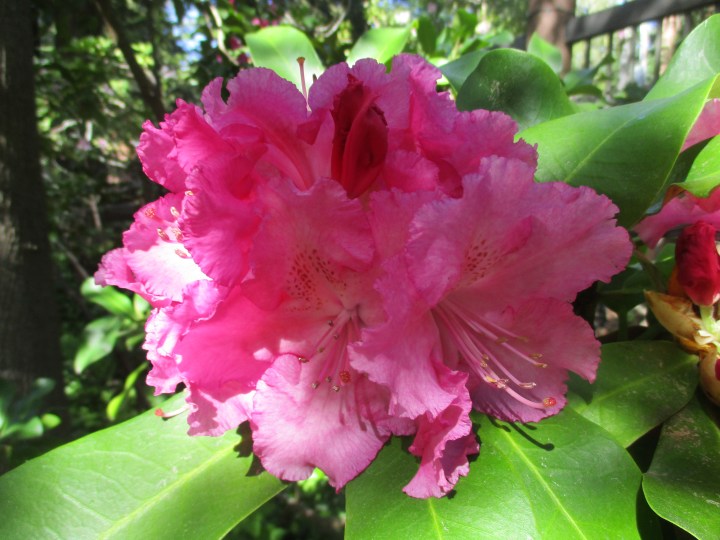
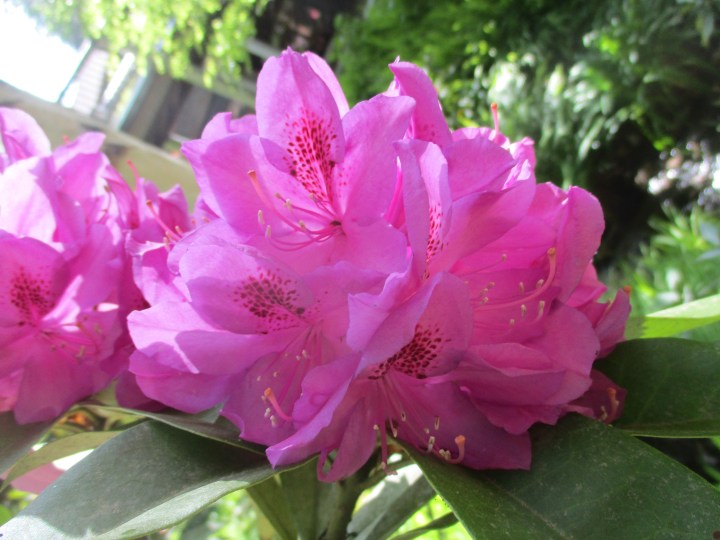
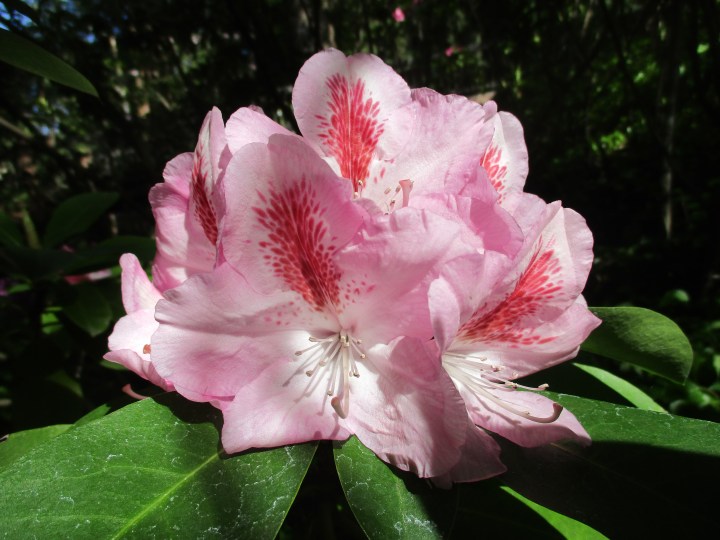
Rhody actually had nothing to do with the rhododendrons. They have been her for decades. The youngest were added in the late 1990s. We know none of their identities. It does not matter. Bloom is spectacular. These pictures are from last Friday, so are a week old already. Six more will be two weeks old for next week. I just can not miss sharing them here for Six on Saturday.

1. Mrs. G. W. Leak – The spots are not pronounced enough. The foliage is not a good match either. Otherwise, the floral color and form are about right. Branch structure seems to match too.P00516-1

2. Trude Webster – This is just a guess. The leaves are not big enough. Bloom is a bit too brightly colored, and its spots are a bit too pronounced, although floral form seems to be about right.P00516-2

3. Lem’s Monarch – This one is questionable. Flowers are usually more white with reddish pink edge. However, they do not look quite like the real thing. Foliage happens to be a good match.P00516-3

4. Anah Kruschke – Like the others, the color is off for this one this year. It is normally a bit richer purple. I am fairly certain about its identity. The foliage and branch structure conform too.P00516-4

5. Rhododendron catawbiense – I am rather certain about the identity of this one. Everything about it is as it should be, even the foliage. This is probably my favorite of these particular six.P00516-5

6. Taurus – Of all of these six, this one is the least likely to be what I refer to it as. Only the floral color is correct. Floral form, foliage and branch structure are not. I do like the name though.P00516-6

This is the link for Six on Saturday, for anyone else who would like to participate:

https://thepropagatorblog.wordpress.com/2017/09/18/six-on-saturday-a-participant-guide/

Bugle Lily

50513
Bugle lilies are like lean gladioli.

It would be accurate to guess that bugle lily, Watsonia pyramidata, is related to gladiola. It is not as impressive as gladiola is, but it is much more reliable. The relatively simple blooms become more abundant as bulbs multiply each year. Conversely, after blooming so flamboyantly in their first year, only a few gladiola bloom for a second year.

New bugle lily bulbs (corms) that were planted early last autumn grew through winter to bloom about now, in white and pastel hues of pink, rosy pink, lavender, orange and almost red. The small flowers are neatly arranged on narrow floral spikes that stand about three or four feet tall. The upright and narrow leaves get only about two or three feet tall.

After bloom, foliage slowly browns through warming summer weather, so should be cut to the ground when it becomes unsightly. While bulbs are dormant through summer, they do not need to be watered much, and can rot if soil stays too damp. Crowded colonies of bulbs can be divided and spread around as summer ends.

Some Seeds Can Hurt Pets

50513thumb
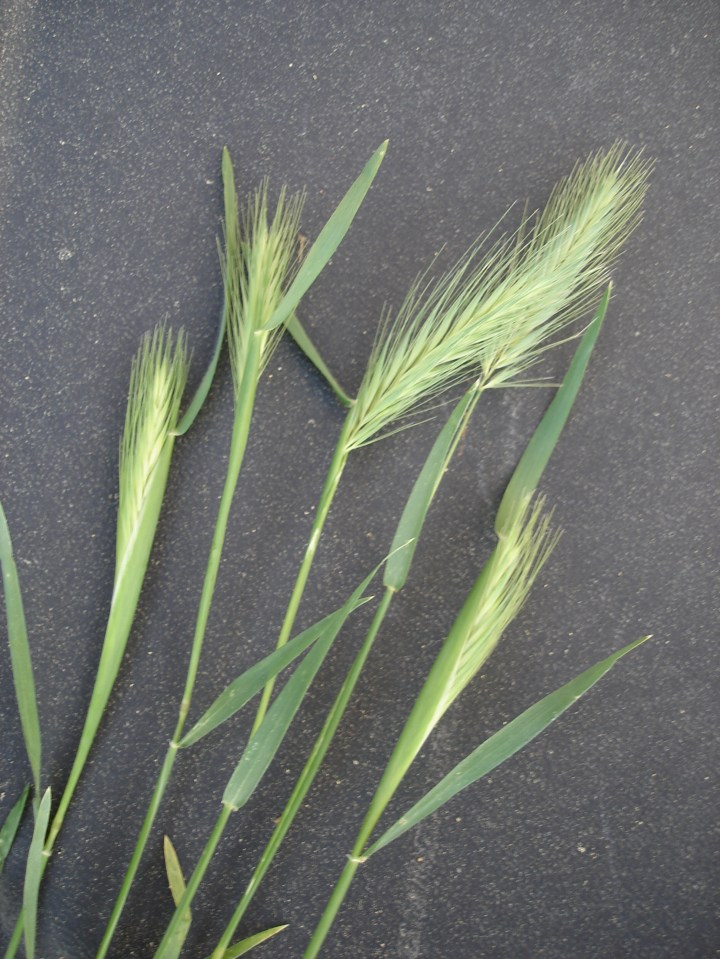
Foxtail is a potentially dangerous weed.

Weeds always have unfair advantages. They grow fast enough to bloom and disperse seed before the rain of early spring runs out, so they do not need any supplemental water. They seem to be able to grow anywhere. Their abundant seed seem to be able to get anywhere. Many produce seed with creative tactics for hitching rides on animals or being blown around by the wind.

This can be a serious problem for the unfortunate animals that interact with these exploitative weed seeds. Burclover and foxtail that are designed to stick to the short hair of grazing animals just long enough to get moved to greener pastures can get seriously tangled in the softer and longer fur of cats and dogs. Foxtail and other thin seeds can get lodged into noses, ears and eyes.

This is why it is so important to control these sorts of weeds, even if the landscape is not a priority. Gardens without resident cats can be visited by neighbor cats who can be hurt by dangerous weed seeds, or disperse the seed into other gardens. Mistletoe seed is not really so dangerous, but has a sneaky way of sticking to birds and squirrels for dispersion.

Thistles are more of an annoyance than actually dangerous. Their seed does not stick into fur. It just gets blown about in the wind. The problem is that the spiny foliage of some types is too painful to handle. If neglected long enough to go to seed, thistles can be seriously prolific. Because it is dispersed by wind, the seed can get anywhere without any help.

Weeds can be recycled in greenwaste, only because greenwaste gets sterilized in the recycling process. Some annual weeds can be composted if they get collected before they produce seed. If there is any seed, some of it may survive the composting process, and germinate wherever the compost gets used. It would be better to dispose of such risky biomass.

Likewise, crabgrass, dandelion, oxalis and other perennial weeds should not be composted because some of the stolons (modified stems) or roots survive the process. Just like seed, some of these surviving vegetative parts can grow into new weeds wherever the compost that contains them gets dispersed. Such resiliency is one of the qualities that makes them ‘weeds’!

Horridculture – Plastic Is Forever

P00513
Ah, the memories.

Horticulturists are environmentalists by definition. Whether we grow horticultural commodities, install such commodities into landscape, maintain such landscapes and associated trees, or design such landscapes, the vegetation that we work with affects the environment. Many of us should take our innately significant environmental responsibilities more seriously than we do.

We should also be realistic about our environmentalism. For example, there is no problem with designing a landscape that attracts butterflies for a client who enjoys butterflies in the garden. However, we should not promote butterfly gardening as something that benefits the environment and ecosystem by distracting insects from native flowers that rely on them for pollination.

I have never been one of ‘those’ extreme environmentalists. I do not want to save all vegetation. Some trees are too hazardous to those in the landscape below. Some exotic species are too aggressively invasive within a natural ecosystem, and therefore detrimental to the environment. Planting a proper tree where it will be an asset is fun; but too many trees obscure sunlight.

Fake environmentalism made good environmentalism look bad, and is contrary to it. Associated sustainability has become a cheap fad to capitalize on. Sustainably grown produce is pointless relative to the fuel necessary to transport what is grown in remote places, and all the plastic that it gets wrapped in. The volume of plastic needed to make sustainability possible is baffling.

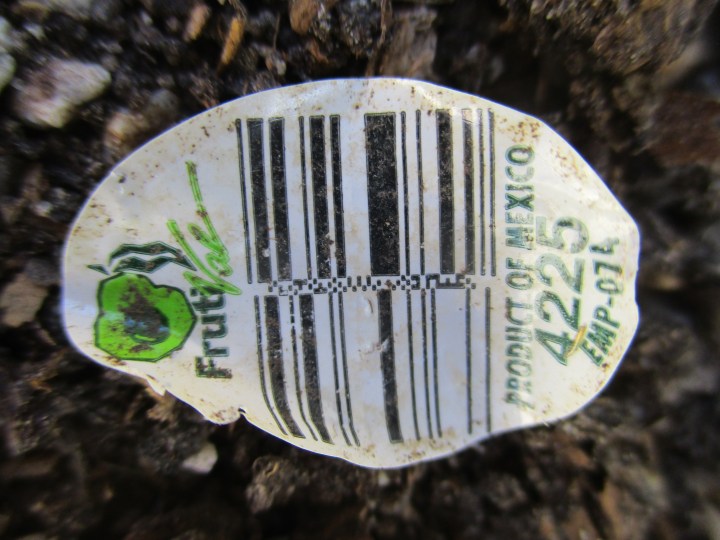
Our compost is not the best, but it is adequately composted. Except for eggshells, the only recognizable bits are non-biodegradable plastics that mistakenly got mixed in, such as small bits of cellophane from the cafeteria kitchens. The most prominently abundant are these small stickers that were originally affixed to individual and mostly sustainably grown fruits and vegetables.

Are so many bits of non-biodegradable plastic so necessary to demonstrate sustainability and environmentalism?

Sticky Monkey Flower

00520
‘Sticky monkey flower’ sounds too silly.

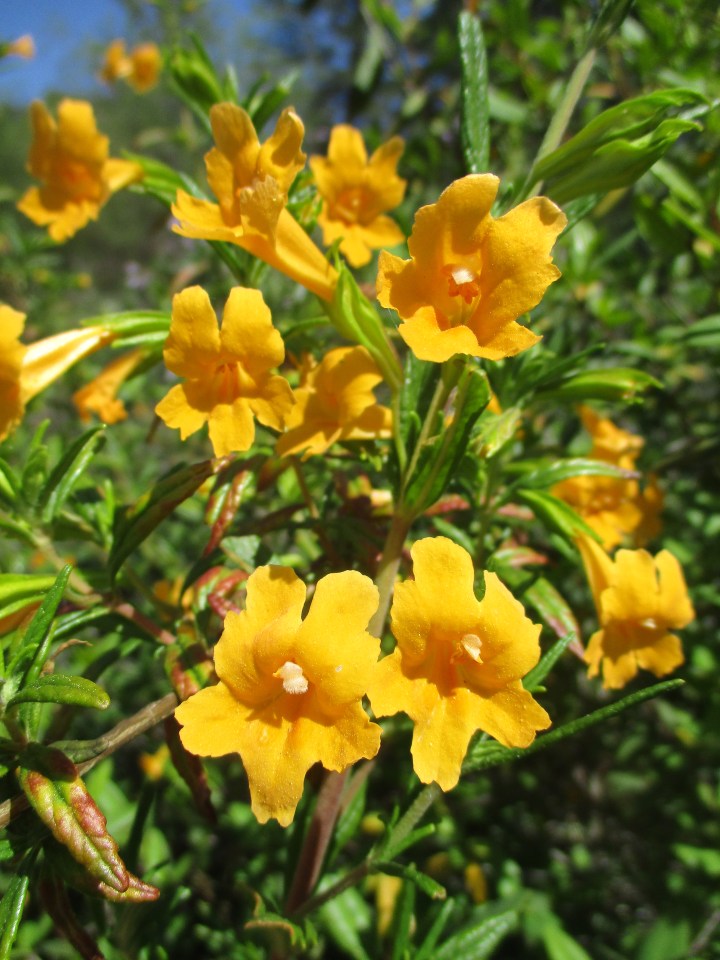
What a silly name this is! Sticky monkey flower, Diplacus aurantiacus (or Mimulus aurantiacus), is native to a broad range of ecosystems of California and the Northern Coast of Baja California. It is famously happy in situations that are too rocky or sandy for most other species. The resinous foliage really can be rather sticky during warm weather. The relevance to a monkey is a mystery.

Sticky monkey flower is more popular among hummingbirds and insects than anyone else. Those who welcome hummingbirds and insects into their garden happen to like it too. Honestly though, it might a bit too casual for refined landscapes. It works better in or on the outskirts of rustic gardens. If not already growing wild, cultivars and the straight species are available in some nurseries.

Bloom begins late in winter or early in spring, and might continue through summer, but is rarely impressively prolific. The bisymmetrical and tubular flowers are about three quarters of an inch long. Almost all are pastel orange, sort of like circus peanuts. Gold and yellow are uncommon. Supposedly, there are rare cultivars that bloom in red or white. Mature plants get more than three feet tall.

Nature Gets Too Much Credit

P00405
So much of nature is unnatural.

Vegetation make people feel closer to nature. It is, after all, what most of us expect to see out in the wild. Most vegetation that is observed in forests and undeveloped areas really is natural. Much of the associated insects and wildlife are natural as well. Such flora and fauna know how to survive within their respective ecosystems. They can not rely on any unnatural intervention from anyone.

Naturalized exotic (non-native) species proliferate only because they are adapted to similar environmental conditions. A lack of pathogens that afflicted them within their natural ranges is a major advantage for most of them. Nonetheless, they are unnatural components of what is commonly considered to be nature. Most naturalized exotic species actually interfere significantly with nature.

Vegetation and associated wildlife that inhabits synthetic landscapes is very different from that which lives out in nature. Only some of the vegetation has potential to naturalize. Even less is native. Almost all of it is reliant on artificial intervention for survival, particularly irrigation. Associated wildlife is reliant on the survival of the reliant vegetation. Landscapes accommodate. Nature does not.

With few exceptions, landscapes that emulate nature are impractical. Landscapes within forests are some of those few exceptions that might need no more than what the forests provide. Even in such situations, combustible vegetation and structurally deficient trees should be cleared away from homes. In California, nature is innately combustible. It is messy and potentially dangerous too.

Most urban landscapes of California would still be dreadfully bleak if limited to natural components. Both San Jose and Los Angeles are naturally chaparral regions. They were formerly inhabited by sparsely dispersed trees on scrubby grasslands. Now, relatively abundant vegetation in both regions is more appealing, and improves urban lifestyles, but is nothing like what nature intended.

Nature is simply inadequate for what is expected of urban landscapes of California.

Timber!

P00510-1
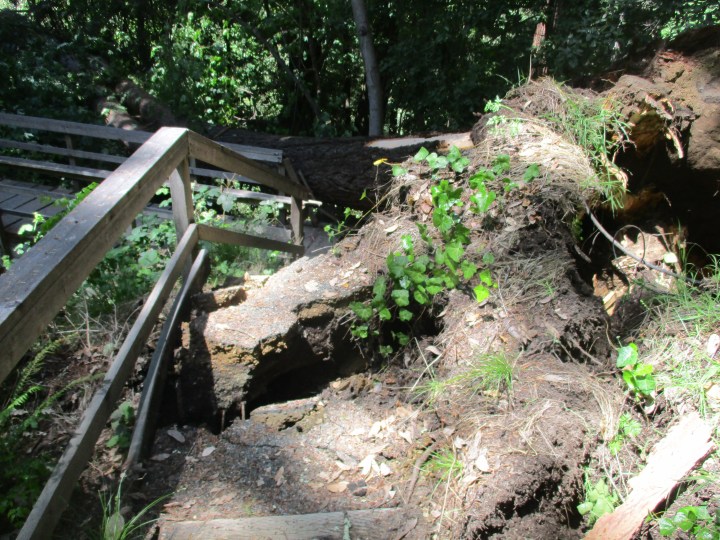
This is a bit more than just slightly inconvenient. The trail continues forward from here, with another trail up the stairs to the right.

It is that time of year. Warming weather accelerates vascular activity, which makes foliage heavier. If evapotranspiration is inhibited by humidity and a lack of wind, the foliage can get too heavy to be supported by the trees that produce it. All that increasing weight can bring down big limbs or entire trees at the most unexpected times. The process is spontaneous limb failure.

By ‘unexpected’, I mean that it happens when there is no wind. It is startling because broken limbs and fallen trees are typically associated with wind rather than a lack of it. Gentle wind actually accelerates evapotranspiration, which relives affected vegetation of some of its weight and susceptibility to spontaneous limb failure. Aridity helps too, by absorbing more moisture.

Of course, even a gentle breeze at the wrong time can have disastrous results for vegetation that is already about to succumb to spontaneous limb failure. I suspect that is what happened here, since the air was not completely still at the time. It was just a bit warmer than it had been, and slightly more humid than typical. It is too late and pointless to analyze the situation now.

P00510-2
This is the top of the stairs that are to the right in the picture above.

At about noon on Thursday, someone who works nearby alerted me to the sound a a big tree falling. I was in the same neighborhood, but was driving by with the radio on. The tree is precisely where I was told it would be. No one was nearby when it fell. Damage was originally minimal, with a portion of trail displaced by roots, and a rail on a bridge crushed by the trunk.

By ‘originally’, I mean that this was not the extent of the damage. After barricading the trails and road leading to the site, and leaving, we heard another loud crash from the same location as a bay tree that had been leaning against the already fallen fir tree collapsed in pieces on top of the whole mess. Fortunately, the damage to the bridge, although worse, is not too terribly bad.

P00510-3
There is more timber here than lumber. The short section of main trunk is severely fractures. The double trunks beyond are not as big as they look.

Between A Rock And A Hard Place

P00509K
Where does this delightful columbine think it is?!

Columbine does not do well here. I do no know why. It does well enough in Colorado to be the Official State Flower there. Yet, the mildest of climates is Colorado are harsher than the climate here. It does not get too terribly warm in summer here. Humidity is minimal, but not as minimal as in much of Colorado. Nor does it exceed that of other regions where columbine does well.

We have certainly tried to grow columbine. It just does not work. Some of it succumbs to powdery mildew. Some succumbs to rust. The last batch just succumbed. Because it was expected, I did not bother to investigate. I got the impression that it was taken out by both powdery mildew and rust. Flowers that bloomed so delightfully when planted went to seed on their way out.

That should have been the end of it. I would not mind if someone tries again to grow columbine for next spring, even if it last for only a short while. I just do not expect to see it ever perform well here. None was planted this year. Even if someone had considered it, there was no need to add any prior to furlough, while cool season annuals for winter continued to bloom so happily.

What I certainly did not consider was the few seed that the last batch of columbine tossed almost a year ago. Apparently, at least one of those seed fell from the ledge where its parent plants lived briefly in now absent planter boxes, and into the edge of a small landscape below. It grew into an exemplary specimen of columbine, which is happily blooming as if it were in Colorado!

It is surrounded by a concrete retaining wall, a perpendicular granite wall and a big granite boulder!


Six on Saturday: (First) Rose Parade 2020


The landscapes are in surprisingly good condition after more than a month of neglect. Weeds are horrendous, but no more so than expected. They and the lawns are the priorities. Significant progress was made just in the last three days that we have been able to work. As busy as we are, I managed to get some nice floral pictures. Rhododendrons are still blooming, but will be the topic for next week.

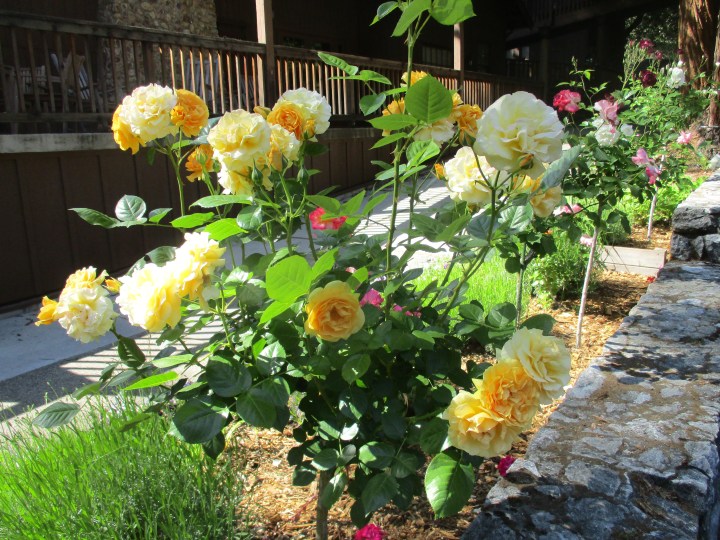
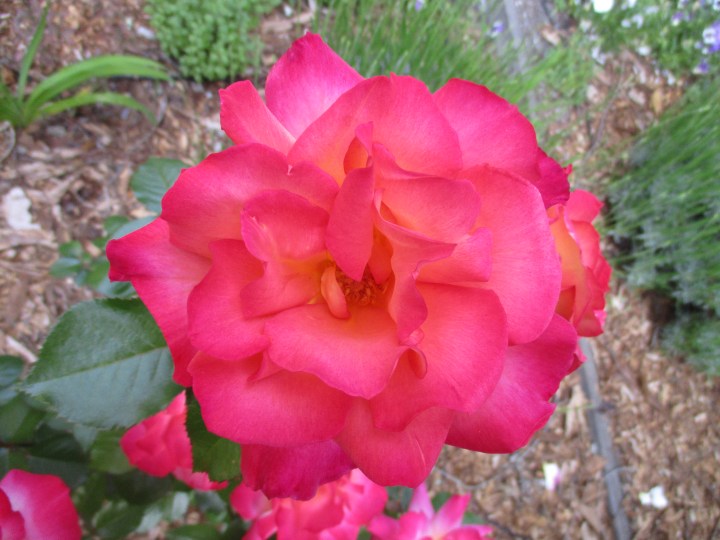
1. Of the mere four cultivars here, this is my least favorite. The color and profusion of bloom are excellent. I just dislike how the floral form resembles those of the trendy David Austin roses.P00509-1

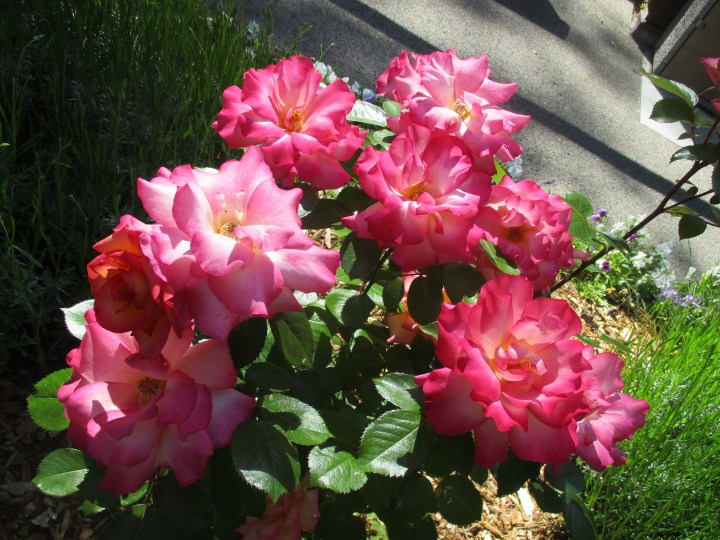
2. This cultivar is the only one that is in shrub form. All the others are tree roses (or standards). The profuse bloom resembled ‘Double Delight’ last year, but is completely different this year.P00509-2

3. Close up, it is more rich bright pink than distinctly reddish pink with white. It is fragrant like ‘Double Delight’ should be, although it does not seem to be as fragrant now as it was last year.P00509-3

4. The first (#1 above) is also different from how it bloomed last year. Its petals are not so densely packed. There are plenty of buds behind the maturing flowers. Performance is exemplary.P00509-4

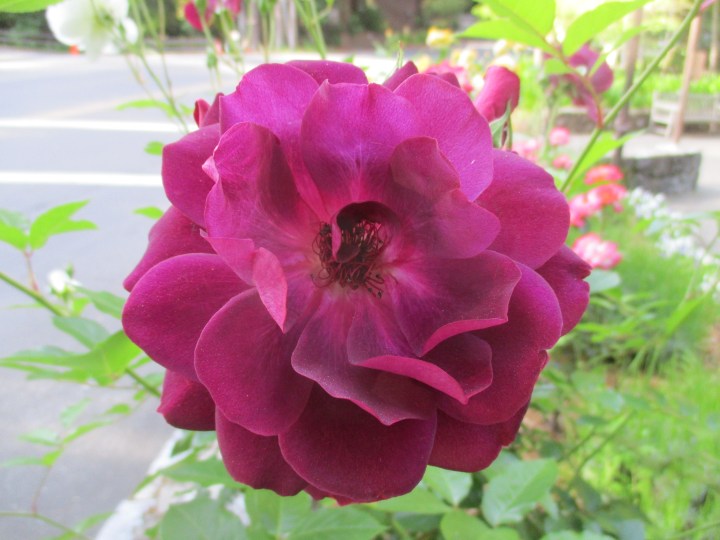
5. Is this purple? Not only is its color odd, but it is grafted onto the same rose trees as the white roses (#6 below). It is too weird for my taste. Everyone else likes it. That is more important.P00509-5

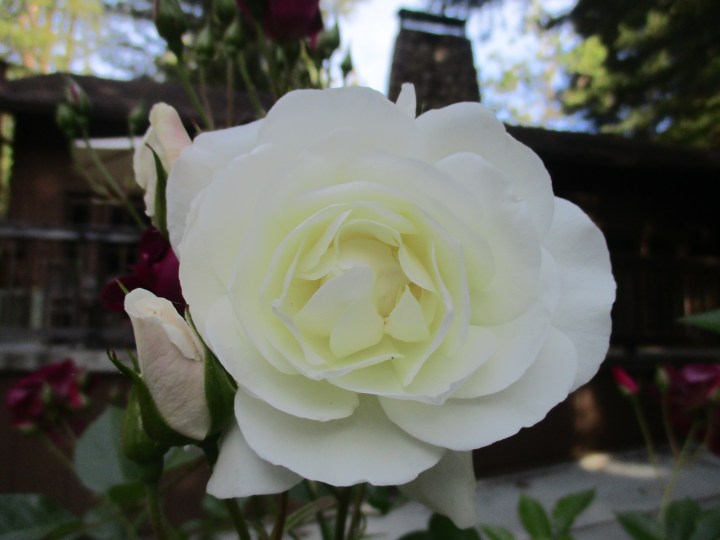
6. As mentioned above, this cultivar is grafted onto the same rose trees as the purple roses (#5 above). To me, it seems to be the common ‘Iceberg’. I do like white, even if it is just ‘Iceberg’.P00509-6

This is the link for Six on Saturday, for anyone else who would like to participate:

https://thepropagatorblog.wordpress.com/2017/09/18/six-on-saturday-a-participant-guide/