
Knowing how colorfully bulbs will eventually bloom can initially make planting them disappointing, since there is nothing to see for all the effort. Planting bare root plants is not much more rewarding. The bare stems are a bit more proof of the effort, but will do nothing until they break dormancy in spring. Now that Christmas trees have vacated nurseries, bare root plants will be arriving, and will need to be planted before winter ends.
As the name implies, bare root plants have bare roots, without the soil they were grown in. Better equipped nurseries ‘heel in’ bare root plants in moist sand, which simply means that the roots get buried temporarily. When purchased, the plants get pulled from the sand and wrapped for the trip to their new home garden, where they get planted permanently into real soil.
Alternatively, bare root plants can be prepackaged in bags of moist sawdust. They only need to be removed from their packaging and sawdust before getting planted into the garden. Mail order plants, including plants purchased online, often get packaged even more simply, with a damp bag around the roots, maybe with a bit of gel or damp paper. The plants are safely dormant, so are not even aware of what is going on.
The main advantage of bare root plants is that they cost about a third of what typical nursery stock in heavier cans of media (soil) cost. Because they are so much less cumbersome, several bare root plants can be purchased at a time, and brought home in a small car without much effort. Since they lack the luxury of the soil they were grown in, they immediately disperse their roots directly into the surrounding soil.
Roots of bare root plants should be spread away from each other at planting. Soil amendment is nice, but should not be so copious that roots will not want to disperse outside of the amended soil. Even if rain is expected, newly planted bare root plants should initially get soaked so that soil settles around the roots. Grafted plants should be planted with the graft union above grade.
Fruit trees such as apricot, cherry, plum, prune, peach, nectarine, almond, apple and pear, as well as roses, are the most popular of bare root plants. Flowering crabapple, flowering cherry, poplar, willow, lilac, forsythia, wisteria and grape are also available.
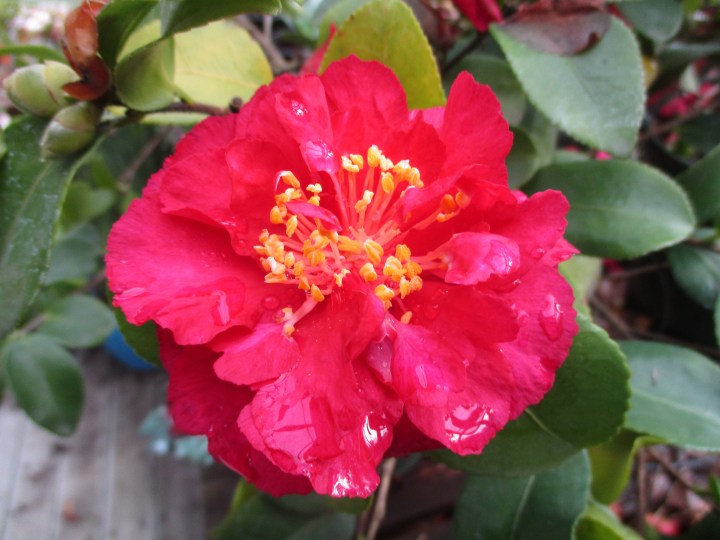 January 1, 2020! The first day of the Twenties!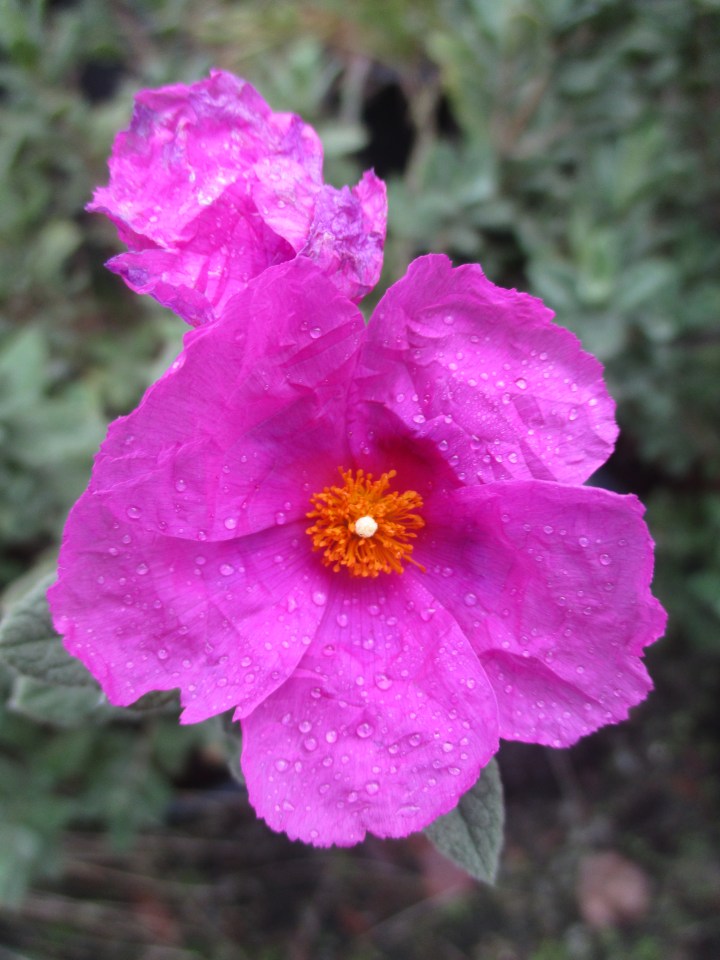
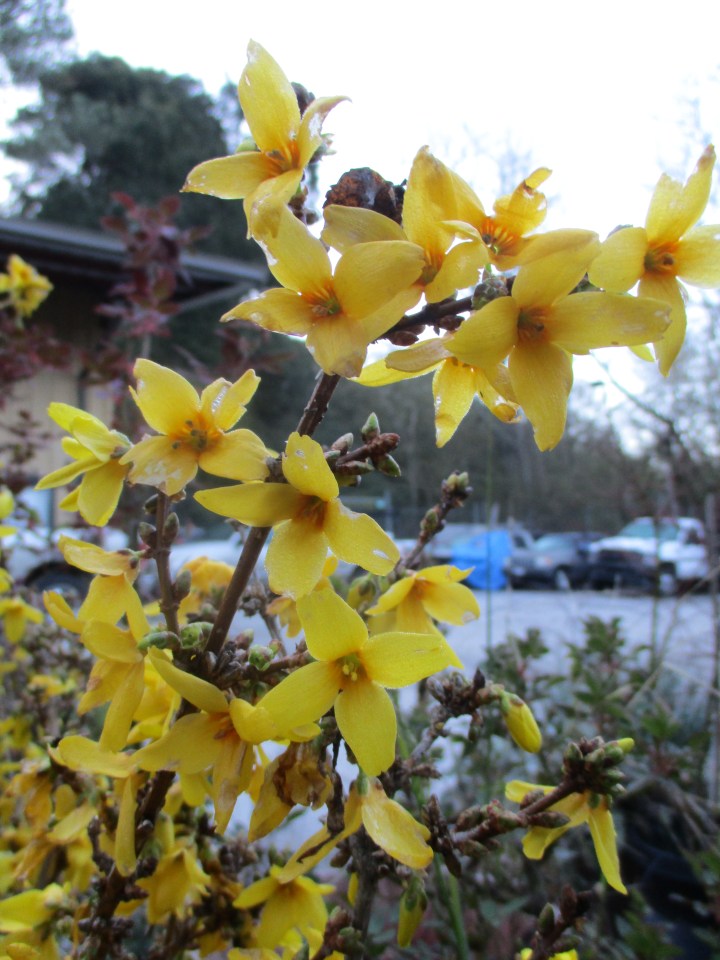 This may seem to be three months early, or an entire season out of season; but this is when bare root forsythia, Forsythia X intermedia, gets planted. Even so, the smaller of new bare root plants will bloom with only a few flowers early in their first spring, so will not produce their famously profuse and garishly bright yellow bloom for another year and three months. They will be worth the wait.
 From below, this looks like a shrubby deciduous tree. It is really just a Douglas fir, like those around it. All the defoliated thicket growth is overgrown
 This . . . was a ball field. It might eventually be one again. The old backstop at the upper left corner of the picture is almost completely obscured under a thicket of blackberry brambles and a fallen boxelder. It would need to be replaced. So would the decommissioned irrigation system, all the bases, the basepath, the turf . . . and everything else that goes into a functional ball field.




 The simple pink and white of ‘good & plenty’ candy is what fairy primrose, Primula malacoides, is known for. Pastel purple is also popular. Rosy reddish pink and deeper pinkish purple are somewhat rare. The small flowers are arranged in circular trusses that stand as tall as one foot, just above the softly mounding light green foliage. The rounded leaves are slightly fuzzy. All parts of fairy primrose are toxic, and to those who happen to be allergic to it, can be as severely irritating to the skin as poison oak!
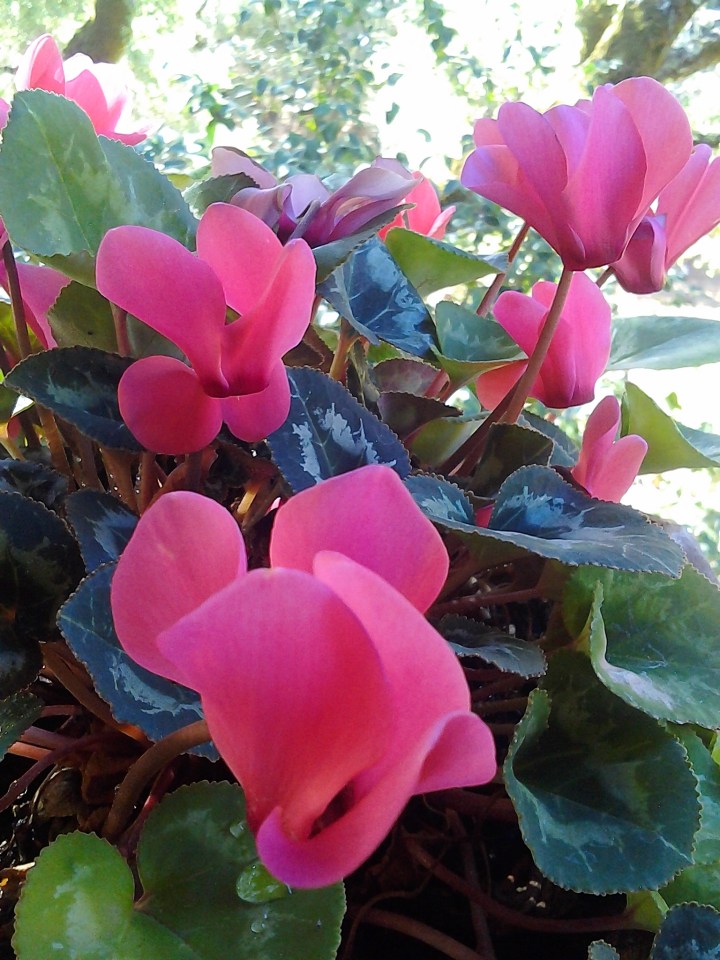 Cyclamen are everywhere! Some nurseries have more cyclamen than all other cool season annuals combined. Not all cyclamen are represented though. Almost all are white or simple red. Pink, salmon and other shades of red are noticeable scarce because they are not traditional colors of Christmas. The plants are mostly of impeccable quality, and outfitted with abundant flowers. While there is not much else blooming, the popularity of cyclamen is impossible to ignore.
