October Brings Cool Season Annuals

41008thumbAs the name implies, ‘annuals’ need to be replaced ‘annually’. What is worse is that they do not even function for an entire year, but only for a specific season. Cool season annuals mostly work from autumn to spring. Warm season annuals mostly work from spring to autumn. Calendula is a popular cool season annual that may not last even that long, since it can mildew half way through winter.

Now that it is time for cool season annuals, it can be unpleasant to remove warm season annuals that are still performing well. In mixed plantings, new annuals can be phased in through autumn as older annuals deteriorate. Busy Lizzie (impatiens), wax begonia and other warm season annuals that are actually perennials can get cut back and overplanted with cool season annuals. The cool season annuals that temporarily overwhelm them can provide shelter from frost. As the cool season annuals finish next spring, the warm season ‘annuals’ can regenerate

However, not all cool season annuals need to finish next spring. Sweet William, cyclamen, chrysanthemum and the various primroses are popular cool season annals that are actually perennials. When the time comes, they can be overplanted with warm season annuals, so that they can regenerate the following autumn. In cool spots, sweet William and some primroses can actually perform all year. (Some people are allergic to primroses like poison oak.)

Alyssum and nasturtium really are annuals, but can function both as warm season and cool season annuals. They sow their own seeds so that new plants can reliably replace old plants without being noticed. The old plants only need to be pulled as they deteriorate. Alyssum is white, or pastel hues of pink or purple. Nasturtium is just the opposite, with bright hues of yellow, orange and red, with only a few pastel options.

Pansies and smaller violas are the two most popular of cool season annuals, since they function like petunias for cool weather. They lack few colors. Most have two or three colors. Ornamental cabbage and kale produce big and bold rosettes of pink, white or pink and white foliage. Kale has weirdly distinctive foliar texture. White, lavender, pink, purple and rose stock is the most fragrant of cool season annuals, and taller varieties are great for cutting. Iceland poppy has delicately nodding flowers on wiry stems. They can be pastel hues of white, pink, yellow, orange or soft red.

Horridculture – Halloween

P91009Halloween is a topic that I could rant about for days. Seriously. I loathe it. I dislike any formerly respectable holiday that has been ruined by excessive commercialization. We all know what happened to Christmas. For me, Halloween, in some regards, is even worse. Christmas is at least pretty. Halloween is intended to be morbid and grotesque and creepy and . . . just plain bad.

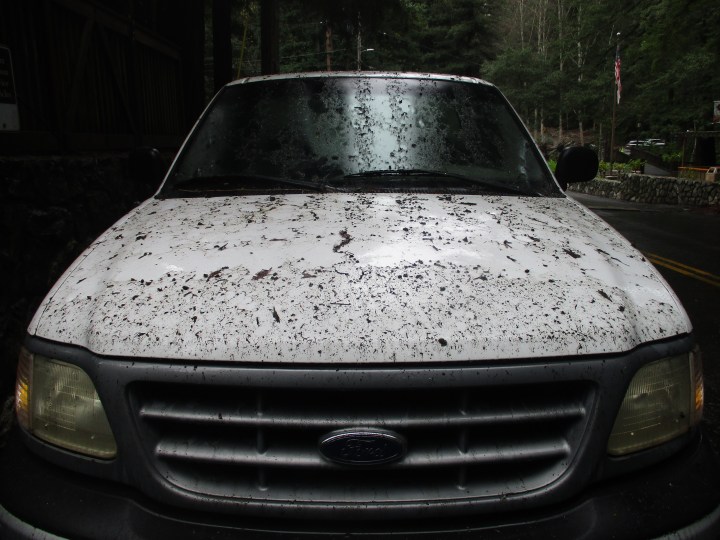
This should be about gardening though. Yes, there is always that guy who gets too drunk at the Halloween party down the road, but manages to stagger just far enough to vomit on my lawn. Then, I need to figure out how to get all the toilet paper out of the redwoods. The nasturtiums that get trampled by hasty brats who are too old for trick-or-treating will eventually recover.

The worst, though, are the Halloween ‘decorations’ in the front yard! We put too much work into maintaining our gardens in good condition to make them look so bad. I do not care if it is just for one day out of the year. Seriously, it is just wrong, on so many levels. Why on Earth should I want my garden to look as cheap and trashy as young ladies dressed up as naughty nurses?!

Pumpkins and even Jack-O’-lanterns are tolerable, and even appealing in a traditional sort of way, but spiderwebs make me think that the witches could put their brooms to better use than frequent flier miles. All those angry black cats should more efficiently control all the spiders and bats. Tombstones?! – Corpses in various degrees of decay?! – There goes the neighborhood!!P91009+

What about the effigies concealed by white sheets, and the other effigies hanging from trees and porches? Whoever thought those were good ideas?! Perhaps Brent can share some insight.

P90330+++++

Johnny-Jump-Up / Violas

91016This is not an easily defined flower. There are hundreds of species within the genus of Viola. Many are known as pansies. Many are known as violas or Johnny-jump-ups. Many are in between. The main difference between these two major groups is that, although very closely related, pansies bloom with bigger flowers, and violas bloom with smaller, simpler and more abundant flowers.

Blue, purple, white and yellow are the most popular colors for viola. Formerly uncommon orange and rusty red have become more popular in the past many years. Colors may be monochromatic, or arranged in intricate patterns with another color or two. The abundant bisymmetrical flowers are only about an inch wide. Mature plants should stay less than six inches tall, and spread as wide.

Violas are technically short term perennials that are typically grown as cool season annuals here. They are unlikely to survive through the innately warm and arid weather of summer. If planted now, they slow down a bit through the coolest winter weather, and then resume for early spring. If planted later in winter to continue slightly later into spring, they last only until the weather gets too warm.

Annual flowers For Cooler Weather

91016thumbAll that unpleasant annual business of removing warm season vegetable plants to relinquish space for cool season vegetables applies to annual bedding plants too. Those of us who do not grow vegetables were spared the agony of pulling up tomato plants that might have still been producing a few tomatoes, just to make room for broccoli. Now, it is time to replace petunias with pansies.

There is a reason why annuals get removed this time of year. It is the same reason why those that get planted now to replace them will be removed later. Annuals are annual. They are expected to perform for only part of one year. True annuals naturally complete their entire life cycles in about a year. Those that have potential to be perennial are too unappealing to salvage through dormancy.

Removal of aging warm season annual bedding plants should be less distressing if they are already deteriorating. By now, most of them are. They tend to wear out faster than some of the warm season vegetable plants. Impatiens can be potted for next year, or, for mixed beds, cut down and overplanted. Most cool season annual bedding plants are already blooming when newly planted.

Because the weather gradually gets cooler through autumn, cool season annual bedding plants appreciate an early start. It is easier to disperse roots before the soil gets cool. Only those that are sensitive to warmth, such as cyclamen, get planted later. Ornamental cabbage and kale might bolt and bloom early at the end of their season if they get too warm at the beginning of their season.

Marigold and chrysanthemum are short term autumn annuals that work very nicely until it is time to plant cyclamen or ornamental cabbage and kale.

Pansy, viola (including Johnny-jump-up), stock, sweet William, Iceland poppy and various primroses are now in season. Some could have been started from seed earlier. Otherwise, it is most practical to plant these cool season annual bedding plants from cell packs. Cyclamen and ornamental cabbage and kale that get planted later are best as more expensive four inch potted plants.

The Wrath Of Grapes

P91006Jocular reference was made to ‘The Grapes Of Wrath’ on our our backward version on the way to Oklahoma several years ago. We happened to drive through Salinas, where author John Steinbeck was from, and Bakersfield near Weedpatch, where the migration from Oklahoma in the story ended. From there, we literally drove the same route from Oklahoma, but in reverse.

I never read ‘The Grapes Of Wrath’.

I do enjoy growing the sort of grape vines that some of us grow in our home gardens for fruit that can be eaten fresh. (I loath wine grapes and vineyards, but that is another topic for later.) There happens to be a nice big unidentified grapevine at work that needed major pruning last winter. It was a sloppy and formerly unpruned mess, with rampant long canes strewn about.

Some of these canes developed roots where they had been laying on the ground long enough to do so. The process is simply and conveniently known as ‘layering’. It is actually a technique for propagation that is sometimes done intentionally to plants that are not doing it naturally, (Again, that is another topic for later.) After giving a few rooted canes away, there were a few extra.

Since last winter, seven copies of the original grapevine are still here! I really do not know what to do with them. I could give them to neighbors before the end of this winter, but would then worry about them not getting the annual pruning they need, and overwhelming the landscapes they inhabit, just like the original vine did. Even in their cans, they are already a sloppy mess.

Many surplus plants are accumulating here. Many will go into landscapes as rainy weather starts. However, there are a few that will not be so easy to accommodate.

Herbaceous Trees

P91005KPalms are like ‘Red Delicious’ apples. It seems that most people dislike them; but they also seem to be very popular. Seriously, if only a few people like ‘Red Delicious’ apples, why are they so common in supermarkets? If most of us dislike palms, why are they so common in the San Jose Skyline?

I suspect that palms really are as unpopular as they seem to be, but that they are also very conspicuous within their situations. Not only are they focal points of the landscapes in which they live, but most types eventually stand as tall as the tallest trees in the neighborhood, and some get significantly taller. They are innately the most prominent trees within their neighborhoods.

Palm are not like other trees though. Arborists may classify them as ‘herbaceous trees’. They are foliar plants while young, producing increasingly large leaves from terrestrial rosettes. They only ‘launch’ and start to develop their trunks after the formerly terrestrial rosettes have grown wide enough to do so.

Not only are their trunks no wider than their associated foliar rosettes, but they get no wider as they grow taller. The base of a trunk of a palm is as wide when the tree is only a few feet tall as it will be when the tree grows to forty feet tall. Mexican fan palms are only wider at their bases because they start out like that.

Palms with slender trunks can launch much sooner than those with wider trunks. It does not take long for their rosettes to get as wide as their trunks. Canary Island date palms have rather plump trunks, so may need to mature for many years before they launch.

Yuccas and dracaenas are not really palms. Their trunks expand and develop branches as they grow and mature.

Six on Saturday: Souvenirs


My first rhubarb was given to my by my paternal-paternal great grandfather before I was in kindergarten. My Iris pallida also goes back four generations. I got one of my two favorite zonal geraniums from a compost pile in Montara, and snuck it back on the train when I was in the seventh grade. Some of the plants I grow have been with me for a remarkably long time.

Well, I did not get pictures of my rhubarb, Iris pallida or zonal geranium for today. Instead, these are five plants with whom I became acquainted more recently, and my first yucca whom I met three decades ago. They all have their respective stories that are more interesting than what I mentioned here. None are directly from nurseries, although #2 and #4 are from cultivars.

I sort of suspect that these plants and others of such significance to me will be with me for a very long time. I know that blue gum is nearly impossible to tame, and that windmill palm can’t be pruned down like the others. I will not force them to comply. The others can give me more cuttings to replace themselves indefinitely. The place names designate where I acquired them.

1. Holmby Hills ~ Los Angeles – Yucca elephantipes – This was my very first Yucca. My colleague, Brent Green, removed it from a project he was working on back in about 1988. It lived as a houseplant next to my desk for many years, and produced a few pups.P91095

2. Mid City ~ Los Angeles – Brugmansia suaveolens – Brent got me cuttings for this angels’ trumpet from another of his landscapes a few years ago because I really wanted a single white to add to the four more complicated cultivars that I already accumulated.P91095+

3. Reno ~ Nevada – Salix laevigata – I know that there is nothing special about the all too common red willow. I like this one anyway, because it grew from a broken twig I happened to grab on the Truckee Riverwalk through Reno. I should be more discriminating.P91095++

4. Murphys – Ficus carica – A few of these little fig trees were grown from pruning scraps. A friend wanted copies of the original tree before selling the home where the tree lived. We do not now what cultivar it is, but we sort of suspect it is the common ‘Mission’.P91095+++

5. Santa Cruz – Eucalyptus globulus – While waiting for a friend who needed a ride, and pacing outside, I started plucking a few tiny weeds from planter. One of the weeds happened to be a tiny blue gum seedling. Against my better judgment, I did not discard it.P91095++++

6. West San Jose – Trachycarpus fortunei – An old friend’s mother grew flowery annuals and perennials in pots on the porch. This windmill palm grew from seed in one of the pots, and was happy there for a few years, but eventually got too big. It lives here now.P91095+++++

This is the link for Six on Saturday, for anyone else who would like to participate:

https://thepropagatorblog.wordpress.com/2017/09/18/six-on-saturday-a-participant-guide/

Pumpkin

41001Actually, it is a fruit; a rather BIG fruit. It happens to be one of the more familiar of winter squash, but is not too commonly eaten. Although it makes excellent pie, and provides edible seeds and flowers, pumpkin is more popularly known as jack-o’-lanterns or Cinderella’s ride to the ball. Pumpkin is not for every garden, since each big and coarsely foliated annual vine needs regular watering, rich soil and considerable space to grow all through summer to produce only one or two big fruit in autumn.

Most pumpkins are big and round, and have smooth and bright orange skin. Those grown for jack-o’-lanterns are brighter orange, and not quite as meaty. Those grown for pie are often a bit smaller and meatier, with a rustier orange color. The biggest pumpkins get too huge to move easily, but lack flavor. The flavors and densities of many weird modern varieties are as variable as the green, red, pink, yellow and white hues of their skins. Some pumpkins have been developed specifically for their seeds, which are known as pepitas, or are used for production of pumpkin seed oil.

Pumpkins Exemplify Ripening Winter Squash

41001thumbZucchini is probably the most reliable of warm season vegetable through summer, even when tomatoes are having a bad year. A single zucchini plant produces enough for a household. Two plants produce enough to share with neighbors. Pattypan, crookneck and other varieties of summer squash may not be quite as reliably productive individually, but can be assembled as a delightfully variable team that produces early in summer, and is just now finishing.

The fruit of summer squash is best when immature and tender. It gets tougher and loses flavor as it matures. Because development of seed within maturing fruit exhausts resources, plants are actually more productive if the fruit gets harvested while immature. In other words, they can either make many small fruits, or a few large fruits. The plants have coarse foliage on big but relatively confined annual plants.

Winter squash is very closely related to summer squash. The shabby annual vines sprawl over much larger areas, and can even climb fences and shrubbery. The main difference though, is that each plant produces only a single fruit or only a few individual fruits that are allowed to mature completely through summer. Their ripening fruit is just now becoming available as summer squash are running out. The fruit is supposed to be best after frost has killed the foliage, which could take a while here.

Hubbard, acorn, turban, spaghetti, kabocha and butternut squash, as well as the many varieties of pumpkin, are the more popular types of winter squash. Unlike summer squash, winter squash can be stored for quite a while, and need to be cooked to be eaten. While winter squash do not produce as many fruiting female flowers as summer squash produce, they seem to make at least as many male flowers that can be harvested while still fresh.

Male flowers can be stuffed, battered and fried, or simply fried. After they have been pollinated and set fruit, female flowers are typically too wilted to be eaten. All squash produce more male flowers than female flowers. Even the most fruitful of summer squash produce about three times as many male flowers as female flowers.

Horridculture – PPE

P91002Personal Protective Equipment. That is what PPE is for. Acronyms can be so vague. PPE could be for Purple People Eater for all we know. That movie just happened to be released to cinema at the end of 1988, just a few months after my summer internship with an exemplary crew of arborists who instructed be about the importance of PPE. I am glad to have missed the movie.

In 1988, the machinery used by arborists as well as lumberjacks was more dangerous, and PPE was more primitive. Hearing protection was only beginning to be standardized. Many of us were not even using it back then, even though the chippers were terrifyingly loud. For some of us, cheap sunglasses sufficed as eye protection. Chaps had been available, but were quite rare.

From the beginnings of their respective careers, younger arborists and lumberjacks learn to use safer machinery and standardized PPE that was still being developed in 1988. Nonetheless, their work is potentially very dangerous. They still work with machines that are designed cut cut down big trees and shred the resulting debris! PPE is just as important now as it ever was.

A notable lack of some of most basic of PPE at a local Lumberjack Contest was difficult to ignore. Even PPE that was unnecessary would have been appropriate for demonstration purposes.

In this picture, a few items of PPE are in order. Chaps were appropriate for bucking, and more than I had access to back in 1988. Boots, which can not be seen in this picture, were adequate. Stylish sunglasses that are also obscured, were likely rated as sufficient for eye protection. There is no need to tuck the shirt in for bucking logs that are stripped of branches that might snag.

What is lacking? Gloves, even for those who do not wear them at work, would have been proper attire for this contest. A hard hat, which is for protection from falling debris, could potentially deflect a kickbacked saw. Hearing protection might have been unnecessary with the fancy and remarkably efficient muffler on this saw; but I actually do not know, (and I saw no earplugs).