Stems that develop roots to grow into new plants as they lay on the ground are known as ‘layers’. Because cane berries develop tall vertical canes that seem to leap as they arch over to touch the ground and root in, the new plants that develop where they do so are known as ‘leapers’. I sort of think that ‘layers’ sounds more like reliable hens than self propagating plants. I also sort of think that ‘leapers’ just sounds funny.
A big forsythia at work had become overgrown with several layers or leapers. I am not really sure which they are, but there was quite a mess of them. We needed to remove the superfluous plants. Also, we wanted a few forsythias in other parts of the landscape. Well, you can figure this out. We decided to kill two layers with one stone . . . or something like that. We decided to pull up the unwanted layers or leapers in one area, and plant them where they were actually desired. We decided to get it all done just prior to a big storm that would help settle the new plants in.
1. Forsythia before division.
2. Forsythia after division. The entire left half of the original clump, which happens to be the original plant, as well as a few small layers or leapers, were removed. This remaining portion of the clump was not pruned yet. It will be pruned after later winter or very early spring bloom. This picture is approximately in the same position as the previous picture #1.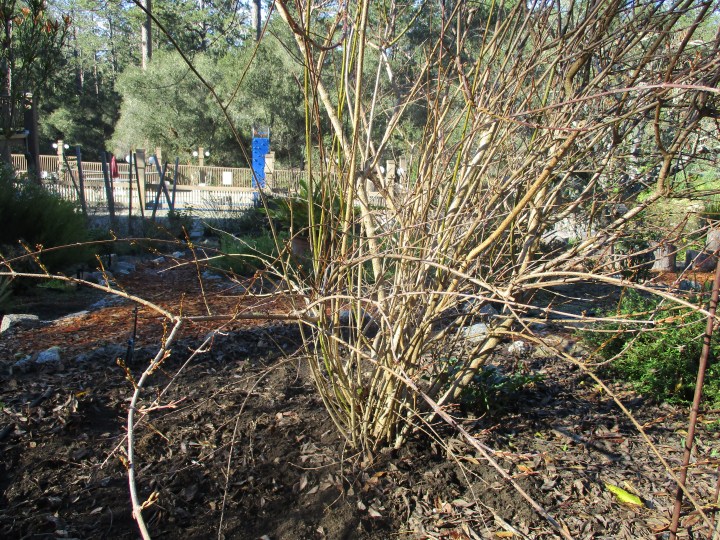
3. This largest of the new plants to be divided from the main plant was actually the original plant. The label was found on one of the old canes. Four smaller layers or leapers are to the right. The four smallest that are shown in picture #5 are not visible here. Because they needed to be pruned back to compensate for the root damage associated with the process, these plants were pruned almost as they would have been after bloom, which will unfortunately limit bloom in their first season.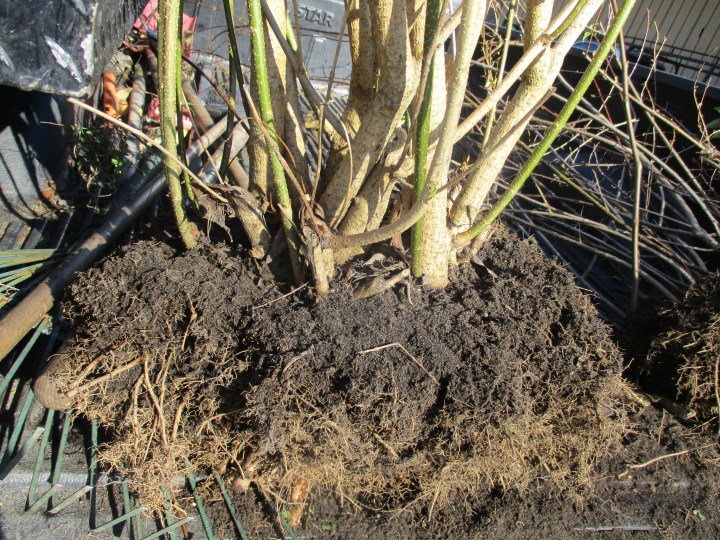
4. This is the same largest clump in picture #3 after getting pruned and installed into another part of the landscape just before the rain. If it does not get pruned after bloom this year, the big older caned will be cut to the ground after bloom next year. By that time, there will be plenty of basal stems to replace them. Ideally, it will be pruned annually after bloom by a process known as ‘alternating canes’, which involved removing old canes to favor newer canes. Individual canes last no more than a few years before getting pruned out.
5. After the largest of the freshly divided plants were installed directly into the landscape, the four smallest layers or leapers were canned and put into the nursery, just because we could not think of a place to plant them directly right away. A layer in the hand is worth two in the bush, and four in the nursery is even better.
6. Another unassociated forsythia bloomed in the nursery at the shops early last year.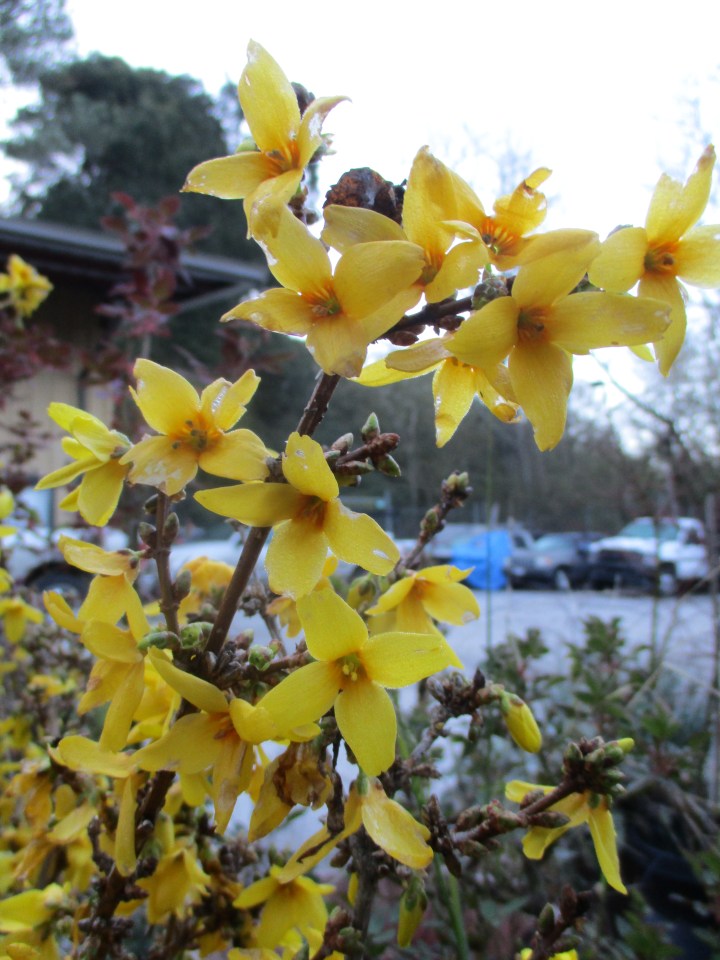
This is the link for Six on Saturday, for anyone else who would like to participate:
https://thepropagatorblog.wordpress.com/2017/09/18/six-on-saturday-a-participant-guide/
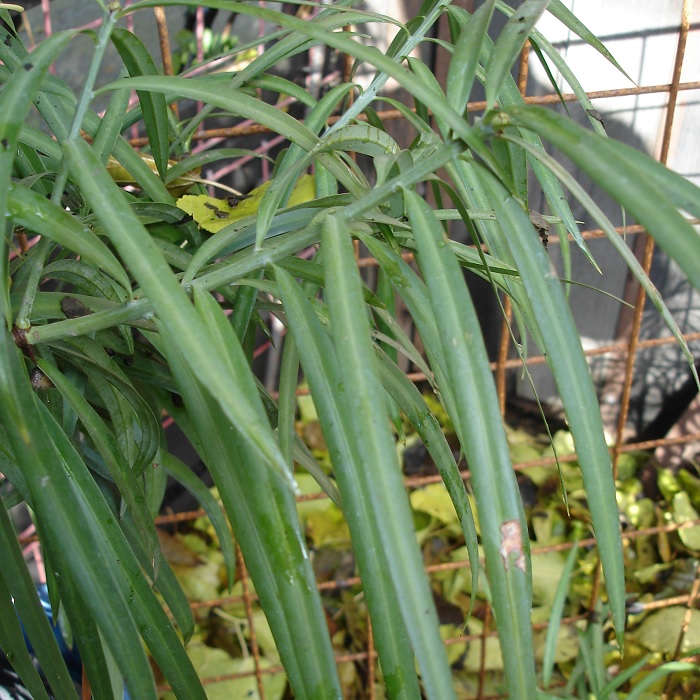 Of the various specie of podocarpus, and as the name implies, the long leafed yellowwood, Podocarpus henkelii, has the longest leaves. They can get about six inches long, and hang elegantly from upwardly curving branches. This glossy evergreen foliage can be quite dense. It is dark green in full sun, and can be a slightly bluish in partial shade, particularly as new growth develops.
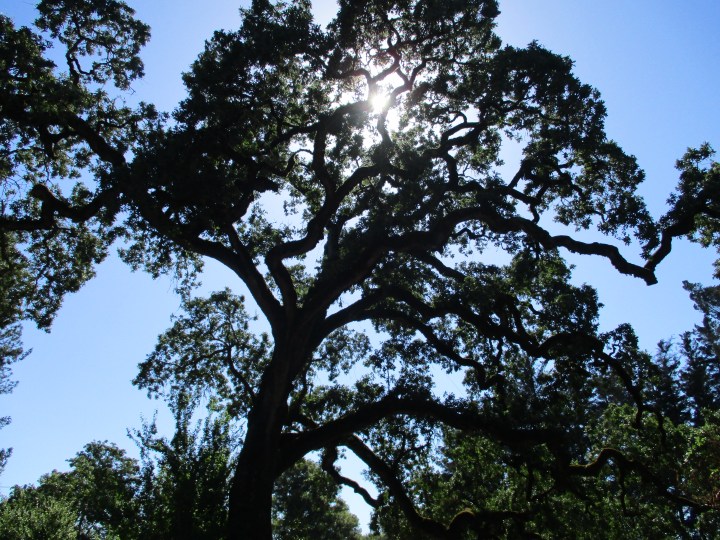 It is no surprise that there are many different types of physicians within the medical industries. Pediatricians, surgeons, cardiologists, dermatologists, and all sorts of ‘doctors’ are all recognized for their particular medical specialty. Yet, almost all horticultural professionals are known simply as gardeners or landscapers, even though many never work directly in gardens or landscapes.
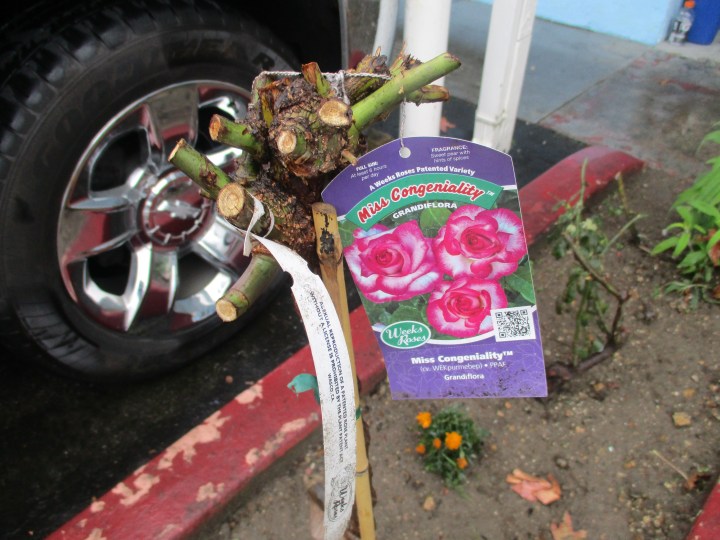 Now, before I commence with my rant and long list of problems with this picture, I should mention that this seemingly abused rose tree does seem to be appreciated. All the roses in this landscape seem to be very healthy, and they bloom constantly between spring and autumn. Their performance suggests that they are regularly fertilized and deadheaded.
 Just like roses and camellias, the innocent peach, Prunus persica, has been developed into too many distinct cultivars to write about in just a few brief paragraphs. It had been in cultivation for thousands of years before arriving in North America. Peach is a classic summer fruit, but trees should be planted while dormant, preferably as bare root stock, about now, in the middle of winter.
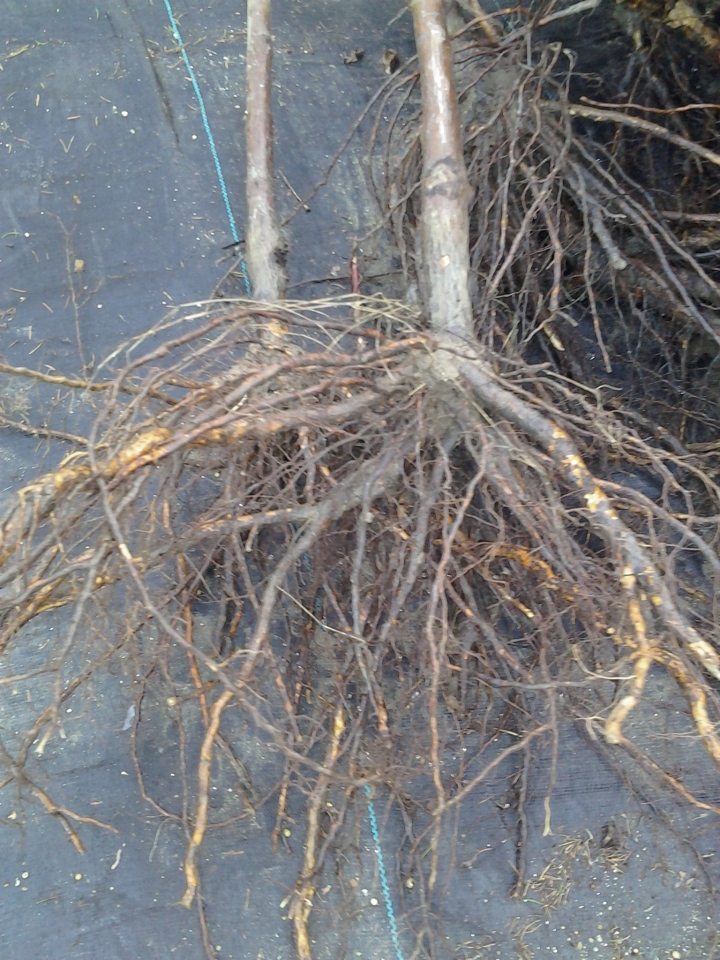 Autumn really is the season for planting. That is the general rule. One generalization about general rules is that they generally do not apply to all of the specifics. In other words, there are likely certain exceptions. In this case, there are some types of plants that should not be planted in autumn. The next best season for planting is probably winter, which happens to be ‘bare root season’.
 The last green roof that I wrote about was planned, although not in a typical manner.
  There is much more to the landscapes at work that I wrote about earlier this morning at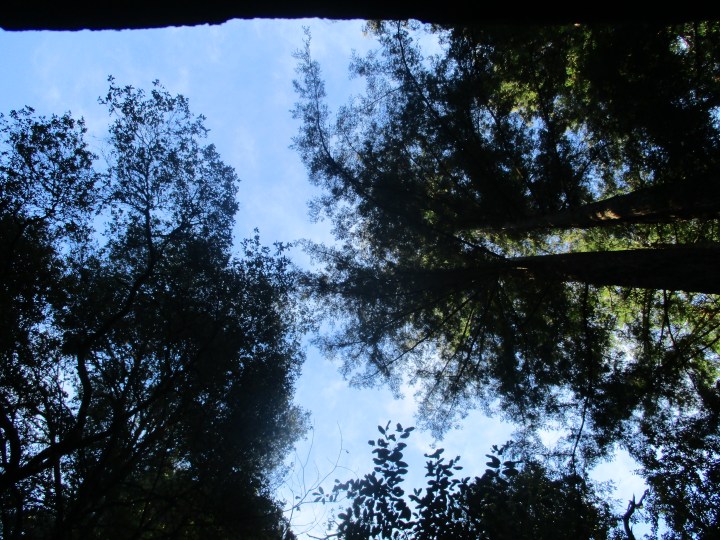



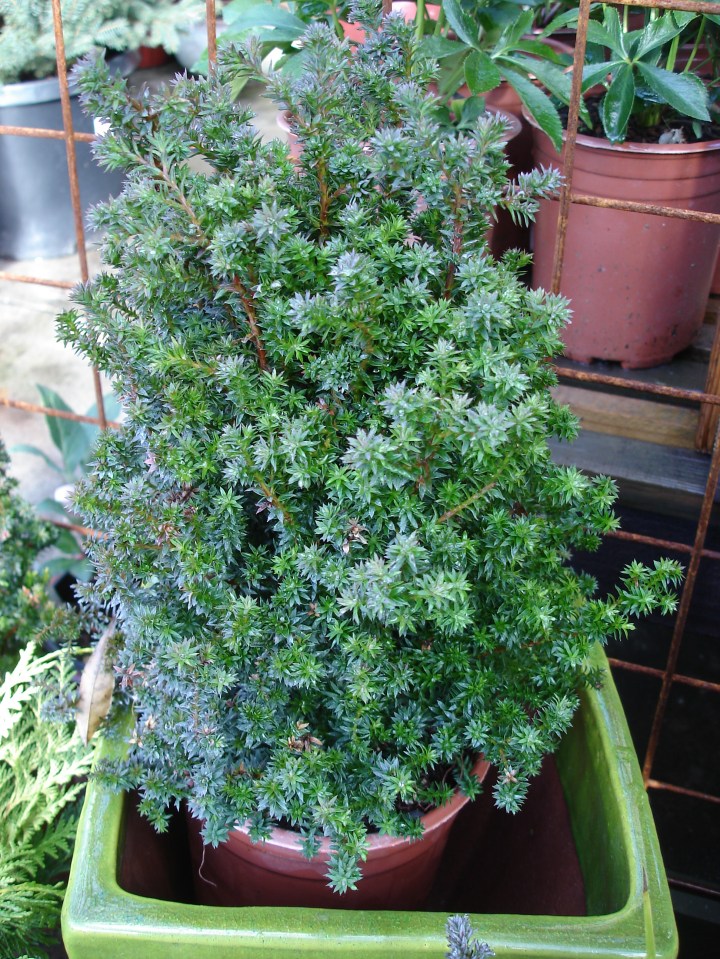 Is it red or white? Actually, it is neither. ‘Whitecedar’ is the common name for Chamaecyparis thyoides, which is a formidable coastal conifer from Maine to Mississippi. ‘Red Star’ is a much smaller garden variety. Its finely textured foliage is bluish green when it first emerges in spring, and can turn slightly purplish or bronzed gray if it gets cold enough in winter, but never turns red.
