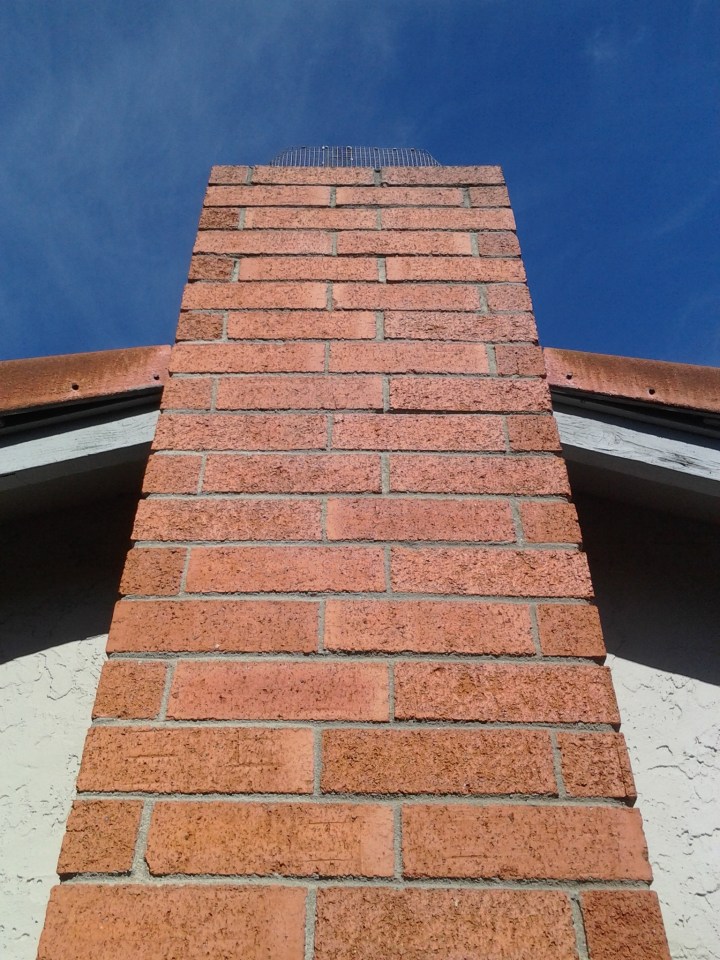
 There are fewer fireplaces after every significant earthquake. Removal of a damaged chimney is probably more practical than repair, particularly if the fireplace does not get much use anyway. Wood stoves sometimes get removed simply because they are in the way. Modern building codes forbid their return once they are gone, and also forbid them in new construction.
The few surviving fireplaces and wood stoves do not get used as regularly as they used to. It seems that no one is around the home long enough to tend to a fire. Orchards that provided so much affordable firewood as they were being removed for urban development are gone now. The outskirts of town, where trees and woodlots might be found, are now more than a short drive away.
Firewood can still be purchased from tree service businesses that must dispose of the wood that their work generates. Because such firewood is a byproduct of urban forestry, it is an unpredictable mix of all sorts of urban trees, and must be procured early in the year to be seasoned by autumn and winter. It is now much too late to purchase green firewood for this winter.
Almost all types of urban firewood are comparable to more traditional types. A few types deposit more residue in chimneys, so that chimneys need to be cleaned more frequently. Firewood from woodlots can be surprisingly more expensive; but it burns cleaner, and is already seasoned. Many woodlots would be pleased to deliver firewood that is ready to burn now.
Firewood is perishable, so only slightly more than enough for one year should be procured annually. Any leftovers can rot if left out in the weather too long. Firewood last longer in a shed or garage, but takes up too much space, and can be attractive to rodents.
Synthetic logs from the supermarket happen to be more efficient than real wood, and do not need to be seasoned. A single log burns longer and cleaner than a few real logs, and produces as much heat. However, they are individually very expensive, and are just not the same as real firewood.
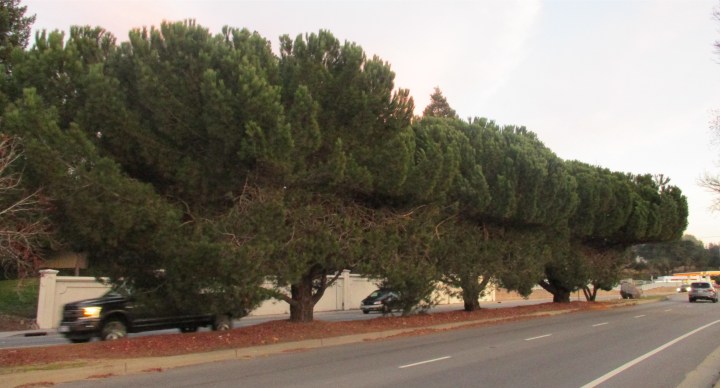 Many arborists mark certain lengths on their pole saws and pole pruners. When stood upright, these marks designate the standard heights for minimal clearance pruning. Not so many need to mark the height of minimal clearance for walkways, since they will prune away anything that is within reasonable reach with hand tools from the ground. The minimal clearance above parking spaces is not so easy to guess at, so is more likely to be marked on poles. So is the minimal clearance over roadways, where the lowest limbs must be high enough to be out of the way of campers and freight trucks.
 We all know that holly is famous for holly berries, but in modern gardening, English holly, Ilex aquifolium, is appreciated, or despised, for its distinctively glossy but very prickly evergreen foliage. Like countless tiny thorns, the foliage is too prickly to handle for those who despise it. Those who appreciate it know there is no substitute for the elegantly polished sheen and handsome texture.
 Cut Christmas trees really are the way to go. There is no obligation to take care of them after Christmas. They do not need to planted out into a garden that will be too small for them as they grow. They do not need to be maintained in a pot, only to get disfigured or partially defoliated before next Christmas. They simple get removed from the home and composted or otherwise disposed of.
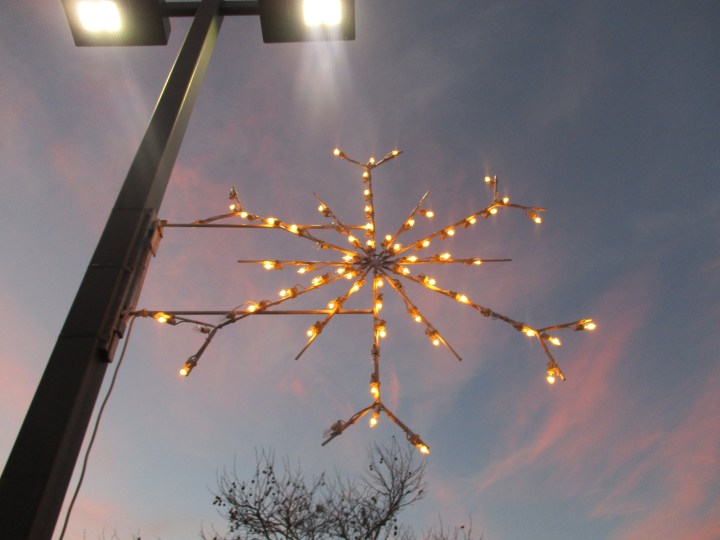 It was one of the more common types of snow in the Santa Clara Valley in the early 1970s.
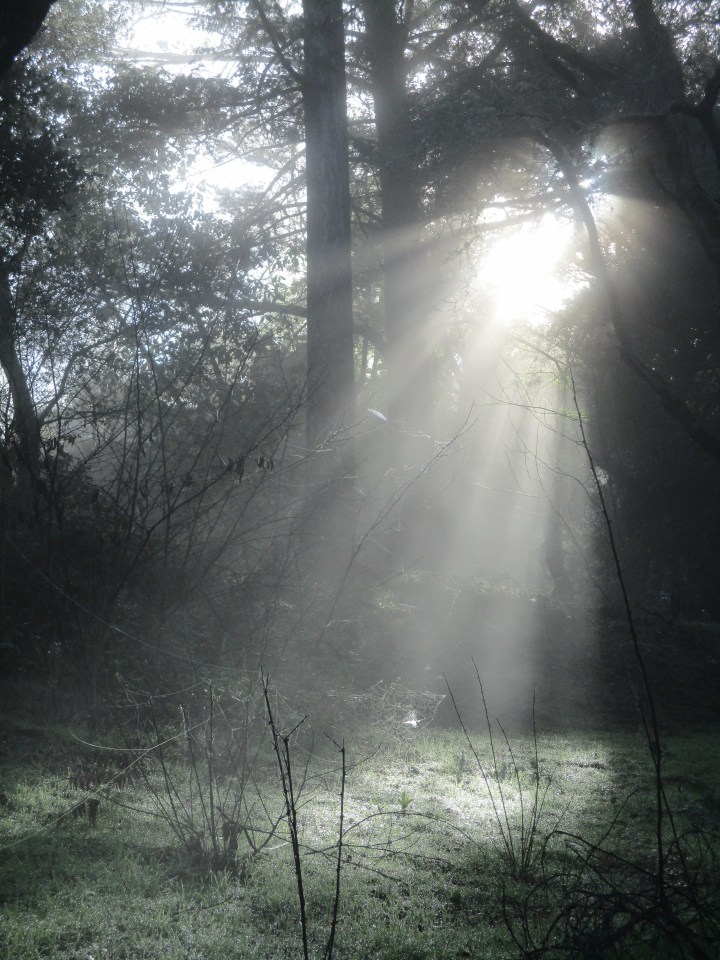 Or . . . a close encounter of the third kind. Let’s just go with the former rather than the latter.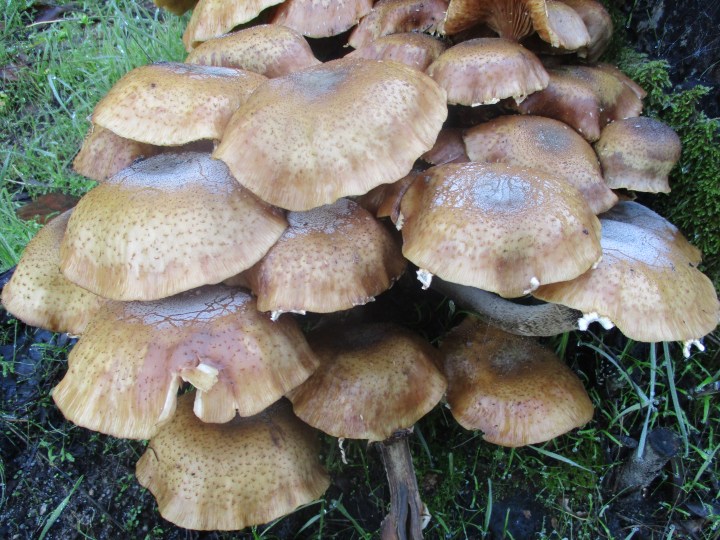



 Between New England and the Pacific Northwest, the boulevard cypress, Chamaecyparis pisifera ‘Cyano-viridis’, is classified as a small tree, even though it gets no bigger than large shrubbery. Locally, only very mature specimens reach the eaves, without getting much more than half as broad. Trunks and limbs remain concealed by fluffy evergreen foliage. Warm and dry air limit growth.
 Nomenclature of the botanical sort was so much simpler back when we studied it back in the 1980s. It was intended to be like that. It was how the various specie of plants were identified and classified. There were certain rules that simply made sense. After ‘family’, plants were classified into general ‘genera’, and then further classified into specific ‘specie’. Some specie were further classified into ‘varieties’ and ‘cultivars’. (Cultivars are simply ‘cultivated varieties’ that need to be perpetuated by cloning because they are too genetically unstable to be true-to-type from seed.)
 Modern fruit trees have been so extensively bred to produce abundant and unnaturally large fruit, that most types are unable to support the weight of the fruit that they can produce each season. Without specialized dormant (winter) pruning to limit production, the weight of excessive fruit breaks and disfigures the limbs of the trees that produce it. Fruit becomes too much of a good thing.
