Six on Saturday: Rose Parade


There is way too much blooming for me to keep up with. Because I know there will be less blooming through summer, I get pictures while I can, even if I can not use them right away. Consequently, these pictures are not exactly from this last week. Some were from the second phase of bloom, and the first picture is from the first and only phase of bloom of a rose that blooms only once annually. I suppose I could have gotten pictures of the other five this last week, but I wanted to get them earlier than later, just in case they were between phases when I wanted to get the pictures.

Roses do very well here, and are even happier in the warmer and more arid weather of the Santa Clara Valley, just a few miles away. The Santa Clara Valley is one of the best places in the world for roses, which is why the Heritage Rose Garden is located there. Sadly, that collection is presently not in very good condition.

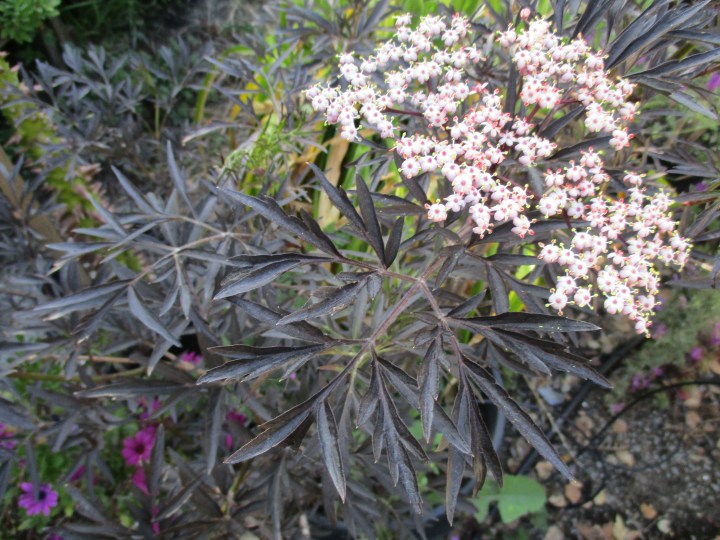
1. ‘Doctor Huey’ is the only cultivar of these six that I can positively identify. It has been the common understock for grafted roses longer than I can remember. Because it is only used as understock, it is not often seen blooming out in the garden. These are only blooming because the original scion died, and was replaced with sucker growth from below the graft. ‘Doctor Huey’ blooms profusely but only once in spring. It grows as a bramble, and can form small thickets if neglected long enough.P80602
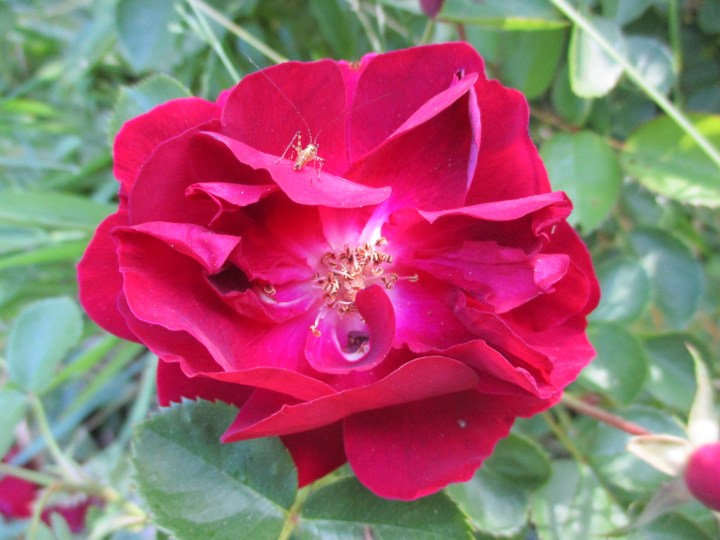
2. Although not white, this pretty hybrid tea rose is probably my favorite of the six just because it is so perfect. I do not know the cultivar. It is not in the landscape, but is in the nursery, waiting to be installed into the landscape. Hybrid teas are the roses that I grew up with, so are my favorites.P80602+
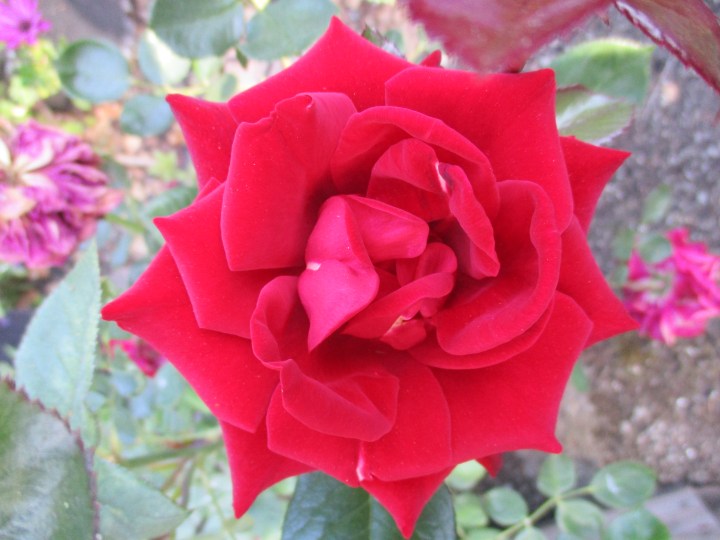
3. I am not sure if this bicolored rose is a hybrid tea or a floribunda. I am guessing that it is a floribunda because there are groups of flowers blooming where I earlier deadhead the first phase of single blooms. It is out in the landscape, in the same garden with 4, 5 and 6 below. It is grown as a shrub. The others are grown as standard or tree roses.P80602++
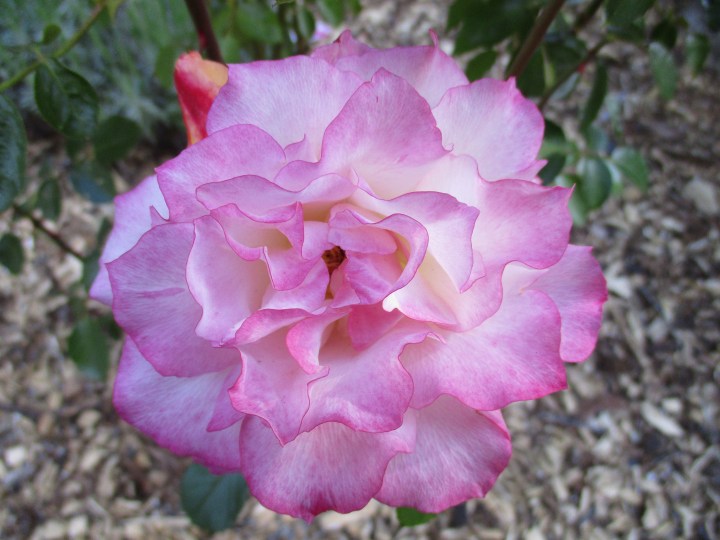
4. This is my least favorite of the six because it looks like one of those trendy David Austin roses. The color is nice, but the form is weird. I will never understand fads. I know that hybrid tea roses were a trend or maybe even a fad at one time, but it was the trend that I grew up with, which is why they are what I compare all other roses to. This rose does not compare to them too well. It is grown as a standard or tree rose.P80602+++
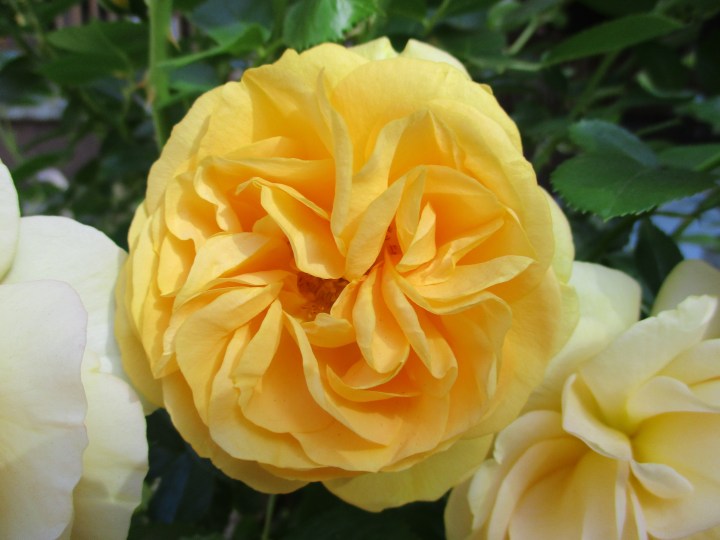
5. This is also grown as a standard or tree rose, but in conjunction with 6 below. I mean that they are grafted together on the same trees. Individually, they are nicely formed roses with excellent color, but they look silly stuck together with the white roses. I could probably identify this rose if I wanted to, but I do not want to misidentify it. Except for the color, the rest of it grows just like ‘Iceberg’.P80602++++
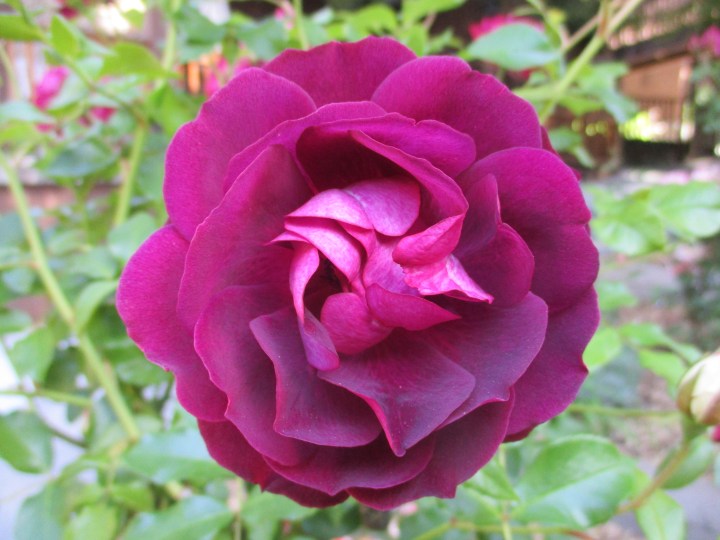
6. This one looks just like ‘Iceberg’, and except for the color, grows just like 5 above, which it is grafted onto the same trees with (as I mentioned above). The white is perfect. If it were a hybrid tea, it would be my favorite of these six. I just prefer 2 above because it is such a perfectly formed rose on good stems.P80602+++++
This is the link for Six on Saturday, for anyone else who would like to participate:

https://thepropagatorblog.wordpress.com/2017/09/18/six-on-saturday-a-participant-guide/

Anemone Clematis

70531Like Ginger and MaryAnn, choosing between the flashier hybrids of clematis and the anemone clematis, Clematis montana, might not be so easy. The fancier hybrids have the bigger, bolder and richly colored flowers that the genus is known for. Anemone clematis has smaller and more subdued flowers in soft pastel hues, but is more prolific, more vigorous, and blooms for nearly a month.
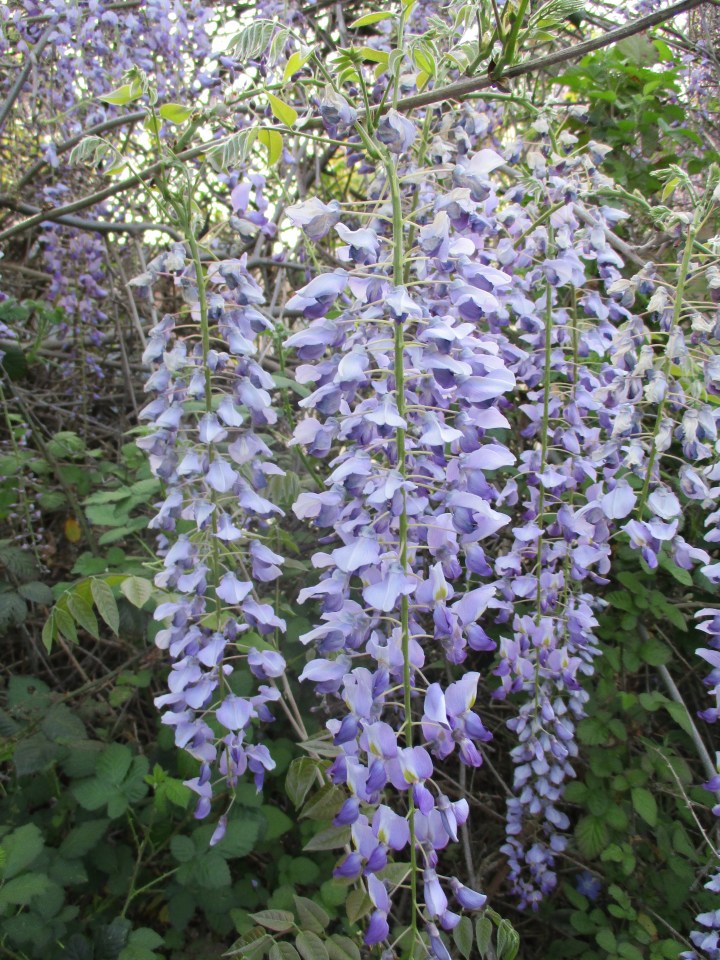
The simple spring flowers look something like those of dogwood, except that they are on wiry deciduous vines that are already outfitted with new foliage. Most are soft white with only four petals and prominent yellow anthers. Some are blushed, pale pink, rose pink or pinkish mauve; and some have more petals or fluffier ‘double’ flowers. The largest flowers are a bit wider than two inches.

The vines are more vigorous than those of clematis hybrids, but are not as aggressive as most other vines or winter clematis. With pruning, they can behave on small gate arbors, although shorter trellises would probably be too confining. If vines escape confinement, they can eventually climb more than thirty feet. The distinctively lobed trifoliate leaves are olive drab, and handsomely rustic.

Grapes And Vines Of Wrath

70531thumbAnyone can plant a grapevine. With a bit of work, almost anyone can make a grapevine grow. Most who put forth the effort can figure out how to prune and cultivate a grapevine. Yet, grapevines so often get very out of control. They easily escape confinement, overwhelm nearby plants, climb into trees and overburden their trellises or arbors. It is easy to forget how aggressive they can be.
The primary problem with aggressive vines is that they require pruning for confinement. The most aggressive vines need the most aggressive pruning. Grapevines can actually be quite docile if pruned properly. Chinese wisteria and red trumpet vine need even more aggressive pruning, and will never be completely tamed. It is important to know the personality of each vine in the garden.

The secondary problem with aggressive vines is they are expected to conform to unrealistic confinement. Small trellises that are lower than about eight feet, including common gate arbors, spires and obelisks, are really only big enough to accommodate docile small vines like clematis (hybrid), American wisteria, well pruned mandevilla and vining annuals like morning glory and pole bean.

Chinese wisteria, large types of bougainvillea and other big and heavy vines need big and stout trellises or arbors. Lattice will not do. Chinese wisteria becomes entangled with lattice, and then crushes it as the vines expand. Bougainvillea does the same to a lesser extent, but then pulls the lattice apart as the intertwined vines sag from the increasing weight of foliage and growing vines.

Clinging vines like creeping fig and Boston ivy present another problem. They are not interested in trellises or arbors. They do not grab onto support by twining stems or tendrils. They instead cling directly to surfaces with specialized aerial roots that damage paint, stucco or even bare wood fences. Clinging vines should therefore only be allowed to climb surfaces that they will not ruin, such as concrete walls. They are better vines for freeway soundwalls than for home gardens.

O

P80530

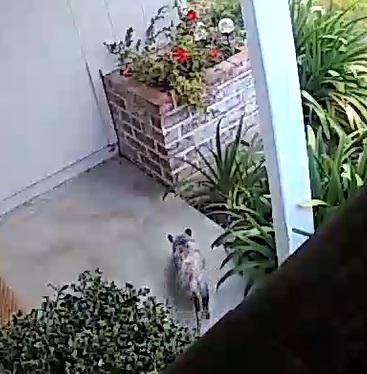
‘O’ is for ‘opossum’. That it the proper common name for the familiar North American critter who lives in or near many home gardens where fruit, vegetables or pet food are available. When a similar critter was found in Australia, it was given the same name by someone who did not spell it properly, hence ‘possum’. It is marsupial, and therefore related to many familiar Australian critters like koalas, kangaroos and the most terrifying of all, wallabies. Well, if the North American name can be applied to an Australian critter, it only makes sense that the Australian name can be applied to the North American critter. Thought technically and correctly ‘opossum’, many of us know them simply as ‘possum’, without the preceding ‘O’.

Opossums have a vast native range in North America. They can live anywhere that does not get too cold for them. They have likely always lived in the Santa Clara Valley to a limited degree. There was not much for large populations of opossums to eat just a few centuries ago.

As orchards grew and displaced native vegetation, there was more fruit that they could eat in season, but still not so much else during the rest of the year to sustain large populations of opossums. It was not easy for opossums to make homes at the modest home sites isolated by large orchards with only seasonal vegetation on the ground.

As orchards were developed into suburban neighborhoods, more habitat was created for opossums. They lived in and around homes, woodpiles, sheds, and areas landscaped with permanent vegetation. Vegetable gardens and more varieties of fruit trees in home gardens provided food throughout the year. There were citrus, avocados, guavas, persimmons and loquats, as well as ornamental berries like pyracantha and cotoneaster. Pet food and household trash were abundant. While San Jose was still a small town, it was inhabited by more opossums than could have been sustained in the entire Santa Clara Valley only a century earlier.

Those old suburban neighborhoods are now even more urban, and their landscapes are much more overgrown than they were when the homes were new. Rats, snails, slugs, grubs and large insects that live in the landscapes are fair game for opossums. Aging and deteriorating homes are easier for opossums to get access to, so finding shelter is easier than it has ever been. With more than a million people just in San Jose, there is no shortage of trash.

All through history, people have been moving in on wildlife. However, what we do not often hear about is the wildlife that moves in on humans.

Rose Campion

80606Rarely planted but often found where the wildflowers grow, rose campion, Silene coronaria, has a way of sneaking in like California poppy or sweet alyssum do. It is so rarely planted that young plants are rarely available in nurseries. Seed is somewhat more available in nurseries, and quite available online. Although they self sow freely if allowed to go to seed, they are not really invasive.

The velvety gray foliage is pretty alone, and becomes a perfect backdrop for the surprisingly bright magenta, regal red or pure white flowers that bloom through early summer. Most of the foliage forms low mounds not much more than a foot wide, while flowering stems stand almost twice as tall. Flowers are ideal for cutting. Hummingbirds enjoy magenta and red flowers more than white.

Individual plants can last for a few years as short term perennials, but because they seed profusely enough to replace themselves annually, they are often grown as annuals, and pulled up before new seedlings appear. Those who last for a second year should probably be groomed. If seedlings are crowded, some can be pulled up and relocated while young. Rose campion wants full sun.

Naturalizing Might Be An Advantage

80606thumbOf course, to the plants who do it, naturalizing is an advantage. To the rest of us, it is often a problem. The advantage to the plants who do it is that they move into new territory, make themselves at home, and probably do quite well with the new place. The disadvantage to everyone else is that naturalizing plants may not play well with others, and consequently interfere with the ecosystem.
Most of the naturalizing plants whom we are aware of are aggressively invasive exotic (non-native) specie, such as Acacia dealbata, pampas grass, blue gum, broom and reed. They move in and compete with or exclude native vegetation. Some might interfere with native fauna as well. (All those monarch butterflies who swarm blue gum are ignoring specie who rely on them for pollination.)

Locally native plants can not naturalize because they are naturally there already. Therefore, all plants who naturalize are exotic. However, not all naturalized exotic specie are aggressively invasive. Some who can not survive without irrigation in the local chaparral climate may never get farther than being a weed in landscaped areas. Some bulbs may not spread from where they are planted.

Rose campion, sweet alyssum, cosmos, forget-me-not, four-o’-clock and nasturtium can replace themselves faster than they die out, but only where they get enough water. Some of the seedlings are likely to appear in situations where they are not wanted. Some might grow into situations where they might be desirable. There is no shame in allowing the desirable ones to continue growing.

Many of the most extensively bred garden varieties eventually revert to something more similar to their ancestors. For example, most of the fancier modern varieties of nasturtium, after a few generations, will bloom with more of the basic yellow and orange than they did when they were new. Eventually, almost all flowers will be yellow or orange. Such seedlings are known as ‘feral’, because they are more similar to the wild ancestry of nasturtium, than to the genetically unstable modern variety that was originally sown.

Memorial Day

P80527

Tomorrow is Memorial Day. Yesterday was the Felton Remembers Parade and Covered Bridge Festival, which is how Memorial Day is celebrated in Felton. It was a celebration worthy of Memorial Day, with plenty of music, crafts and expensive but unhealthful food to go with it. All that was lacking was that which is ‘memorial’. It seems that we have forgotten about that which we should never forget.

There were plenty of classic cars to provide memories of how stylish cars had been. There was a Boy Scout Troop to conduct the Flag Raising Ceremony at the main interchange of Highway 9 and Felton Empire Road to provide memories of when we still respected the American Flag and traditions associated with it. We were reminded of who our local politician are, and that we are still procuring funds for a new library, and that there are too many clubs for hateful women, and that the individual members of the motorcycle club get more done around here than everyone else combined (except for our local District Supervisor who provides the memories of what a public servant used to be.)

Felton Covered Bridge Park, the venue of the Covered Bridge Festival, is surrounded by memorial trees. All the redwood trees (which are of the cultivar ‘Soquel’, rather than wild trees) are memorial trees, sponsored by friends and families of the honored deceased. Some are outfitted with plaques. One was recently added. Another sweetgum tree is a memorial for Charlie, a very respected English bulldog. The small valley oak in an island in the parking lot is known simply as the Memorial Tree, to commemorate several who did not get their own tree. All the trees were there for the festivities, but only to provide shade and beauty.

Perhaps celebration is the best Memorial, or at least the best that such a large group can collectively participate in. Actually, the Covered Bridge Festival was exactly that, a ‘festival’ that merely coincided with the Felton Remembers Parade. It was not really a Memorial by design.

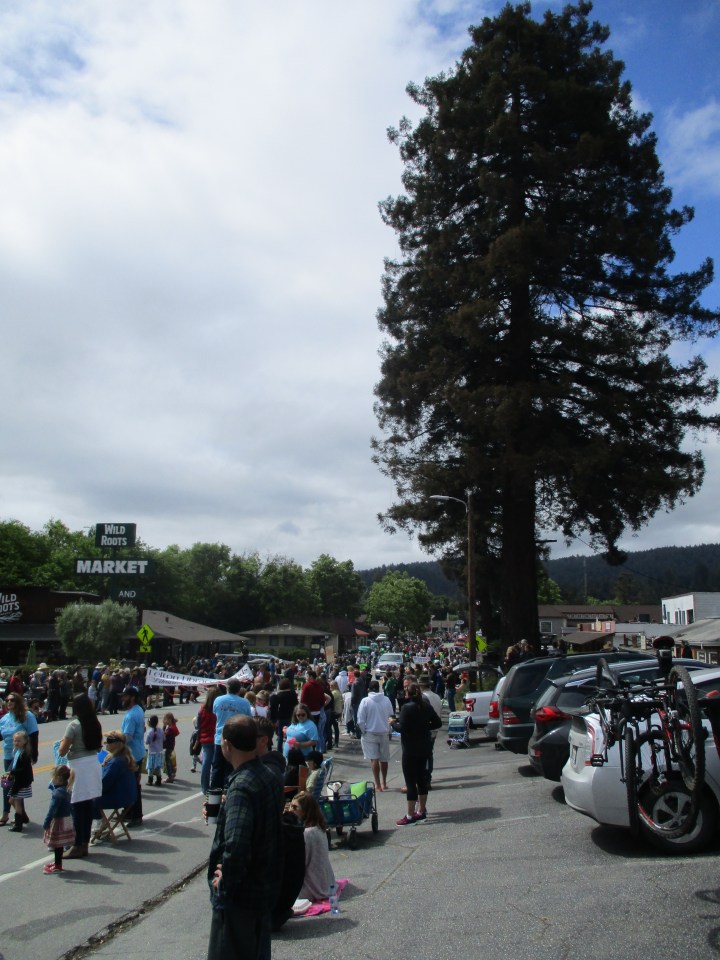
The big old Featherstone Tree at the center of town, and in the picture of the Felton Remembers Parade above, is not really a memorial tree, but does happen to be outfitted with a commemorative plaque for Mr. Featherstone who planted it, and has witnessed more parades on Highway 9 than anyone has.

https://tonytomeo.wordpress.com/2017/10/05/big-tree-in-a-small-town/

The little Memorial Tree in Felton Covered Bridge Park, and in the picture below, was easier to ignore in the parking lot behind the mobile kitchens. I have written a few articles about it, beginning with this one –

https://tonytomeo.wordpress.com/2017/10/06/small-tree-in-a-big-park/

and most recently this one –

https://tonytomeo.wordpress.com/2018/05/02/may-2/

P80527+

Honeysuckle

P80526K

This is no ordinary honeysuckle. It is quite less than ordinary. It is not available in local nurseries. No one here wants it. Although it might be available from nurseries that provide native plants within the native range of this honeysuckle, most of those who find it in their garden probably do not want it there. After all, there are plenty of more desirable honeysuckles to grow. Some have more fragrant bloom. Some have more colorful bloom.

As you can see, this honeysuckle is not very impressive. It is about as shrubby as it is vining, and does not get very big. The small white flowers lack fragrance, and are not very abundant.

What I like about this honeysuckle is that it came all the way from Oklahoma. ( https://tonytomeo.wordpress.com/2017/11/19/oklahoma/ ) It is native there. I do not remember what honeysuckle it is at the moment. I brought it back with all sorts of seed and a few native plants that I obtained while there, including Arkansas yucca, Eastern red cedar and prickly pear. I can still remember sorting and packing some of the ‘specimens’ at a table outside a coffee shoppe on the bank of the Oklahoma River in downtown Oklahoma city, in Oklahoma County, in . . . Oklahoma.

When I grew rhododendrons, I knew people who bragged about rare cultivars that they and only a few of their friends and colleagues had obtained. Most were very pretty, with impressive bloom and bright color. Some were not so appealing; but no one wanted to say so. Sometimes, it seemed that the rarity of a cultivar was more important than any actual attributes.

I can remember many rare cultivars of rhododendron.

However, I know of none as rare as my honeysuckle from Oklahoma. I have the only one.

Six on Saturday: Elderberry +


It is only coincidence that all of the bloom for today happens to be white. Again, these are old pictures, from two weeks ago or so. The mock orange, Philadelphus lewisii, and black locust, Robinia pseudoacacia, finished bloom a while ago. Both were very fragrant.

I wanted to get these pictures of the ‘Black Lace’ elderberry, Sambucus nigra ‘Black Lace’, and the native blue elderberry, Sambucus cerulea, in bloom, not because they are remarkably pretty, but for comparison. Their more recent bloom has been more impressive, with wider floral trusses. The blue elderberry is very common here, and because common black elderberry are uncommon here, it is our standard elderberry. ‘Black lace’ is only rarely available in nurseries, and grown primarily for the dark foliage and nice bloom. However, some mail order catalogs describe it at a productive fruit ‘tree’, as if it is comparable to other elderberries. It came here as an ornamental. Fruit would be an added bonus. I am very interested to see how it compares to the native blue elderberry, which is excellently productive, particularly if cultivated. It is ideal for award winning jelly, even if it does not win the blue ribbon: https://tonytomeo.wordpress.com/2017/10/01/blue-ribbon/

Elderberry bloom is useful as well, although we have not used it for anything here. I prefer to leave the bloom to make more fruit. However, because there are so many around here, we could easily get a significant volume of bloom without significantly compromising the availability of fruit later on. Bloom can be battered and fried like fritters, or used in beverages. I will leave that work to someone else.

1. ‘Black Lace’ elderberry bloomP80526
2. blue elderberry bloomP80526+
3. ‘Black Lace’ elderberry foliageP80526++
4. blue elderberry foliageP80526+++
5. mock orangeP80526++++
6. black locustP80526+++++
This is the link for Six on Saturday, for anyone else who would like to participate:

https://thepropagatorblog.wordpress.com/2017/09/18/six-on-saturday-a-participant-guide/

Clematis

70524There are so many different specie involved with the extensive breeding of the modern cultivars of clematis that they are not even assigned full Latin names. They are simply known as ‘clematis’ (without a specie name), with a respective cultivar name. Clematis X jackmanii is the oldest known hybrid, so the name is often applied to other hybrids, whether or not they are actually related.

The big broad flowers are abundant and spectacular this time of year, but unfortunately do not last long. Bloom finishes before the weather gets much warmer, leaving unimpressively rustic foliage on wiry vines. The vines might reach ground floor eaves, and are just the right size for small gate arbors. If necessary, old plants can be lightly groomed of twiggy growth while bare through winter.

Flowers are rich shades of blue, purple, red, pink or white. Many are bi-colored, and some have ruffled centers. During full boom, there may be more flowers than foliage visible. Foliage is a dark shade of olive green, with a dull matte finish, which is actually a perfect background for the rich color of the bloom. Roots like rich, moist and cool soil, while the vines climb into sunnier situations.