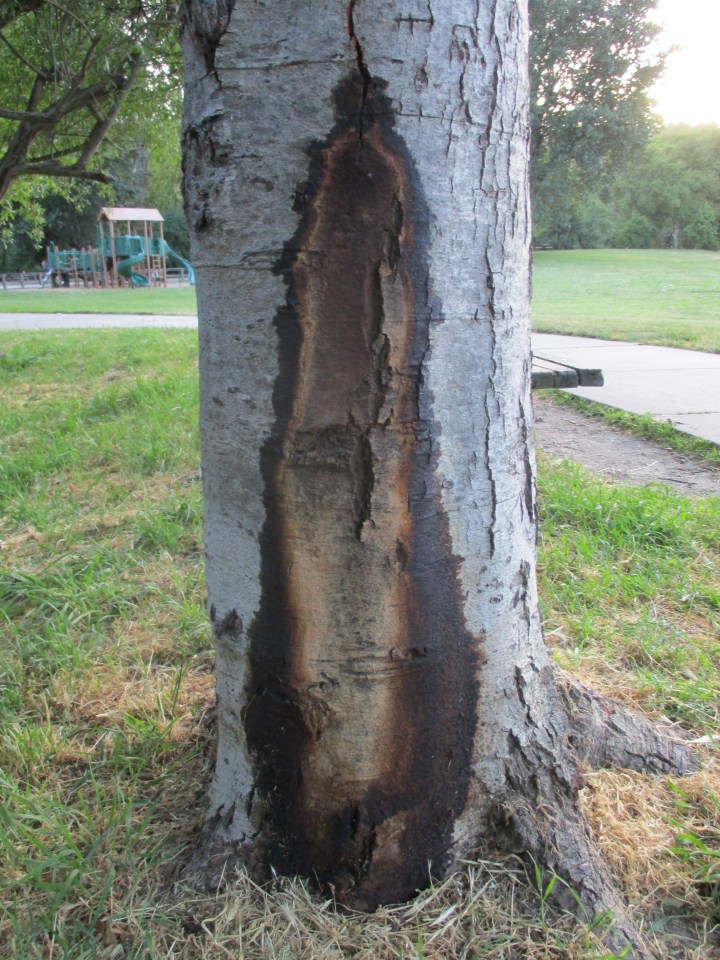
 This unhappy native white alder, Alnus rhombifolia, had been deteriorating for quite a while. White alders do not last long even in the wild. A few nearby have already been removed. This one is next. They were nice and shady when the landscape was new. Nicely maturing sycamores and a bigleaf maple can take over for this one now.
As bad as it looks, this nasty stain had nothing to do with the imminent doom of this tree. It developed only recently, and very quickly. It is not nearly as bad as it looks. If the tree were not to be removed, it could survive with this problem for quite a while. Other healthier trees can live with it for many years or indefinitely, and some actually recover.
It is ‘flux’. More specifically, it is slime flux, which is also known as bacterial wetwood. The obvious symptoms are this unsightly bleeding and staining. A less obvious symptom is the swelling that caused the fissure in the bark from which the unsightly fluid is draining. The fluid can smell nasty!
Furrows in the bark develop naturally as the trunk expands over many years. They do not penetrate through the bark into the cambium below.
Fissures are fractures that penetrate through the bark and into the cambium. The fissure in these pictures developed so recently that the orange interior of the bark has not oxidized to tan or gray yet. The fissure is about six inches long, and slightly lower than a doorknob.
Even for healthy trees, there is no remedy for slime flux infection. It can only be left to do whatever is going to do. It can accelerate internal decay, but is otherwise not as detrimental to the health of an infected tree as it would seem to be.

(The article from my weekly gardening column that is typically posted on Thursday was posted yesterday, which is why this article, which is more appropriate for Wednesday is posted today.)
 There is a difference. Hybrid tea and grandiflora roses were bred to be excellent cut flowers for the home. They bloom on long stems, and last well once cut. However, the rigid and thorny plants that produce these excellent blooms are realistically not much to look at. Floribunda, polyantha and climbing roses are more of a compromise with less ideal (perhaps) flowers on friendlier plants.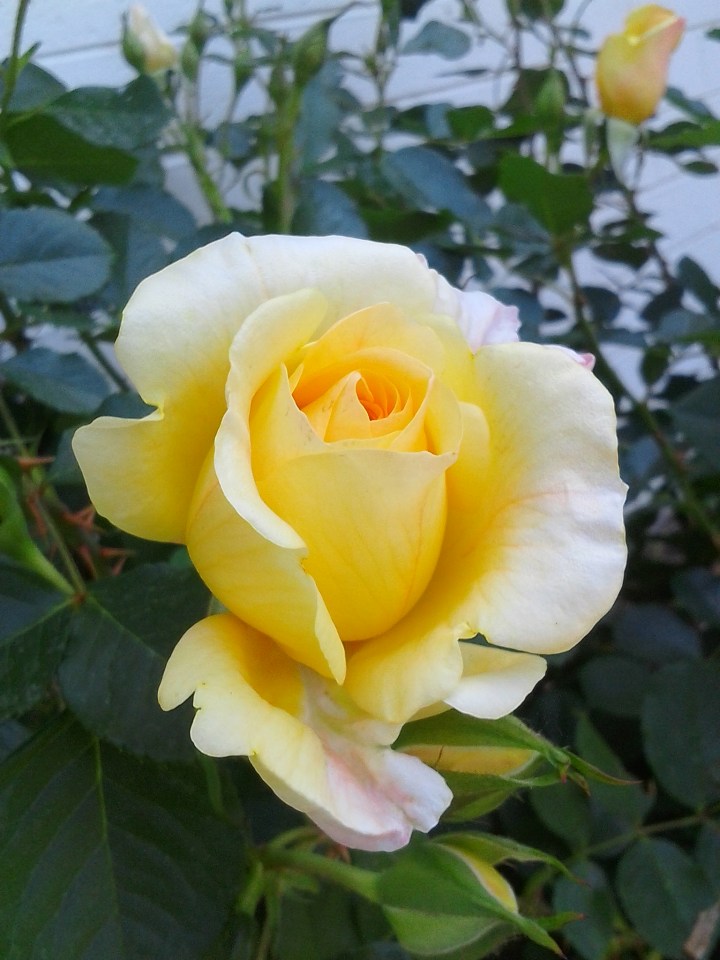
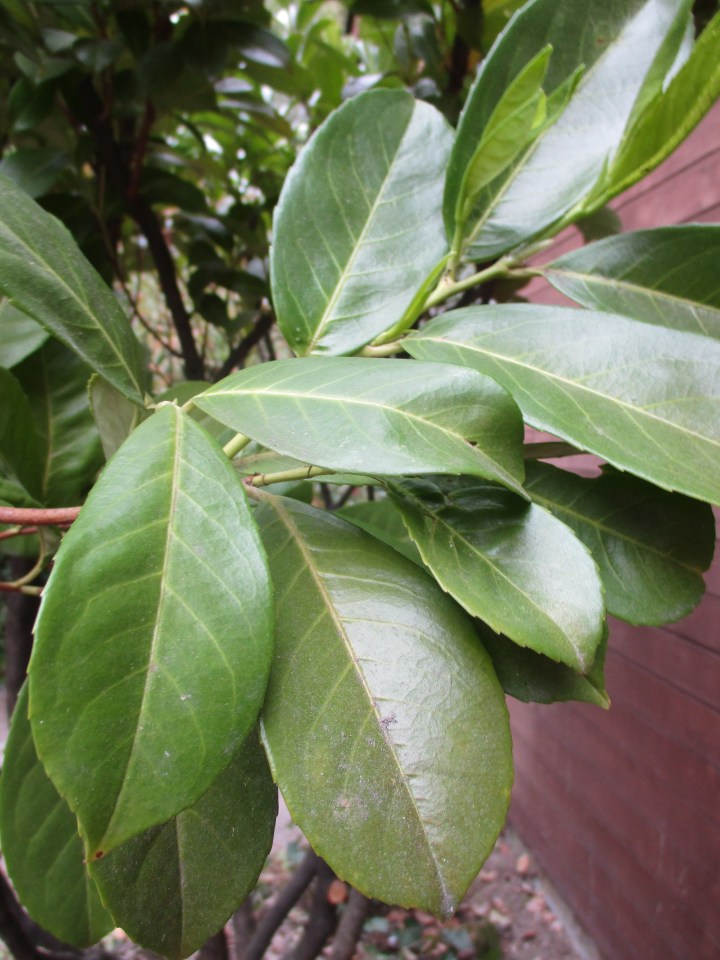 There is a reason why the most popular specie for frequently shorn formal hedges have small leaves and finely textured foliage. Technically, a formal hedge of cherry laurel, Prunus laurocerasus, can be shorn as well, but should be shorn only once or twice annually, and then allowed to fluff back out. Otherwise, the big leaves get shredded as quickly as they recover from previous shearing.
 Those of us with ‘maintenance gardeners’ are likely aware of how rare it is to find someone who knows how to maintain hedges properly. It seemed so simple years ago. Several identical plants could simply be planted in a row, and then somewhat regularly shorn for confinement to a prescribed space. They were not allowed to exceed a specific height or width for long between shearing.
 The ‘politically correct’ designation for them now is ‘flowering cherry’. We all know what it means, but it is not quite as accurate. After all, they all flower. Fruiting cherries can not make fruit without flowering first. The old fashioned designation as ‘fruitless cherry’ is more accurate, but not so appealing. Besides, after half a century, the work of these two deteriorating old fruitless cherry trees has not been in vain.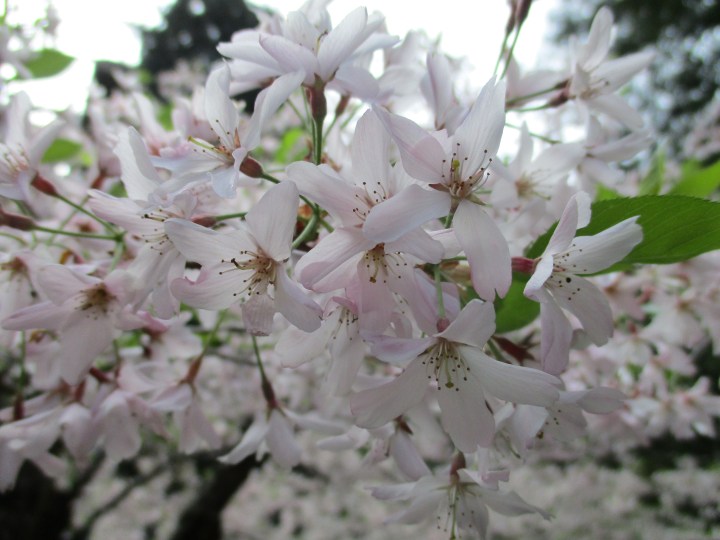
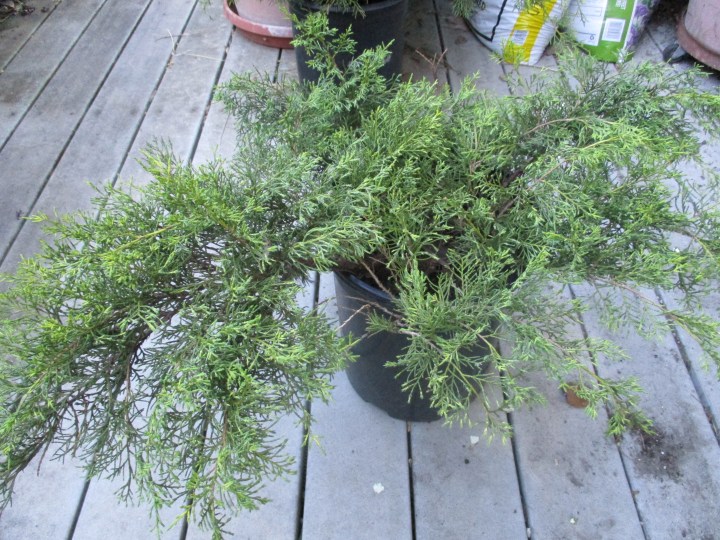 Oh, the stigma of juniper never gets old! No matter how many cool new cultivars get introduced, and how many specie get rediscovered, they are still though of as those nastily prickly ‘tams’ that were too common in the 1950s. Even some of us who really like junipers dislike tams, not only because they share their stigma with all other members of the genus, but also because they really are nasty and prickly, and not as useful as their overuse would suggest. Are they deep ground cover or shallow shrubbery? They might work for a few years, or maybe many years, but they eventually crash into each other or other plants and pile up into a dense thicket that can not be pruned without being deprived of all dignity.
 The pros and cons of wax privet, Ligustrum japonicum ‘Texanum’ might get it a rating of about 2.5 out of 5. It seems that every asset is offset by a liability. The profuse clusters of tiny white flowers are sweetly fragrant, but are also a serious problem for those allergic to pollen. The berries attract birds, but are also very messy, and contain seeds that can germinate in the strangest of places.
 If good fences make good neighbors, what about hedges? If only it were that simple. There are all sorts of evergreen hedges to provide privacy, obstruct unwanted views, disperse wind, define spaces, or muffle noise. They can do much of what fences do, and muffle sound better. The problem is that they are composed of living plants, shorn into submission and very unnatural shapes.
 Seriously, I am not making this up. ‘Drunk Stick’ is what the Spanish name of ‘palo borracho’ translates into. It is one of the few common names of the tree I know only as floss silk tree, Chorisia speciosa or Ceiba speciosa. Yes, it sounds crazy, but not as crazy as what the trunk and limbs looks like. One can speculate why it is known as ‘drunk stick’. I am not certain that I want to know.
