Colors

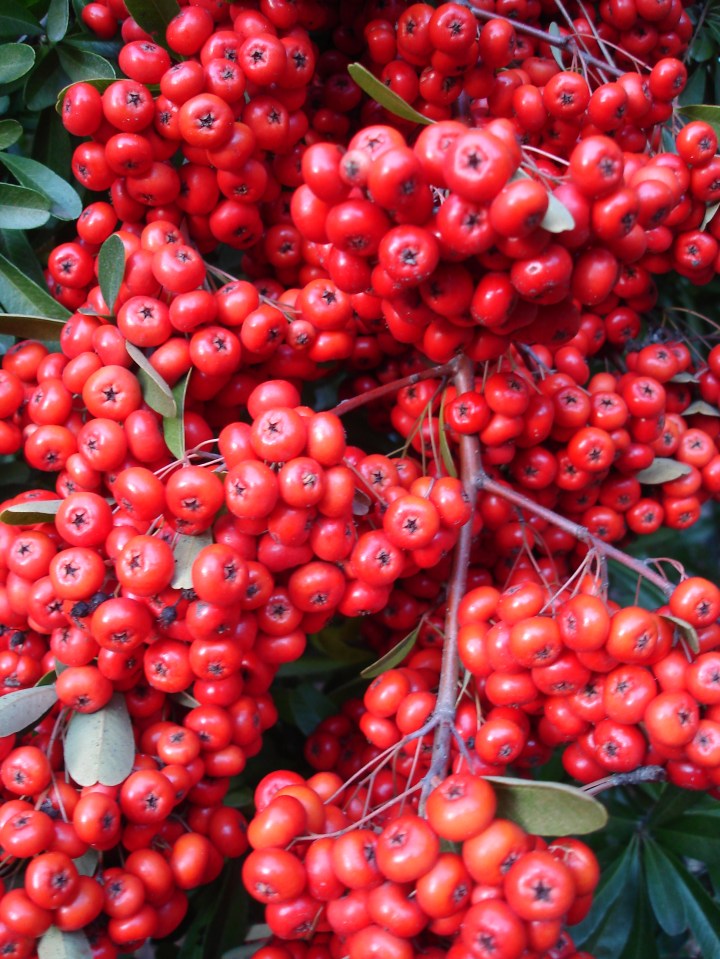
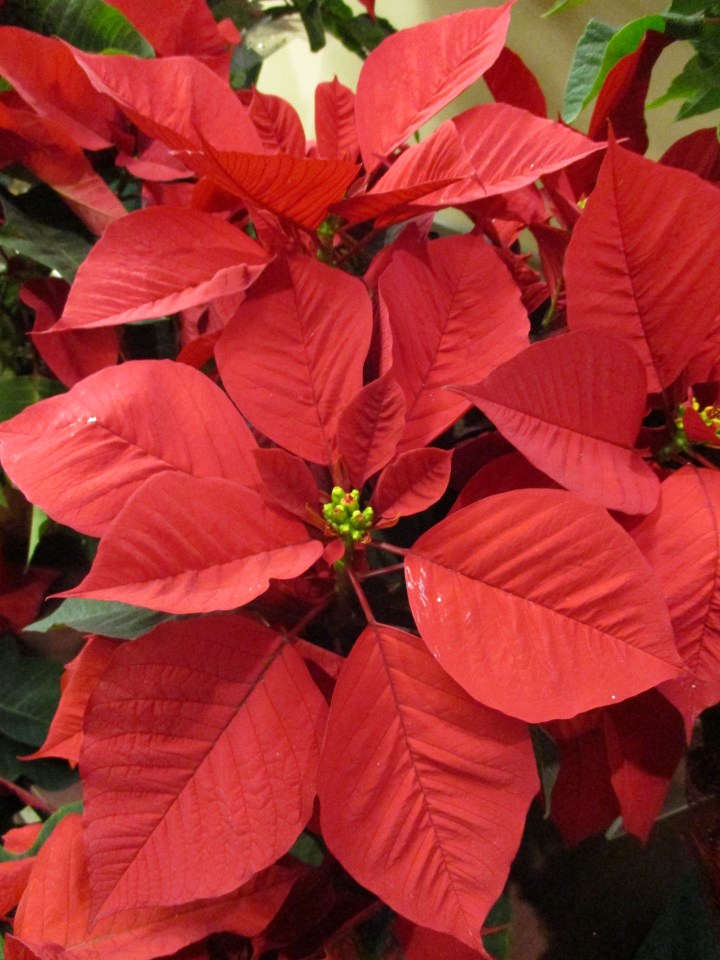
P71029+Remember the movie from 1988? I don’t either. I never saw it. Gang violence is not my idea of a good time. The title ‘Colors’ refers to the use of distinguishing colors by the gangs of Los Angeles. Gang members wear colors that correspond to their respective gang affiliation.

As autumn progresses, some of us get to gloat about our colors. New England gets the most and best colors, with a full range of reds, oranges and yellows, as well as browns and burgundies. The Appalachian Mountains to the south seem to go lighter on the reds and burgundies, concentrating more on oranges. The upper Midwest around Minnesota excels at the rich reds, with yellows confined to groves of cottonwoods. The lower Midwest does well with clear browns alternating with yellows, and even some oranges. The Rocky Mountains have a good range of color, with more gold than the Appalachians Mountains, but it is not as spectacularly concentrated. The bright colors contrast more with evergreens.

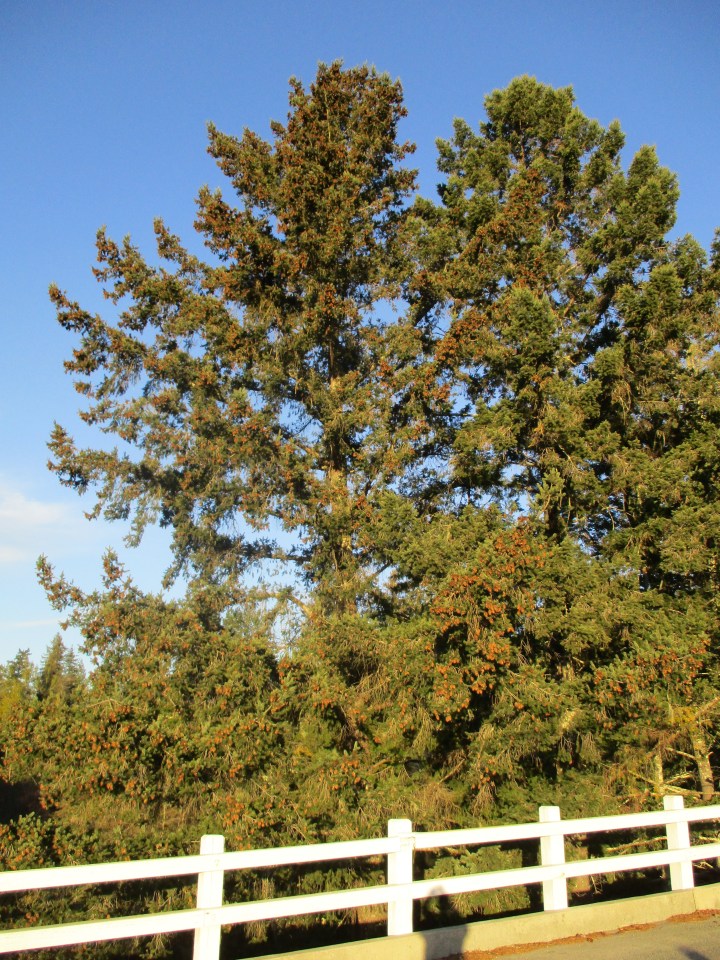
Here on the West Coast, we have yellow. . . . and redwoods . . . and palm trees. The bright yellow cottonwoods are quite flashy farther inland and in Nevada, where they grow along creeks and rivers that flow through the southern deserts. The only orange and rusty red we get from native specie here is from poison oak. Cottonwoods, willows, sycamores, box elders and even the bigleaf maples all turn yellow; and only when the weather is just so. Box elder foliage is more likely to shrivel and turn tan. Sycamore and willow foliage usually gets rather shabby.

To get the bright oranges and reds that everyone else in American enjoys, we plant exotic (non-native) trees; and there are not many choices that color reliably in our mild climate. Sweetgum is probably the most reliable, and the most variable with its color. Pistache and flowering pear are the second best choices, although flowering pear has a serious problem with fireblight here. Gingko colors very nicely, but is limited to yellow, which we already have a bit of.

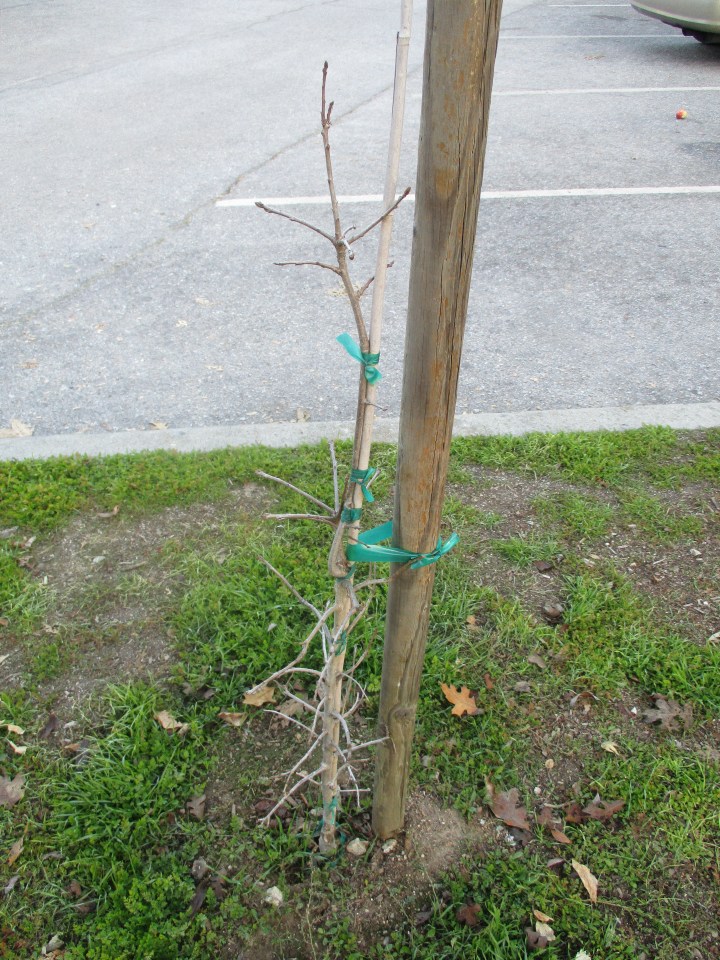
While everyone else is posting pictures of their autumn color online and bragging to Californians about it, our color is only beginning to develop here. The most reliably colorful of the exotic trees seem to be doing well; but the natives and some of the exotics are defoliating prematurely, without much color at all. Honeylocusts have dropped most of their foliage while it is still lemon-lime green. Box elders just look sickly. Cottonwoods drop leaves as soon as they turn yellow, leaving only green leaves up in their canopies. The English walnut in the picture is the best color I could find.

It happens this way sometimes. This year, it might be a result of the unusually warm weather so late in summer, after the weather had already started to turn milder. It is impossible to say for certain. We take what we can get. We are not known for autumn color here.

P71029

Planned Obsolescence

P71028For my exquisite 1979 Electra, planned obsolescence did not work out so well. It was probably a grand Buick for that time, and one of the last with tail fins! It was elegant. It was big. It was steel. It was made to last ten years or 100,000 miles . . . and that was it. Seriously, as much as I enjoyed that car, it did not want go to much farther than it was designed to go. It limped along for almost 20,000 miles more, but was not happy about it, and was really tired and worn out by the time it went to Buick Heaven.

Planned obsolescence used to mean something completely different in landscaping. Yes, we all know what it means now; that many of the so called ‘sustainable’ modern cultivars last only a few years so that they need to be replaced sooner than older cultivars. What it used to mean is that fast growing plants were used to get a landscape established quickly, while more desirable but slower plants took their time growing. As the more desirable plants matured, the fast growing plants could be removed.

For example, a large condominium complex was landscaped primarily with Norway maples and flowering pears. These trees would eventually grow to be proportionate to the buildings and the spaces that they shade. To provide shade sooner, and to help the landscape look established by the second summer, common cottonwoods were incorporated into larger areas. Their placement was not as important as it was to the maples and pears, but was strategic enough to avoid the other trees and buildings as long as possible. The intention was to allow the cottonwoods to be the prominent trees in the landscape only temporarily, but to remove them as the maples and pears matured. It was a practical technique used by landscape designers for as long as anyone can remember.

Sadly, few modern ‘gardeners’ understand this concept. The cottonwoods did not get removed when they should have been. They overwhelmed and crowded the other trees, and caused them to be disfigured as they grew. The cottonwood roots broke pavement and ruined lawns. Then, after all the damage and destruction, . . . the cottonwoods died, like cottonwoods do. Now the landscape is shaded by healthy but distorted maples and pears. The plan did not work very well.

Now, such planned obsolescence is simply impractical for trees. Even if those maintaining landscapes were reliable enough to follow through with such plans, modern tree preservation ordinances would prevent them from getting permits to remove temporary trees. Planned obsolescence can work with smaller shrubbery and perennials in home gardens, but those of us who use the technique must follow through with our plans so that things do not get too crowded.

Firewood

P71027Heating homes has certainly changed. It has gotten much more efficient and less polluting. Homes are much better insulated than they were only a few decades ago. Heating systems use much less fuel, and produce much cleaner exhaust. That is partly how more than a million people who live in San Jose now make less smog than when there were half as many.

The unfortunate part of that efficiency is the decline in popularity of traditional fireplaces and stoves. Burning wood is now politically incorrect, and at times, even illegal. ‘Spare the air’ days are strictly enforced when air quality gets unpleasant.

In San Jose, building codes do not allow fireplaces to be build into new homes. Only homes that were build with fireplaces or stoves prior to the ordinance are outfitted with them. Fireplaces that are damaged by earthquakes are often removed instead of repaired.

Tending a fire does not fit into modern lifestyles very well anyway. If someone stays home long enough to do so, he or she is too busy with other work. Tending a fire simply is not considered a common household chore anymore. Fireplaces do not have thermostats, so do not maintain the sort of consistency in temperature that so many of us have become accustomed to.

Those of us who still use our fireplaces (when permitted) must procure firewood. There are no more deteriorating orchards to supply it. We can not grow our own because permits are needed to cut down trees that are big enough to make firewood. Permits are only granted for trees that must be cut down for other reasons. The need for fuel is not good enough.

Consequently, it becomes necessary to purchase expensive firewood. To some of us, it is still worth it. We can either purchase mixed firewood from a tree service, or get it from a firewood cutter in the Santa Cruz Mountains. There always seem to be more trees that need to be cut down than are needed for firewood.

Anatomically Correct Horticulture

P71026Certain fruits and vegetables were so much more palatable before studying botany. Knowing what they really are sort of puts a damper on things.

Real fruits, including those known as vegetables, are no problem. We all know what they are, and they have the seeds to prove it. Just like flowers reward pollinators with nectar, many plants use fruit to get animals and people to disperse their seeds. Therefore, the fruit is designed to be eaten.

The majority of vegetables are fine too. It seems natural to eat leaves, stems, roots and even flowers. Things get a bit weird with petioles of rhubarb, celery and cardoon, since the leaves are not eaten. Cinnamon bark and saffron stamens also seems a bit odd. What about maple syrup? Is it a vegetable too?

Then there are fruits and vegetables that are not what we think they are.

You will never look at a potato the same way knowing that it is a subterranean stem known as a stolon. If it is looking back at you, it is because it has eyes, which are actually modified axillary buds, which only stems are equipped with. It it were a modified tuber or or a tuberous root like most of us think it is, it would not have these eyes.

Pineapple might be watching too, with its many eyes. Each eye actually represents a flower. What we think of as a pineapple fruit is actually a densely crowded collection of distended and fused flowers. Does that mean it is a vegetable like broccoli or cauliflower?

Strawberry is sort of fruity; but only what we think of as strawberry ‘seeds’. They are actually single seeded fruits known as ‘achenes’. Really, those little black things are outfitted with everything that they need to be classified as fruit. The red part of the strawberry is only a ‘receptacle’ for the achenes.

Everyone knows that fig trees do not bloom. So, how do they make fruit? Well, they technically don’t make any visible fruit; but they do bloom. What we think of as a fig fruit is actually a weird inside out inflorescence, with minute flowers on the inside. Each species of fig is pollinated by a particular species of minute wasp that enters the inflorescence through a very small hole at the end. Minute achenes about the size of strawberry achenes are the crunchy bits in ripe figs. To make figs even more unappealing, some wild figs contain the eggs and larvae of the wasps that went inside to deposit their eggs before dying there. Yum. Most garden varieties attract the wasps, but lack the necessary floral parts for the wasp to want to leave their eggs there. They therefore do the job of pollinating without dying inside.

Butterfly

P71022Before you send me a comment about it, I am already aware that this is a very bad picture. It was taken with my primitive telephone because it was convenient at the time. This tired looking butterfly might not have waited for me to get the camera. It passed away, seemingly peacefully, right there on the hood of the old Chevrolet. It did not seem to be injured in any way. It probably simply expired like butterflies do after breeding. It is a natural process that the butterfly did not seem to be too distressed about. It gets no obituary because I am not qualified to write one. We are not sufficiently acquainted. I do not even know the specie of this butterfly.

Now that he or she is deceased, I ponder the beauty of these insects. They are so graceful and very colorful. They flutter about like animated flowers. Everyone likes them. Some of us grow flowers that attract them to the garden, and plants to sustain their baby caterpillars.

All flowers are designed to appeal to their pollinators of choice. Those that are pollinated by wind lack color, fragrance and other bling, but are very abundant. Those that are pollinated by flies smell like what flies like. Those that want to attract nocturnal pollinators are fragrant, luminescent (with ultraviolet patterns that are invisible to us), and open at night. Bee pollinated flowers use infrared patterns, and lots of other colors that bees like, and reward them with nectar and superfluous pollen. Well, you get the point. Floral structure, size, patterns, color, fragrance and schedule are all designed around pollinators.

It is difficult to say what butterflies like. They visit such a variety of flowers. Some have abundant pollen. Others have a bit nectar. Some are tiny flowers in dense groups. Others are larger composite (daisy-like) flowers. Butterflies can see both infrared and ultraviolet color, so it is hard to know what they see in flowers.

Some of the clustered small flowers that butterflies like are alyssum, fennel, goldenrod, phlox, Queen Anne’s lace, verbena, yarrow and of course, butterfly bush. They also like flower of the mint family, such as bee balm, lavender, oregano, rosemary and the various sages. Their favorite composite flowers include aster, calendula, cosmos, marigold, coneflower, zinnia and all the daisies and sunflowers.

Lavender Starflower

71101It is really an evergreen shrub with limber stems; but lavender starflower, Grewia caffra, can work almost like a rambling vine. It does not actually climb or grip anything. Like the canes of a climbing rose, it can be tied onto a trellis or fence as an espalier. As a free standing shrub, the arching stems should be pruned selectively. Shearing deprives them of their natural form, and inhibits bloom.

Espaliered plants can reach the eaves. Free standing shrubs have the potential to get as high and wide, but take more time. Alternatively, lavender starflower can be trained as a small patio tree. The leaves look like elm leaves, with the same sandy texture. The lavender star-shaped flowers are as wide as a quarter. They are not abundant, but they bloom as long as the weather is warm. Lavender starflower does as well with full sun as it does in partial shade.

Gutters And Chimneys Need Attention

71101thumbThere is no time that is best to clean the gutters on the eaves. They should probably be cleaned early before the debris within them gets dampened by the first rains. However, they will only need to be cleaned out again after more foliage falls. If cleaned only after all the foliage falls, they will be grungier, and there will be potential for some of the debris to flow into and clog the downspouts.

Most of the fresh leafy debris that fell recently is relatively easy to clean out. Debris that has been accumulating through the year will be more decomposed and settled in. Evergreen trees are somehow messier than deciduous trees. They drop smaller volumes of debris in autumn, but they drop the rest throughout the year. Deciduous trees drop all their foliage within a limited season.

That certainly does not mean that deciduous trees can not make a mess. All that foliage has to go somewhere. If the weather gets cool slowly, foliage falls slowly, and for a longer time. Some deciduous trees innately defoliate slowly, and may even wait all winter to finish. Fruitless mulberry, tulip tree and poplars typically defoliate efficiently, making a big mess that gets cleaned up once.

Flat roofs that lack gutters collect debris too. So do the spaces behind chimneys and in roof valleys (where the slope changes direction). Even if this debris does not interfere with the function of gutters and downspouts, it promotes rot in roofing material. Trees and vines that touch a roof are likely to be abrasive to roofing material if they move in the breeze, or hold debris against the roof.

Trees and vines must be kept clear of chimneys, not only because they can interfere with ventilation, but also because they can be cooked by exhaust from the fireplace below, and ignite! Fan palm beards (dead foliage that accumulates on trunks), pine, cypress, spruce and cedar are particularly combustible. Clinging vines can separate brick from mortar, which is another fire hazard.

Working on the roof and gutters is of course potentially dangerous. It might be best to get a professional for these sorts of jobs, especially if trees need to be pruned. While that is being done, there is plenty of raking and other gardening for us to do (without a ladder). Raking leaves is an important job too, since fallen leaves can shade out lawn, ground-cover and flowering annuals.

Yuccas (reblogged)


P71022+Yuccas are almost as useful as aloes are for gardening in chaparral or desert climates. I say ‘almost’ because most are not quite as friendly. The leaves are outfitted with nastily sharp tips. It is how they protect themselves from grazing animals in the wild, but it is not such an advantage in home gardens. Some actually have the potential to be dangerous where someone could bump into them. The leaves of Joshua tree can puncture leather. Some types of yucca get so big that they make it difficult to avoid their nasty leaves, even if planted in the background.

That being said, for those of us who do not need to worry about endangering children, dogs or anyone else out in our gardens, yuccas are very distinctive and handsome plants. Their striking foliage radiates outward from dense foliar rosettes. Large spikes of creamy white flowers that bloom in summer or autumn stand above the foliage quite boldly. Some yuccas produce remarkably tall floral spikes. Our Lord’s Candle, Yucca whipplei (Hesperoyucca whipplei), is a terrestrial yucca that sits low to the ground, but produces a huge flower stalk that stands ten feet tall! Modern garden varieties of Adam’s needle, Yucca filamentosa, are variegated.

Of the yuccas that develop sculptural trunks, only a few are available in nurseries. The giant yucca, Yucca elephantipes, is almost too common in mild climates, and unfortunately develops a massively distended trunk that is too big for some of the situations it gets into. Most other trunk forming yuccas that grow slower are uncommon because they are susceptible to rot in landscapes where they get watered through summer.

Except for a few tropical yuccas that are very rare, yuccas are very drought tolerant. Even in desert climates, some yuccas survive on annual rainfall. Others are happier if watered a few times through summer. Giant yucca happens to be a tropical yucca, but surprisingly does not need much water.

Giant yucca is very easy to propagate from cuttings of the big canes. Even big pieces can be cut and stuck as cuttings. However, most of the tree yuccas are difficult to propagate.

Terrestrial yuccas that do not develop trunks are generally easy to propagate by division of pups, although some are difficult to handle. Some terrestrial yuccas actually develop small trunks that creep along the ground, or maybe stand a few feet tall. They can be propagated as cuttings like giant yucca.

P71021

Aloes (and a Rant)

P71020We really should be growing more of what grows well here. This is as relevant in other regions as it is in the Santa Clara Valley. Some regions have a lot more to choose from. There are always limitations too. Tropical plants do not survive the winters of New England. Apples and pears want more winter chill than they can get in San Diego.

In California, we do not have enough water to go around. Well, that is not completely true. Much of that misconception is political, which is none of my business. Much of it is that there are just too many people living here and sharing a limited resource. Much of it is that many of the too many people living here waste water on, among other things, gardening.

Many of the urban areas of California are in chaparral climates, which means that there is not much rain. Los Angeles and some other urban areas are full blown desert, which means that rain is quite minimal. My former neighborhood in the western Santa Clara Valley got about a foot of rainfall annually. It was considered to be chaparral. Trona, in the Mojave Desert, gets about four inches of rain annually.

However, few people in chaparral or desert regions landscape their homes accordingly. Some limit their ornamental plants to natives. Others limit their choices to plants from chaparral or desert climates, even if not native. Yet, most of us grow plants and lawns that really have no business in chaparrals or deserts, and we do so excessively.

Well, enough of that rant. There are many plants that really should be more popular here.

Aloes are a perfect example. Although many are from more tropical climates, most do not need to be watered too much. Some prefer minimal watering through summer. After winter rains, they produce fresh new succulent foliage in spring, and bloom reliably. Many have flashy orange or yellow flowers on striking vertical spikes. As plants grow, superfluous shoots can be separated and planted wherever more of the same plants are desired.

Smaller aloes are quite dense and mounding, with tight rosettes of stout leaves. Larger types with more open growth can get six feet tall. A few grow into small trees, with thick trunks that might be distended or buttressed at ground level. Leaves might have pronounced teeth along the margins, and most are spotted to some degree.

Everything about aloes is striking. They have prominent and colorful bloom. The distinctive succulent foliage is bold and unique. The larger aloes even have sculptural form.

Aloes are ideal for planters and pots because their roots are so complaisant and undemanding. They are rarely bothered by insects or disease. They are so easy to propagate that cuttings or pups can be acquired from friends or neighbors who are already growing them.

Rain!

P71020Something really crazy happened last night. From out of nowhere, a profusion of drops of water started to fall from the sky! It continued to fall for a while, and got everything wet. Soil that had been dry and dusty became rather muddy. As crazy as it sounds, it is not impossible, and actually happened repeatedly last autumn, winter, and into spring. In fact, it was so abundant that the San Lorenzo River filled with all this strange sky water, and flooded worse than it had since the flood of 1982! People in other less arid climates are more familiar with this sort of thing. It is actually no mystery. It is known simply as ‘rain’.

‘Rain’ is like free water. Really, we do not need to pay for it! It falls from the sky, and waters the garden so we don’t need to. It might be the only water that areas outside of the garden get. Some plants out there have been waiting for it since it stopped falling from the sky last spring. Rain that does not soak into the ground drains into creeks and rivers, which flow into reservoirs that store it for later use. (Local reservoirs don’t really save it for later use directly, but use it to recharge groundwater; but that is another story.)

Another advantage of rain is that it tends to get things wet, which makes them less combustible. This is rather useful when forests nearby are burning. The Bear Fire near Boulder Creek is not quite extinguished. In fact, it is not yet contained. This rain should help with that. It probably will not do much for what is already burning, but should slow the already stagnating progression of the fire.