 There is still no news about why mistletoe disappeared this last year in our area. No one really noticed it missing until late in summer. The absence of mistletoe became more apparent as deciduous trees that had been infested with it last year defoliated in autumn. What is even more strange is that the dead mistletoe plants deteriorated so quickly and efficiently that they are completely absent, as if something ate all the mistletoe, or took it away. The only evidence of former infestation in some trees are the swollen portions of stems where mistletoe had been attached. An article about this mysterious absence of mistletoe can be found here; https://tonytomeo.wordpress.com/2017/09/24/where-has-all-the-mistletoe-gone/ .
Someone who harvests mistletoe from local trees, both to eradicate it from a few trees, and also to sell it in local markets, made an interesting observation about the absence of mistletoe just within the past few day. He found that some mistletoe survives, but only in the upper extremities of tall trees. Most of the trees are locust trees, perhaps because they happen to be taller than most of the other trees that had been infested. One infested tree is a black walnut. The viable mistletoe plants are somewhat young and small. Larger plants or colonies that were as high as the smaller surviving plants are gone. Specie of mistletoe that infest coast live oak and some conifers have not been observed.
There are several variables that could account for the survival of relatively small mistletoe plants high in the canopies of host trees. Some pathogens that could affect mistletoe might proliferate in congested growth that limits air circulation, but not where air circulates efficiently through sparse and exposed growth higher up. Some pathogens that proliferate in cool and damp situations are inhibited by drier and sunnier situations. Some pathogens are more likely to infect hosts that are closer to the ground. If rodents are taking mistletoe vegetation, they prefer the shelter of more congested lower growth, and avoid the vulnerability of more exposed higher growth.
 Matthew McDermott got this picture, which was actually part of a video, of a tree burning from within during the devastating fires in Sonoma County last October 9. Many of us saw it in the news. It is actually not as uncommon as it would seem to be. Interior wood is more combustible, and sometimes already well aerated from decay, so can burn if exposed to fire through wounds or cavities, while the exterior of the same tree resists combustion. This is why there are so many big and healthy coastal redwoods with burned out hollow trunks. Of course, trees more commonly burn from the outside.
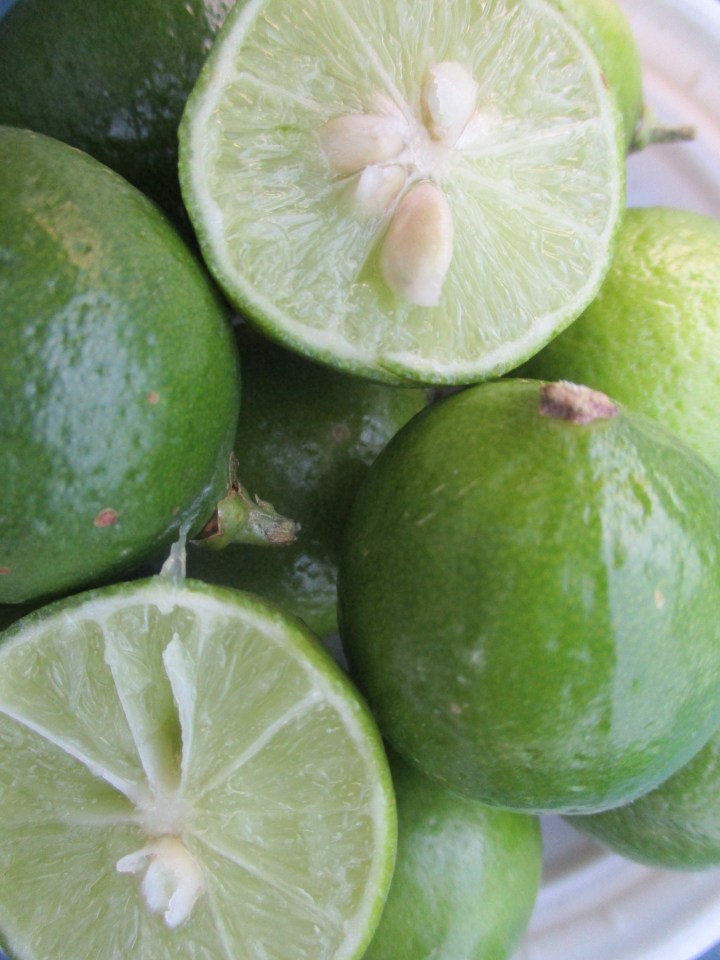 Those who can grow Mexican lime, Citrus aurantifolia, get to brag to their friends who can not, even if they are only a few miles away in slightly cooler spots. It really is marginal here. If it gets too cool in winter, it can defoliate. Frost can damage or kill the stems. Because it stays smaller than other citrus, Mexican lime happens to do well in large pots that can be moved to shelter for winter.
 Timing is very important in gardening. Even when the weather in autumn still seems like summer, spring blooming bulbs must be planted on time. Bare root fruit trees will become available while they are dormant, and will need to be planted before they wake up. Roses need to be pruned before buds for new canes swell later in winter, even if their old canes are still awake and blooming.
 Newer developments are often named after what was destroyed to procure space for them. Writers and historians have been making that observation for decades.
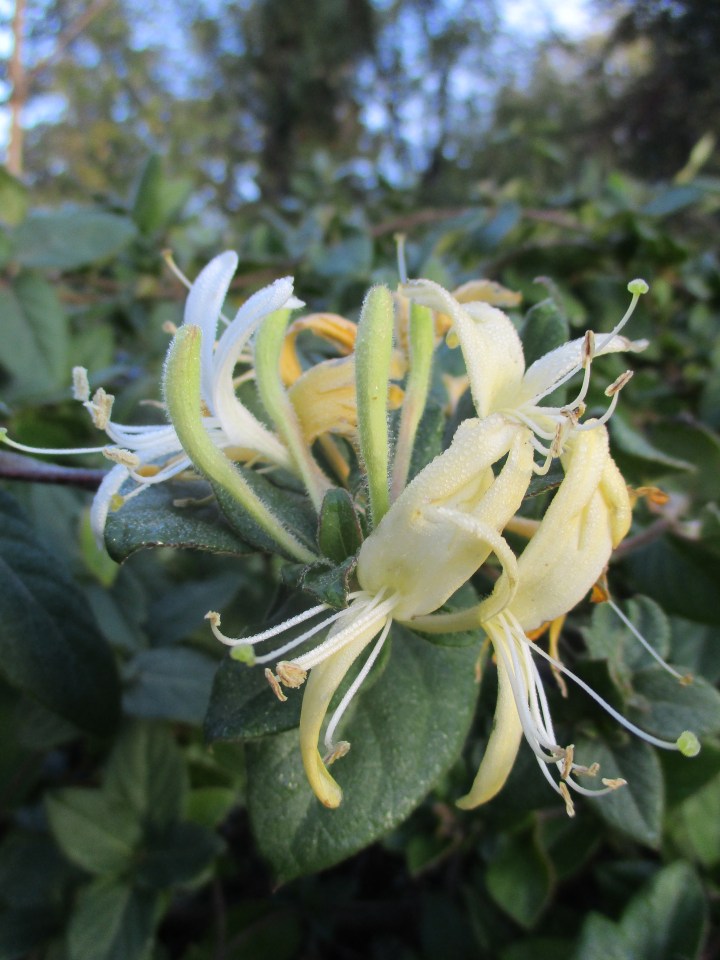 See what happens when the plants in the garden are happy? They do pretty things. It is now halfway through December and this honeysuckle is still blooming nicely. The cool weather has inhibited bloom somewhat, but has not totally prevented it yet. By the end of winter, this honeysuckle will get pruned back so that it can regenerate new growth to bloom through next year.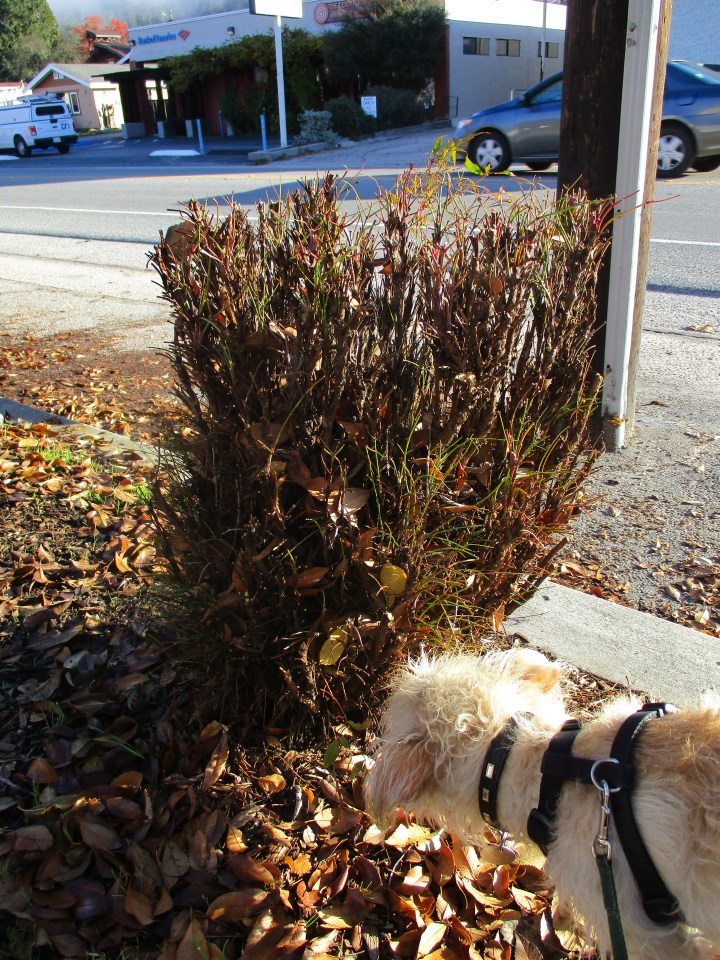
 Okay, so this is not really the time of year that they should be blooming. Torch lily, Kniphofia uvaria, should bloom in the middle of summer. However, without watering, naturalized plants bloom when the weather prompts them to. Some wait out the warm and dry summer weather to bloom as soon as they get dampened by the first rains. Others bloom in spring, before things get too dry.
 Not much bothers old fashioned junipers. They tolerate heat and frost, and anything else the weather throws at them. They do not appeal to many troublesome insects. Once established, they do not mind if they do not get much water. So, aside from over-watering and bad pruning, they are pretty indestructible. Yet, once in a while, otherwise healthy junipers die suddenly and mysteriously.
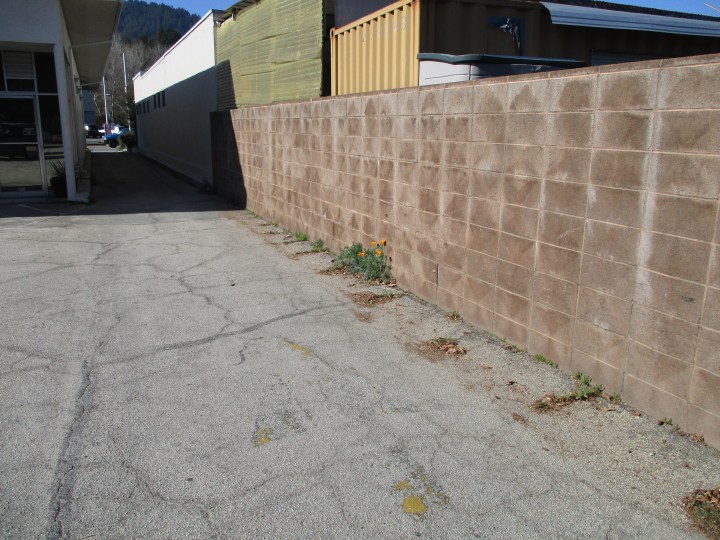 Not just any poppies; California poppies, the state flower of California.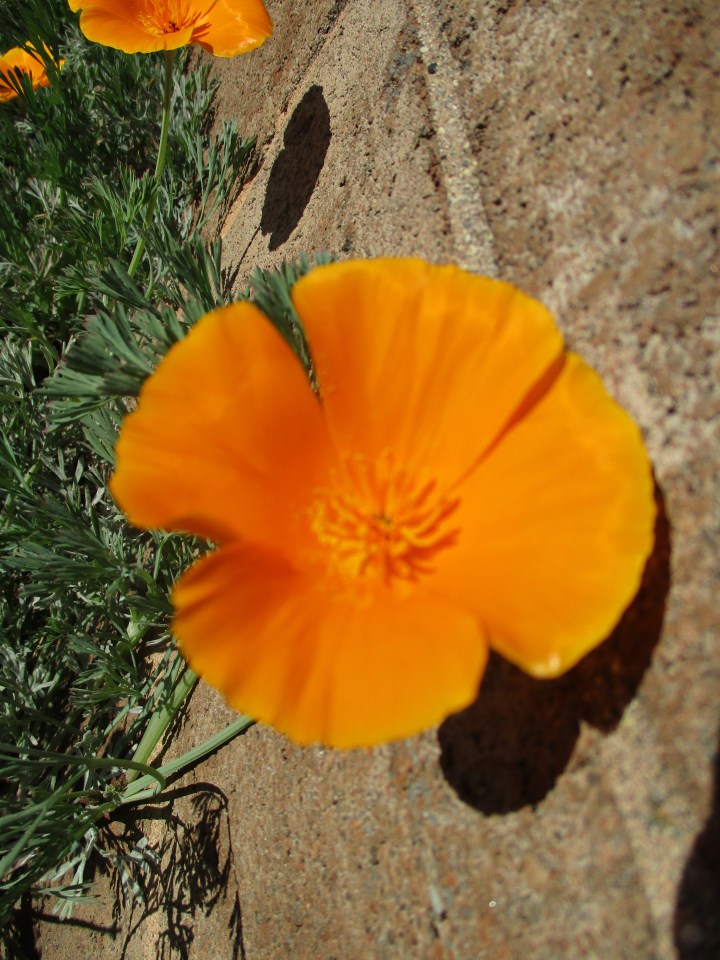
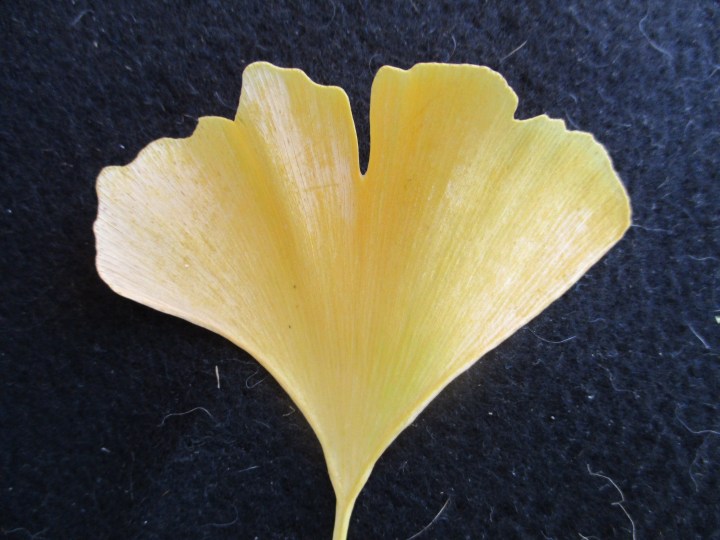 This single yellow ginkgo leaf says a lot. It was found among the abundant cottonwood leaves on the broad walkway in Felton Covered Bridge Park (
