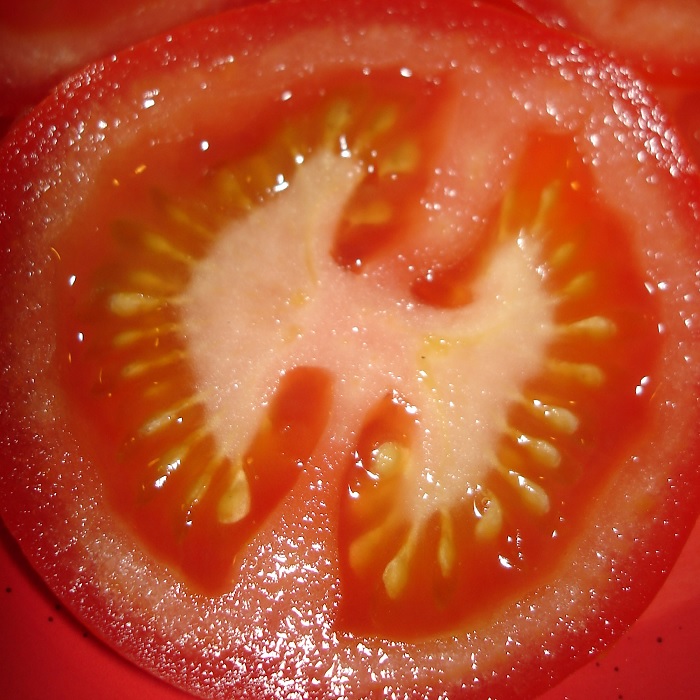
 Certain fruits and vegetables were so much more palatable before studying botany. Knowing what they really are sort of puts a damper on things.
Real fruits, including those known as vegetables, are no problem. We all know what they are, and they have the seeds to prove it. Just like flowers reward pollinators with nectar, many plants use fruit to get animals and people to disperse their seeds. Therefore, the fruit is designed to be eaten.
The majority of vegetables are fine too. It seems natural to eat leaves, stems, roots and even flowers. Things get a bit weird with petioles of rhubarb, celery and cardoon, since the leaves are not eaten. Cinnamon bark and saffron stamens also seems a bit odd. What about maple syrup? Is it a vegetable too?
Then there are fruits and vegetables that are not what we think they are.
You will never look at a potato the same way knowing that it is a subterranean stem known as a stolon. If it is looking back at you, it is because it has eyes, which are actually modified axillary buds, which only stems are equipped with. It it were a modified tuber or or a tuberous root like most of us think it is, it would not have these eyes.
Pineapple might be watching too, with its many eyes. Each eye actually represents a flower. What we think of as a pineapple fruit is actually a densely crowded collection of distended and fused flowers. Does that mean it is a vegetable like broccoli or cauliflower?
Strawberry is sort of fruity; but only what we think of as strawberry ‘seeds’. They are actually single seeded fruits known as ‘achenes’. Really, those little black things are outfitted with everything that they need to be classified as fruit. The red part of the strawberry is only a ‘receptacle’ for the achenes.
Everyone knows that fig trees do not bloom. So, how do they make fruit? Well, they technically don’t make any visible fruit; but they do bloom. What we think of as a fig fruit is actually a weird inside out inflorescence, with minute flowers on the inside. Each species of fig is pollinated by a particular species of minute wasp that enters the inflorescence through a very small hole at the end. Minute achenes about the size of strawberry achenes are the crunchy bits in ripe figs. To make figs even more unappealing, some wild figs contain the eggs and larvae of the wasps that went inside to deposit their eggs before dying there. Yum. Most garden varieties attract the wasps, but lack the necessary floral parts for the wasp to want to leave their eggs there. They therefore do the job of pollinating without dying inside.
 Before you send me a comment about it, I am already aware that this is a very bad picture. It was taken with my primitive telephone because it was convenient at the time. This tired looking butterfly might not have waited for me to get the camera. It passed away, seemingly peacefully, right there on the hood of the old Chevrolet. It did not seem to be injured in any way. It probably simply expired like butterflies do after breeding. It is a natural process that the butterfly did not seem to be too distressed about. It gets no obituary because I am not qualified to write one. We are not sufficiently acquainted. I do not even know the specie of this butterfly.
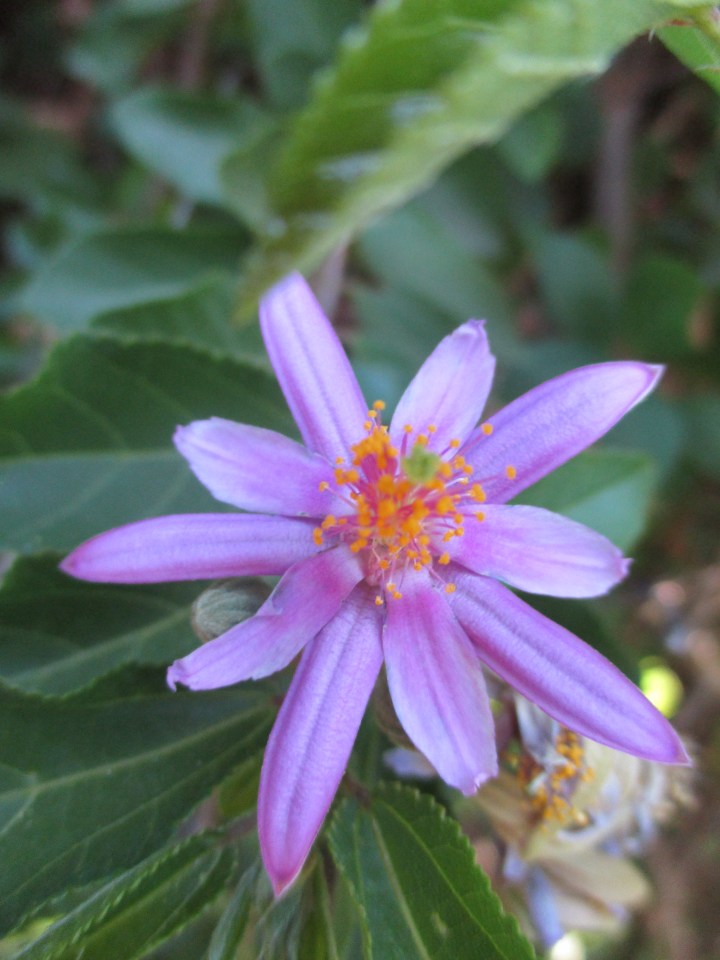 It is really an evergreen shrub with limber stems; but lavender starflower, Grewia caffra, can work almost like a rambling vine. It does not actually climb or grip anything. Like the canes of a climbing rose, it can be tied onto a trellis or fence as an espalier. As a free standing shrub, the arching stems should be pruned selectively. Shearing deprives them of their natural form, and inhibits bloom.
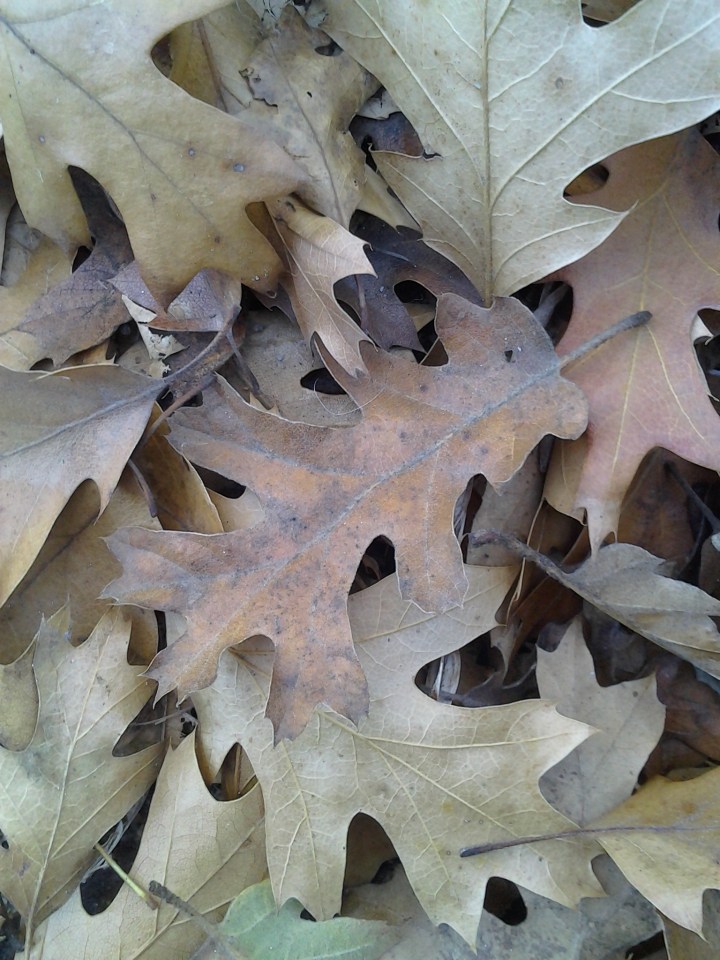 There is no time that is best to clean the gutters on the eaves. They should probably be cleaned early before the debris within them gets dampened by the first rains. However, they will only need to be cleaned out again after more foliage falls. If cleaned only after all the foliage falls, they will be grungier, and there will be potential for some of the debris to flow into and clog the downspouts.
 Yuccas are almost as useful as aloes are for gardening in chaparral or desert climates. I say ‘almost’ because most are not quite as friendly. The leaves are outfitted with nastily sharp tips. It is how they protect themselves from grazing animals in the wild, but it is not such an advantage in home gardens. Some actually have the potential to be dangerous where someone could bump into them. The leaves of Joshua tree can puncture leather. Some types of yucca get so big that they make it difficult to avoid their nasty leaves, even if planted in the background.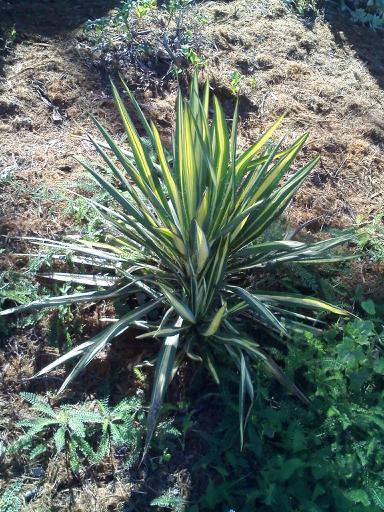
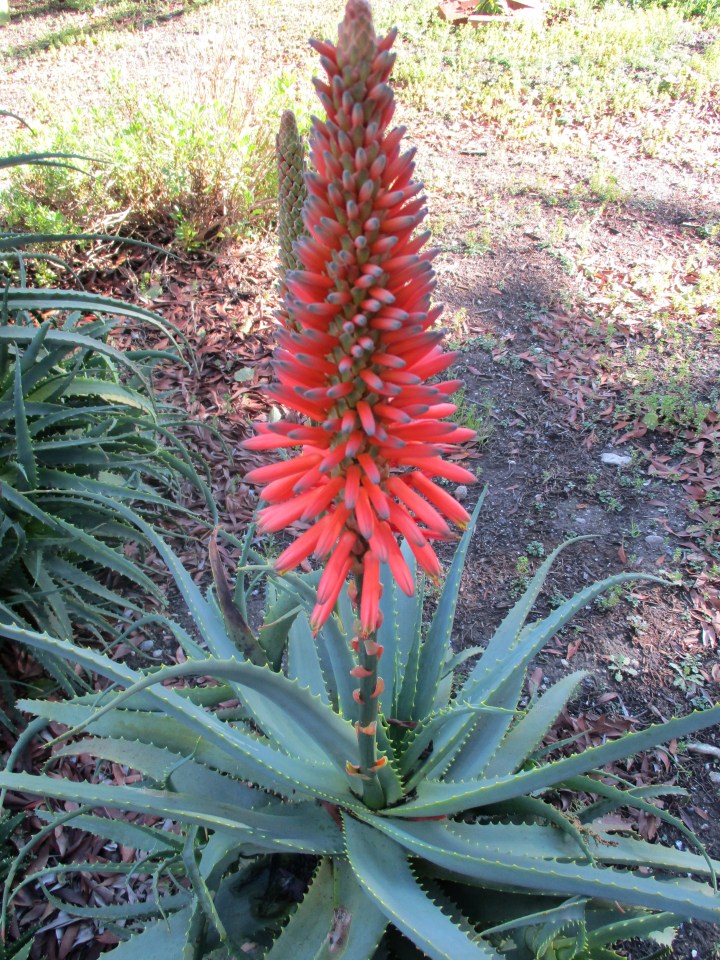 We really should be growing more of what grows well here. This is as relevant in other regions as it is in the Santa Clara Valley. Some regions have a lot more to choose from. There are always limitations too. Tropical plants do not survive the winters of New England. Apples and pears want more winter chill than they can get in San Diego.
 Something really crazy happened last night. From out of nowhere, a profusion of drops of water started to fall from the sky! It continued to fall for a while, and got everything wet. Soil that had been dry and dusty became rather muddy. As crazy as it sounds, it is not impossible, and actually happened repeatedly last autumn, winter, and into spring. In fact, it was so abundant that the San Lorenzo River filled with all this strange sky water, and flooded worse than it had since the flood of 1982! People in other less arid climates are more familiar with this sort of thing. It is actually no mystery. It is known simply as ‘rain’.
 Long before my white supremacy garden (
 Fire is part of life here. It is a risk that those of us who live in the Santa Cruz Mountains must accept. We live in forests full of abundant vegetation fuel, where fire crews and equipment have limited access. The horrible Tubbs Fire that recently burned an urban neighborhood in Santa Rosa demonstrates how destructive, risky and unpredictable fires can be. That neighborhood was in town, outside of forests, where fire is not such a commonly accepted risk.
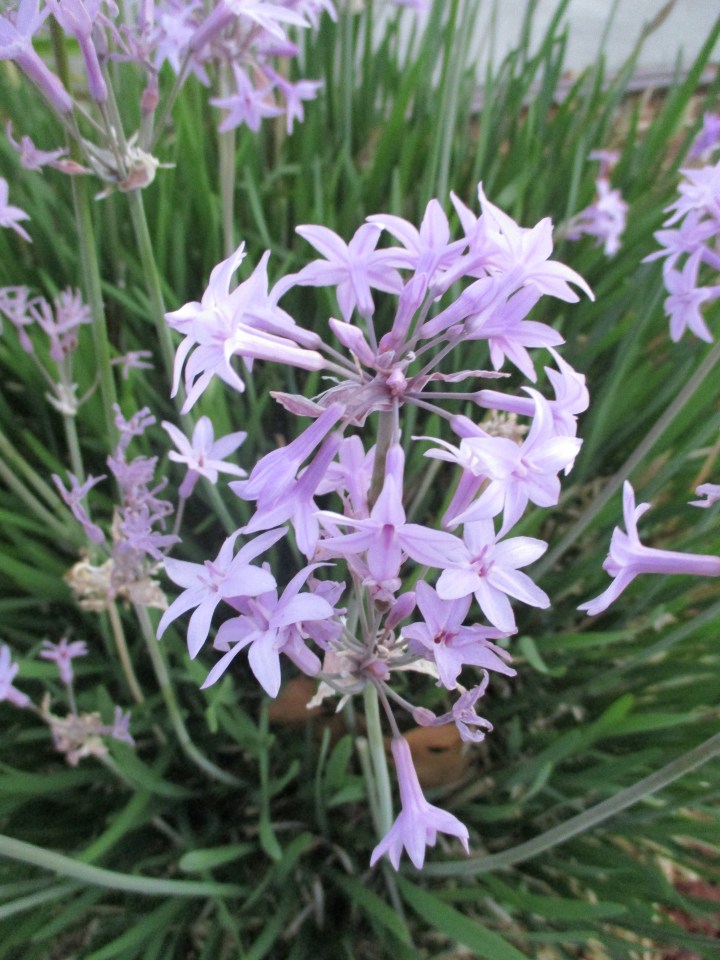 Some flowers are better left in the garden rather than cut and brought in. Society garlic, Tulbaghia violacea, looks like it would be an ideal cut flower, with nice bare stems. The aroma suggests otherwise. It smells something like a strongly aromatic combination of onion and garlic. Even in the garden, it might be a good idea to keep it at a distance. Deer and rabbits do not mess with it.
