 Just like warm season vegetable plants in the vegetable garden, flowering warm season annuals get replaced this time of year. Although the weather is still warm, cool season annuals should be planted now so they can disperse roots before the weather gets too much cooler. Except for a few short term annuals and perennials, most should perform until the weather gets warm next spring.
Pansy, viola, Iceland poppy, sweet William, calendula, stock and the various primroses should get down to the business of blooming rather efficiently, and hopefully compensate for the removal of deteriorating warm season annuals. Ornamental cabbage and kale, as well as cyclamen, can be a bit later because they are a bit more sensitive to warmth, but not slowed much by cool weather.
Nasturtium and alyssum can work as either or both warm and cool season annuals. Both are annuals, so individual plants do not last more than a few months. In hot spots, they may perform well in winter, but then get roasted in summer. In cold spots, they may do exactly the opposite. In the right situations, they self sow and bloom all year. Tired old plants should be groomed out if unsightly.
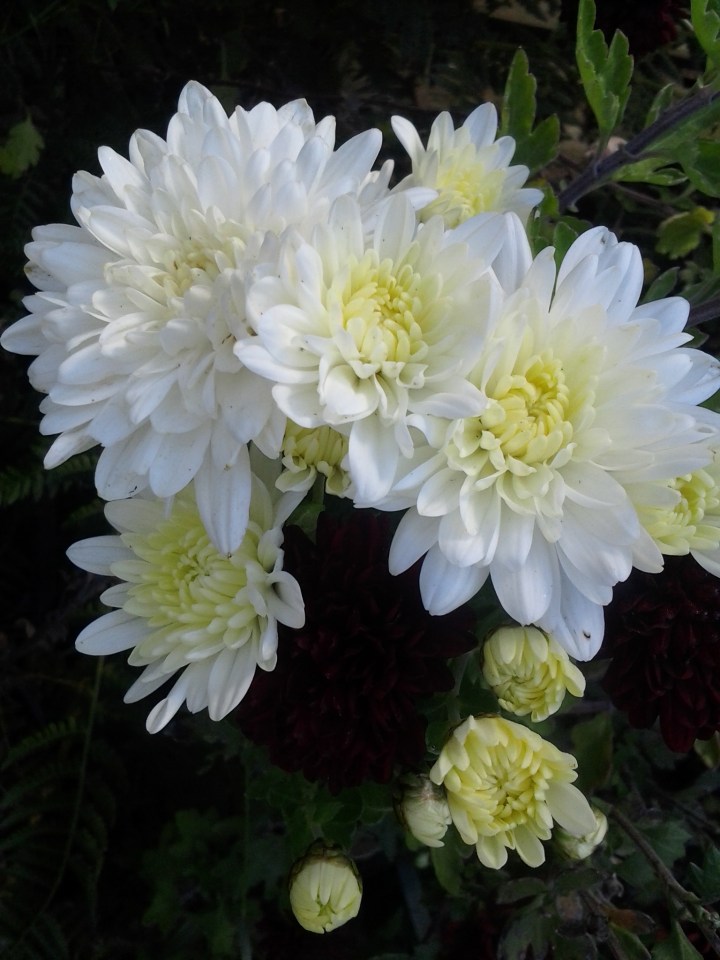
Chrysanthemums are the most prominent of seasonal color for autumn, and come in all sorts of colors that are ideal for an autumn palette. They are actually perennials that are grown as annuals. Unfortunately, they are usually grown as very short term annuals, that are allowed to bloom only once, and then replaced with something more wintry, like cyclamen or ornamental cabbage or kale.
Like cool season vegetable plants, most flowering cool season annuals should be planted as small plants in cell packs. Chrysanthemum, as well as cyclamen and ornamental cabbage and kale that get planted afterward, are the exceptions that should be planted as four inch potted plants, but they are expensive anyway. Primroses can be planted from either cell packs or four inch pots. (Primroses can cause a serious skin allergy, just from contact.) Nasturtium and alyssum should be grown from seed sown early.
 It is hard to beat redwoods. Seriously! There are only three specie, which are now three different genera; but one is the biggest tree in the world, one is the tallest tree in the world, and the third is one of only a few conifers that are deciduous. The biggest and the tallest are both native to California. The deciduous redwood is from China.
 The trees look spooky now. Box elders, honeylocusts and alders, and even some of the sycamores, have dropped so much of their foliage since that weirdly hot weather a few weeks ago. The smoky sky as a backdrop enhances the spooky factor. The trees do not seem to be too distressed. They just dropped their leaves a bit early to conserve resources. If they had not dropped foliage by now, they would be dropping it soon anyway.
 Palm trees did not impress me much when I was young. Although striking in the right landscapes, they did not ‘do’ much. They made no fruit. They made no firewood. Only the big Canary Island date palms made any significant shade. What they did make was a big mess that was difficult to rake. They were expensive to maintain. They sheltered rats and pigeons. Their seedlings came up in the weirdest places.
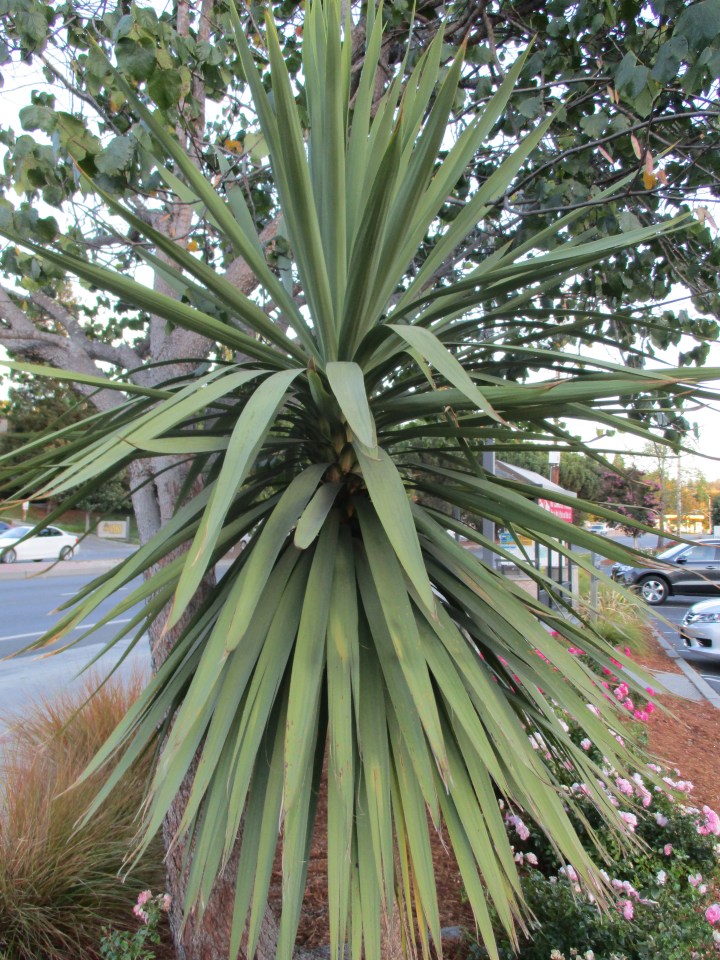 Dracaena palm, Cordyline australis, is not a palm at all. It is more closely related to yuccas. (Incidentally, a few yuccas are also inaccurately known as palms as well, but that is another story.) The simple specie that grows taller than a two story house is rare nowadays. It develops a high branched canopy of evergreen olive drab foliage. The three inch wide leaves are about three feet long.
 The difficult part is pulling up the warm season vegetable plants while they still seem to be productive. It gets much easier after that. Putting new cool season vegetable plants back into the garden is much more gratifying. Vegetable gardening never stops here. One season starts before the previous season ends. If cool season vegetable plants get a late start, they take longer to produce.
 Landscape Designer, Brent Green and I are both very professional at work. Brent is particularly well dressed, well groomed and well spoken. I happen to be simpler and plainer, but it works for the clients who respect my expertise. What our clients do not see is how we interact with each other. It would be very easy to be offended. Yet, we consult with each other almost daily, usually when Brent is driving somewhere . . . alone. We get loud, obnoxious, rude, crude, potty mouthed and just plain nasty!
 You can say what you like about nasturtiums. My landscape designer colleague, Brent Green certainly did when he named them ‘dago pansies’. They are still one of my favorite flowers, and just might be my favorite, even though none are convincingly white. They were my first. I discovered them when I was very young. They were growing near an old English walnut tree in my great grandfather’s garden. He noticed that I liked them, so found some seeds underneath to send home with me.
