
So many annuals are actually perennials. They just get dug and replaced because they are not pretty enough during their off season. For warm season annuals, winter is the off season. For cool season annuals, summer is the off season. However, if left alone, many annuals that are actually perennials go dormant so that they can survive through their off season to regenerate and perform again for another season, or several seasons
Cyclamen and various primroses are cool season annuals that are in season now. Cyclamen will go dormant and defoliate as the weather gets warm in summer. Primroses do not defoliate, but get rather runty through warm weather. If planted with other light duty warm season perennials that take over for them, no one notices. For example, primroses are colorful enough now to distract from tired fleabane. By the time primroses fade, the fleabane takes over.
Chrysanthemums are among the flashiest of perennial annuals, but also have a short season. They typically get planted while blooming in autumn, but finish their bloom cycle before winter. After all the rain and cool weather . . . and then a bit of warm weather, some are already dying back to the ground; but closer examination might reveal new growth already emerging from the roots!
Nasturtiums can obscure regenerating chrysanthemums nicely. If the frost sets them back, they recovery quickly. They will bloom more colorfully by spring, and continue until summer gets too warm. By that time, the chrysanthemums should be filling out nicely to bloom by autumn. As the chrysanthemums finish, the nasturtiums will have sown their seeds, so that the process can start over again. Neither chrysanthemum nor nasturtium need to be removed while out of season. They only need to be pruned back and groomed accordingly.
Coleus, impatiens, fibrous begonias and maybe even polka dot plant that were only moderately damaged by frost might be salvageable if they can stay put long enough. That is the advantage of growing them in pots with other small perennials that will cover for them when they die back or need to be pruned back.
 The simple pink and white of ‘good & plenty’ candy is what fairy primrose, Primula malacoides, is known for. Pastel purple is also popular. Rosy reddish pink and deeper pinkish purple are somewhat rare. The small flowers are arranged in circular trusses that stand as tall as one foot, just above the softly mounding light green foliage. The rounded leaves are slightly fuzzy. All parts of fairy primrose are toxic, and to those who happen to be allergic to it, can be as severely irritating to the skin as poison oak!
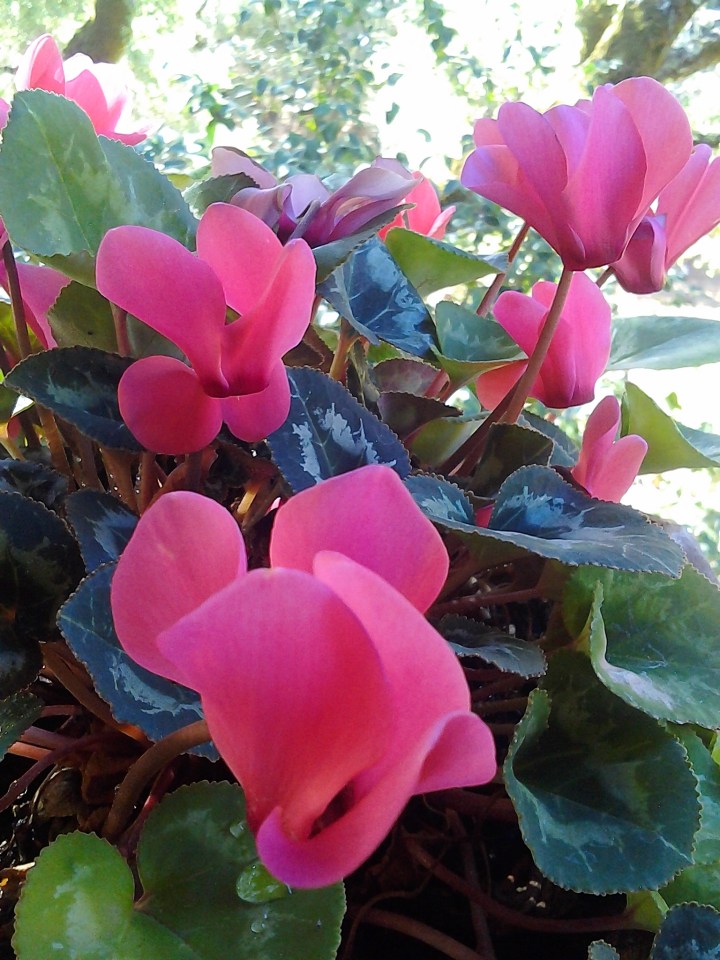 Cyclamen are everywhere! Some nurseries have more cyclamen than all other cool season annuals combined. Not all cyclamen are represented though. Almost all are white or simple red. Pink, salmon and other shades of red are noticeable scarce because they are not traditional colors of Christmas. The plants are mostly of impeccable quality, and outfitted with abundant flowers. While there is not much else blooming, the popularity of cyclamen is impossible to ignore.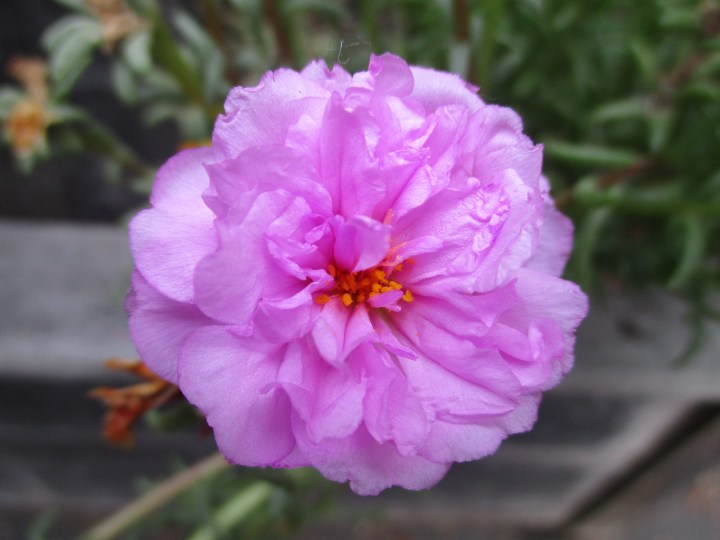


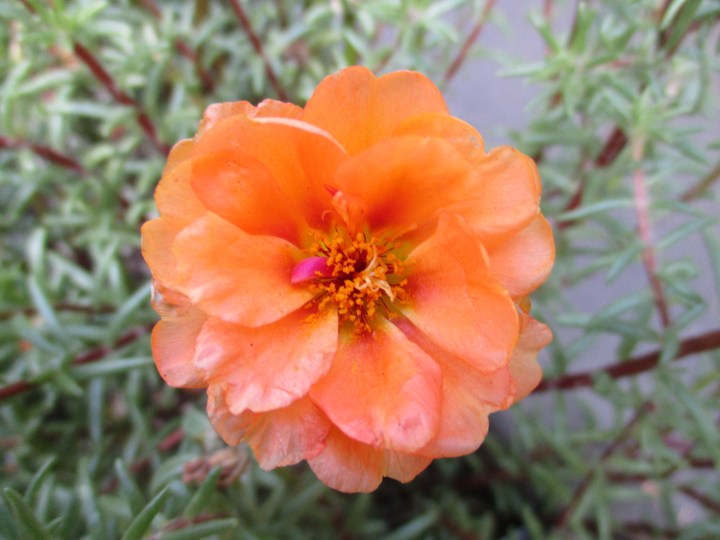
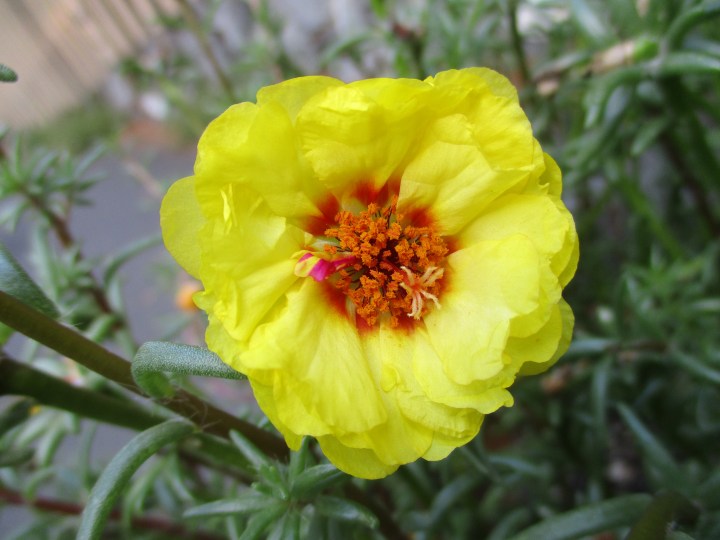

 The recent unseasonably warm weather was no problem for any remaining moss rose, Portulaca grandiflora. They usually start to look rather tired as the weather gets cooler this time of year, and eventually succumb to the first frost. Where allowed to do so, they can regenerate next year from seed. I like to collect their seed during the summer or autumn so that I can sow them after the last frost of the following winter. Through spring and summer, I find that additional plants are easy to grow from cuttings.
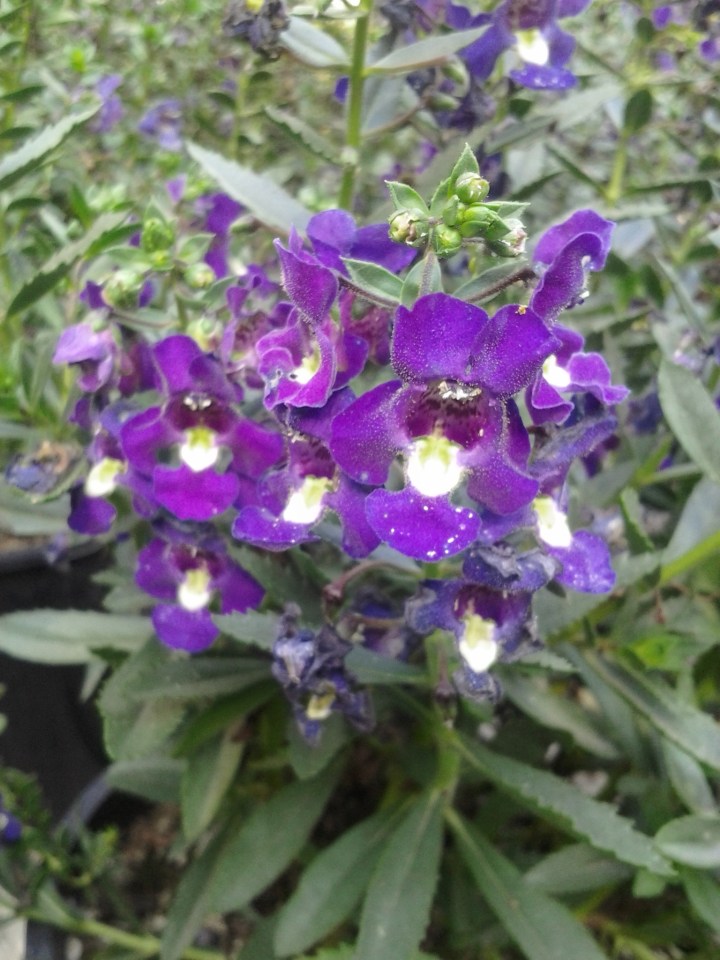 Angelonia is one of those warm season annuals that can actually survive through winter as a pernnial to bloom again next spring. It may even want to continue to bloom untill frost. The flowers can be blue, purple, red, pink or white, and look something like small snapdragon flowers. Most have spots or stripes of an alternate color or two in their throats. Some modern varieties have fragrant flowers. Plants can get a foot or two tall, and almost as wide. In sheltered spots, angelonia can be cut back as soon as it starts to look tired in autumn. Exposed plants might be happier if cut back significantly later, as winter ends. Old growth may be unsightly for a while, but can protect interior stems and roots from frost. Besides, pruning stimulates new growth that will be more susceptible to subsequent frost.
 As the name implies, ‘annuals’ need to be replaced ‘annually’. What is worse is that they do not even function for an entire year, but only for a specific season. Cool season annuals mostly work from autumn to spring. Warm season annuals mostly work from spring to autumn. Calendula is a popular cool season annual that may not last even that long, since it can mildew half way through winter.
 This is not an easily defined flower. There are hundreds of species within the genus of Viola. Many are known as pansies. Many are known as violas or Johnny-jump-ups. Many are in between. The main difference between these two major groups is that, although very closely related, pansies bloom with bigger flowers, and violas bloom with smaller, simpler and more abundant flowers.
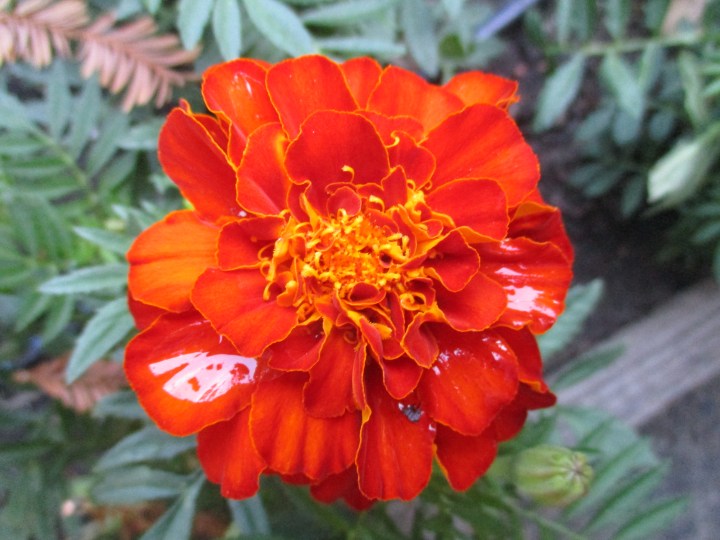
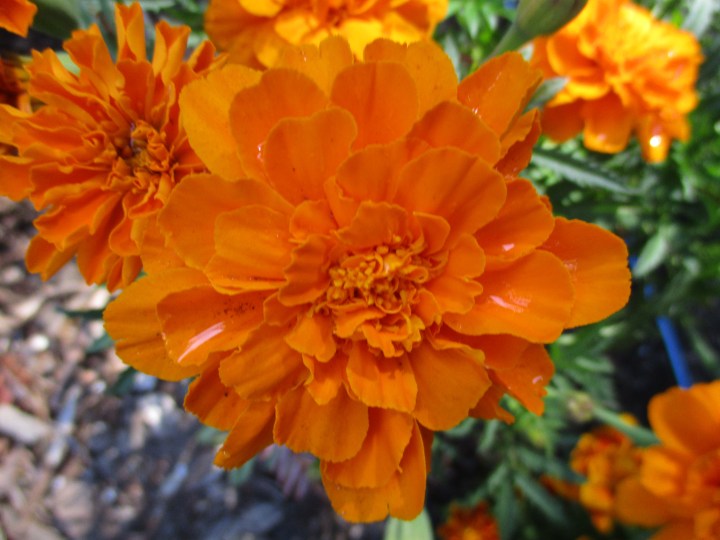
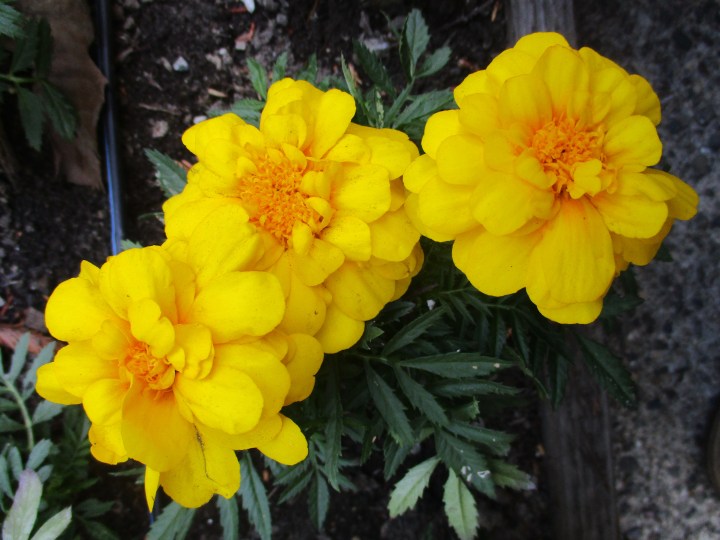 Actually, French marigold, Tagetes patula, is no more French than African marigold is African. All are from Mexico and Guatemala. They were merely popularized and bred respectively in France and Africa. There are now hundreds of varieties. Yet, their color range is surprisingly limited to hues and shades of yellow, orange and ruddy brown. White marigolds are really just very pale yellow.


 Tony Tomeo