This is getting close to the in-between time for annuals. Warm season annuals that bloomed through summer will soon be getting replaced with cool season annuals that will perform through winter. Of course, our seasons are neither as distinct nor as severe as they are elsewhere. Many annuals are actually perennial here. Some stay later than they should, just because they can.
Aging annuals and perennials can get somewhat trashy if they are not pruned back or replaced soon enough. Their replacements might not be very impressive until they get established and start to grow. So far, only a few violas have been installed here for autumn, and only because the petunias that were where they are now were getting tired prematurely. There will be more.
There is certainly much more color in the landscapes than what these pictures show. White just happens to be my favorite color.
1. Alyssum is supposed to be a cool season annual for spring or autumn. It does not like cold winter weather or warm summer weather. In our mild climate though, it does well in any season. In sunny spots, it self sows to replace itself before it gets old and deteriorates. This batch will eventually get removed, just so we can put something else here. It is prettier in sunnier spots.
2. Dianthus, like alyssum, is supposed to be a cool season annual. It just does not succumb to the minor summer warmth here. Nor does it succumb to the mildly cool winter weather. It could grow as a short term perennial if we did not need to remove it to plants something else later. It also would perform better with better sun exposure. Here, bloom is not as full as it should be.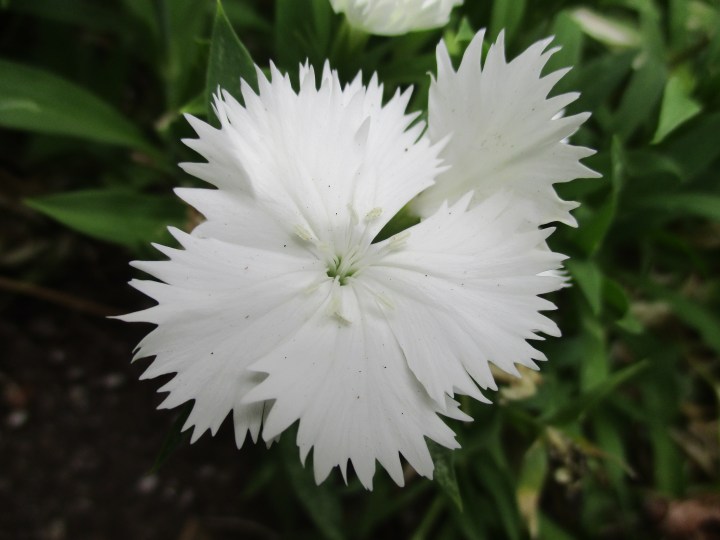
3. Viola is one of the cool season annuals that does not do well through summer here. Some survived from last spring, but they were not happy about it. A few of the many might survive and regenerate if we cut them back, but it is easier to plant something new. These white violas, as well as some comparable yellow ones, got planted early to replace prematurely fading petunias.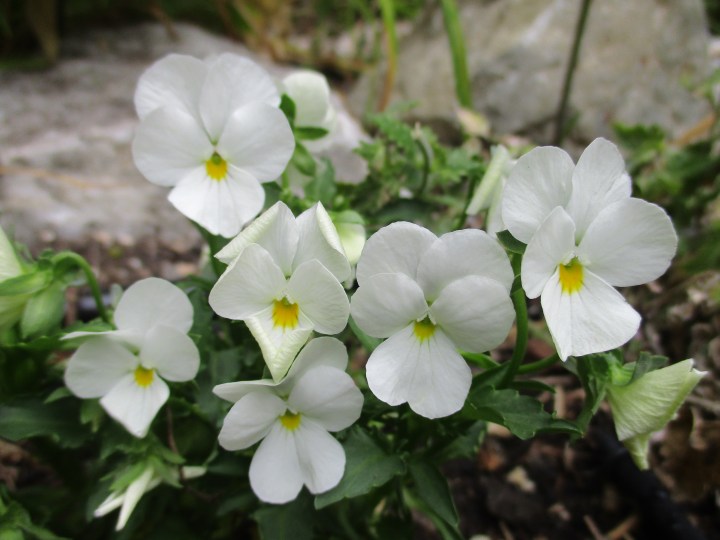
4. Petunia is a warm season annual that did well through most of the summer, but is now fading a bit early. Some have already been replaced with violas. Others probably should be. These are still mostly presentable, so can remain for now. If possible, it is better to not replace them with violas too early. Violas that grow too much before autumn can get floppy through winter.
5. Phlox was not planted. A single plant grew in an already crowded bed of flashy annuals and perennials two springs ago. There were a few more last year, and even more this year. They all land in good situations, where they unobtrusively grow through spring, bloom in summer, and die back through autumn. They are warm season annuals, but are expected back next spring.
6. Geranium, which are really pelargonium, are perennial here, rather than annual like they are in climates with cooler winters. They can be damaged or even killed by frost where they are more exposed, but this particular geranium is sheltered by an eave and trees. They will probably get cut back at the end of next winter, just to stimulate fresh new growth to replace the old.
This is the link for Six on Saturday, for anyone else who would like to participate:
https://thepropagatorblog.wordpress.com/2017/09/18/six-on-saturday-a-participant-guide/
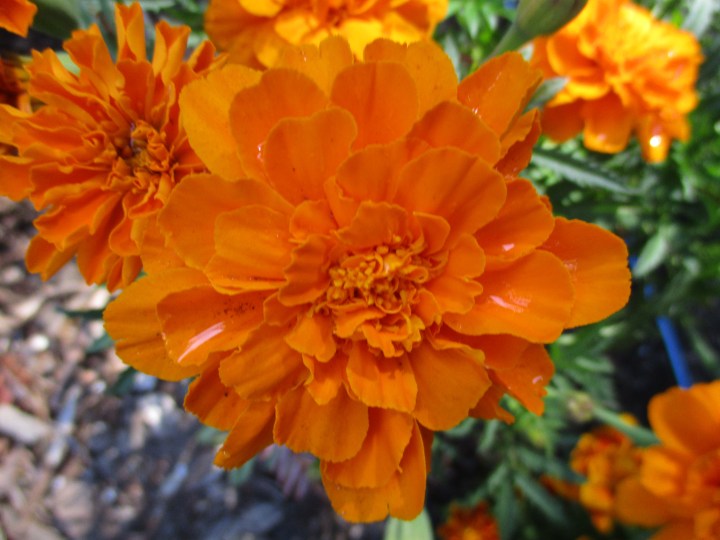
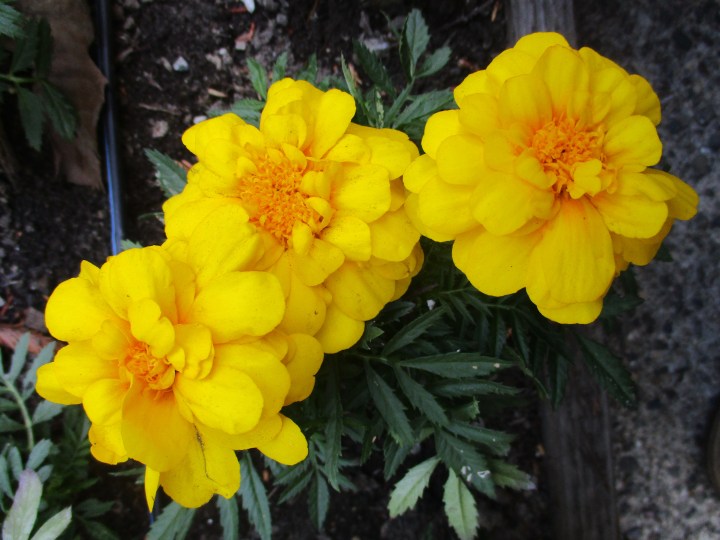 Actually, French marigold, Tagetes patula, is no more French than African marigold is African. All are from Mexico and Guatemala. They were merely popularized and bred respectively in France and Africa. There are now hundreds of varieties. Yet, their color range is surprisingly limited to hues and shades of yellow, orange and ruddy brown. White marigolds are really just very pale yellow.
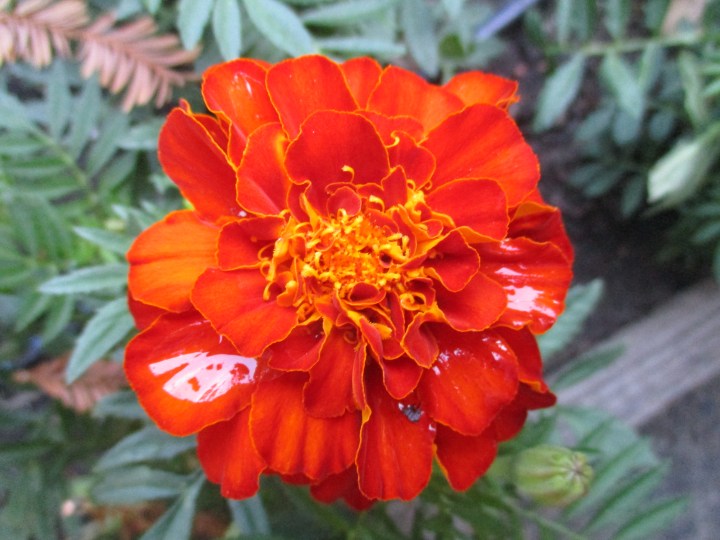


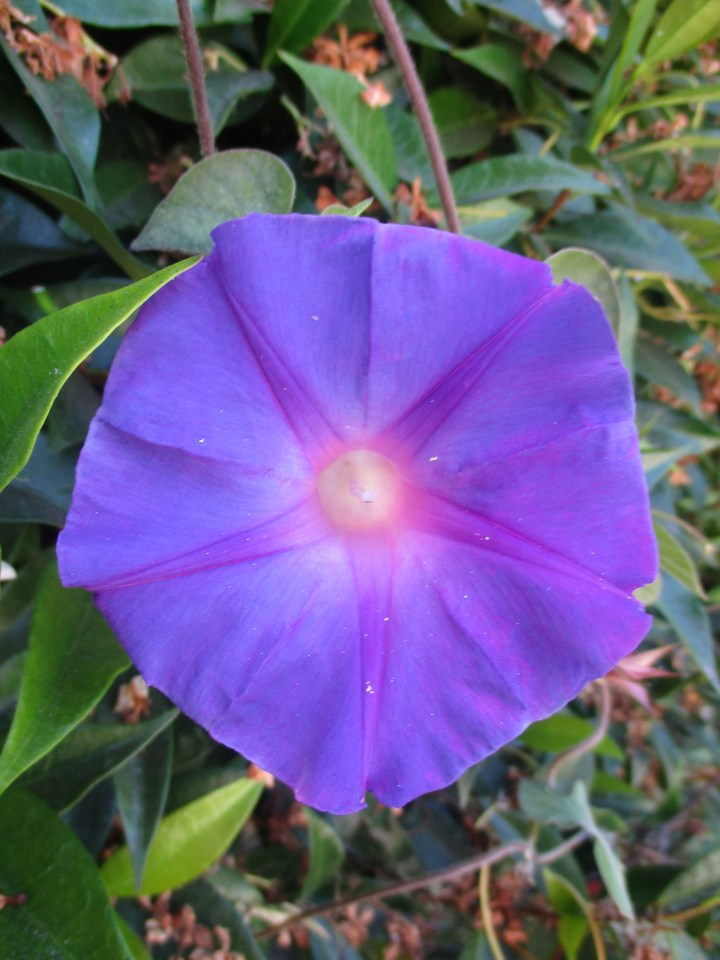 A landscape designer would have more fun describing both the modern and the good old fashioned varieties of morning glory. Their vivid colors are so resplendent. Their rich green foliage is so luxuriant. Their delicate vines are so elegant. Hey, perhaps this is not so difficult. Anyway, the popular garden varieties of morning glory are descendents of various species of the genus Ipomea.
 Most of the familiar vines really are exploitative bullies. They shade the same trees and shrubs that they climb for support. Some will even strangle and kill those who make it possible to get where they want to be. If they do not find trees or shrubs to victimize, they are likely to climb walls and ruin the paint, stucco or siding. Their aggressive nature can be a problem in landscape situations.
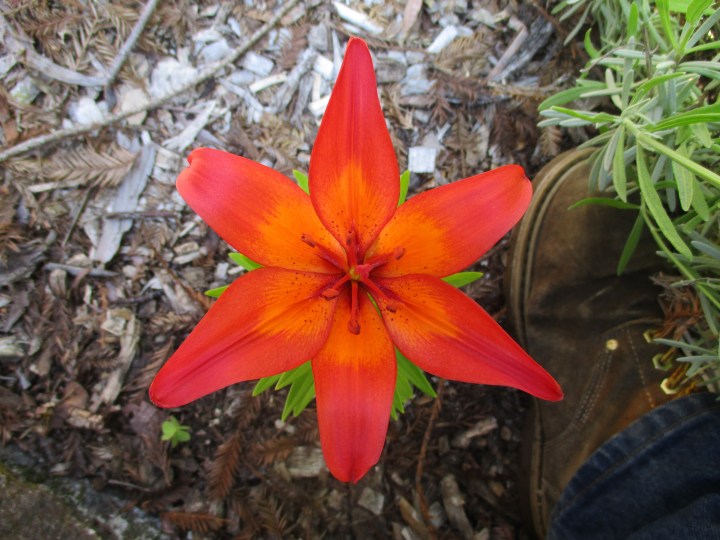 What a delightful surprise! It happens sometimes here in the rose garden. It may not look like much, as a short stemmed single lily floret that is mostly overwhelmed by the English lavender that I held back with my boot for this picture. It should be three feet tall or so, with several florets. The surprise is that no one planted it. Well, at least no one planted it recently. This rose garden has more history than is obvious from what blooms here now.
 Colorado is another state that was able to designate one of the most excellent wildflowers of North America as the Official State Flower because it happens to be native there. Rocky Mountain columbine, Aquilegia caerulea, however, did not contribute as much to the breeding of the many modern hybrid varieties of columbine as did common European columbine, Aquilegia vulgaris.
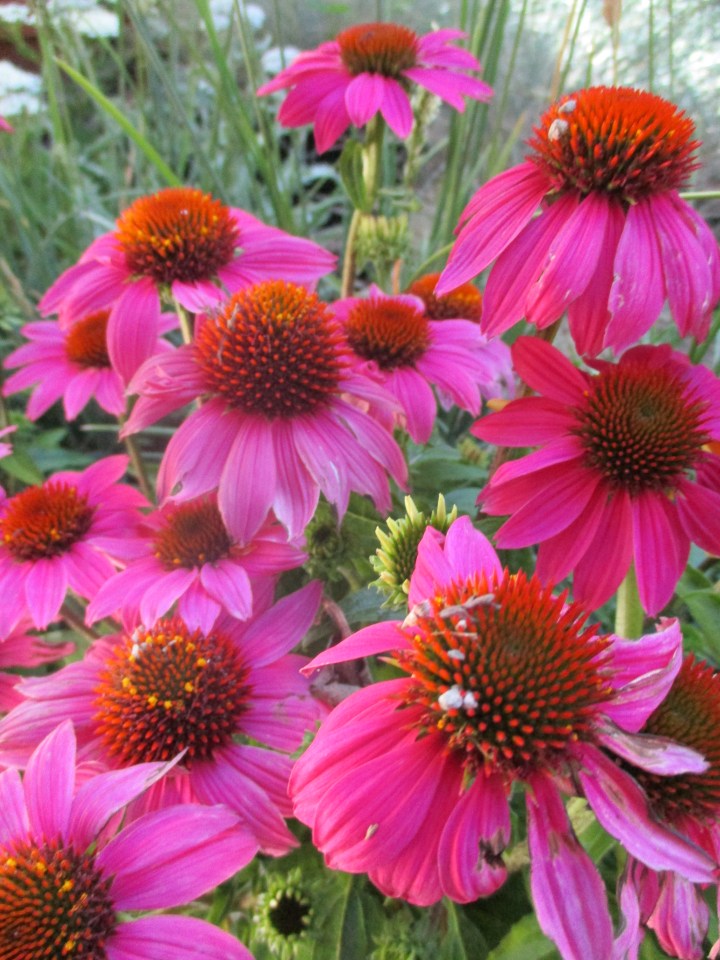 Annuals are plants that complete their entire life cycle from germination to death within a single year. Biennials complete their entire life cycle in two years, mostly by developing vegetative growth during their first year, and then blooming, producing seed and then dying after their second year. Perennials are the many herbaceous plants that survive longer than just a few years or indefinitely.
 The flowers may not last very long once cut, but cosmos, Cosmos bipinnatus, blooms so abundantly, that there might not be any shortage of new flower to cut and bring in to replace those cut a day or two before. Their pastel pinks and lavenders, as well as white, suit the Easter season perfectly. Their soft light green foliage is remarkably lacy. Mature plants are about two to four feet tall.
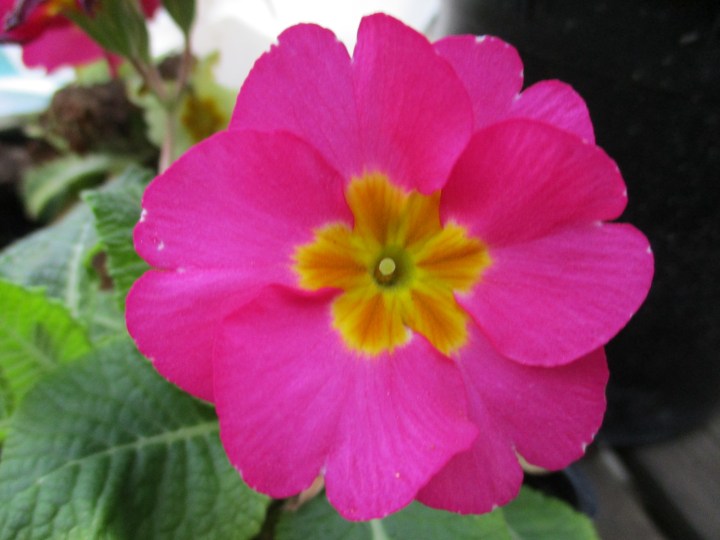 Pulling out cool season annuals that are still somewhat colorful is never easy, even if they are already deteriorating. There is always the desire to stretch their season as late as possible until they succumb to warmer weather. Only a few can perform all year, or get cut back to hide below other taller plants until the weather gets cool enough in autumn for them to regenerate and bloom again.
