Rain is rare here so late in the season. It is also potentially damaging to some of the plants in the landscapes, and some of the latest of the spring flowers that are still blooming. Most of the deciduous plants are lush with new foliage on limber stems that are still adapting to the increased foliar weight. Foliage gets even heavier when it gets wet from rain. For the willows, the extra weight is enough to break limbs.
Willow limbs do not often break away cleanly. They instead split apart so that they fall slowly while still attached to the main tree. In the swampy conditions where they naturally grow, the broken but still attached limbs develop roots where they touch the ground, and then grow into new trees. Broken limbs are therefore not a problem for willows. Nonetheless, they are a problem in the landscapes.
1. This looks like mozzarella cheese being pulled apart. My great uncle used to bring some of the good Italian stuff when he came up from Long Beach for some of the Holidays. Oh my, how off topic!
2. This is what it really was. Willow limbs are surprisingly weak this time of year. They don’t just break. They split apart. I should have gotten a picture of it before I cut it up.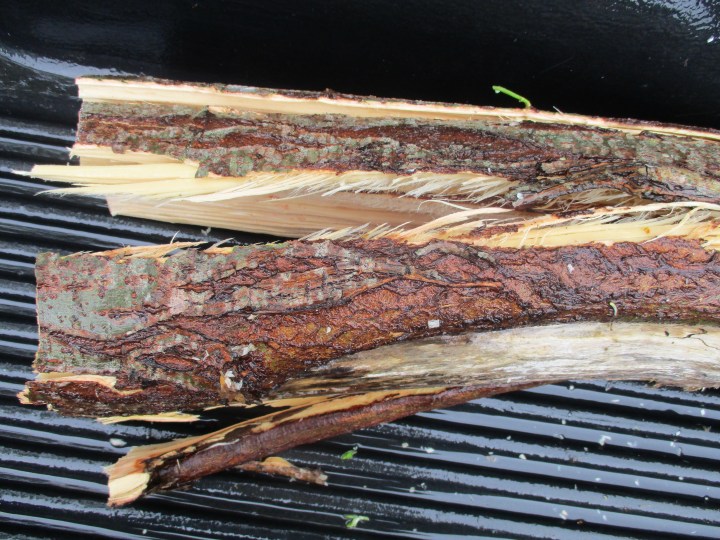
3. It landed right across a walkway, where I could not put off breaking it apart and taking it away. With all the rain that caused it to break, the lawn was too swampy to walk around on.
4. It landed on this bench too, or at least the left half of it. With hundreds of acres of unused and unlandscaped forest out there, why must falling trees land in such inappropriate situations?
5. All that mess was not even a full load. It just didn’t take up much space after it was all broken apart and loaded up. There was plenty of other willow to cut later in the day, and for the next few days.
6. Willow! My niece named him. I knew better than to argue. I never liked the name though. I and almost everyone but my niece knew him as Bill, which is short for Willow. My friend Steven knew him as William.
This is the link for Six on Saturday, for anyone else who would like to participate:
https://thepropagatorblog.wordpress.com/2017/09/18/six-on-saturday-a-participant-guide/
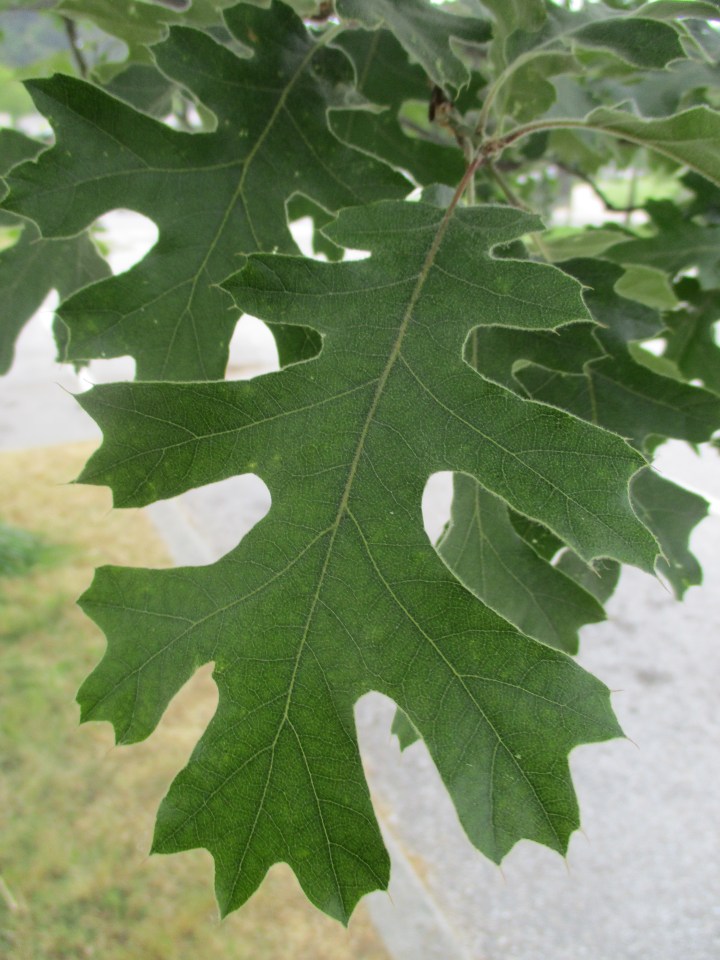 Oak, which might seem to be obvious to many of us, was identified by the Arbor Day Foundation as the People’s Choice for American’s National Tree. We certainly like our redwoods and exotic palms in California. Quaking aspen and blue spruce are probably favorites in Colorado. Sugar maple must be the most popular in Vermont. Yet, everyone appreciates the mighty American oaks.
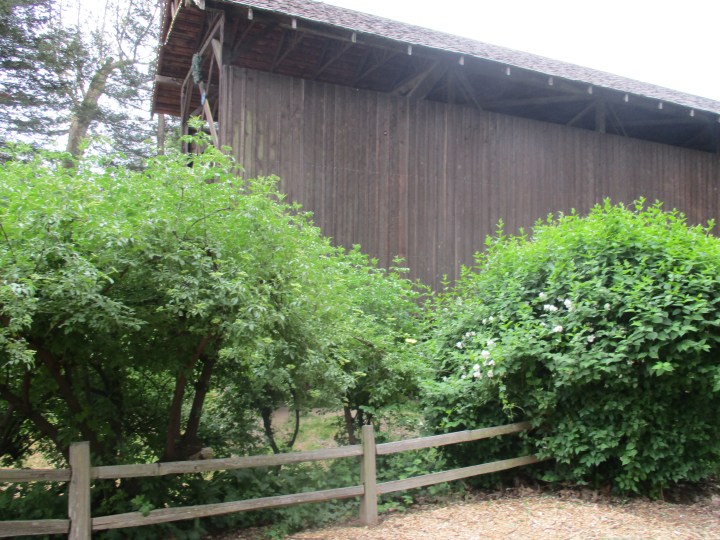 Pollarding and coppicing are proper pruning techniques. If you think you are an arborist who believes otherwise, do not waste my time arguing about it. More than likely, you are neither as educated nor as experienced as I am with such matters, or you work exclusively with trees for which such procedures would be very inappropriate.
 Redwoods are SO TALL!
 This is the beginning of one of several new knuckles on a pollarded crape myrtle tree that was pollareded for the first time just this past winter. It was quite a mess of thicket growth that was too congested to bloom well. It is also located in a confined situation where it could not just be groomed, pruned up for clearance, and then just left to develop a larger canopy higher up. Pollarding will both contain it, as well as invigorate healthier growth.



 The most destructive tools that so-called ‘gardeners’ have access to are hedge shears. They use them on just about anything within their reach. If a tree is not beyond their reach, they are likely to shear it into a nondescript glob of a shrub, complete with lodgepole stakes and straps that never get removed. Yet, in all their enthusiasm, they will not properly shear hedges that are actually intended to be shorn. Well, I have ranted on that enough.
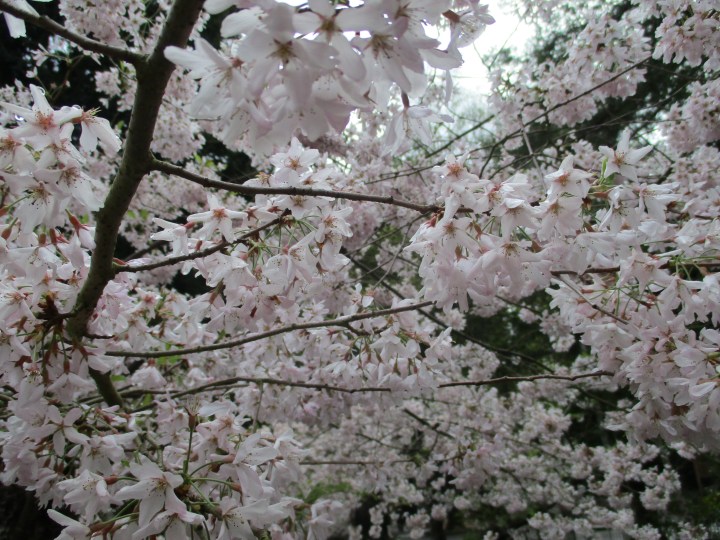
 After decades of spectacular spring bloom, this pair of flowering cherry trees in the picture above must be removed. They have been deteriorating for a very long time. Below the limber blooming branches of the tree on the right, there is not much more than a bulky rotten trunk, one rotting limb, and a short stub of a limb that was cut back to a bit of viable twiggy growth last year. The tree to the left has only a few more viable but rotten limbs.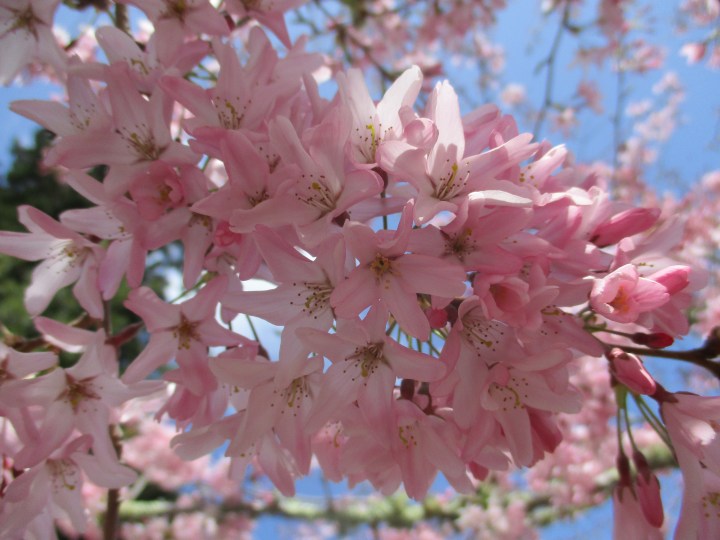

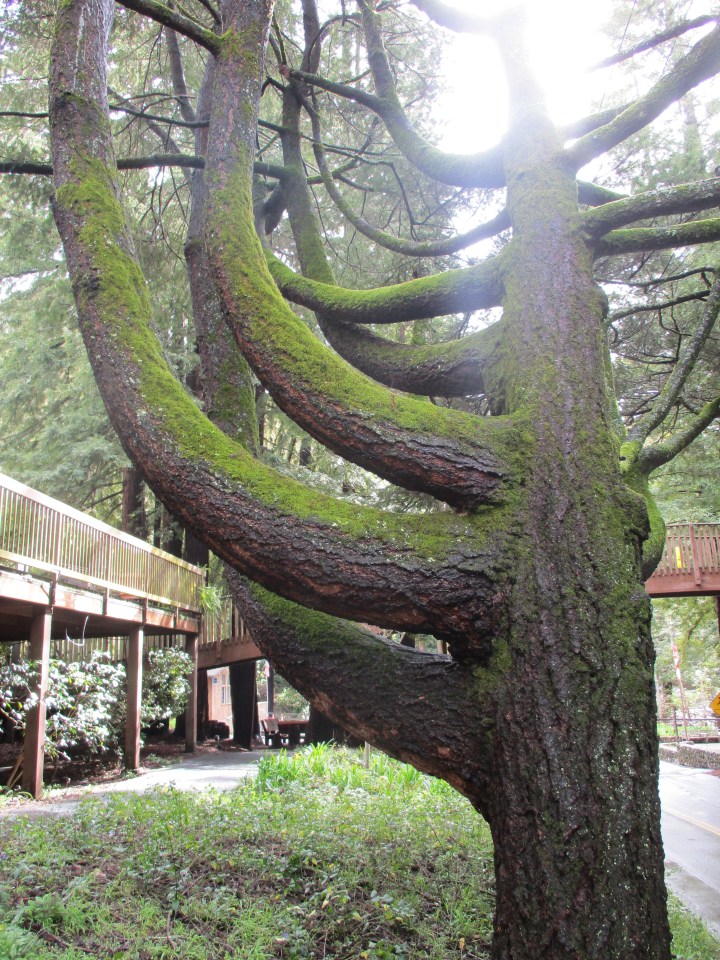 This is no common Douglas fir. It is the ‘Davey Tree’, named after the tree service that so diligently prunes it for clearance from the utility cables above. Yes, I can see as easily as you can how disfigured it is. The plan is to cut it down before it falls apart. At least that is the excuse for cutting it down. It is relatively short an stout, so is likely quite able to support its own weight, regardless of this disfigurement. We really just want it gone because it is so unsightly.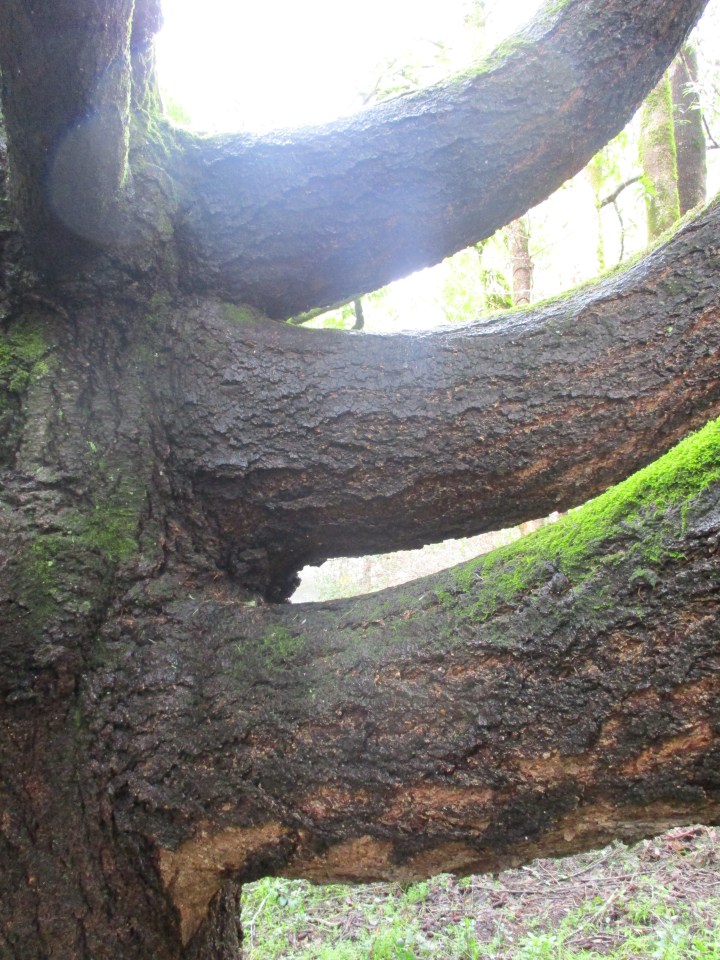
 There is no sugaring season here. Spring comes on too suddenly. By the time sap starts to flow, buds are already swelling.
