1. Seriously!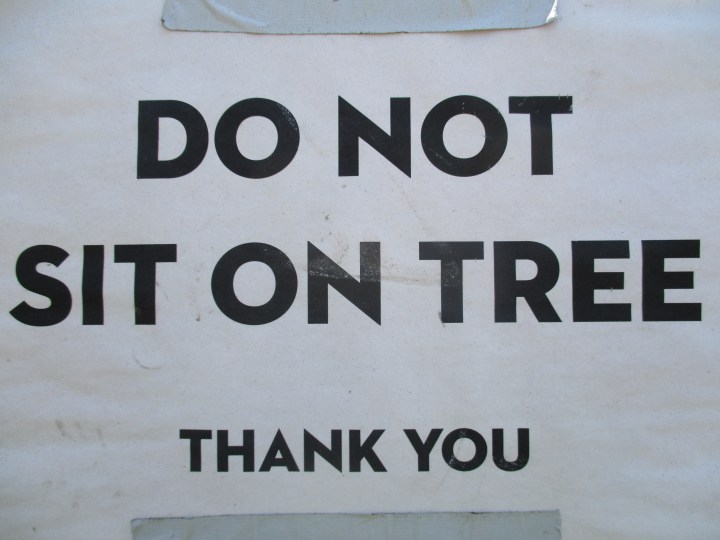
2. Allow me to explain. This is one of three small but very gnarly coast live oaks that grew from the roots of a single tree that was cut down or fell several decades ago. Because the trunks of the three trees are so horizontal and sculptural, children climb on them. Sometimes many children sit on the trunk of this particular tree to get their group picture taken. We had been concerned about how this might compromise the stability of the tree for quite a while. Before we constructed suspension devices to prop it and one of the other two trees with, it destabilized and sagged! We pruned much of the canopy away to eliminate some of the weight that exerts so much leverage against the root system, and propped the trunk with a saw horse. We hope that the tree survives the loss of roots that likely broke away in the process, but would not be surprised if it does not. We are not ready to cut it down. It and the two other trees are so well known and popular among guests. The sign is visible to the right. I will explain the colored yarn on the trunk in a moment.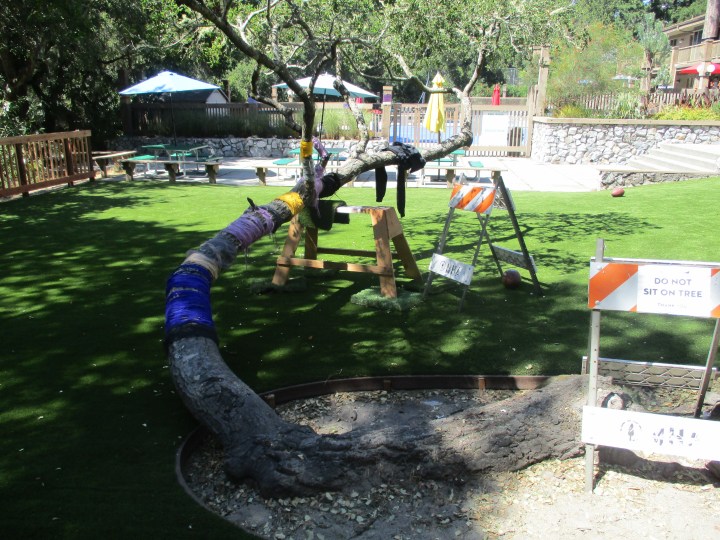
3. The subject tree is to the lower right in this picture. The two other trees are sprawled to the upper left. The tree that extends farthest to the left will get propped as well. All three have been pruned more aggressively than they should have been to eliminate much of the weight.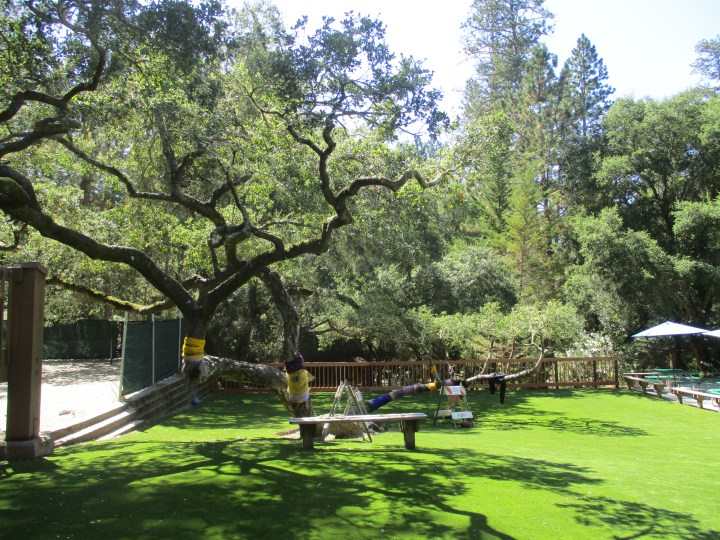
4. The yarn on the trunks is decoration that the camp counselors installed prior to the arrival of the guests. It must have taken a long time to wrap this much yarn around the trunks, and there is a whole lot more in many other trees. I wrote about it earlier in ‘Boom! Zap! Wow! Bam! Zing!‘.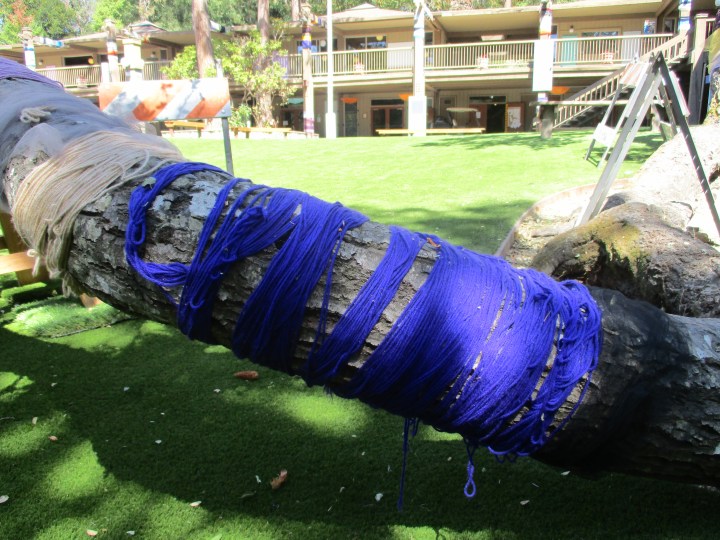
5. This is a completely different coast live oak, with a completely different problem. It needed to be pruned for clearance from an adjacent roadway and walkway. The major limb that was here supported less than one tenth of the total canopy, but because it had been cut back repeatedly, it was unusually bulky. Consequently, the shiner that remains is about as wide ad the remaining trunk! That is VERY arboriculturally incorrect. To make matters worse, the cut was not at the correct angle, so eliminated the lower half of the ‘collar’ that is supposed to expand to compartmentalize (heal) the shiner. The problem now is that by the time the shiner heals, the interior of the trunk may be so rotten that the tree may need to be removed anyway. The limb needed to be removed. The only other option was to remove the entire tree.
6. Nothing was done to this coast live oak. It grew like this naturally. Although not an exemplary specimen, it certainly is impressive.
This is the link for Six on Saturday, for anyone else who would like to participate:
https://thepropagatorblog.wordpress.com/2017/09/18/six-on-saturday-a-participant-guide/
 This grand sycamore has likely been here since the third day of Genesis. A few of the top branches got broken off when Noah’s Ark floated over. When I was a little kid, it was on the edge of a vacant field where road debris was dumped, and older kids rode their dirt bikes. Now it is on the western edge of the parking lot of Felton Covered Bridge Park. I write about it sometimes.
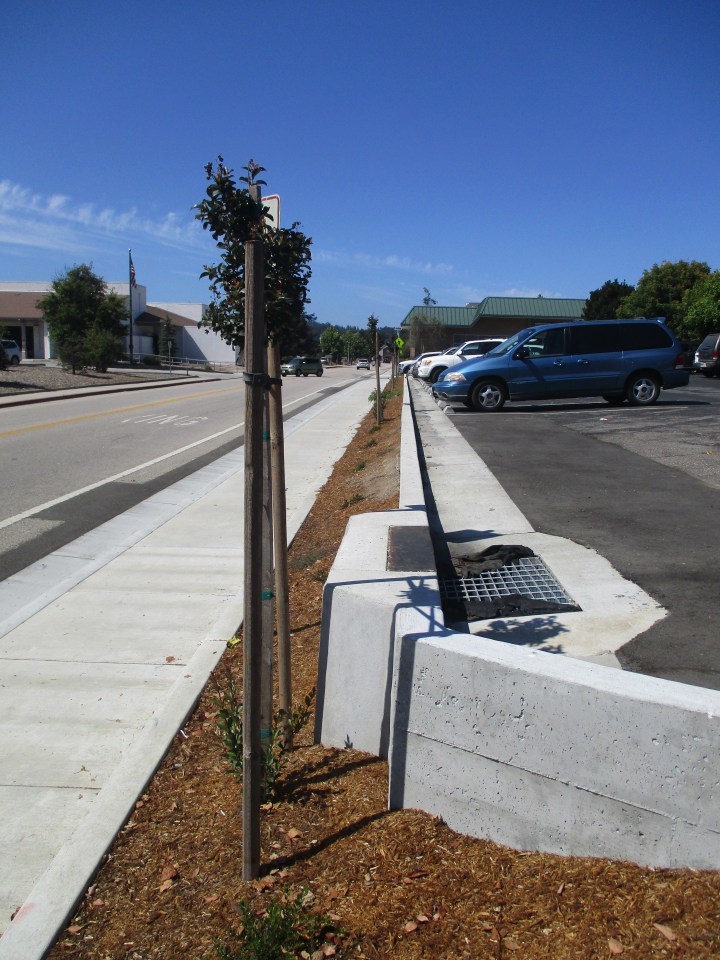 We arborists happen to like trees. That is why we are arborists. Most of us also understand that trees are not appropriate for every situation, or where they are not appreciated. There is no point in planting a tree where it will just get cut down by someone else who does not like it. We want trees to be happy. We also want those who live with them to be happy with their trees.
 Many municipalities enforce tree preservation ordinances. Whether we agree with them or not, these ordinances are designed to preserve significant trees that are assets to the community. For the greater good, local governments have made it their business to limit what we can do with our own trees on our own properties. There are many advantages. There are many disadvantages. We arborists see it all.
 The terminology has certainly changed over the years. Not many of us remember what tree surgeons were, or that there were actually a few different kinds of tree surgeons, who performed very distinct tasks. Tree surgeons are now known as ‘arborists’. Much of what they used to do is done by other types of horticultural professionals. The work that arborists still perform is ‘arboriculture’.
 There are mixed emotions about tree removal permits that so many municipalities need to issue in order for a ‘heritage’ tree to be cut down legally. Most of us want to believe that in America, we have certain rights to do what we want to on the properties that we own. Obviously, that makes the most sense. However, if it were that simple, many more prominent trees that are collective assets to the larger communities would be removed.
 The easier name is ‘dawn redwood’. I just used the big and fancy Latin name because that is how landscape designers with something to prove say it. If the big name does not impress clients, an explanation of how rare it is, and that it is one of only a few deciduous conifers, will likely do the job. Even back when it was still a fad, I got the impression that was its main function; to impress clients.
 It sounds like science fiction, but it is not. Every spring and during particular summer weather, limbs can fall from trees without warning, and seemingly for no reason at all. It happens when least expected, while the weather is warm and perhaps humid, but notably without wind. The lack of wind is what makes it so unexpected. It is a phenomenon known simply as spontaneous limb failure.
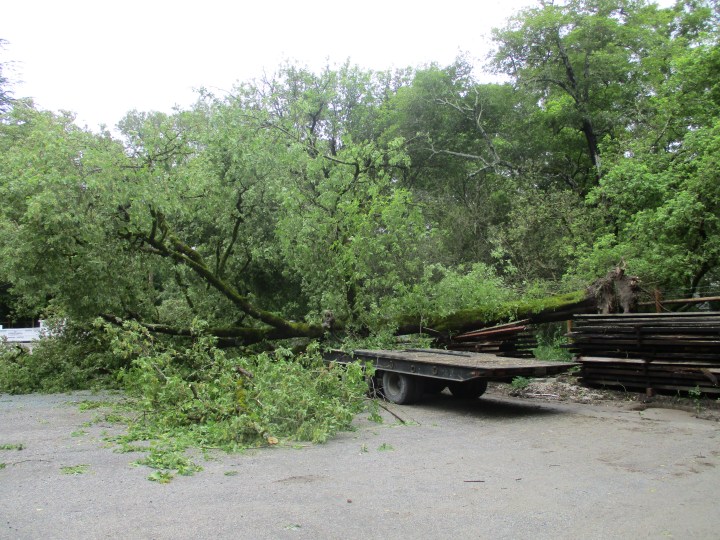 This is a formerly unplanned sequel to the article ‘

 There happen to be quite a few campgrounds in the region, with one about a quarter of a mile upstream from where this picture was taken, and another less than three miles past that. Both are primarily used by school age children. The vast redwood forests with creeks flowing through are ideal for such campgrounds.
