
With conservation of water being so important right now, annuals are not a priority. Many of us are trying to use as little water as possible, and only to keep the more significant trees, shrubbery and perennials alive until winter. Lawn and annuals are usually the first to succumb, mainly because they use more water than anything else.
They are also somewhat expendable. Lawn is certainly expensive, but realistically, can be replaced as soon as water becomes available. Hopefully, new lawns will be more conservative with water, like they should have been since the last “drought” (and the one before that). Annuals are planted annually (duh), so they get replaced anyway.
Annuals as bedding plants over large areas were already somewhat passé before the last few dry winters. Even the more indulgent landscapes used annuals merely as relatively modest borders around or in front of more substantial, but less consumptive, perennials and shrubbery. Pots and planters are already more appropriate.
Some of the trendiest big pots are so ornate that they do not need flowers to provide more color. Besides, with a few striking perennials for colorful foliage or form, there is not much space left for annuals. What matters with annuals is that fewer in a pot can be flashier than more in the ground. Fewer annuals mean less water is required.
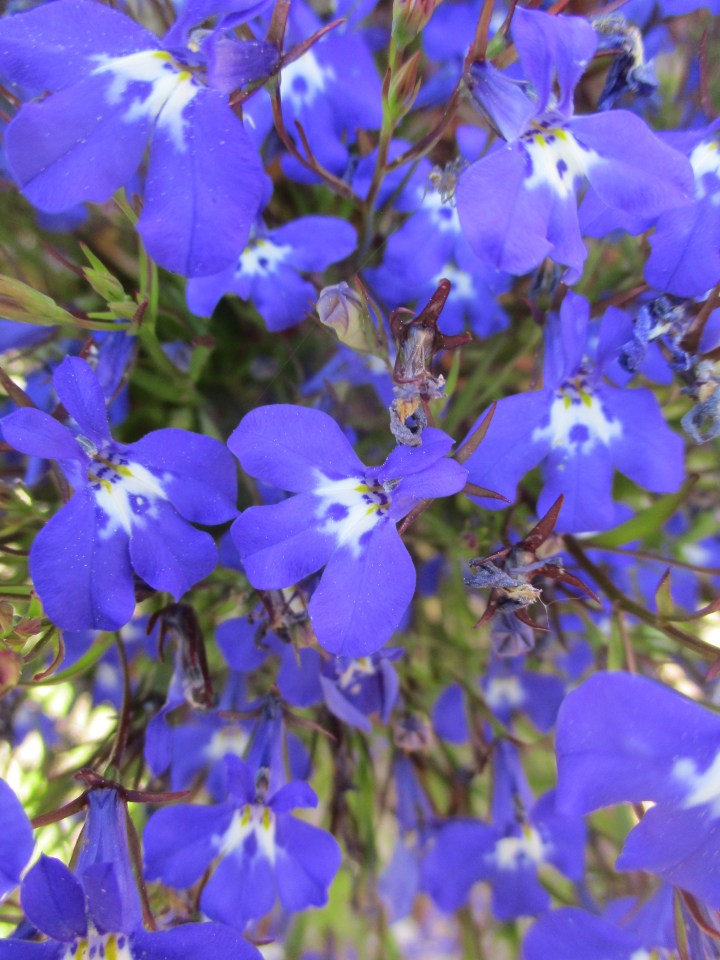
Elevated planters may not be as ornate, but display flashy annuals just as effectively. Petunia, million bells, lobelia and alyssum can cascade over the edges, to be colorful both on top and on the sides. Marigold, zinnia, celosia and any interesting foliar or sculptural perennials get a bit more height. It all helps to get a bit more out of less.
Pots and planters are not necessarily less work. They just need less water than larger beds, because they are smaller. Relative to their area, they actually need more water, and must be watered very regularly to sustain the confined roots within. Hanging pots need the most water. All confined plants benefit from fertilizer.


 The simple pink and white of ‘good & plenty’ candy is what fairy primrose, Primula malacoides, is known for. Pastel purple is also popular. Rosy reddish pink and deeper pinkish purple are somewhat rare. The small flowers are arranged in circular trusses that stand as tall as one foot, just above the softly mounding light green foliage. The rounded leaves are slightly fuzzy. All parts of fairy primrose are toxic, and to those who happen to be allergic to it, can be as severely irritating to the skin as poison oak!
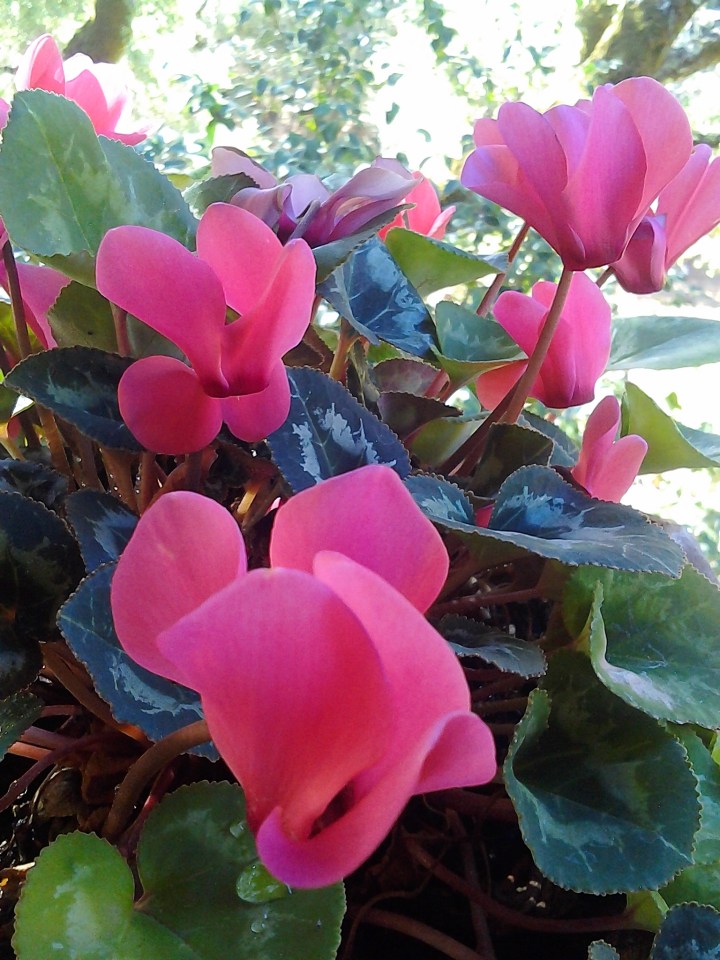 Cyclamen are everywhere! Some nurseries have more cyclamen than all other cool season annuals combined. Not all cyclamen are represented though. Almost all are white or simple red. Pink, salmon and other shades of red are noticeable scarce because they are not traditional colors of Christmas. The plants are mostly of impeccable quality, and outfitted with abundant flowers. While there is not much else blooming, the popularity of cyclamen is impossible to ignore.
 It is unfortunate that most florists’ cyclamen, Cyclamen persicum, are enjoyed as cool season annuals only through winter, and then discarded as they are replaced by spring annuals. They can actually survive as perennials for several years, with white, red, pink or magenta flowers hovering above their marbled rubbery foliage each winter. Foliage typically stay less than six inches deep.
 The recent unseasonably warm weather was no problem for any remaining moss rose, Portulaca grandiflora. They usually start to look rather tired as the weather gets cooler this time of year, and eventually succumb to the first frost. Where allowed to do so, they can regenerate next year from seed. I like to collect their seed during the summer or autumn so that I can sow them after the last frost of the following winter. Through spring and summer, I find that additional plants are easy to grow from cuttings.
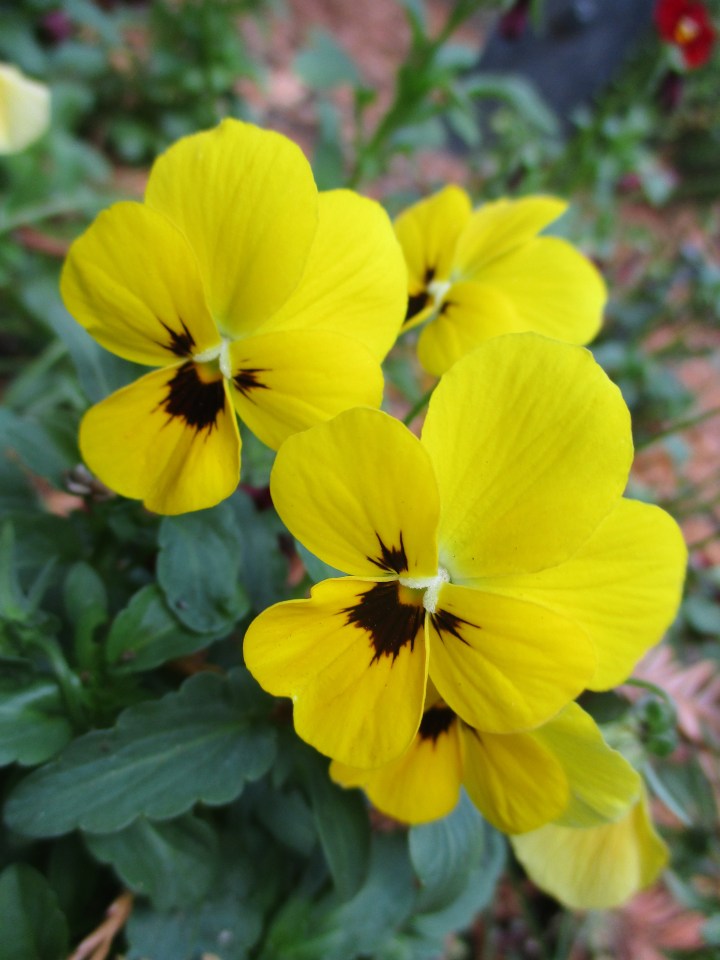 All that unpleasant annual business of removing warm season vegetable plants to relinquish space for cool season vegetables applies to annual bedding plants too. Those of us who do not grow vegetables were spared the agony of pulling up tomato plants that might have still been producing a few tomatoes, just to make room for broccoli. Now, it is time to replace petunias with pansies.
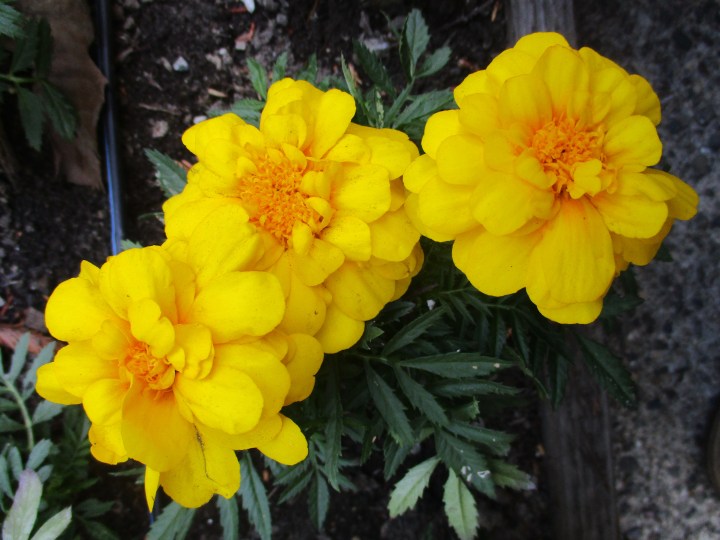 Actually, French marigold, Tagetes patula, is no more French than African marigold is African. All are from Mexico and Guatemala. They were merely popularized and bred respectively in France and Africa. There are now hundreds of varieties. Yet, their color range is surprisingly limited to hues and shades of yellow, orange and ruddy brown. White marigolds are really just very pale yellow.
 Tony Tomeo