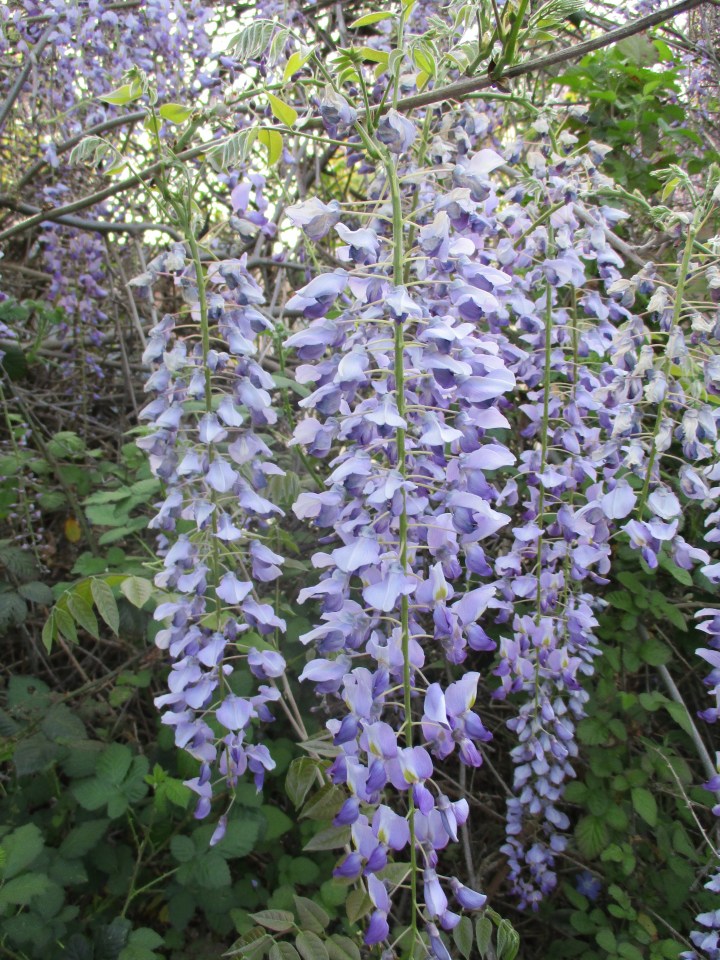
 It is easy to see why there are optimum times to prune, and just as easy to see when pruning should not be done. Generally, deciduous plants prefer to get pruned while dormant and bare. They should not be pruned when actively blooming or making new foliage. Roots are of course not so easy to see. Do we really know what they are doing, or what sort of mischief they are getting into?
Autumn is the best time for planting most plants. They are less active than they had been earlier in the year, and many are going dormant. Either way, they do not need much. Once in the ground, their roots are kept cool and moist by the weather. They get to sit there all winter, as they slowly begin to disperse their roots to get ready for the following spring. It all fits into their natural life cycle.
Shopping habits, however, do not. By autumn, many plants are neither as pretty nor as tempting as they were earlier in the year. By winter, the weather keeps many of us inside, and out of nurseries. Now that it is spring, it is difficult to resist all the pretty plants that are blooming so delightfully. We are tempted to buy them compulsively, even if we have no immediate plans for them.
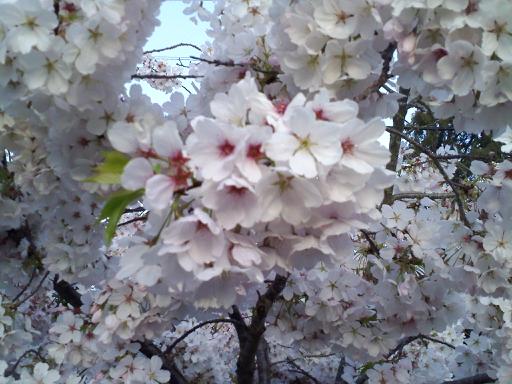
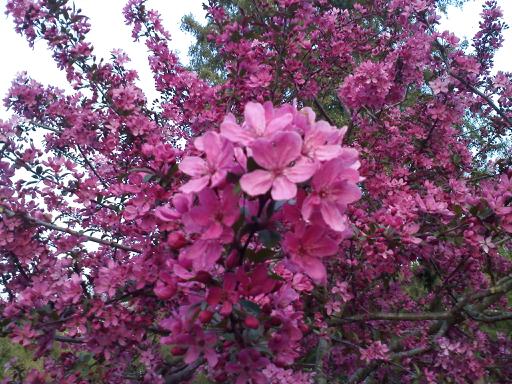
That is okay. We can make this work. Buying certain plants in bloom actually has certain advantages. It shows how and when particular plants bloom. This might be helpful when trying to decide between different cultivars of deciduous magnolias, flowering cherries, flowering crabapples or wisterias, for example. Besides, they will finish blooming quickly, and start to produce new foliage.
If planted before new foliage matures, new plants should be planted in cool weather, and maybe sprayed lightly with water after the roots get soaked in. This is best for drought tolerant plants like ceanothus, that want out of their cans (nursery pots) as soon as possible. If new plants stay in their cans long enough for foliage to mature, they must be watered carefully, but not kept saturated. The black vinyl cans should be shaded, since they get warm in sunlight.
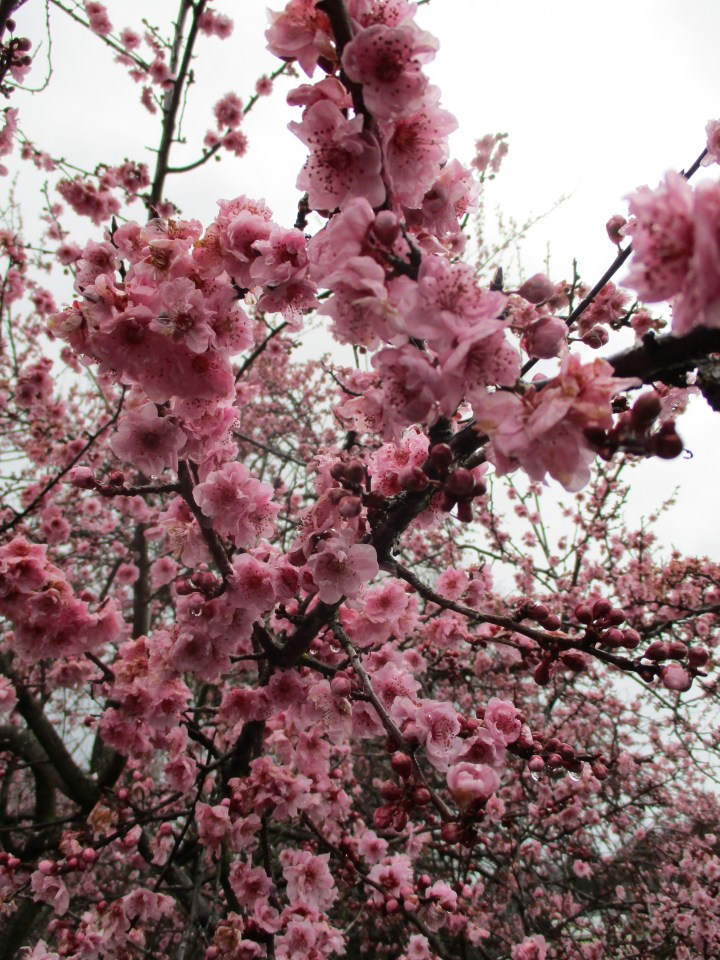 Of all the fruitless fruit trees, the purple leaf plum is the most popular here, but probably not for the obvious allure of its rich purplish or bronze foliage that maintains color until it falls in autumn. Purple leaf plum is simply so easy to grow. It does not need to be pruned as regularly as flowering peaches or flowering crabapples do. It is not as sensitive to sunscald as flowering cherries are.
 Many people have a favorite color. I learned how seriously some people can take their preference for a particular color when I was in high school, and taking care of the yardwork for a few homes in the neighborhood. There were three tract homes next to each other. One was grayish blue, with a silvery blue Sedan deVille in the garage, and a garden of blue flowers. The middle house next door was soft amber yellow, with a buttery yellow Oldsmobile 98 in the garage, and a garden of exclusively yellow flowers. The house next door to that was iron oxide red, with an exquisite rich red Electra in the garage, and a garden of, you guessed it, red flowers.
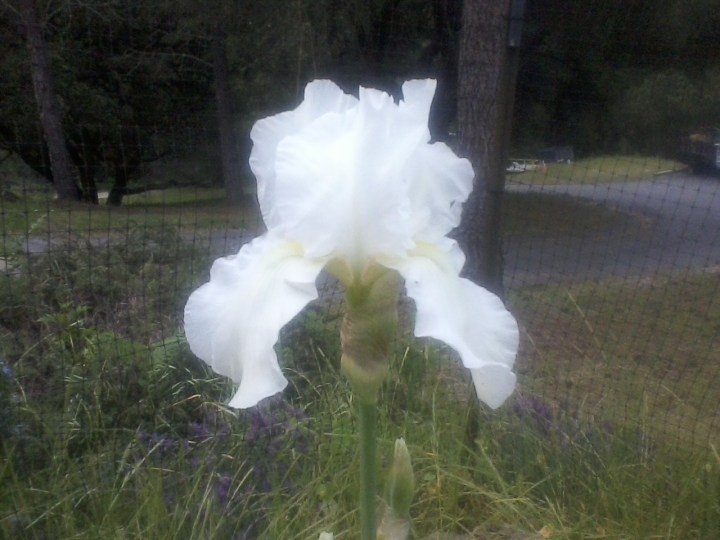 The statute of limitations allows me to discuss this now. It happened thirty years ago, in the spring of 1987. The famous landscape designer, Brent Green, was my roommate in the dorms at Cal Poly, San Luis Obispo. As the bearded iris started to bloom, Brent immediately noticed a bed of uniformly pink bearded iris off the edge of a lawn in the inner campus. He watched it bloom from beginning to end, and occasionally updated me on the progress. During the process, he convinced me that these iris were very rare. Neither of us had ever seen pink bearded iris before. We had no idea that they could easily be purchased from mail order catalogs or nurseries.
 It makes sense for flowers to bloom in spring. Winter is too cool, windy and damp for both flowers and the insects that pollinate many of them. By summer, successfully pollinated flowers have faded, are busy making seed to disperse in autumn. Some plants produce fruit to get birds and other animals to disperse their seed. There are certain advantages to blooming early in the spring.

