Flowers Might Be Getting Scarce

70830thumbIt makes sense for flowers to bloom in spring. Winter is too cool, windy and damp for both flowers and the insects that pollinate many of them. By summer, successfully pollinated flowers have faded, are busy making seed to disperse in autumn. Some plants produce fruit to get birds and other animals to disperse their seed. There are certain advantages to blooming early in the spring.

Native plants that are endemic to chaparral climates are quicker with bloom, so that they finish before the air gets too arid. Desert plants might bloom for less than a week. Some tropical plants might bloom whenever they want to because they do not understand the concept of seasons, but they are not the prominent plants in our gardens. Therefore, flowers get scarce this time of year.

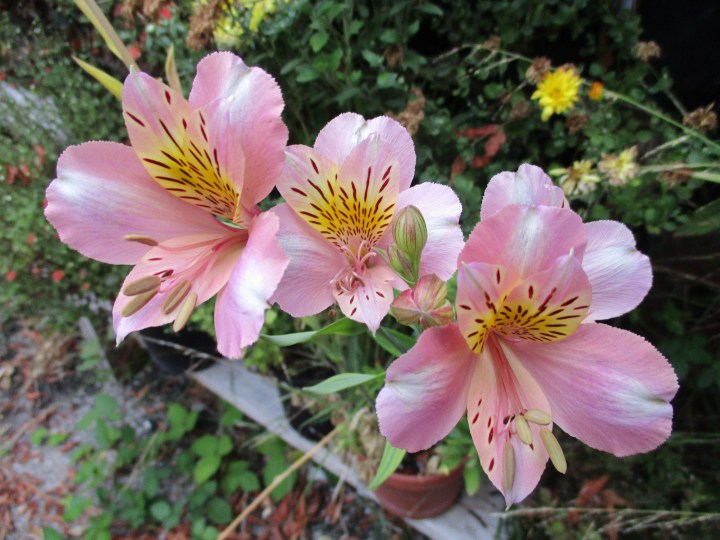
Besides the few perennials and annuals that bloom as long as the weather stays warm, there are not many plants that bloom reliably so late in summer. Belladonna lily, which is also known as naked lady, might be one of the flashiest, as its bright pink flowers bloom on top of bare stalks before the low basal foliage develops. It was actually dormant through the warmest part of summer.

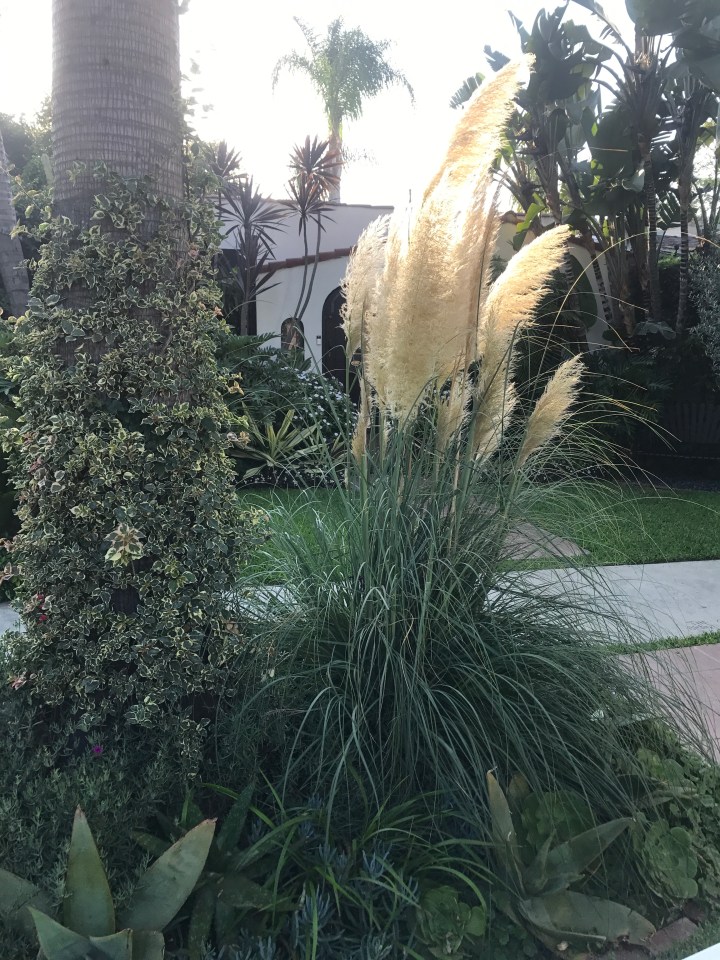
Billowy and bold pampas grass flowers bloom this time of year, but are uncommon. The boldest type of pampas grass is too big and difficult to manage for home gardens. The smaller type has dingy tan flowers, and is so invasive and weedy that it is unavailable in nurseries. Those of us who have it in our gardens did not plant it. Other grasses with nice late flowers are not very colorful.

Russian sage has become one of the more popular late blooming perennials. More traditional Japanese anemone, goldenrod, lion’s tail and showy stonecrop all seem to have lost popularity over the years. Mexican blue sage should bloom best late in summer, but often finishes sooner than expected. Yarrow often blooms later than expected, until summer ends. Marigold, blanket flower and some sunflowers bloom until frost. Chrysanthemums, whether grown as annuals or perennials, are just beginning late in summer.

Flowers For Late Summer Bloom

80905thumbNo mater how much work we put into our roses to sustain bloom all through the season, and not matter how successful we are with that endeavor, the first spring bloom is always the best. Some roses continue to bloom in floriferous phases afterward, while others bloom sporadically but continually; but there is nothing like the first bloom phase. The last blooms are just waiting for autumn.

Of course, concentrating resources into early bloom is very sensible. That is why so many plants bloom only once in spring. It gives them time to get pollinated, develop seed and fruit structures, and finally disperse their seed or fruit structures, all before winter. Plants that bloom in summer or autumn are either from regions where winters are not too harsh, or where summers are harsher.

Because summer weather in most regions tends to be warmer and drier than spring weather, flowers that prefer to bloom in summer tend to be more prolific but smaller and less colorful. By this time of year, they are more reliant on wind for pollination rather than insects anyway. Therefore, they do not need to be big and colorful to attract pollinators, although some are fragrant just in case.

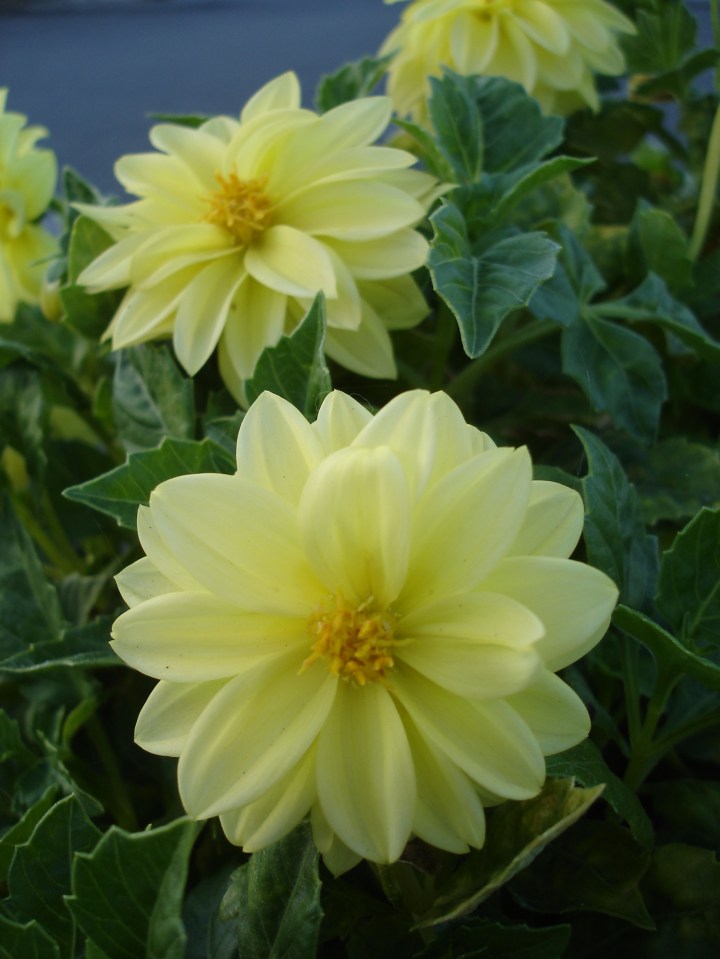
Sunflower, blanket flower, cone flower, zinnia, cosmos, delphinium, dahlia and of course rose, are some of the favorite flowers in the garden as well as for cutting in late summer and into autumn. Cut dahlia flowers should get their water changed daily so that they do not rot and smell bad so soon. Canna blooms about now, but does not last so well as cut flowers. Lily-of-the-Nile is finished.

Believe it or not, lemon bottlebrush is a delightful cut flower for those who are not allergic to it or repelled by the aromatic foliage. So are some of the showier eucalyptus, such as the red flowering gum, Eucalyptus ficifolia. Mexican blue sage that was cut back to the ground over winter blooms a bit in spring, takes a bit of time off through summer, and then starts to bloom as summer ends, ultimately blooming spectacularly early in autumn. A few other sages bloom as late, but few are good for cutting.

The Bad Seed

P80818KThis salvia would probably look badder without it. Yes, that’s badder and not better. I mean, if all these slightly unsightly seeded stems were cut back, then the even more unsightly deteriorating foliage below would be more prominent. When one looks at it that way, the bad seed suspended above does not seem all that bad.

It is doubtful that the ‘gardeners’ who ‘maintain’ this site put that much thought into it. They are, after all, the same who ‘maintain’ the firethorn that is pictured in this article from June 27 (The Wrong Plant In The Wrong Place https://tonytomeo.com/2018/06/27/horridculture-the-wrong-plant-in-the-wrong-place/ ). There were probably too busy botching something else to notice that this salvia is in need of botching as well.

There is some unpruned black sage nearby that displays similar but smaller seeded structures on more irregular and arching stems, rather than vertical stems that stand upright. They too are somewhat appealing in a weirdly sculptural sort of way. They might stay like that until winter, when they will likely get pruned back as they deteriorate in the weather.

Sunflowers are commonly left after bloom just because finches and other seed eating birds like them so much. They do not get cut down until the birds are finished with them. To many, this is the main reason for growing sunflowers.

Another excuse to be lazy about deadheading spent blooms is that many will provide seed that can be collected for the next season, or merely allowed to self sow and naturalize. Leaving open pollinated vegetables out to go to seed is a common practice. For example, the last few radishes to be pulled might just be left to bolt, bloom and go to seed. Cosmos tends to throw its seed whether we want it to or not.

Garden Bloggers’ Bloom Day August 15 – Summer Weather Continues . . . Mostly


We were fortunate to have missed out on the unpleasant warmth that most everyone in the Northern Hemisphere experienced. It was warm here, but no warmer than is normal for summer. The only difficulty is that it got so warm so suddenly after such mild weather early in summer. Some of the flowers that were blooming at that time finished a bit earlier as a result of the weather.

Flowers that are blooming now are somewhat on schedule. Chrysanthemum does not see to have much of schedule, but that should be expected. Although I would guess that they are early, those who know better tell me that naked lady is right on time.

Those in other climates have no problem talking about the end of summer or even the incoming autumn already. I am not ready to give up on summer. I will likely be talking about it still in September. I can talk about autumn in October.

These pictures were taken on the Santa Cruz County side of the Santa Cruz Mountains above Los Gatos, closer to Felton. The climate is more coastal than the chaparral climate of the Santa Clara Valley, although both are within USDA Zone 9.

Naked lady started blooming about a week ago, just long enough for the first of the bloomed flowers to start deteriorating in the background. I thought this was somewhat early, but a colleague, who is incidentally not at all horticulturally oriented, informed me that this is exactly the right time for them. When I was a kid getting ready to go back to school, I remember them blooming in September in Montara, but that was many miles away, and in a somewhat different and more coastal climate.8bd1

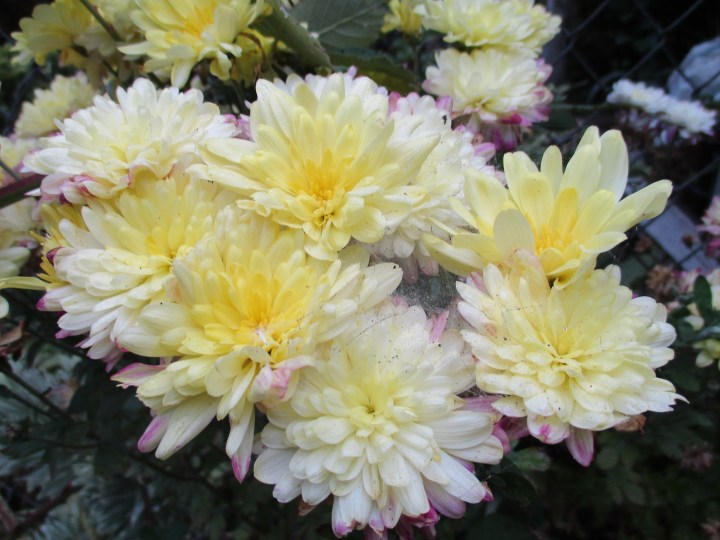
Chrysanthemum is another flower that I think of as blooming later, and even into autumn. Yet, these have been blooming since late spring. There are different cultivars that bloomed at different times. These are the latest, but are already starting to deteriorate. Perhaps those that already finished will bloom for another phase in autumn. It is difficult to say. I think that they bloom whenever they want to here.8bd2
Peruvian lily is blooming for a second phase, which really is right on schedule. The main and most prolific bloom phase was in late spring. After those flowers finished and deteriorated, the finished stalks got plucked, leaving only a bit of vegetative stems sprawling on the ground, and a few unbloomed stalks that are blooming now. After bloom, the finished stalks will probably get cut in half, but not plucked. That technique removes the seed capsules and keeps the tall and lanky stalks from falling over, but also leaves a bit of foliage to help the lower vegetative growth recharge the system for bloom next year.8bd3
Rose blooms all summer. Some of the hybrid tea roses bloom in more obvious phases after their most prolific first phase. Floribunda roses like this one bloom so steadily that there is not much separation between phases. This particular rose is in a pot that was not likely watered enough through the earlier warm weather, so subsequent bloom was not expected. Some of the petals are a bit roasted around the edges.8bd4

Zonal geranium blooms about as steadily as floribunda roses do. They would bloom right through winter if there did not need to be cut back before spring. Some zonal geraniums put out quite a bit of new growth recently. It will be awkward to cut them back at the end of next winter. The stems that are fresh and new now will still be in good condition right through winter, so I will not want to cut them back like I should. The flower of this zonal geranium is the same color as the rose above.8bd5

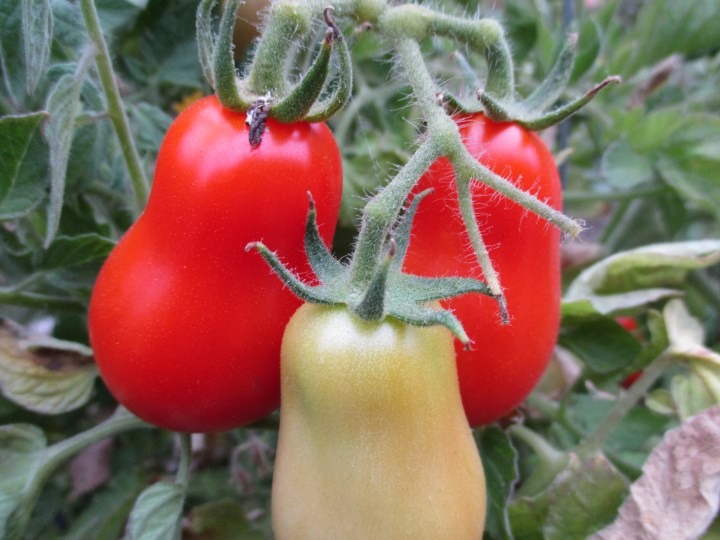
San Marzano tomato is NOT what this tomato is. It was labeled as such, but looks more like common ‘Roma’. No one is complaining. There is certainly nothing wrong with it, except that it is not what was expected. Hey, this unknown tomato is the same color as the zonal geranium above, which is the same color as the rose above. All the other flowers above are from plants that are in the storage nursery at work. These tomatoes are in a colleague’s garden adjacent to the nursery.8bd6
Garden Bloggers all over America and in other countries can share what is blooming in their gardens on the fifteenth of each month on “Garden Bloggers’ Bloom Day”, hosted by Carol Micheal’s May Dreams Garden at http://www.maydreamsgardens.com
Garden Bloggers’ Bloom Day July 15 – Summer Weather Has Arrived


While so many of us in the Northern Hemisphere were contending with unusually warm weather, our weather here had been unusually mild. The weather only recently became warm for the past two weeks or so. It did not get unusually hot here like it did in so many other regions, but the warmth developed suddenly enough to damage many of the flowers that were blooming at the time. This included many of the new perennials that we happened to be installing at the time. Consequently, there were not nearly as many flowers to get pictures of as there had been in May, and some of the flowers in these pictures show damage from the sudden change in the weather. I am sorry that I neglected to participate in Bloom Day in June.

These pictures were taken at work, on the Santa Cruz County side of the Santa Cruz Mountains above Los Gatos, closer to Felton. The climate is more coastal than the chaparral climate of the Santa Clara Valley, although both are within USDA Zone 9.

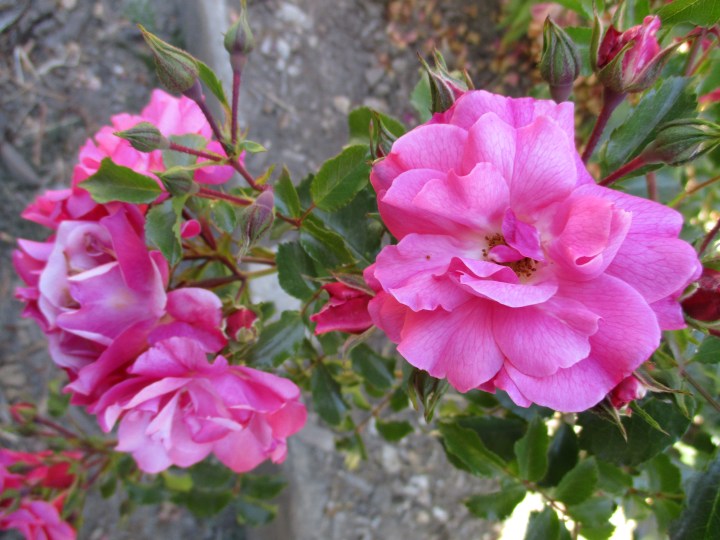
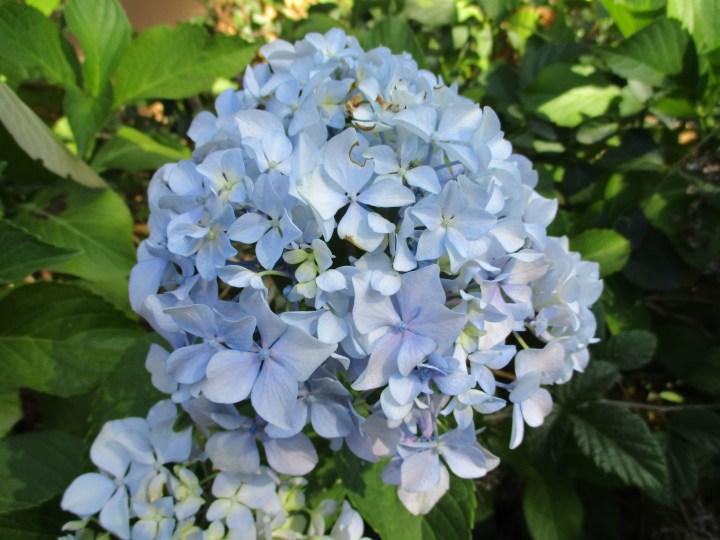
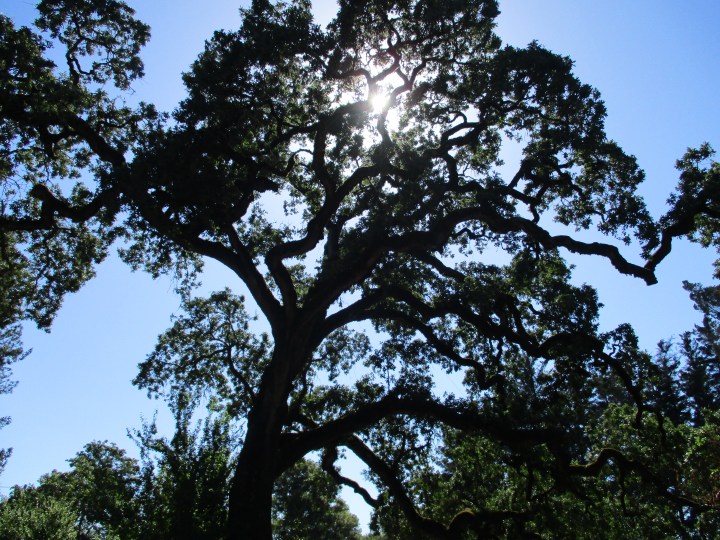
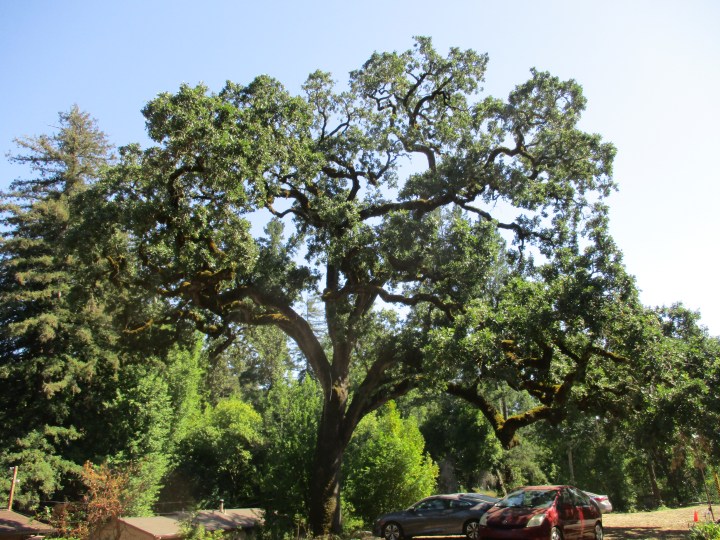
Carpet Roses are the lowliest of all roses, but they happen to be more functional for more landscape applications than other roses are. These got pruned back to a few canes over winter, and will get trimmed for confinement about now, but really do not need any more work than that. They bloom profusely in a few phases. They are only looking tired now because of the weather.7bd1Hydrangea are finishing in most other areas here. These are odd ones. They are more exposed to harsh weather conditions than others, but are somehow lasting later than those that are more sheltered. They are blue instead of pink, but are not in what would be considered acidic conditions within redwood forests. Nor were they fertilized to be blue. No one is complaining.7bd2Yarrow was planted just before the weather changed. Once established, it does remarkably well in the endemic soil and climate.7bd3Yarrow unfortunately got roasted by the sudden warmth. These yellow (or ‘golden’) flowers are getting quite crispy already.7bd4Coneflower was likewise planted just before the weather changed, and likewise got roasted. These happen to be some of the best at the moment.7bd5Valley Oak probably qualifies as appropriate for Bloom Day because it really is blooming right now. You just can not see it. The dust is everywhere. I really like this grand and sculptural tree. The valley oak happens to be the biggest oak in North America, and it also happens to live here, on the outskirts of groves of coastal redwoods, which are the tallest trees in the World.7bd6Valley Oak is so excellent that I had to get another picture of it from another angle. The first picture was looking about south toward the midday sun. This is looking almost to the east, perpendicularly to the other picture. The cars in the foreground are much closer than they seem to be. The trunk of the tree is significantly wider than it seems to be in relation to the cars.7bd7Garden Bloggers all over America and in other countries can share what is blooming in their gardens on the fifteenth of each month on “Garden Bloggers’ Bloom Day”, hosted by Carol Micheal’s May Dreams Garden at http://www.maydreamsgardens.com

Grapes And Vines Of Wrath

70531thumbAnyone can plant a grapevine. With a bit of work, almost anyone can make a grapevine grow. Most who put forth the effort can figure out how to prune and cultivate a grapevine. Yet, grapevines so often get very out of control. They easily escape confinement, overwhelm nearby plants, climb into trees and overburden their trellises or arbors. It is easy to forget how aggressive they can be.

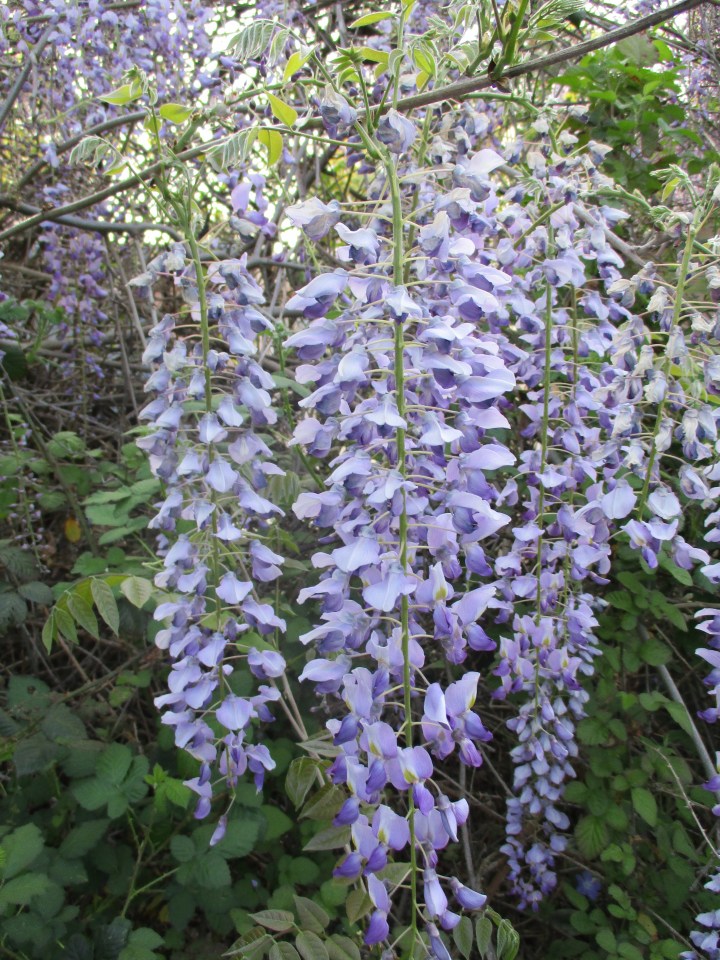
The primary problem with aggressive vines is that they require pruning for confinement. The most aggressive vines need the most aggressive pruning. Grapevines can actually be quite docile if pruned properly. Chinese wisteria and red trumpet vine need even more aggressive pruning, and will never be completely tamed. It is important to know the personality of each vine in the garden.

The secondary problem with aggressive vines is they are expected to conform to unrealistic confinement. Small trellises that are lower than about eight feet, including common gate arbors, spires and obelisks, are really only big enough to accommodate docile small vines like clematis (hybrid), American wisteria, well pruned mandevilla and vining annuals like morning glory and pole bean.

Chinese wisteria, large types of bougainvillea and other big and heavy vines need big and stout trellises or arbors. Lattice will not do. Chinese wisteria becomes entangled with lattice, and then crushes it as the vines expand. Bougainvillea does the same to a lesser extent, but then pulls the lattice apart as the intertwined vines sag from the increasing weight of foliage and growing vines.

Clinging vines like creeping fig and Boston ivy present another problem. They are not interested in trellises or arbors. They do not grab onto support by twining stems or tendrils. They instead cling directly to surfaces with specialized aerial roots that damage paint, stucco or even bare wood fences. Clinging vines should therefore only be allowed to climb surfaces that they will not ruin, such as concrete walls. They are better vines for freeway soundwalls than for home gardens.

Six on Saturday: Elderberry +


It is only coincidence that all of the bloom for today happens to be white. Again, these are old pictures, from two weeks ago or so. The mock orange, Philadelphus lewisii, and black locust, Robinia pseudoacacia, finished bloom a while ago. Both were very fragrant.

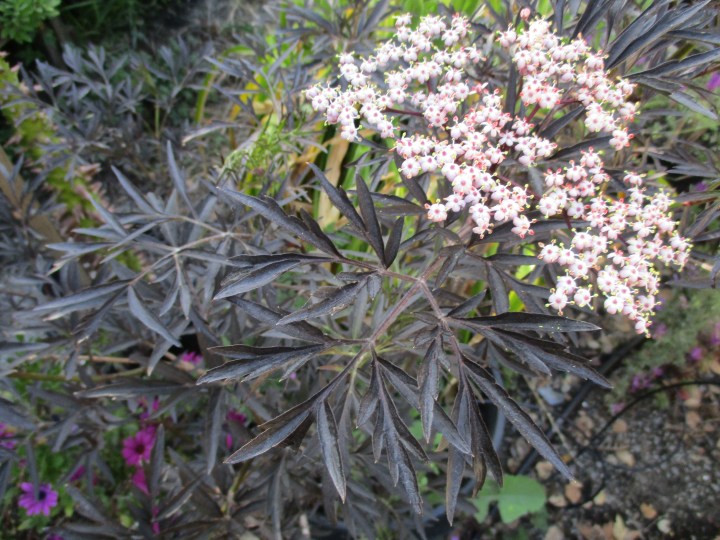
I wanted to get these pictures of the ‘Black Lace’ elderberry, Sambucus nigra ‘Black Lace’, and the native blue elderberry, Sambucus cerulea, in bloom, not because they are remarkably pretty, but for comparison. Their more recent bloom has been more impressive, with wider floral trusses. The blue elderberry is very common here, and because common black elderberry are uncommon here, it is our standard elderberry. ‘Black lace’ is only rarely available in nurseries, and grown primarily for the dark foliage and nice bloom. However, some mail order catalogs describe it at a productive fruit ‘tree’, as if it is comparable to other elderberries. It came here as an ornamental. Fruit would be an added bonus. I am very interested to see how it compares to the native blue elderberry, which is excellently productive, particularly if cultivated. It is ideal for award winning jelly, even if it does not win the blue ribbon: https://tonytomeo.wordpress.com/2017/10/01/blue-ribbon/

Elderberry bloom is useful as well, although we have not used it for anything here. I prefer to leave the bloom to make more fruit. However, because there are so many around here, we could easily get a significant volume of bloom without significantly compromising the availability of fruit later on. Bloom can be battered and fried like fritters, or used in beverages. I will leave that work to someone else.

1. ‘Black Lace’ elderberry bloomP80526
2. blue elderberry bloomP80526+
3. ‘Black Lace’ elderberry foliageP80526++
4. blue elderberry foliageP80526+++
5. mock orangeP80526++++
6. black locustP80526+++++
This is the link for Six on Saturday, for anyone else who would like to participate:

https://thepropagatorblog.wordpress.com/2017/09/18/six-on-saturday-a-participant-guide/

Flowers For Home And Garden

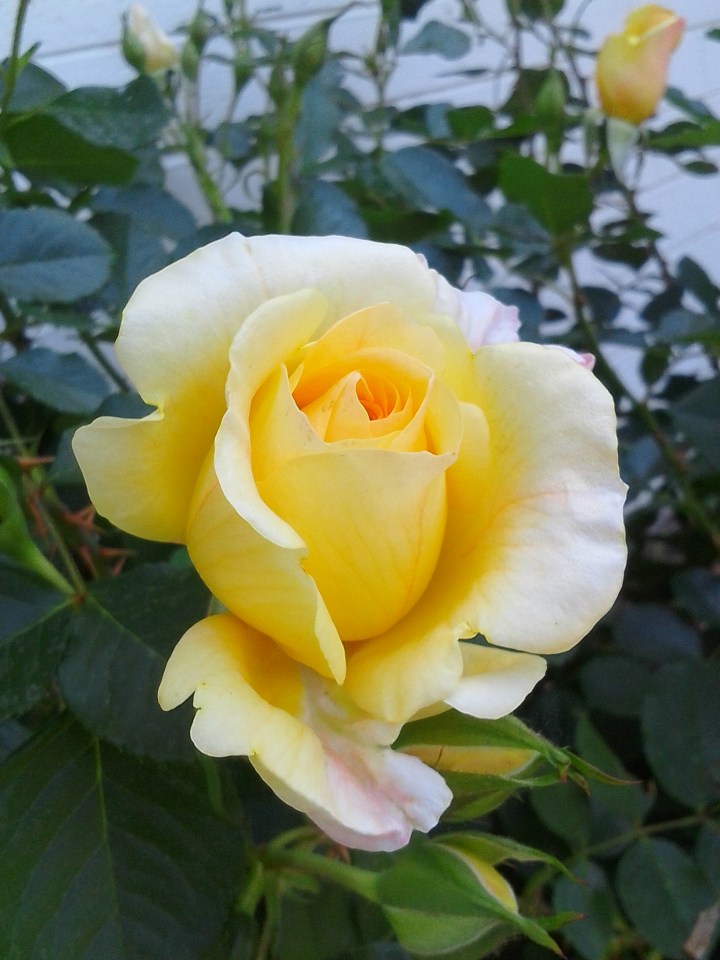
70524thumbThere is a difference. Hybrid tea and grandiflora roses were bred to be excellent cut flowers for the home. They bloom on long stems, and last well once cut. However, the rigid and thorny plants that produce these excellent blooms are realistically not much to look at. Floribunda, polyantha and climbing roses are more of a compromise with less ideal (perhaps) flowers on friendlier plants.
Conversely, bearded iris are spectacular while blooming out in the garden, but do not last so well as cut flowers. As colorful as they are, they perform best while still attached to the plants that produced them. Fading flowers might be groomed away from flowers that continue to bloom later, but are not a serious problem if allowed to linger. The garden is more forgiving than the home.

Where space allows, rose gardens or cutting gardens are areas devoted to the production of flowers for cutting and bringing into the home. Like vegetable gardens, cutting gardens might be hedged, fenced or partly concealed from the rest of the landscape. No one minds if the utilitarian plants within get deprived of their flowers, or need to be staked or caged like big tomato plants.

Taller and bulkier varieties of dahlia, delphinium, lily, Peruvian lily (alstroemeria) or sunflower that might be to big and awkward elsewhere in the garden can be right at home in a cutting garden. Compact and more prolific varieties of the same flowers work better in more prominent parts of the garden, and if prolific enough, can also provide flowers (although less spectacular) for cutting.

There are very few rules in regard to cut flowers. Many of us bring in bearded iris or daylily, even though they may not last more than a day. The buds below the flowers might bloom afterward. Blooming clematis vine, nasturtium (on or off stem), lily-of-the-Nile, zonal geranium, bougainvillea, bottlebrush, crape myrtle and even flower stalks of New Zealand flax, are all worthy cut flowers for anyone wanting to try them, especially if the garden provides enough to spare.70524thumb+

Garden Bloggers’ Bloom Day May 15 – My Second (Yes, Another Sequel)


Just like in April, there is too much blooming here in the Santa Cruz Mountains above Los Gatos to easily select only a few pictures. Again, these pictures are from work instead of my home garden. We are in USDA Zone 9, on the coastal side of the Santa Cruz Mountains, which is significantly less arid than the chaparral climate of the Santa Clara Valley below the inland side.

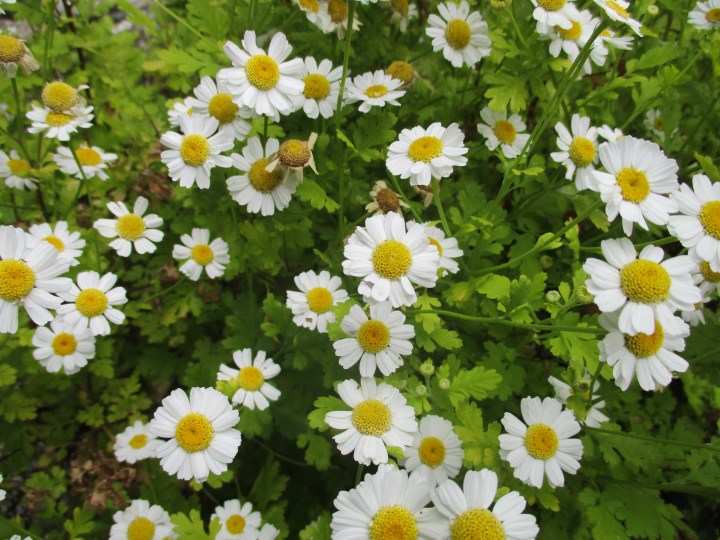
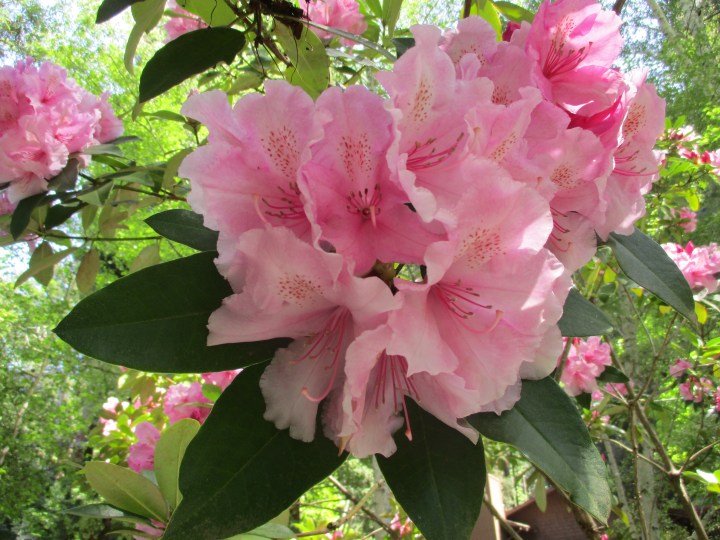
In the process of selecting pictures, I omitted most of any flowers that I have used or will use for other articles, as well as the new warm season annuals that will be more prolific later in the season. However, I might feature chamomile soon, and will post several pictures of rhododendrons on Saturday morning.

Mock orange, Philadelphus lewisii, is finished blooming. I wanted to get this picture of it before it was completely gone. These flowers were in a shaded spot, so lasted a bit later than the others. They are extremely fragrant, and extremely white. They contrast nicely with their rich green foliage and the surrounding evergreens. This mock orange is the state flower of Idaho.5bd1Mock orange of a different flavor blooms sporadically and later. This one is Pittosporum tobira, or something like it. It happens to be a very old shrub, so might predate the modern garden variety, or might be a slightly different species. It does not look quite right, but I can not explain it in any manner that would interest anyone. It is fragrant too, but with heavier fragrance.5bd2Roses are finishing their first phase, but are already starting their next phase. Most of these are floribundas, which are not my favorite, but work very well here were they are so visible. Quantity is more important than quality here in this prominent spot. We want them to bloom more regularly than to make flowers for cutting, although some do happen to make nice stems.5bd3Clematis is still in the can because it was only recently purchased from a nursery to be added where others are not filling in on their trellis adequately. Vines are such a bother. Most are too aggressive and crush their trellises. Those that are not so aggressive do not fill in well enough. Clematis blooms nicely this time of year, but rarely does much more once summer gets warm.5bd4Peruvian lily or alstoemeria do quite well here, and are certainly happier than in the Santa Clara Valley a few miles away. There are three here. A pink one can be seen in the background. There is also a salmon pink one. All three are the sort that used to be grown for cut flowers, but are difficult to obtain now. Most garden varieties are lower and mounding with shorter stems.5bd5Chamomile can naturalize here, but this garden variety does not seem to seed so profusely. Actually, it does not seem to seed at all. I have not yet seen any feral chamomile. The foliage of this variety was bright yellowish chartreuse when it was new, and is now fading to light green. It blooms most of the time. By the time it gets too green, it can get cut back and start all over.5bd6Rhododendron is blooming all over. I took pictures of only this one flower because, as I mentioned earlier, I will post six more pictures of other rhododendrons on Saturday morning. I chose this particular flower because I also wanted to show how big the plant that produced it is. Other colors can be seen nearby. They are really happy here, even with minimal maintenance.5bd7This picture does not show off flowers as well as the rest of the pictures do, but shows how big the rhododendron tree is. Although it is not as broad as some of the others are, it is likely the tallest here. It is situated at least twelve feet below the bridge, and stands about twelve feet above it, so is at least twenty five feet tall! Even by my standards, it is a big rhododendron!5bd8Garden Bloggers all over America and in other countries can share what is blooming in their gardens on the fifteenth of each month on “Garden Bloggers’ Bloom Day”, hosted by Carol Micheal’s May Dreams Garden at http://www.maydreamsgardens.com

Six on Saturday: Azaleas


There is just too much blooming this time of year to fit it all into one Saturday. These azaleas were blooming quite some time ago, and these pictures are at least a week old. Some might be almost two weeks old. I just could not use them last week because there were still camellias to show off.

1. What this one lacks in profusion, it compensates for with large flower size. We used to grow one that looked like this but perhaps with slightly richer color. It was known as ‘Phoenicia’. It was a bit too garish for my taste.P80505
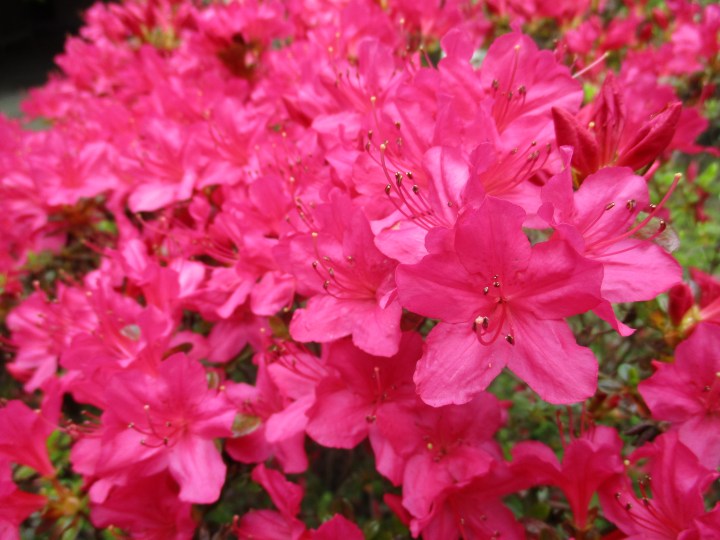
2. These flowers are smaller, but seriously more profuse. In fact, they are so profuse that, like #4, #5 and #6, the foliage is barely visible behind so many flowers. It is garish too, but I rather like this particular flavor of color.P80505+
3. Okay, so they are not as profuse, but they are such an excellently bright red. It looks like ‘Ward’s Ruby’ to be, but I can not be certain. All these azaleas look so different in this landscape than in production on the farm.P80505++
4. Not much foliage could be seen through these glowing flowers. They are more profuse than they look. They just do not seem so profuse because they are not dense. I do not know which cultivar to compare this one to.P80505+++
5. ‘Coral Bells’ has very profuse and very densely arranged tiny flowers. They form a layer over the exterior of the plant. Although I would say that these are more pink than coral, this cultivar is unmistakably ‘Coral Bells’.P80505++++
6. ‘Fielders White’ is the best that I saved for last. They are perfectly white medium sized flowers that are profuse enough to almost obscure the foliage, but not so profuse that the perfect form of the flowers is obscured.P80505+++++
This is the link for Six on Saturday, for anyone else who would like to participate:

https://thepropagatorblog.wordpress.com/2017/09/18/six-on-saturday-a-participant-guide/