Delay Some Gardening Between Seasons

Plants are still going to seed.

For gardening, this is one of those in between times of year, when summer chores are under control, but it is a bit too early for much of the work that will need to be done in autumn. Automated watering systems have already been adjusted for the longest and warmest days of summer, so will only need to be adjusted the other way as days eventually get cooler and shorter. Growth of most plants slows; and some of the plants that will later be the earliest to show fall color begin to fade from bright green to paler green.

The last of the summer fruits should be gone, leaving the trees that produced them looking somewhat tired. The weight of large fruit, particularly peaches, might have pulled stems downward where they may now be obtrusive. Pruning a few minor stems should not be a problem. However, trees are still too vascularly active for major pruning. That needs to wait for dormant pruning while trees are bare in winter.

A few plants with sensitive bark are susceptible to sun scald if pruned to expose too much bark on interior stems while the sun is still high and warm. This is not so likely to be a problem if pruned during winter because the sun is lower and cooler, and foliage grows back before the following summer. Actually, that is why English walnut and various maples are able to defoliate during winter, even though their smooth bark needs to be shaded.

Pruning of plants that are potentially sensitive to frost should likewise be delayed. Otherwise, pruning is likely to stimulate development of tender new growth that will be even more sensitive to frost during winter. Besides, new growth develops slower this time of year, so plants look freshly pruned for a longer time than if pruned late in winter, just prior to spring.

Some types of pittosporum are more susceptible to disease if pruned in late summer or autumn because their open pruning wounds heal slowly and stay open to infection during rainy winter weather. However, slow recovery from pruning can be an advantage to formally shorn hedges that are not so sensitive to frost or disease, such as the various boxwoods, or glossy or wax privets. If shorn now, they might stay trim until spring.

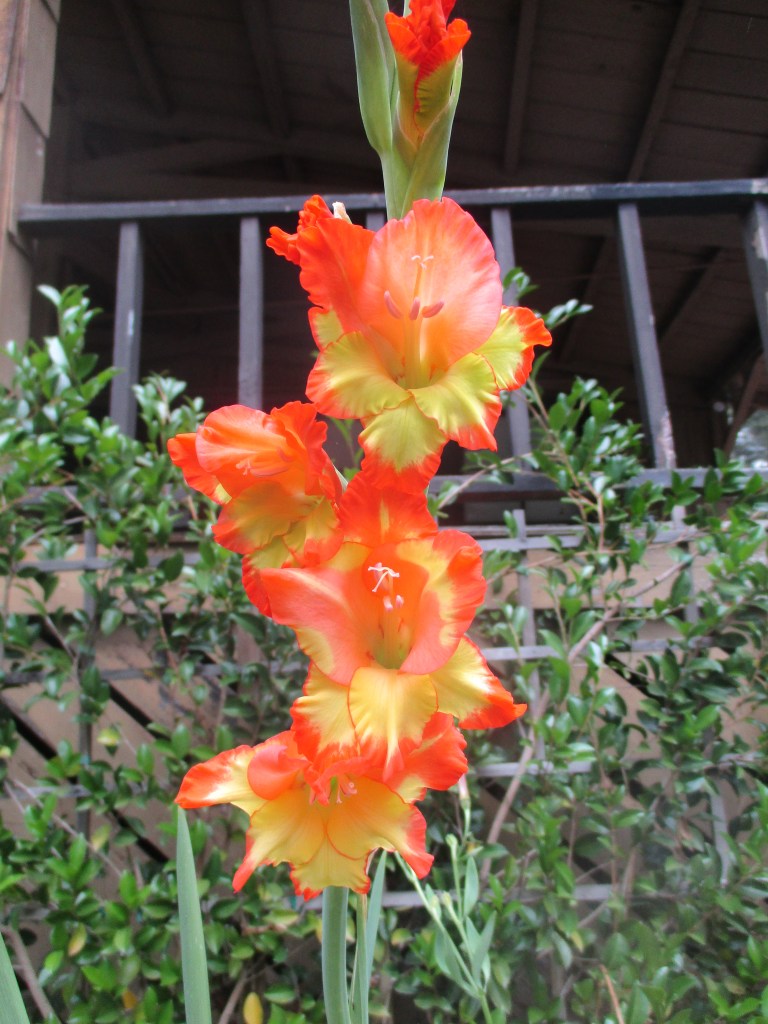
The dried foliar remains of any summer bulbs that are finished blooming can now be plucked and disposed of. Gladiolus and montbretias that are still green can be deadheaded (pruned to remove deteriorated flower stalks), but should be allowed to turn completely brown before getting plucked. Watsonias are not so easy to pluck without also pulling up the bulbs, so should instead get their dried foliage pruned off.

Weeds outside of landscaped areas may not seem to be a problem, but many are now producing seed that gets blown into the garden. Even if such weeds do not need to be pulled, their flowers and seeding stalks should still be cut off and removed if possible.
Montbretia

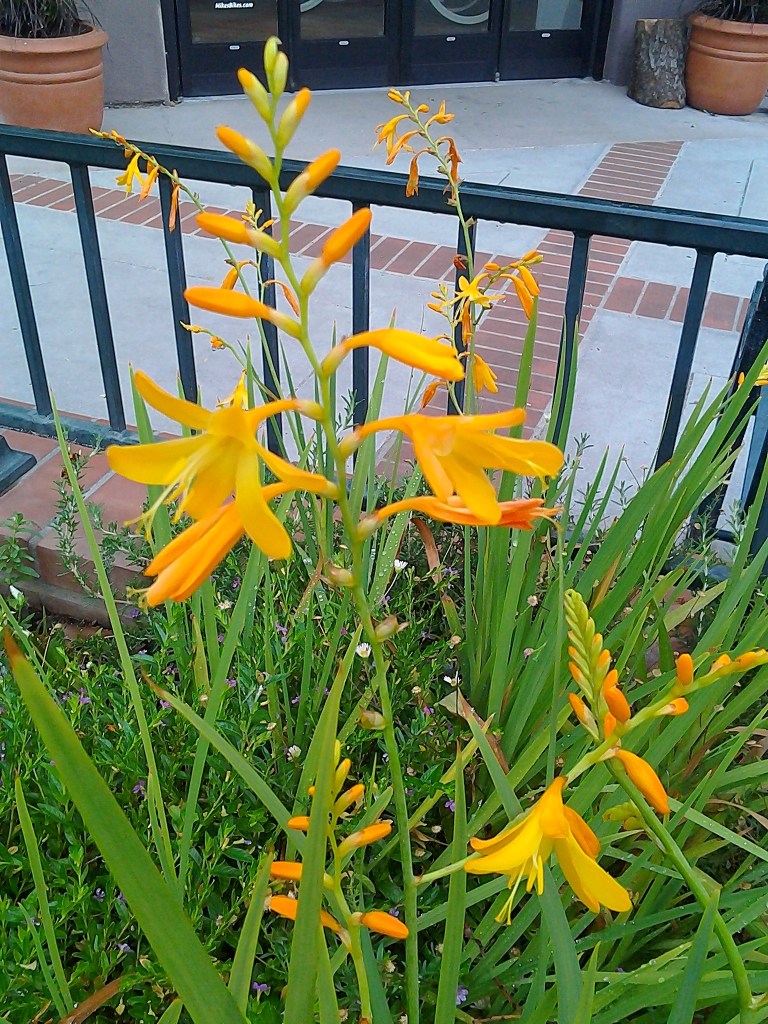
Bright orange montbretia is quite reliable and resilient, but can easily become a weed if not groomed of fading flowers.

Once they get into the garden, montbretia, Crocosmia X crocosmiiflora, may never leave. They sometimes survive the demolition of their original garden to emerge and bloom in the garden of a new home built on the same site. Bulbs (actually corms) multiply surprisingly efficiently to form large colonies that should eventually be divided if they get too crowded to bloom. Ungroomed plants sow seeds that may be invasive.

The one or two inch wide flowers are almost always bright orange, but can sometimes be reddish orange, yellow or pale yellow. The branched flower stems are two or three feet tall or a bit taller, and stand nicely above the grassy foliage. The narrow leaves are about half and inch to an inch wide.

Six on Saturday: My First Allium!

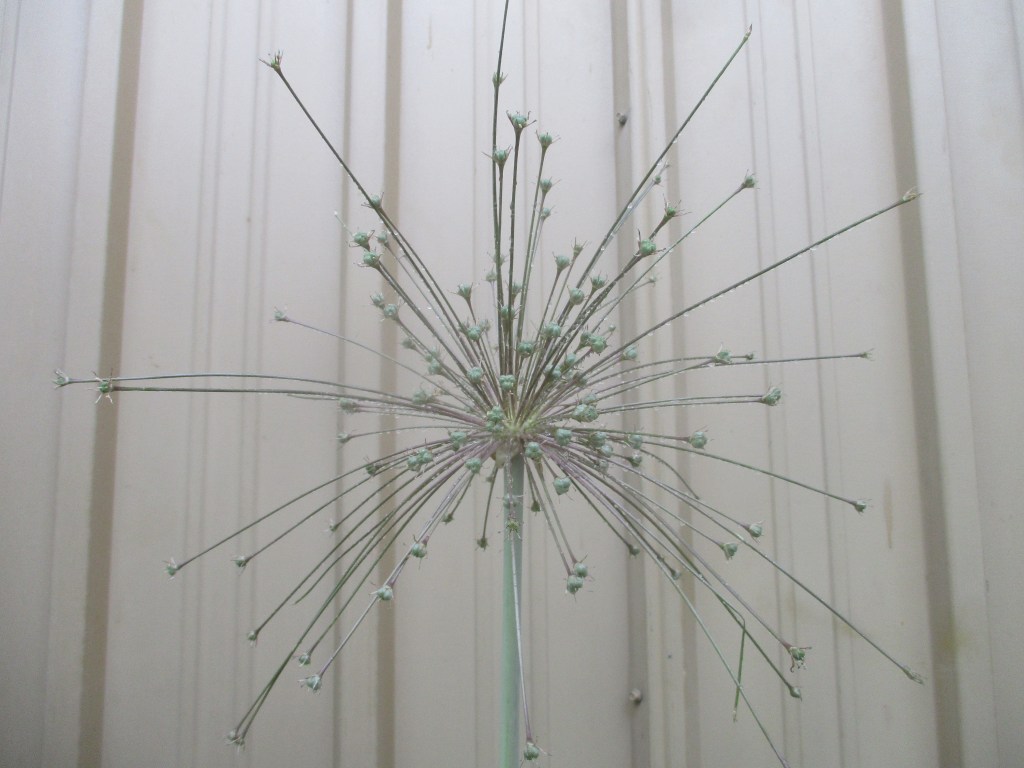
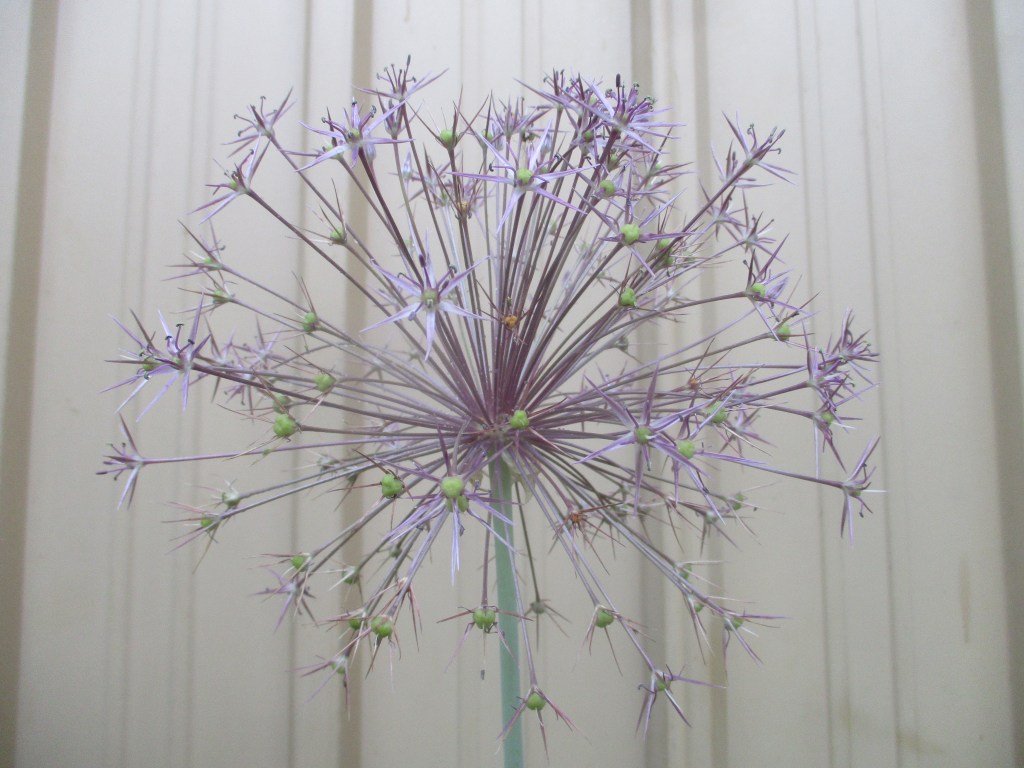
Allium species have been somewhat elusive. I had seen only pictures of them from other gardens. By the time I finally decided to try them in my own garden, they were no longer available from local nurseries. When I found them online, there were too many cultivars to choose from. It was baffling. Tangly Cottage Gardening sorted it all out for me by giving me my first two, Allium schumbertii and Allium christophii. They are exquisite, and are now generating seed. I should have gotten better pictures of them while they were in the middle of bloom, rather than before and after bloom. Since there are only three pictures of them here, three pictures from work were added, for a total of Six on Saturday.

1. Robinia pseudoacacia, black locust, is a horrible weed. This one had been falling for a long time before it landed in this motorpool yard. At least it warned us to avoid damage.

2. Gunnera tinctoria, Chilean rhubarb, regenerates efficiently after winter dormancy. It was completely bare only a few weeks ago. It should get much grander through summer.

3. Lilium asiaticum, Asiatic lily, was a gift from a neighbor two winters ago. Its dormant bulbs were unimpressive at the time. They were splendid last year, and are more so now!

4. Allium schumbertii, Persian onion, is one of two species of Allium that were gifts from Tangly Cottage Gardening! This unfinished bloom was more than a foot and a half wide!

5. Allium schumbertii, Persian onion, is also known as tumbleweed onion because these seeded trusses break off to disperse seed as they tumble about the deserts they inhabit.

6. Allium christophii, star of Persia, is the other of the two species of Allium from Tangly Cottage Gardening. I hope that both species are reliably perennial, and their bulbs multiply.

This is the link for Six on Saturday, for anyone else who would like to participate: https://thepropagatorblog.wordpress.com/2017/09/18/six-on-saturday-a-participant-guide/

Hyacinth

Hyacinth is both colorful and fragrant.

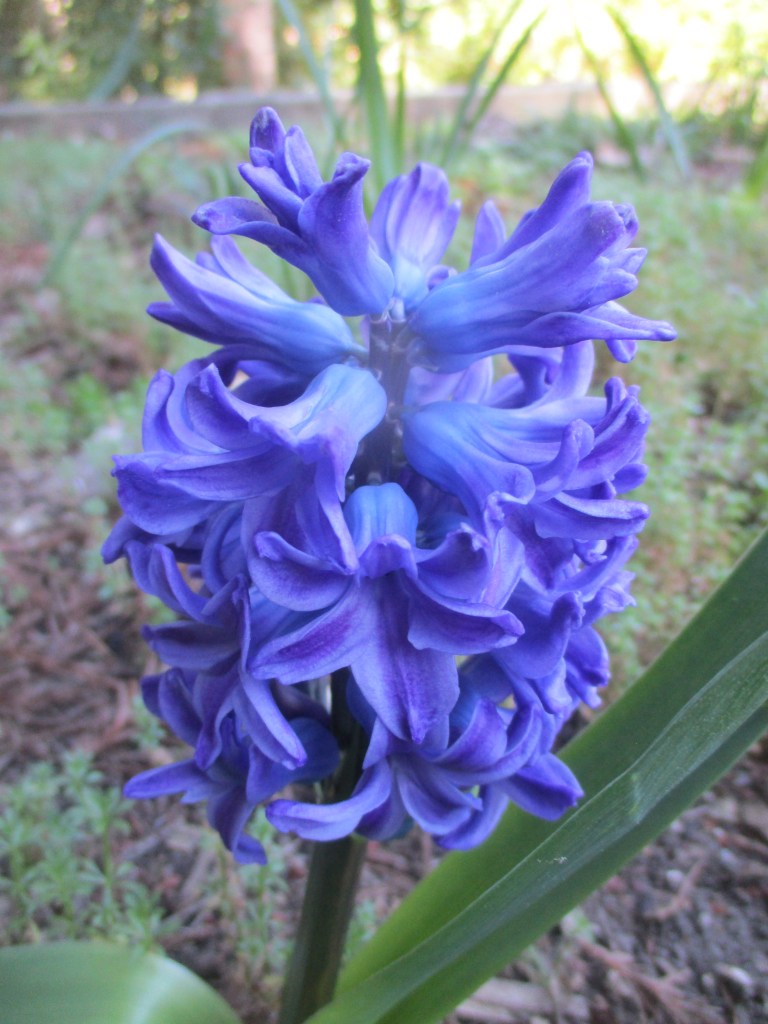
The most fragrant of flowers generally lack color. The most colorful of flowers generally lack fragrance. Most flowers employ either fragrance or color to attract pollinators, but not both. Hyacinth is an exception that is as colorful as it is fragrant. Bloom can be rich hues and tints of most colors except for green. The captivating fragrance is sweet and intense. 

Hyacinth are spring bulbs that are now finishing bloom, but are ready for planting during autumn. They require a bit of chill through winter, so must be dug and refrigerated for two months or so while dormant in milder climates. Dormant bulbs are plump and round, like small but toxic onions. They appreciate rich soil, regular irrigation, and a sunny situation. 

Bulbs generate only a few strap shaped and somewhat rubbery leaves during late winter prior to early spring bloom. These leaves resemble lily of the Nile leaves, but stay rather short, and may not flop. Hyacinth blooms with one or two short, stout and neatly cylindric trusses of several small flowers. Foliage lingers for only two or three months after bloom. Bulbs may not be reliably perennial.

Deadhead Spring Bulbs After Bloom

Most spring bulbs are done blooming.

Fruiting warm season vegetables that are now in season, such as squash, tomatoes and beans, are more abundant with regular harvest. Plants that produce such fruit respond to their natural obligation to generate seed. Deprivation of the fruit that contains their seed stimulates production of more. Similarly, it is helpful to deadhead some flowering plants.

Deadhead grooming is a type of pruning, even if it does not involve pruning shears. It is, in simple terms, the removal of deteriorating flowers after bloom. For some plants, it only improves aesthetic appeal. For many others, it redirects resources from seed production into subsequent bloom, or vegetative growth that eventually sustains subsequent bloom. 

Now that early spring bulbs are finishing bloom, it is time to deadhead them. Most bloom just once annually, so without the distraction of seed production, will prioritize vegetative growth into new bulbs to bloom for next year. Many of the summer bulbs that bloom later bloom more than once annually, so divert conserved resources into subsequent blooms.

However, many cultivars of spring bulbs are too extensively hybridized to produce viable seed. For them, deadhead grooming merely eliminates unappealingly deteriorated floral carcasses, while their foliage continues to sustain the development of new bulbs for next year. The foliage of most deteriorates slowly through warming spring or summer weather. 

Some extensively hybridized modern cultivars are not sterile though. Some can produce feral progeny that are less appealing than the hybrid parents, but are vigorous enough to displace them. Deadhead grooming eliminates most or all of the unwanted feral seed. Of course, for wild grape hyacinth and snowdrop, seed can be left to develop and disperse.

Established colonies of feral freesias can be allowed to make seed for more of the same. However, hybrid freesia benefits from deadhead grooming to eliminate feral seed. Dutch iris, narcissus, daffodil, tulip, hyacinth and lily can also benefit from deadhead grooming, for a variety of reasons. Some are sterile. Some are not. Some get shabby. Some do not.

Ranunculus

Ranunculus enjoys mild weather through spring.

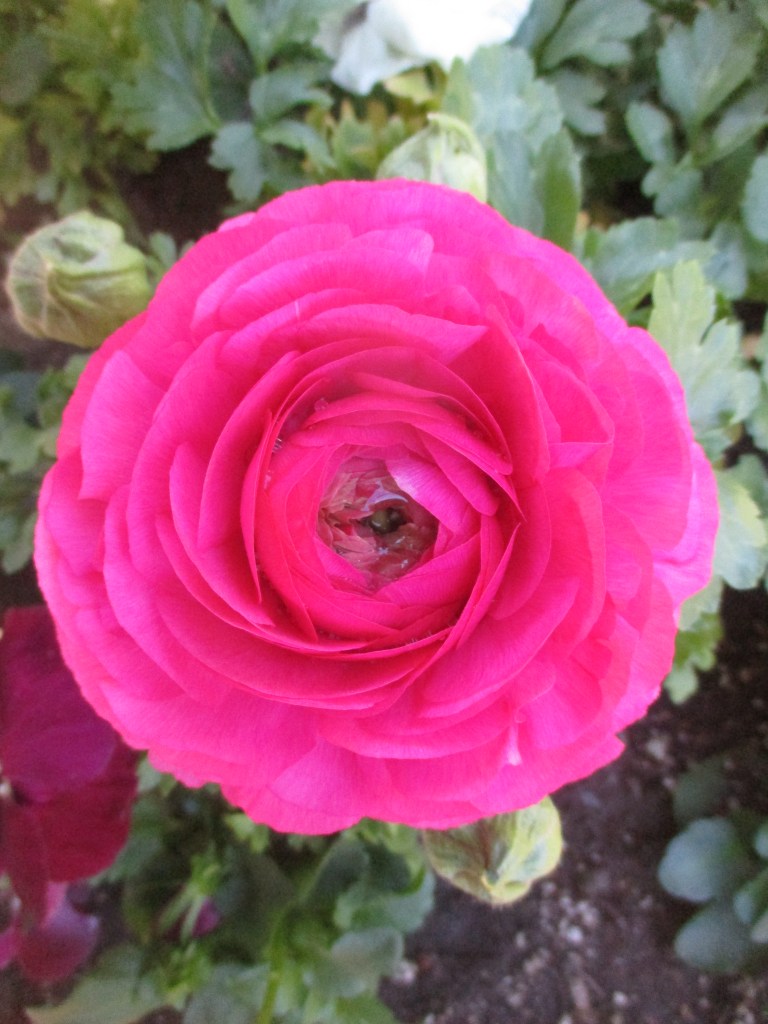
If their strange tubers got into the garden last autumn, ranunculus should be blooming by now. Although their schedule suggests that they crave winter chill like other spring bulbs, they merely want to disperse their roots early. Then, they can bloom as winter ends, and continue until spring weather gets too warm for them. They mostly finish prior to summer. 

If tubers did not get into the garden earlier last autumn, young ranunculus plants become available from nurseries late in winter. Although generally a spring annual, tubers, which go dormant by summer, have potential to regenerate perennially for subsequent springs. Digging and storing tubers through most of their dormancy might improve their potential.

Ranunculus bloom can be pink, red, orange, yellow, purple, cream or white. Flowers are plump and neatly dense with many papery petals, like little peony flowers. They stand on sturdy stems about half a foot to a foot high. Their finely textured basal foliage resembles parsley, but with a lighter color. Dormant tubers are tufts of short, plump and woody roots.

Gladiolus

Gladiolus are still just dormant corms.

Although they will not bloom until summer or autumn, gladiolus are in season now. Their corms, which are like bulbs, are now available from nurseries, and are ready for planting. Unlike earlier spring bulbs, they need no chill, and should not generate new foliage until warmer spring weather. Corms prefer to be at least four inches deep, in sunny situations. 

The most popular and common gladiolus, Gladiolus X hortulanus, are hybrids of several species. They bloom more impressively than their simpler parents, but are not as reliably perennial. Most corms bloom for only a single season, although some within each group may bloom for a second season or more. Blooms can get heavy enough to need staking. 

Bloom can be bright or pastel hues of any color except true blue, perhaps combined with another related color. Individual florets are not large, but they share their floral stalks with several similar florets that bloom upward from the bottom. Long and pointed leaves stand upright, flaring only slightly to the left and right. The tallest gladiolus can get six feet high.

Late Bulbs Require No Chill

Cannas grow after spring bulbs bloom.

Spring bulbs are making a comeback from their unceremonious internments last autumn. Some of the earlier sorts are visibly extending foliage above the surface of the soil. A few narcissus, daffodil and crocus are already blooming! Now it is time to plant late bulbs, or summer bulbs, which start to grow through warm spring weather, and bloom for summer.

Spring bulbs are generally the same as hardy bulbs of climates with cold winter weather. They are hardy to frost while dormant. Since chill is relatively mild locally, their hardiness is irrelevant. Conversely, some prefer more chill than they experience locally. Inadequate chill can compromise performance. Autumn planting maximizes their brief chill exposure. 

Late bulbs are completely different from spring bulbs. Not only do they not require chill to perform, but some dislike it. Many of the most popular late bulbs that can naturalize here succumb to frost elsewhere. Instead of early planting for chill, as spring bulbs prefer, late bulbs prefer late planting to avoid chill. Their foliage emerges after the last threat of frost.

However, although they do not need or even appreciate chill, most popular late bulbs are resilient to the minor chill of local climates. Once established, they simply die back to the ground in response to the first frost of autumn. They maintain dormancy through winter to regenerate for spring. Some repeat this process for years, since the soil does not freeze.

Not all late bulbs are actually bulbs. Most are corms, rhizomes, tubers, tuberous roots, or other bulb-like perennials. Some, such as dahlia and canna, bloom through an extensive season. Some, such as lily and gladiolus, bloom only once. Planting in phases for a few weeks prolongs their bloom. Of course, they will synchronize for any subsequent bloom.

Canna and common white calla are two of the most reliable late bulbs. Crocosmia is too reliable, and since it can be invasive, it is rarely available. Common gladioli and various lilies are spectacular in bloom, but not reliably perennial. Dahlia is a very rewarding and reasonably reliably perennial summer bulb. It is spectacularly variable in color, form and texture.

Early Bulbs Start Even Earlier

Daffodils for next spring start now.

Crocus, daffodil and narcissus are among the earliest of the popular early bulbs to bloom at the end of winter. Hyacinth, tulip, freesia, anemone, ranunculus and some types of iris bloom shortly afterward. That process should begin in February or so, about five months from now. Early bulbs are seasonable now though. This is when they go into the garden.

Early bulbs, or spring bulbs, take commitment. While dormant, they are not much to look at. There is less to look at after their internment into shallow graves, where they disperse their roots secretly through winter. They will not make an appearance until they bloom in spring. Fortunately, their performance is more than adequate compensation for the effort.

Early bulbs go into the garden now because they take time to get ready for spring bloom. While dispersing roots, they also begin to develop foliage and floral stems. Such growth remains safe and invisible below the surface of the soil until the weather is warm enough for it to emerge. Until then, chilly and rainy weather helps bulbs adhere to their schedule. 

Whether they are true ‘bulbs’, or they are corms, rhizomes, tubers or tuberous roots, early bulbs are specialized storage structures. They contain what the particular plants need to grow to maturity and bloom within their preferred season. They should resume dormancy afterward, to repeat the process as perennials. However, few modern cultivars will do so. 

Realistically, extensive breeding for the development of the more extravagant of modern early bulbs has compromised their vigor. Consequently, some are not reliably perennial. Some simpler crocus, daffodils and narcissus can naturalize as perennial in comfortable situations. Otherwise, more of the later bulbs, like canna, cala and dahlia, are perennial.

Whether they naturalize or not, most early bulbs bloom just once annually. Planting them in phases prolongs bloom. Ideally, a subsequent phase begins to bloom as its preceding phase finishes. The length of bloom determines the frequency of phases. For example, if tulips bloom for a week, phases can be weekly. Winter annuals cover nicely when done.

Naked lady

These naked ladies are not shy.

While so many flowers are finishing their bloom and leaving their drying foliage behind, naked lady, Amaryllis belladonna, is just beginning to bloom, naked of any foliage. Clusters of a few to several bright pink flowers stand on bare stems about two feet tall. Individual flowers are about two and a half to three and a half inches long, and resemble lily flowers. Foliage only appears after flowers deteriorate, and lasts only until weather gets warm late in spring. The strap shaped leaves are about a foot to a foot and a half long. Through summer, the two or three inch wide bulbs are dormant and bare, and seem to be dead with their tops visible at the soil surface, but retain fleshy roots below. They should therefore only be dug and divided if they get too crowded or need to be moved.