Leopard Plant

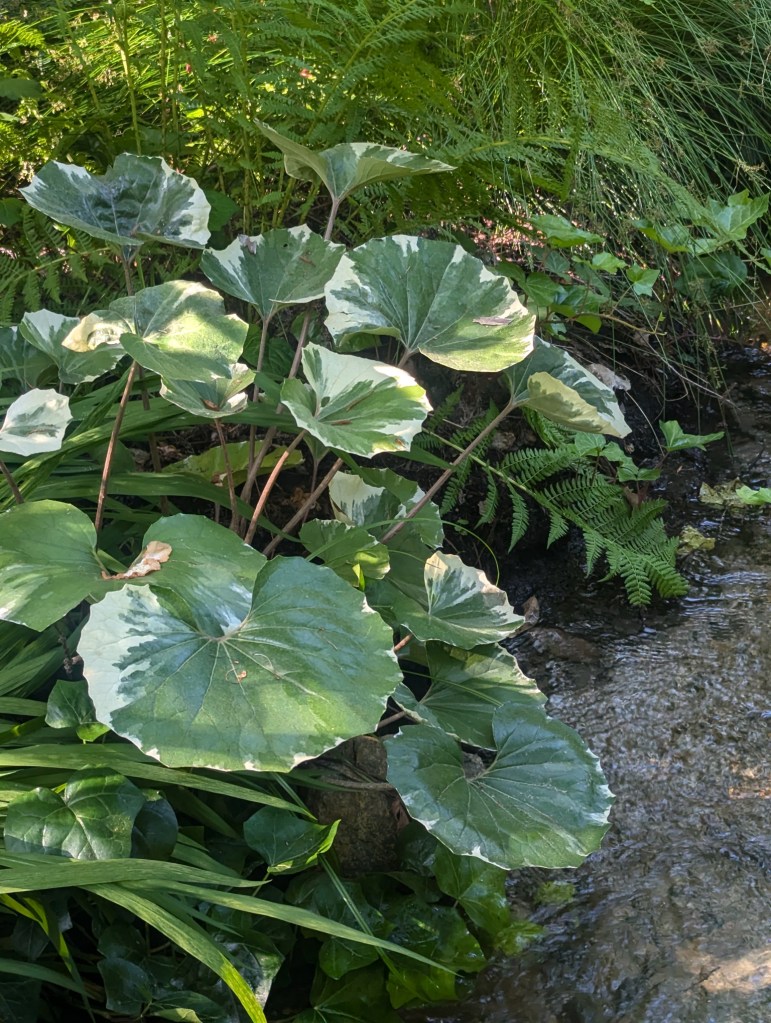
Leopard plant enjoys shady riparian situations.

Not much can survive in the shade of broad eaves that extend over a northern exposure. With sufficient watering, that is where the leopard plant, Farfugium japonicum, can excel. It is naturally an understory species that prefers the shade of bigger vegetation. If it does not get too dry, it also performs well with full sun exposure. It enjoys organically rich soil.

Leopard plant is a striking foliar plant, but may also bloom for autumn or winter. Its bright yellow daisy flowers are about an inch wide, and bloom in loose trusses. The glossy and evergreen foliage might be foot and a half high. Some cultivars are more compact, while old cultivars may get slightly bigger. Individual leaves are about three to six inches wide.

Popular cultivars of leopard plant are notably diverse. Most are variegated with yellow or white spots, blotches, margins or irregular streaks. Some exhibit wavy, crinkly or convex foliar margins. Yet, the most popular is likely the old fashioned cultivar with simple, deep green foliage. Their subterranean rhizomes migrate, but rather slowly. Too much fertilizer can cause foliar burn or even inhibit bloom.

Coral Bells

Coral bell foliage is as pretty as its delicate flowers for which it is named.

Even though their delicate trusses of tiny hanging flowers on one or two foot tall wiry stems make good cut flowers and attract hummingbirds in spring and early summer, coral bells, Heuchera micrantha, is more often grown for its colorful foliage. Contrary to their common name, the flowers (of this species) are more often pale or greenish white anyway. Their foliage can be all sorts of shades of green, gold, tan, brown, bronze, and purplish. The rounded and lobed leaves have somewhat raspy tomentum (hairs) and can be about two and a half inches wide. ‘Ruffles’ has more ruffled and deeply lobed leaves. ‘Palace Purple’ is a very popular cultivar with distinctive deep bronze or purplish foliage.

Mature plants can be divided in spring to make more plants every few years or so. Where protected from frost, division can be done in late autumn. Coral bells can also be propagated by cuttings. Rich soil and good exposure are preferred; but partial shade is best in warm spots.

Red Alert

Acer platanoides

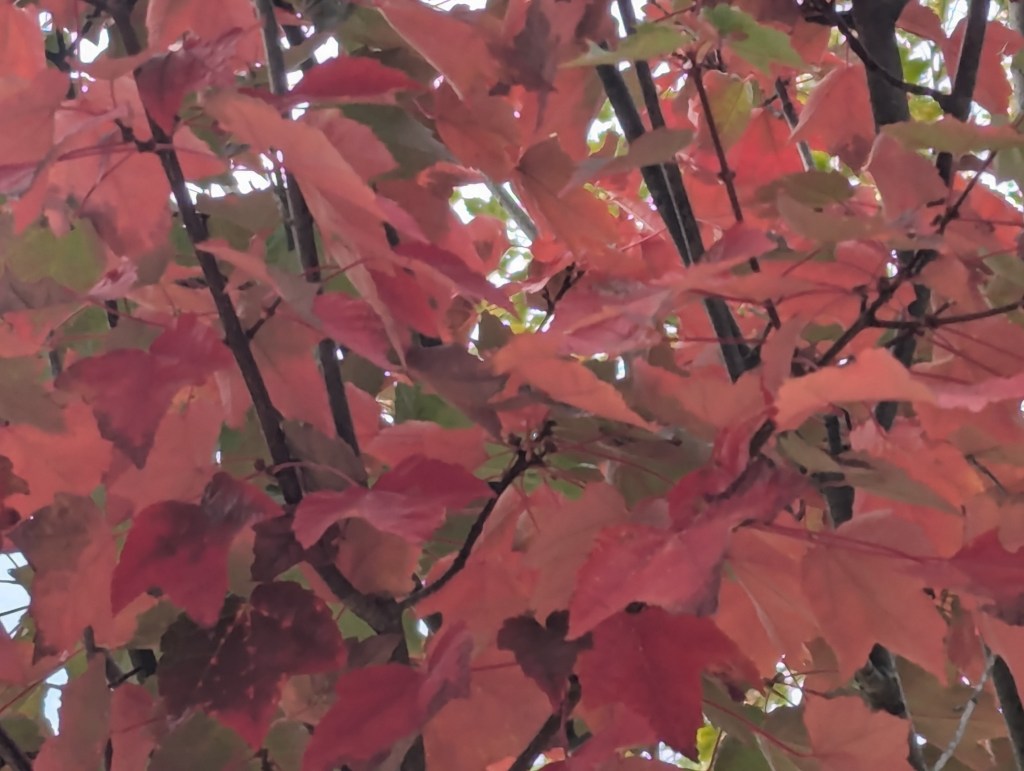
Acer platanoides ‘Schwedleri’, is Schwedler’s maple, which is an old fashioned cultivar of Norway maple. It is not a red maple. However, because its new foliage initially emerges with deep burgundy red color, it is often mistaken for red maple, particularly where red maple is uncommon. Its deep burgundy red foliar color does not last long before developing deeper purplish bronze color, with tiny contrastingly greenish yellow flowers. For autumn, the foliage turns yellow. Schwedler’s maple was a common street tree for the many large tracts of suburban homes that were built within the Santa Clara Valley during the late 1950s. Although it has not been available from nurseries for the past few decades, at least two similar but more modern and darker bronze cultivars of Norway maple are becoming more available. Modern cultivars are generally sterile, so are not invasive like the simple species has been within some ecosystems that are more favorable to naturalization than that of the Santa Clara Valley. The Norway maple in the picture above is not ‘Schwedleri’ but looks very much like it.

Acer rubrum is the real red maple, not just because of its often bright red autumn foliar color, but primarily because of its red floral buds that emerge immediately prior to foliation in spring. However, prior to autumn, its foliage is simple green. Red maple was rare here prior to 1990, and by the turn of the Century was still only mildly popular in the Santa Clara Valley. It could be more popular than it is, and realistically, performs better as a street tree than cultivars of Norway maple. Although not as colorful as bronzed cultivars of Norway maple are through summer, its vibrant yellow, orange and typifying red autumn foliar color is superior, even in response to only mild chill.

Acer rubrum

Green, White & Red

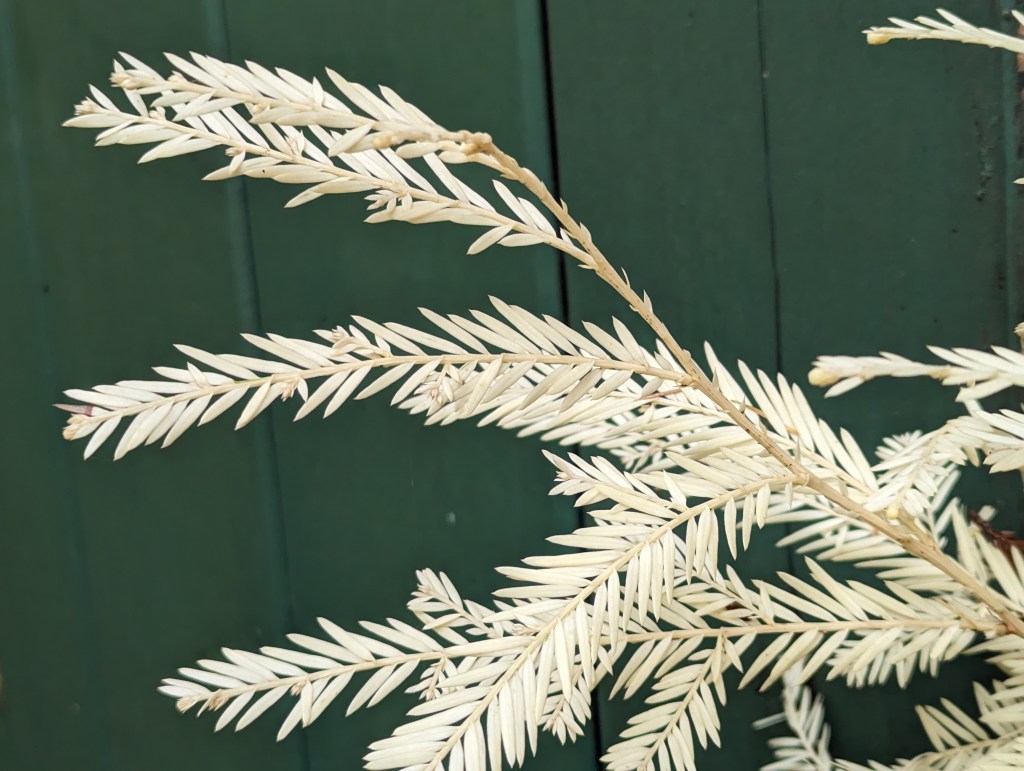
North Fourteenth Street is about as close as I have ever been to Italy; but amongst all the Green foliage here, I can find a bit of White albino Redwood foliage. It is a ‘sport’, which is a silly word for mutant growth. Because it lacks chlorophyll, and is consequently unable to photosynthesize, it is reliant on resources that it draws from the tree that generated it, which has a canopy of normal green foliage. Because of this reliance, copies of this mutant growth can not be grown as cuttings. Such cuttings simply could not sustain their own growth. I have made a few unsuccessful attempts to graft this mutant growth onto normal trees. The scions deteriorate before they can graft. I should try again. This foliage really is as strikingly white as it looks in pictures. I am certainly no expert on floral design, and I know that this foliage does not last for long once cut, but I suspect that it would look striking with black bearded iris or black hollyhock, or on a smaller scale, with black pansies or black petunias. Heck, it might likewise be striking with white flowers. In the early 1970s, albino redwoods, which are merely albino sports of normal redwoods, were considered to be very rare, with only a few documented specimens. Although they really are quite rare, many more have been documented since then, and many more, such as this specimen, remain undocumented. I wrote about this albino redwood foliage a few years ago, and was reminded of it by the wildlife photographer of Portraits of Wildflowers near Austin. Except for a few trees that are barely north of the border with Oregon, coastal redwood is exclusively native to the West Coast of California. It is the tallest tree in the World.

Tree Houseleek

Tree houseleek can be dark bronze.

This must be one of the sillier horticultural names. Tree houseleek, Aeonium arboreum, is neither a tree nor related to leeks. The biggest cultivars can not stand much more than three feet tall. Above that, their succulent foliage gets too heavy for their fleshy stems and fine roots. They perform well as houseplants only within very sunny situations.

Formerly common tree houseleek, with simple green foliage, is not so common anymore. Almost all popular modern cultivars are variegated or bronzed, with wide foliar rosettes. Variegation ranges from bright lemony yellow to creamy white. Bronze ranges from light brown to very darkly purplish. Foliar rosettes are about four to eight inches wide.

Plumply conical trusses of tiny yellow or chartreuse flowers bloom for spring. They are neither numerous nor brightly colorful, but are weirdly interesting. Fresh spring foliage is most colorful and lush. It can fade and partially shed during arid summer weather. New plants propagate very easily from dragging stems or cuttings of pruning scraps.

Variegation And Other Foliar Color

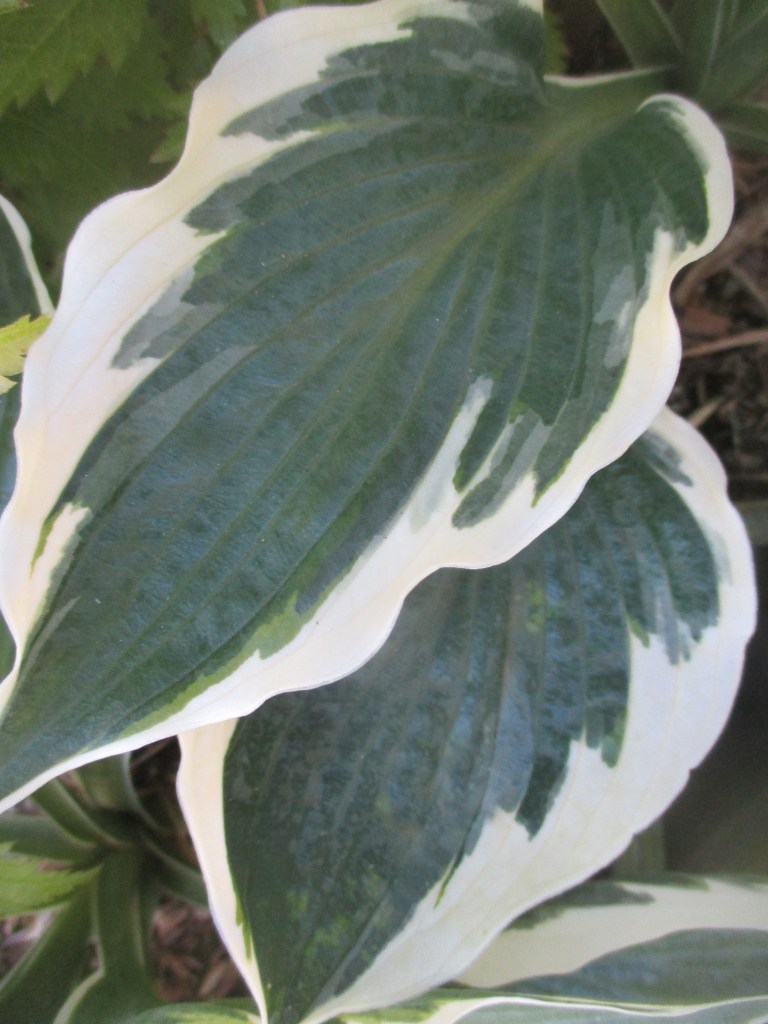
Bright white variegation brightens shady spots.

Foliar color is not limited to autumn. Some deciduous plants display colorful foliage from spring to autumn. Then, some of these change color for autumn. Some evergreen plants display colorful foliage through the year. Variegation of foliage can be more colorful than associated bloom. So can unvariegated bronze, purple, red, yellow, blue or gray foliage.

All sorts of plants exhibit variegation or other variations of color of their foliage. They can be annuals, perennials, shrubs, vines, trees, or houseplants. Although many are popular primarily because of their foliage, some provide appealing bloom as well. Blue and gray foliage is a natural advantage in harsh climates. Other colors are selections of mutations. 

Because variegation deprives portions of foliar surface area of the chlorophyll needed to perform photosynthesis, it inhibits growth. This can be an advantage for plants that grow too vigorously otherwise. However, many variegated plants occasionally develop growth that is not variegated. If not removed, it can overwhelm and displace desired variegation. 

New Zealand flax, dracaena palm (Cordyline australis), gold dust plant, euonymus, coral bells and hosta are some of the many plants that are more familiar with colored foliage or variegation than without. If simple unvariegated coleus, croton or caladium are available, they must be notably rare. Blue spruce is always blue. Purple leaf plum is always purple. 

Although both gold and gray junipers are popular, the most common are green. Bronzed and variegated cannas are likewise not quite as popular as those with simple lush green foliage. Pittosporum tobira is so much more vigorous without variegation than with it, that the two distinct types of this same species perform different functions within landscapes.

Golden honeylocust supposedly produces lighter shade than darker green honeylocust. ‘Ruby Lace’, a bronze cultivar of honeylocust, supposedly produces faintly darker shade. Some golden or variegated foliage is more susceptible to scorch; although sun exposure enhances foliar color and variegation. Fresh new spring growth gets the best foliar color, but is likely to fade through summer.

Smoke Tree

Smoke tree has striking foliage too.

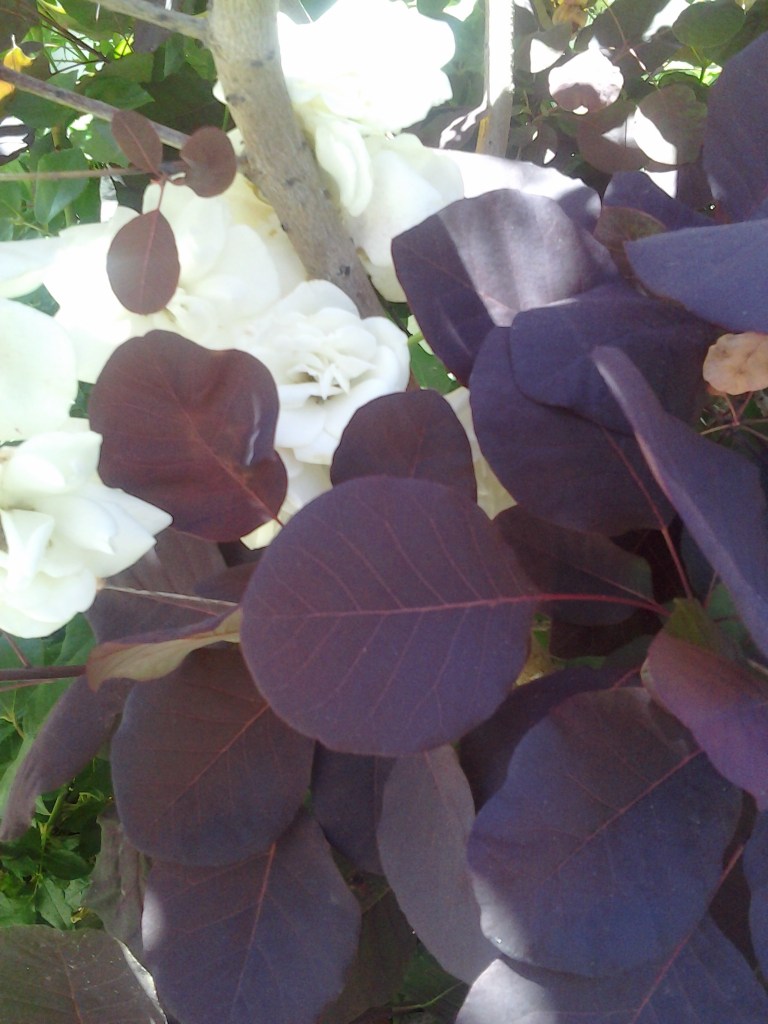
Wispy billows of pinkish or tan blooms through June and July are what the smoke tree, Cotinus coggygria, is named for. It probably should have gotten more recognition for brilliant foliar color in autumn. It reliably turns bright yellow and orange, and if the weather is right, it can turn rich red and even purplish. Until then, the popular modern varieties have either dark purplish or light yellowish foliage. Some of the older plants have slightly bluish green foliage. The nearly circular leaves are about two or three inches long. Yellowish varieties tend to be shortest. Those with purplish or bronze foliage get larger. Old fashioned green plants are the largest, and can get twelve feet tall and broad. Smoke tree can be large shrubbery, or pruned up as small trees. Aggressive pruning in winter promotes better foliar color through spring and summer, but inhibits smoky bloom. Slightly distressed plants have better color in autumn. Plants that are watered too much are likely to succumb to disease within only a few years.

Foliage Can Provide Color Too

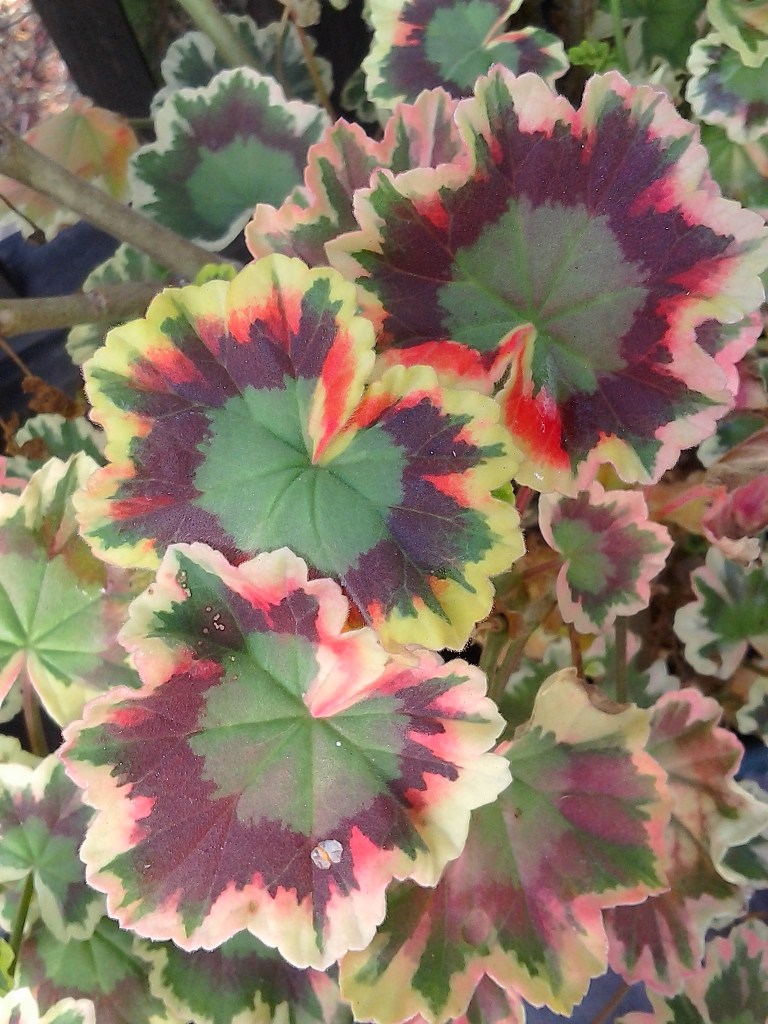
There is considerable variety in variegation.

Flowers get all the credit for color. They certainly are the most colorful features in the garden, as well as the most fragrant. However, foliage can do so much more than simply provide green. It can be hued with yellow, red, blue, purple, bronze, gray, or variegated with white or yellow. Plants with colorful foliage can range in size and function from small annuals and perennials to shrubbery, vines and even trees.

Hydrangea, hosta, ivy, English holly and various pittosporum are some of the more popular plants for white variegation, and are often variegated with yellow. Euonymus can conversely be variegated with white, but is usually variegated with yellow. New Zealand flax can be variegated with pink, bronze, brown or gold. Box elder is a good sized deciduous tree that can be variegated with white, or alternatively frosted uniformly with gold as new foliage emerges in spring. There is even a variety that has slightly purplish or smoky colored new foliage.

Silver mountain gum, silver Mediterranean fan palm, lamb’s ears, artemesia and the various dusty millers have remarkably silvery foliage. Silver mountain gum can grow into a mid-sized tree with a stout trunk. Lamb’s ears is a low perennial. Olive trees, some junipers and the various lavenders have gray foliage. Colorado blue spruce and some agaves have striking blue color.

Various purple leaf plums and Japanese maples are famous for their purplish foliage. Smoke tree and some beech have even darker purplish foliage. Some New Zealand flax and cannas can be just as purple or comparably bronze.

Actually, New Zealand flax and cannas, as well as junipers known for blue or gray foliage, can alternatively be bright yellow. Golden arborvitae, golden honeylocust and golden Monterey cypress really stand out nicely against darker green.

Colorful foliage tends to be most colorful as it develops freshly in spring, and tends to fade somewhat through summer. Gold junipers can actually fade to basic green by autumn. Shade inhibits most types of coloration, but can show off variegation better. There really is so much variety with colorful foliage that it is impossible to generalize.

Variegated Foliage Brightens Shady Spots

50401thumb
Variegation contrasts nicely with dark green.

Up at high elevations and out in deserts, where sunlight is most intense, plants can actually get more exposure than they need. The bluish or grayish glaucous foliage of the Colorado blue spruce from the Rocky Mountains, and the century plant from the Sonoran Desert, is actually designed to reflect a bit of sunlight so that the foliage does not scald.

Plants from foggy coastal areas, and understory plants that naturally live below the canopies of larger trees, do the opposite. They are deep green to absorb as much sunlight as possible. This is why Monterey pine and Monterey cypress are the same shade of dark green; and why most ferns are such dark green. Only tree ferns that stand above lower plants are naturally light green.

This can make it difficult to brighten a dark spot in the garden, since most lightly colored foliage wants an abundance of sunlight. White or lightly colored flowers would theoretically work nicely, but generally are neither permanent nor abundant where shaded. Golden foliage, like that of golden elderberries, golden arborvitaes and golden junipers, is greener in the shade.

Variegated foliage is different. Even if the green parts of the foliage are greener where well exposed than where shaded, the variegated parts are always variegated. Some plants are variegated with white. A few are variegated with yellow. Those that tolerate shade can brighten shaded spots nicely, or at least add a bit of contrast to dark green.

Even if the big pastel flowers of variegated angel’s trumpets and variegated hydrangeas do not stand out as well as they would against deeper green foliage, the foliage provides its own contrast. A concern with hydrangeas, as well as variegated dogwoods, is that they are deciduous, so lack foliage through winter.

Variegated Pittosporum tobira and variegated euonymus have smaller evergreen leaves. Variegated ivies are nice ground covers. On a smaller scale, so is dead nettle. Euonymus, pittosporums and ivies will sometimes need to have more vigorous unvariegated stems pruned out before they overwhelm and replace variegated growth.


Black Mondo Grass

50121
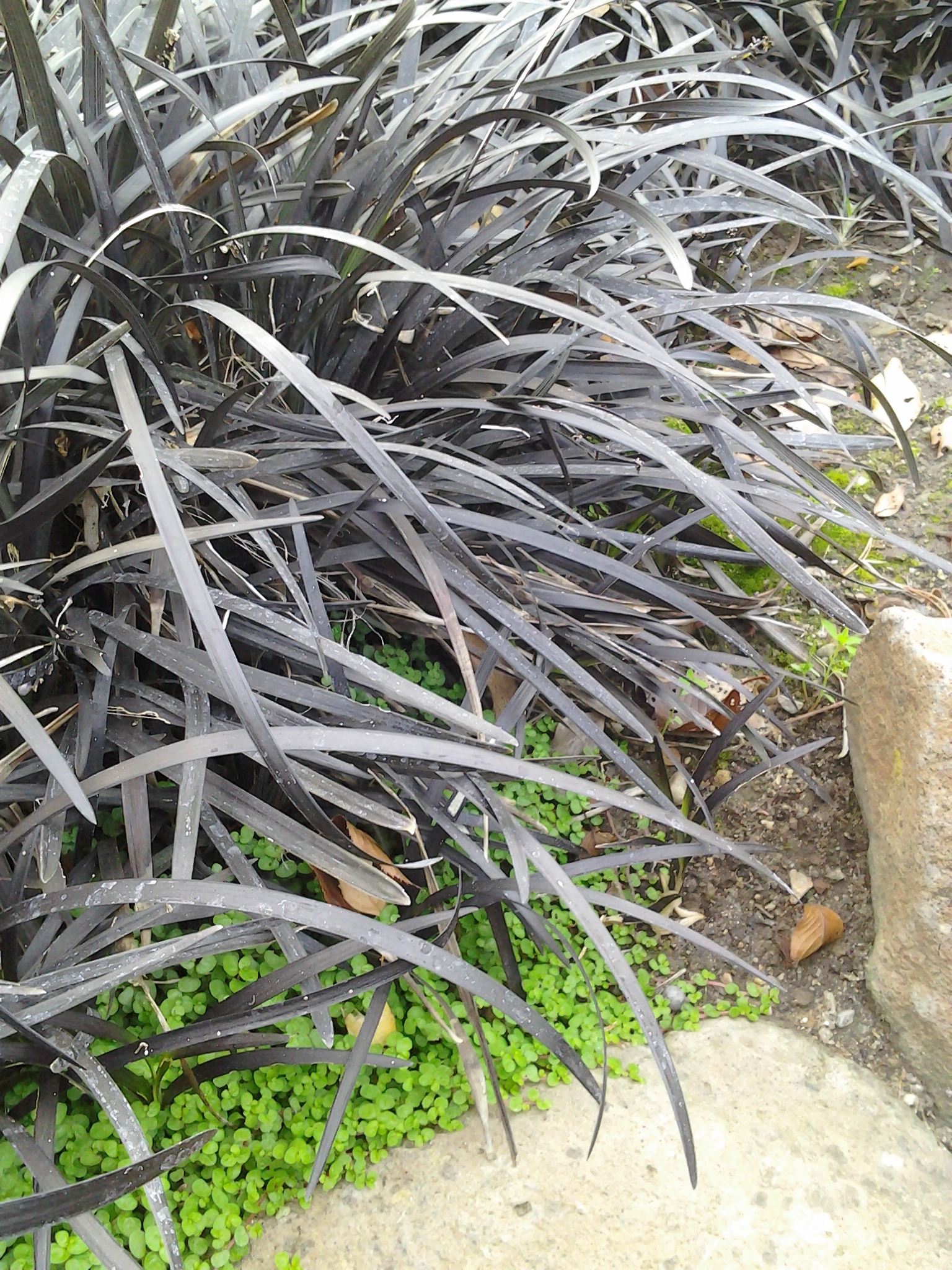
The foliage really is this dark.

The deeply colored foliage of black mondo grass, Ophiopogon planiscapus ‘Nigrescens’, is about as convincingly ‘black’ as foliage can get. It is darker than bronze New Zealand flax, purple leaf plum or bronze coral bells. Only purple beech or chocolate coleus are comparable. The foliage is dark enough to contrast very well against lightly colored planters or gray concrete, so works well in urns or mixed perennials, and bordering walkways. If it gets enough sunlight, black mondo grass makes a nice small scale ground cover under Japanese maples.

Mature plants stand only about half a foot tall, and spread slowly. The happiest plants can get nearly twice as tall. The softly cascading leaves are only about a quarter inch wide. Small spikes of tiny pink flowers that sometimes bloom in summer would contrast nicely against the dark foliage, but are rarely seen above the foliage. Black mondo grass prefers rather rich soil and somewhat regular watering. However, as they disperse roots, older plants do not seem to mind too much if they briefly get a bit dry.