 Fruit trees, with few exceptions, have been extensively bred to produce the quality of fruit that we expect from them. Some are consequently genetically unstable, or at least less genetically stable than their wild ancestors were. Even if they never mutate or try to revert to a more stable state, they are very unlikely to produce seed that can develop into genetically similar trees.
In other words, they are not ‘true-to-type’. Their seed might grow into trees that produce fruit that resembles that of one of their ancestors, or of a pollinating parent tree. It is impossible to predict what fruit will be like until it actually develops.
That may take a while. Some seed grown fruit trees start out with juvenile growth, and take a few years to mature enough to bloom and produce fruit. Some types of avocado trees grow tall and lanky for a few years before they bloom. Most citrus are fruitless and wickedly thorny through their juvenile phase.
Grafted fruit trees or those grown from cuttings are true-to-type because they are genetically identical clones of their single parents. Cuttings and scions (for grafting) are made from adult growth, so do not need to mature through a juvenile phase.
The unpredictability of genetic variability is the main reason fruit trees are not often grown intentionally from seed. Juvenility might be the second main reason. However, neither of these two reasons prevents curb mongrels from growing wherever their seed lands, which is often next to sidewalks and curbs where cores and pits get discarded.
Curb mongrels generally get removed and disposed of, just like any other weed. It would be more practical to plant a known cultivar of fruit into a situation where such a tree is actually desired. Every once in a while, a curb mongrel appears where it is allowed to stay, and eventually produces fruit that justifies its preservation.
Well, that was not what happened with this curb mongrel apple tree that appeared adjacent to a patio used for outdoor dining. It was not compatible with the landscape, so got removed before it was able to produce any fruit. It looks like it was grafted, but only because someone tried to cut it down without removing the stump two years ago.
The problem now is that it came up with enough roots to survive relocation. It is not so easy to dispose of a tree with such potential, even though there is no way to know what its potential is until it fruits. It will get planted into a private garden and pruned back accordingly. If we had planned for it to be relocated, the process would have been delayed until it was defoliated.
If the fruit is of inferior quality, the tree can be removed and discarded. At least we tried. Alternatively, a desirable cultivar can be grafted onto it. In a home garden, no one needs to know that it is not a known understock (rootstock) cultivar. The foliage resembles that of ‘Red Delicious’, which makes sense for seed that likely originated from a commonly discarded core.
 Remember this from Sesame Street?
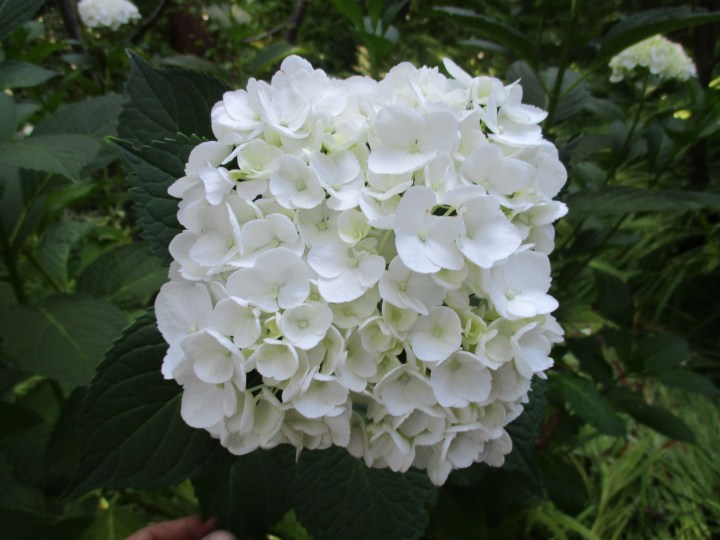 What ever happened to the formerly common white hydrangea? It used to one of the three standard types of hydrangea; and the other two were really variants of the same sorts of ‘pink or blue’ hydrangea that I wrote about in ‘
 No, this is not a Paris daisy. It is a common euryops daisy, Euryops pectinatus. It is obviously related, but the flowers are bright yellow rather than clear white with yellow centers, and the foliage is darker green. It is more resilient, so became more common in landscapes as quickly as mow, blow and go ‘gardeners’ replaced real gardeners who actually know something of horticulture. There is certainly nothing wrong with it. It is just cliché.
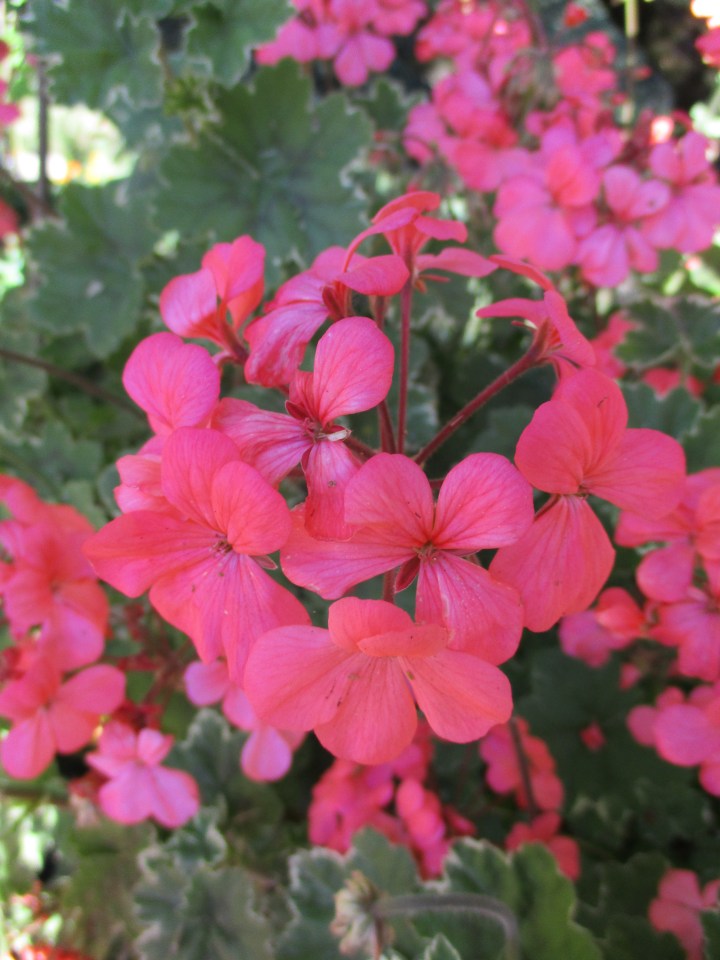 New and improved is not always better. Modern garden varieties of zonal geranium, Pelargonium X hortorum, with bigger, fuller and more profuse blooms, are more colorful than the relatively weedy classic varieties, but they are considerably more demanding. In fact, because they are so unhappy through winter, they are often grown as warm season annuals instead of as perennials.
 This picture of a yellow Pacific Coast iris probably should have been incorporated into the Six on Saturday post earlier today. I omitted it because I was not so impressed with how the color showed up. It is really more yellow than it looks. In this picture, it looks more like a discolored version of the white Pacific Coast iris. This sort of variation, that might have been normal for old fashioned photography, is not expected of digital imagery.
 Back in the good old days, Kaffir lily, Clivia miniata, which is probably most popularly known simply as ‘clivia’, bloomed with big round trusses of exclusively bright reddish orange flowers. It was such an excellent color that no one thought to change it. Flowers of feral plants that sometimes grew from seed were potentially more orange and less red, but were flashy nonetheless. There was no need, and minimal potential, for ‘improvement’.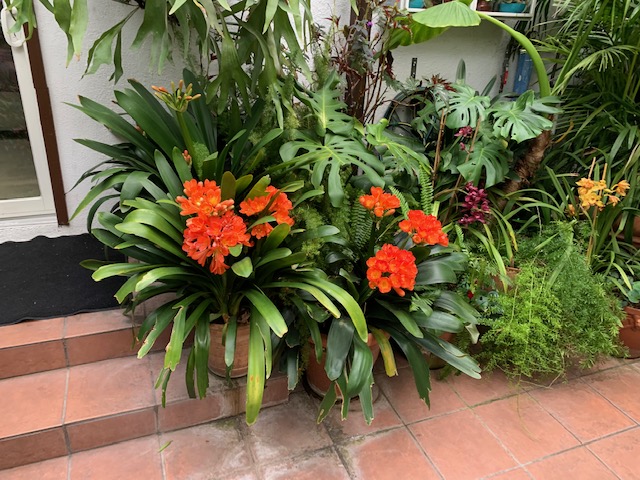
 Nomenclature of the botanical sort was so much simpler back when we studied it back in the 1980s. It was intended to be like that. It was how the various specie of plants were identified and classified. There were certain rules that simply made sense. After ‘family’, plants were classified into general ‘genera’, and then further classified into specific ‘specie’. Some specie were further classified into ‘varieties’ and ‘cultivars’. (Cultivars are simply ‘cultivated varieties’ that need to be perpetuated by cloning because they are too genetically unstable to be true-to-type from seed.)
 Mutants are the source of many of our favorite cultivars of otherwise simpler specie. Many cultivars of plants with compact, pendulous or fastigiate (strictly vertical) growth, or variegated, bronzed, golden or otherwise abnormally colored foliage, were derived from ‘sports’, which are mutant stems that appear on otherwise normal plants. Thornless blackberries were sports of thorny cultivars. Fruitless mulberry is a sport of white mulberry. There is no shortage of mutants.
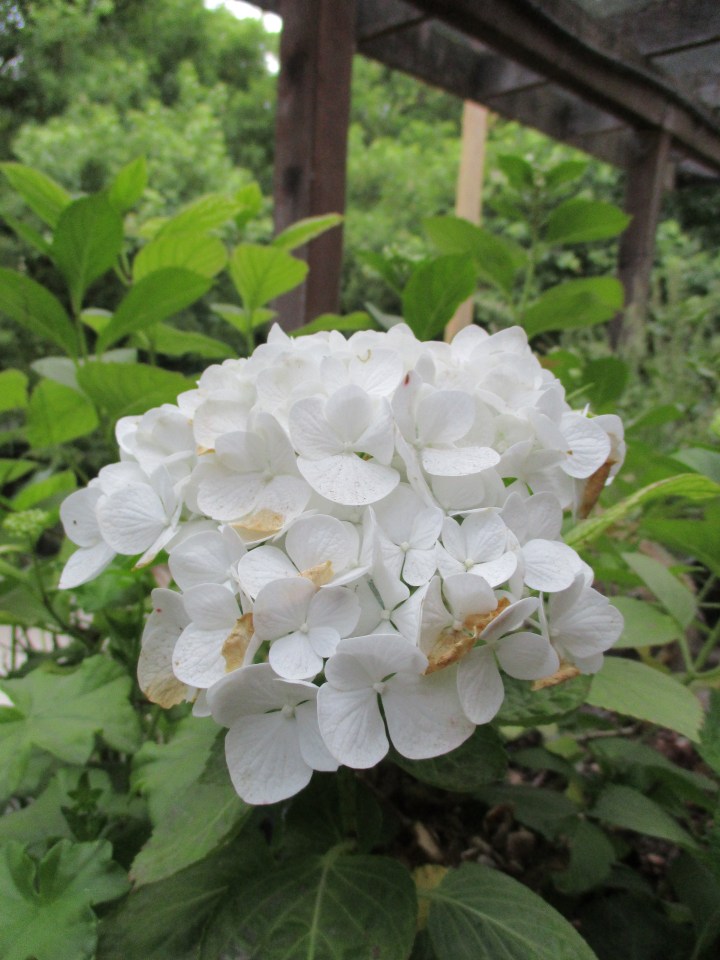 There are so many more of the fancier cultivars of hydrangea, Hydrangea macrophylla, than there were as recently as the 1990s. Many of the pink and blue hydrangeas were interchangeable years ago. They would bloom blue if the soil was acidic. They would bloom pink if the soil was alkaline. Their color changed accordingly when planted from potting media into soil of another pH.
 Tony Tomeo