
The locusts that John the Baptist ate out in the desert were not grasshoppers. They were the nutritious locust pods of the carob tree, Ceratonia siliqua. Their familiar sweet cocoa flavor was probably fine for a while, but the starchy texture must have gotten dreadfully monotonous. After all these centuries, carob is still grown for food and as a shade tree.
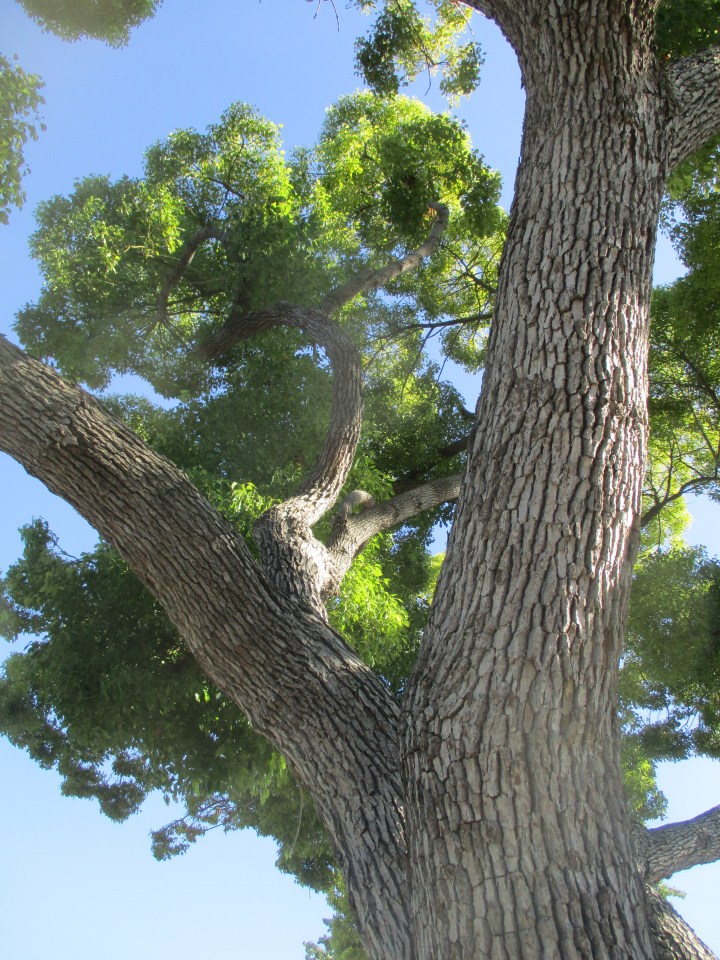
It takes a very long time for a carob tree to get taller than forty feet. Most are less than thirty feet tall, and not quite as broad. Their rounded canopies are very dense. The stout trunk and limbs are quite sculptural, with variably but handsomely textured bark. The five or six inch long evergreen leaves are pinnately compound, with very glossy round leaflets.
Unfortunately, the big chocolaty pods are abundant enough to be messy if not harvested. Trees that do not produce pods bloom in autumn with seriously stinky male flowers that attract flies for pollination. Some trees are both male and female, so are both messy and stinky. Because carob trees are grown from seed, their gender can not be predicted.
Since they are from the drier regions around the Mediterranean Sea, carob trees really do not crave for much water once they have dispersed their roots. They grow somewhat faster if watered generously a few times through summer, but will survive without it. Too much water will cause buttressed roots that will break nearby concrete.


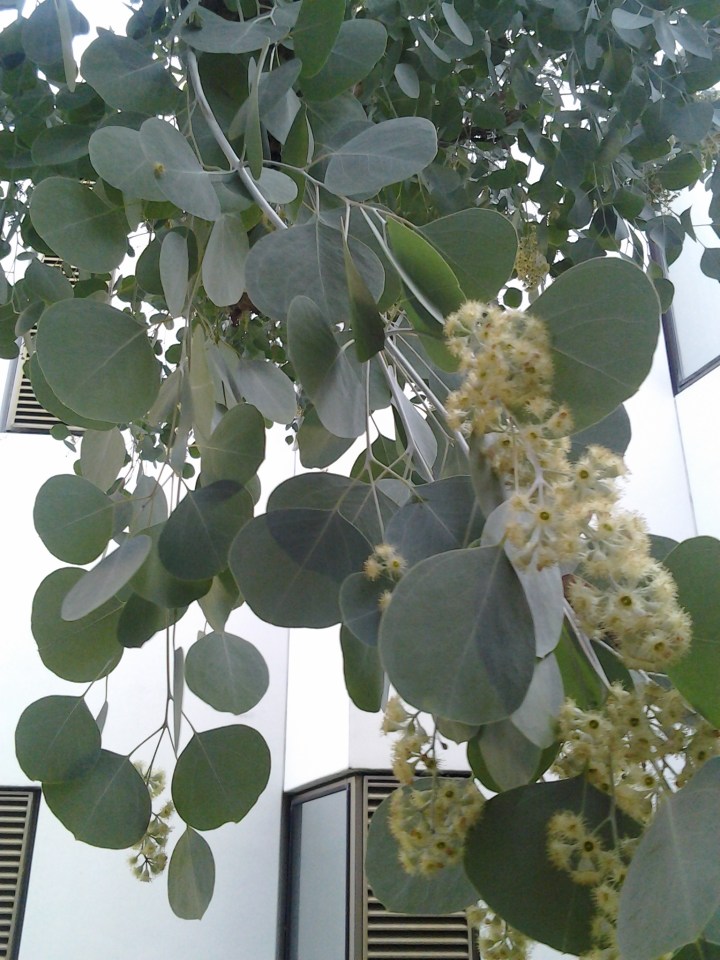


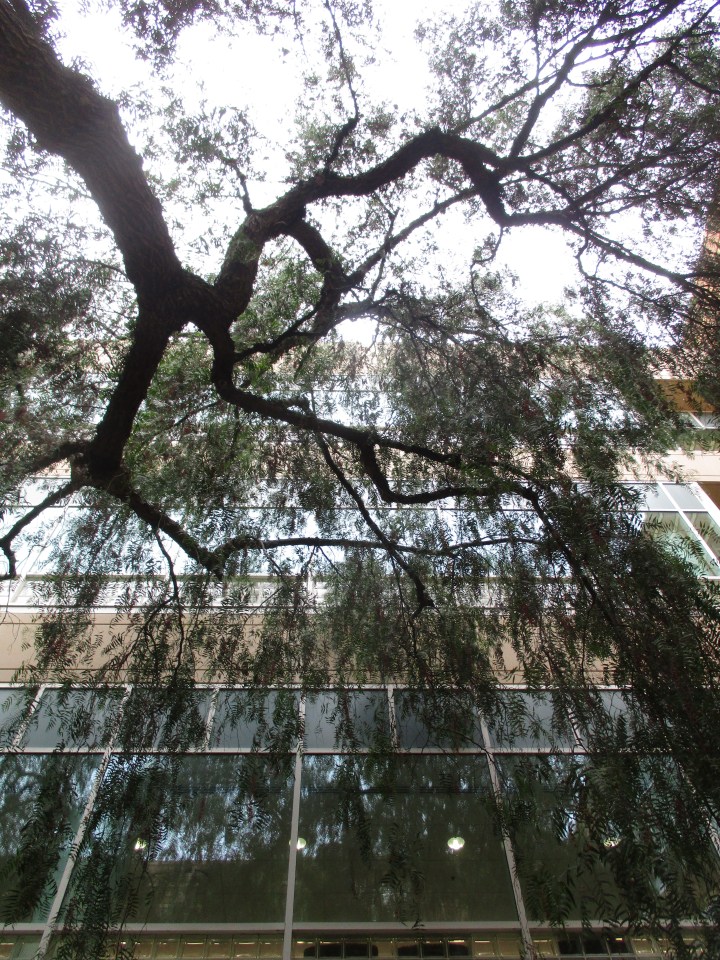 It has been naturalized in Southern California long enough to seem to be native. California pepper, Schinus molle, is actually endemic to Peru and adjacent arid regions of South America as far south as Central Argentina. Furthermore, although its small pink fruits with hard black seeds are sometimes used for culinary purposes, it is actually not related to black pepper, and is mildly toxic.
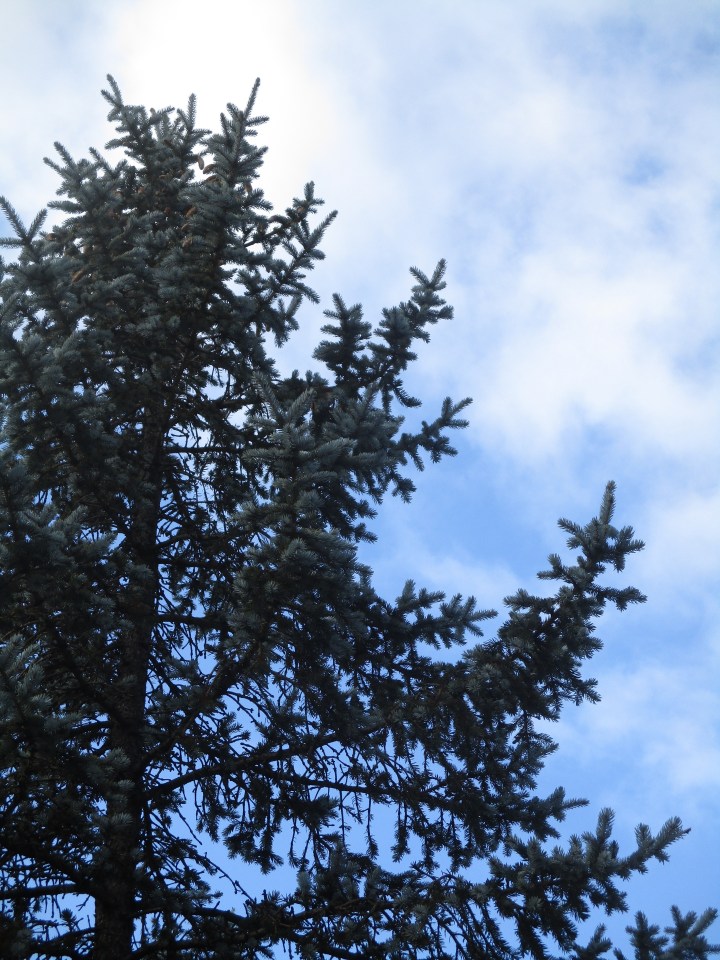 For a tree that is native to the upper elevations of the Rocky Mountains, blue spruce, Picea pungens, does surprisingly well here. It only wants to be watered a bit through summer to compensate for the lack of rain and humidity in chaparral climates. It does not seem to miss a more pronounced chill through winter. Disease and insect infestation are uncommonly noticeable or damaging.
 Tony Tomeo