Six on Saturday: Ferns

After the warm and arid summers here, ferns enjoy the beginning of the rainy season in late autumn or early winter, which is about now.

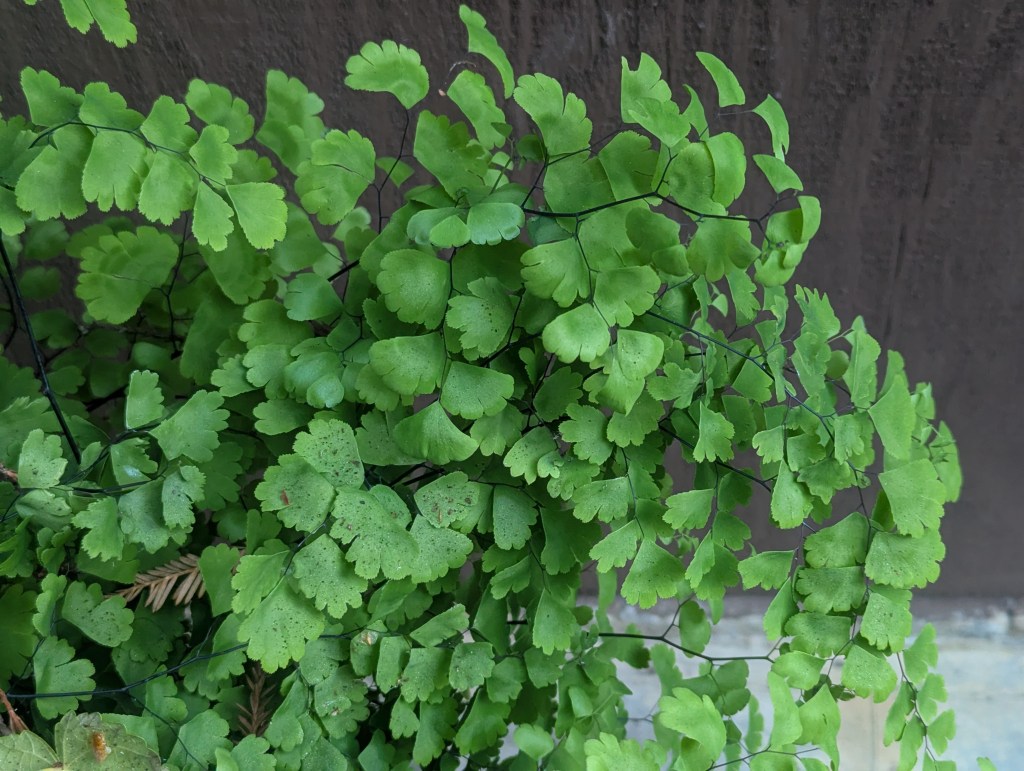
1. Adiantum capillusveneris, Southern maidenhair fern replaces all its tired old foliage for autumn. It resembles native species of maidenhair fern, but with distinct foliar form.
2. Nephrolepis cordifolia, sword fern remains within a big pot because it can be invasive in the ground. It is directly related to Boston fern, but is not quite as soft and pendulous.
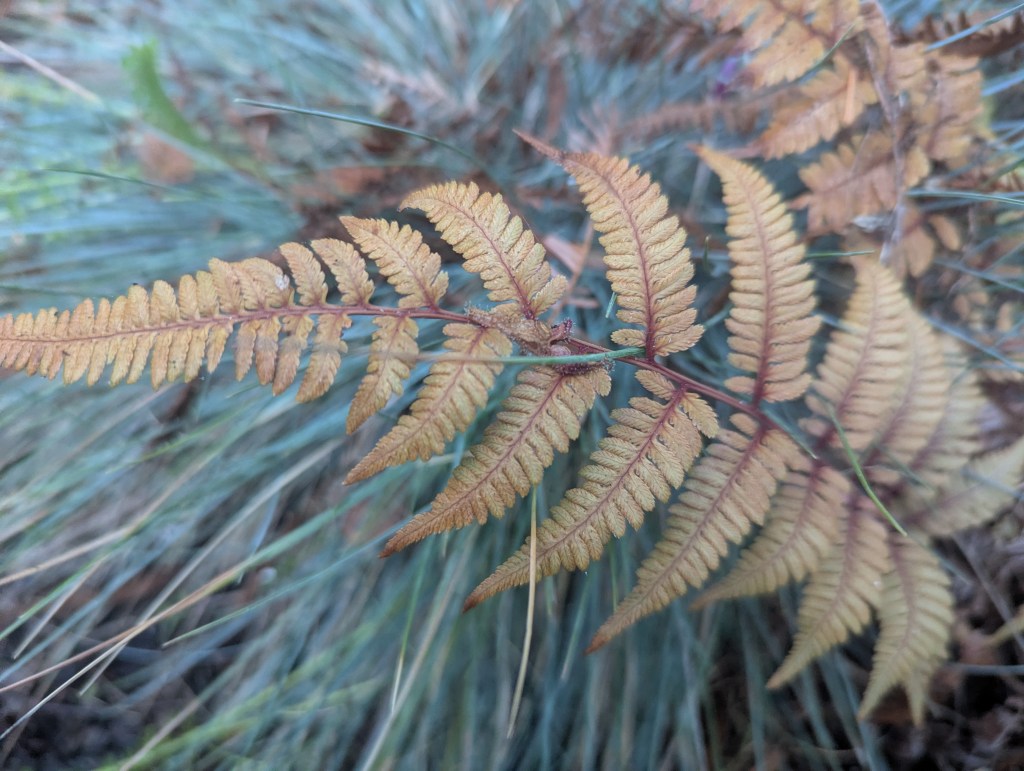
3. Dryopteris erythrosora, autumn fern is the only fern here that exhibits autumn foliar color. It is pretty, but quite diminutive. It is no bigger now than it was several years ago.
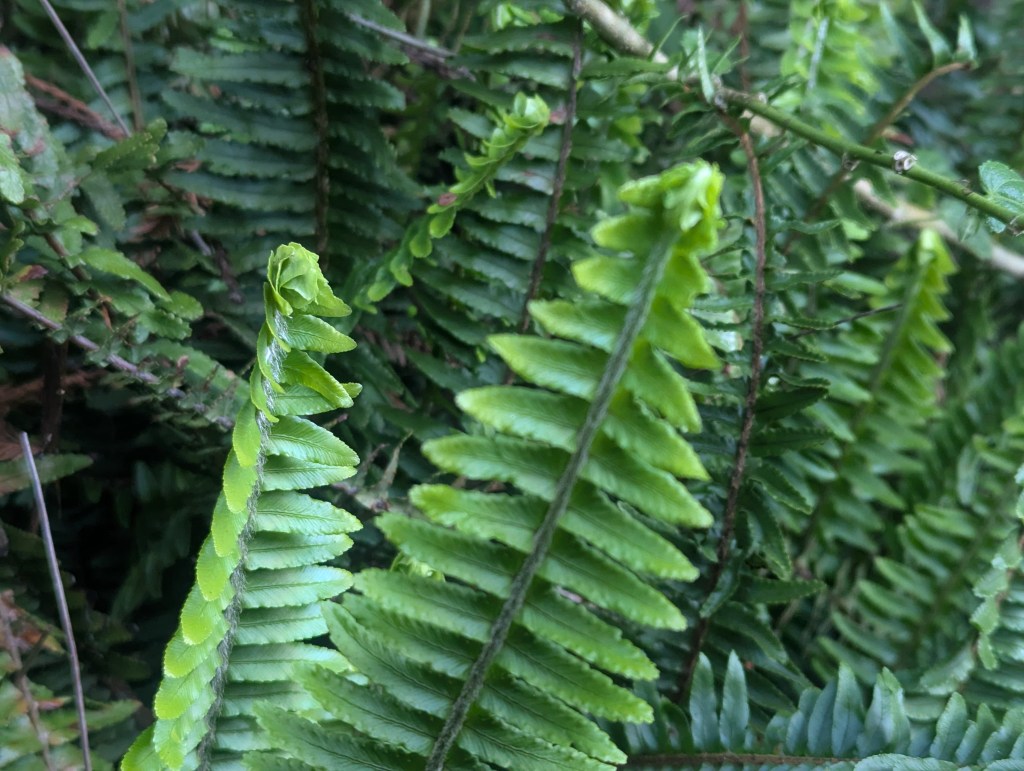
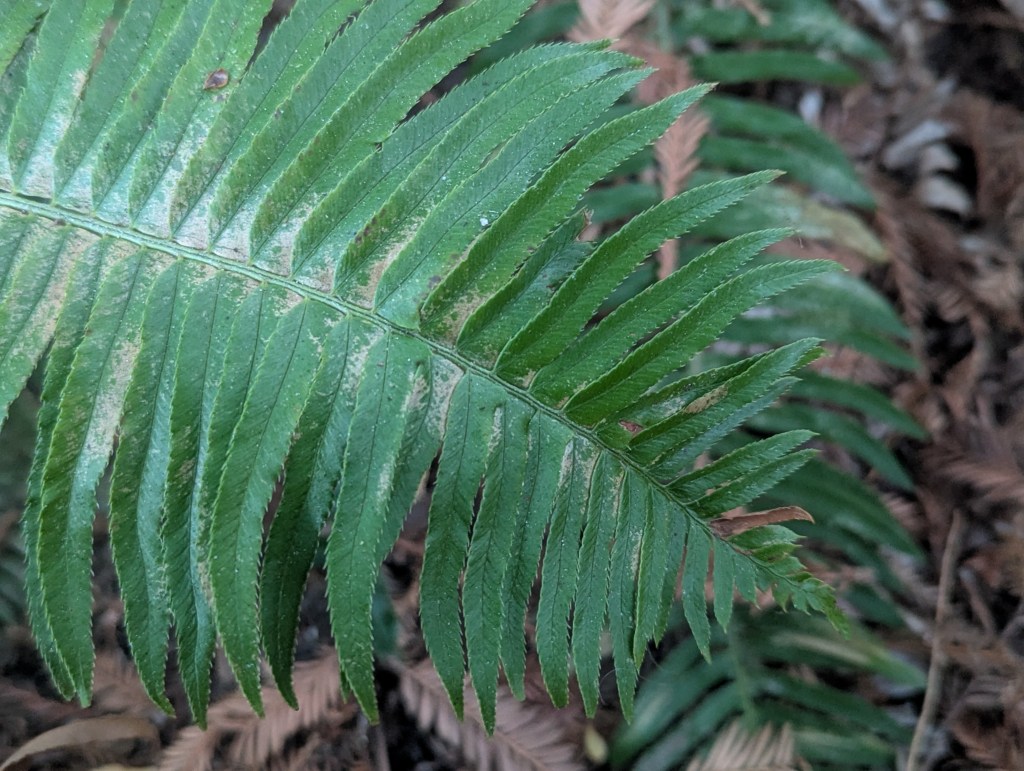
4. Polystichum munitum, Western sword fern and the next two ferns are native here. All three grow wild within some of our landscapes; and all are remarkably tolerant of shade.
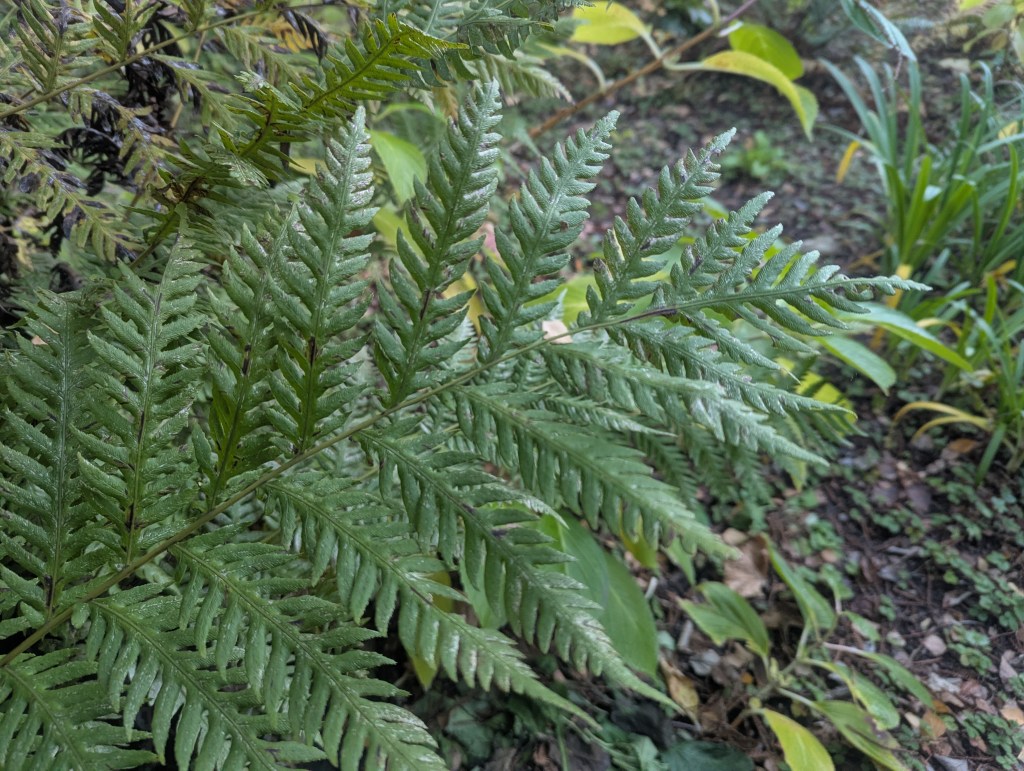
5. Athyrium filixfemina, lady fern is also known locally as ostrich plume fern, but is not related. It has tender leaves with almost succulent rachises that break easily if disturbed.
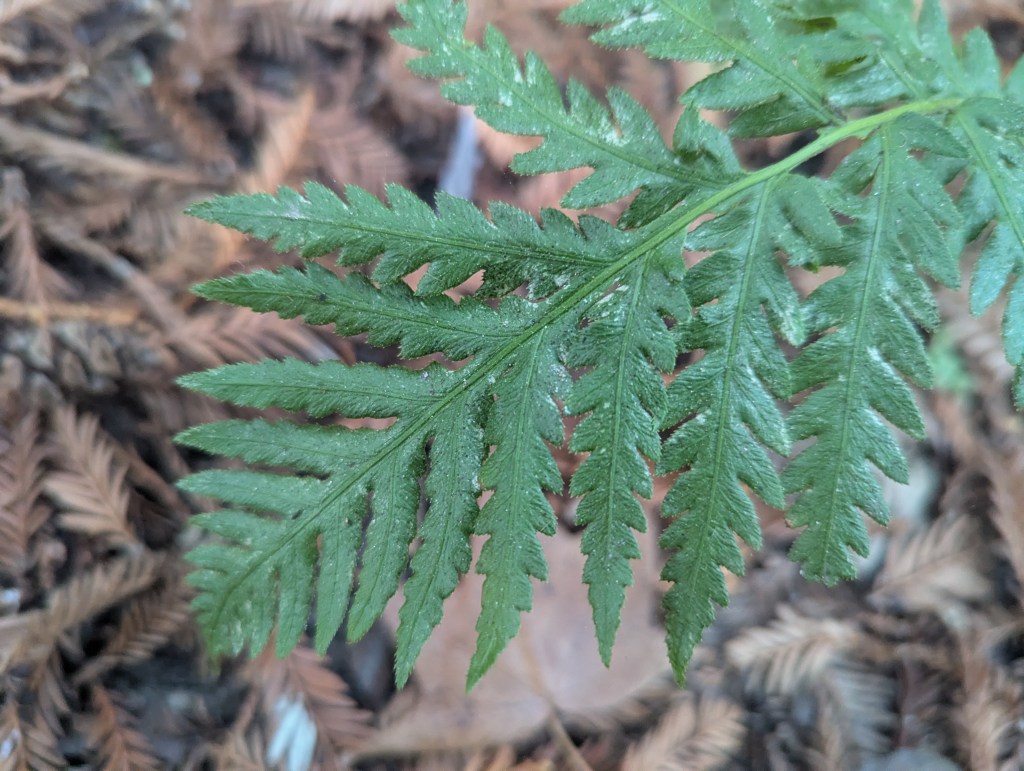
6. Woodwardia fimbriata, giant chain fern has a similar foliar texture, but is bigger and more resilient than lady fern. We sometimes need to remove big superfluous specimens.
This is the link for Six on Saturday, for anyone else who would like to participate: https://thepropagatorblog.wordpress.com/2017/09/18/six-on-saturday-a-participant-guide/

Shade Tolerant Species Genuinely Shine

Some species actually prefer partial shade.

Home gardens are getting shadier as bigger modern homes occupy smaller modern lots. Bigger homes make bigger shadows. So do their bigger fences that compensate for their minimal proximity to each other. Less space within their smaller gardens extends beyond their shade. Consequently, shade tolerant species have become more popular than ever.

Also, small trees have become more popular than large trees for small modern gardens. However, more of them are evergreen to partially obscure obtrusively close homes. Their shade lasts throughout the year, and is likely darker than that of deciduous trees. It could be too dark in some situations even for shade tolerant species. Even they need sunlight.

Realistically, shade tolerant species merely require a bit less sunlight than most species. No real vegetation can survive without any sunlight. Like it or not, artificial turf can be the most practical option for the shadiest of lawns. Some potted plants can cycle around the garden, to take turns in shade and sunlight. If so, they may not need to be shade tolerant.

Most shade tolerant species perform differently with shade than with better exposure. For example, some rhododendrons that tolerate shade bloom better with more sunlight. Most species with colorful or variegated foliage are more colorful with more sunlight. Likewise, sunlight enhances autumn color for some deciduous species. Shade is merely tolerable.

Also, some shade may be dynamic. Garden space below deciduous trees can be shady for summer, but sunny for winter. Below high evergreen trees, sunlight might get through at a lower angle through winter. Major pruning or removal of vegetation can improve sun exposure if necessary. Many shade tolerant species are adaptable to such modifications.

Most shade tolerant species are understory species. They naturally live below canopies of higher vegetation. Some have big leaves and dark foliar color to maximize absorption of sunlight. Ferns are famously tolerant of shade, although tree ferns can reach above it. Kaffir lily, cast iron plant and hosta tolerate shade also. Rhododendron, azalea, camellia, andromeda and hydrangea tolerate shade as well, but need a bit of sunlight to bloom.

Six on Saturday: Vacation

Rhody, Carson and I are finally on vacation in Western Washington. As usual, departure was delayed. Now that we are here, and not at work, I have not been taking pictures like I should have been. Consequently, I am deficient of pictures for Six on Saturday. Four of these six, or two thirds, are not even relevant to horticulture.

1. Sasquatch, who is also known as Bigfoot, is a celebrity of the Pacific Northwest; and is a species that is commonly considered an individual. This was in Canyonville in Oregon.

2. Portland in Oregon is the City Of Roses. This is its South Waterfront district, south of Downtown. Incidentally, most roses prefer the climates of San Jose to those of Portland.

3. Rhody enjoys rest stops. They allow him to renew his ownership of Oregon. This is the Toutle River Rest Area, on northbound Highway 5, north of Castle Rock in Washington.

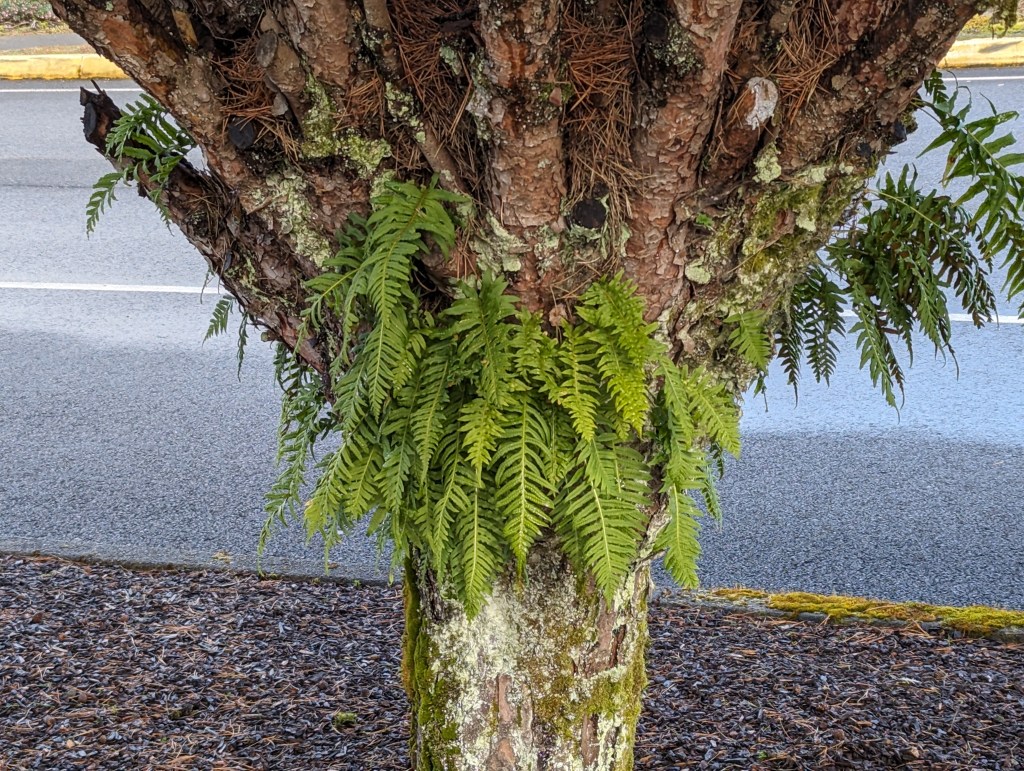
4. Ferns are common within the coastal climates of the Pacific Northwest. I do not know what this fern is. The pine may be a Japanese red pine. It is in Raymond in Washington.

5. ‘Black Gamecock’ Louisiana iris is to the left within the big box to the right. It was the priority, to replace what the gophers ate last year. There is more now than then! The rest of this vegetation is a dozen or so additional perennials from Tangly Cottage Gardening! I will get individual pictures of some of them as I process them when I get back to work. The unidentified variegated foliage to the far right seems to be variegated Japanese iris.

6. Skooter approves of my exploitation of his garden. He must know that I intend to take better care of his Louisiana iris than I did last year. He was on a sunny porch at the time.

This is the link for Six on Saturday, for anyone else who would like to participate: https://thepropagatorblog.wordpress.com/2017/09/18/six-on-saturday-a-participant-guide/

Variegated Boston Fern

Tiger fern is prettier up close.

Boston fern is merely one of several cultivars of Nephrolepis exaltata. Its cultivar name is ‘Bostoniensis’. Variegated Boston fern, or tiger fern, is reputedly a cultivar of this cultivar. Its cultivar name is either ‘Variegata’ or ‘Tiger’. From a distance, it seems to be a yellower version of the original. Prettily intricate stripes become apparent with closer observation.

Variegated Boston fern is a bit smaller and a bit less vigorous than common Boston fern. Like all variegated cultivars, it works with a bit less chlorophyll. Mature potted specimens might get no wider or higher than three feet. Unvariegated Boston fern can be more than four feet from top to bottom. Both could be larger if their long fronds were less pendulous.

In home gardens, variegated Boston fern can get rather tattered through winter. It is likely to defoliate if exposed to even minor frost. This is why it is more popular as houseplants, usually in hanging pots. Such potted specimens rely on consistent watering. Diffused but bright sunlight is best. Occasional application of fertilizer enhances foliar color and vigor.

‘Borrowing’

This particular situation is both too compact and too shady for these items.

Yellow and purple ‘Karma’ iris did not work out so well. To be brief, Brent and I ‘borrowed’ rhizomes of pink bearded iris after their bloom, and prior to their removal and disposal, but they bloomed yellow and purple for the following spring. Apparently, we ‘borrowed’ the wrong rhizomes, and were victims of ‘karma’ that was appropriate for the manner in which we ‘borrowed’ them.

Of course, that experience has never dissuaded me from ‘borrowing’ what I want to grow in my own garden. I am a horticulturist. I can grow just about anything that will grow here from seed, cutting or other sources of propagation material. Some is from situations from which it must be removed anyway. Some is from greenwaste piles. Some is from seed or cuttings that I find while out and about. I purchase almost nothing from nurseries.

Much of what we grow for the landscapes at work is recycled from other landscapes at work. This particular portion of a landscape is in front of a residential staff cabin. The Australian tree fern and elephant ears were installed here by a former resident who no longer resides here. Unfortunately, this situation is both too confined and too shady for them. Not only do the leaves extend over the adjacent walkway and steps, but, in response to the shade, they also grow larger and therefore more obtrusive than they otherwise would be. Because it would be impractical for them to remain within this landscape, I am not at all hesitant about recycling them into other landscapes. I am merely waiting for cooler and rainier winter weather, when they will be more conducive to relocation. The elephant ears should be dormant. I know which landscape the fern will relocate to. The elephant ears may remain canned for propagation.

Sword Fern

Sword fern can migrate surprisingly vigorously.

It seems to be related to Boston fern because it is. Sword fern, Nephrolepis cordifolia, is a less refined species of the same genus. It does not want to live as a docile houseplant. Instead, it prefers room to grow and spread in the garden. It has potential to spread a bit vigorously though. Containment protects adjacent smaller perennials or bedding plants.

Sword fern foliage is the same light and slightly yellowish green as that of Boston fern. It generally stands more upright though. Rather than hang softly from planters, like Boston fern does, it leans outwardly. Its pinnately compound fronds can grow almost two and a half feet tall. Pinnae might be about an inch and a half long, with a slightly grainy texture.

Sword fern is not particularly discriminating about exposure, moisture or soil. It can cling to trunks of Canary Island date palms and infest their canopies epiphytically. Sword fern is greenest with regular irrigation and shelter from harsh exposure though. Its evergreen foliage can discolor and partially defoliate when distressed. Grooming might be tedious. Healthy colonies may hide their old foliage.

Fern Foliage Is Softly Bold

Ferns provide distinctive and bold foliage.

Ferns are foliar perennials. They provide neither floral color nor fragrance. They provide neither fruits nor vegetables. With few exceptions, they provide no shade. The very few that are deciduous are not impressively colorful for autumn here. Ferns can not grow as hedges. Nor can they become lawns. They exclusively provide distinctive fern foliage.

They do so splendidly! Most produce the sort of distinctively lacy fern foliage that ferns are famous for. Some exhibit even more finely textured and airy foliage. A few exhibit a relatively coarse foliar texture. Almost all ferns are rich and deep green. Some are lighter or slightly yellowish green. A rare few are silvery gray, or display an intricate silver lining.

Almost all ferns that are popular within home gardens are evergreen. Most benefit from occasional grooming to remove deteriorating old foliage. Some produce new growth on top as old growth lies down below. Several grow most lushly after removal of all foliage prior to their growing season. A few deciduous types of fern defoliate for their dormancy.

Ferns do not develop stems or trunks like most other vegetation does. They sprawl over the ground with rhizomes, which are fleshy stems. Rhizomes grow only in length, but not in diameter. Tree ferns grow upward as their rhizomes deteriorate below. Roots that grow through the deteriorating rhizomes form what seems to be trunks. Fern roots are fibrous.

Leaves of ferns are fronds. Such fronds of most ferns divide into pinnae, which are like smaller leaflets. Pinnae of some ferns divide into even smaller pinnae. Rachi are central stalks that suspend the pinnae within individual fronds. Ferns reproduce by spores, so lack flowers. Most ferns propagate efficiently by division of preferably dormant rhizomes.

Because of their fibrous root systems, ferns are complaisant to confinement within pots. Most ferns are naturally understory vegetation, so are innately tolerant of partial shade. Ferns that tolerate aridity as well as shade and confinement are delightful houseplants. Most ferns are very tolerant of relocation, although some must replace foliage to adapt.

Tasmanian Tree Fern

Tasmanian tree fern is more tolerant of significant frost than Australian tree fern is.

The trunk of a tree fern is really just tough compressed roots growing downward through dead organic material left behind by earlier growth. The foliage and terminal shoot high on top is just like any other fern that never leaves the ground. Because such a trunk is porous, it is ideal for epiphytic plants that, in the wild, mostly cling onto trees instead of growing on the shadier forest floor. Even though most epiphytic plants are able to cling to just about anything, many prefer tree fern trunks because they can actually root into them.

The shaggy trunks of Tasmanian tree fern, Dicksonia antarctica, take decades to grow tall enough for smaller plants to be visible below the lush foliage, but are plump enough to host a rowdy party of  clinging epiphytes. Most get only about four or five feet tall, with the foliage standing a few feet higher, although some old specimens in Golden Gate Park are more than fifteen feet tall, and very old specimens in their native Tasmania can get nearly fifty feet tall.

The big lacy leaves spread about six feet wide, and can reach twice as wide in shadier spots. Shade also makes the foliage darker rich green. Like almost all ferns, Tasmanian tree fern like relatively rich soil and regular watering. Unlike other tree ferns though, it tolerates frost.

Six on Saturday: L. A.

Los Angeles is commonly abbreviated as ‘L. A.’ or simply ‘LA’, which is not only insolent, but can be mistaken for Louisiana. I must spell it out. Anyway, I am in Los Angeles now. After postponing this trip for months, I left hastily without much of a plan. I am camped out in the backyard at Brent’s home, not only because it is the best place to stay here, but also because I did not bother to make reservations at the eccentric Hotel del Flores. I did not do much of what I wanted to do, and will not before I leave, but I do not mind. It has been good to simply relax and grab a few oddities from Brent’s garden, including #1, #2 and #5. Some of these shared earlier.

1. Platycerium bifurcatum, staghorn fern grew into a suspended colony that is about six feet wide. I may have mentioned earlier in Six on Saturday that it looks like coronavirus.

2. Platycerium grande, giant staghorn fern, which Brent and I refer to as moose antlers, flares out too much on top to form more spherical colonies like Platycerium bifurcatum.

3. Monstera Deliciosa ‘Albo Variegata’, variegated split leaf philodendrons is supposedly rather rare. I thought that it was more common years ago, but no one else remembers it.

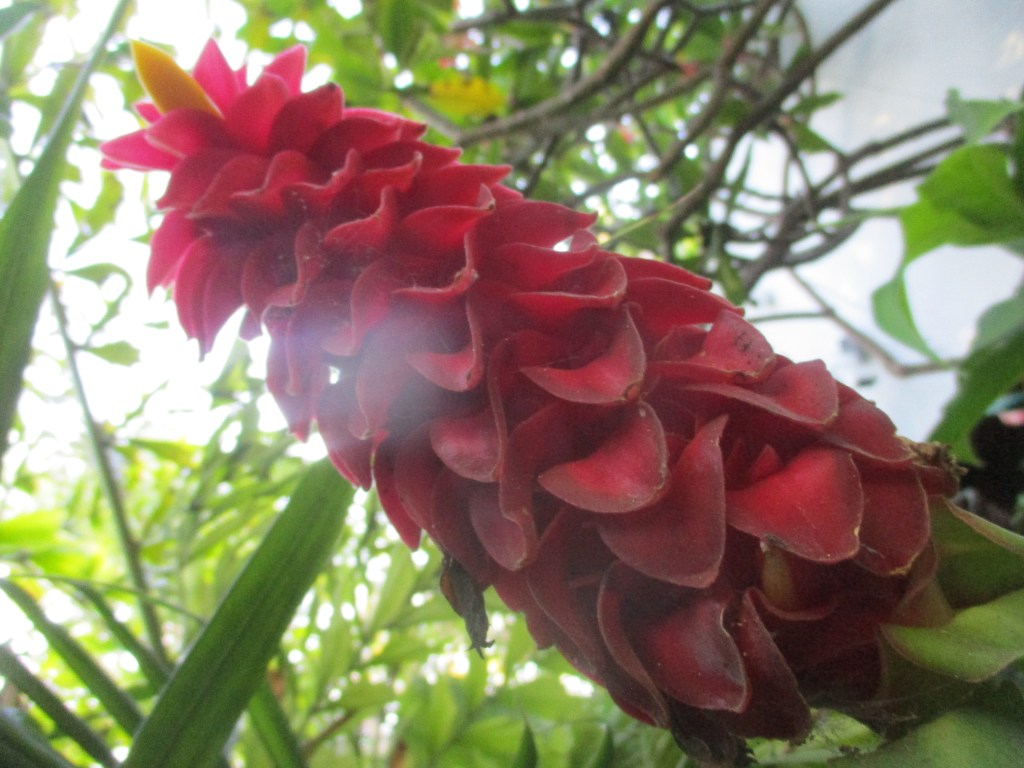
4. Costus comosus, red tower ginger should bloom between late winter and early spring, rather than between later summer and early autumn. Maybe its bloom lasts for months.

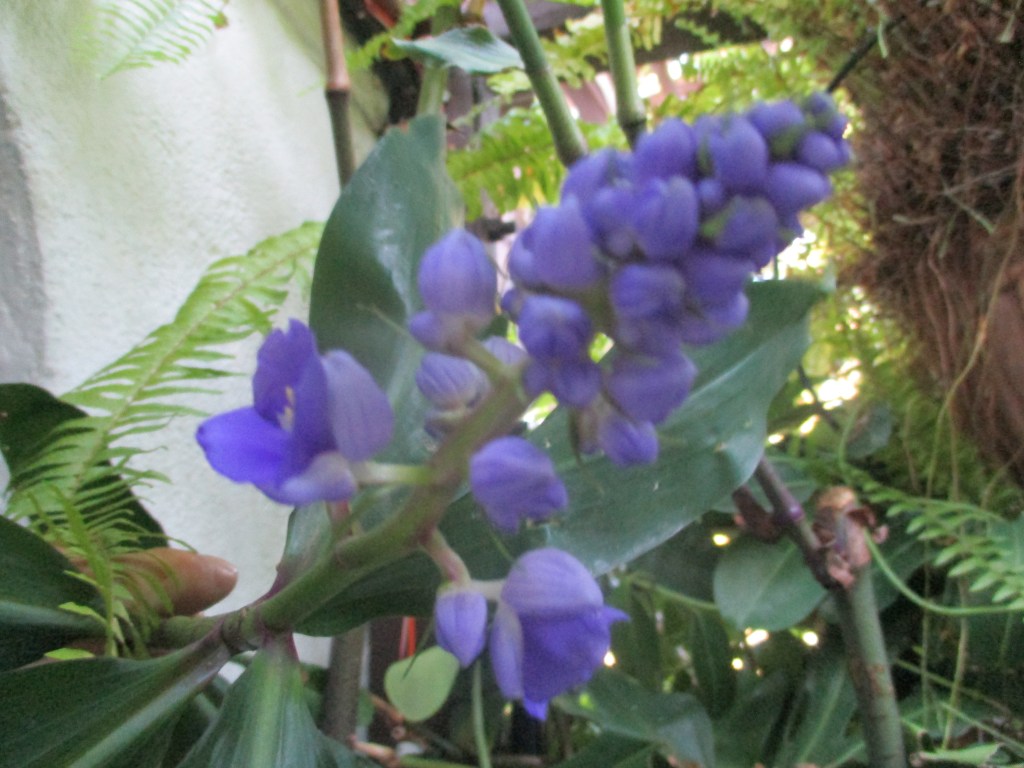
5. Dichorisandra thyrsiflora, blue ginger, which is not actually related to ginger, should bloom about now, but is not blooming as spectacularly now as it did several months ago.

6. Aechmea fasciata, silver vase bromeliad should have bloomed half a year ago like red tower ginger. Likewise, bloom can last for a long time. However, this bloom looks young.

This is the link for Six on Saturday, for anyone else who would like to participate: https://thepropagatorblog.wordpress.com/2017/09/18/six-on-saturday-a-participant-guide/

Giant Chain Fern

Giant chain fern is remarkably resilient.

On the West Coast between British Columbia and Mexico, the largest native fern might be the giant chain fern, Woodwardia fimbriata. In sheltered and damp coastal forests, it can get taller than six feet, although it is typically about three feet tall and wide in home gardens. The lightly colored and almost yellowish green fronds generally stand upright and flare outward from the center. The foliage is doubly lobed and lacy, but quite substantial. The thick rhizomes spread rather slowly. Established plants are remarkably resilient. They can tolerate almost full sun exposure if watered enough. Those in partial shade can tolerate lapses of watering. However, they do not recover too readily from relocation or division.