Tasmanian tree fern is more tolerant of significant frost than Australian tree fern is.
The trunk of a tree fern is really just tough compressed roots growing downward through dead organic material left behind by earlier growth. The foliage and terminal shoot high on top is just like any other fern that never leaves the ground. Because such a trunk is porous, it is ideal for epiphytic plants that, in the wild, mostly cling onto trees instead of growing on the shadier forest floor. Even though most epiphytic plants are able to cling to just about anything, many prefer tree fern trunks because they can actually root into them.
The shaggy trunks of Tasmanian tree fern, Dicksonia antarctica, take decades to grow tall enough for smaller plants to be visible below the lush foliage, but are plump enough to host a rowdy party of clinging epiphytes. Most get only about four or five feet tall, with the foliage standing a few feet higher, although some old specimens in Golden Gate Park are more than fifteen feet tall, and very old specimens in their native Tasmania can get nearly fifty feet tall.
The big lacy leaves spread about six feet wide, and can reach twice as wide in shadier spots. Shade also makes the foliage darker rich green. Like almost all ferns, Tasmanian tree fern like relatively rich soil and regular watering. Unlike other tree ferns though, it tolerates frost.
Los Angeles is commonly abbreviated as ‘L. A.’ or simply ‘LA’, which is not only insolent, but can be mistaken for Louisiana. I must spell it out. Anyway, I am in Los Angeles now. After postponing this trip for months, I left hastily without much of a plan. I am camped out in the backyard at Brent’s home, not only because it is the best place to stay here, but also because I did not bother to make reservations at the eccentric Hotel del Flores. I did not do much of what I wanted to do, and will not before I leave, but I do not mind. It has been good to simply relax and grab a few oddities from Brent’s garden, including #1, #2 and #5. Some of these shared earlier.
1. Platycerium bifurcatum, staghorn fern grew into a suspended colony that is about six feet wide. I may have mentioned earlier in Six on Saturday that it looks like coronavirus.
2. Platycerium grande, giant staghorn fern, which Brent and I refer to as moose antlers, flares out too much on top to form more spherical colonies like Platycerium bifurcatum.
3. Monstera Deliciosa ‘Albo Variegata’, variegated split leaf philodendrons is supposedly rather rare. I thought that it was more common years ago, but no one else remembers it.
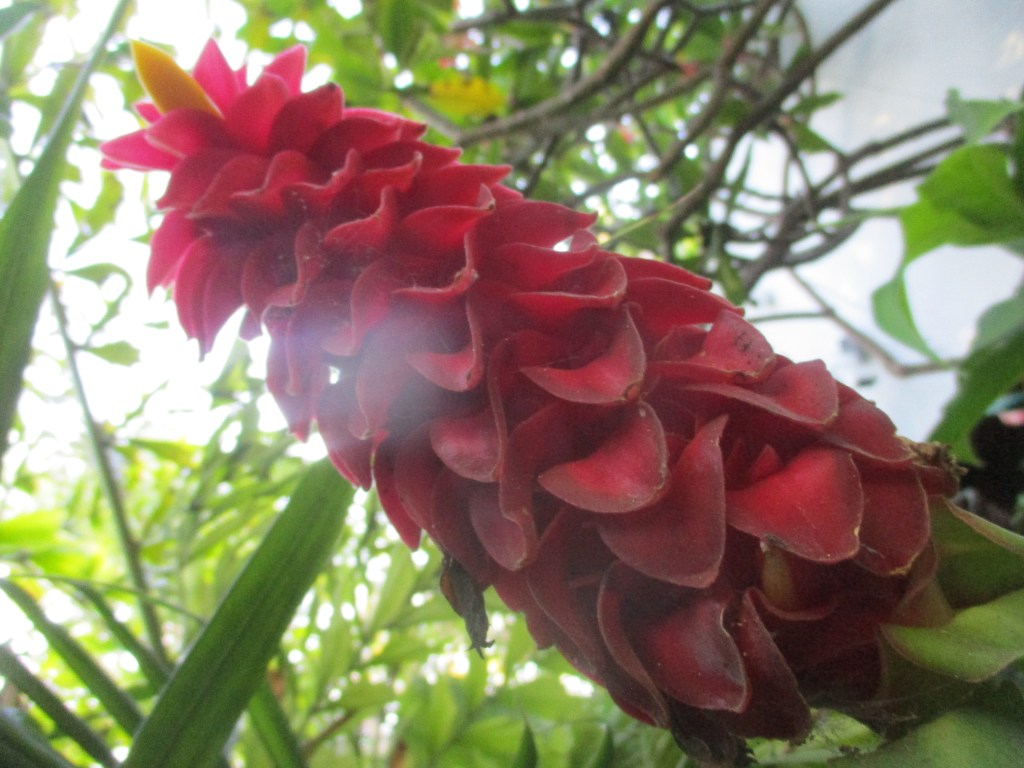
4. Costus comosus, red tower ginger should bloom between late winter and early spring, rather than between later summer and early autumn. Maybe its bloom lasts for months.
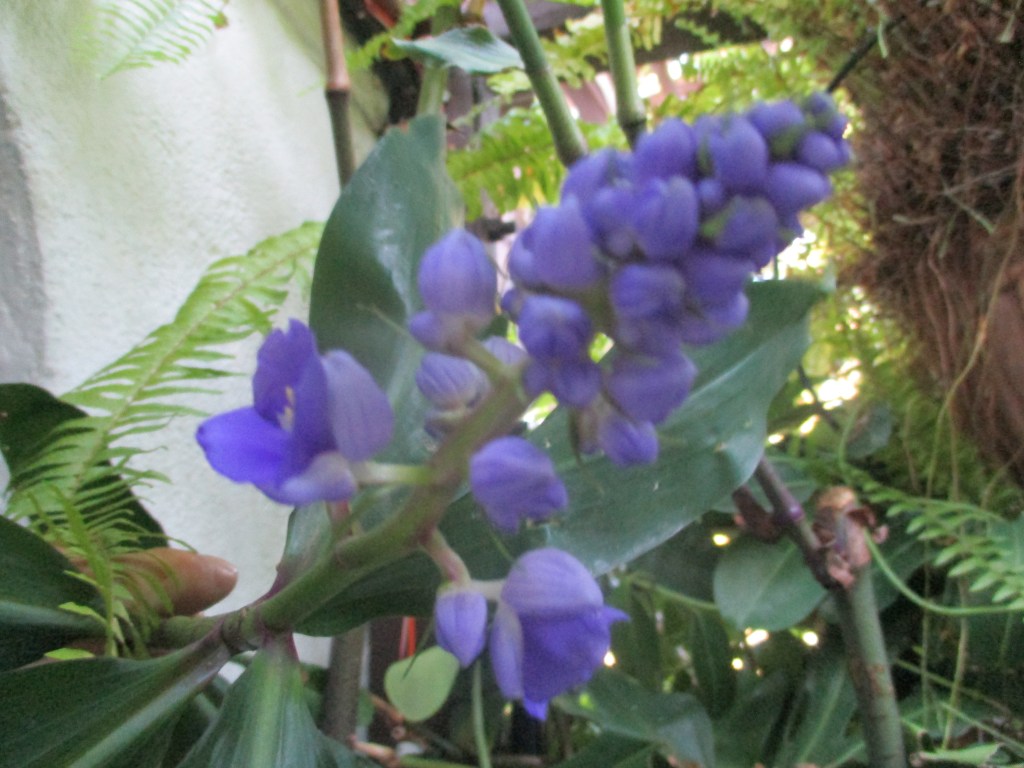
5. Dichorisandra thyrsiflora, blue ginger, which is not actually related to ginger, should bloom about now, but is not blooming as spectacularly now as it did several months ago.
6. Aechmea fasciata, silver vase bromeliad should have bloomed half a year ago like red tower ginger. Likewise, bloom can last for a long time. However, this bloom looks young.
On the West Coast between British Columbia and Mexico, the largest native fern might be the giant chain fern, Woodwardia fimbriata. In sheltered and damp coastal forests, it can get taller than six feet, although it is typically about three feet tall and wide in home gardens. The lightly colored and almost yellowish green fronds generally stand upright and flare outward from the center. The foliage is doubly lobed and lacy, but quite substantial. The thick rhizomes spread rather slowly. Established plants are remarkably resilient. They can tolerate almost full sun exposure if watered enough. Those in partial shade can tolerate lapses of watering. However, they do not recover too readily from relocation or division.
Ferns are an odd group. They lack the color or fragrance of flowers, or the branch structure of shrubbery, trees or vines. Very few turn color in autumn. They provide only green foliage. Yet, as simple as this seems, the generally evergreen foliage that ferns provide is some of the most distinctive foliage that can be found in the garden.
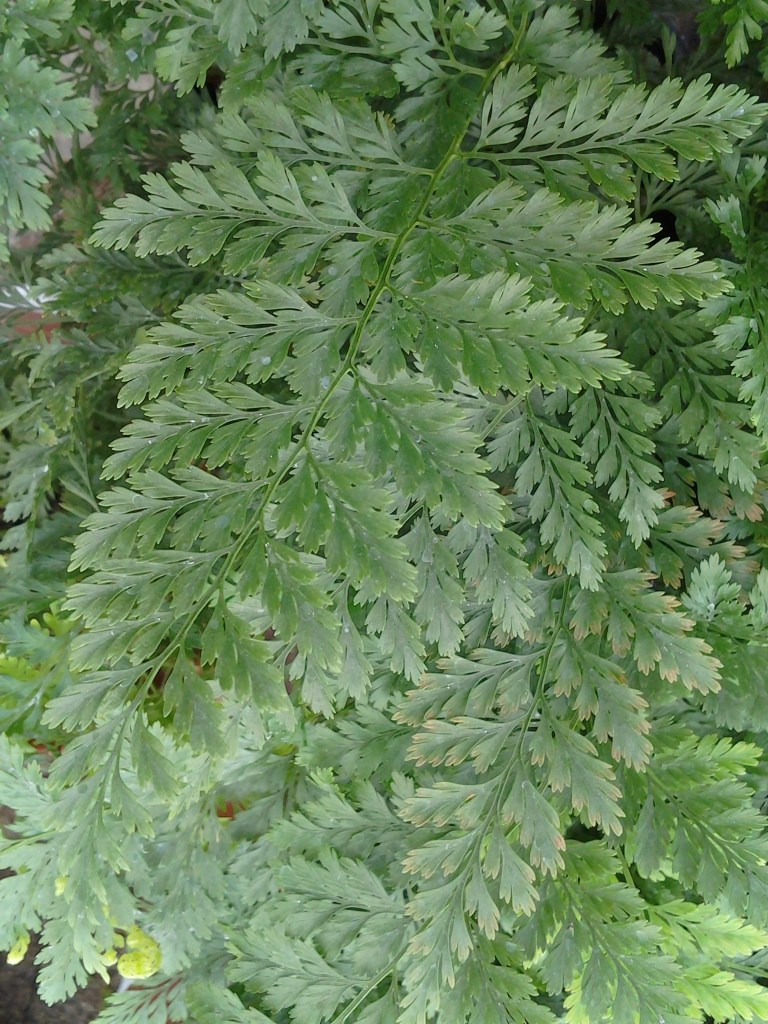
With few exceptions, ferns are richly deep green. Only a few are lighter green or almost yellowish. The leaves, which are known as ‘fronds’, can be soft and papery, or coarse and tough. The fronds of most ferns are pinnately divided into neatly arranged leaflets; and many ferns have leaflets that are intricately lobed. Some ferns have leaves with more palmate symmetry. A few ferns actually have undivided leaves.
(Pinnate symmetry involves a central midrib or midvein to each leaf, or a central rachis that supports lateral leaflets. Radial symmetry involves multiple midveins or rachi that radiate outward from the centers of individual leaves.)
The Australian tree fern is the largest of the common ferns. It develops a broad canopy of long fronds on top of a trunk that can launch it as high as a two story home. Both the fronds and trunk of the Tasmanian tree fern are shorter and stouter. Other tree ferns are rare. The trunks are not really stems, but are thick accumulations of roots dispersed through decomposed stem tissue.
The staghorn fern is an epiphyte that naturally clings (nonparasitically) to trunks and limbs of trees. The flared upper fronds collect foliar litter that falls from the trees above to sustain the roots within. In home gardens, it is popularly grown on wooden plaques or hung like hanging potted plants, but without a pot.
Some ferns can be grown as houseplants like the classic Boston fern, which cascades softly from a hanging pot. Maidenhair fern is popular for intricate foliage on wiry rachi (leaf stems). Squirrel foot fern has lacy foliage and interestingly fuzzy rhizomes that creep over the edge of a pot.
Since almost all ferns are understory plants that naturally live on or near a forest floor below a higher canopy of trees, they are generally quite tolerant of shade. In fact, most prefer at least some sort of partial shade. This is quite an advantage for spots in the garden that are too shady for other plants. Also, many ferns can disperse their roots into soil that is already occupied by more substantial plants, even if the more substantial plants happen to also be making the particular spot too shady for other plants. In other words, they play well with others.
However, many ferns are more demanding than other plants are in regard to soil quality and watering. They perform best with rich and well drained soil, and regular watering. Sickly ferns generally respond well to fertilizer; but too much fertilizer can burn foliage. Old leaves may need to be groomed out if they do not naturally get overwhelmed by new foliage.
Does anyone really know what a ‘perennial’ plant is? It is obvious that it is not an ‘annual’ plant that lives only a single year. A ‘biennial’ plant produces vegetative (non-blooming) growth in the first year, and then blooms, develops seed, and dies in the second year. A plant only needs to live more than two years to be a perennial plant, or simply a ‘perennial’. Well, that does not narrow the definition down much. Bristlecone pine can live for thousands of years, but is not often thought of as a perennial.
In simple home gardening terminology, a perennial not only lives for more than two years, but does so without producing significant woody stems. Yes, this also happens to include palms and trunk forming yuccas (which are known as ‘perennial trees’), but that is another topic. Some perennials live only a few years. Some can live indefinitely by replacing their stolons, rhizomes, bulbs, tubers or whatever they regenerate from as their old growth gets left behind.
For example, bearded iris spread by fleshy stems known as ‘rhizomes’. As they grow from the forward tips, the older ends that get left behind will rot away. They are constantly replacing themselves, without leaving evidence of how long they have been doing so. (In other words, it is impossible to cut one down to count the rings.)
Many plants that are known as annuals are actually perennials, but get removed and replaced during their respective dormant season. Busy Lizzy can regenerate each spring if their roots do not succumb to frost in winter. Begonia, chrysanthemum, cyclamen and primrose are just some of the many other annuals that could technically survive as perennials.
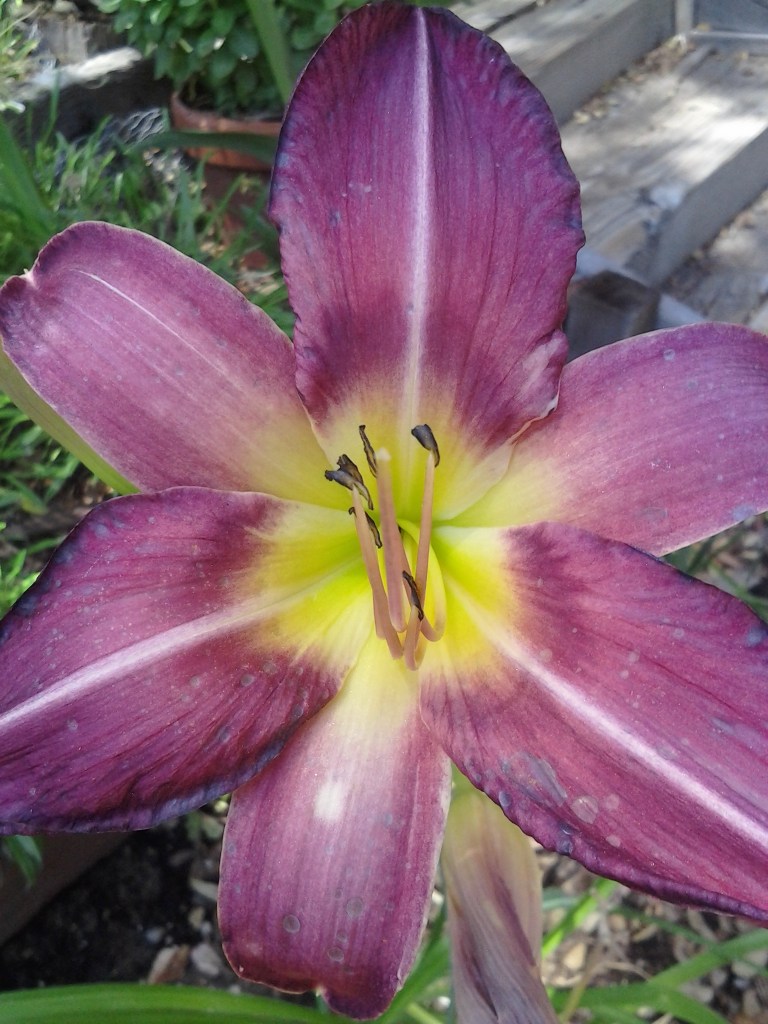
Lily-of-the-Nile, African daisy, daylily, canna, penstemon, New Zealand flax and various grasses and ferns are some of the more familiar perennials. They are too diverse to generalize about, but happen to be among the most reliable of plants for bloom and foliage. Because form and mature size is somewhat predictable, properly selected perennials are unlikely to outgrow their particular situations.
Rabbit foot fern, Davallia fejeensis, is one of those few plants that actually seems to be happier in pots, particularly unglazed terracotta pots that stay damp where its oddly fuzzy rhizomes creep over the edges. Besides, pots have the advantage of portability, so that appealing plants can be brought into the home as houseplants, even if only for a few months at a time. Rabbit foot ferns that lose leaves because the air in the home is too dry should recover if moved to a shady and humid spot out in the garden for a while.
The fuzzy rhizomes are as appealing as the foliage, and can creep a foot or even more if they wrap around a pot. They rot if buried, so should be spread out over the surface of the potting soil when small plants get put into larger pots. The very lacy foliage can get a foot deep in damp and partly shady spots. Foliage is shorter and more dense with more sunlight.
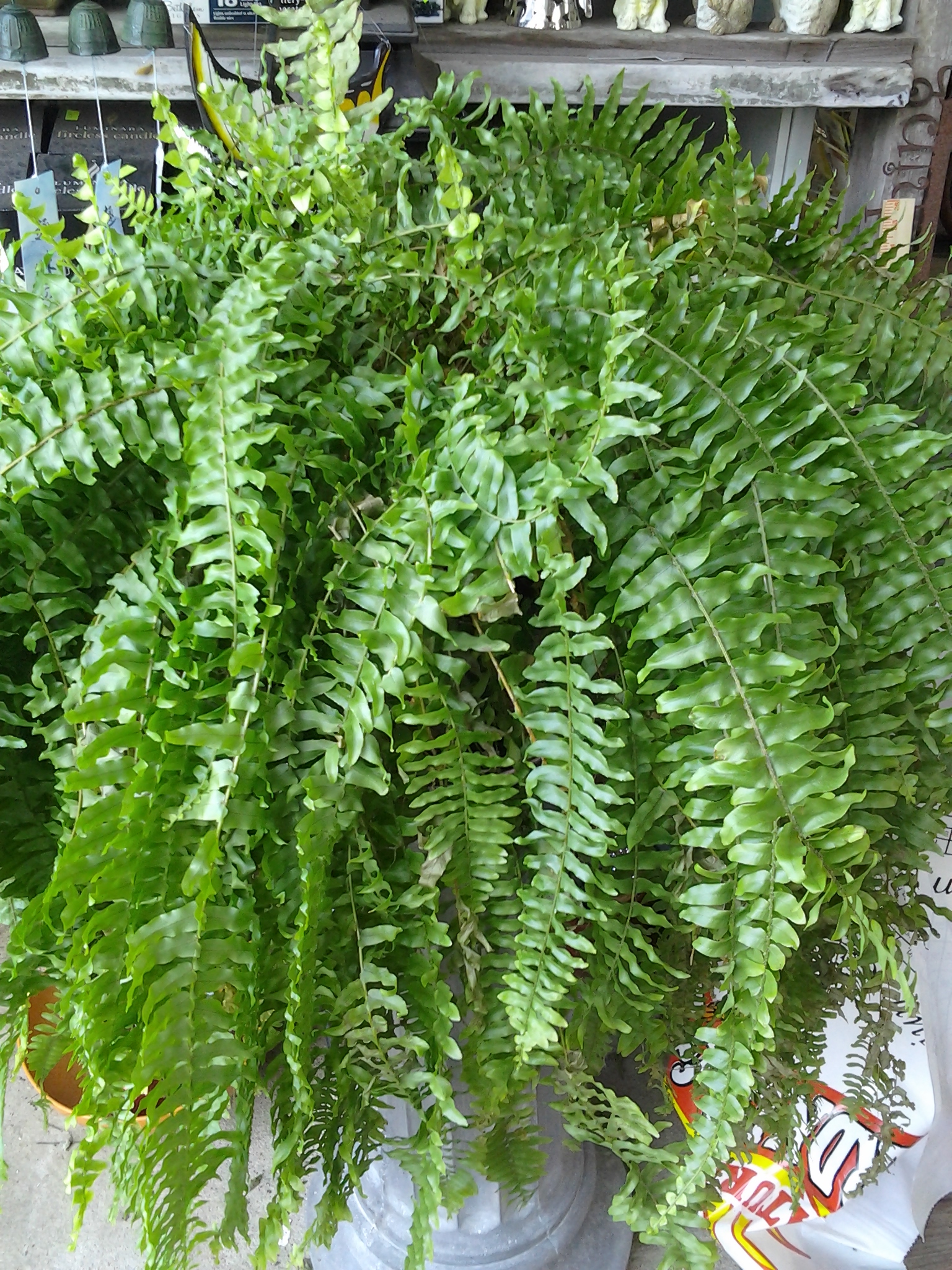
It is not actually from Boston. The first Boston fern, Nephrolepis exaltata ‘Bostoniensis’ was merely discovered in Boston, as a mutant in a shipment of otherwise normal ferns. Unlike the more upright parent plants, Boston fern has softly arching fronds that can hang vertically at the ends.
The fronds are typically about a foot and a half long, and can be a few feet long in humid and partly shady environments. Each frond is comprised of many pinnae that are neatly arranged on both sides of a wiry rachis (leaf stalk). Each leaflet is an inch or two long or longer. Delicate aerial roots sometimes dangle below the foliage.
Through the 1970’s, Boston fern was one of the most popular houseplants. Yet, it really prefers more humidity than it gets inside. It is actually happier on porches or in atriums where it is sheltered from frost and harsh sun exposure. It prefers partial shade outside, but likes abundant ambient sunlight as a houseplant.
Without color or fragrance of flowers, ferns provide some of the most distinctive foliage in the garden. They do not turn color in autumn. Only a few tree ferns develop sculptural branch structure. Yet, they do their job well, and many are happy to do so in spots that are a bit too shady for other plants.
Almost all ferns are low perennials that produce foliage that arches outward from the center. Some can get quite broad. A few tree ferns grow upward on trunks (although the trunks are merely tough roots that grow through decomposing stems). Australian tree ferns can get quite tall and broad where sheltered from wind.
The staghorn fern is a weird epiphyte that naturally clings to tree trunks or rock outcroppings where it collects organic debris that falls from trees above. In home gardens, it is popularly grown on wooden plaques or as a hanging plant. Hanging plants do not necessarily need pots, or sometimes engulf their pots as they grow.
Leaves of ferns are known as ‘fronds’, and with few exceptions, are intricately lobed or divided into smaller leaflets known as ‘pinnae’, which are arranged on opposite sides of leafstalks known as ‘rachi’ (or singularly as ‘rachis’). The staghorn fern has unusually branched but otherwise unlobed fronds. The bird’s next fern has has distinctively simple fronds without any lobes or pinnae.
Most of the popular ferns are naturally understory plants that grow below larger plants. Even most tree ferns grow amongst larger trees. This is why so many ferns tolerate shade so well. In fact, many prefer partial shade, and will actually fade or scorch if too exposed. However, it is also why so many ferns prefer rich soil with an abundance of organic matter.
Maidenhair, rabbit’s foot, bird’s nest, holly, Boston and a few other ferns are popular as houseplants. Because home interiors are a somewhat arid for them (lacking humidity), some ferns like to be misted daily. Ferns respond well to regular but light application of fertilizer. Too much fertilizer can roast foliage.
Because ferns are not expected to bloom, nitrogen (which can inhibit bloom for some plants) is not a problem. Ferns that are out in the garden can therefore get fish emulsion or a bit of the same sort of nitrogen fertilizers that keep lawns green.
This is not the native Western sword fern of forested and riparian regions here on the West Coast. This sword fern, Nephrolepis cordifolia, is native to Northeastern Australia, Southeastern Asia and Hawaii. It is naturalized in many regions beyond its natural range, and is considered an invasive exotic species in some regions. Its resiliency and reliability are appreciated in local gardens.
If it resembles the popular houseplant, Boston fern, it is because this sword fern is of the same genus. It just happens to prefer to be out in a garden rather than inside a home. Much or even most of the light green foliage stands more upright, rather than cascading from pots or elevated planters. Foliage of mature plants can get almost three feet high, with an even broader horizontal reach.
In fact, sword fern is notorious for sneaking around the garden and spreading wider than just a few feet. It is not particularly aggressive about. It creeps slowly but steadily until someone eventually notices that it has gotten a bit too prolific. Their abundant runners are wiry and strangely hairy, and produce small round tubers. Foliage can be yellowish if not watered enough in sunny situations.
Within its natural range on the West Coast between the southern extremity of Alaska and the southern extremity of California, Western sword fern, Polystichum munitum, is the most common of the native ferns. A few disjunctive wild colonies live as far inland as the Black Hills of South Dakota. Yet, with few exceptions, Western sword fern is difficult to cultivate outside of the natural range.
A fern that is so resilient and undemanding seems like it should be more adaptable. Although foliage is fuller and richer green with regular watering and occasional fertilizing, established plants do not need much at all. They survive in the wild here, with naturally limited rainfall, and just go dormant if they get too dry. Symbiotic soil microbes might be their limiting factor in foreign regions.
The dark evergreen and pinnately compound fronds get about two or three feet long, but can get more than four feet long in damp and partly shady situations. They form thick mounds that mostly obscure lower old fronds that die after their first or second year. Since it is naturally an understory species, Western sword fern prefers somewhat rich soil, partial shade and shelter from dry wind.




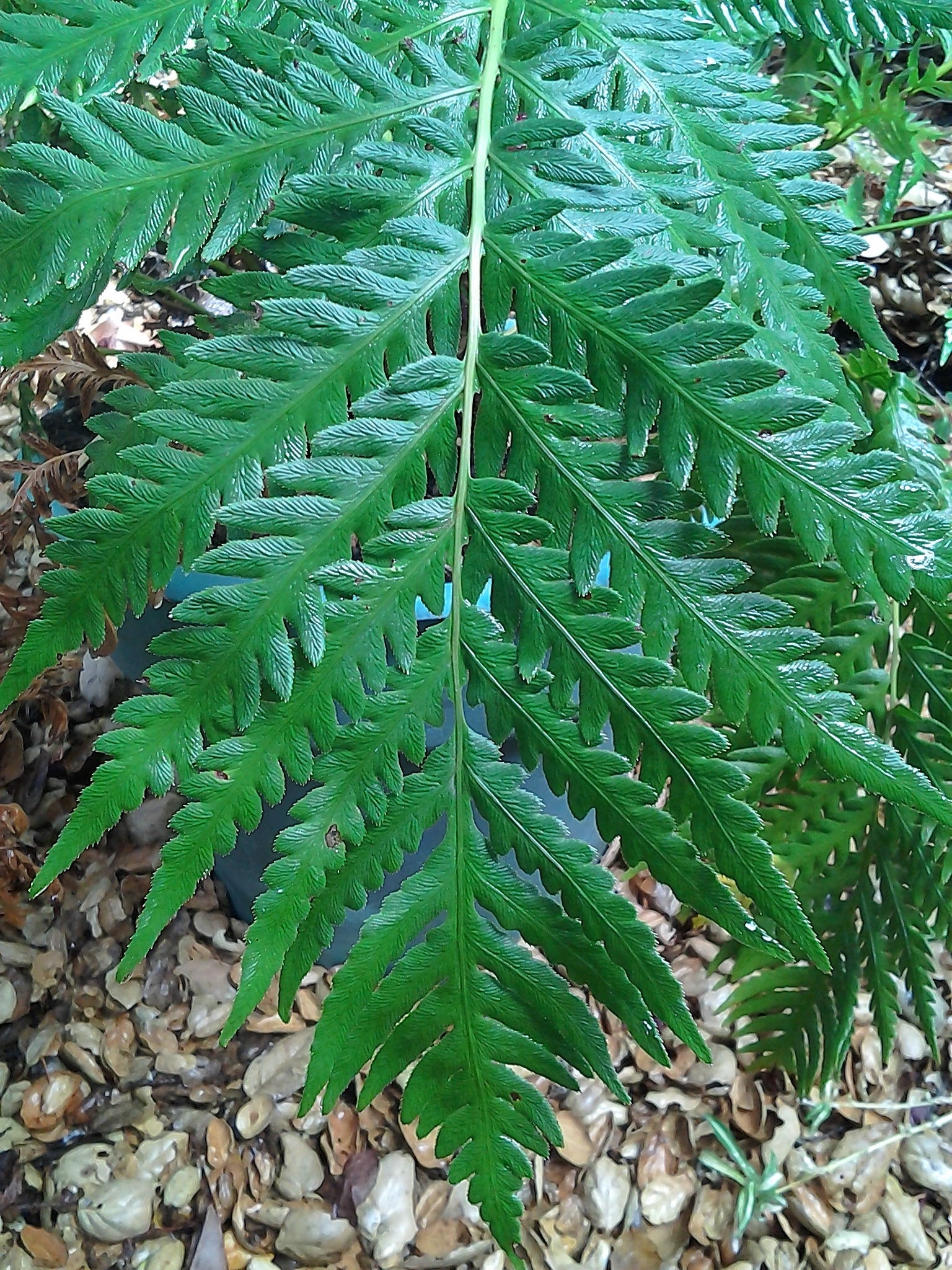

 Within its natural range on the West Coast between the southern extremity of Alaska and the southern extremity of California, Western sword fern, Polystichum munitum, is the most common of the native ferns. A few disjunctive wild colonies live as far inland as the Black Hills of South Dakota. Yet, with few exceptions, Western sword fern is difficult to cultivate outside of the natural range.
