
Ferns are an odd group. They lack the color or fragrance of flowers, or the branch structure of shrubbery, trees or vines. Very few turn color in autumn. They provide only green foliage. Yet, as simple as this seems, the generally evergreen foliage that ferns provide is some of the most distinctive foliage that can be found in the garden.
With few exceptions, ferns are richly deep green. Only a few are lighter green or almost yellowish. The leaves, which are known as ‘fronds’, can be soft and papery, or coarse and tough. The fronds of most ferns are pinnately divided into neatly arranged leaflets; and many ferns have leaflets that are intricately lobed. Some ferns have leaves with more palmate symmetry. A few ferns actually have undivided leaves.
(Pinnate symmetry involves a central midrib or midvein to each leaf, or a central rachis that supports lateral leaflets. Radial symmetry involves multiple midveins or rachi that radiate outward from the centers of individual leaves.)
The Australian tree fern is the largest of the common ferns. It develops a broad canopy of long fronds on top of a trunk that can launch it as high as a two story home. Both the fronds and trunk of the Tasmanian tree fern are shorter and stouter. Other tree ferns are rare. The trunks are not really stems, but are thick accumulations of roots dispersed through decomposed stem tissue.
The staghorn fern is an epiphyte that naturally clings (nonparasitically) to trunks and limbs of trees. The flared upper fronds collect foliar litter that falls from the trees above to sustain the roots within. In home gardens, it is popularly grown on wooden plaques or hung like hanging potted plants, but without a pot.
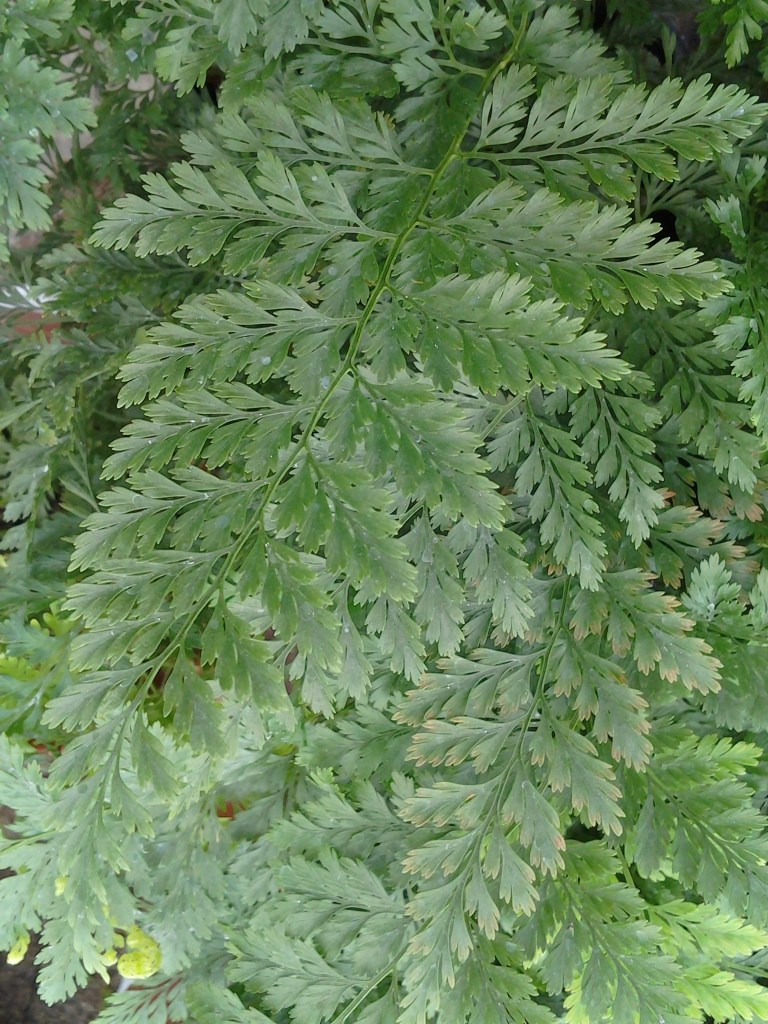
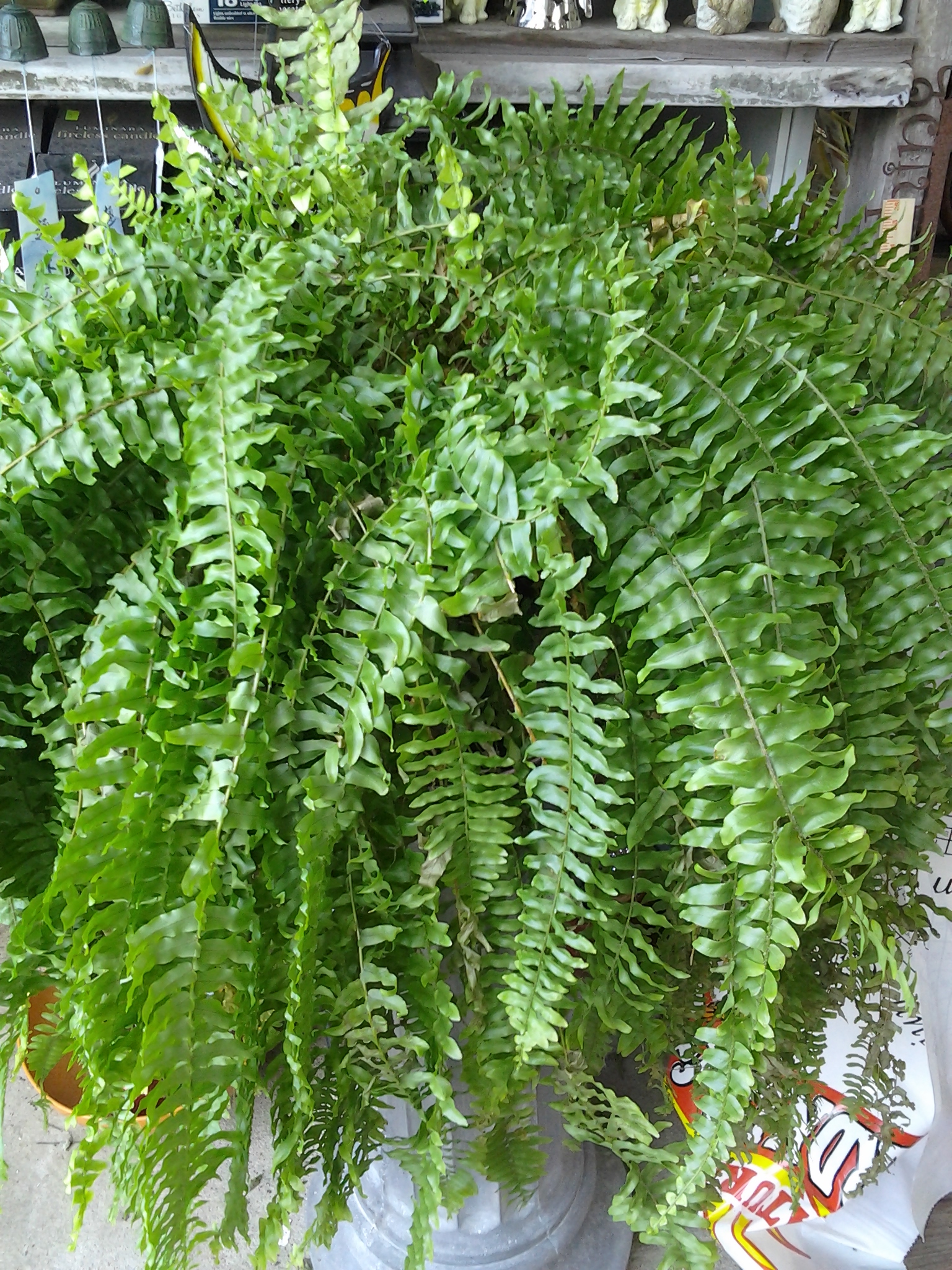
Some ferns can be grown as houseplants like the classic Boston fern, which cascades softly from a hanging pot. Maidenhair fern is popular for intricate foliage on wiry rachi (leaf stems). Squirrel foot fern has lacy foliage and interestingly fuzzy rhizomes that creep over the edge of a pot.
Since almost all ferns are understory plants that naturally live on or near a forest floor below a higher canopy of trees, they are generally quite tolerant of shade. In fact, most prefer at least some sort of partial shade. This is quite an advantage for spots in the garden that are too shady for other plants. Also, many ferns can disperse their roots into soil that is already occupied by more substantial plants, even if the more substantial plants happen to also be making the particular spot too shady for other plants. In other words, they play well with others.
However, many ferns are more demanding than other plants are in regard to soil quality and watering. They perform best with rich and well drained soil, and regular watering. Sickly ferns generally respond well to fertilizer; but too much fertilizer can burn foliage. Old leaves may need to be groomed out if they do not naturally get overwhelmed by new foliage.
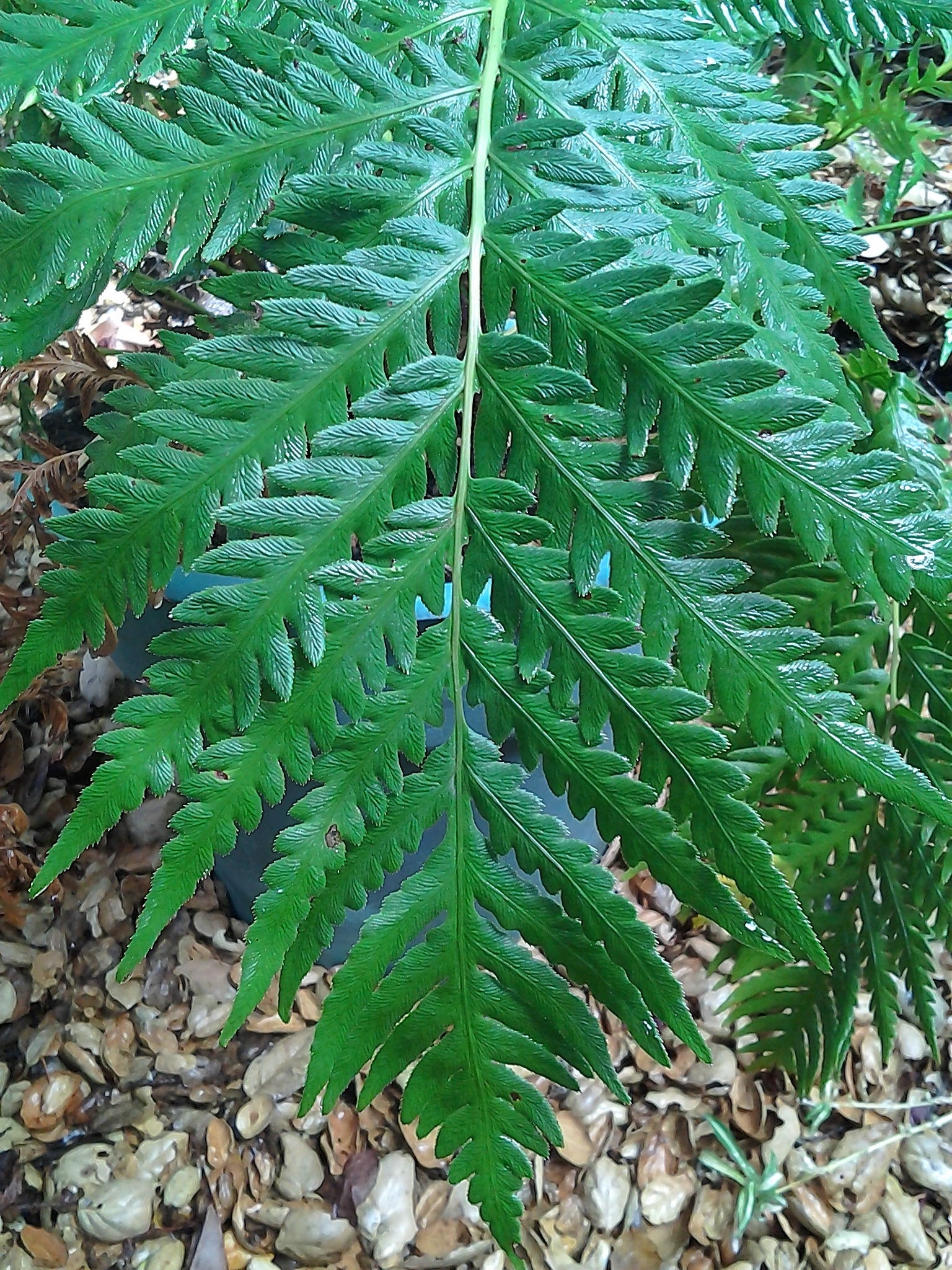

 Within its natural range on the West Coast between the southern extremity of Alaska and the southern extremity of California, Western sword fern, Polystichum munitum, is the most common of the native ferns. A few disjunctive wild colonies live as far inland as the Black Hills of South Dakota. Yet, with few exceptions, Western sword fern is difficult to cultivate outside of the natural range.
 Some of us might remember Delta maidenhair fern, Adiantum raddianum, as a houseplant that was popular for terrariums in the 1970s and into the 1980s. Although quite happy in terrariums, it eventually gets big enough to crowd other plants in such tight spaces. It prefers to be potted on a porch, or in a regularly watered and sheltered spot in the garden. It tolerates quite a bit of shade.
 Many of the most popular plants are expected to bloom to add color and fragrance to the garden. Many others are grown to produce fruit or vegetables. Some are appreciated for their foliar color in autumn. Big trees are grown for shade. Turf grasses are grown as lawn. Evergreen shrubbery makes hedges. It seems that all plants perform particular tasks in the gardens which they inhabit.
 This is one of those perennials that has mixed reviews. Although relatively tough once established, holly fern, Cyrtomium falcatum, is susceptible to rot and fungal leaf-spot. It likes to be watered somewhat regularly, but rots if the soil is constantly saturated. Leaf-spot is not as dangerous as it looks, but can be unsightly. Too much fertilizer (to correct the damage) can burn the foliage too.
 Tony Tomeo