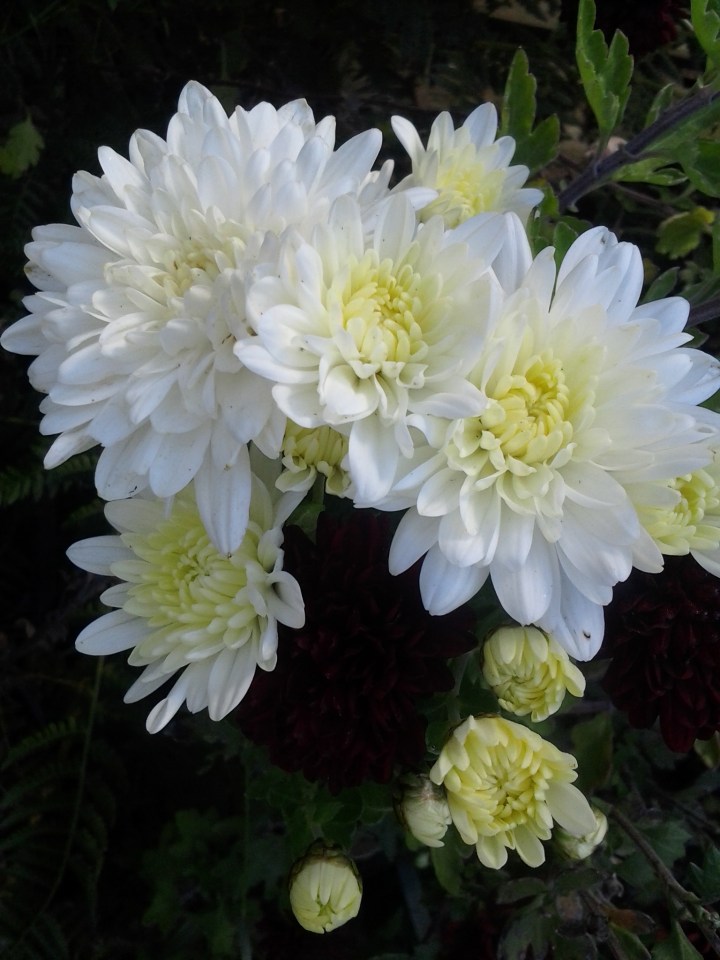
 Just like warm season vegetable plants in the vegetable garden, flowering warm season annuals get replaced this time of year. Although the weather is still warm, cool season annuals should be planted now so they can disperse roots before the weather gets too much cooler. Except for a few short term annuals and perennials, most should perform until the weather gets warm next spring.
Pansy, viola, Iceland poppy, sweet William, calendula, stock and the various primroses should get down to the business of blooming rather efficiently, and hopefully compensate for the removal of deteriorating warm season annuals. Ornamental cabbage and kale, as well as cyclamen, can be a bit later because they are a bit more sensitive to warmth, but not slowed much by cool weather.
Nasturtium and alyssum can work as either or both warm and cool season annuals. Both are annuals, so individual plants do not last more than a few months. In hot spots, they may perform well in winter, but then get roasted in summer. In cold spots, they may do exactly the opposite. In the right situations, they self sow and bloom all year. Tired old plants should be groomed out if unsightly.
Chrysanthemums are the most prominent of seasonal color for autumn, and come in all sorts of colors that are ideal for an autumn palette. They are actually perennials that are grown as annuals. Unfortunately, they are usually grown as very short term annuals, that are allowed to bloom only once, and then replaced with something more wintry, like cyclamen or ornamental cabbage or kale.
Like cool season vegetable plants, most flowering cool season annuals should be planted as small plants in cell packs. Chrysanthemum, as well as cyclamen and ornamental cabbage and kale that get planted afterward, are the exceptions that should be planted as four inch potted plants, but they are expensive anyway. Primroses can be planted from either cell packs or four inch pots. (Primroses can cause a serious skin allergy, just from contact.) Nasturtium and alyssum should be grown from seed sown early.
 The flowers may not last very long once cut, but cosmos, Cosmos bipinnatus, blooms so abundantly, that there might not be any shortage of new flower to cut and bring in to replace those cut a day or two before. Their pastel pinks and lavenders, as well as white, suit the Easter season perfectly. Their soft light green foliage is remarkably lacy. Mature plants are about two to four feet tall.
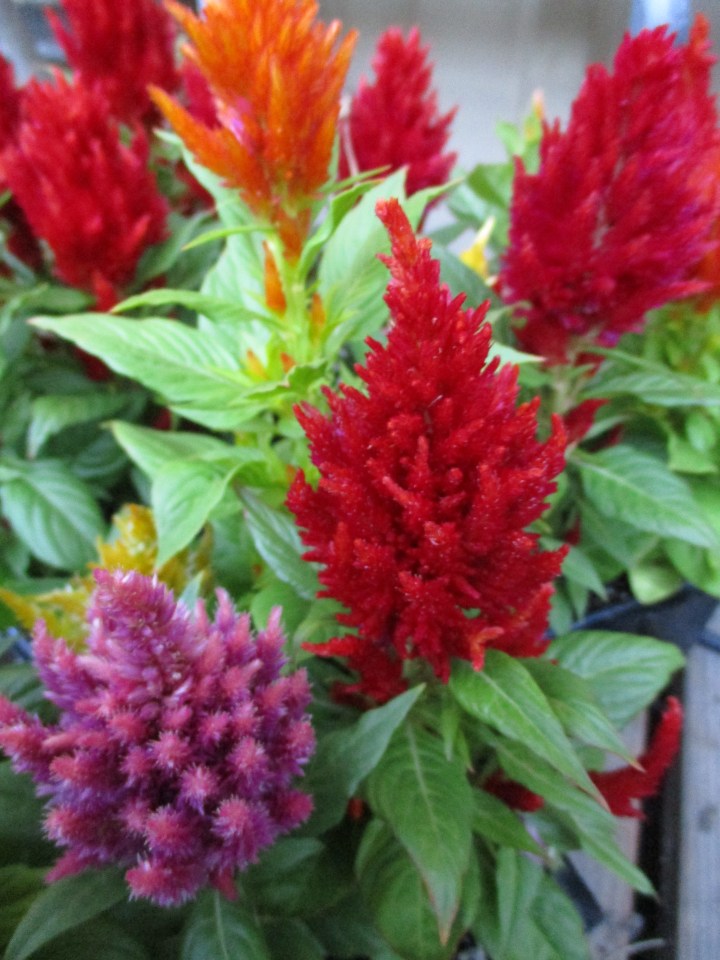 Not all annuals last as long as petunias do through summer, or pansies do through winter. Some fill in for the in between seasons, or if longer term annuals do not last quite as long as they should. Cockscomb, Celosia plumosa, blooms best now that it is about halfway through summer, and then finishes as weather gets too cool for it in late autumn, not so much more than two months later.
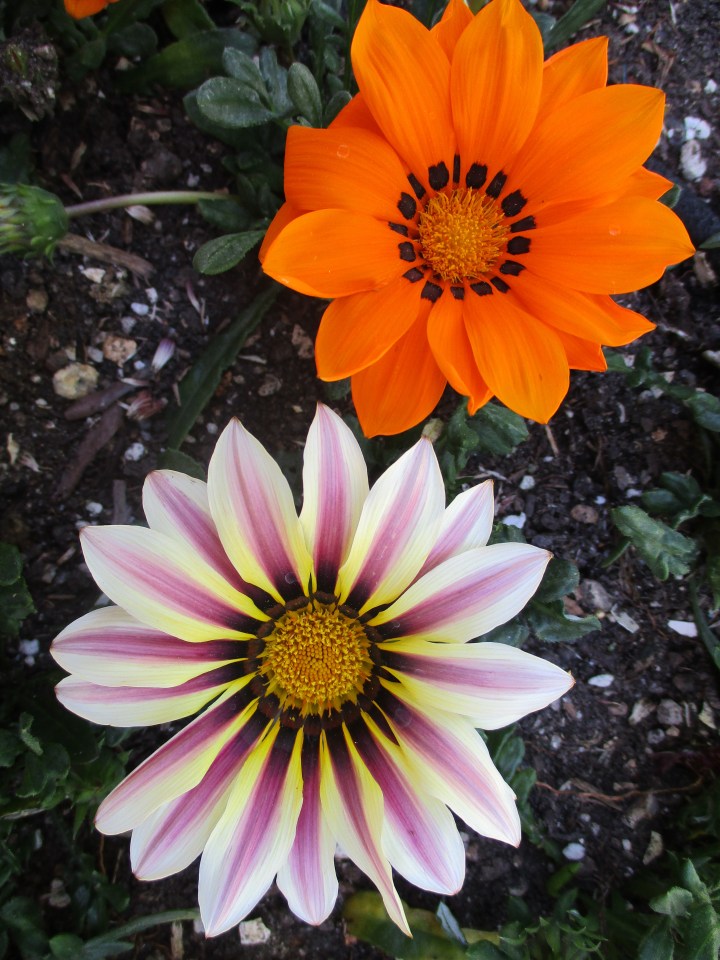 Why would anyone want to grow annual gazania when perennial gazania that is popularly grown as ground cover lasts for several years? Well, as long as the weather stays warm, annual gazania blooms with an impressive abundance of bigger and more brightly colored flowers. Perennial gazania blooms less profusely and only in midsummer, with simpler and somewhat smaller flowers.
 Tony Tomeo