The minute bright pink flowers of Mexican heather, Cuphea hyssopifolia, are less than a quarter inch long, but are enough to get the attention of the hummingbirds who really dig them. Flowers can rarely be more purplish or even more rarely white. The limber stems are well foliated with finely textured and narrow leaves that are not much more than half an inch long. Mature plants are typically lower but a bit wider than two feet. Overgrown plants can be pruned severely at the end of winter to regenerate over summer.
Gladiolus hybrids are not reliably perennial locally. They might not be reliably perennial anywhere. I had believed that they could be so where they get more winter chill, but chill does not seem to help. I have been told that they are no more perennial in Pennsylvania, Oregon or Oklahoma. When I grew them many years ago, only about a third survived to bloom for a second season. Of that third, only about a third survived to bloom for a third season. This is one of many reasons why I am so ‘glad’ about perennial Gladiolus papilio , as well as Watsonia species, from Tangley Cottage Gardening. Although, strangely, a few hybrid Gladiolus survive.
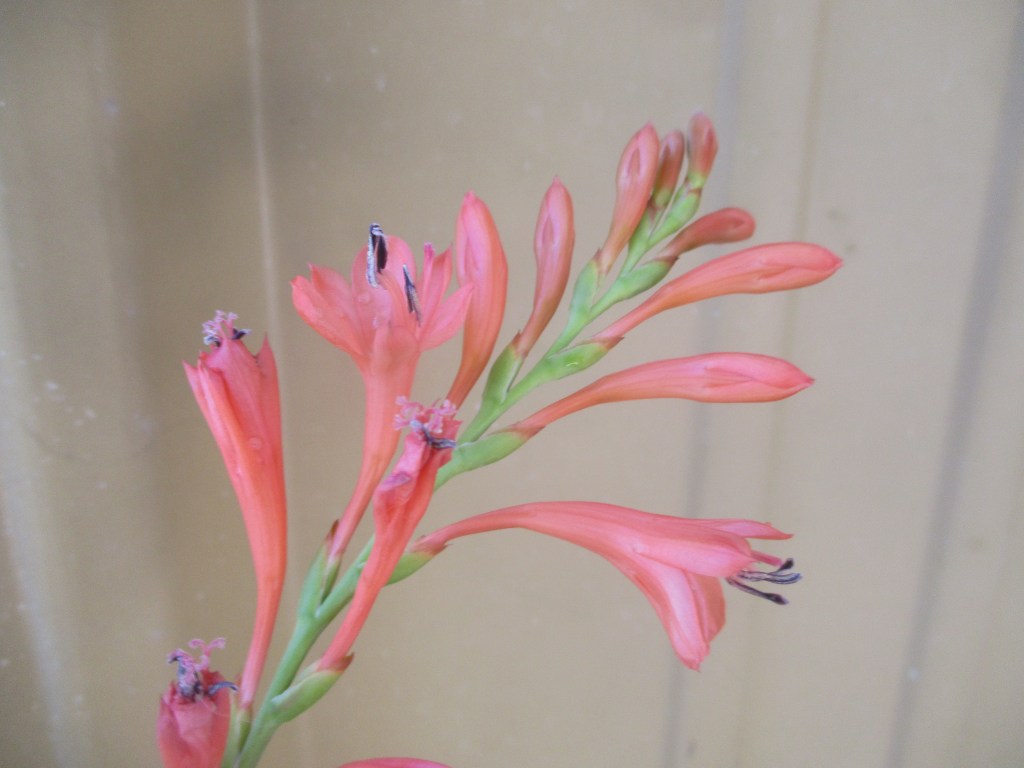
1. Watsonia X pillansii ‘Coral and Hardy’, just like the Gladiolus papilio, was a gift from Tangly Cottage Gardening of Ilwaco in Washington. I learned that it blooms in summer.
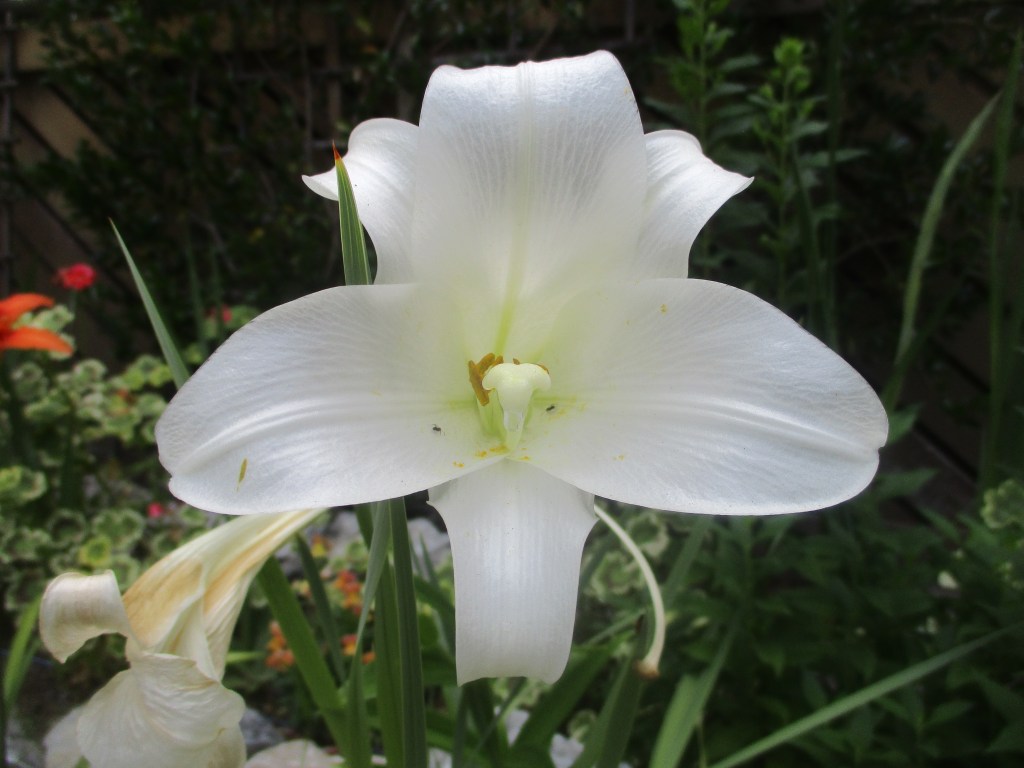
2. Lilium of an unidentified cultivar is finally finishing bloom. Obviously, it is irrelevant to Gladiolus. It just happened to be so pretty precisely as I was in need of a sixth picture.
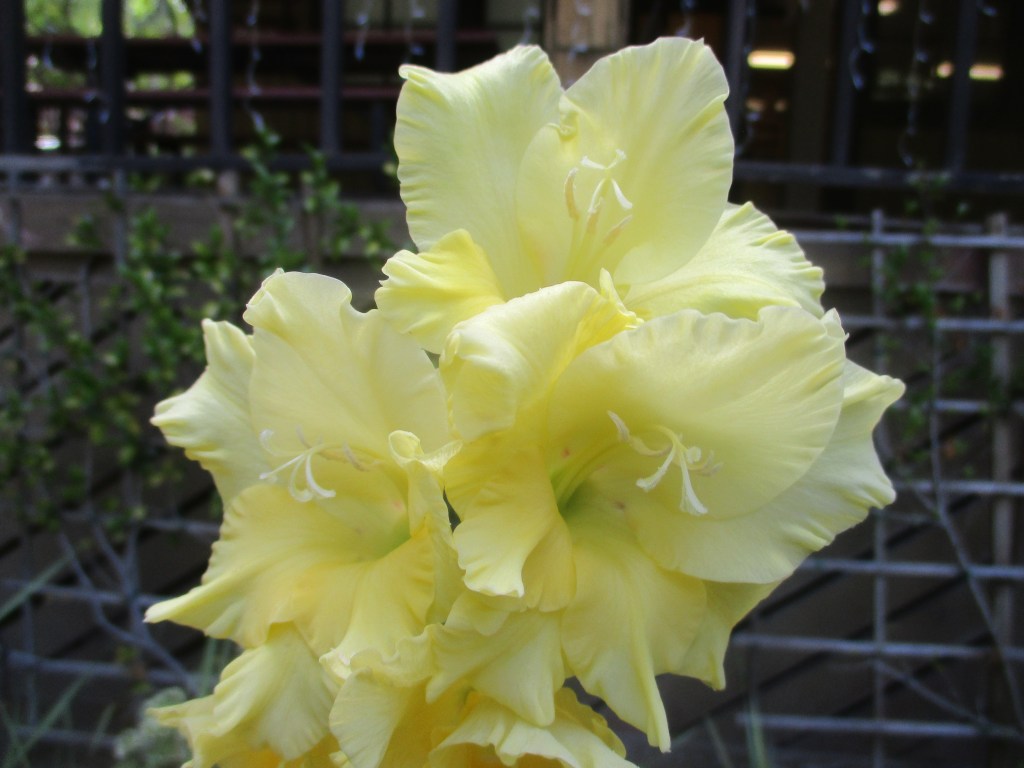
3. Gladiolus is mostly finishing bloom now. These few are blooming a bit late. These are merely the common hybrid sort that someone purchased from a retail nursery years ago.
4. Not only have a few of the Gladiolus hybrids been surprisingly reliably perennial for a few years, but this pastel yellow cultivar has actually multiplied, from one bulb to a few.
5. This Gladiolus hybrid blooms annually also, but unlike the pastel yellow cultivar, does not multiply. This and one other just like it are the only two, with neither more nor less.
6. This purple Gladiolus hybrid does the same. It would be nice if it could generate a few copies. Since it is the only specimen here, and might be fragile, I will not tamper with it.
Where winters are cooler, zonal geranium, Pelargonium X hortorum, performs as a warm season annual. It is perennial only with shelter from frost. Locally, traditional cultivars are so reliably perennial that they can get congested without thorough pruning and grooming after winter. Frost occasionally ruins outer growth, but rarely kills entire plants with roots.
Modern cultivars bloom more profusely and more colorfully than old cultivars, but are not quite as resilient. They are more likely to rot during the damp and cool weather of winter. They bloom exquisitely from spring through autumn though, with bright hues of red, pink, peach, salmon and white. They stay lower and more compact, so require less grooming.
The more popular modern zonal geraniums should not get much more than two feet high and wide. Their small flowers bloom on globular floral trusses that can get as wide as six inches. Traditional zonal geraniums get bigger, with smaller floral trusses. Nearly circular and aromatic leaves generally exhibit darker halos between lighter centers and margins.
Green is the most common floral color. It only seems to be rare amongst flowers because almost all green bloom relies on wind for pollination. Thus, neither color nor fragrance is useful to get the attention of pollinators. Actually, green flowers do not get much attention at all. They are easy to ignore in the wild, and generally unpopular within home gardens.
Most showy green flowers such as zinnia, chrysanthemum, hydrangea and gladiolus are progeny of unnatural breeding. Showy but naturally green flowers such as hellebore and orchid are merely incidentally green, as they employ infrared or ultraviolet color to attract pollinators. Although people can not see infrared or ultraviolet color, many pollinators do.
After all, flowers bloom only for pollination. Many customize color as well as fragrance to appeal to preferred pollinators. They are merely incidentally appealing to people as well. People breed flowers to be more appealing to people, even if unappealing to pollinators. Nonetheless, even breeding is limited to characteristics that initially attracted pollinators.
It is impossible to identify the most common color among flowers that rely on pollinators. Pollinators are regional. Therefore, red and orange flowers may be more common where hummingbirds who prefer red or orange are more common. Purple flowers may be more common where bees or certain butterflies who prefer purple are the dominant pollinators.
Yellow seems to be the most common natural color of flowers of North America. Red and orange are very common as well. Although common, pink is merely a tint of red, so is not a real color. Neither is brown, which is a shade of orange. Although very common among flowers that rely on wind pollination, it is quite rare among flowers that rely on pollinators.
Blue is the rarest natural floral color. Many flowers that seem to be quite blue are actually purplish. Purple is uncommon, but not as rare as blue. Ultraviolet and infrared get almost no consideration since they are invisible to people. However, both are common amongst most showy flowers, particularly white and maybe red flowers. Red is invisible to insects, though infrared is not.
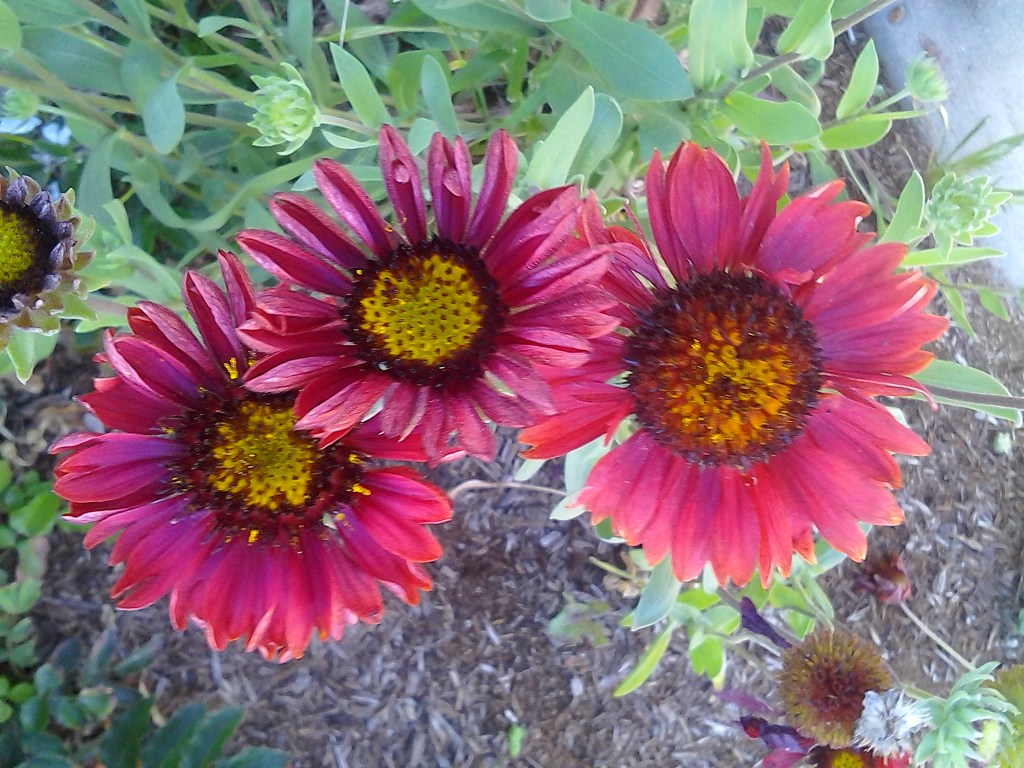
The bright colors and patterns of blanket flower, Gaillardia, resemble those of blankets made by native American Indians. The daisy flowers are typically two different shades of red, orange, yellow, brown or yellowish white. Not many varieties bloom with single colors. Taller varieties can get almost two feet tall, with slender but sturdy stems that are good for cutting. The narrow leaves are mostly basal, so do not crowd bloom.
The more popular varieties of blanket flower are perennial. Healthy plants can slowly get quite broad, and can self sow their seed to spread a bit farther. Annual varieties can not get as broad, but often self sow more efficiently than perennial types do. Once it gets growing, blanket flower does not need much water. However, regularly watered plants are already blooming. Modestly watered plants wait until summer.
The iris that live in my garden will likely always live in my garden. Each one has history. I got my first Iris pallida from my great grandmother’s garden at about the time I was in kindergarten. Less than twenty others have been added since then, because I am so very selective. I must be. Otherwise, my garden would fill with iris which I would be obligated to perpetuate. These four iris pictured here are at work, although #4 originated from my garden, where the two other white iris that are not pictured here live. All finished bloom a while ago, so these are old pictures.
1. Dicentra formosa, which I believe is Pacific bleeding heart, blooms at about the same time as the bearded iris. Some of the colonies are quite broad under the redwood forests.
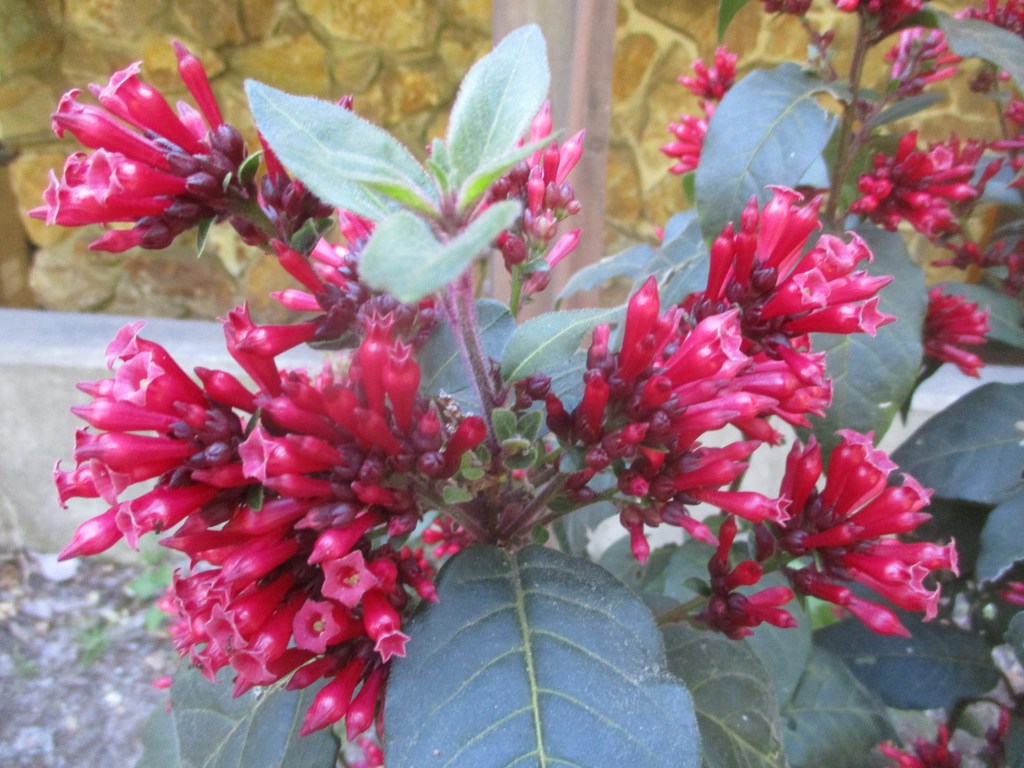
2. Cestrum fasciculatum Newellii ‘Ruby Clusters’ could do without either its first variety name or its subsequent cultivar name. I did not select it, but am getting to appreciate it.
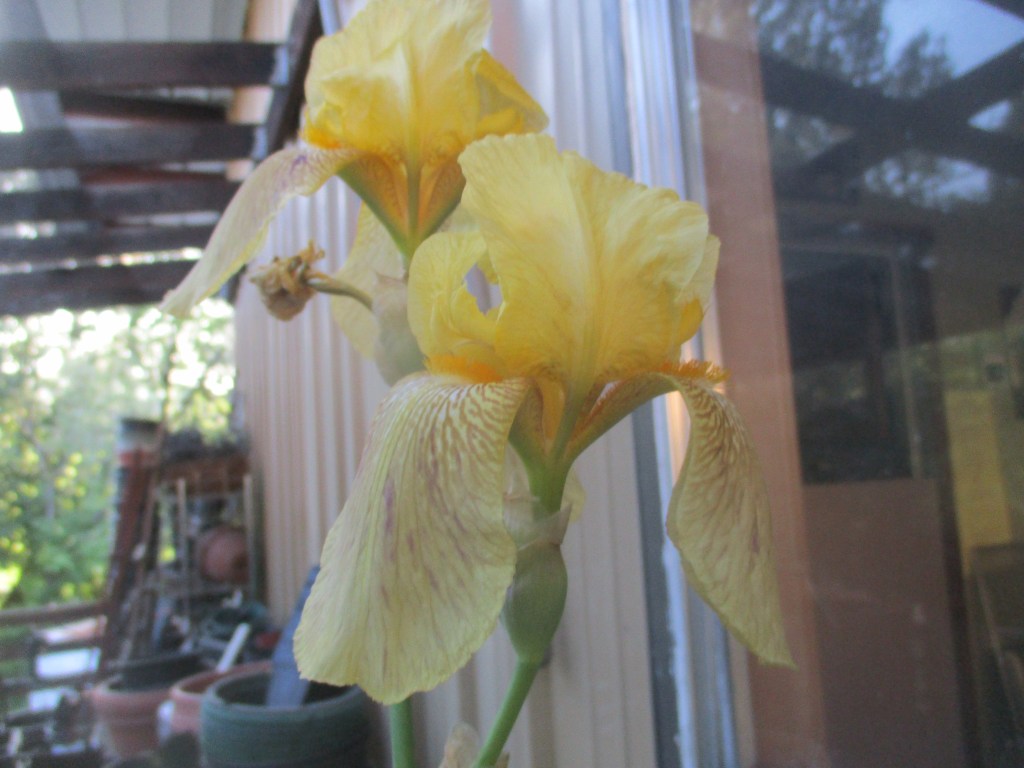
3. Yellow iris appeared next to a debris dump many years ago. It could have grown from a scrap, or could be feral. It seems wimpy. It got canned, but should have been relocated.
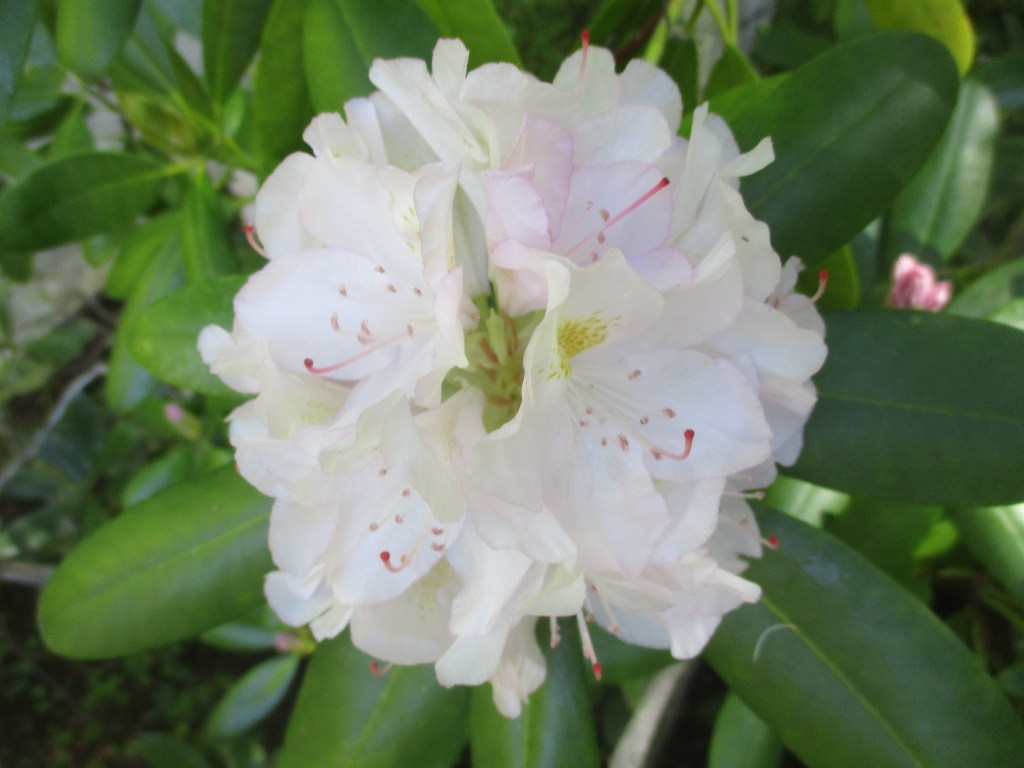
4. White iris seems prettier at night. During the day, it seems to be slightly grayish, with oddly pale yellow beards. I believe that it is feral. Two other cultivars are perfectly white.
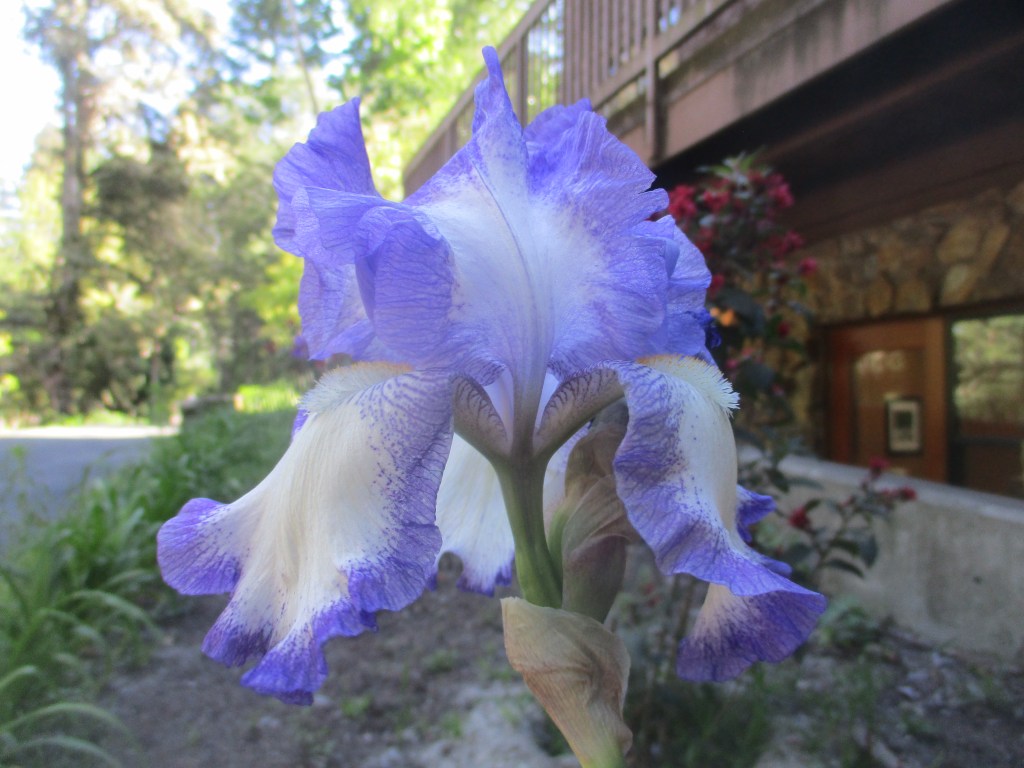
5. Blue iris, with both dark and light blue, could actually be a cultivar. It is impossible to be certain. The flowers are simple and not ruffled. The stems are tall, but a bit too lanky.
6. White and blue iris, of these four, is the most likely to be a cultivar. Lanky stems could be a result of neglect. I hastily interred the rhizomes last autumn just to keep them alive.
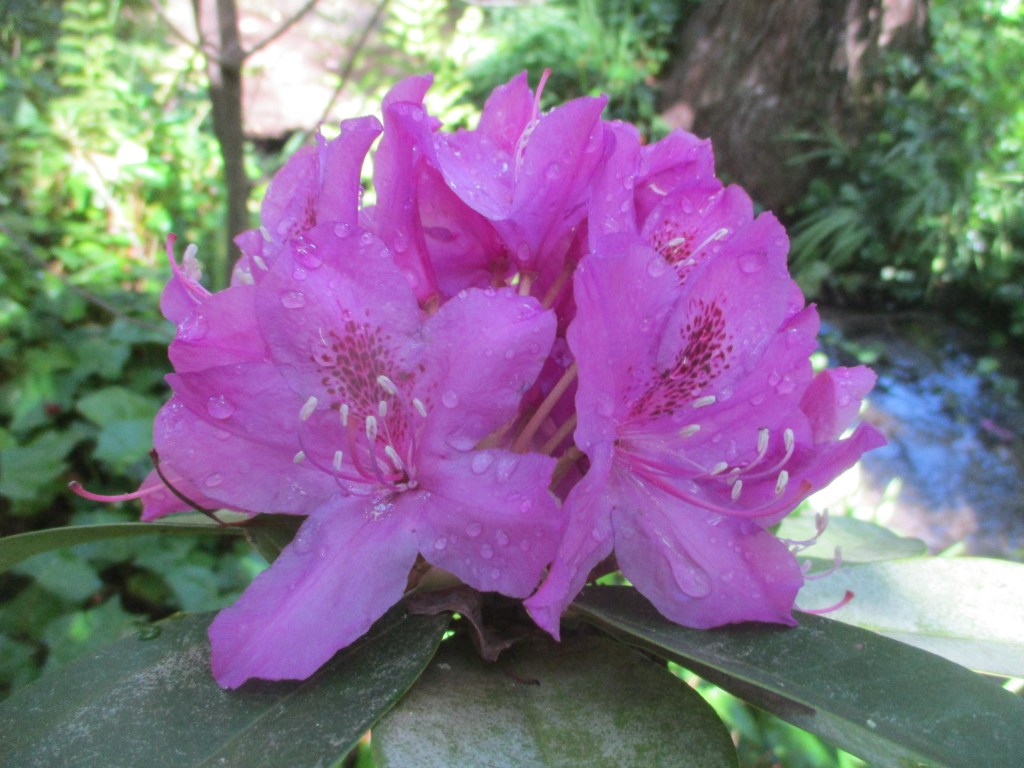
Some flowers excel with particular colors. Jacaranda is best in blue. White looks plain or boring. California poppy is best in natural orange. Pale white, pale purple, pink and any other modern color seems weird for them. Poinsettia should be red, or perhaps white or pink, but not ‘peach’, ‘plum’ (whatever color that is) or yellow! Although I had never met a rhododendron that I did not like, I do find that the best are either purple or red. Pinks are very appealing too, but not quite as ideal as the others. White rhododendrons can be rather bland. These six rhododendrons bloomed prior to last Saturday. Since I intend to limit the redundancy of pictures of rhododendrons this season, they will be the last.
1. White is my favorite color. White rhododendrons should therefore be my favorites. So, are they? I would prefer this one to be brighter white, without tan spots or pink stamens.
2. White, to me, seems mundane for rhododendrons anyway. This is brighter white than the other, and lacks pink stamens, but has yellow centers. Simple white would be better.
3. Lavender, or whatever this color is, seems a bit more appropriate for rhododendrons. It is slightly more pinkish than it seems in this picture. Can it really qualify as lavender?
4. Lavender is a tint of purple, like pastel purple. Therefore, this may qualify as lavender more than the previous picture. It is slightly more bluish, with a slightly ruffly structure.
5. ‘Anah Kruschke’ was likely the most popular cultivar grown on the farm, and for good reasons. The pinkish purple bloom is exquisite and reliable. Foliage with form are ideal.
6. Purple and red are, in my opinion, the best colors for rhododendrons. Not many other flowers can bloom with such rich purples and reds. Other flowers provide better whites.
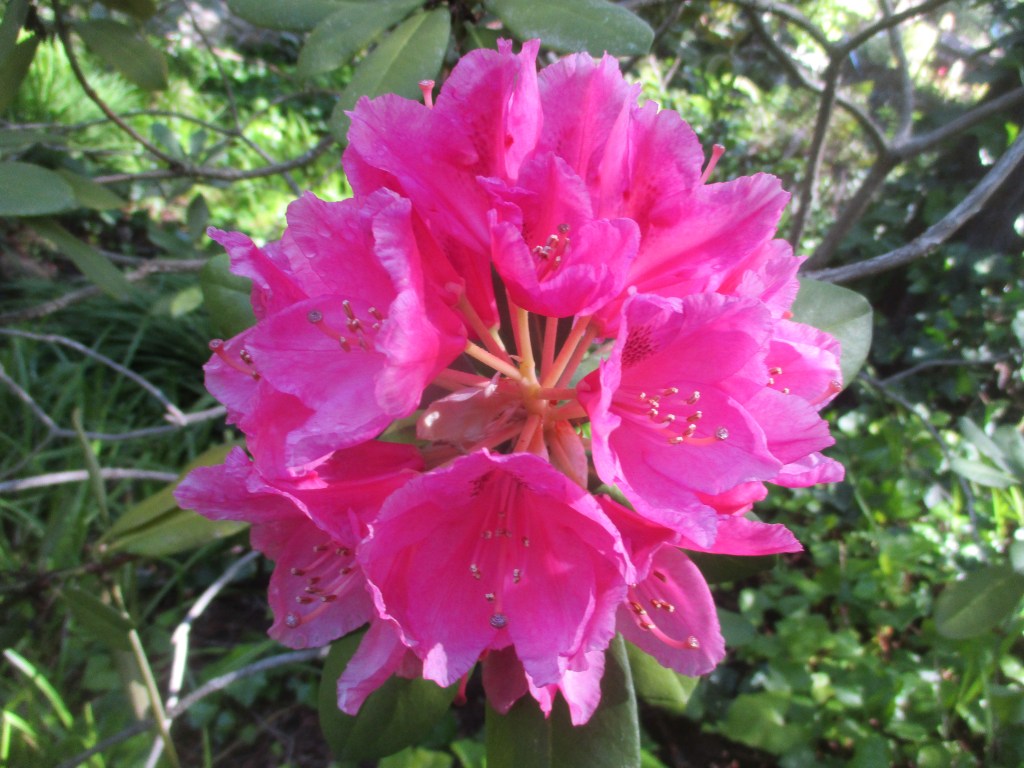
There are too many rhododendrons here. Working with them in a landscape situation is very different from growing them on the farm. The farm generates hundreds of primary cultivars, with hundreds of others to potentially introduce. Thousands of plants grow in cans on much of forty acres. Ideally, most develop an abundance of floral buds, but then leave the farm prior to bloom. Here, only a few hundred rhododendrons bloom well and mature within their landscapes with no intentions of ever leaving. These are mostly pink with one that blooms pinkish red.
1. Mothers’ Day Rhododendron blooms reliably for Mothers’ Day annually, regardless of how early or late other neighboring rhododendrons bloom. No one knows its real name.
2. Now that I see this one in this picture, I do not remember if it was more rosy in color. It seems to be a simpler but bright pink now. I am not so proficient with analyzing color.
3. This one also seems to be a bit different from how I remember it. I thought that it was more like watermelon red, rather than reddish pink. This is why I will not choose colors.
4. Oh, I should remember the name of this one. My colleague grew it! I delivered it years ago. It looks like ‘Rocket’ but I do not believe that it is. I should have saved the old label.
5. Of these Six, this is the only rhododendron that I know the name of, and is one of only a few that I may identify here. It is one of the most common cultivars; ‘Mrs. G. W. Leak’.
6. Most of our rhododendrons here are pink or purple. Only a few are red. This might be the darkest red here. I refer to it as ‘Taurus’, but it is not. Individual flowers open widely.
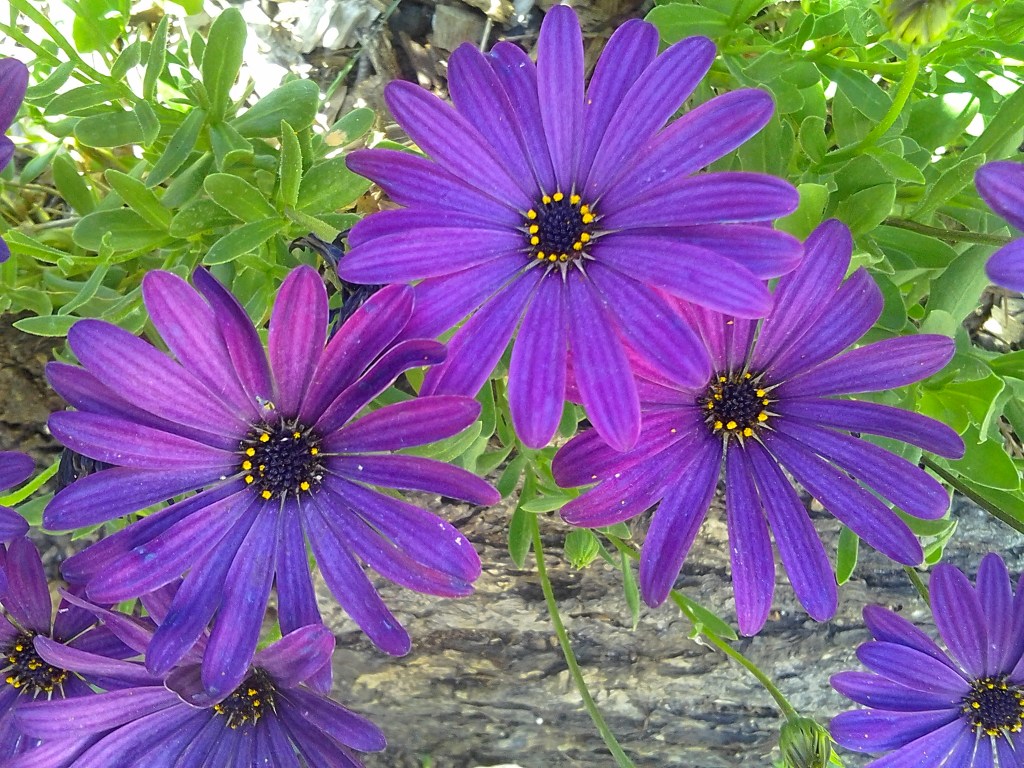
Only a few decades ago, the only familiar African daisies, Osteospermum spp., were the sprawling and often sparsely branched ‘freeway daisies’ with blue-eyed white or rarely light purple flowers. They made nice blooming ground cover that could be planted in drifts for a bit of color among the deep green of Algerian ivy on expansive freeway embankments.
Modern varieties are shrubbier perennials with more profuse bloom of white, cream, pink, purple, pale yellow or pale orange flowers, mostly with blue or purple centers. Some yellow flowers have yellow or cream centers. Some of the fancy types have spooned petals like some types of cosmos or chrysanthemums. After the primary bloom phase in spring, a few sporadic flowers may continue to bloom through summer until the secondary light bloom phase late in summer. However, the old fashioned ‘freeway daisy’ types do not always display a second bloom phase. Varieties with variegated foliage are still rather rare.
Even though African daisies can survive in inferior soil with minimal watering, they perform best with good soil and regular watering. Plants in containers can not disperse their roots like they want to, so are are more dependent on regular watering. Fertilizer prolongs bloom.
If only it did not like such regular watering, the common white calla, Zantedeschia aethiopica, would be quite a sustainable perennial. Once established, it can be difficult to get rid of, particularly in well watered gardens. Even unwatered plants that die to the ground through dry summer weather are merely dormant and waiting for rain to regenerate and bloom.
The remarkably elegant blooms stand about two or three feet tall, each with a single spathe loosely wrapped as a flaring cone around a spadix that supports the indistinguishable diminutive flowers. The bright white spathe is often more than four inches wide, and can be twice as wide in shade. The spadix is only about three or four inches long, and as yellow as Big Bird. The spongy dark green leaves are about a foot or two tall.
‘Green Goddess’ blooms with a longer and recurved spathe with a green tip and margins. Colorful callas are actually different specie. All parts of all types of callas are incidentally toxic.