Dried Flowers Last All Year

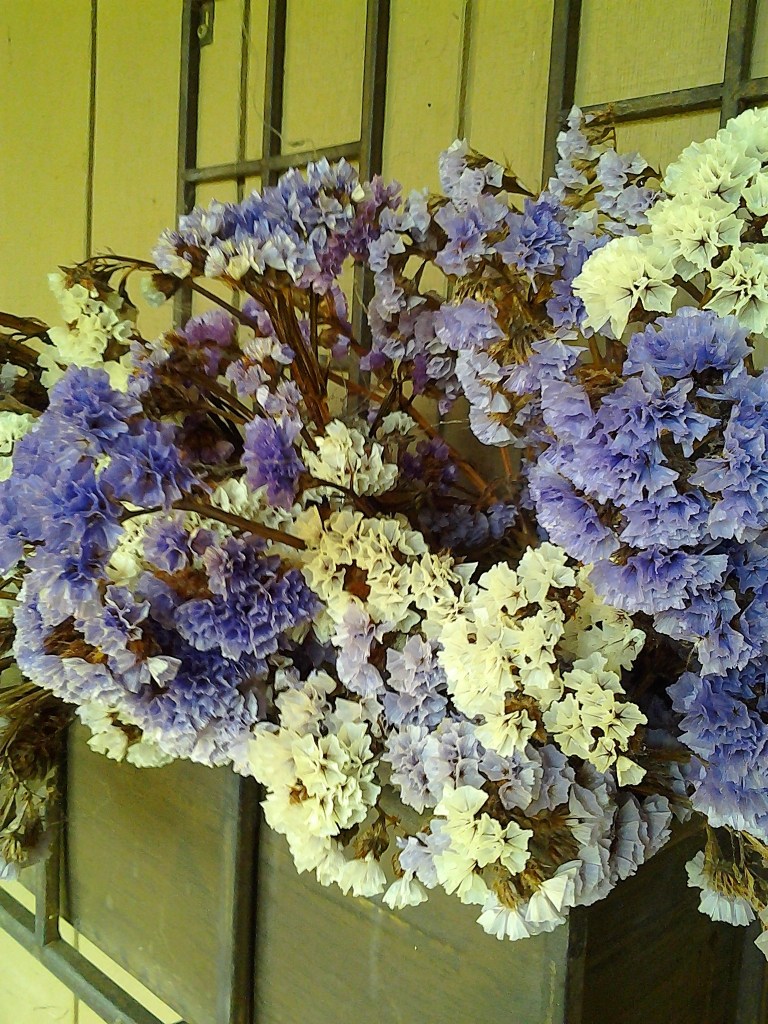
These flowers were cut weeks ago, and will look just as fresh months later.

Statice, strawflower and globe thistle continue to bloom later than most other summer annuals, and hold their flowers longer. Even after bloom, the flowers are so stiff and ‘crispy’ that they remain intact and colorful until they succumb to exposure to weather. If cut and brought in from the weather soon enough, they will last as dried flowers at least until fresh flowers start to bloom in the garden next spring.

Strawflower and larger globe thistle tend to wilt and droop from the weight of the bulky flowers, so should be tied in small bunches and hung upside down to dry. Perennial statice (which has larger blooms than annual statice) tends to flop to the ground, but the stems often bend only at the base so that the rest of the stem length stays somewhat straight. Smaller globe thistle and annual statice often dry standing up while still out in the garden.

Yarrow and English lavender can be dried as well, but lose most of their color. Lavender dries naturally in the garden. Yarrow can likewise be allowed to dry in the garden, but probably keeps a bit more color if cut while still fresh and hung upside down. Because yarrow blooms are so wide, they should be hung individually or in small bundles. Queen Anne’s lace has even wider blooms that curl inward as they dry, so they really should be hung individually.

Old hydrangea flowers that are only beginning to fade can dry surprisingly well if cut and hung individually before they deteriorate too much or start to rot. Some varieties retain color better than others. Some fade almost completely to an appealing brown paper bag.

There are not many roses this time of year, but when they do bloom, even they can be cut and dried while beginning to unfurl. Only a few small and tightly budded roses can be dried when completely open. Because they droop right below the blooms, roses should be hung upside down to dry. Dark colored roses get very dark as they dry. White roses turn tan. Pink and yellow are probably the better colors.

Cat-tails and pampas grass flowers are big, bold and dated cut flowers. Yet, for situations where big flowers fit, they are just as practical now as they were in the 1970s. Because pampas grass flowers shed, and cat-tails can explode (to disperse their seed), they should be sprayed with hair spray or another fixative to keep them contained. Pampas grass foliage has dangerously serrate edges that can give nasty paper cuts, so should be handled carefully, and displayed out of the way.

Chrysanthemum

Chrysanthemum is famously diverse and colorful.

Chrysanthemum compensates for its lack of fragrance with rich color and variable form. Centuries of breeding have produced countless shades and tints within the yellow, orange and red range. This includes pink as a tint of red, cream as a tint of yellow, and bronze as a shade of orange. Some reds and pinks are precariously close to purple or lavender. There is, of course, white as well.

Flowers may be solitary big pom-poms, multiple small buttons, or anything in between. Many are daisy types, mostly with bright yellow centers. Spider chrysanthemums have strangely elongated and hooked ray florets, which are generally thought of as ‘petals’. Some chrysanthemums that would otherwise bloom with many small flowers can be groomed to bloom with fewer bigger flowers.

Chrysanthemums with compact growth and uniform bloom are popular as short term annuals for autumn. Their primary bloom phase is impressively profuse. Unfortunately, few get an opportunity to bloom again. Other cool season annuals replace most of them for winter. In ideal situation, with rich media and regular watering, chrysanthemums can actually perform as short term perennials.

Moss Rose

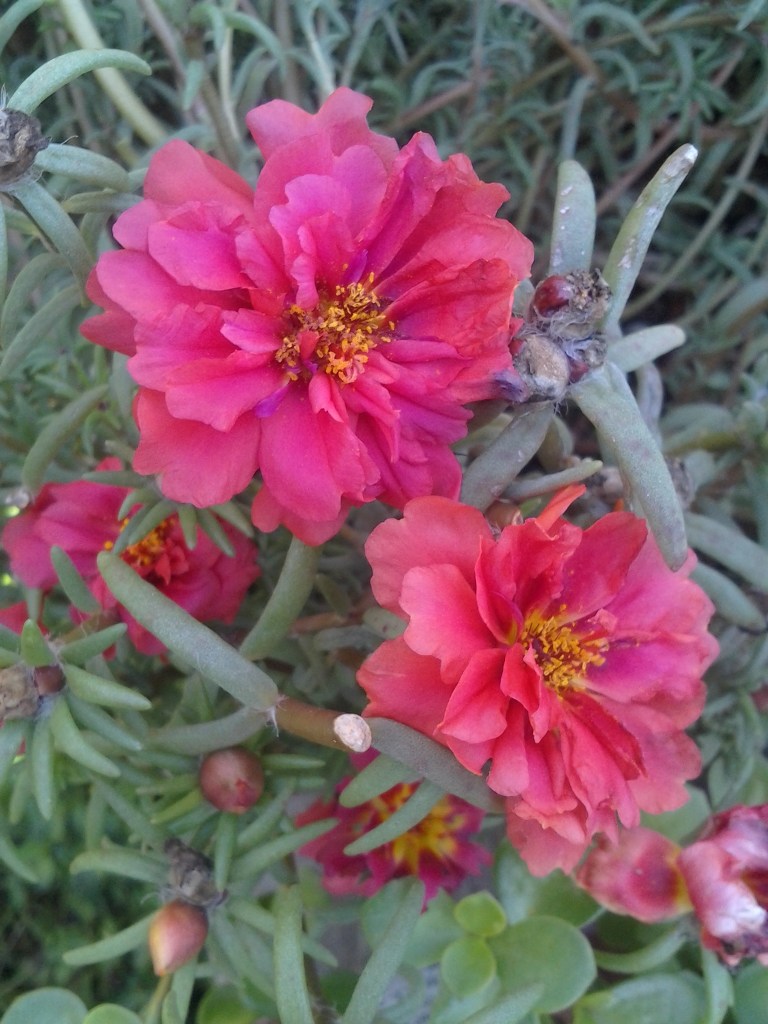
Moss rose can bloom until frost.

The recent unseasonably warm weather was no problem for any remaining moss rose, Portulaca grandiflora. They usually start to look rather tired as the weather gets cooler this time of year, and eventually succumb to the first frost. Where allowed to do so, they can regenerate next year from seed. I like to collect their seed during the summer or autumn so that I can sow them after the last frost of the following winter. Through spring and summer, I find that additional plants are easy to grow from cuttings.

The inch wide flowers are white, pink, red, orange or yellow, with only a few ruffled petals. Modern varieties that have rufflier ‘double’ flowers and richer colors still seem to be less popular than the more delicate traditional types. The cylindrical and succulent leaves are only about an inch long. The small plants can get more than six inches deep where they are happy or crowded. Moss rose likes good exposure and decent soil, but does not need the rich soil that most other annuals demand. Nor does it necessarily need such regular watering.

These Bulbs Are Not Incandescent

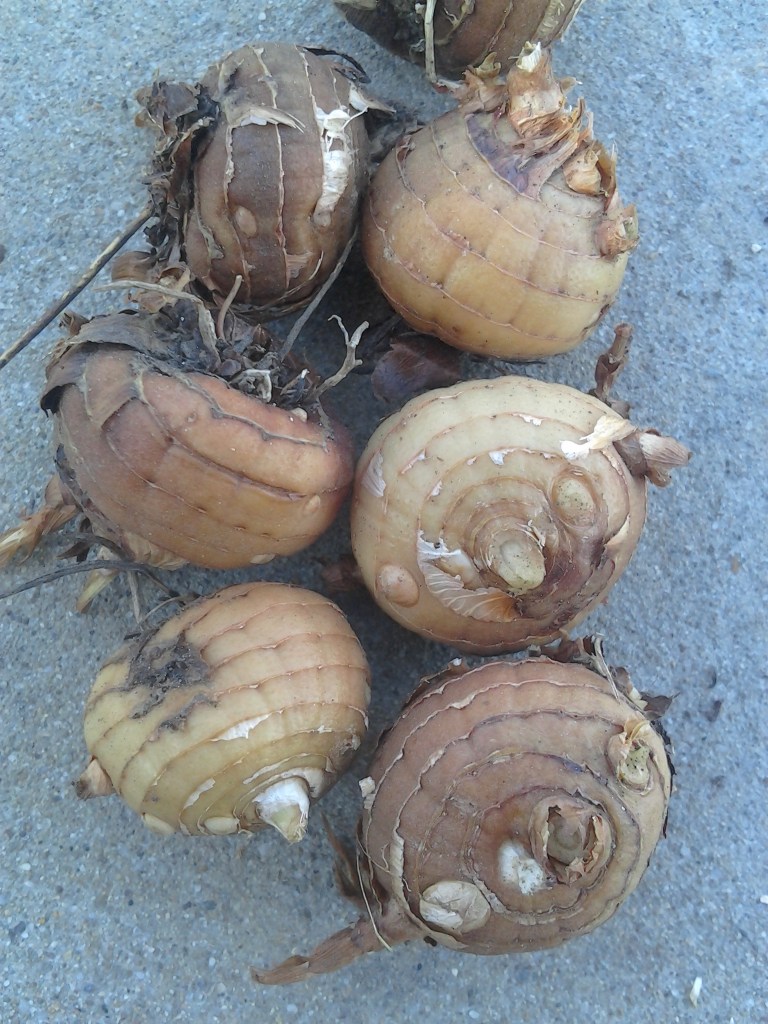
Bulbs do not look too impressive.

It may seem to be too early to be concerned with narcissus, daffodil and grape hyacinth, but this is when their bulbs go into the garden. Once established, these familiar examples, as well as early bearded iris, can be the most reliable for colorful bloom at about the same time early each spring. Crocus and freesia bloom just as early, but may not naturalize as reliably. Lily, tulip, hyacinth, anemone and ranunculus really prefer cooler winters to bloom reliably after their first spring, even though they are worth growing for just one season.

Bulbs, including corms, rhizomes, tubers and tuberous roots, can be found in nurseries when it is time for them to be planted. Gladiolus are not yet available only because they are summer blooming bulbs that should be planted a bit later than spring bulbs. None of the bulbs are much to look at while dormant, and are even less impressive once they get buried out of sight, but they have already stored up everything they need for the blooms that we expect from them next year. Once hidden below the surface of the soil, seemingly dormant bulbs secretly disperse their roots into the surrounding cool and moist soil to be ready to bloom as soon as weather allows.

In their first year, some bulbs can be planted in groups at different times to coincide with the expected durations of their particular bloom cycles. For example, if the flowers of a particular type of bulb can be expected to last two weeks, a second phase of the same bulbs can be planted two weeks after the first phase. As the first phase finishes bloom next spring, the second phase should begin bloom. However, phasing is only effective for the first season, since all bulbs of any particular variety will be synchronized by their second season.

Anemone, ranunculus and bearded iris each bloom synchronously, regardless of when they get planted, so are immune to phasing. Fortunately, the many varieties of bearded iris have different bloom seasons. Some bloom as early as narcissus. Mid-season varieties bloom shortly afterward, and are followed by late varieties. Some modern varieties bloom early, and then again after the late varieties!

October Brings Cool Season Annuals

Warm season annuals are now passe.

As the name implies, ‘annuals’ need to be replaced ‘annually’. What is worse is that they do not even function for an entire year, but only for a specific season. Cool season annuals mostly work from autumn to spring. Warm season annuals mostly work from spring to autumn. Calendula is a popular cool season annual that may not last even that long, since it can mildew half way through winter.

Now that it is time for cool season annuals, it can be unpleasant to remove warm season annuals that are still performing well. In mixed plantings, new annuals can be phased in through autumn as older annuals deteriorate. Busy Lizzie (impatiens), wax begonia and other warm season annuals that are actually perennials can get cut back and overplanted with cool season annuals. The cool season annuals that temporarily overwhelm them can provide shelter from frost. As the cool season annuals finish next spring, the warm season ‘annuals’ can regenerate

However, not all cool season annuals need to finish next spring. Sweet William, cyclamen, chrysanthemum and the various primroses are popular cool season annals that are actually perennials. When the time comes, they can be overplanted with warm season annuals, so that they can regenerate the following autumn. In cool spots, sweet William and some primroses can actually perform all year. (Some people are allergic to primroses like poison oak.)

Alyssum and nasturtium really are annuals, but can function both as warm season and cool season annuals. They sow their own seeds so that new plants can reliably replace old plants without being noticed. The old plants only need to be pulled as they deteriorate. Alyssum is white, or pastel hues of pink or purple. Nasturtium is just the opposite, with bright hues of yellow, orange and red, with only a few pastel options.

Pansies and smaller violas are the two most popular of cool season annuals, since they function like petunias for cool weather. They lack few colors. Most have two or three colors. Ornamental cabbage and kale produce big and bold rosettes of pink, white or pink and white foliage. Kale has weirdly distinctive foliar texture. White, lavender, pink, purple and rose stock is the most fragrant of cool season annuals, and taller varieties are great for cutting. Iceland poppy has delicately nodding flowers on wiry stems. They can be pastel hues of white, pink, yellow, orange or soft red.

Six on Saturday: A Bit More Color

Since the Fire, my Six on Saturday posts have been rather gloomy. Titles such as ‘Pompeii‘, ‘Revelation‘ and ‘Revelation II‘ are appropriately descriptive. More color is in order.

1. Silvery bark of a silver maple is sort of colorful. Hey, the next five really are more colorful. I planted this tree as a young twigling in the Santa Clara Valley when I was in high school. It had a second trunk, which I layered as another tree for the front garden. This tree is in back. I would like to get a copy for my own garden. This is now an old picture that I got during evacuation.

2. Orangish red bloom is that of ‘Pollack’ zonal geranium, which is grown more for its very variegated foliage. However, this bonus bloom is on a specimen that reverted to be less variegated.

3. Peachy Peruvian lily looks pink to me, but is not quite as pink as the pink sort. There is a yellow sort here too. They certainly are prolific. In 1986, I worked with these as a cut flower crop.

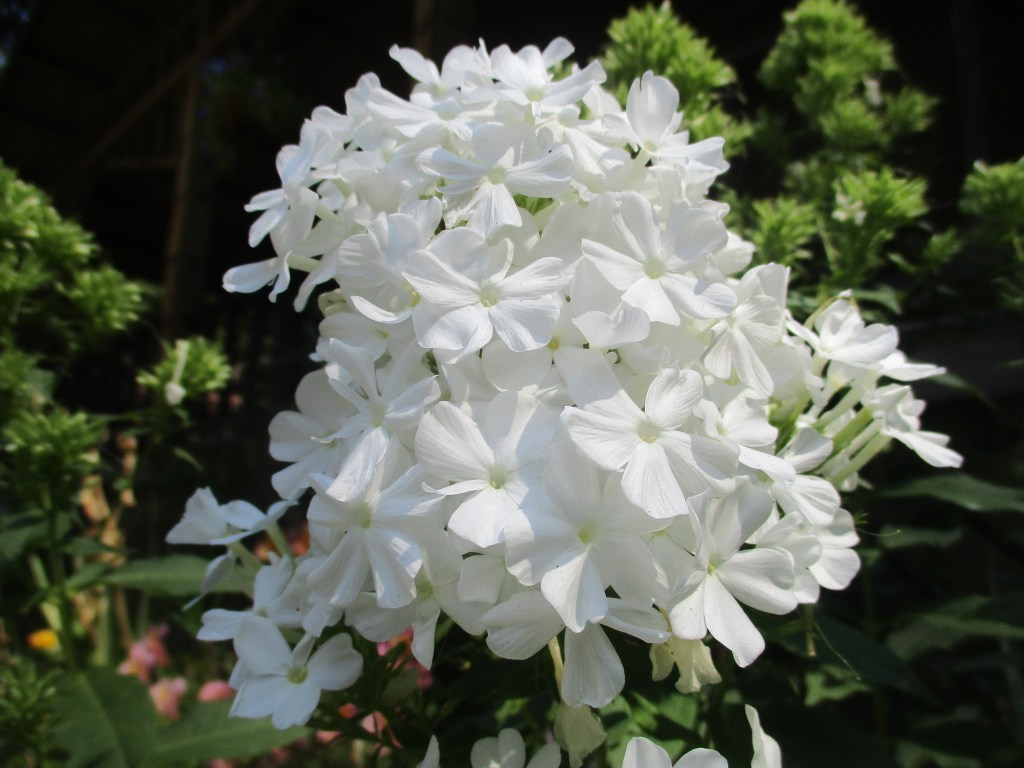
4. White phlox self sowed here last year or earlier, and have performed splendidly. There are more this year than there were last year. It would be excellent to get a few more for next year.

5. Blue annual morning glory grew up with my tomatoes. Oddly, they did not do so well where their seed were actually sown intentionally, in pots on the deck up above the vegetable garden.

6. This is my favorite picture this week. I can not read what, if anything, is written in paint on this rock. It looks like someone enjoyed painting it, and placing it to be found out in the garden.

This is the link for Six on Saturday, for anyone else who would like to participate:

https://thepropagatorblog.wordpress.com/2017/09/18/six-on-saturday-a-participant-guide/

Schedule Bloom For Every Season

00916thumb
There is bloom for every season.

Early spring bloom is best. That is simply how the schedule of the majority of flowers works. The priority of flowers is pollination. Pollination is necessary for the production of seed. The production of seed and any associated fruit takes time. Seed, whether contained within fruit or not, then disperses before winter. After soaking and chilling through winter, seed germinates for the next spring.

For a variety of reasons, some flowers prefer to bloom earlier, later, or randomly through the year. Some are from climates in which they want to avoid harsh weather of a particular season. Some rely on pollinators who are active for a limited time. Regardless of the reasons for their bloom schedule, early, late and randomly blooming flowers add color to the garden before and after spring.

Many flowers that bloom randomly through the year tend to bloom better and later with a bit of persuasion. Cutting roses regularly seems innocent enough, but actually deprives rose plants of their efforts to produce seed. So does deadheading to remove their developing fruit structures that contain seed. Plants respond by trying to bloom again or more prolifically than they would otherwise.

Lily of the Nile reliably provided much of the color through the middle of summer. Many gardens have some. Some gardens have many. Their color range is limited, but effective. Now that they are done, canna, dahlia and delphinium should continue to bloom until frost. Mexican blue sage that took a break after spring bloom should bloom even better as summer ends, and into early autumn.

The bloom schedule of many flowers of the Compositae (or Asteraceae) family also coincide with late summer. Some have been blooming since spring. Some just started recently. These include but are not limited to cone flower, blanket flower, zinnia, cosmos, coreopsis, sunflower and Japanese anemone. African daisy and euryops daisy often bloom well after the earliest rains of autumn.

Eucalypti that bloom colorfully, such as red flowering gum, Eucalyptus ficifolia, bloom after the warmth of summer, but before cooling autumn weather.

Summer Flowers Make The Cut

50819thumb
Try something new for cut flowers.

It would seem obvious that there would be more flowers to cut to bring into the home during summer than there would be in winter. A quick tour through the garden might prove otherwise. Much of the color in the garden this late in summer is provided by flowers that fade quickly, or small flowers of shrubby plants that lack good stems for cutting.

Lilies, gladiolus and most of the lily of the Nile that bloomed earlier in summer are finished. Bearded iris (reblooming types) that will soon be blooming again, as well as cannas, wilt too much to last long as cut flowers. Dahlias happen to be at their prime, and are excellent cut flowers if their water gets changed regularly. Otherwise, they rot and smell badly.

Realistically, anything that blooms is fair game. Of course, this does not mean that everything tried will work. It does means that some flowers that are not often thought of as good cut flowers might be worth considering as such. Not all of us are equipped with roses, zinnias, dahlias, sunflowers, delphiniums, blanket flowers or the many other favorite summer bloomers.

All sorts of sages, which are also known by their Latin name of ‘salvia’, are delightful cut flowers. However, some types are not very showy. Others wilt right after getting cut. Mexican blue sage may or may not wilt, but is colorful enough to be appealing even if it can not stand up like it should. Sometimes it is best to try something new to see if it works.

Sea foam statice and annual statice are nice cut flowers both fresh and dried. Fresh flowers are probably more colorful, but of course, do not last as long as dried flowers. Annual statice is lightweight enough to stand upright as it dries in a vase. Sea foam statice has bulkier flowers that should probably be hung up-side-down to dry straight.

Oleander certainly is reliably colorful, but is not worth cutting. It wilts almost immediately, and drips toxic sap. However, the stigmatized and common lemon bottlebrush is a surprisingly tasteful cut flower with rustically aromatic foliage. Speaking of foliage, some types of eucalyptus, particularly the red flowering gum (Eucalyptus ficifolia), have handsome flowers as well.

Fourth of July

P00704K
Lily of the Nile are floral Fourth of July fireworks.

Fireworks, Fourth of July parades, and the associated crowds are of course canceled for this year.

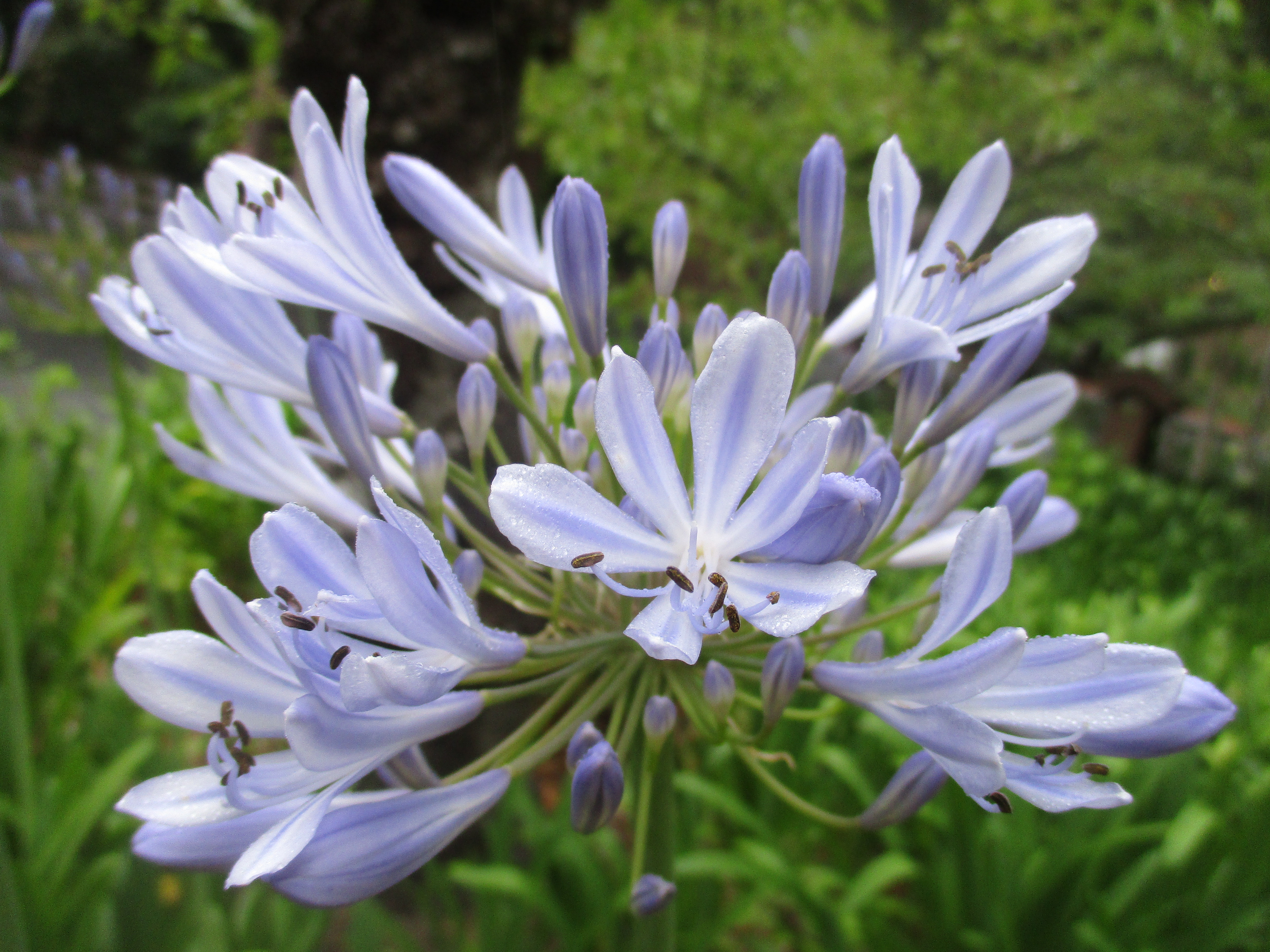
Lily of the Nile does not mind. It blooms in time for the Fourth of July regardless of what the rest of us are doing, or not doing. That is one of the two reasons why some of us know it as the ‘Fourth of July flower’. The other reason is that the nearly spherical floral trusses resemble exploding skyrocket fireworks. They are mostly blue, with some white. All that is missing is red.

The bloom in this picture is not exactly exemplary. It would have been larger, rounder, and likely more advanced in bloom if it had developed in a sunnier location. There are enough of them that we do not notice that most are somewhat diminutive. In autumn, many of the overgrown plants will be relocated to a sunnier situation where they can bloom as they would prefer too.

Lily of the Nile was the first perennial that I grew a significant quantity of. While in junior high school, a neighbor instructed me to remove a healthy colony of lily of the Nile that had grown obtrusively large in only twenty years. I could not just discard it, so chopped it into more than sixty pups, and planted it all over the neighborhood. Much of it is still there. A bit of it is here.

Back then, it was known as Agapanthus orientalis. In school, I learned it as Agapanthus africanus. I still do not know if they are two different species, or if one is just a variety of the other. I do know that mine are distinctly different from common sorts, with bigger and rounder floral trusses. The others have straighter stems that support their blooms batter, and finer foliage.

Six on Saturday: Closeups


This is not how we normally look at these flowers, stems and vegetables (fruits). They might look strange out of context. That was sort of intended. ‘Six on Saturday’ allows more freedom of creativity than the simple illustrations that I use for the gardening column. The last two are closeups of the same two gladiolas that were featured last week. Perhaps they show color better.

I should try this again for next week.

1. Lily of the Nile is the ‘Fourth of July Flower’. It blooms for the Fourth of July, and the florets radiate from the center of their floral truss like fireworks. I will write more about this at noon.P00704-1

2. Epiphyllum stems, like the stems of other cacti, do all the work of foliage. Because they are flat, they actually look like big and weirdly arching leaves. New tip growth is still rather blushed.P00704-2

3. Zucchini is too productive. I neglected to go down to harvest it for two days or so, and then found that some fruits had gotten as big as bowling pins. They are fortunately not too tough yet.P00704-3

4. Red willow is a weedy tree that I should not be growing intentionally. This is special though. I brought its cuttings from Reno. It will be coppiced, and not allowed to grow as a real tree.P00704-4

5. Gladiola got enough attention last week that I got closer pictures of them this week. This one seemed to be more purple or less blue last week, with just a bit of white, like elderly Grimace.P00704-5

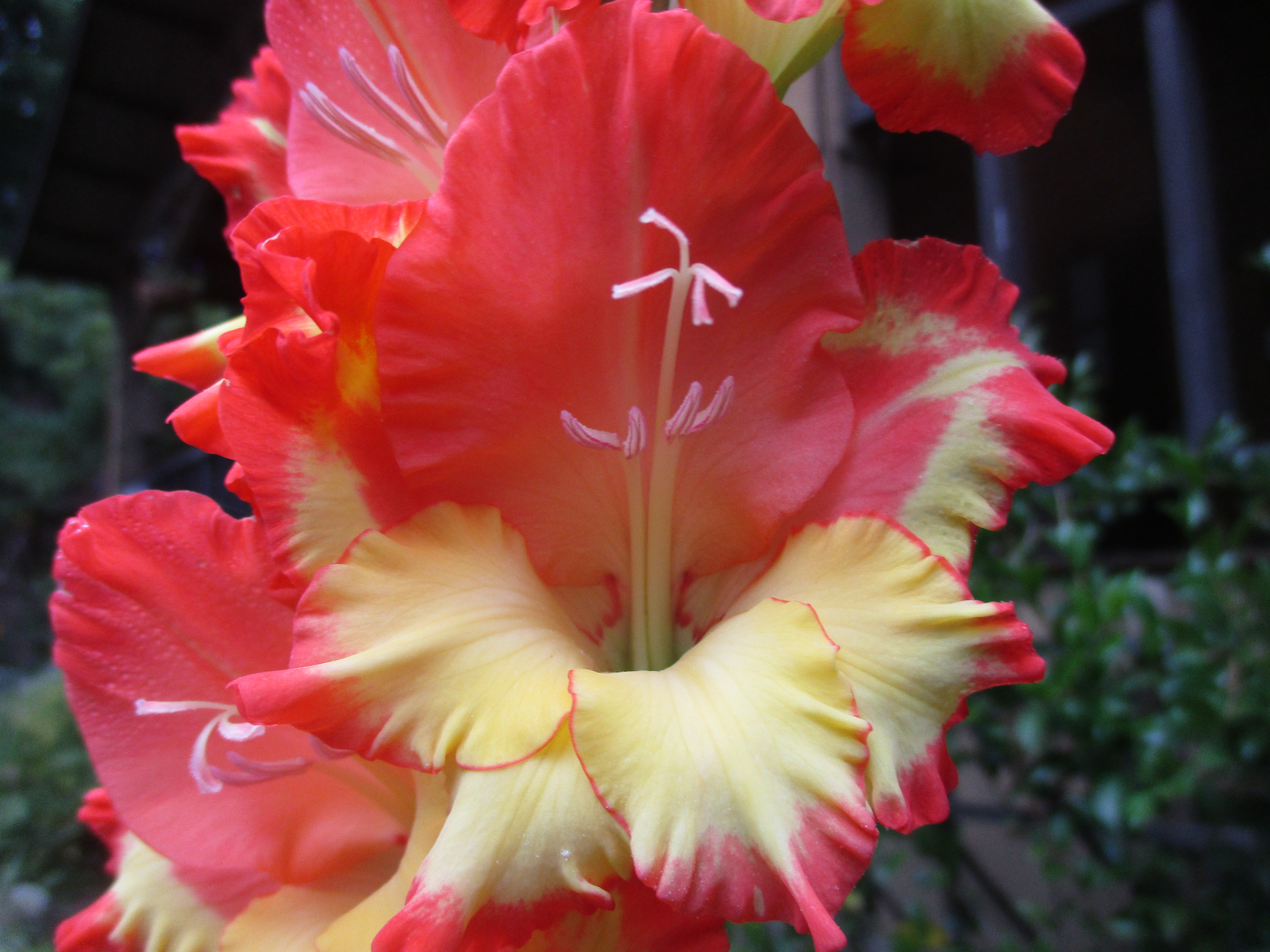
6. Gladiola are more fun when someone else selects bold colors that I would not consider. This flashy orange and yellow bloom is exquisite, and looks like Grimace’s friend, Ronald McDonald.P00704-6

This is the link for Six on Saturday, for anyone else who would like to participate:

https://thepropagatorblog.wordpress.com/2017/09/18/six-on-saturday-a-participant-guide/