Just like in April, there is too much blooming here in the Santa Cruz Mountains above Los Gatos to easily select only a few pictures. Again, these pictures are from work instead of my home garden. We are in USDA Zone 9, on the coastal side of the Santa Cruz Mountains, which is significantly less arid than the chaparral climate of the Santa Clara Valley below the inland side.
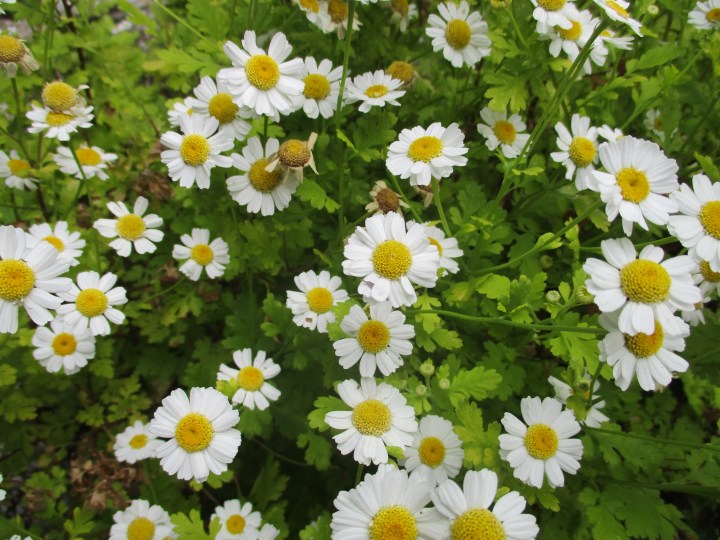
In the process of selecting pictures, I omitted most of any flowers that I have used or will use for other articles, as well as the new warm season annuals that will be more prolific later in the season. However, I might feature chamomile soon, and will post several pictures of rhododendrons on Saturday morning.
Mock orange, Philadelphus lewisii, is finished blooming. I wanted to get this picture of it before it was completely gone. These flowers were in a shaded spot, so lasted a bit later than the others. They are extremely fragrant, and extremely white. They contrast nicely with their rich green foliage and the surrounding evergreens. This mock orange is the state flower of Idaho. Mock orange of a different flavor blooms sporadically and later. This one is Pittosporum tobira, or something like it. It happens to be a very old shrub, so might predate the modern garden variety, or might be a slightly different species. It does not look quite right, but I can not explain it in any manner that would interest anyone. It is fragrant too, but with heavier fragrance.
 Roses are finishing their first phase, but are already starting their next phase. Most of these are floribundas, which are not my favorite, but work very well here were they are so visible. Quantity is more important than quality here in this prominent spot. We want them to bloom more regularly than to make flowers for cutting, although some do happen to make nice stems.
 Clematis is still in the can because it was only recently purchased from a nursery to be added where others are not filling in on their trellis adequately. Vines are such a bother. Most are too aggressive and crush their trellises. Those that are not so aggressive do not fill in well enough. Clematis blooms nicely this time of year, but rarely does much more once summer gets warm.
 Peruvian lily or alstoemeria do quite well here, and are certainly happier than in the Santa Clara Valley a few miles away. There are three here. A pink one can be seen in the background. There is also a salmon pink one. All three are the sort that used to be grown for cut flowers, but are difficult to obtain now. Most garden varieties are lower and mounding with shorter stems.
 Chamomile can naturalize here, but this garden variety does not seem to seed so profusely. Actually, it does not seem to seed at all. I have not yet seen any feral chamomile. The foliage of this variety was bright yellowish chartreuse when it was new, and is now fading to light green. It blooms most of the time. By the time it gets too green, it can get cut back and start all over.
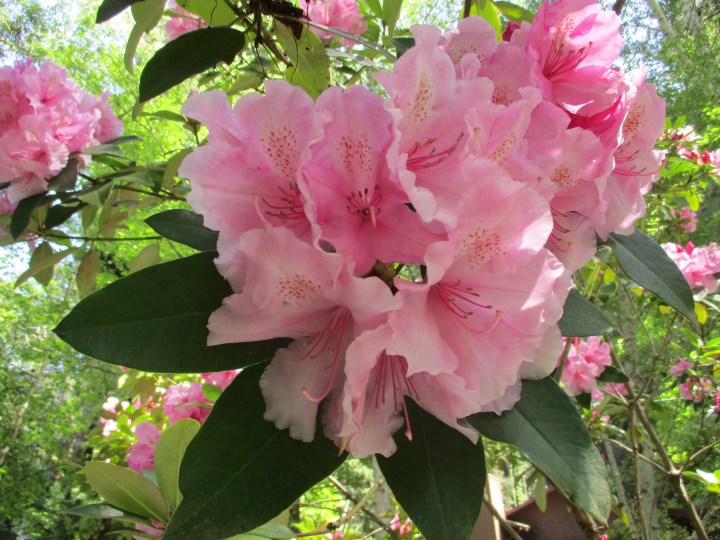
 Rhododendron is blooming all over. I took pictures of only this one flower because, as I mentioned earlier, I will post six more pictures of other rhododendrons on Saturday morning. I chose this particular flower because I also wanted to show how big the plant that produced it is. Other colors can be seen nearby. They are really happy here, even with minimal maintenance.
 This picture does not show off flowers as well as the rest of the pictures do, but shows how big the rhododendron tree is. Although it is not as broad as some of the others are, it is likely the tallest here. It is situated at least twelve feet below the bridge, and stands about twelve feet above it, so is at least twenty five feet tall! Even by my standards, it is a big rhododendron!
 Garden Bloggers all over America and in other countries can share what is blooming in their gardens on the fifteenth of each month on “Garden Bloggers’ Bloom Day”, hosted by Carol Micheal’s May Dreams Garden at http://www.maydreamsgardens.com
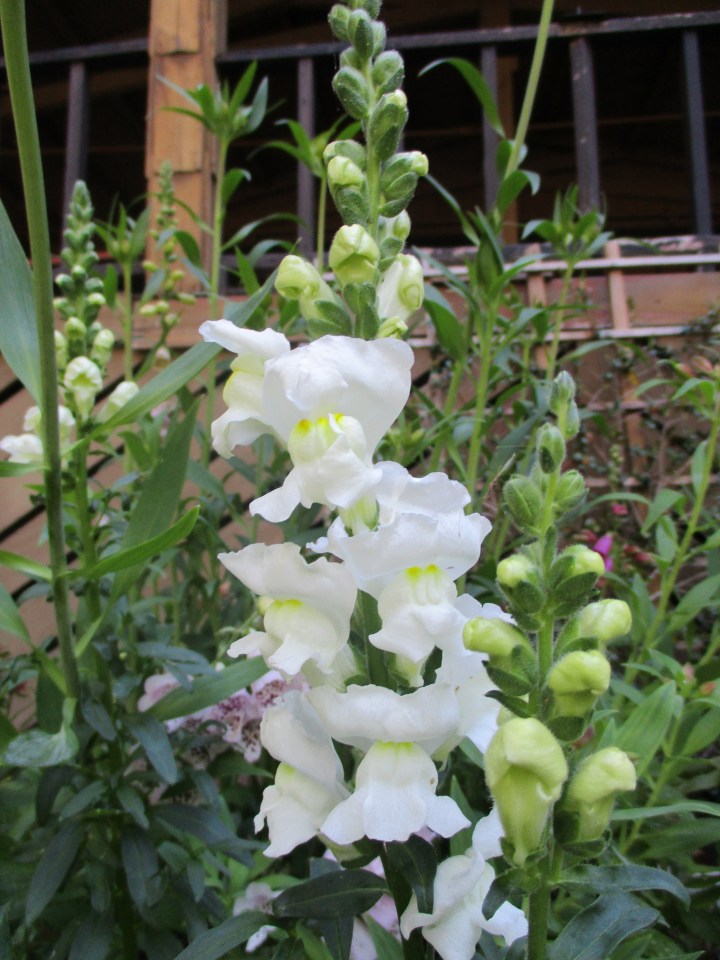 They are short term annuals in spring or autumn. Where winters are cold, they may last from spring through autumn. Where summers are hot, they may last from autumn through spring. So what are snapdragon, Antirrhinum majus, here? They can be either or both, depending on where and when they get planted. For most of us, they are a cool season annuals that finish before summer.
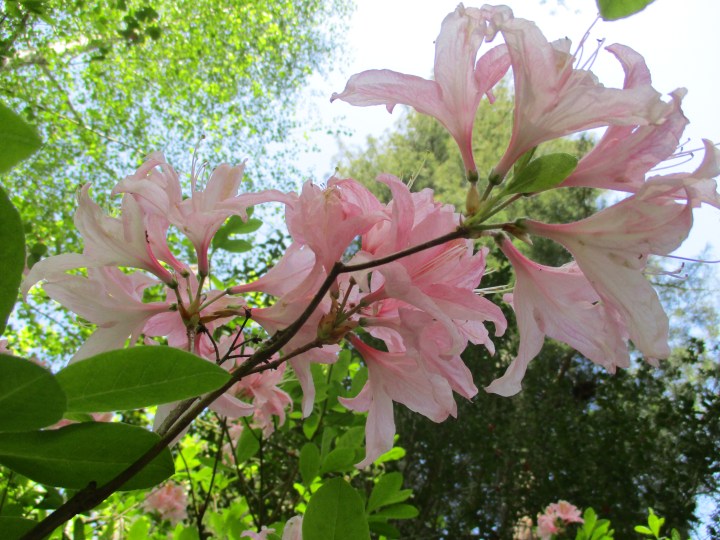
 They are not a myth. They are quite real. So are the related and similar deciduous azaleas. There are certainly not as popular or as diverse as the familiar evergreen cultivars, but they have their place.
 (The article from my weekly gardening column that is typically posted on Thursday was posted yesterday, which is why this article, which is more appropriate for Wednesday is posted today.)
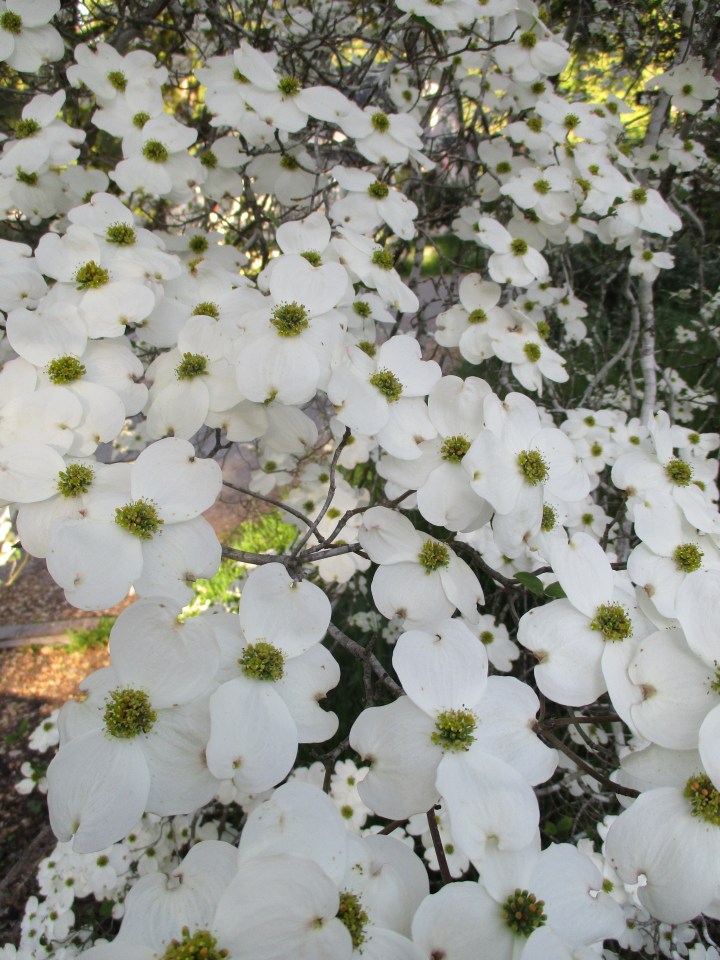 Flowering dogwood, Cornus florida, seems like it should be more popular here than it is. It blooms spectacularly in April. The foliage can color nicely in autumn. Mature trees are proportionate to medium sized or smaller suburban gardens. However, the limiting factor to their popularity in the local climate is that they are understory trees that prefer to be in the partial shade of larger trees.

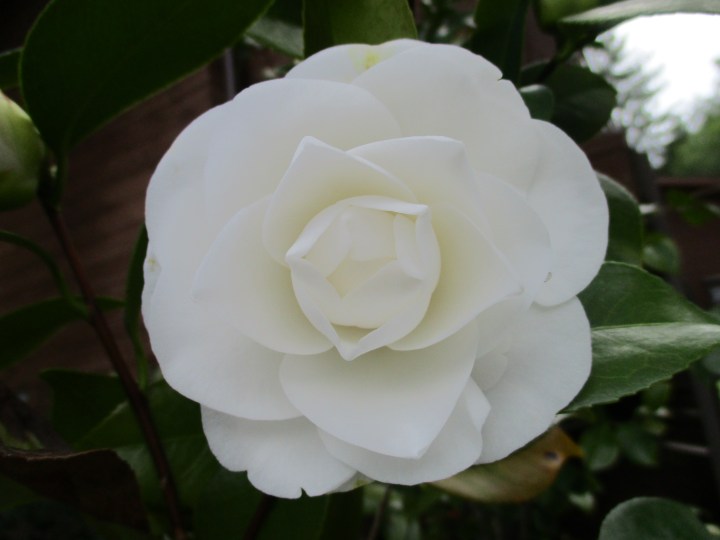

 What an unappealing name! That is probably why so many of us know it simply as ‘wild onion’ or ‘allium’. Few of us bother to get sufficiently acquainted with it to know it by the species name of Allium triquetrum, which is actually not much more appealing than ‘onion weed’. It is not really wild, but has naturalized as an invasive exotic, or in other words, ‘weed’. At least it is a pretty weed.
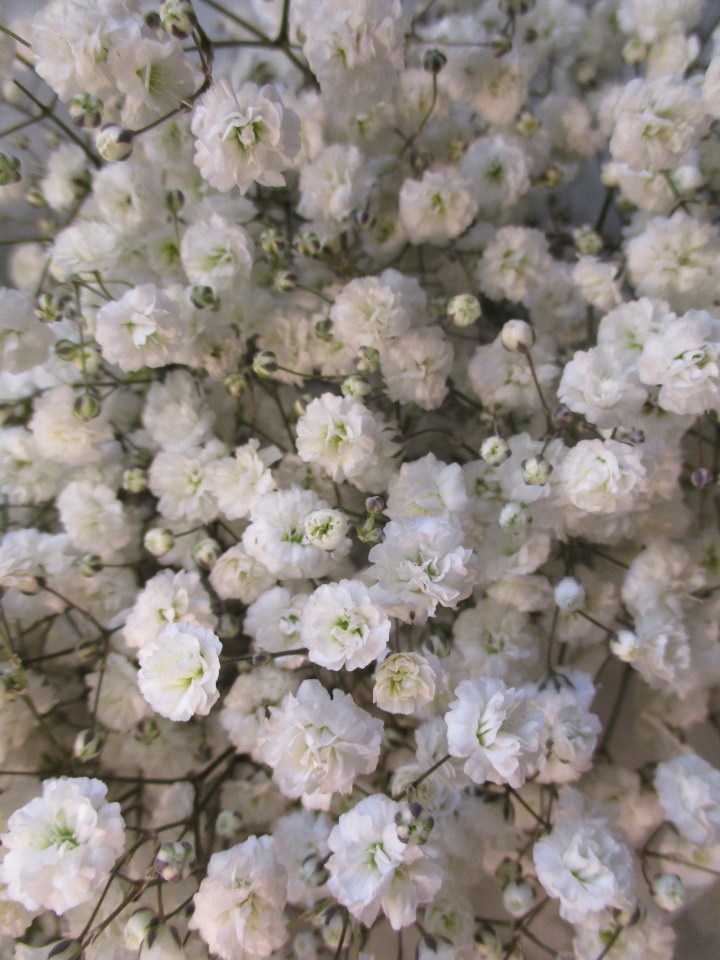 You might think that such a popular flower would be easy to get a picture of. Baby’s breath, Gypsophila paniculata, is everywhere, and almost a standard component of the mixed bouquets found in supermarkets. However, the flowers are so small and so sparsely arranged on thin stems, that they do not look like much in pictures. This picture is a closeup of a tightly bound bundle of bloom.
 This one is different though. It is not the characteristic homogeneous bright orange that California poppies should be. The orange in the middle is what the entire flower should look like. The outer yellow hallow is not typical.
 Before its new lime green foliage emerges, the otherwise modest star magnolia, Magnolia stellata, dazzles with a surprising profusion of crisp white, blushed or pale pink bloom. The three inch wide flowers have between a dozen and two dozen floppy petals (which are actually tepals). If the weather is right, the flowers might be slightly fragrant. If only bloom could last longer than it does!
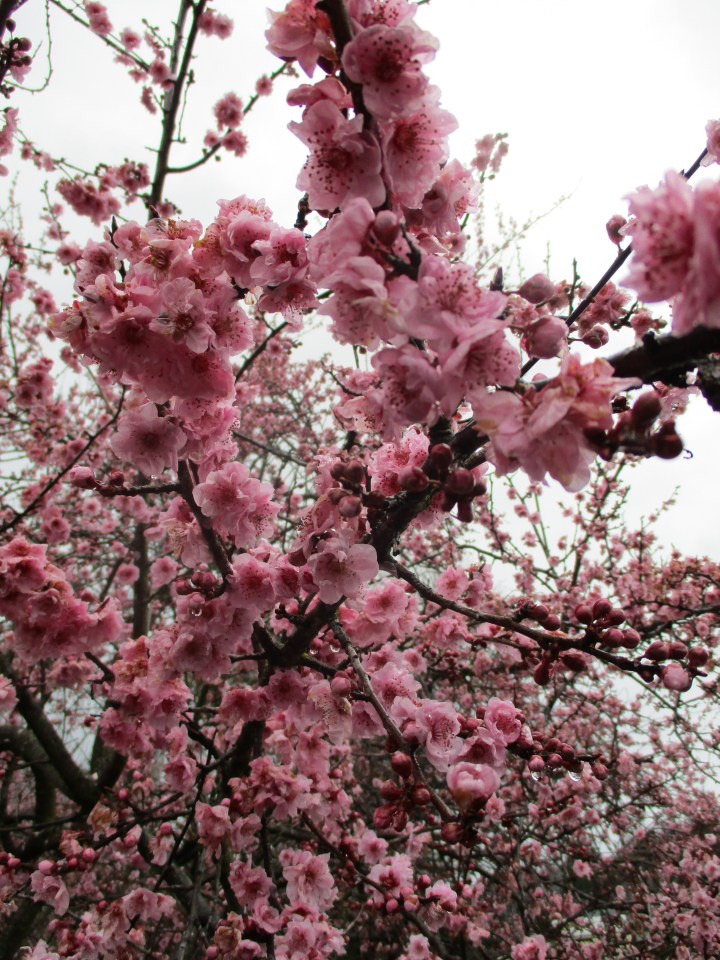 Of all the fruitless fruit trees, the purple leaf plum is the most popular here, but probably not for the obvious allure of its rich purplish or bronze foliage that maintains color until it falls in autumn. Purple leaf plum is simply so easy to grow. It does not need to be pruned as regularly as flowering peaches or flowering crabapples do. It is not as sensitive to sunscald as flowering cherries are.
 Tony Tomeo