There were no major projects this week that were interesting enough to get six pictures of. The best that I could do was get six random pictures of random features of the landscapes. I do not actually do much to cultivate flowers, but they happen to be components of the landscapes. Most are perennials that bloom on their own. Of course, I do not mind taking credit for them.
Some blooms started late while the weather was mild, but were then accelerated as the weather suddenly warmed. It seemed that several different types of flowers needed to be deadheaded at the same time. Zonal geraniums and lily-of-the-Nile are two of the most reliable perennials that bloom on schedule no matter what. Zonal geraniums bloom sporadically most of the time, and only bloom more while the weather is warm. Lily-of-the-Nile may start a bit early or a bit late, but is always in full bloom on the fourth of July. The blooms even look like exploding fireworks. More than two weeks later, their flowers are still in full color but will slowly start to fade. Phlox was a surprise for us.
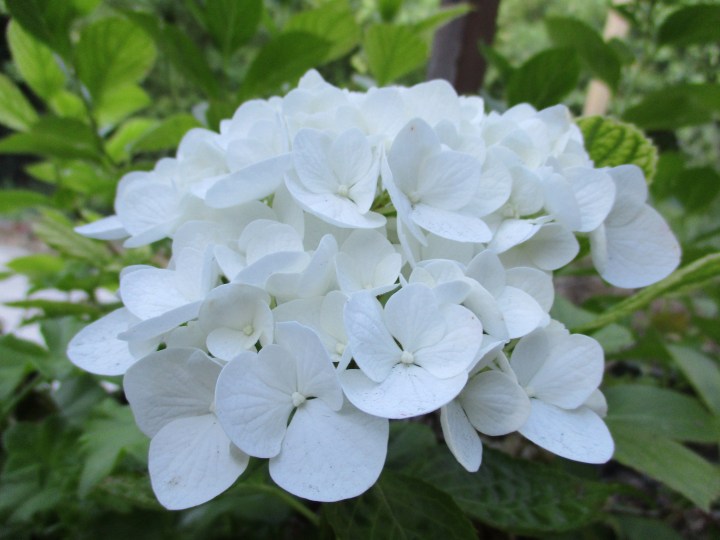
1. Can you guess what this bloom is?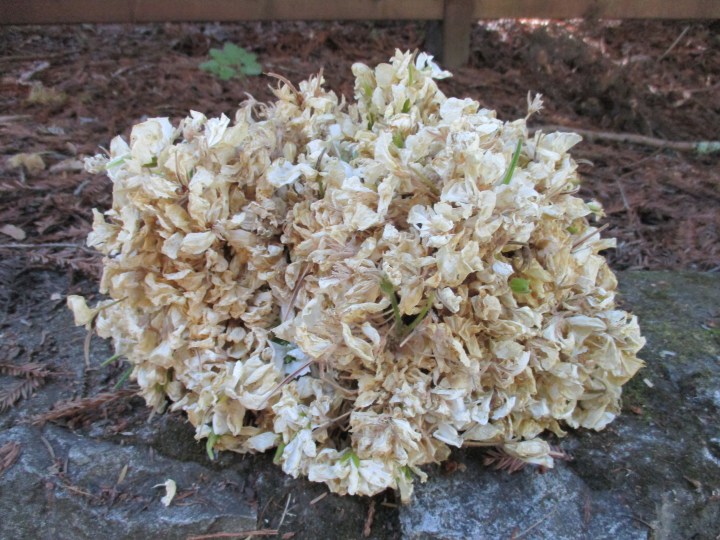
2. You can probably guess that this is phlox. It sure had my colleagues and I perplexed. We had never seen anything like it. Phlox is uncommon here. I would even say it is rare. No one knows why. It just is. I got a picture of it a few years ago only because I was intrigued by it in a neighboring landscape. It took a bit of effort to identify it, although I sort of suspected that it was phlox. It did not look quite like this phlox, and was lower to the ground. No one knows how this one got into the landscape. We suspect it arrived with the ‘fertilizer’ that the horses make for us.
3. Lily-of-the-Nile is still one of my all time favorite summer blooming perennials. I do not care how cheap and common it is. It is one of the first perennials I divided while I was in junior high school. I grew more than eighty new plants from a single old plant that needed to be removed. It was the old fashioned sort, with big blue flowers and big flabby leaves, perhaps bigger than these. I also like the white ones with the same big flowers and leaves, of course, because they are white. All the fancy modern cultivars are nice too, but not as excellent as the originals. I do like seeing the very pale blue ones in other gardens.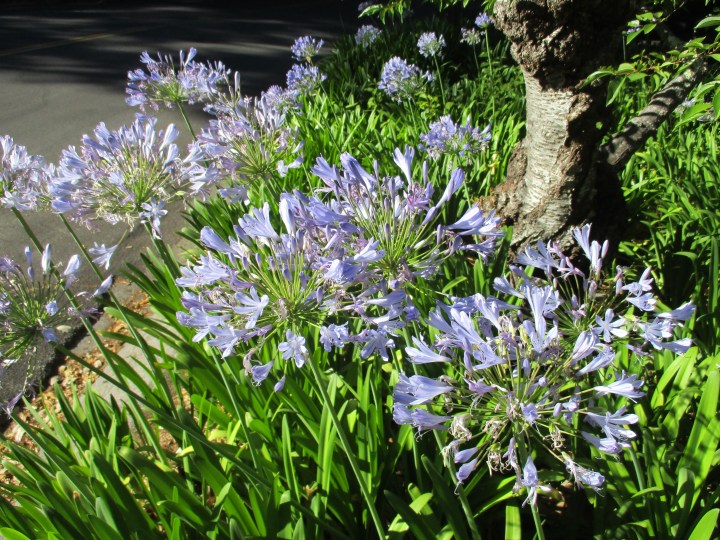
4. This zonal geranium has these small but cheery cherry red flowers, but it is really grown for the weirdly variegated foliage that is blurry in the background. I think that these flowers would look better against simple green foliage. There is another zonal geranium in another part of the landscape, with small peachy pink flowers and foliage that is variegated only with white. I am none too keen on the flower color, and I am not often too keen on variegation, but the foliage of that particular zonal geranium really looks sharp.
5. Himalayan blackberry is one of the worst and most invasive of the exotics weeds here. It develops huge canes that arch over and drop on top of other plants in the landscape. The wickedly sharp prickles (technical term for their thorns) are tortuous when trying to remove the canes. Even picking their berries is nasty business! There are a few berries ripening now, and they happen to be pretty good, but they are sooooooo not worth it.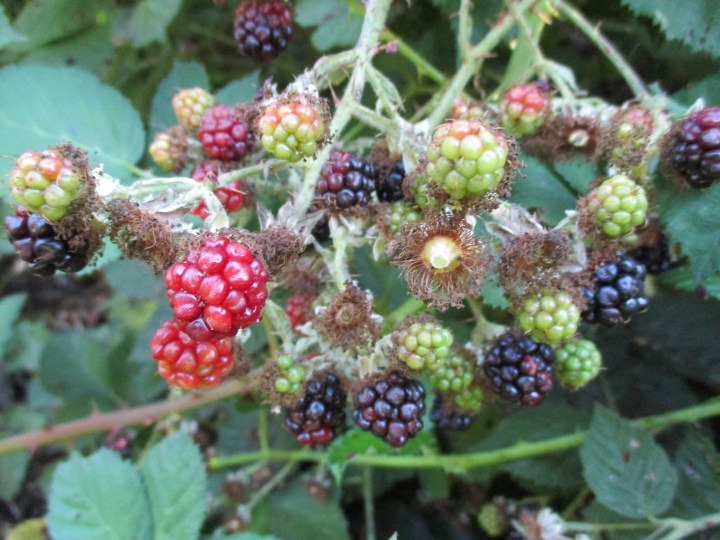
6. Chips needed to be dispersed into the newly landscaped areas that are partially visible in the background of this picture. These chips were free. They are made of recycled wood waste. For our purposes, they are sufficient. However, they include a few large chunks of wood and bits of metal. The chunk of metal in this picture is a short section of rebar. Some of the chips have paint on them. Some seem to be bits of old furniture. It makes one wonder where some of this material came from.
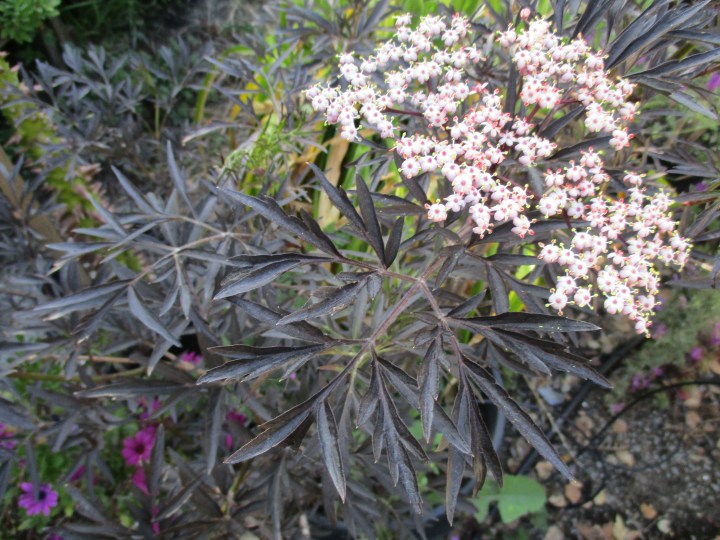
By the way, the bloom in the first picture #1 is merely a fist full of deadheaded white zonal geranium flowers all pressed together. White zonal geraniums do not readily drop their faded blooms like other zonal geraniums do, so they need to be deadheaded.
This is the link for Six on Saturday, for anyone else who would like to participate:
https://thepropagatorblog.wordpress.com/2017/09/18/six-on-saturday-a-participant-guide/
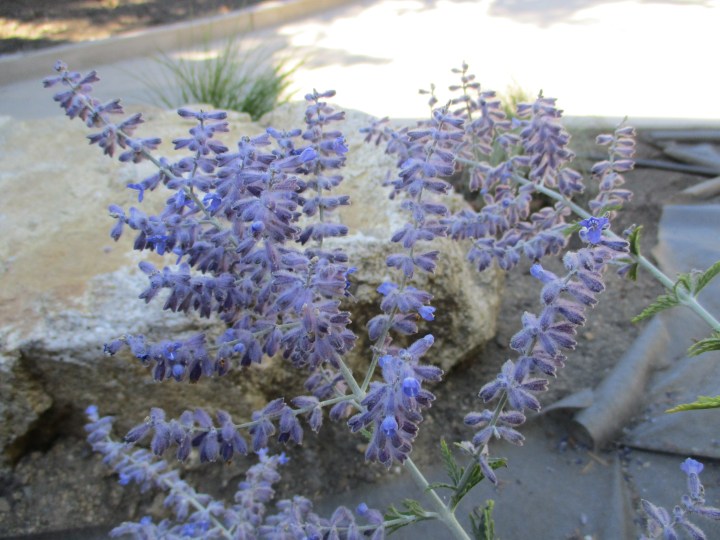
 2. Russian sage, Perovskia atriplicifolia, That sounds like ‘piroshki’. These and the rockrose #4 were 5 gallon plants, so are somewhat bigger than most other plants in the new landscape. They were not bothered by the change of the weather. Their faded denim blue flowers continue to bloom nicely. This is a plant that has been popular for a while, but that I have never grown. I tend to avoid trendy plants. However, my colleagues do not.
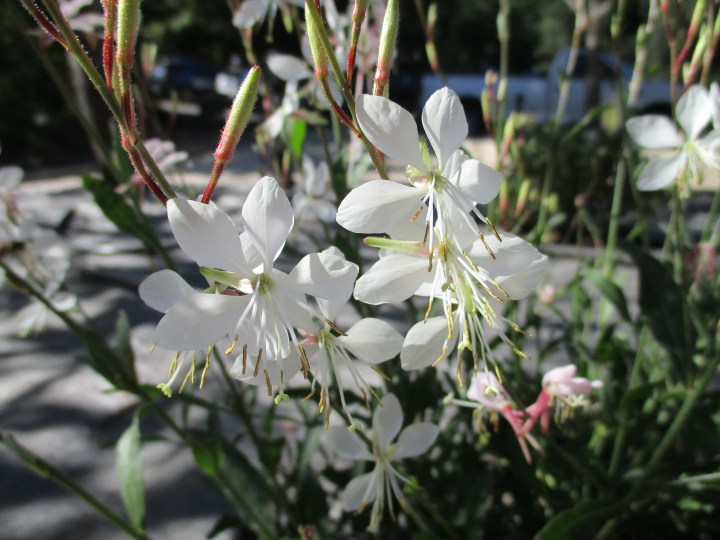
 3. gaura, Gaura lindheimeri, The common name is ‘white gaura’, but some are pink and some are darker pink that is almost red. I do not know if they are merely cultivars of ‘white’ gaura, or different specie. It seemed appropriate to omit ‘white’ from the name. Besides, that is how I learned it. This one can self sow enough to be an annoyance. Individual plants do not live very long, so a few feral seedlings can be selected to replace them.
 4. rockrose, Cistus cretisus, When I learned about rockrose back in the 1980s, we learned only two specie. One was white rockrose. The other was pink rockrose; and the pink rockrose did not look like this one. Now, there are too many to remember. Most do not have species name, but merely cultivar names. I really do not know if this really is Cistus cretisus. It just happens to look like it. I suppose I should have looked at the label.
 5. chocolate coreopsis, Coreopsis ‘Chocolate’, As I implied for #4, nomenclature is not what it used to be. It was standardized to simplify things, but is difficult to keep track of now with all the breeding and hybridizing, and botanists wanting to make a name for themselves by changing a name to something supposedly more accurate. I really do not know the species name of the chocolate coreopsis. It is known merely by the cultivar name.
 6. milkweed, Asclepias tuberosa, This one wilted rather badly in the warmth, but did not get roasted too much. The shriveled flowers in this picture are the worst of the damage. It is blooming more profusely now, and is developing strange seed pods. Milkweed is another trendy plant that caters to the butterfly gardening fad. I am not certain if I like the idea of planting something that is expected to get munched. It sure is colorful for now.
 This is the link for Six on Saturday, for anyone else who would like to participate:
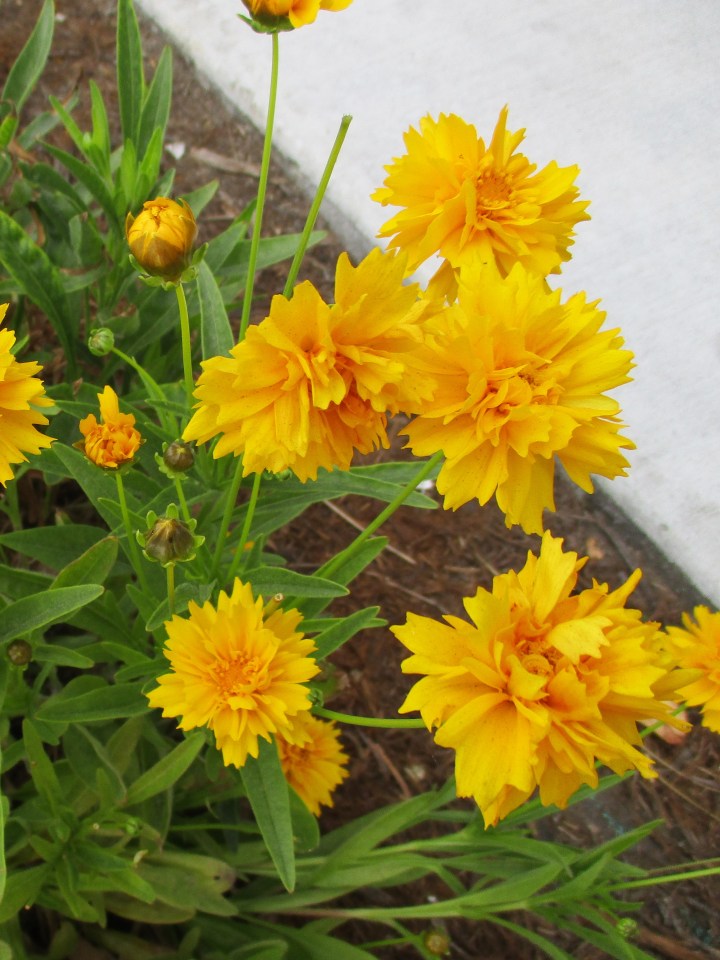 It is a common theme. Coreopsis was a much simpler group of only a few specie and cultivars in the 1980s. There are now too many hybrids and cultivars to keep track of. They have been bred so extensively that they do not produce viable seed like the old fashioned types that can self sow so nicely, and were more closely related to the unimproved specie that would be found in the wild.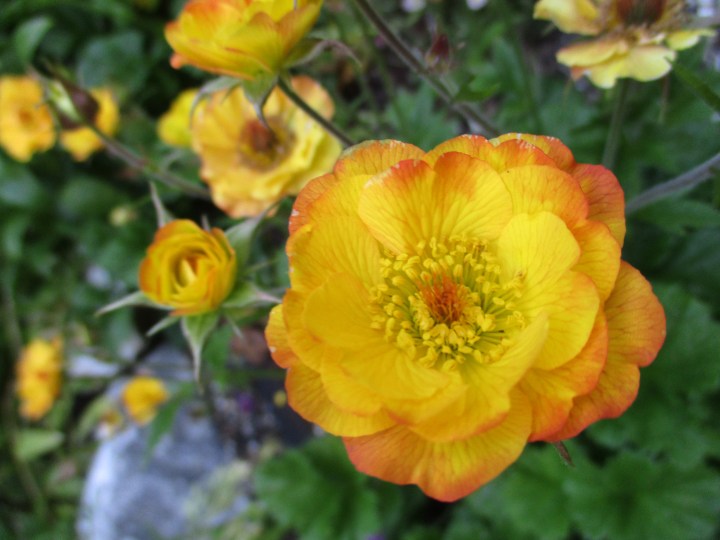
 Once it gets started in late spring, ‘Mystic Spires Blue’ salvia has potential to bloom until autumn. It only needs older floral spikes pruned away as they fade (deadheading) to stimulate new bloom. If it gets overworked and lanky without deadheading, it can be cut back in the middle of summer to start a new bloom cycle all over. It can get more than three feet tall and almost three feet broad.




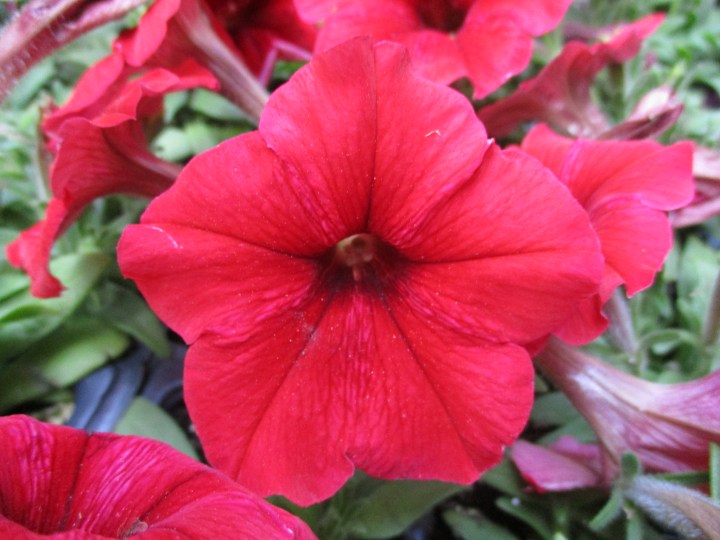
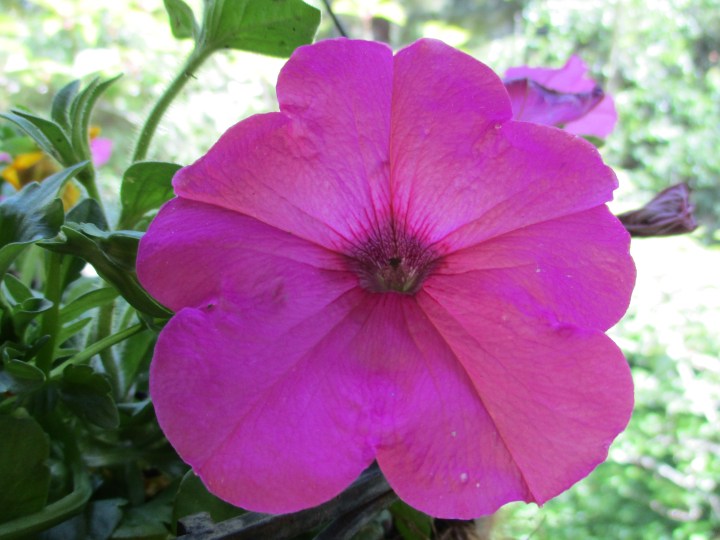
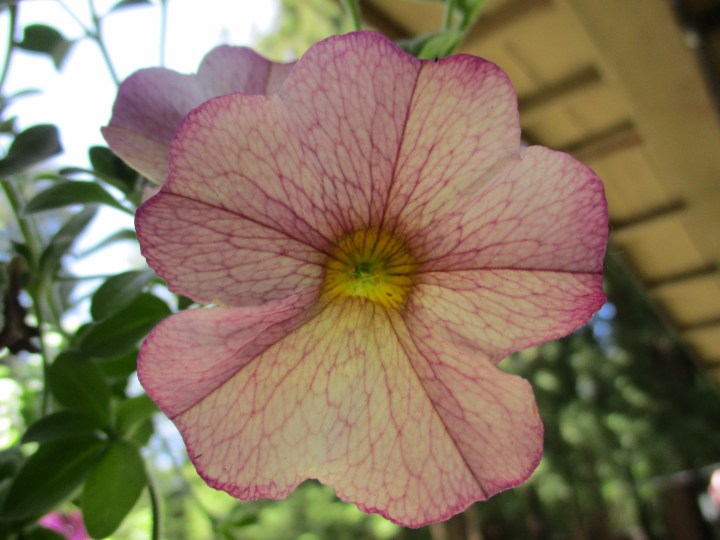
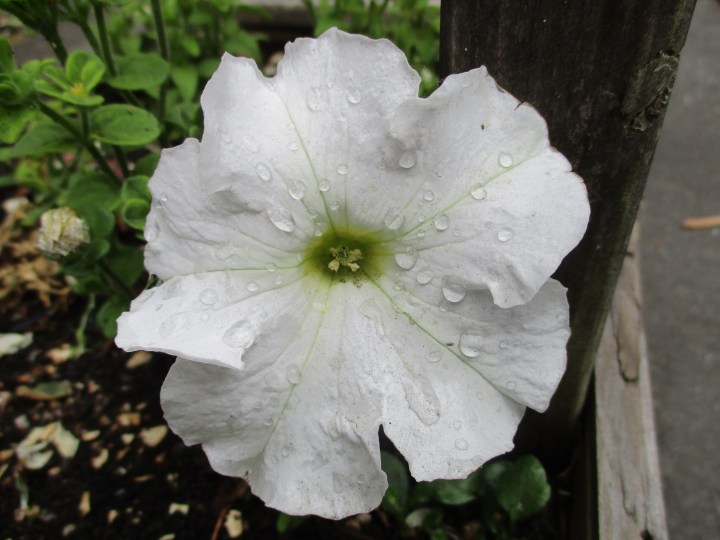
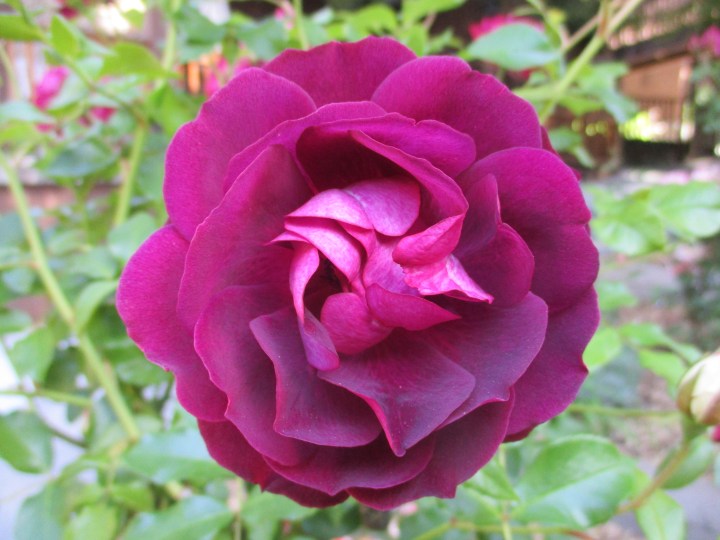

 Rarely planted but often found where the wildflowers grow, rose campion, Silene coronaria, has a way of sneaking in like California poppy or sweet alyssum do. It is so rarely planted that young plants are rarely available in nurseries. Seed is somewhat more available in nurseries, and quite available online. Although they self sow freely if allowed to go to seed, they are not really invasive.