Smokebush

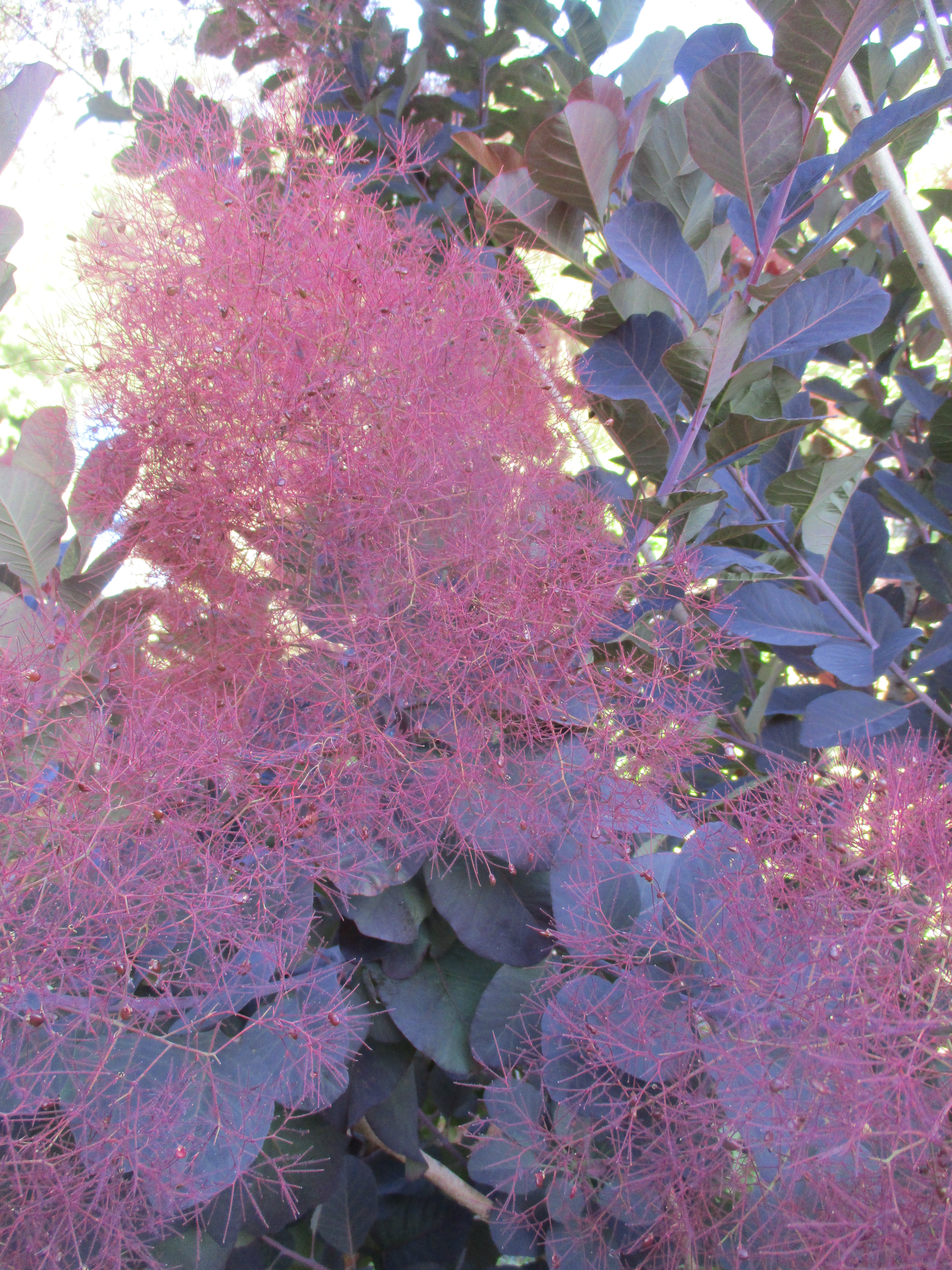
00624Cliche is barely avoidable regarding smokebush, Cotinus coggygria. It provides rich foliar color from spring until autumn, with uniquely billowy bloom through summer. Then, it provides exquisite fall color until winter. Then, it provides sculptural form of bare stems until spring. Smokebush ‘has it all’. . . almost. All the spectacle distracts from a lack of floral fragrance. Will anyone ever notice?

Foliage is rich purplish bronze, bright greenish yellow or olive green through spring and summer. Formerly common old fashioned cultivars with olive green foliage are now rare. Nowadays, most are rich purplish bronze. Fall color is fiery yellow, orange and red. The round leaves are about one to three inches long. Purplish to pale pinkish plumes of smoke-like bloom are a striking contrast.

The largest of smokebush grow at a moderate rate to more than fifteen feet high and wide. Most cultivars are more compact. They get wobbly in the ground if they grow too vigorously. Aggressive pruning during winter improves stability and enhances foliar color for the next season. However, minimal pruning of stable plants promotes bloom. Smoke tree wants full sun, but is not demanding.

Bronze Is The New Green

00624thumb
Color like this needs no bloom.

Bronze foliage will never actually replace green foliage. Even if there were enough variety of plants with bronze foliage to do so, too much bronze would look dreary. Bronze is just another option for foliar color in landscapes with significant vegetation. It is distinct from simpler green, and contrasts nicely with gold, blue, gray and variegated foliage. Some bronze foliage is variegated too.

There is all sorts of bronze foliage. Some is brownish bronze. Some is reddish. The most popular bronze foliage is rather purplish. It can be evergreen or deciduous. Annuals, perennials, shrubs, vines, trees and houseplants can provide bronze foliage. Most plants that provide bronze foliage are variants of plants that also provide bloom or fruit. Some are common. Others are rather rare.

Bronze foliage is not an advantage to plants that produce it. The most efficient foliage is green. Gray or bluish foliage has the advantage of reflecting some of the harsh sunlight that could scald it in severe climates. Otherwise, foliage that is a color other than green reflects more of the useful sunlight than it should. Incidentally, dark foliage also absorbs more of the sunlight that can scald it.

This is why many bronze plants are noticeably less vigorous than their greener counterparts. Although it would not be an advantage in the wild, diminished vigor makes some bronze plants more adaptable to compact home gardens. For example, the brownish bronze ‘Summer Chocolate’ silk tree will not get half as high and wide as the common silk tree. It can fit nicely into a cozy atrium.

Cultivars of purple leaf plum, Japanese maple and Eastern redbud are more familiar complaisant bronze trees. ‘Ruby Lace’ honeylocust is still quite rare. Bronze shrubbery includes smokebush, Chinese fringe flower, elderberry, barberry and ninebark. New Zealand flax, canna, houseleek, ajuga, mondo grass and coral bells are popular bronze perennials. Cordyline is a larger perennial.

Bronze foliage adds a bit more color than typical green foliage. In the right situations, it is appealing bold.

Horridculture – Green Is The New Black

P00523K-1
Foliage does not get any blacker than this.

This is not another of my many racial slurs for the renowned Southern Californian landscape designer, Brent Green. Believe or not, I endure many more of such slurs from him; so will not even bother putting something else out there that compels his retaliation. This is about Japanese laurel, Aucuba japonica, which is incidentally rather yellowish with rich golden variegation.

Japanese laurel, which is known as gold dust plant locally, is happy in partial shade, and will tolerate rather significant shade. That is a distinct advantage in landscapes that are dominated by so many big redwoods. Even without significant bloom, the bright yellowish foliage is an asset in visually dark parts of the landscapes. There probably should be more of it here than there is.

It is not one of my favorites though. It does not cooperate with pruning, and often produces overly vigorous growth that flops over in response to aggressive pruning. It shelters proliferation of snails in warmer climates. What I dislike most about it is the prominent blackening of some of the foliage that is too exposed to direct sunlight. It is so unsightly in front of the cheery gold.

After pruning a few overly vigorous stems that became floppy, I noticed how quickly the lush and fresh new foliage blackens from exposure. The pictures above and below were taken about two hours after the stems were pruned. The stems grew in a notably shaded situation, and were then left out on a hot black bed liner without shade, which of course accelerated the process.

I should have gotten a picture of the foliage as I found it, with all exposed surfaces blackened, as if spray painted where they were on the black vinyl. The portions of the leaves that remain green were shaded under other foliage.

P00523K-2
Shaded parts are still fresh and gold dusted green. Exposed parts are roasted to a crisp.

Variegated Foliage Brightens Shady Spots

50401thumb
Variegation contrasts nicely with dark green.

Up at high elevations and out in deserts, where sunlight is most intense, plants can actually get more exposure than they need. The bluish or grayish glaucous foliage of the Colorado blue spruce from the Rocky Mountains, and the century plant from the Sonoran Desert, is actually designed to reflect a bit of sunlight so that the foliage does not scald.

Plants from foggy coastal areas, and understory plants that naturally live below the canopies of larger trees, do the opposite. They are deep green to absorb as much sunlight as possible. This is why Monterey pine and Monterey cypress are the same shade of dark green; and why most ferns are such dark green. Only tree ferns that stand above lower plants are naturally light green.

This can make it difficult to brighten a dark spot in the garden, since most lightly colored foliage wants an abundance of sunlight. White or lightly colored flowers would theoretically work nicely, but generally are neither permanent nor abundant where shaded. Golden foliage, like that of golden elderberries, golden arborvitaes and golden junipers, is greener in the shade.

Variegated foliage is different. Even if the green parts of the foliage are greener where well exposed than where shaded, the variegated parts are always variegated. Some plants are variegated with white. A few are variegated with yellow. Those that tolerate shade can brighten shaded spots nicely, or at least add a bit of contrast to dark green.

Even if the big pastel flowers of variegated angel’s trumpets and variegated hydrangeas do not stand out as well as they would against deeper green foliage, the foliage provides its own contrast. A concern with hydrangeas, as well as variegated dogwoods, is that they are deciduous, so lack foliage through winter.

Variegated Pittosporum tobira and variegated euonymus have smaller evergreen leaves. Variegated ivies are nice ground covers. On a smaller scale, so is dead nettle. Euonymus, pittosporums and ivies will sometimes need to have more vigorous unvariegated stems pruned out before they overwhelm and replace variegated growth.


Ferns Are Made For Shade

50304thumb
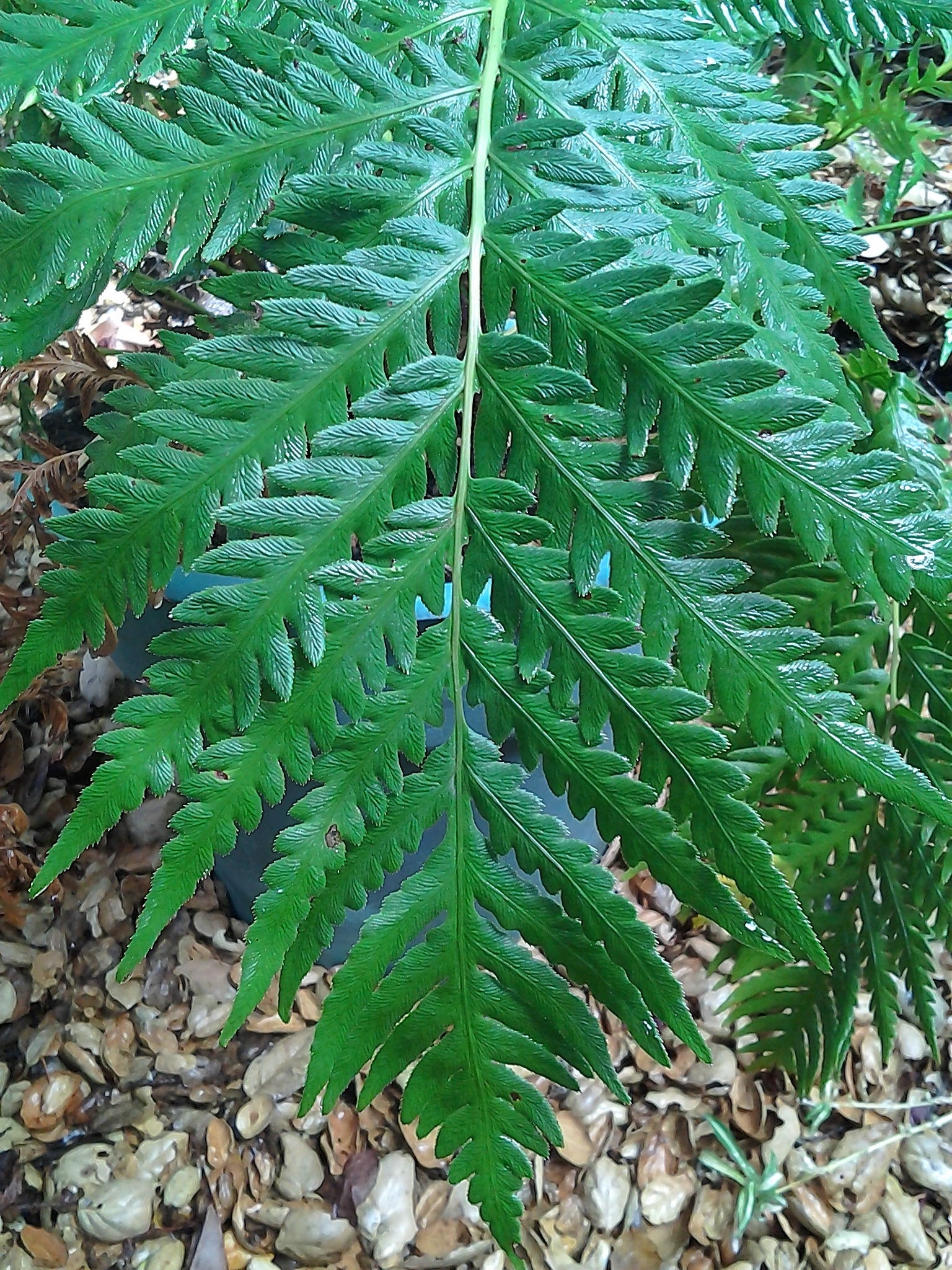
Ferns are famous for distinctive foliage.

Without color or fragrance of flowers, ferns provide some of the most distinctive foliage in the garden. They do not turn color in autumn. Only a few tree ferns develop sculptural branch structure. Yet, they do their job well, and many are happy to do so in spots that are a bit too shady for other plants.

Almost all ferns are low perennials that produce foliage that arches outward from the center. Some can get quite broad. A few tree ferns grow upward on trunks (although the trunks are merely tough roots that grow through decomposing stems). Australian tree ferns can get quite tall and broad where sheltered from wind.

The staghorn fern is a weird epiphyte that naturally clings to tree trunks or rock outcroppings where it collects organic debris that falls from trees above. In home gardens, it is popularly grown on wooden plaques or as a hanging plant. Hanging plants do not necessarily need pots, or sometimes engulf their pots as they grow.

Leaves of ferns are known as ‘fronds’, and with few exceptions, are intricately lobed or divided into smaller leaflets known as ‘pinnae’, which are arranged on opposite sides of leafstalks known as ‘rachi’ (or singularly as ‘rachis’). The staghorn fern has unusually branched but otherwise unlobed fronds. The bird’s next fern has has distinctively simple fronds without any lobes or pinnae.

Most of the popular ferns are naturally understory plants that grow below larger plants. Even most tree ferns grow amongst larger trees. This is why so many ferns tolerate shade so well. In fact, many prefer partial shade, and will actually fade or scorch if too exposed. However, it is also why so many ferns prefer rich soil with an abundance of organic matter.

Maidenhair, rabbit’s foot, bird’s nest, holly, Boston and a few other ferns are popular as houseplants. Because home interiors are a somewhat arid for them (lacking humidity), some ferns like to be misted daily. Ferns respond well to regular but light application of fertilizer. Too much fertilizer can roast foliage.

Because ferns are not expected to bloom, nitrogen (which can inhibit bloom for some plants) is not a problem. Ferns that are out in the garden can therefore get fish emulsion or a bit of the same sort of nitrogen fertilizers that keep lawns green.

Foliage Is Meant For Weather

00311thumb
Lush foliar houseplants enjoy occasional rinsing.

Foliage needs sunlight for photosynthesis. Foliage needs air for respiration. Roots need moisture to sustain foliage. Houseplants can technically get all of what they need from the confinement of their pots within the interiors of homes and other buildings. They only require sufficient moisture to be delivered to them, and sufficient sunlight from windows. The air is the same that we all utilize.

However, there is no substitute for nature. While hydroponics and synthetic light facilitate yet more deprivation of what is natural, the plants involved would appreciate more consideration. Without exception, domesticated plants are descendants of plants that grew wild somewhere. Those that dislike local weather would be pleased with the weather of their respective ancestral homelands.

Most of the popular houseplants that are grown for their lush foliage originated from tropical forests. Many were understory plants that prefer the shade of larger trees. That is how they tolerate the relatively shaded interiors of buildings. Now that they are here as houseplants, they appreciate shelter from frost. They probably miss rain, humidity, sporadic breezes and tropical warmth though.

Rinsing tropical foliage plants in the shower eliminates some of the dust that they accumulate where air stagnates. Rinsing them out in the garden is even better because it does not make such a mess in the shower. What is even better than both of these options is allowing a gentle rain to rinse the foliage. Plants only need to be moved to a windless spot prior to an expected rain shower.

The weather was much too cool earlier in winter. There will be no rain later in summer. This time of year, and again next autumn, the weather is safely mild; and eventually, a few showers are likely. Timing is critical. Plants should be brought out just prior to rain, and brought in before the weather gets sunny. Foliage that has always been sheltered is very sensitive to scald from direct sunlight.

Saucers and pots can be cleaned while outside. Crowded plant can be repotted.

Evergreens From Our Home Gardens

91225thumbEvergreens are popular for home décor through winter because there is not much blooming so late in most other American climates. The tradition endures, even though cut flowers of all sorts can easily be purchased from common supermarkets nowadays. Here on the West Coast, where several varieties of flowers can bloom through winter, evergreen foliage is as popular as it ever was.

Christmas trees are the most substantial form of traditional seasonal evergreens. The biggest wreaths occupy less space, and are mostly confined to walls rather than floors. Garlands can be big too, but their less defined form fits more neatly into limited space. For many of us, neatness is not a priority. Displays of evergreens and all the associated ornamentation can get quite elaborate.

Not many of us grow our own Christmas trees. It is more practical to purchase them as if they are very large cut flowers. Most but not all of us who hang garland likewise procure it already made. Some purchase prefabricated wreathes too. However, it is possible that more of us create our own. Other bits and pieces of evergreens are unlikely purchased. Most are from our home gardens.

Most of the pine, spruce, fir, hemlock, yew, arborvitae, and various genera known collectively as cedar, that are traditional evergreens in other regions are scarce here. A few other exotic species of pine, as well as natives, are more common in some landscapes. There are also different cedar and arborvitae. Blue spruce can sometimes be found. Douglas fir is native to nearby mountains.

Other regions lack the abundance of various cypress and juniper that are common here, as well as coastal redwood. (Redwood foliage is perishable once cut.)

There are no rules about cut evergreens anyway. Within reason, we can cut and bring in whatever we happen to find to be appealing in our gardens. We should cut the foliage properly though, as if pruning. Also, we should not cut too much from any particular spot, but instead harvest evenly over a large area. It helps to take pieces that are out of view, or that need to be pruned out anyway.

Deck the Halls

P91215-1English holly is politely naturalized here. This means that, although naturalized, it is not aggressively invasive, and does not seem to be too detrimental to the ecosystem. It is only annoying to see out in forests, far from the landscapes that the seed escaped from, and wonder if it has potential to significantly compete with native vegetation. It would be better if it were not there.

At least it is pretty. In refined landscapes, it happens to be one of my favorites for distinctively glossy and prickly foliage. There is nothing else like it. Variegated cultivars are just as striking, with a bit of color for situations where there is already plenty of rich dark green. Female plants produce a few bright red berries. Older or distressed plants might produce more than others.

So, I have mixed feelings about this overgrown English holly tree that I must eventually cut down. In the picture above, it is evident that it is not the prettiest. It is a sparsely foliated thicket of tangled inner stems on an uninterestingly straight and bare trunk. It occupies a prominent position where there should be something of a friendlier disposition. It doesn’t contribute much.

However, it does produce an abundance of delightfully bright red berries. I got these pictures while collecting berries to decorate the buffets and tables of the big dining room across the road.

If it were in my garden, I would probably pollard it back to the bare trunk or perhaps just a short stump, and allow it to regenerate with fresh new foliage. Such a procedure would eliminate the tangled thicket of bare interior stems, but would unfortunately inhibit berry production for at least a few years while new growth matures. I just do not want to give up on it completely.P91215-2P91215-3

Autumn Weather Prompts Foliar Color

91127thumb(alternate)Mild climates allow more flowers to bloom through autumn and winter here than in most other parts of America. That is why cool season annuals like pansies and violas are so popular. Cyclamen can be planted now too. None will be obscured by snow. By the time cool season annuals start to fade, warm season annuals will be replacing them. There is something to bloom in every season.

There are a few disadvantages to mild climates, though. Many plants rely on significant winter chill to stay on schedule. Inadequate chill limits the cultivars of apples and pears that are productive here. Not many spring bulbs will naturalize. Prior to winter, some deciduous plants are hesitant to resign to dormancy until they experience a chill that is cool enough to convince them it is autumn.

Some deciduous plants recognize a specific temperature as credible evidence of a change of seasons. Others want a specific temperature to be sustained for a specific duration or repeated for a few nights. Shorter days and longer nights are taken into consideration by species who want to confirm what they deduce from the weather. Different plants use different methods of observation.

That is why deciduous plants who develop foliar color before defoliating in autumn do so on their own terms. Weather conditions that promote excellent color among birches may not be the same that cause flowering cherries to color well. Warmth and minimal humidity that sometimes prompt premature and blandly colored defoliation of sycamores might enhance later color of sweetgums.

Sweetgum, Chinese pistache, flowering pear and ginkgo are the most reliable trees for foliar color in autumn. Ginkgo turns only brilliant yellow. The others exhibit an excellent mix of yellow, orange and red. Crape myrtle can be about as colorful, but is not always as reliable.

Of course, there is more to these and other deciduous trees than their colorful foliage in autumn. After all, they are trees. Their particular characteristics and appropriateness must be considered before adding any of them to a landscape.91127thumb

Slow Color

P91110Autumn is not much to brag about here. It supposedly got just cool enough at night for the minimal requirement of frost, at 32 degrees, but no one noticed. It has been getting to the low 80s during the day. There has been no rain yet, and none is in the forecast. As bland as such weather seems, it is not at all out of the ordinary. Autumn often arrives later than it does elsewhere.

Consequently, autumn foliar color is not much to brag about either. There are only a few trees that reliably develop good color, such as sweetgum, pistache, flowering pear, crape myrtle and maidenhair tree (ginkgo). As reliable as it is, maidenhair tree provides only bright yellow, without the oranges and reds that the others exhibit. None are exhibiting significant color just yet.

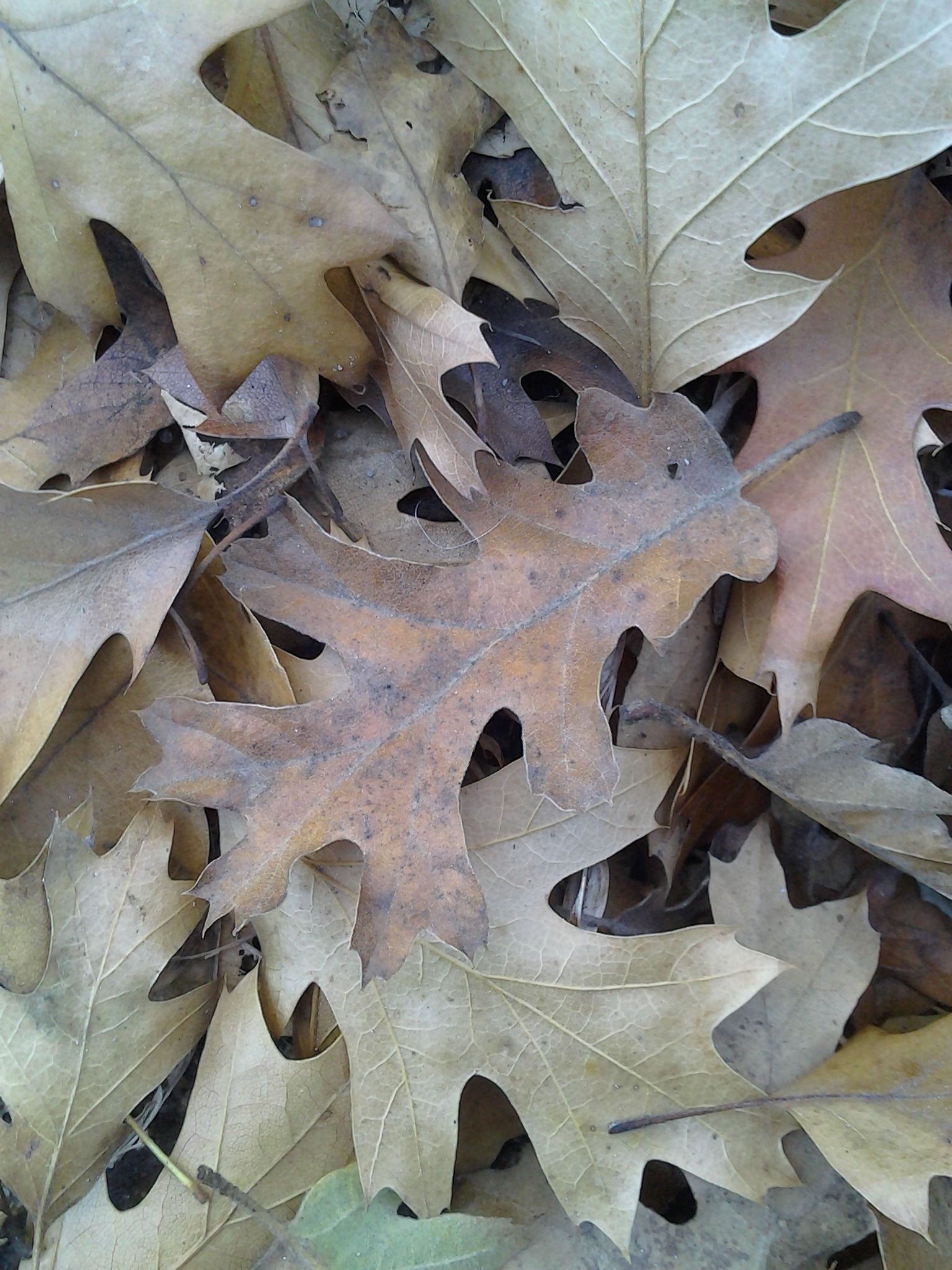
There are several other trees that have potential to develop good color, but are not as reliable about doing so. Birch can get almost as brilliant yellow as maidenhair tree does, but does not do it every year. Red oak may turn brilliant orange with a bit of brownish red mixed in, but only every few years or so. On rare occasion, even London plane (sycamore) shows off burnt orange.

Every species has a distinct personality. They each respond differently to different variables. Weather conditions that stimulate good color among flowering cherries may not stimulate good color for bigleaf maples. Dogwoods that colored so well at about the same time last year as the tulip trees, are already nearly bare after minimal color, while the tulip trees are mostly green.

Every few years, if mildly but suddenly chilled, these cottonwood develop a brighter yellow, with less blotching. With slower and drier chill this year, they are deteriorating and falling without much yellow at all.P91110+