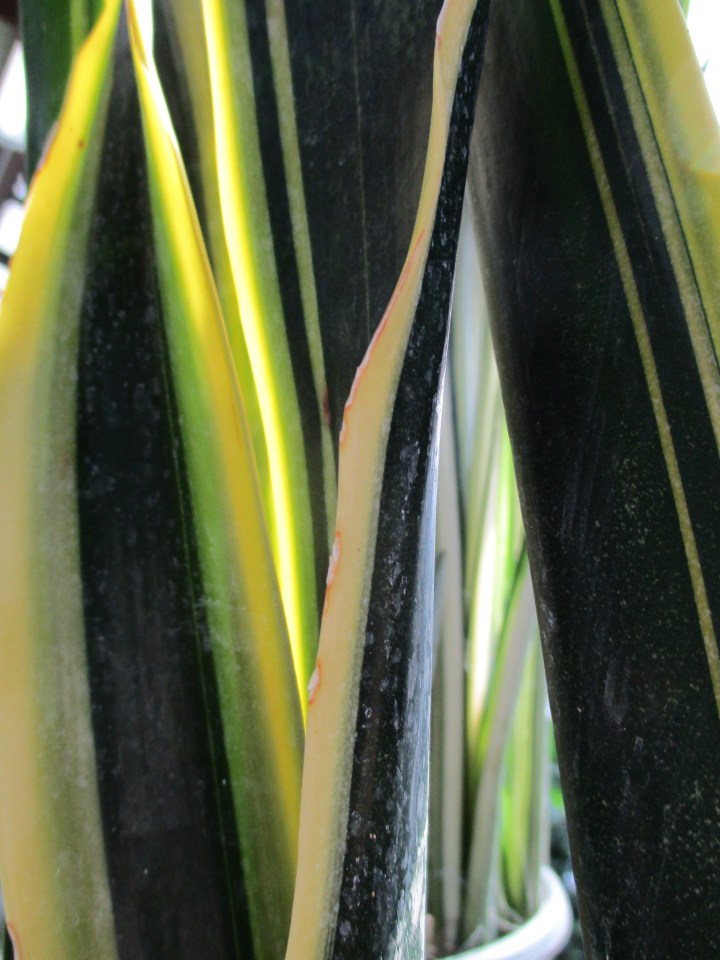
Foliage needs sunlight for photosynthesis. Foliage needs air for respiration. Roots need moisture to sustain foliage. Houseplants can technically get all of what they need from the confinement of their pots within the interiors of homes and other buildings. They only require sufficient moisture to be delivered to them, and sufficient sunlight from windows. The air is the same that we all utilize.
However, there is no substitute for nature. While hydroponics and synthetic light facilitate yet more deprivation of what is natural, the plants involved would appreciate more consideration. Without exception, domesticated plants are descendants of plants that grew wild somewhere. Those that dislike local weather would be pleased with the weather of their respective ancestral homelands.
Most of the popular houseplants that are grown for their lush foliage originated from tropical forests. Many were understory plants that prefer the shade of larger trees. That is how they tolerate the relatively shaded interiors of buildings. Now that they are here as houseplants, they appreciate shelter from frost. They probably miss rain, humidity, sporadic breezes and tropical warmth though.
Rinsing tropical foliage plants in the shower eliminates some of the dust that they accumulate where air stagnates. Rinsing them out in the garden is even better because it does not make such a mess in the shower. What is even better than both of these options is allowing a gentle rain to rinse the foliage. Plants only need to be moved to a windless spot prior to an expected rain shower.
The weather was much too cool earlier in winter. There will be no rain later in summer. This time of year, and again next autumn, the weather is safely mild; and eventually, a few showers are likely. Timing is critical. Plants should be brought out just prior to rain, and brought in before the weather gets sunny. Foliage that has always been sheltered is very sensitive to scald from direct sunlight.
Saucers and pots can be cleaned while outside. Crowded plant can be repotted.
 Evergreens are popular for home décor through winter because there is not much blooming so late in most other American climates. The tradition endures, even though cut flowers of all sorts can easily be purchased from common supermarkets nowadays. Here on the West Coast, where several varieties of flowers can bloom through winter, evergreen foliage is as popular as it ever was.
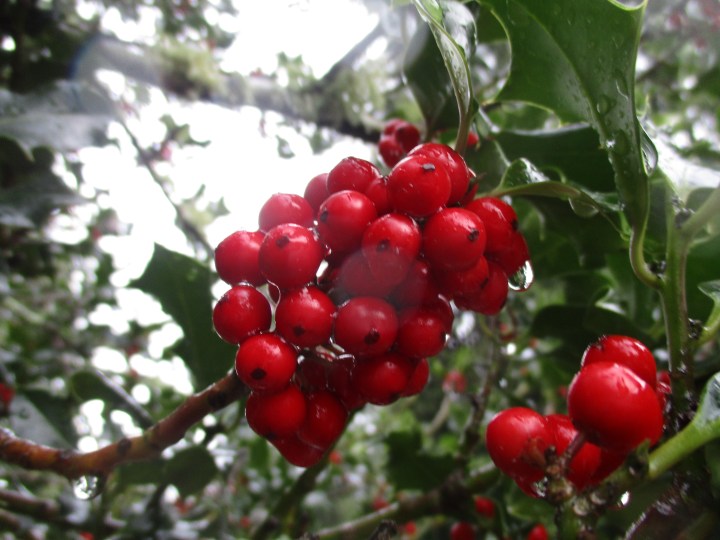
 English holly is politely naturalized here. This means that, although naturalized, it is not aggressively invasive, and does not seem to be too detrimental to the ecosystem. It is only annoying to see out in forests, far from the landscapes that the seed escaped from, and wonder if it has potential to significantly compete with native vegetation. It would be better if it were not there.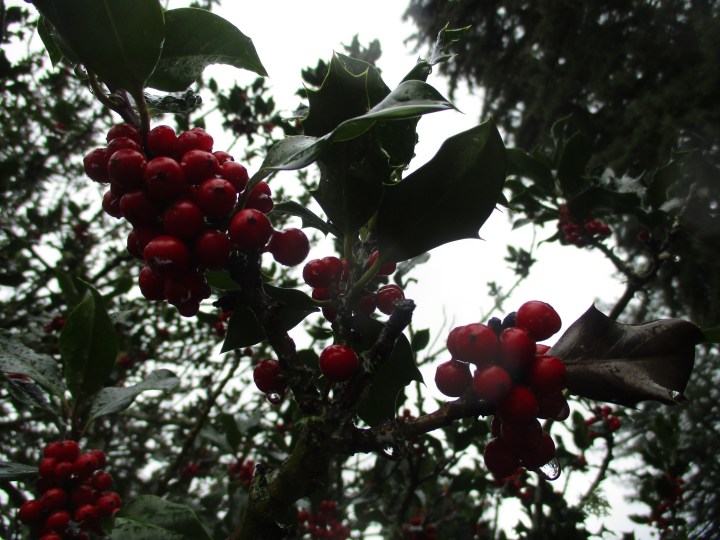
 Mild climates allow more flowers to bloom through autumn and winter here than in most other parts of America. That is why cool season annuals like pansies and violas are so popular. Cyclamen can be planted now too. None will be obscured by snow. By the time cool season annuals start to fade, warm season annuals will be replacing them. There is something to bloom in every season.
 Autumn is not much to brag about here. It supposedly got just cool enough at night for the minimal requirement of frost, at 32 degrees, but no one noticed. It has been getting to the low 80s during the day. There has been no rain yet, and none is in the forecast. As bland as such weather seems, it is not at all out of the ordinary. Autumn often arrives later than it does elsewhere.
 It is easy to mistake various cultivars of Dyckia for diminutive relatives of Agave or Yucca. They form stout rosettes of rigid leaves with wickedly sharp terminal spines. Their comparably nasty but incurved marginal teeth resemble those of most species of Agave, but are generally more abundant. Surprisingly though, Dyckia are instead related to bromeliads. They just happen to be xeric.
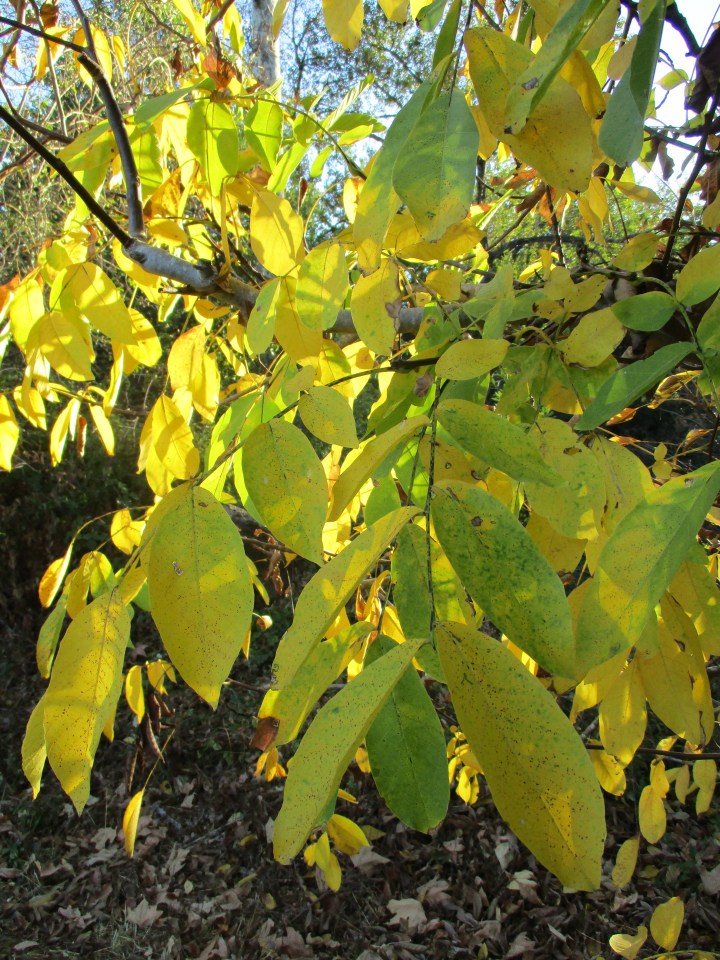
 Pretty soon, as autumn weather starts to get cooler, some deciduous plants will develop brilliant color before defoliating for their winter dormancy. Throughout the rest of the year, evergreen plants with gold, silver, bronze, bluish, purplish, reddish or variegated foliage are more colorful than common green foliage is. A few deciduous plants with colored foliage turn different colors in autumn.
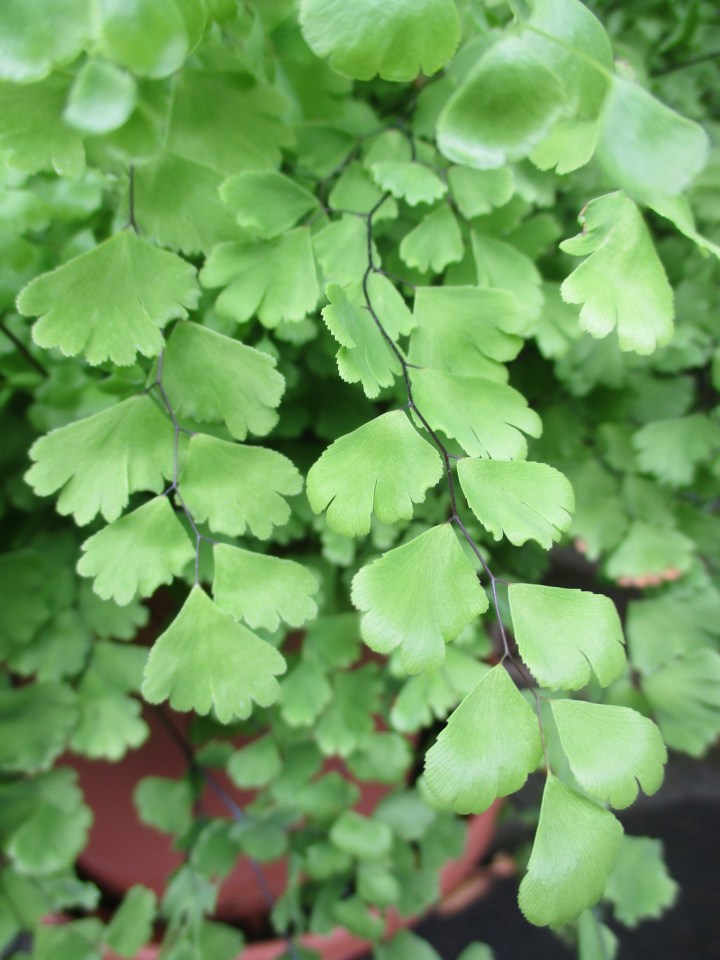 Some of us might remember Delta maidenhair fern, Adiantum raddianum, as a houseplant that was popular for terrariums in the 1970s and into the 1980s. Although quite happy in terrariums, it eventually gets big enough to crowd other plants in such tight spaces. It prefers to be potted on a porch, or in a regularly watered and sheltered spot in the garden. It tolerates quite a bit of shade.
 Many of the most popular plants are expected to bloom to add color and fragrance to the garden. Many others are grown to produce fruit or vegetables. Some are appreciated for their foliar color in autumn. Big trees are grown for shade. Turf grasses are grown as lawn. Evergreen shrubbery makes hedges. It seems that all plants perform particular tasks in the gardens which they inhabit.
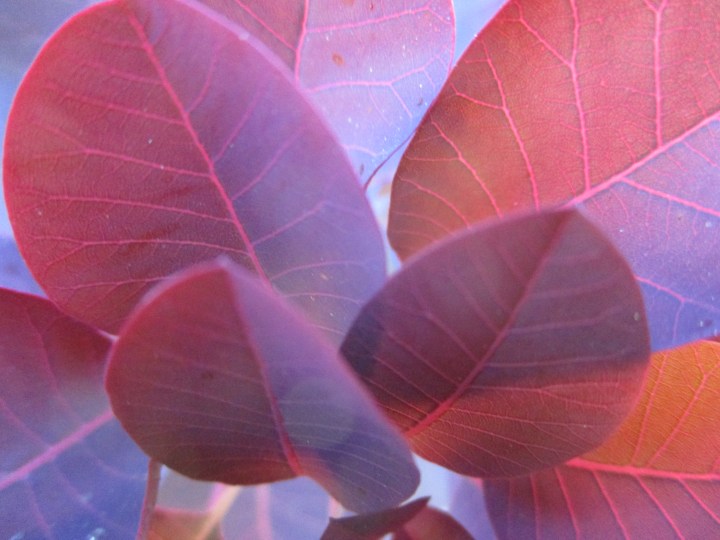 Autumn foliar color is not the concern yet. It develops later as deciduous plants defoliate for winter. Purplish, reddish, yellowish, bluish or gray foliar color that can be seen now is provided by plants that are colorful while actively growing. Almost all of this sort of foliage is most colorful when it is young and fresh, early in spring. Then, through summer, some of the best foliar color fades.

