Common or Soft Rush

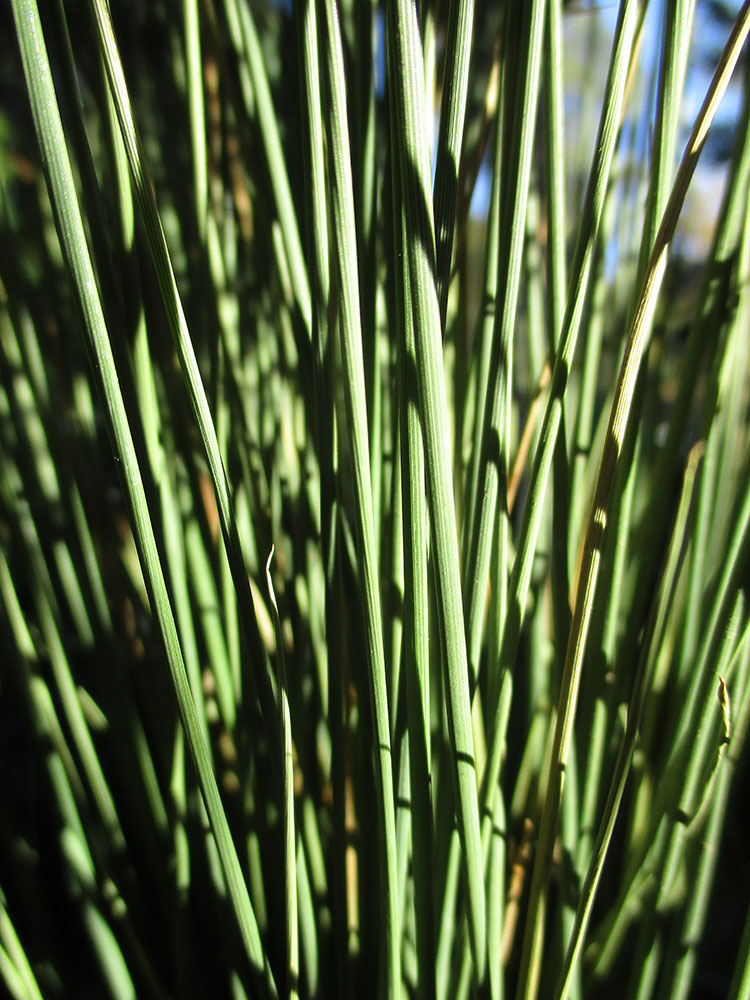
Physiologically, common rush is more interesting than it looks.

There was nothing common or soft about Rush, the innovative hard rock band of the seventies and eighties. Juncus effusus is only known as soft rush because the spiky and sharply pointed ‘foliage’ appears to be stiff, but is actually quite soft. It is common because in has such a vast natural range, including North America, Europe, Asia, Africa and Australia. It does not like hard rock, but instead prefers rich and moist soil, and will even be happy in soil that is too damp for other plants. Common rush tolerates a bit of shade but prefers good exposure. Because winters are too mild to freeze it back to the ground naturally, overgrown or discolored common rush can be cut down and then left to regenerate as winter ends.

The distinctive ‘foliage’ is not actually foliage. The minute leaves are unimpressive brown scales that do not do much at the base of each of the many upright green stems that function like foliage. The top six inches or so of each of these spike like stems is actually a bract that extends above the dangling but uninteresting tan or dingy yellow flowers that hang to the side. Collectively, the stems and bracts form distinctively sculptural clumps that radiate upward and outward. Healthy clumps are not much more than three feet high and wide.

Leopard Plant

Leopard plant looks like it would be at home in the garden of Kermit the Frog.

The differences between false ligularia (Farfugium spp.) and real ligularia (Ligularia spp.) are so vague that the the names are commonly interchangeable. Leopard plant happens to be a real Ligularia japonica. The round and very glossy leaves are dark green with random spots of sunny yellow. Mature plants form rather dense foliar mounds about a foot wide and nearly as high. Prominent floral trusses that bloom in late summer or early autumn are a pleasant surprise, even though the small and sometimes feeble daisy flowers are typically only dingy gold, and often have brownish centers. Both ligularia and false ligularia are understory plants that naturally prefer the shelter of larger plants, so they prefer partial shade. They also like relatively rich soil and regular watering, although once established, they can recover efficiently if they happen to briefly get dry enough to wilt.

Crested Ligularia

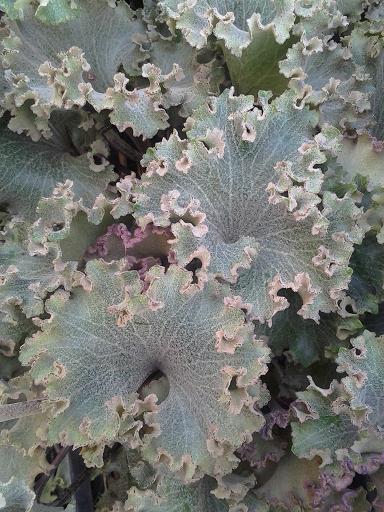
Crested ligularia is not what it seems.

There are so many excellent ligularia to choose from. Crested ligularia is not one of them. Although it is an excellent and distinctive perennial, it is not really a ligularia. It is Farfugium japonicum ‘Cristata’ (which actually sounds more like a hybrid of a Volkswagen and a Toyota). The slightly fuzzy and coarsely ruffled rounded leaves form grayish green mounds more than a foot high and wide. Gold trusses of small daisy flowers bloom late in summer or early in autumn. Regular watering and partial shade keep foliage full. Harsh exposure can discolor foliage during the warmest summer weather. Frost is not often a problem.

‘Green’: The ‘Other’ Autumn Color

The color is better this year than it was when this was written three years ago. Nonetheless, foliar color here is not as impressive as it is where weather is already cooler.

tonytomeo's avatarTony Tomeo

P71202After reading so much about the exquisite foliar color that most everyone else in the Northern Hemisphere gets this time of year, I must admit, I can get rather envious of those who experience four seasons instead of just two. The abundance of spring in the Southern Hemisphere does not help. Why have I not found a garden blog from Ecuador or Indonesia so that I have something to point and laugh at? It just isn’t fair.

Well, now I have something to brag about.

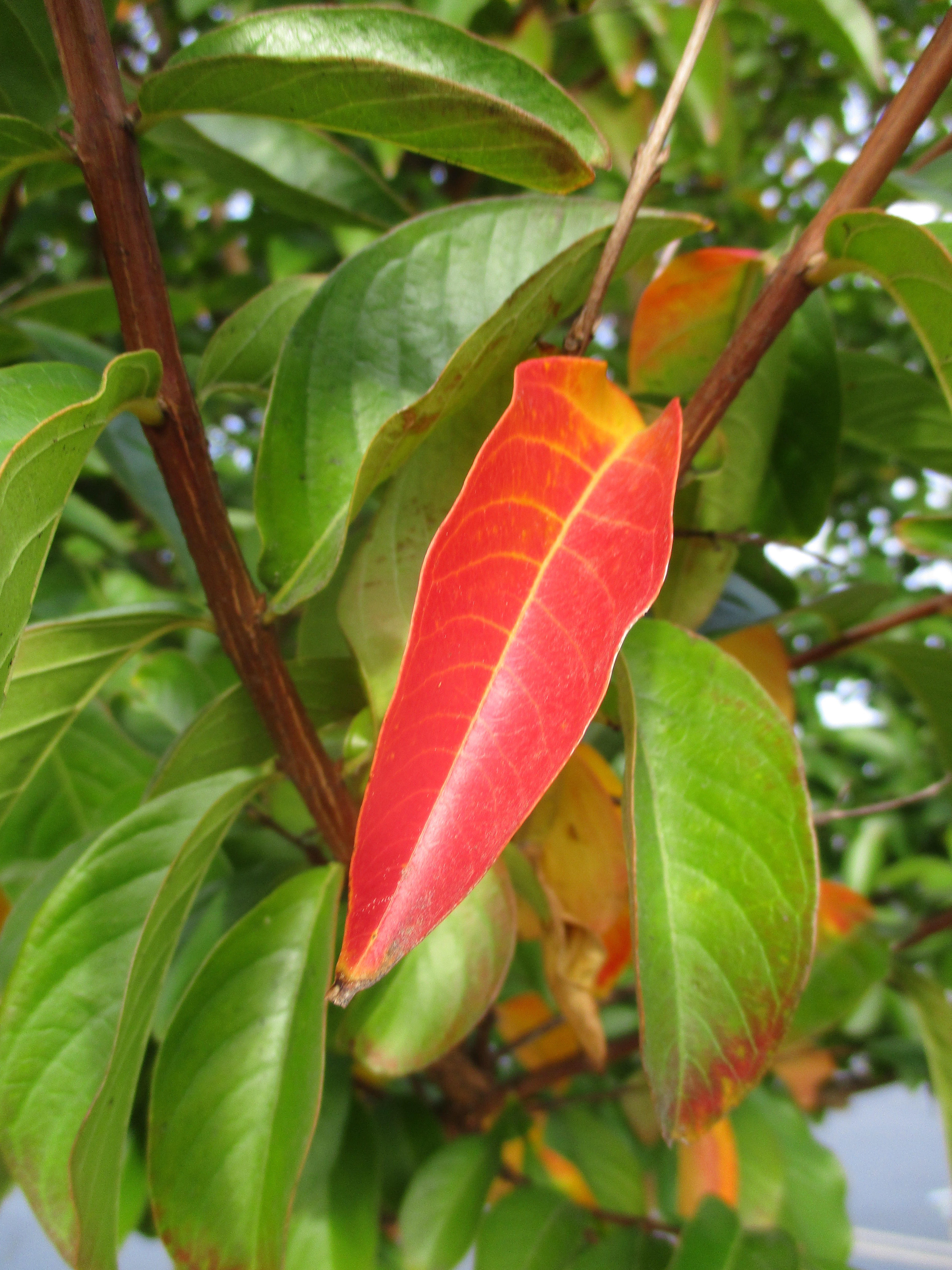
I found this bright red leaf on a crepe myrtle in town. Isn’t it pretty? Go ahead, you can tell me. It is gorgeous, RIGHT? Go on; say it! Say it NOW! LOUDER!

Soon, all the foliage behind it will be turning red and orange with maybe a bit of yellow. Can you see it? I think some of those leaves are starting to consider…

View original post 155 more words

Collect Fallen Leaves Before Winter

Falling leaves will soon be accumulating in gutters.

The problem with all the colorful foliage that adorns so many of the deciduous trees in autumn is that it does not stay in the trees too long. Combined with all the other less colorful deciduous foliage, as well as whatever evergreen foliage happens to fall this time of year, it will become quite a mess by winter. Rainy and windy winter weather will only make it messier by bringing down even more foliage!

Contrary to popular belief, many evergreen trees are just as messy as deciduous trees are. Instead of dropping all their foliage in autumn or winter, most evergreens drop smaller volumes of foliage throughout the year. The mess is less obvious since it sneaks up slowly, but can accumulate over a few months. Only a few evergreen trees drop much of their foliage in more obvious seasonal phases.

Debris from evergreen trees is actually more likely to be a problem for plants below. Pines, cypresses, firs, spruces, cedars, eucalypti and many other evergreen trees produce natural herbicides that inhibit the emergence of seedlings of plants that would compete with them in the wild. In landscape situations, this unfortunately interferes with lawns, ground covers and annuals. Besides walnuts and deciduous oaks, not many deciduous trees use this tactic.

Regardless, any foliar debris can be a problem if allowed to accumulate too long. Large leaves, like those of sycamore, can accumulate and shade lawn, ground cover and some dense shrubbery, and can eventually cause mildew and rot. Finely textured foliage, like that of jacaranda or silk tree, can sift through most ground covers to the soil below, but can still make a mess on lawn.

Before rainy weather, debris should be cleaned from gutters and downspouts. Because some foliage continues to fall through winter, gutters will likely need to be cleaned again later. Flat roofs and awkward spots that collect debris, such as behind chimneys, should also be cleaned.

Gutters at the street are more visible and accessible, so do not often accumulate enough debris to be a problem, but may need to be cleaned if they become clogged with debris washed in by the earliest rains. Fallen leaves should be raked from pavement so that it does not get dangerously slippery, or stain concrete too much.

Deciduous Trees Defoliate Through Autumn

Too many fallen leaves get messy.

September 22 was the equinox. Here in the Northern Hemisphere, days will get slightly shorter as nights will get slightly longer. The intensity of the sunlight will diminish as the sun moves farther to the south. The weather will of course get cooler. In this particular climate, the rainy season will begin. Deciduous plants, as well as some evergreen plants, will respond accordingly to the changes.

Deciduous plants defoliate as they go dormant for part of the year. A few defoliate through hot and dry summer weather. Otherwise, almost all deciduous plants defoliate for dormancy through cool and stormy winter weather. They are more resilient without foliage that is sensitive to both frost and wind. While days are short and sunlight is diminished, foliage would not be very active anyway.

The foliage of many deciduous plants gets remarkably colorful during defoliation. Sweetgum, pistache and ginkgo are famously colorful. However, many deciduous plants, such as valley oak and silver maple, are not impressively colorful. Regardless, all deciduous plants that defoliate for winter will eventually start to do so, or have started already. Several evergreen plants shed debris too.

Gravity is a force that is more reliable than weather. It pulls foliar debris downward onto roofs, roadways, decks, patios, lawns and whatever happens to be below deciduous trees.

The timing of defoliation is ironic. Gutters and downspouts that were empty all summer now collect debris as the rainy season begins. They may need cleaning more than once if deciduous trees above defoliate slowly. While patios and decks get less use, they need more raking to avoid staining. Fallen leaves promote rot in turf grass and ground covers, and inhibit penetration of sunlight.

At this time of year, it is difficult to believe that evergreen trees are generally messier than deciduous trees. Deciduous trees tend to defoliate only once annually, although some drop bloom or fruit separately. Evergreen trees drop about as much debris, but do so for a longer season or continuously throughout the year.

Leaves Are Starting To Fall

50923thumb
Falling leaves are messy before colorful.

Autumn color is different every year. Sometimes, early and sudden cool weather after a mild summer promotes good foliar color that lingers longer while relaxed trees slowly realize that they should probably start to defoliate. Sometimes, early wind and rain accelerate defoliation of otherwise good color. There are a few variables that trees must adapt their performance to.

Warm and arid weather two weeks ago started the process of defoliation suddenly and a maybe slightly early this year. Even before the weather gets cool, deciduous trees are already starting to shed the oldest of their foliage that they do not need in order to hold their youngest foliage a bit later into autumn. Evergreen trees do the same to limit desiccation.

Slightly breezy weather that was so pleasant after such heat was just enough to start dislodging deteriorating foliage. Now, leaves are already starting to fall before they develop much color. Redwoods and pines are likewise dropping browned needles. Fortunately, trees that are the most colorful in autumn tend to hold their foliage better until the weather gets cooler.

It is impossible to predict how colorful trees will be this autumn; although if storms are as healthy as predicted, the mild temperatures may inhibit color, while wind and rain dislodge colorful foliage. Regardless, it is already time to start raking falling leaves and needles. They can get messy, and when the rain starts, they can stain pavement and clog gutters.

When more foliage falls later in autumn, it will need to be raked from ground cover, surviving portions of lawn, and any other plants that collect it, so that it does not shade out the sunlight.

Elephant Ears

50722-c
The origin of taro is vague.

Taro was grown as a vegetable in ancient Egypt. It was grown in India before that. A few hundred varieties were cultivated in precolonial Hawaii. Taro was likely native to southeast Asia, but has been in cultivation for so long that it is difficult to know where it originated from. In modern American gardens, it is known as elephant ears, Calocasia esculenta, and grown for its striking foliage.

The big and broad leaves are held as high as six feet on long petioles (leaf stalks), and flare out as broadly as three feet, although many varieties get half as tall and broad. Some varieties have weirdly dark foliage. Others have green leaves with colorful veins. A few are simply jade green. Any of the deciduous foliage that lingers into winter should be cut back before spring.

Since they are naturally bog plants, elephant ears likes very rich potting soil and plenty of water. Muddy clay soil that will not float away works fine for pots submerged in ponds. (Ick!) Partial shade is important. Leaves can get roasted if too exposed. To propagate, corms can be divided while dormant in winter. All parts of elephant ears are toxic until cooked.

Shiny Xylosma

00722
Shiny xylosma should get more respect.

As a backdrop for more interesting plants, shiny xylosma, Xylosma congestum, may not get the respect that it deserves. If it seems to be a bit too common in some big landscapes, it is probably because it is so practical. It can function like the strictly shorn hedges that were popular decades earlier, but is a bit more adaptable to modern landscape styles. It can be formal or quite informal.

Formal hedges of shiny xylosma are typically no taller than eight feet, and a bit more plump than old fashioned privet hedges. They can get a bit sparse if kept too lean. Informal hedges are mostly lower and plumper, with casually irregular surfaces and no corners. Old shiny xylosma can grow as a small tree more than eight feet tall. Younger specimens are of the shorter cultivar, ‘Compacta’.

Established shiny xylosma is surprisingly resilient. Roots disperse impressive distances to reach moisture so that old specimens can survive without direct irrigation. Although, they prefer regular watering. Overgrown specimens can eventually regenerate nicely from coppicing or pollarding. The main disadvantage is that vigorous new growth will likely develop concealed but sharp thorns.

Six on Saturday: Closeups II

This is the more foliar counterpart to the closeups for my Six on Saturday from last week. Some are closer than others. Some would be more easily identifiable without captions than others. All are quite random. All these subjects are in the storage nursery; but only #1 and #5 will eventually find homes in the landscapes here. The others will likely go into one of my own gardens. I have no idea of what to do with #2.

1. Agave pedunculifera – provided the most abstract picture of the six. The name is only a guess. Someone else might have been able to identify it as something else if more of it were visible.P00711-1

2. Eucalyptus globulus ‘Compacta’ – compact blue gum – was my second choice for juvenile blue gum foliage. It was easier to reach because it is more . . . compact. The other blue gum is tall.P00711-2

3. Cinnamomum camphora – camphor – is light yellowish green most of the time, and then gets slightly blushed with new growth late in spring. This young tree started late in partial shade.P00711-3

4. Trachicarpus fortunei – windmill palm – provided the second most abstract picture of the six. It is more recognizable though. Mediterranean fan palm is darker. Other fan palms are light.P00711-4

5. Picea sitchensis – Sitka spruce – was brought from Smith River, on the coast just south of Oregon. It does not seem to mind being so far from home. The happy new growth is impressive.P00711-5

6. Juniperus virginiana – Eastern red cedar – is my favorite this week because I brought it from Oklahoma. Cedrus deodara – deodar cedar – is the real cedar that provided the background.P00711-6

This is the link for Six on Saturday, for anyone else who would like to participate:

https://thepropagatorblog.wordpress.com/2017/09/18/six-on-saturday-a-participant-guide/