 Conifers are the most prominent forest trees in North America, but are notably scarce in home gardens. Except for compact varieties of juniper (which were probably too common years ago) and arborvitae, most conifers are trees that get too big for residential gardens, and few adapt to regular pruning that might keep them contained. Almost all are evergreen, so block sunlight in winter.
Gingko (maidenhair tree), bald cypress and dawn redwood happen to be deciduous conifers; but gingko is typically thought of as a ‘broadleaf’ (not coniferous) tree, and bald cypress and dawn redwood are quite rare. The various podocarpuses are useful coniferous trees that happen to be very complaisant to pruning, but like gingko, they are typically thought of as broadleaf trees.
Junipers and arborvitaes are just as practical for home gardens as they ever were, and the many modern varieties that have been introduces over the years are even more interesting than the old classics. Modern arborvitaes are more compact. Modern junipers exhibit more colorful foliage, and more distinctive forms and textures. Foliage can be lemony yellow or blue like a blue spruce.
Simply speaking, conifers are cone bearing plants. They are typically outfitted with needle or scale leaves. Of course, it is not that simple. Juniper seeds are contained in fleshy structures that resemble berries. Gingo and podocarpus seeds actually come with a squishy mess. So, ‘cones’ are not always as easy to recognize as pine cones are. Neither are the wide ‘needles’ of gingko.
Redwoods, pines, cedars, cypresses, Leyland cypresses, spruces and firs are the more familiar of the larger coniferous trees. Bunya bunya, Norfolk Island pine, western red cedar, incense cedar and the various yews and chamaecyparises are somewhat rare. Larch and hemlock are very rare because they do not like the climate here. With few exceptions, these larger conifers have dominant central trunks that can not be pruned down without ruining the structure of the trees as they develop.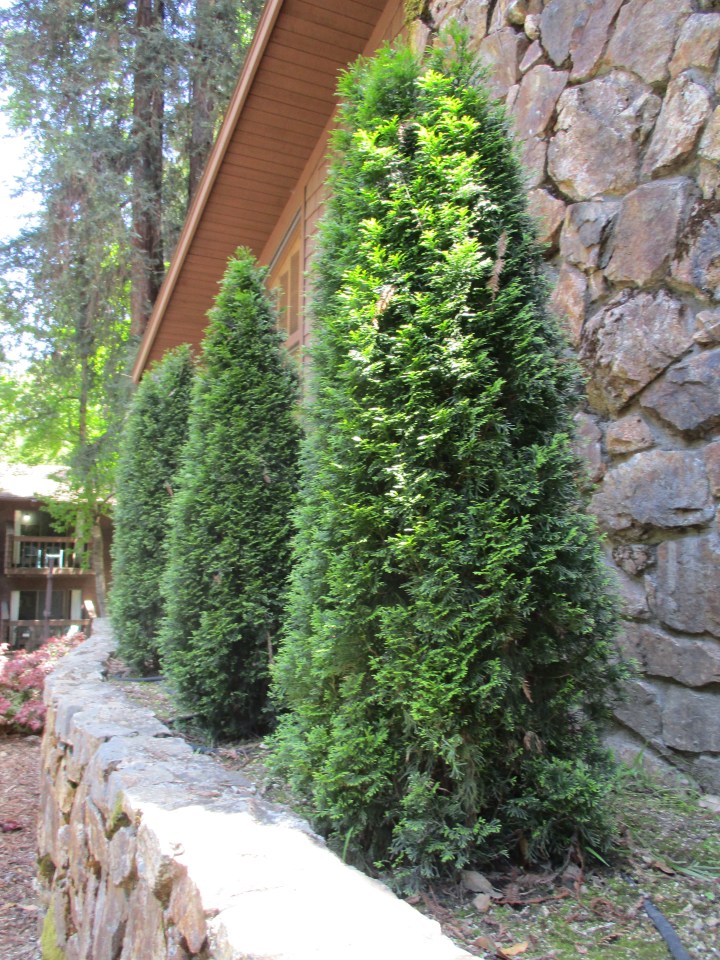
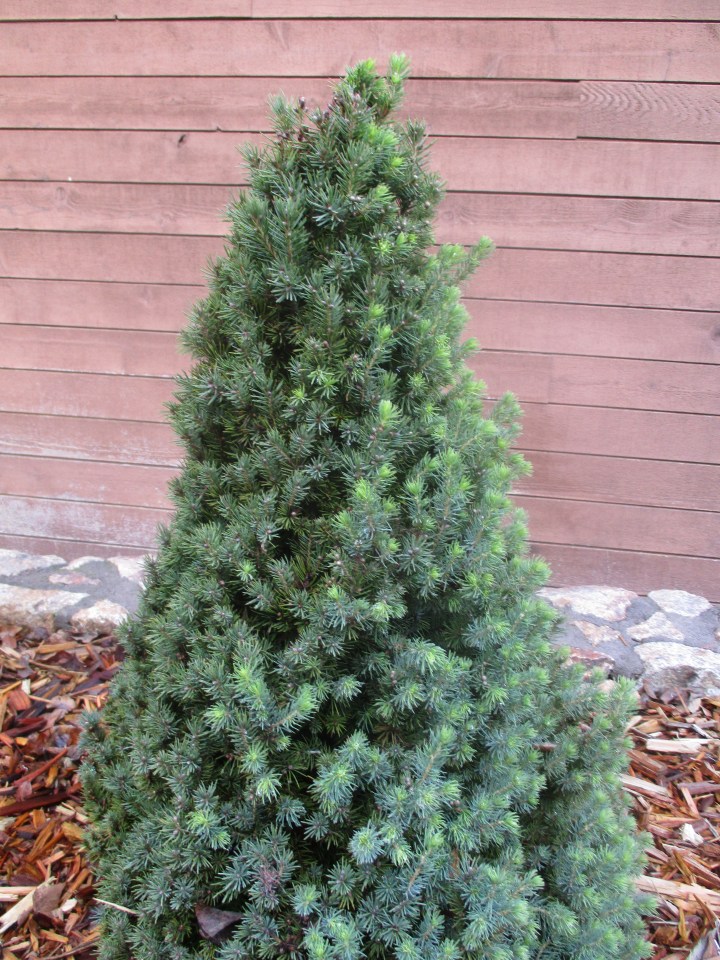 People really stress out over Christmas trees. Some do not want a cut Christmas tree because it involves killing the tree. Some do not want an artificial Christmas tree because it is . . . artificial. Some do not want a living Christmas tree because it is too expensive for a tree that is too small. There are so many myths and misconceptions about Christmas trees, yet everyone wants one.
 The softest and laciest of the asparagus is the asparagus fern, Asparagus setaceus. The extremely small ‘leaves’ (or ‘cladodes’) are less than a quarter of an inch long. The tiny and mostly unnoticed pale white flowers that bloom sporadically in warm weather make it obvious that asparagus fern is not really a fern. (Ferns do not bloom.) If any green berries develop, they are toxic.
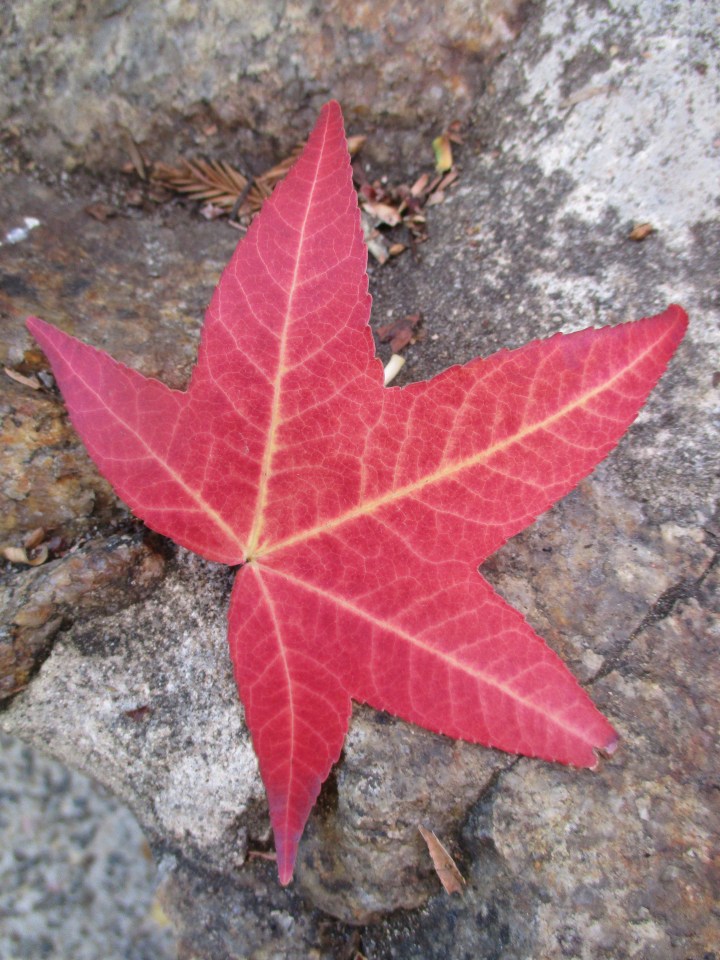
 We may not get much foliar color in autumn here, but we get enough. Sweetgums do not need much cool weather to color well. They would probably have colored better and held their foliage a bit better if the weather got cooler faster, but we can not complain about what we got. Most of the crape myrtles are still completely green. Cottonwoods are defoliating, but without much color. Maples are rare here. The three best trees for color in autumn here are sweetgum, pistache and flowering pear. Of these, we happen to have several sweetgums here.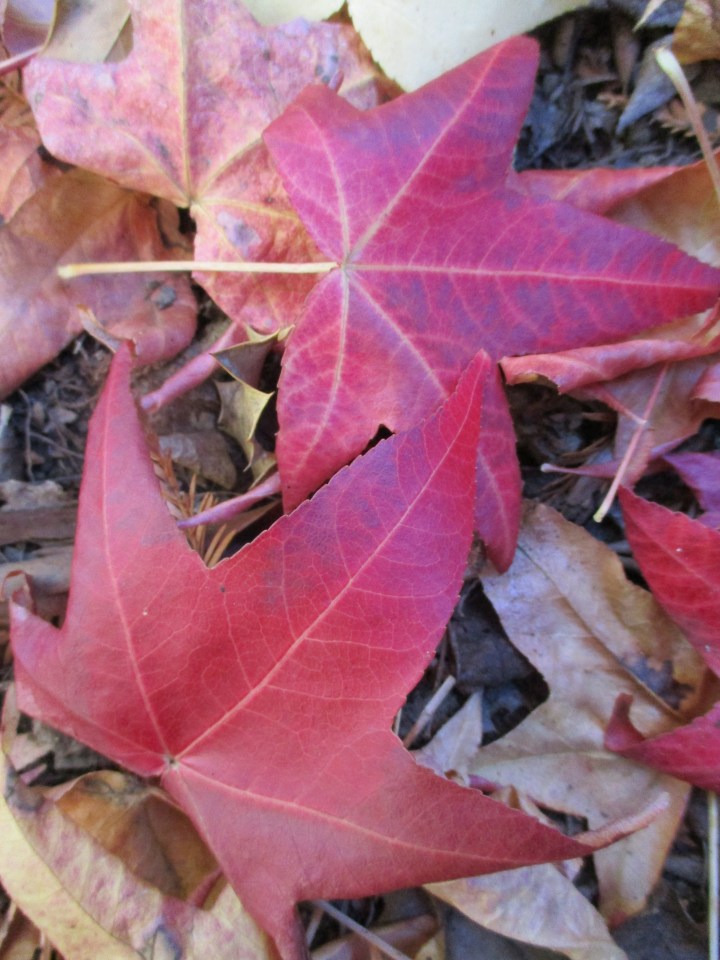

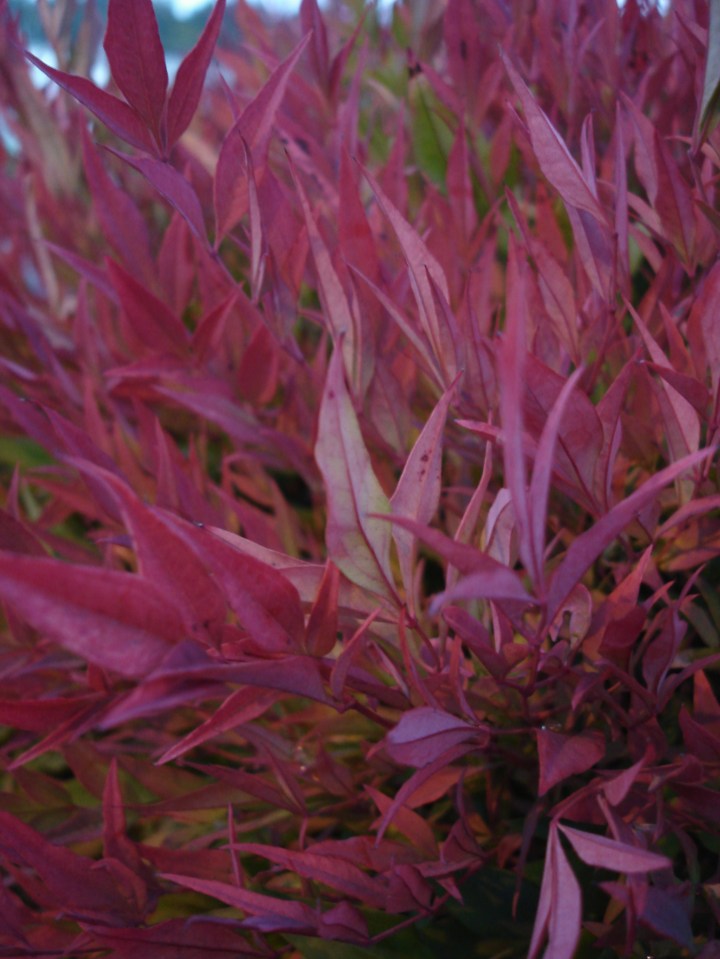 Good old-fashioned Heavenly bamboo, Nandina domestica, which can almost reach the eaves, can be difficult to obtain nowadays. More compact modern cultivars do not get much more than six feet tall, and some stay less than three feet tall. Foliage is airier in partial shade, but more colorful where more exposed.
 Mild winter weather on the West Coast limits the choices for autumn color. So many of the trees, shrubs, vines and perennials that get so colorful where autumn weather is cooler do not get so colorful here. Mild weather also allows so many more evergreen plants and plants that do not get colorful in autumn to thrive here than in harsher climates. Consequently, the tougher and more colorful plants are not so common.
 Autumn is slow in getting here. Yes, as of last Sunday, it is now autumn. The date is determined by the equinox, so is the same for everyone in the Northern Hemisphere, and is the same for the arrival of spring in the Southern Hemisphere. It just takes a bit longer for autumn weather to develop in the mild climate here. Nights are cooler. Shorter days are not as warm as they had been.
 It might seem like autumn color is a bit early this year. In the wild, where there is no irrigation, native box elders, and maybe some of the cottonwoods and sycamores, are already yellowing. The box elders are already dropping some of their foliage. However, this is not caused by an early chill. It is caused by late warmth after an otherwise mild summer, and might inhibit better color later.
 Autumn color is different every year. Sometimes, early and sudden cool weather after a mild summer promotes good foliar color that lingers longer while relaxed trees slowly realize that they should probably start to defoliate. Sometimes, early wind and rain accelerate defoliation of otherwise good color. There are a few variables that trees must adapt their performance to.
 Ferns tends to be . . . well, ‘ferny’, with divided or intricately lobed foliage. Staghorn ferns and bird’s-nest ferns are the more familiar of the rare exceptions. Staghorn ferns have two types of simple undivided fronds, and both types lack rachi. Bird’s-nest ferns have weirdly simple fronds that, although equipped with prominent rachi, lack any distinctive division or lobes that make ferns ‘ferny’.
 Tony Tomeo