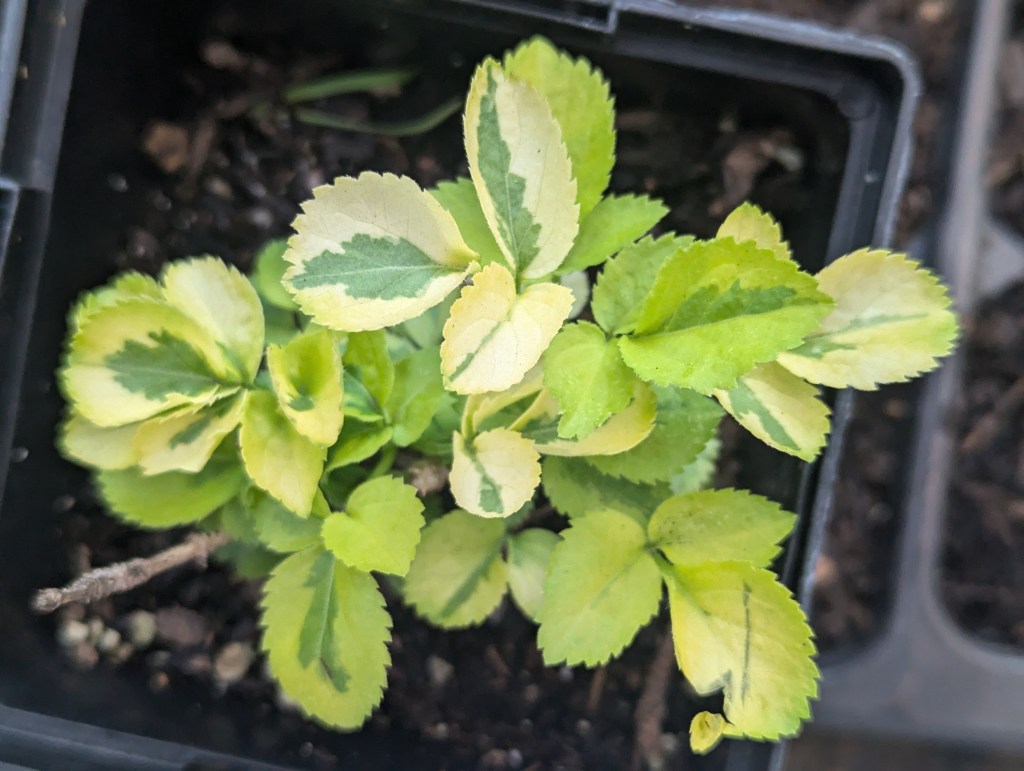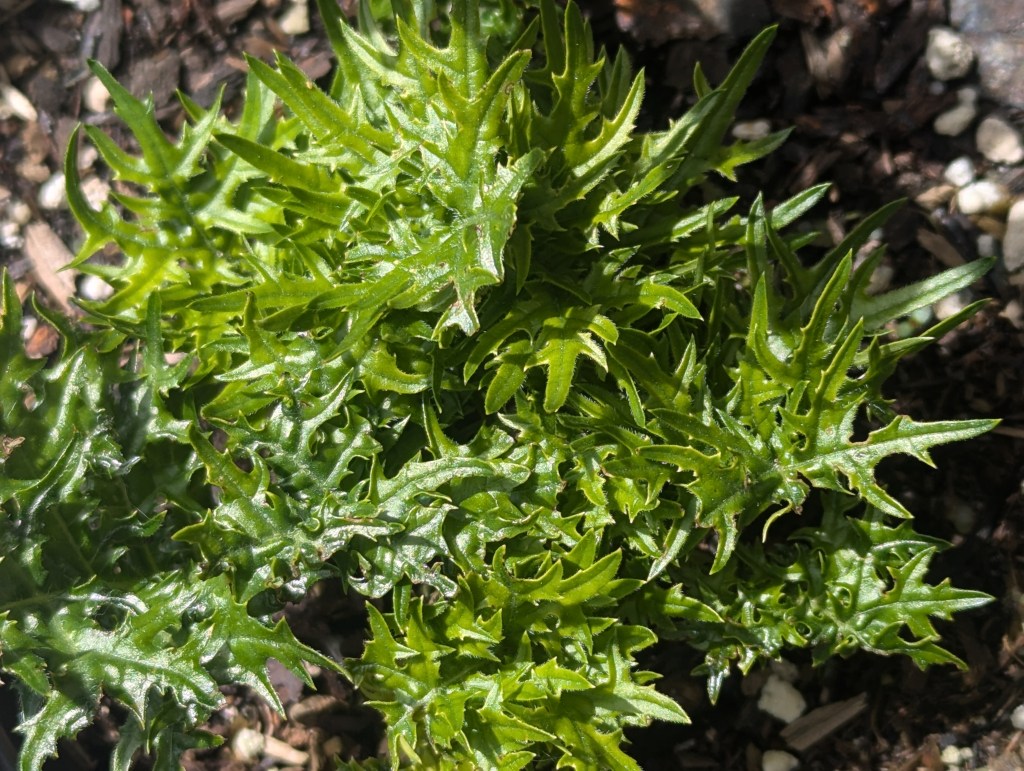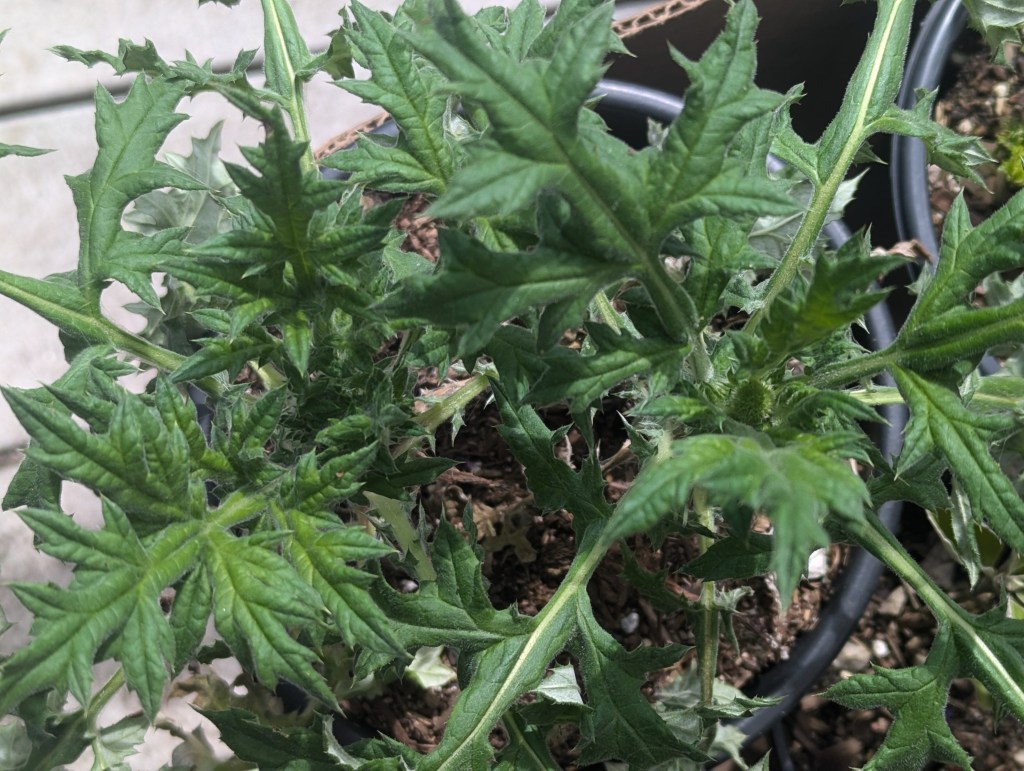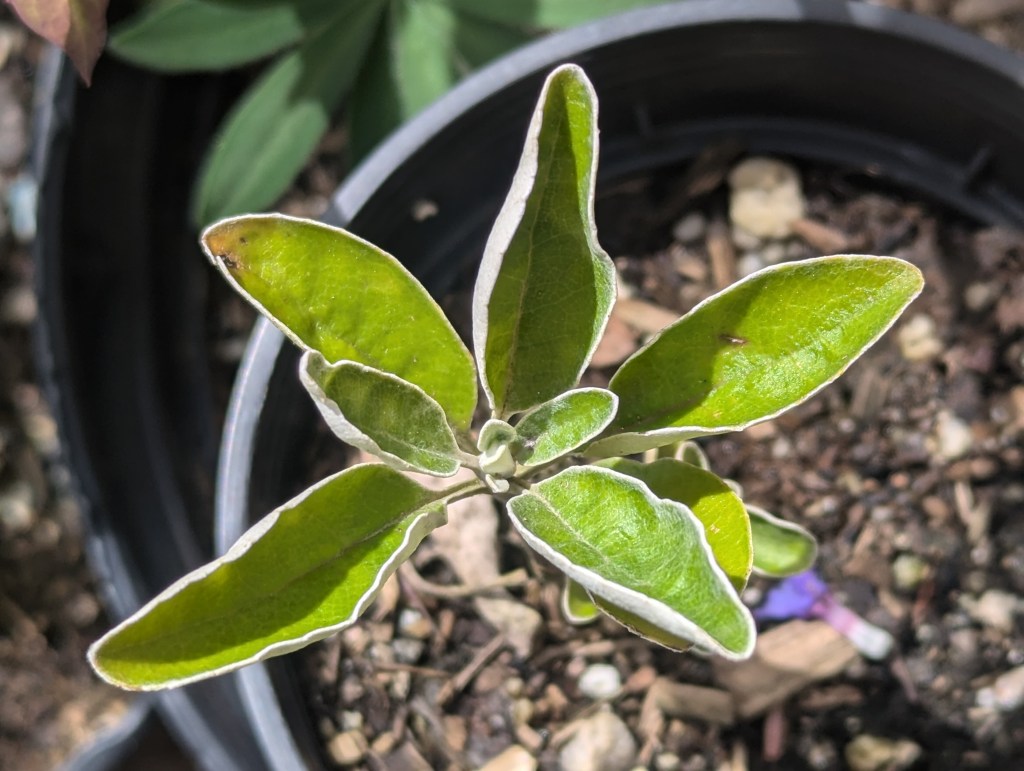
Aromatic Foliage Has Ulterior Motives

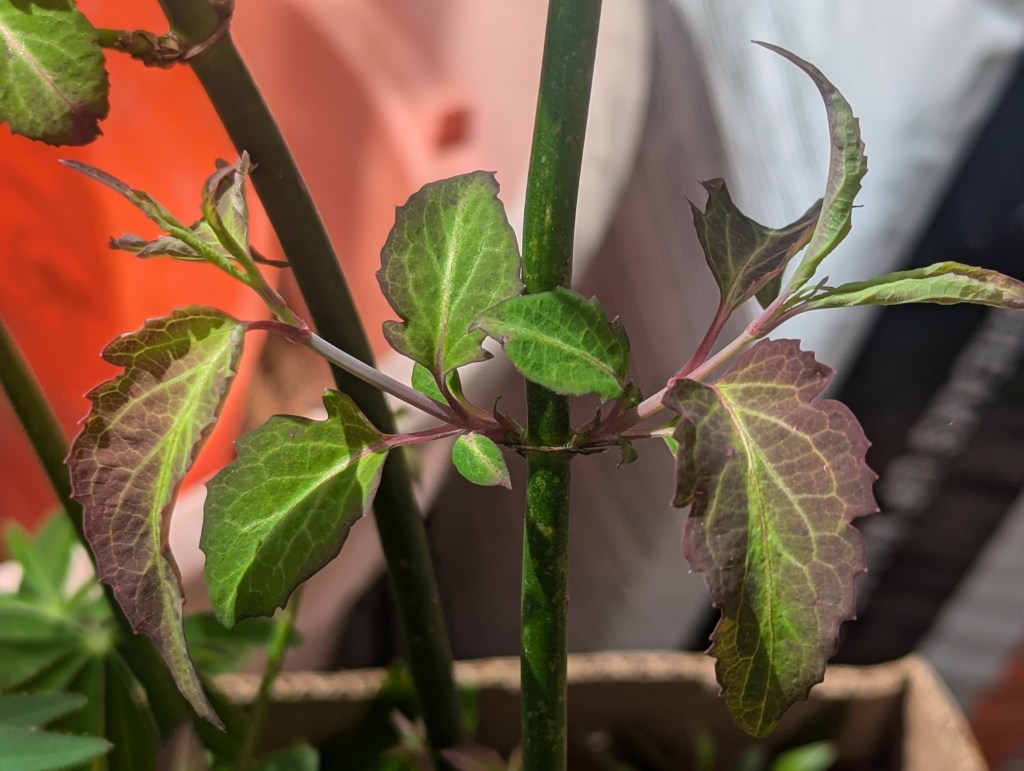
Several Salvia species are splendidly aromatic.

Floral fragrance attracts insect pollinators. Foliar aroma repels insect pathogens. It might repel other herbivores also. For organisms that lack olfactory perception, plants certainly make productive use of it. Fragrant flowers are as attractive in home gardens as they are to pollinators in the wild. However, aromatic foliage has the opposite of intended effects.

In other words, aromatic foliage is popular within home gardens because of its aroma. Its effort to be repulsive to some insects and herbivores makes it attractive to people. Some aromatic foliage has culinary or herbal application. Actually, almost all herbs are notably aromatic, with corresponding flavors. Mint, chive, thyme and sage are popular examples.

Window boxes became popular in ancient European towns because of aromatic foliage. Where garden space was scarce, they were convenient planter boxes for growing herbs. Also, prior to window screens, they sustained aromatic foliage that repelled mosquitoes. Trailing rosemary, ivy geranium and nasturtium are still very traditional accompaniments.

Rosemary has both culinary and aesthetic application. Culinary cultivars exhibit the best flavor. Landscape cultivars are either trailing or more densely shrubby. Some cultivars of fennel are similarly better for either culinary or landscape application. Bronze fennel has become popular for both. Varied lavenders are more popular as home garden shrubbery.

Native bay is very aromatic when its foliage is disturbed, but is not culinary bay. It is a big and obtrusive tree that is proportionate only to large landscapes. Culinary bay is another smaller species that is more proportionate to home gardens. Also, it has a distinct aroma. Incense cedar is another very aromatic native tree, but is quite rare within home gardens.

Most aromatic foliage can not exude its aroma like fragrant flowers exude their fragrance. Most does so only when disturbed. Some, such as that of many conifers and eucalypti, is beyond reach. It is therefore easy to dismiss within some landscapes. Lavender, lantana, diosma, rockrose and salvia stay within reach. Warmth and humidity amplify their aroma.

Six on Saturday: More Gifts from Tangly Cottage Gardening

Tangly Cottage Gardening was a primary destination of my vacation. I posted pictures of it last week. These are six more species that I received as gifts.

1. Acanthus spinosus, armed bear’s breech has the strangest common name of these six. Is the bear armed or just its butt? Regardless, I happen to like common Acanthus mollis, and had coincidentally been wanting to try this less common species as well. Now, I will.

2. Echinops ritro, globe thistle was a minor crop where I worked with cut flowers during the summer of 1986. I did not enjoy harvesting it then, but recently, I had coincidentally been wanting to add a single specimen to my garden. I just could not think of an excuse.

3. Helenium autumnale, common sneezeweed also has an amusing common name. I am unfamiliar with this species, although its botanical name somehow seems to be familiar. I got three distinct cultivars of it now! If we were not already acquainted, we will be now.

4. Brachyglottis greyi, daisy bush has a contrarily mundane common name. Many other species could easily qualify for its name. Somehow though, it makes it more compelling. Now, I want to see what makes it distinct from all other daisies, bushes or daisy bushes.

5. Leycesteria formosa, Himalayan honeysuckle or pheasant berry is yet another species that I had coincidentally been wanting to acquire. I embarrassingly did not recognize its name initially. I was told that I would find its flowers to be more appealing than its fruit.

6. Lupinus, lupine is regifted and unidentified. I do not know if it is annual or perennial. Because it was grown in a can rather than merely shared as seed as annuals should be, I suspect that it is perennial. I will find out. This one can contains several swell seedlings.

This is the link for Six on Saturday, for anyone else who would like to participate: https://thepropagatorblog.wordpress.com/2017/09/18/six-on-saturday-a-participant-guide/

Six on Saturday: Eucalyptus

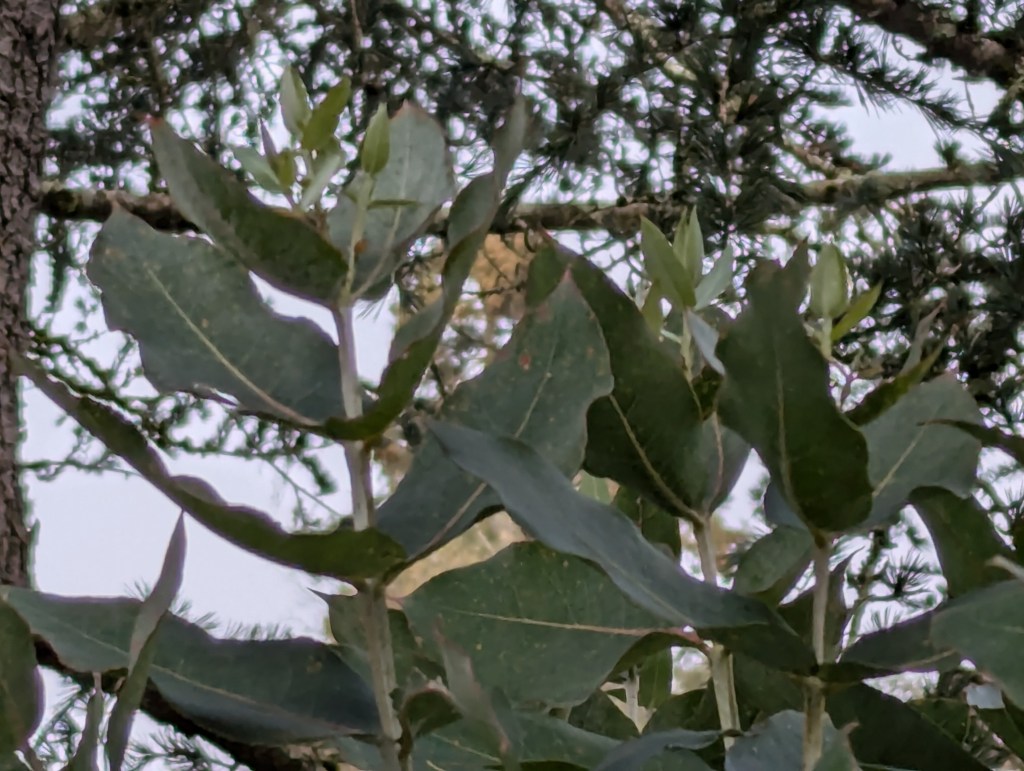
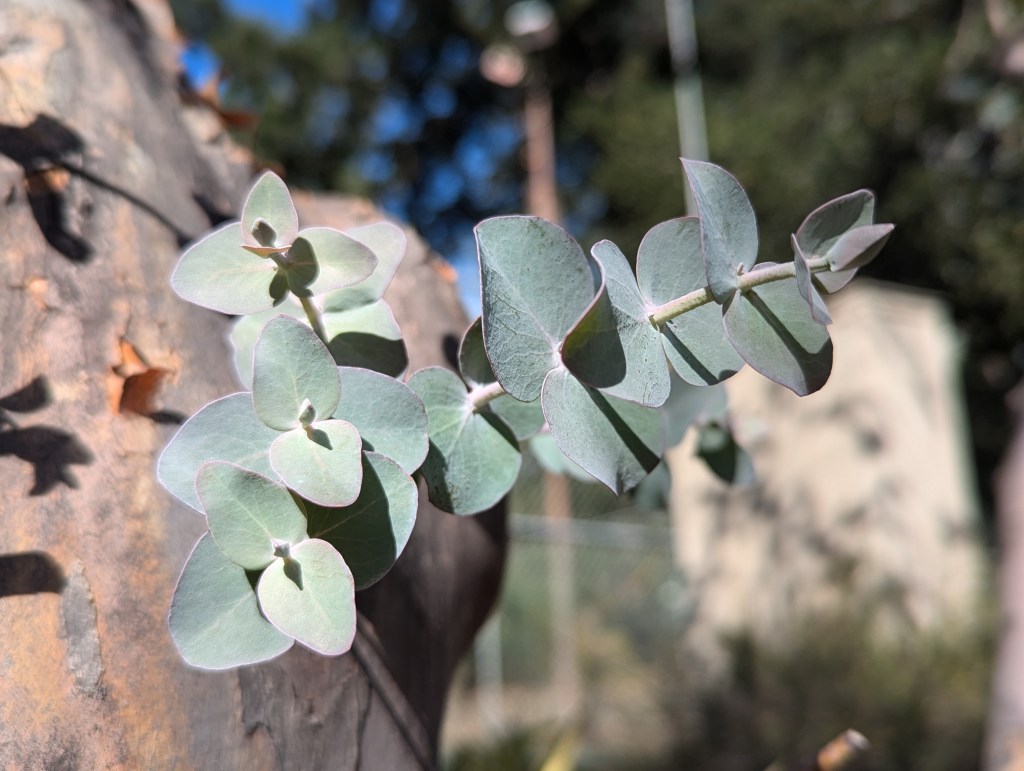
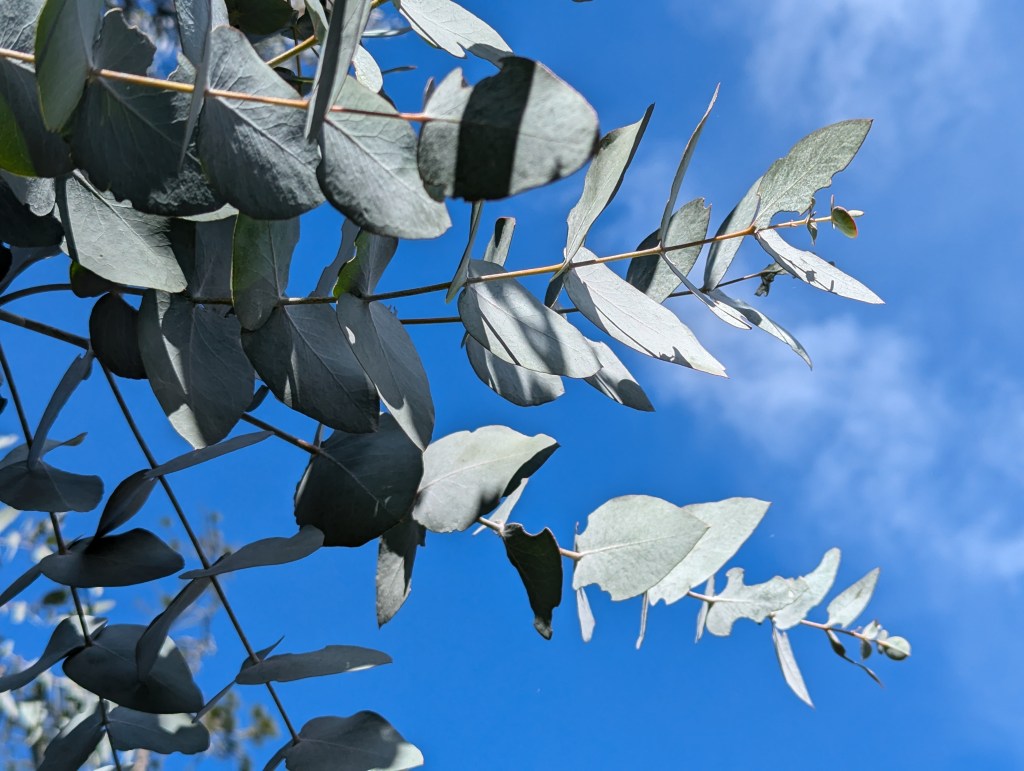
Eucalyptus has a bad reputation. Regardless, the worst of the genus and its only cultivar that I am aware of inhabit my gardens. Four less offensive species inhabit a landscape at work. Actually, several species of Eucalyptus are not only appropriate for home gardens, but are also naturally very well adapted to local chaparral climates. Their bad reputation is an unfortunate result of the bad behavior of merely one of hundreds of species, which happens to be the second of these Six. Eucalyptus camaldulensis, red gum allegedly also contributed to that reputation, but more so in Southern California than here, as it is rare locally. Half of these six show sessile juvenile foliage, rather than petiolate adult foliage. Pictures of high foliage were taken from significant distances.

1. Eucalyptus globulus ‘Compacta’, bushy blue gum is my least favorite eucalyptus, since it is a contrarily runty cultivar of an otherwise grand species, but here it is in my garden.

2. Eucalyptus globulus, blue gum is too grand for my garden, though, so can not develop a natural form. It is pollarded for its aromatic juvenile foliage, but has a few adult leaves.

3. Eucalyptus cinerea, silver dollar tree, which is not the same as silver dollar gum, may be confused with silver mountain gum, since their botanical names are interchangeable.

4. Eucalyptus pulverulenta, silver mountain gum is very distinct from silver dollar tree. I find their confusion to be annoying. Botanical nomenclature is designed for simplicity.

5. Eucalyptus sideroxylon, red ironbark grew from a small root sucker with merely a few roots. I got it from a stump in another landscape, and am impressed by its performance.

6. Eucalyptus citriodora, lemon gum is delightfully aromatic, and, as its name suggests, is rather lemony. Its foliage will soon be too high on lanky bare trunks to reach, though.

This is the link for Six on Saturday, for anyone else who would like to participate: https://thepropagatorblog.wordpress.com/2017/09/18/six-on-saturday-a-participant-guide/

Six on Saturday: Yellow

Only one of these six is as yellow as it should be. Two are not yellow enough. Two are too yellow. One is not yellow at all, but is affiliated with another who is.

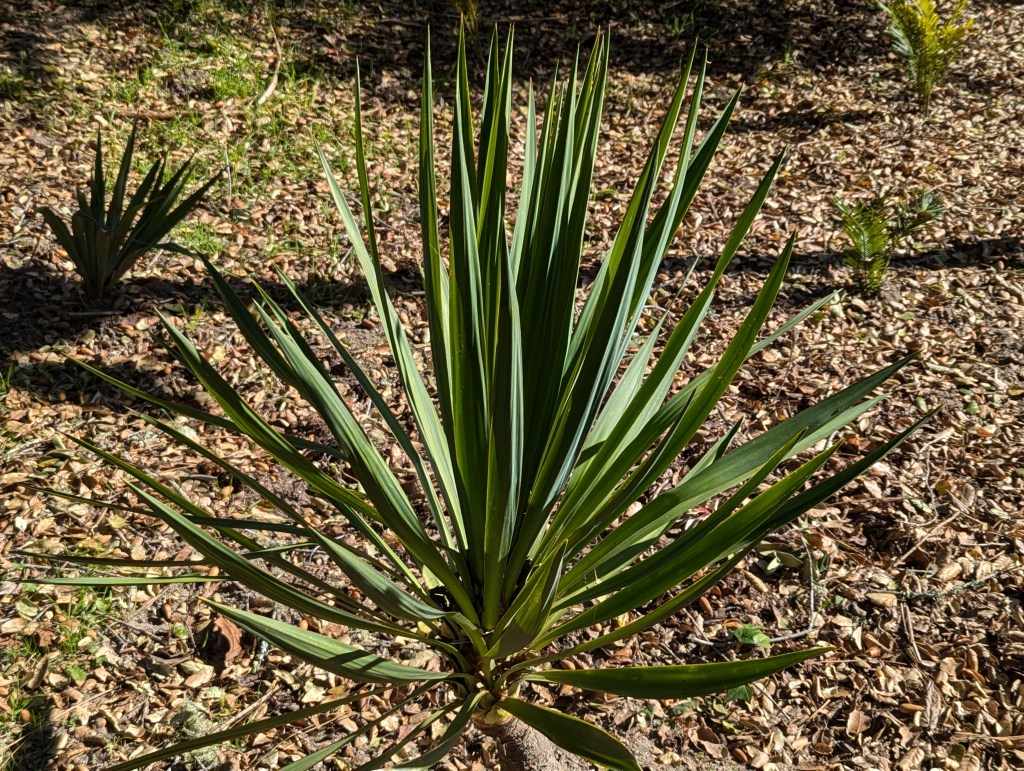
1. Yucca X recurvifolia, curve leaf yucca, which is now known by its new botanical name of Yucca gloriosa var. tristis, remains impressively green after transplant, but is related to the rather sickly looking cultivar, ‘Mellow Yellow’, with ghastly chartreuse foliar color.

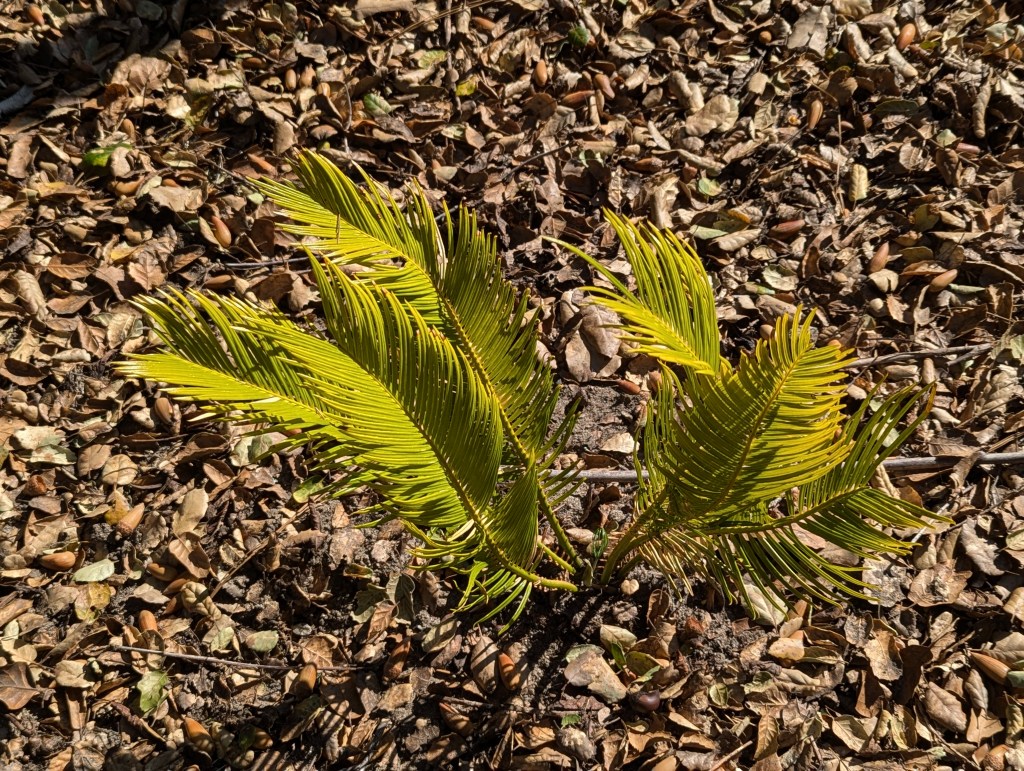
2. Cycas revoluta, sago palm, which was transplanted with the curve leaf yucca, displays this more predictably yellowish foliar color now. It should develop its more typical richly dark green color and foliar symmetry as it resumes growth with warmer spring weather.

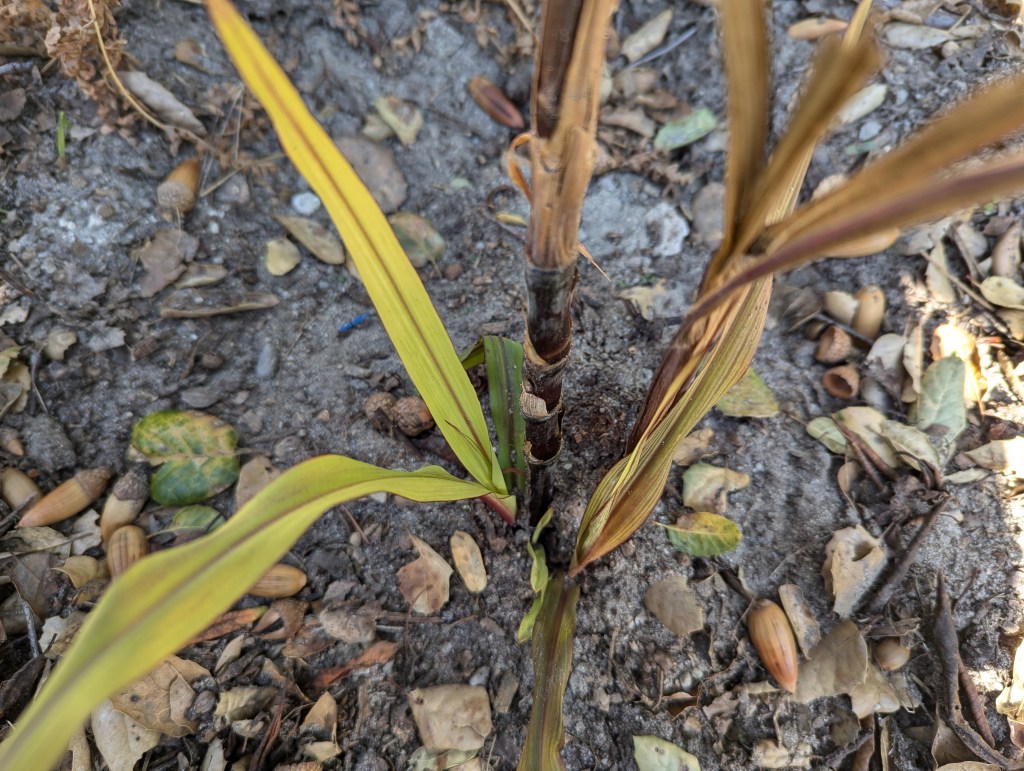
3. Saccharum officinarum ‘Pele’s Smoke’ sugarcane retains its cultivar designation only because I do not know what it is. It is likely a different cultivar, and might be a different species. Its new foliage is yellow because the weather is still too cool for it to be bronze.

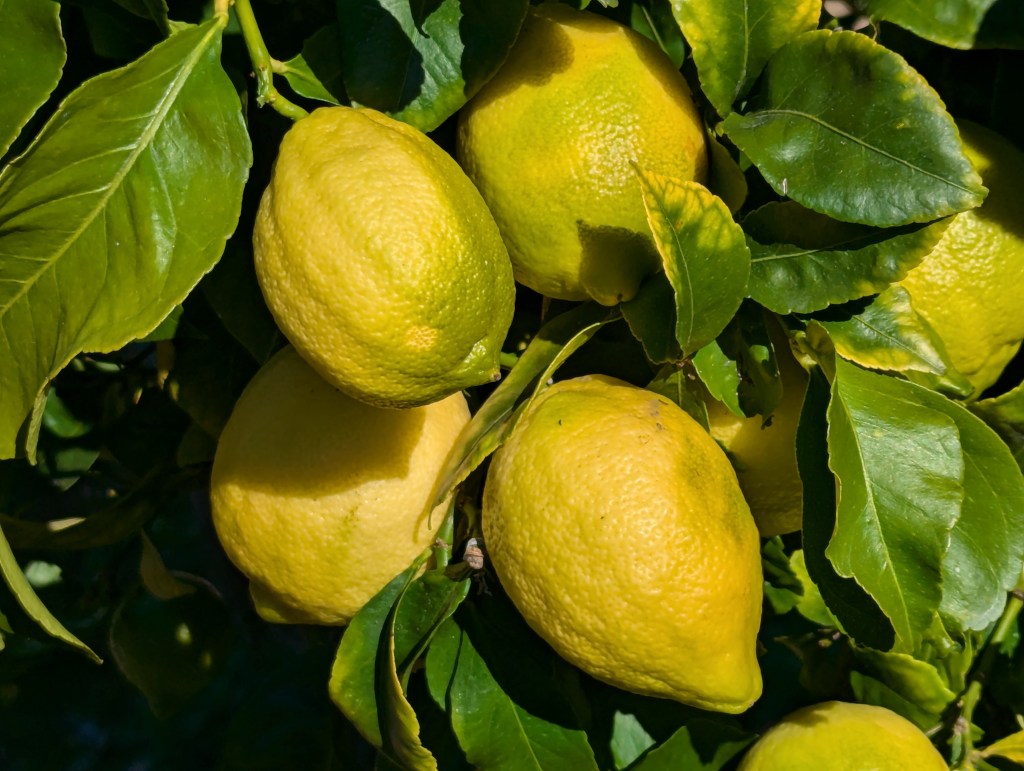
4. Citrus X limon ‘Eureka’ lemon should be more yellow than this by now. None seem to be completely ripe. Variation of ripening is an attribute of ‘Eureka’ since, unlike ‘Lisbon’, it provides a few ripe lemons randomly throughout the year. Still, most ripen for winter.

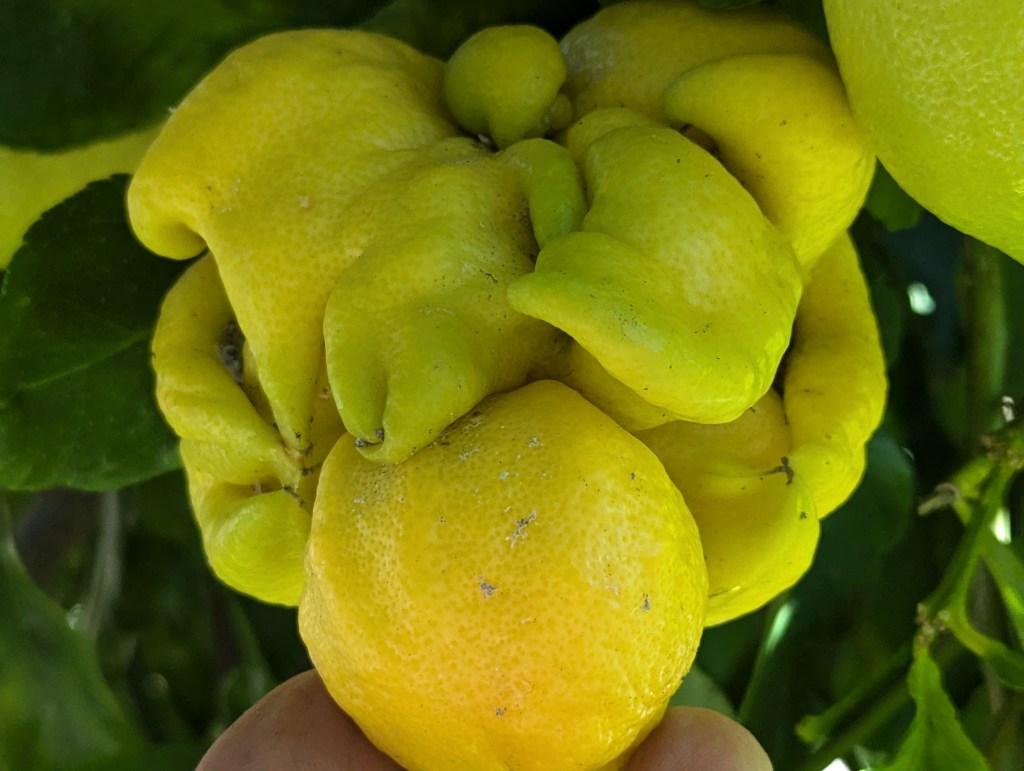
5. Citrus X limon ‘Eureka’ lemon is susceptible to minor damage from citrus bud mite. It may seem to be more than minor, and for this particular lemon, the damage is obviously quite major. However, only a few of the hundreds of lemons of this tree will be damaged.

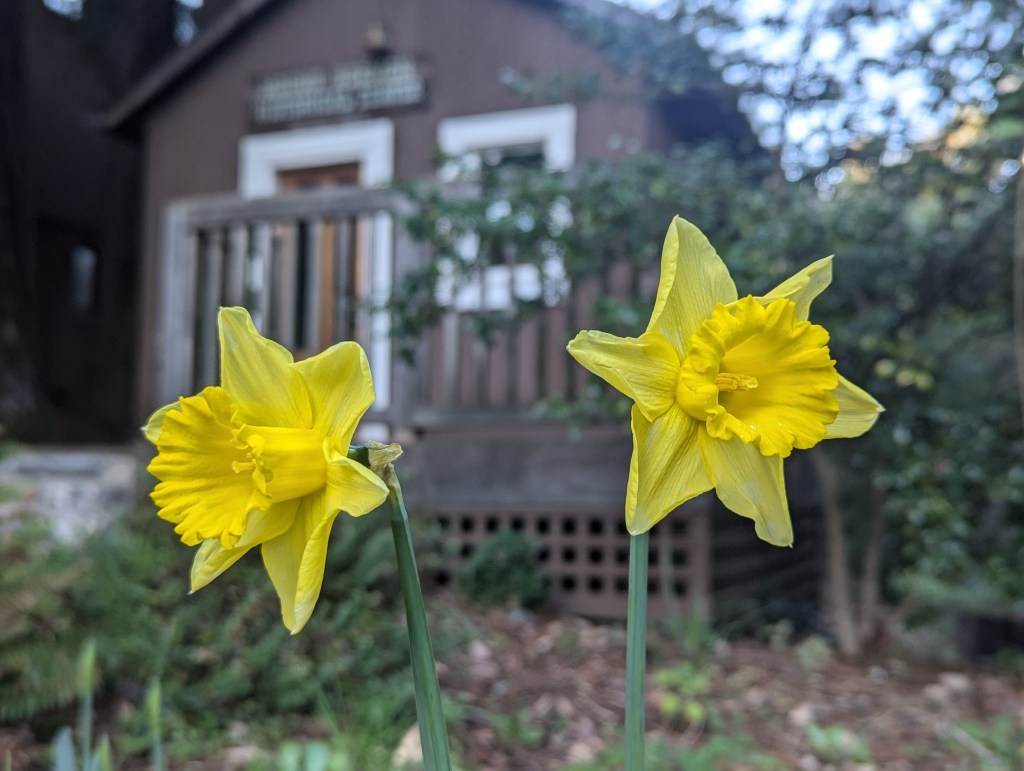
6. Narcissus pseudonarcissus ‘King Alfred’ daffodil may be a more modern cultivar, but has been naturalized here long enough to be genuine. Although happy to bloom like this annually, bulbs do not multiply, which is why I can not get many flowers in one picture.

This is the link for Six on Saturday, for anyone else who would like to participate: https://thepropagatorblog.wordpress.com/2017/09/18/six-on-saturday-a-participant-guide/

Coral Bells

Coral bell foliage is as pretty as its delicate flowers for which it is named.

Even though their delicate trusses of tiny hanging flowers on one or two foot tall wiry stems make good cut flowers and attract hummingbirds in spring and early summer, coral bells, Heuchera micrantha, is more often grown for its colorful foliage. Contrary to their common name, the flowers (of this species) are more often pale or greenish white anyway. Their foliage can be all sorts of shades of green, gold, tan, brown, bronze, and purplish. The rounded and lobed leaves have somewhat raspy tomentum (hairs) and can be about two and a half inches wide. ‘Ruffles’ has more ruffled and deeply lobed leaves. ‘Palace Purple’ is a very popular cultivar with distinctive deep bronze or purplish foliage.

Mature plants can be divided in spring to make more plants every few years or so. Where protected from frost, division can be done in late autumn. Coral bells can also be propagated by cuttings. Rich soil and good exposure are preferred; but partial shade is best in warm spots.

Dusty Miller

Such silvery foliage contrasts exquisitely with bronze foliage.

The relaxed trusses of small yellow composite (daisy-like) flowers of dusty miller, Senecio cineraria, can bloom at any time except when winter gets too cold. They are still blooming now. Yet, who cares? Dusty miller is grown more for its fuzzy white foliage than for bloom. It actually looks best and fluffier if occasionally shorn and pruned to remove blooming stems before they bloom. Individual leaves are intricately lobed. Mature plants get taller and wider than two feet. Dusty miller likes full sun exposure, good drainage and moderate water. Too much water causes rot and discoloration.

Gold Dust Plant

Gold dust plants actually prefers partial shade to full sun exposure.

Like so many hollies, the gold dust plant, Aucuba japonica ‘Variegata’, is grown more for its glossy foliage than for flowers or berries. The tiny dark red flowers that bloom in the beginning of spring are barely visible. Clusters of bright red half inch wide berries that ripen in autumn and winter are almost never seen without a male pollinator. Yet, the three inch wide and three to five inch long leaves are colorful enough with their splattering of light yellow spots. Gold dust plant grows rather slowly to about six to eight feet tall and wide, and does better in partial shade. Foliage can get roasted if too exposed to sunlight.

English Holly

English holly can be handsomely variegated.

Hollies produced more bright red berries while they were more popular many years ago. Formal and perhaps lengthy hedges of exclusively female cultivars were common. A few or solitary male pollinators grew nearby, often as obscure small trees. Nowadays, males are oddly rare. Not many horticultural professionals are aware that hollies are dioecious.

English holly, Ilex aquifolium, is both the most and least favorite holly. Some who grow it appreciate its distinctively intricate foliar texture. Others detest the unpleasant prickliness of the same foliar texture. No other holly is as spiny, although most are somewhat prickly. All hollies exhibit dark green foliar color, remarkably glossy foliar sheen and rigid foliage.

English holly can grow as a small tree with a dense canopy. With pruning, most stay less than ten feet tall. Cultivars with white or yellow variegation grow slower and stay smaller. Berries are common amongst naturalized colonies which naturally include both genders. Nurseries occasionally sell cultivars of both genders, potted together to mature together.

Foliage Surpasses Flowers For Christmas

Hollies contribute more foliage than berries.

Winter bloom might be limited. Wintry berries, dried flowers and the remains of summery bloom can be more abundant. Evergreen foliage is as abundant as it always is. After all, it is evergreen. That is most likely why it is so popular for home decor through Christmas. It is the primary component of wreaths and garlands, and, technically, of Christmas trees.

Flowers are more scarce where winters are cooler. They are also more desirable indoors while the weather is too cool to be outdoors. Evergreen foliage effectively compensates. While flowers are less scarce here, the most traditional evergreen foliage is more scarce. It is simply less popular within home gardens locally. Also, less of it grows wild in forests.

Most cut evergreen foliage consequently grows on farms like certain popular cut flowers. Many of such farms are in the Pacific Northwest, where such foliage grows most readily. Many types of fir, spruce and pine that are popular for wreaths are naturally happy there. Western red cedar, which is the primary component of garland, is a native species there.

However, locally available cut evergreen foliage can be as delightful as traditional types. A few types are native species that grow wild beyond cultivated home gardens. More are exotic species within refined landscapes. Douglas fir is both traditional as well as native to many regions of California. A few native pines can substitute for more traditional types.

Redwood, cypress and juniper are likewise alternatives for traditional evergreen foliage. Some are natives or relatives of native species. Deodar and Atlas cedars resemble blue spruce. Arborvitae may substitute for Western red cedar, and is actually the same genus. English holly, although rare, and more rarely produces berries, is occasionally available.

Christmas trees are the ultimate form of cut foliage. Unlike other foliar decor, they almost exclusively grow on farms. Their cultivation is very impractical for refined home gardens. Collection of other cut foliage should not damage its source. Some may be from pruning scraps. Christmas trees, though, are much more than a few stems. They are entire trees, containing all their stems.

Autumn Foliar Color Within Mild Climates.

Pistache does not need much chill to develop exquisite foliar color.

Cooler climates may not have so much annual flower color to choose from at the end of summer, but have more autumn color from trees and a few shrubs and vines. The weather is of course different every year, so autumn color is never predictable. Just as some of the typically colorful trees may not be so spectacular every year, some of the more mundane trees may be surprisingly colorful if the weather is just so.

In milder climates, sweetgum (Liquidambar), flowering pear and Chinese pistache are generally the most reliable for the most color as the weather gets cooler. All three exhibit a good range of color, from clear yellow, through orange and bright red. Sometimes, particular colors are more prominent, or even exclusive. For example, Chinese pistache can be completely orange without yellow or red. Some cultivars of sweetgum specialize in particular color ranges. For example, ‘Burgundy’ turns dark red or purplish red without much yellow or orange.

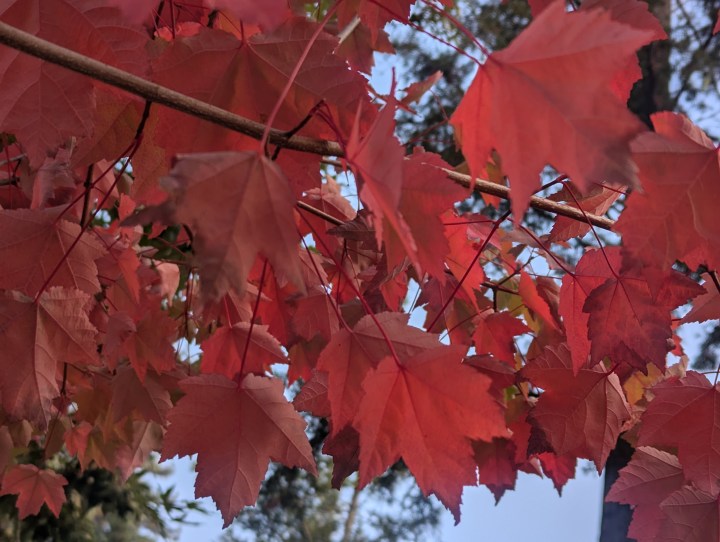
In cooler climates, maples color well. Sugar maple is perhaps the most colorful, comparable even to sweetgum. Unfortunately, it does not hold onto its foliage as tightly, and soon looses it to slight wind or rain. Red maple colors just as reliably, but is more red and brown with less yellow and orange. Norway maple typically turns yellow or somewhat orange. Silver maple turns only dingy yellow, but gets big enough to make quite a show.

The best bright yellow is probably provided by maidenhair (Ginkgo biloba) tree. Birch, honey locust, tulip tree, fruitless mulberry, some willows and poplars can be comparable if the weather turns cool suddenly. Redbud, dogwood, hawthorn and flowering cherry are more subdued shades of yellow, but are grown more for their spring flowers anyway. Persimmon probably provides the best brightest orange foliage, followed by abundant and comparably bright orange fruit!

Some ash, some oaks, Chinese tallow tree, parrotia and dawn redwood all provide their own flavors of autumn color. Dawn redwood and pin oak actually turn simple brown, which some people think makes the trees look dead! Raywood ash turns a nice burgundy red or purplish. However, the old fashioned Modesto ash (which is a type of Arizona ash) turns as bright yellow as fruitless mulberry does. Not all crape myrtles have good fall color, but some are as colorful as sweetgum is. Various hazels, spiraeas and viburnums are colorful shrubbery in autumn. Wisteria vines, which are known more for their colorful spring flowers, turn yellow.