Flowers Are Only The Beginning

70719thumbFlowers have a bigger and better agenda than coloring our gardens and homes. They bloom to get pollinated. Their color and fragrance are designed merely to attract pollinators. Less vain but more abundant blooms take advantage of the wind to disperse their pollen. Once pollinated, flowers fade and deteriorate as resources get diverted to the production of seed and fruit to contain it.

Some flowers are on a tight schedule. They bloom in a single brief season. Others have a bloom season that last significantly longer than the individual flowers do. They might bloom continually for a few months, replacing fading older flowers with new flowers; or they might bloom in phases, with each phase blooming simultaneously, and then getting replaced with a subsequent phase.

Fruit trees and many fruiting vegetable plants bloom once annually, and then produce fruit. Tomato, summer squash and bean plants bloom and produce fruit continually. Tomato fruits are best if allowed to ripen on the vine. Beans and summer squash like zucchini are better if harvested while young and tender. Also, the plants are more productive if regularly deprived of premature fruit.

The priority of these plants is to produce seed. Production of seed requires significant resources. Plants that are busy producing seed within maturing beans and zucchini do not put much effort into producing subsequent bloom and fruit. However, if deprived of maturing seed and fruit, these sorts of plants are compelled to divert resources into new bloom, and seed and fruit production.

The same applies to many flowering plants, particularly perennials and flowering annuals. ‘Deadheading’ is the removal of deteriorating flowers to promote continued bloom. It is not practical for plants with profuse small flower, such as sweet alyssum and lobelia. Nor is it necessary for some sterile or nearly sterile plants that do not produce much seed anyway, like busy Lizzy (impatiens).

French marigold, petunia, zinnia, floss flower and cockscomb all bloom better if deadheaded. Rhododendrons do not benefit directly from deadheading, but look better without old floral trusses. Conversely, the potentially picturesque dead flowers of sea holly might be left intact.
Too Much Grapefruit

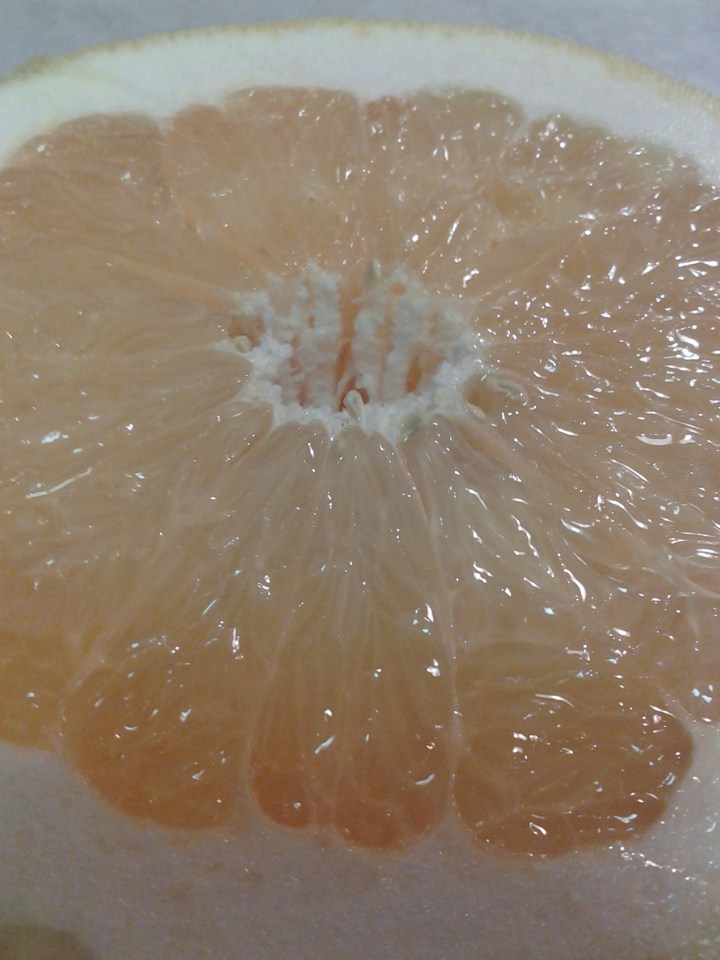
P80303KThere really is such a thing as too much grapefruit. I know; I have witnessed it more than once.
The most recent occasion was two years ago. We were pruning a few fruit trees for a client in San Jose. One of the trees was an old fashioned ‘Marsh’ grapefruit, which happens to be my all time favorite grapefruit.

As we were pruning, the client was dragging brush away to curbside recycling. Most of our clients prefer to do the ‘cleanup’ to save money. The client asked me if I would like some of the fruit. Of course, surplus fruit is one of the many benefits of our work; and of course, I told the client that I would be pleased to take some of the excellent grapefruit. I then went back to work on a nearby persimmon tree.

While busy with the persimmon tree, I was unaware of what the client was doing with the grapefruit. I knew that there was quite a bit of it. She and her sister bagged it and took it out front. From there, they loaded as much of it as they could into the little Blazer (Roy, the ‘Bravada’. It is a long story. I will explain later.). By the time I finished, the Blazer was FILLED with bagged grapefruit! I really should have gotten a picture.

There was no way I could eat or share all that grapefruit before most of it went bad. However, it would have been rude to leave the fruit there after they had so nicely loaded it into the car. Naturally, I ate a lot of grapefruit. It was excellent! The good news is that I really was able to share all that I could not eat or juice. None of it was wasted.

Plants Are Masters Of Deception

80307thumbMany of us already understand that daisies, sunflowers, asters and all related flowers are composite flowers, which bloom as many tiny flowers clustered tightly together to form what appears to be significantly larger single flowers. Distended ‘ray’ florets around the edges imitate petals that other types of flowers are equipped with. It is like one stop shopping for pollinators craving nectar.
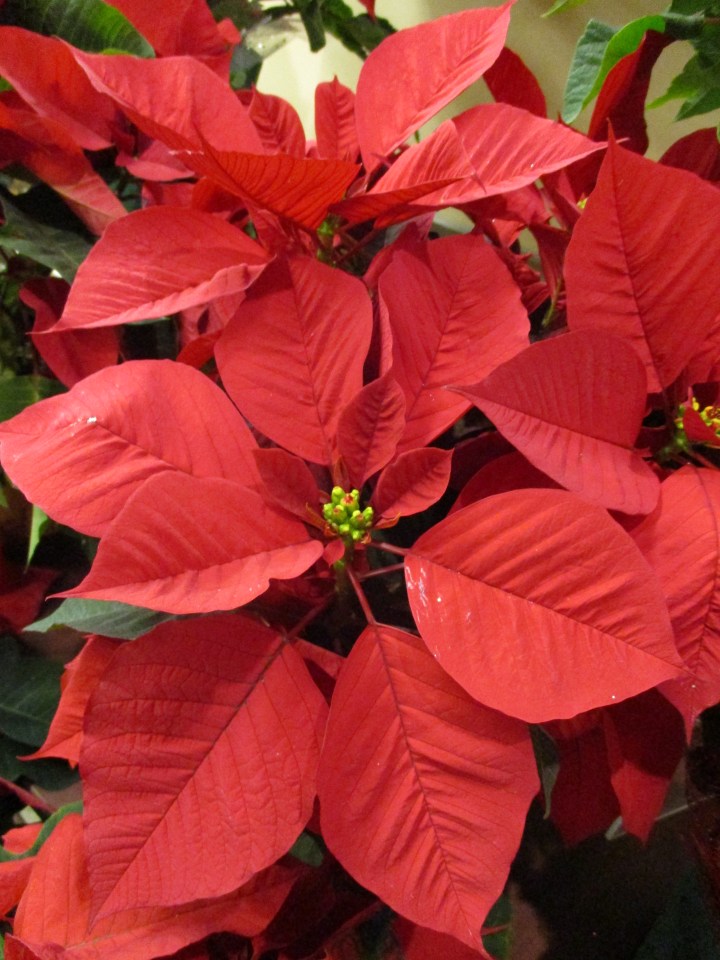
Many other plants have developed comparably ingenious techniques for facilitating what they need to do. Flowers are the more common beneficiaries of their creativity. Fruits, leaves, stems and roots have also been modified out of necessity. For example, the colorful bracts around tiny poinsettia and bougainvillea flowers are modified leaves that pretend to be petals to attract pollinators.

We think of strawberries, pineapples and figs as fruit. Strawberry fruits are actually the small specks on the outside that resemble seeds. The sweet and juicy part that suspends these fruits is a modified stem. Each ‘eye’ of a pineapple is a swollen flower, that is fused with flowers around it. Tiny fig flowers bloom and produce seed all within the fleshy floral structure that is eaten like fruit.

Some types of acacia trees have no real leaves. Their foliage is comprised of distended petioles (leaf stems) known as ‘phyllodes’, but without the leaves that petioles normally support. Juvenile leaves that actually look like lacy acacia leaves do not last long. Makrut lime has big phyllodes too, but in conjunction with leaves, which is why they seem to have double leaves joined end to end.

Cacti and the euphorbs (poinsettia relatives) that resemble them are among the most deceptive of plants. Euphorbs that have both recognizable leaves and thorns provide hints about how they work, since some tufts of thorns and spines also have leaves. Each tuft is a node. Small bristly spines are modified leaves. Larger and stouter thorns are modified axillary stems. A few stems develop into limbs or segments. Without leaves, the fleshy green stems do all the work of photosynthesis.

Kumquat

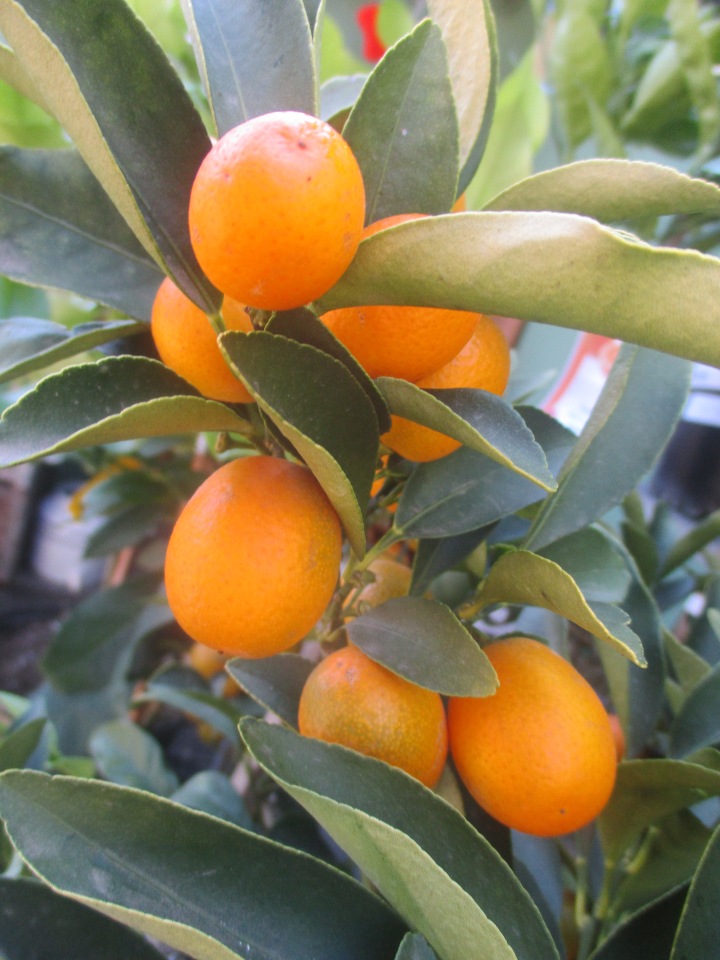
80131Tet, on February 16, will be the Vietnamese New Year’s Day for the Year of the Dog! Any year associated with the dog must be pretty excellent. Anyway, potted and fruited kumquat trees are very traditional decorations for Tet. Although less popular than orange and lemon trees, they are the most compact of the citrus trees, so are therefore the most adaptable to compact home gardens.
They grow slowly and may never reach first floor eaves. The evergreen leaves are a bit thicker, smaller and darker green than those of Mandarin orange. Stems are mostly thornless. The compact growth is quite symmetrical, so might only occasionally need to be trimmed for a stray stem here and there. Clusters of small white flowers bloom about the time the last of the fruit gets harvested.

Kumquat has the distinction of being the ‘other’ citrus. Although the genus is alternatively known as Citrus, experts know it as Fortunella. Those with round fruit are Fortunella japonica. Those with oval fruit are Fortunella marginata. The abundant fruits are not much bigger than big grapes, and are eaten whole, with the seeds spit out. The tart pulp with the sweet skin is a tangy combination.

When Life Gives You Lemons

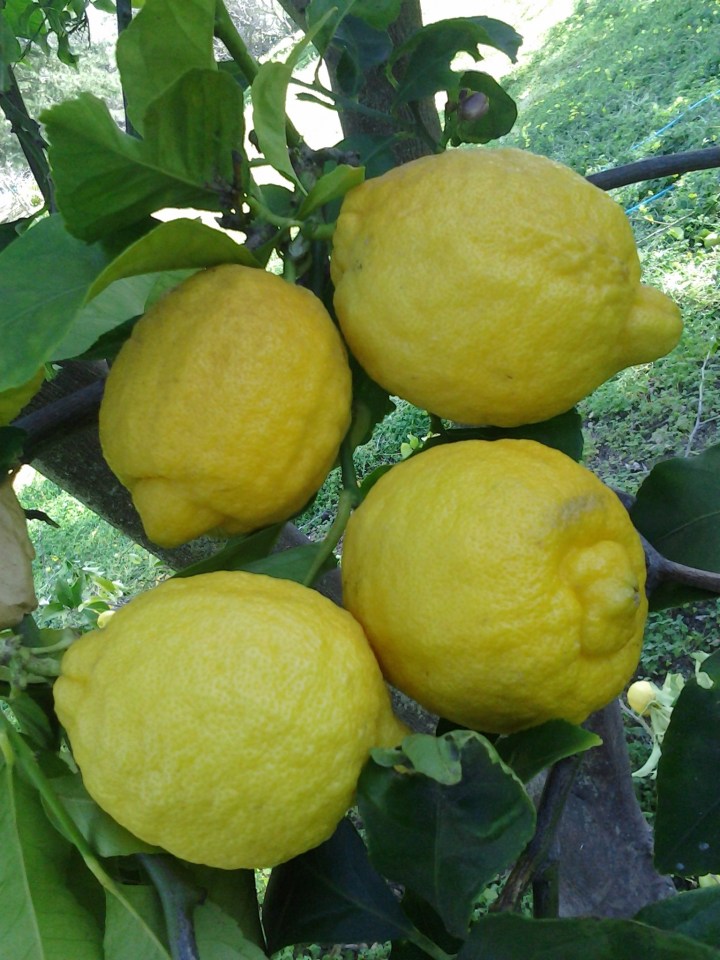
80131thumbWhen life gives you lemons, it is likely this time of year. Although, the most popular garden varieties of lemon, like ‘Meyer’ and ‘Eureka’, continue to produce at least a few more fruits sporadically through the year. ‘Lisbon’ lemon that is still used in orchard production, and is the ancestor of the household ‘Eureka’ lemon, produces almost all of its fruit in winter, and blooms shortly afterward.
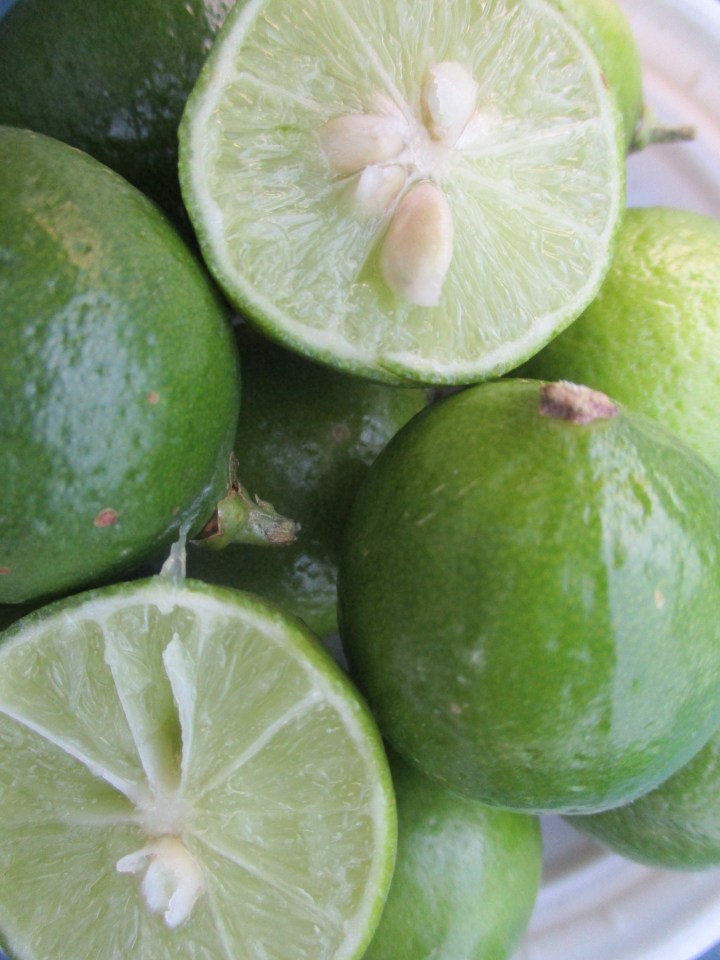
Ripe citrus in the middle of winter impresses those in climates where winter is too cold for much to happen in the garden. They could not grow a citrus tree if they wanted to. Even here, frost can damage some of the more sensitive citrus varieties, like ‘Mexican’ lime. Unlike the fruits of summer, citrus fruits ripen slowly and are not so perishable, so do not need to be harvested right away.

This means that if it is raining, cold or just to wintery to go outside, citrus fruits can be left on the tree until the weather improves. Most of us prefer to pick them in small batches anyway. Ideally, fruit should get picked as it is consumed. Lemons and limes typically get picked individually as needed, until there are so many that some need to be bagged and shared with friends and neighbors.

Mandarin oranges are the most perishable of the citrus. Because their skins are so loosely attached to the pulp, the pulp can oxidize, lose flavor and eventually get dry and pithy. Incidentally, a ‘tangerine’ is merely a Mandarin orange that was developed in North or South America. A surprisingly sour (unknown) Mandarin orange might really be a ‘Rangpur lime’, which is not a lime at all.

Unlike most fruit that continues to ripen after harvest, or pears that actually delay ripening until after harvest, citrus fruits stop developing flavor once picked. It is best to taste them for confirmation of ripe flavor prior to harvest. Some Mandarin oranges may have slightly greenish blotches on them even when completely ripe. The best ‘Valencia’ oranges can look rather yellowish. Grapefruits might mellow if left in their trees past ripeness, but can also inhibit bloom.

Berries Are For The Birds

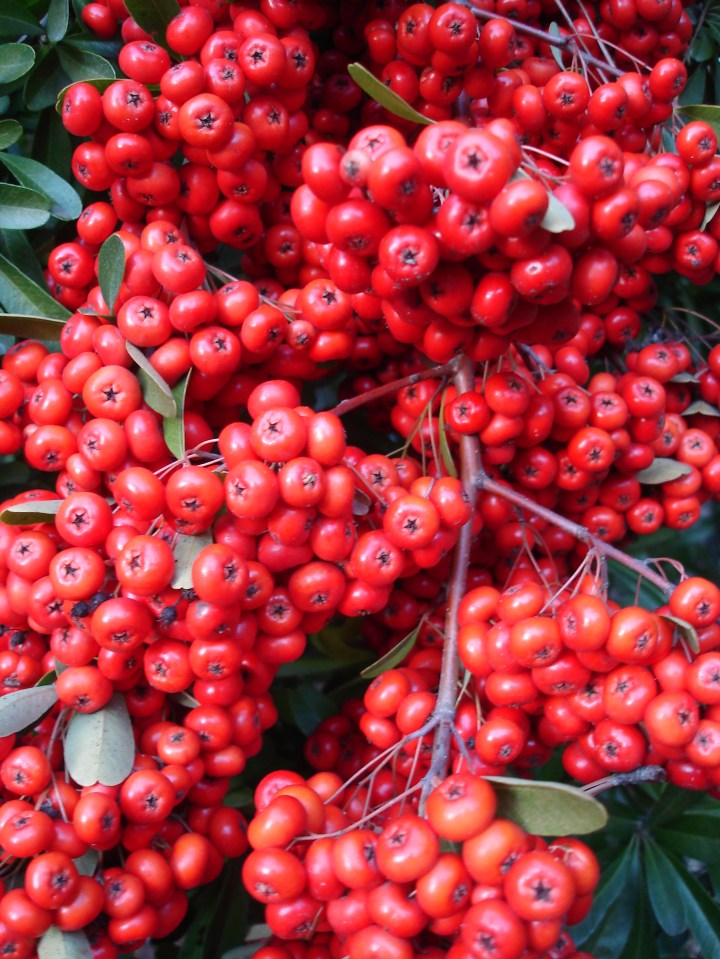
51125It is probably no coincidence that certain berries and small fruits are so colorful through winter while colorful flowers are relatively scarce. Like flowers, they want to get others to do something for them. Flowers use color, aroma, flavor and sometimes even texture to attract and reward pollinators. Colorful berries and fruits do the same to attract birds and animals who disperse their seeds.
There are not many colorful flowers blooming in winter to distract anyone from colorful berries and fruit. Those who want them are pretty intent on finding them anyway. There is not much else for overwintering birds to eat. Squirrels probably have plenty of acorns and nuts stored, but might enjoy a few berries too. No matter how abundant they are, there is serious competition for berries.

Most types of berries and small fruits that are so colorful through winter contain tiny seeds that get eaten along with the fruit. In this manner, the seeds get taken away from their origin as easily as birds fly away. They then get dispersed as birds do what birds do (that can be so annoying on a freshly washed car). Digestion only scarifies these seeds, which might not germinate otherwise.

This all might be much more information than necessary for home gardening. All we really need to know is that there are several plants that can produce colorful berries through winter while other color is limited. Although, it might be useful to be aware that these colorful berries are likely to eventually be depleted by the birds and any other wildlife that they are intended to be appealing to.

Then again, winter berries are popularly grown specifically to attract birds and wildlife to the garden. Either way, if berries are grown for their color or to attract birds, they have the potential to be messy. Those that do not get eaten eventually fall onto whatever is below them. Those that do get eaten fall (in ‘another form’) all over the neighborhood, and of course, onto freshly washed cars.

Coincidentally, most plants that produce colorful winter berries are related. They are of the ‘rose’ family, ‘Rosaceae’, and produce similar ‘pomme’ fruits that look like minute apples. Firethorn (pyracantha) is the most colorful and prolific. The various cotoneasters, including some low growing ground-covers, are similar, but not so prolific. Toyon is a colorful native that works nicely in unrefined landscapes. English hawthorn is a small deciduous tree.

Mexican Lime

71227Those who can grow Mexican lime, Citrus aurantifolia, get to brag to their friends who can not, even if they are only a few miles away in slightly cooler spots. It really is marginal here. If it gets too cool in winter, it can defoliate. Frost can damage or kill the stems. Because it stays smaller than other citrus, Mexican lime happens to do well in large pots that can be moved to shelter for winter.
Mature trees can get taller than six feet, but not much higher than first floor eaves. The limber stems have small but sharp thorns. The two inch long evergreen leaves are glossy and nicely aromatic. The small white flowers are actually less fragrant. The round one or two inch wide fruits ripen from rich green to pale greenish yellow. The peel is very thin and tough, which is ideal for squeezing the juice from the very juicy and aromatic, but potentially seedy, greenish yellow pulp within.

Holy Guacamole!

P71202.jpgHorticulturists have a way of making all those long Latin names sound easy to pronounce. Lyanothamnus floribundus ‘Asplenifolius’ – Syzigium paniculatum – Metasequoia glyptostroboides. I do not know why proper pronunciation of their names is so important. They have no ears. They can not hear if we simply call them ‘Earl’. Even if they could hear, they would not respond.
Communication with other people is probably more important. Yet, we are so often unable to spell something as seemingly simple as the sound of a palm frond falling to the ground. Does it sound like “whoosh”, or “splat”, or some combination of both? What do the Santa Anna Winds sound like as they blow through a grove of Aleppo pines? What does a red flowering gum full of bees sound like?

Heck, Brent could not even tell me what an incident that he heard in his own backyard sounded like. As he came home from work and was getting out of the car in the driveway a few days ago, he heard in rapid succession, a loud ‘CRACK!’ followed immediately by a loud ‘WHOOSH!’ and a big ‘THUD!’ and ‘BANG!’. Well, I was sort of clear on all that, but it was the finale that was baffling him.

He said it sounded like someone dumping out a big bucked of tennis balls filled with something to make them heavy. I did not ask how he knew what that sounded like, or what the tennis balls were filled with, or why anyone would fill tennis balls with anything, or . . . He was obviously unsatisfied with that explanation, so said it sounded more like a whole bunch of billiard balls bouncing off of the bumpers all at the same time, without bumping into each other. Well, that is some pretty talented pool.

Okay, so it sounded like when you get into an elevator on the ninth floor of the Bank of America Tower, you know the big one downtown, and the bottom falls out of your big bag of ‘Eureka’ lemons somewhere between the fifth and fourth floors, and everyone is staring because it is noon thirty on Friday, and . . . well you know, . . . and then there was this . . . and . . . ain’t nobody got time for that!

Dude, just shut up! I get it.

Well, he went to the backyard to investigate. The source of the commotion was not immediately apparent from ground level. Everything seemed to be in order, maybe a bit sunnier, which might not have been noticed anywhere else after autumn . . . but this is Los Angeles. When Brent looked up to the deck on the flat roof of the office, it all became clear.

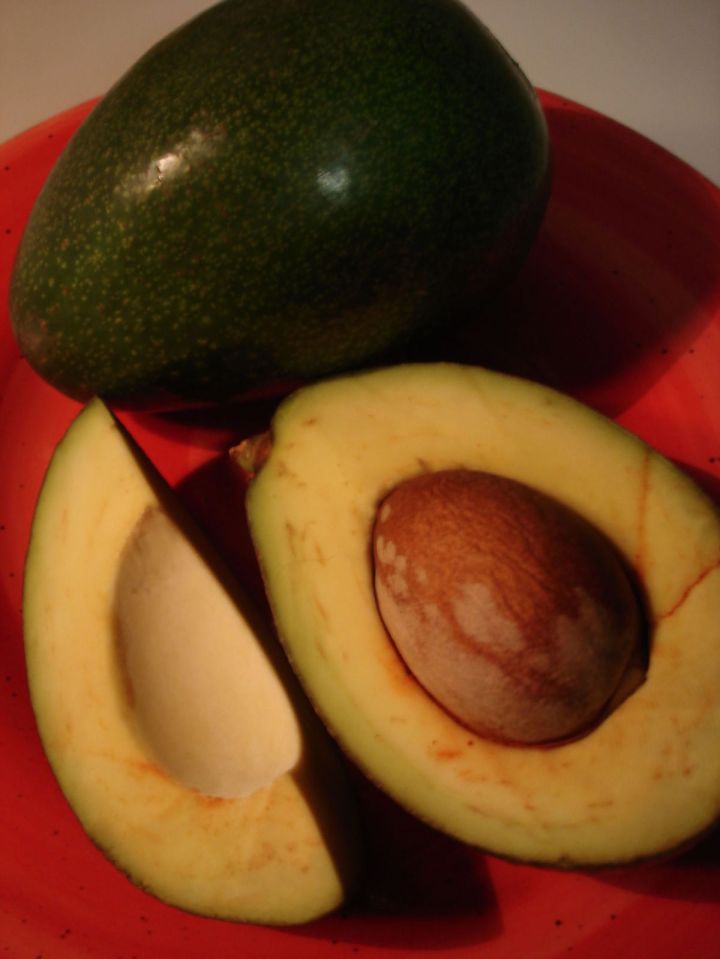
The big avocado tree in the neighbor’s garden dropped a big limb onto the deck. The last strange sound he heard was that of so many heavy avocados hitting the deck and scattering in every which direction, including down the wrought iron spiral stairs. All the patio furniture and cool potted plants up there got clobbered. Fortunately, there was no serious damage, and the avocado tree should be fine. Most of the fruit was in good condition. Only those that fell down the stairs were pulverized into lumpy guacamole.

The Secret Affairs Of Flowers

61207thumbThere are some things about plants that we might be better off not knowing about. For instance, their idea of sex is even weirder than that of humans! Generally, flowers of ‘monoecious’ plants have male parts and female parts that do what they must to produce seed, which is often contained in some sort of fruit structure. Some plants can pollinate themselves. Ick! Others require separate but compatible pollinators.

Some plants bloom with both but separate male and female flowers. Female pine cones that produce seed are very different from the male pine flowers that produce pollen. Female flowers of spruce and several other conifers bloom higher in the canopy than male flowers. This promotes better cross pollination, since pollen must be blown upwardly but relatively randomly to the cones instead of simply falling from above.

Dioecious plants might seem less . . . weird. They actually have separate genders. Some are female. Some are male. Female plants require pollination from male plants in order to produce seed and fruit, though some can provide a few of their own male flowers if they sense a lack of males in the neighborhood. Ick again! There are certain advantages to every method of pollination, whether it makes sense to us or not.

One advantage of dioecious plants that does make sense to us is that messy fruit can be prevented by growing one gender or the other. Modern cultivars of Chinese pistache and maidenhair tree (gingko) are male, so can not produce the messy fruit that older trees are notorious for. Female date palms recycled from old date orchards are unable to produce dates without the male pollinators that do not get recycled.

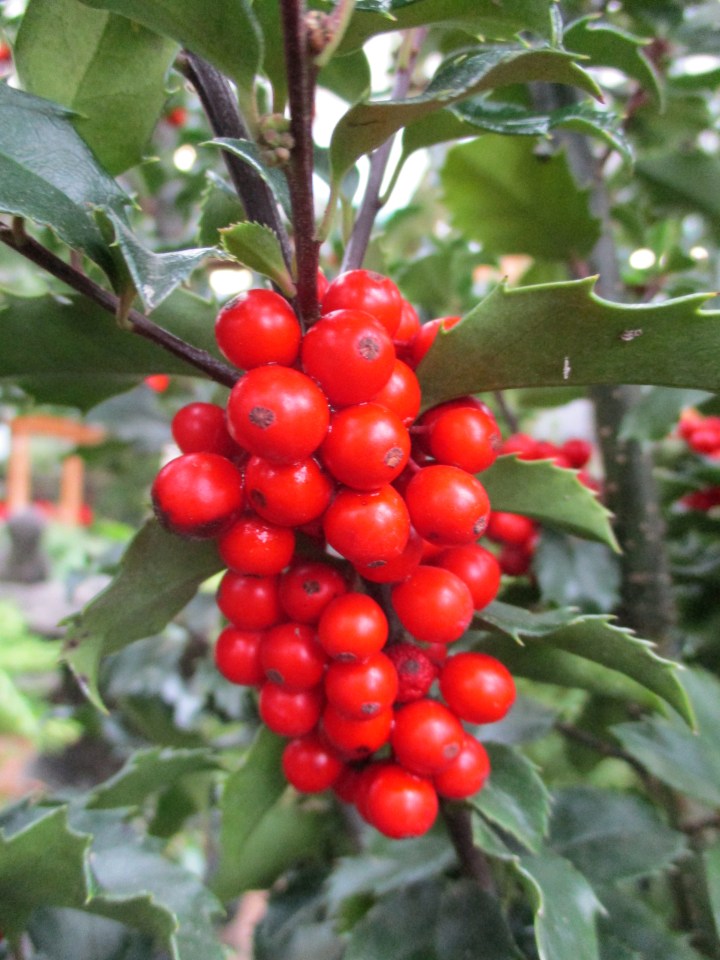
However, this is a disadvantage if holly can not make berries because it lacks pollinators. Decades ago, scions (stems) of male holly were grafted onto female plants. Alternatively, male plants were sold along with female plants.

Plants Grow Up So Fast

50429thumbShortly after germinating and producing their first few leaves, many seedlings start to produce foliage that is indistinguishable from the foliage that they will produce for the rest of their lives. Other plants might initially be outfitted with leaves that are smaller, thicker, or somehow slightly different from what will appear later. Then there are those that produce juvenile growth that is completely distinct from later adult growth.

There are many reasons for juvenile growth. It might be a competitive advantage for plants that live in dense forests. For others, it might deter grazing animals. Ivy actually has three phases, with juvenile ‘ground cover’ growth that creeps over the forest floor in search of a vertical support, adolescent ‘vine’ growth that climbs the support, and adult ‘tree’ growth that blooms and seeds when it gets to the top of the support.

Eucalyptus trees produce juvenile growth that is more pungently resinous than adult growth, in order to deter animals that would otherwise eat it. Adult growth develops when the main trunks have grown beyond reach of most of the threatening animals. Vigorous new growth that develops in response to breakage or pruning later in life is also outfitted with juvenile foliage so that koalas and other climbers leave it alone.

Avocado trees grown from seed produce no obvious juvenile growth, but without wasting their effort on blooming and fruiting, they grow very fast and lanky to compete with a dense forest canopy, whether real or imagined. For their first several years, they need to be pruned for structure and containment. They eventually produce adult branches, and start to bloom and produce fruit (although the fruit might be variable.)

Avocado trees obtained from nurseries are grafted so that they are genetically identical to a specific cultivar (for conformity of fruit), and so that they can start to produce right away. Their ‘scions’ (upper part of grafted trees) are obtained from adult growth of stock trees, so do not take several years to mature. The same technique works for citrus, which otherwise produce fruitless and wickedly thorny juvenile growth.

Sometimes, juvenile growth is preferred. Ivy gets pruned out of trees and off of walls to preserve the juvenile growth as an appealing and efficient ground cover plant, while also eliminating the potentially destructive climbing vines.51104