 Lawn is the carpeting for our outdoor spaces. Like pavement or decking, it makes the space in or gardens useful for more than growing other plants. Since it is designed to share its space with us, we give it more ground space than any other type of plant. For what it contributes, most of us do not mind giving lawn all the water and attention that it requires. It really seems indispensable.
Realistically though, most of us are lazy; and we really should be using less water in our gardens. Perhaps it would be more polite to say that we should more selectively prioritize the expenditure of limited resources and effort. Lawns that do not get much use are probably not worth all the work and water. There are easier ways of managing extra space than covering it with turf grass lawn.
Whether we like it or not, artificial turf is very undemanding, and requires no water. It is a bit too uniform and perfectly colored to convince those who bother to notice that it is not real turf, but it is still more convincing than old fashioned artificial turf. It is durable enough for children and dogs, as long as no one tries to dig in it. It does well where dark shade prevents real grass from growing.
The cost of artificial turf is an important consideration. It is relatively expensive for those who maintain their own lawns. However, artificial turf that last for many years is less expensive than paying gardeners to mow for just two or three years. The perfect uniformity of color and texture that might be unappealingly unnatural for horticultural purists is so worth the extra expense to perfectionists.
Installation of artificial turf in a new landscape is relatively easy, since irrigation can be installed only for adjacent plants that require it. Replacement of real lawn with artificial turf in an established landscape is much more challenging, or in rare situations, impractical. Trees and adjacent plants that are reliant on lawn irrigation will need to be watered (somewhat) where the original lawn was.
It seems silly and contrary to water conservation to water artificial turf, but it is sometimes necessary until roots of established plants adapt and migrate to other sources of water. This can take a few years for trees that are surrounded only by lawn. Irrigation need not be as frequent as it was to sustain turf grass, but should be sufficient to sustain any other plants while they figure things out.
 If more of us knew how vines compete in the wild, fewer of us would grow them in our home gardens. Understory plants that are satisfied with the sunlight that reaches them through a higher forest canopy are the most passive. Taller trees compete for sunnier exposure above. Vines are the most aggressive as they climb and overwhelm trees to get the best exposure on top of everything.
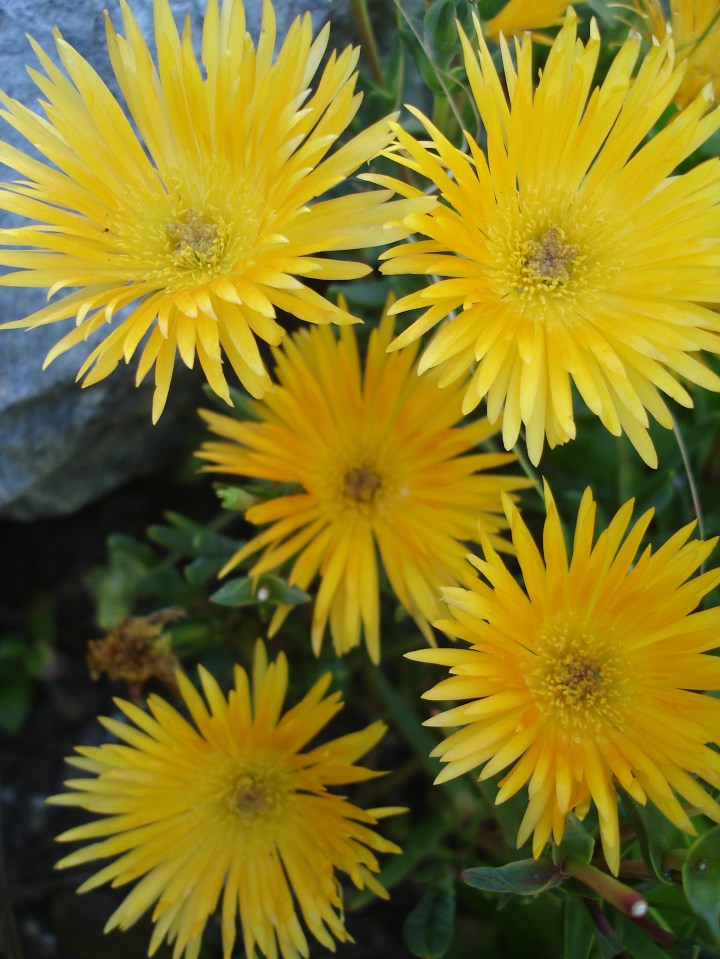 Bright pink bloom that can be profuse enough to obscure the succulent foliage below is nothing new for iceplant. Some bloom bright purplish pink. Others are reddish pink. A few are softer pink or white. What is unexpected is iceplant that blooms bright yellow, orange or gold, like Lampranthus aureus does. (Freeway or beach iceplant that blooms soft yellow or pink is not a true iceplant.)
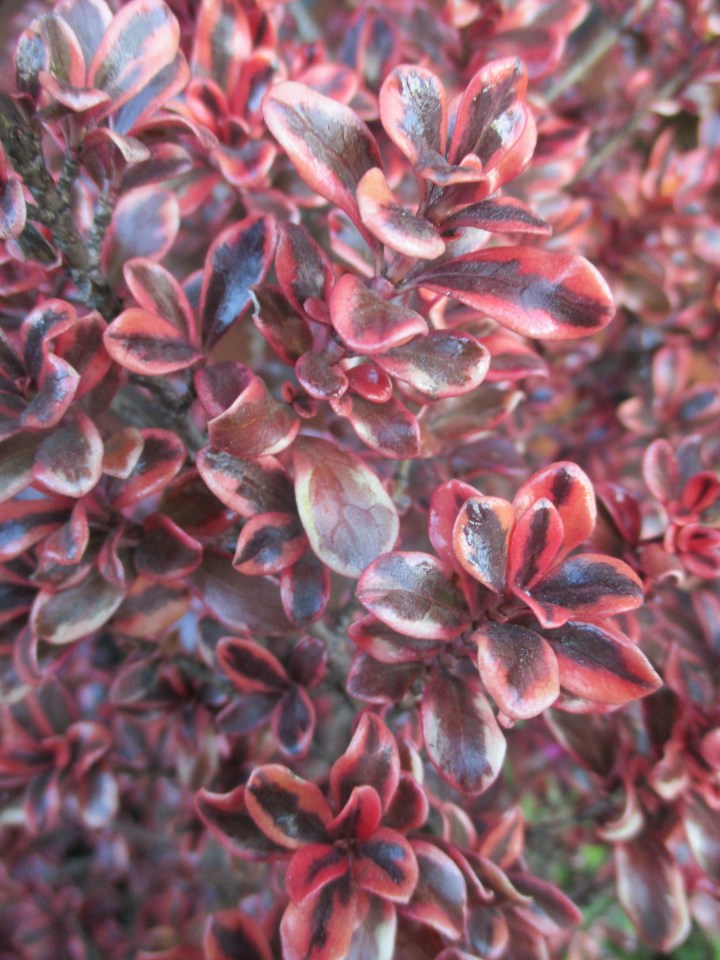 Classic but simple mirror plant, Coprosma X kirkii, was a utilitarian shrubby ground cover for many years before all the colorful modern cultivars that are so popular now were invented. Individual plants can cover quite a bit of ground without getting any deeper than two feet. It is particularly useful in coastal landscapes, because it is so resilient to wind and exposure, as well as sandy soil.
 It seems like not so long ago when the only African daisy that was commonly available was the trailing African daisy that makes such a nice relaxed ground cover for small spaces. The simple white flowers have navy blue centers, and are occasionally joined by mutant light purple flowers. The cultivar that blooms only in light purple was not as popular. Things have certainly changed!
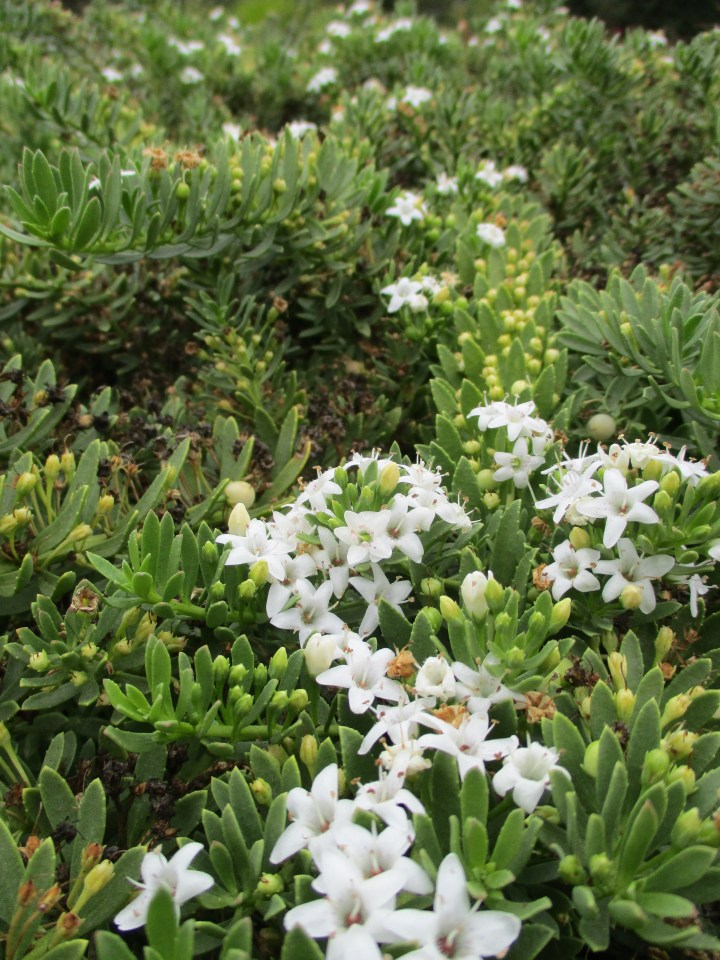 The familiar sandalwood, Myoporum laetum, that is such a resilient small tree or big shrub in windy coastal climates, might make the wrong impression for the less familiar creeping myoporum, Myoporum parvifolium. Creeping myporum does not get much more than a foot high unless it climbs over stones or other obstacles, and it might stay less than six inches deep in exposed spots.
 If shade trees are the ceilings, and hedges and shrubbery are the walls, then turf and other groundcover plants are the floors of some of our outdoor living spaces. Except for turf grasses, most groundcovers are not as useful as hardscapes like pavement and decking, but they perform other functions in areas that do not get such use. Groundcovers inhibit weeds, erosion, dust and mud.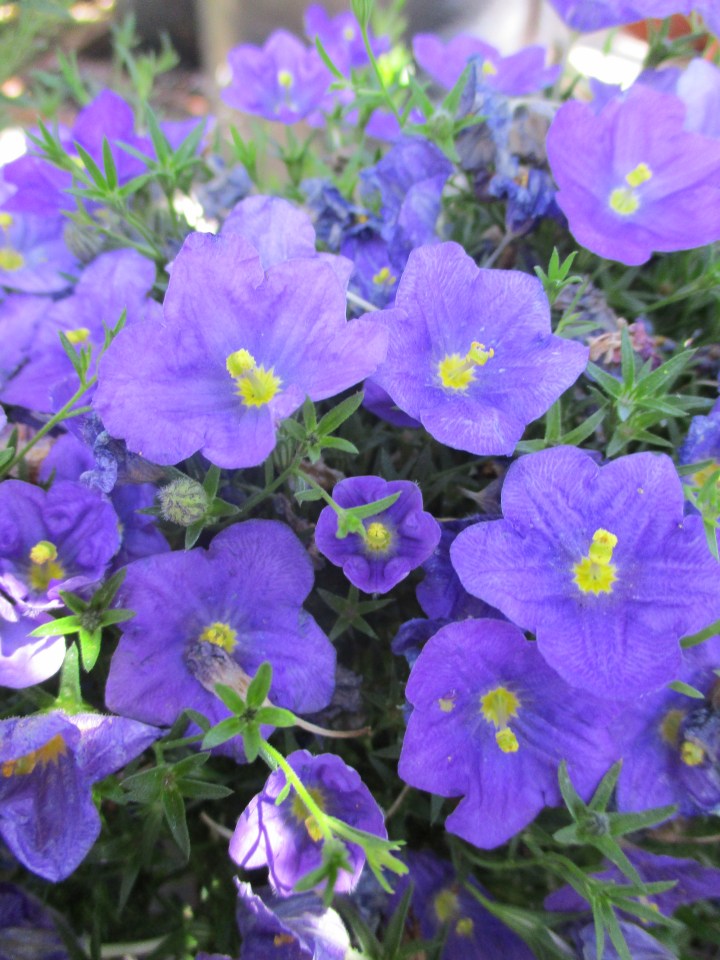
 Erigeron karvinskianus
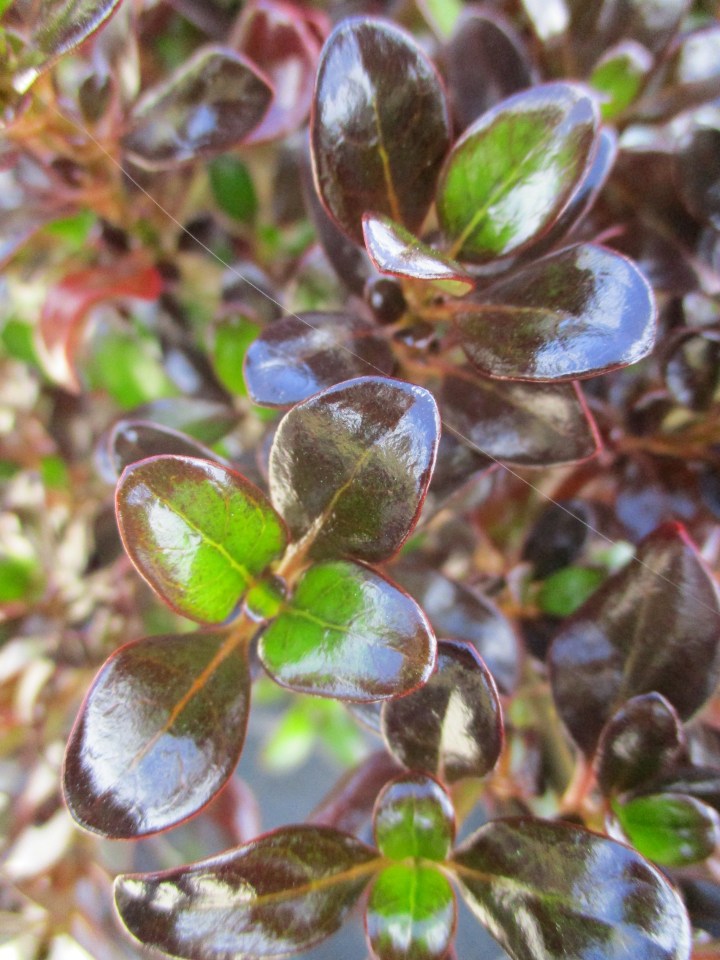 As the old fashioned larger mirror plant, Coprosma repens, fell out of favor through the 1990s, several more colorful varieties of a more compact species of mirror plant, Coprosma X kirkii, became popular. (The ‘X’ in the name indicates that it is actually a hybrid of two specie.) Without getting much more than two feet deep, it spreads out laterally like dense evergreen groundcover.
 Tony Tomeo