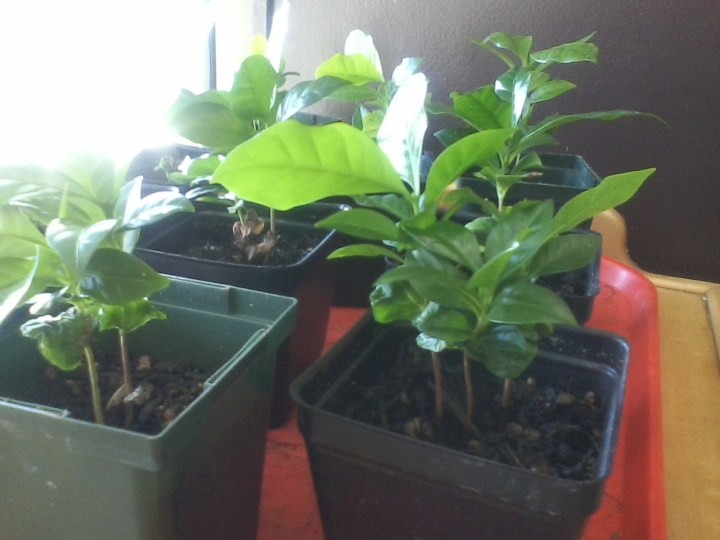
 There are certain things that we expect to find in a coffee shoppe. Mainly, we expect to find . . . coffee. Yes, coffee, . . . duh. We can get all sorts of coffee beverages; hot, chilled, steamed, infused with things that have no business going into coffee. They have all sorts of cool sounding but strangely irrelevant Italian names that white people enjoy telling people of Italian descent how to pronounce. Yes, my name is Tony Tomeo; and I don’t want twenty cups of coffee with bread. Well, besides the coffee beverages, there are plenty of coffee beans; all sorts of roasts. I do not know of any coffee shoppe that grows any of the beans that it sells, but there is nice coffee shoppe in Felton, The Mountain Roasting Company, that grows coffee trees.
Yes, that is unique. I noticed a few years ago that besides the typical Ficus benjamina, there are three large coffee trees. They look similar to the Ficus benjamina, but are a bit less refined, and lack the braided trunks. They grow up to the ceiling before getting cut back to stumps to start the process all over again. The Ficus benjamina do not grow that well; but the coffee trees are happy enough to bloom there.
I have not asked how they get pollinated. I really do not know how coffee flowers get pollinated in the wild. Somehow, they make a few fruits, known as coffee cherries, with viable coffee beans inside. The seeds get collected, germinated, and potted for customers who have an appreciation for growing something unique. Small coffee trees can now be found in well outfitted nurseries, but it would be so much cooler to grow one that was grown at a local coffee shoppe.
I am embarrassed to say that I do not know how to grow coffee trees. I think of them as tropical plants, but I really do not know. Just because they are cultivated closer to the tropics does not mean that they originated there. I do believe that they are understory trees, that prefer to live in the partial shade of larger trees. Old text, as well as a few not so old gardening books from the 1960s, describe them as houseplants. There is not much mention of them after that. They only recently started appearing in nurseries. I like when old traditional plants make a comeback, particularly if it happens to be an alternative to a boringly common plant like Ficus benjamina.
 The softest and laciest of the asparagus is the asparagus fern, Asparagus setaceus. The extremely small ‘leaves’ (or ‘cladodes’) are less than a quarter of an inch long. The tiny and mostly unnoticed pale white flowers that bloom sporadically in warm weather make it obvious that asparagus fern is not really a fern. (Ferns do not bloom.) If any green berries develop, they are toxic.
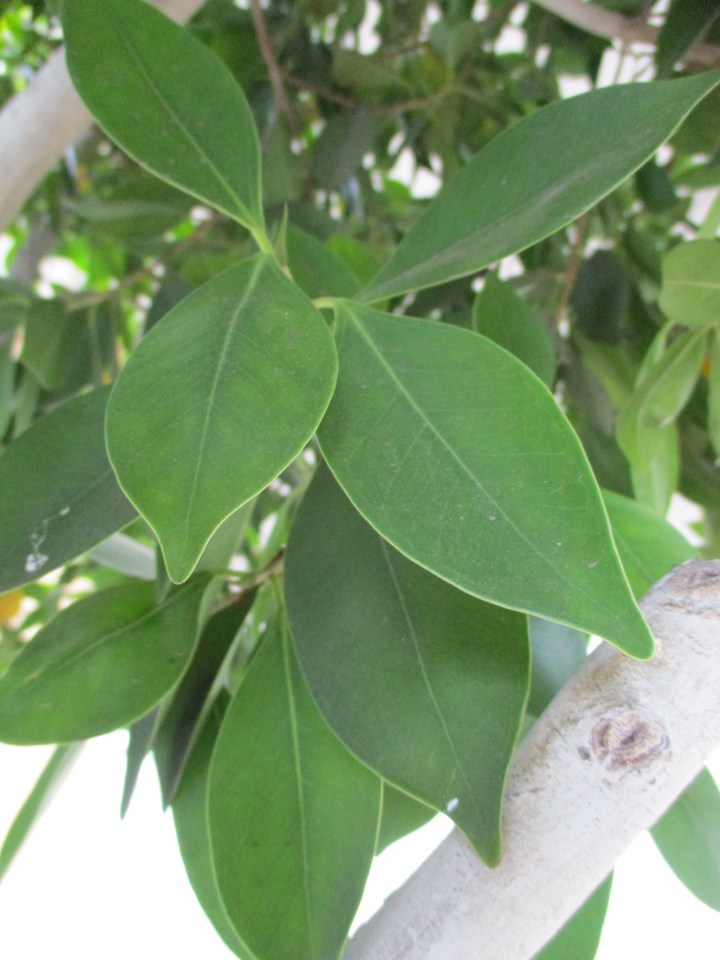 It is hard to believe that such a delightfully robust and luxuriant tree like the Indian laurel,
  Staghorn ferns are epiphytes. They cling to tree trunks, rocks or whatever they happen to grab onto. They can root into decayed wood if it is porous enough, but they are satisfied to just cling to the exterior. They do not need soil. They sort of make their own soil by collecting debris that falls from the canopies of trees above. In the jungles where they live, they get all the water they need from rain. They often live in the crotches of branches because that is where they happen to land. (The epiphyte I wrote about earlier was just a palm that landed in the wrong place, but is not really an epiphyte.
  They were not always houseplants. They came from somewhere else. Most came from shady tropical forests, which is why they have such big dark green leaves, and are so tolerant of shady home interiors. They are pretty good sports about tolerating the domestic lifestyles that we subject them to, but they would really prefer to be thousands of miles away, growing wild back home.
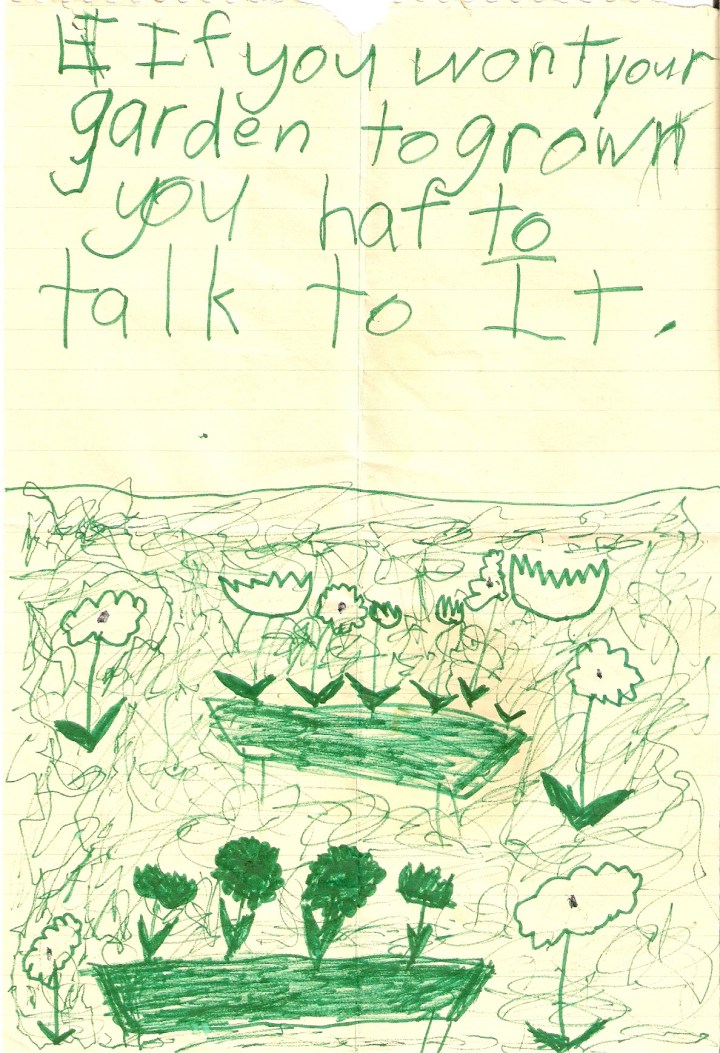 So the spelling is a bit . . . off. Ignore the ‘E’ before ‘If’ and the ‘n’ after ‘grow’. They are crossed out . . . sort of. ‘wont’ means ‘want’. ‘haf’ means ‘have’, as in ‘have to’ or ‘need to’. It made sense at the time, more than four decades ago. Perhaps I should rephrase it.
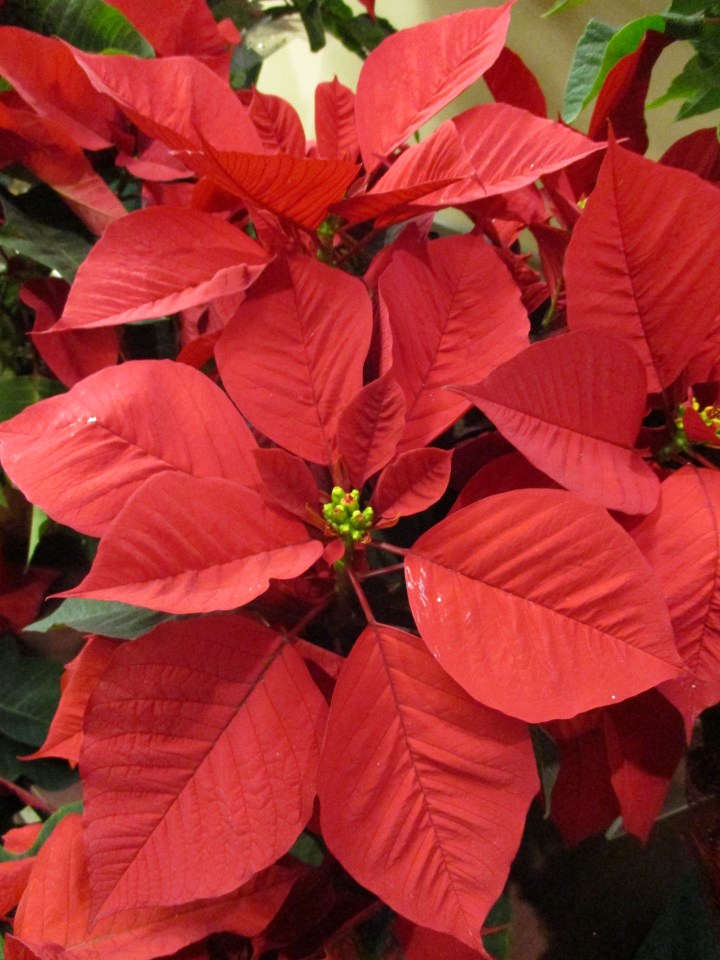 After all the Christmas decorations get put away for next year, and the Christmas tree eventually gets undressed from all its ornaments, and retired to the compost pile or greenwaste, all the pretty seasonal potted plants remain. Some will bloom, or at least maintain their current bloom, for months. Some might eventually get planted out in the garden. Others might stay potted in the home.
 The Latin name is easy to confuse with the sacred flowers of an aquatic perennial from tropical regions of Asia, or a funny looking British sport coupe. Lotus berthelotii is a diminutive terrestrial perennial known as parrot’s beak. It gets only about a foot high, and spreads to only two or three feet wide. It cascades nicely from hanging pots, and is actually rarely planted out in the garden.
 What an unflattering name for such striking tropical foliage! The pointed and strap-shaped evergreen leaves of mother-in-law’s tongue, Sansevieria trifasciata, stand vertically, about two or three feet tall. They are rather rigid, and seem to be plastic with a glossy finish. Almost all modern varieties are variegated with silvery gray, white, cream or yellow stripes or banding. Dwarf varieties stay shorter, with flared foliage.
 Everyone is from somewhere. Not everyone is fortunate enough to be from California. Most of the various plants in our gardens, even if grown locally, are descendants of plants that were collected from all over the world. Most houseplants are from tropical regions. They perform well as houseplants primarily because they tolerate the sort of partial shade that they would get as understory plants in dense tropical forests.
 Tony Tomeo