Did you see my Six on Saturday posts last week, in which I explained the origin of these pictures, and why they are of such bad quality? To be brief, they were sent by Brent Green, my colleague since 1986, who is a renowned landscape designer in the Los Angeles region, and takes very bad pictures.
Well, these pictures are atypically not bad. They are of Brent’s home garden, which is crowded with way too many plants. There is more variety within this confined space than I could fit in several acres . . . or many acres. Some plants get trialed here before being used in some of the landscapes that Brent designs.
What you can not see in these pictures is that this garden is on a small city lot in Mid City Los Angeles, just about a block from the Santa Monica Freeway. What you can not hear, either here or there, is the noise of the freeway, which is mostly muffled by the high hedges and various small fountains strategically located throughout the garden.
Since Brent sent too many pictures, six more will be posted here: https://tonytomeo.com/2019/04/06/six-on-saturday-brents-garden-ii/
1. A small elevated porch-like patio at the rear of the garden was built from debris of the old, and now replaced (obviously) driveway. The old broken concrete was stacked in a few layers. The chunks of the top layer were mortared together with a bit of fresh concrete. This is the view from that patio, back toward the house. The patio and low walls constructed of the same debris can be seen in the next batch of pictures.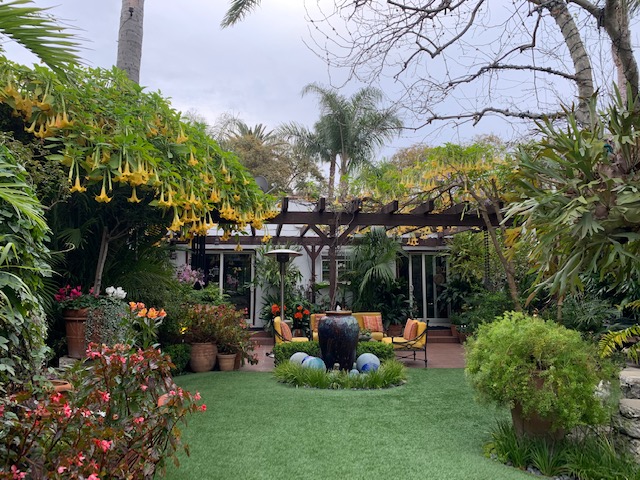
2. This is probably the most important picture that Brent sent so far. Those soft orange flowers just to the left and just above the center of the picture are Alstroemeria, or Peruvian lily, from my garden. They are the main reason that Brent’s garden is SO spectacular. Anyway, the low wall was also constructed from the debris from the old driveway. This picture is a closer view just to the left of the previous picture above.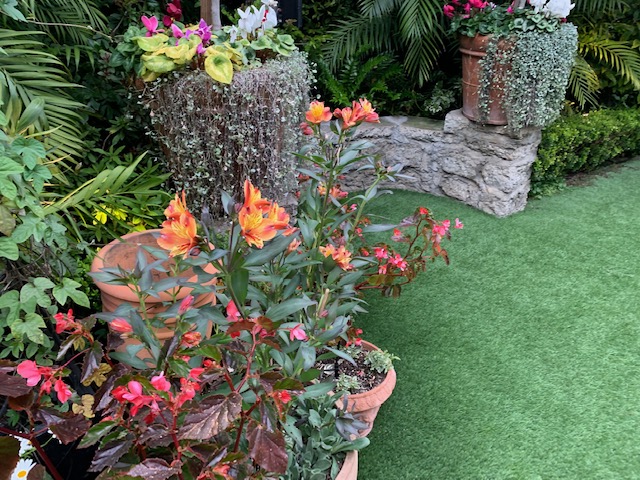
3. Just to the left of the picture above, and just in front of the picture above that (although outside of the margin of the first picture), this unidentified pink azaleas was blooming happily. Brent probably thought I would be impressed with this one, but duh, I used to grow azaleas, and I still work with more than I can count. I did not grow this one though. There is another picture of a similar specimen in the next batch of pictures.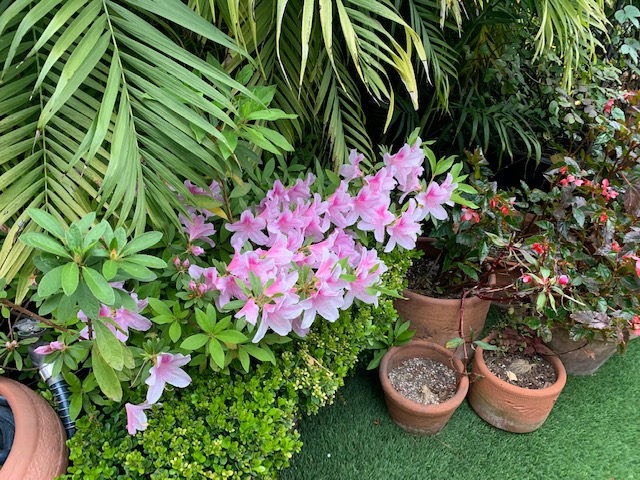
4. Again, Brent mistakenly thought I would be impressed with this one. I think he wanted to show off the blooming Chinese wisteria rather than the beams that it is climbing on. It really is spectacular though, and was even more spectacular when it covered more of the arbor. Unfortunately, parts of it mysteriously died, and some was removed to allow more sunlight through. This section is obscured by the big angel’s trumpet in the first picture.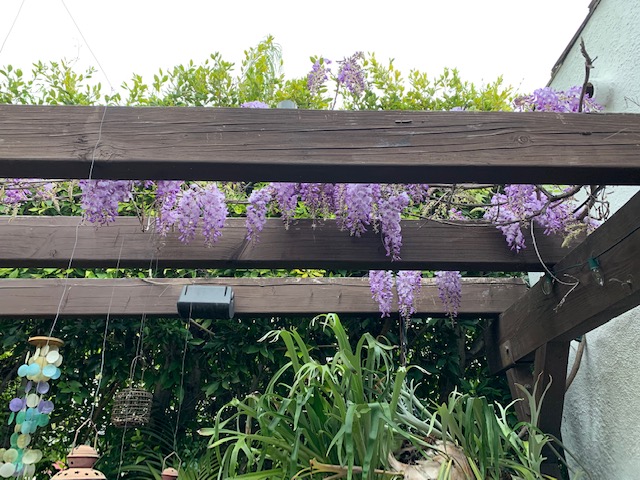
5. What a sloppy mess! The bright reddish orange flowers amongst the lush strap shaped leaves in the middle are Kaffir lily, Clivia miniata. There are a few scattered about, that bloom in colors ranging from even redder orange to very pale (almost white) yellow. Yet, the traditional bright reddish orange is still the best. They tolerate quite a bit of shade, which is important in this overgrown jungle. I am impressed, but I do not tell Brent.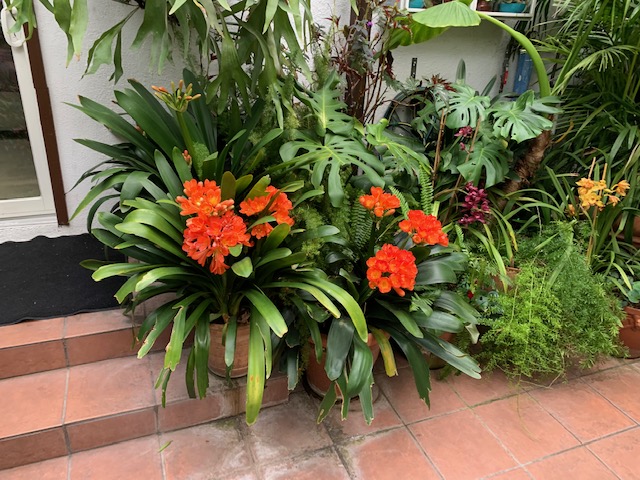
6. If this ‘Charles Grimaldi’ angel’s trumpet looks familiar, you might have seen it in the Sunset – Western Garden Book. It provided the illustration for its genus of Brugmansia. It is quite large, and grows like a weed. I pruned it years ago, and to my surprise, Brent didn’t totally panic when I cut the entire top off. Just before I pruned it, Brent tore off the big rooted canes that grew into the big copy off to the right in the first picture.
This is the link for Six on Saturday, for anyone else who would like to participate:
https://thepropagatorblog.wordpress.com/2017/09/18/six-on-saturday-a-participant-guide/
 In this situation, the point is that all those pointed tips of the leaves of this awkwardly floppy century plant, Agave americana, are extremely sharp, extremely rigid and EXTREMELY dangerous. Those shorter teeth on the margins of the leaves are just as sharp and rigid, and are curved inward to maximize injury to anyone trying to get away from an initial jab. With tips that impale, and marginal teeth that slash, this is one very hateful perennial!
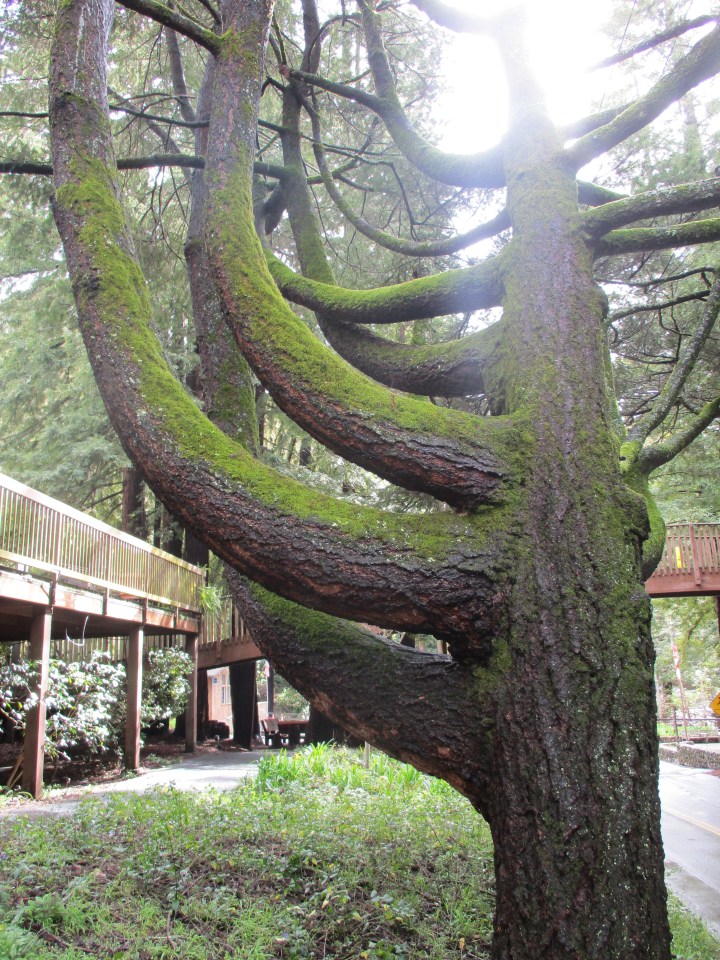 This is no common Douglas fir. It is the ‘Davey Tree’, named after the tree service that so diligently prunes it for clearance from the utility cables above. Yes, I can see as easily as you can how disfigured it is. The plan is to cut it down before it falls apart. At least that is the excuse for cutting it down. It is relatively short an stout, so is likely quite able to support its own weight, regardless of this disfigurement. We really just want it gone because it is so unsightly.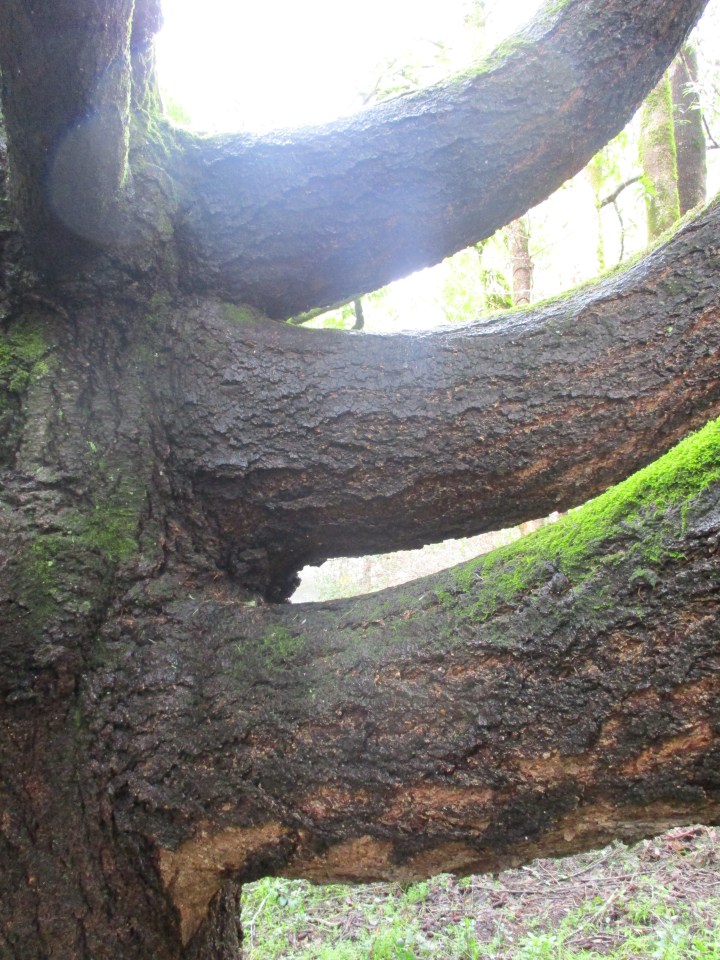
 This is why I do not grow hellebores in my own garden. The specimen in the pictures above and below are about as good as they get here. Most are quite a bit worse. Some put out only one or two flowers. Some do not survive their first year in the garden.
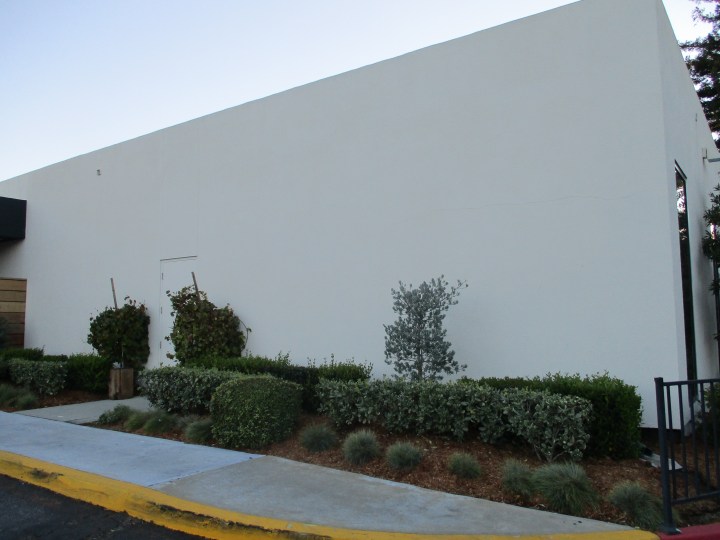 From a distance, this landscape does not look so bad. It seems to have been only recently installed, and features the sort of material that was likely intended to not necessarily obscure the sleek architecture of the building behind it, but to eventually soften the starkness of it.
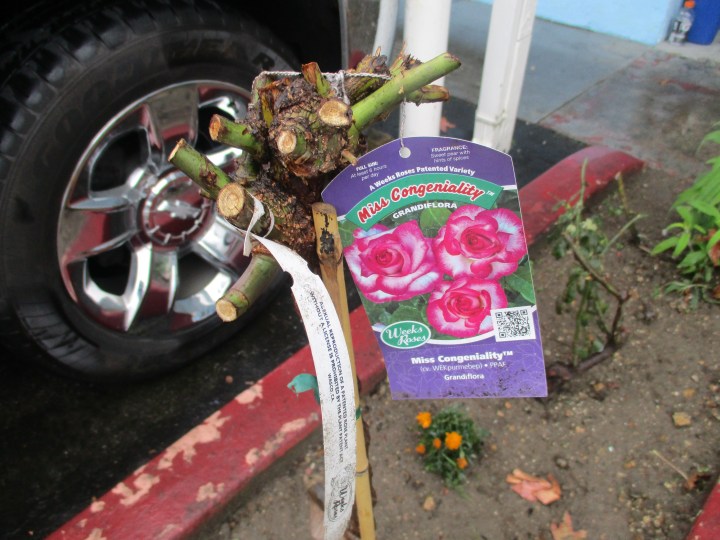 Now, before I commence with my rant and long list of problems with this picture, I should mention that this seemingly abused rose tree does seem to be appreciated. All the roses in this landscape seem to be very healthy, and they bloom constantly between spring and autumn. Their performance suggests that they are regularly fertilized and deadheaded.
 We learned it young from Schoolhouse Rock. Those of us who studied Landscape Design were compelled to learn why, and assume that it is always true.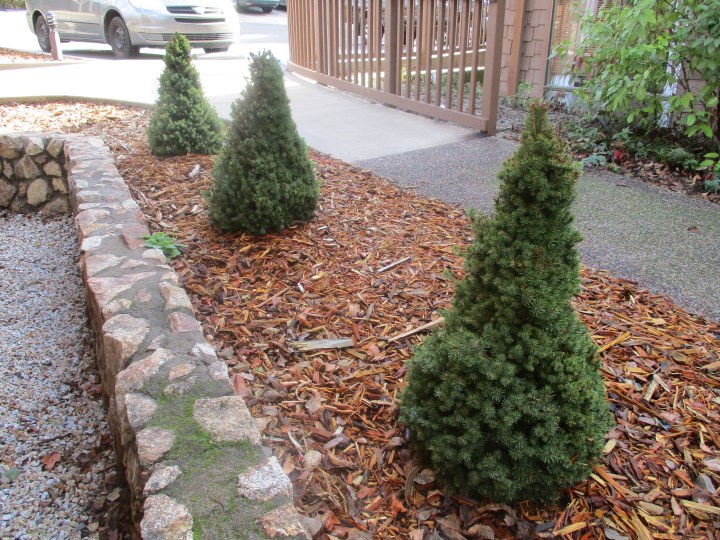
 Skyscrapers are already very efficient. They fit more usable floorspace into their ‘footprint’ than any other type of building does. They conserve energy that gets used for heating and cooling by exposing less of that floorspace to the outside weather. For all that usable floorspace, they need only a single roof.
 When they became a fad in the 2000s, it was one of the very few fads that was actually sensible for California. Agaves certainly are not for every landscape, and certainly do not suit everyone’s taste, but they are ideal for the climate here. In some regards, they are more practical than the more popular of the native specie that tend to be scrubby looking and short lived. Agaves really should have become trendy a long time ago.
 This is not a sequel to my rant ‘Real Deal’ from yesterday. It is just another rant. I should write more such rants; and I am actually considering designating Wednesday, as the day for discussion of the various hooey in horticulture, from some of the many fads and gimmicks to the lack of professionalism in the horticultural industries. Wednesday is the day between my current gardening column articles and the gardening column articles that are recycled from last year. There is certainly no shortage of hooey to discuss. I have been mostly polite about it so far. I sometimes wonder why I should bother with politeness. I sort of think that some would prefer more honesty than such unfounded pleasantries. Well, I can give more thought to that later. There are still a few more pleasant topics that should be discussed as well. For now, I will continue:
 Tony Tomeo