Six on Saturday: Craigslist

Craigslist is becoming a bad habit for me. It was the source of the overly abundant canna that I featured earlier, as well as seven Mexican fan palms. Last Wednesday, I procured a big pile of surplus purple bearded iris and African iris, free of charge. The bearded iris are ideal for a new ‘iris bed’ that formerly lacked occupancy. The African iris were heeled in and canned for later installation into another landscape that is not yet developed. The acquisition was very fortuitous, but also necessitated a bit of effort to process all the iris. After I either canned or heeled in all of the African iris, I installed all of the bearded iris, fortunately, by yesterday evening.

1. African iris, Morea iridioides, (which is also fortnight lily, Dietes iridioides and Dietes vegeta), could have potentially been divided into more than a hundred individual pups!
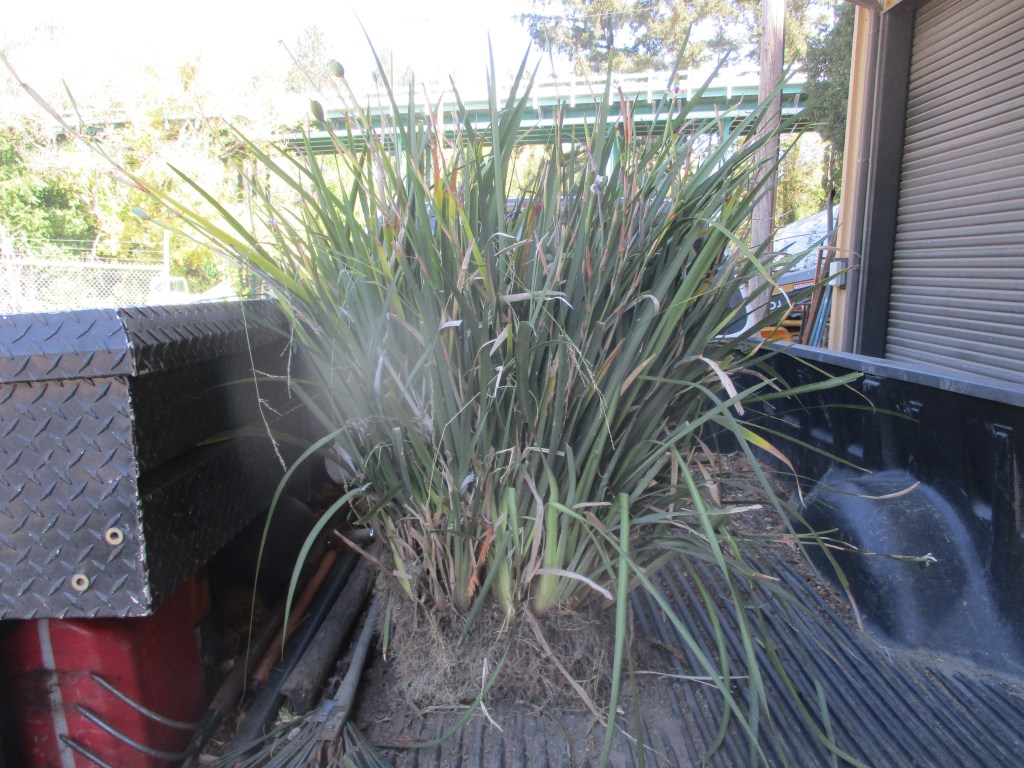
2. A few small clumps of pups were either already separated from the primary colony, or were dug from elsewhere in the same garden, so were divided and processed separately.

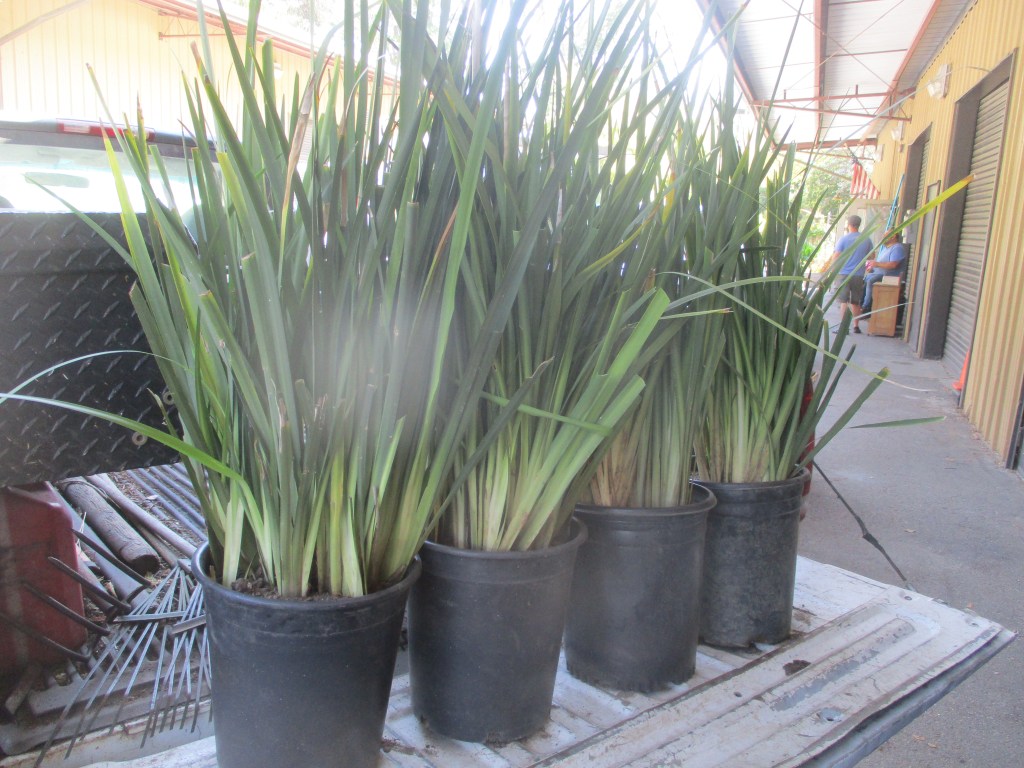
3. The few divided and processed pups were then heeled into two #5 cans for installation directly into a landscape, preferably prior to resuming foliar growth at the end of winter.

4. The bulky primary colony was merely groomed and divided into four big clumps, and canned into #5 cans, likely to be divided as pups or smaller clumps for later installation.
5. Bearded iris generated more than a hundred rhizomes, which is enough for more than fifty linear feet if installed half a foot apart, and now occupies nearly half of the ‘iris bed’.
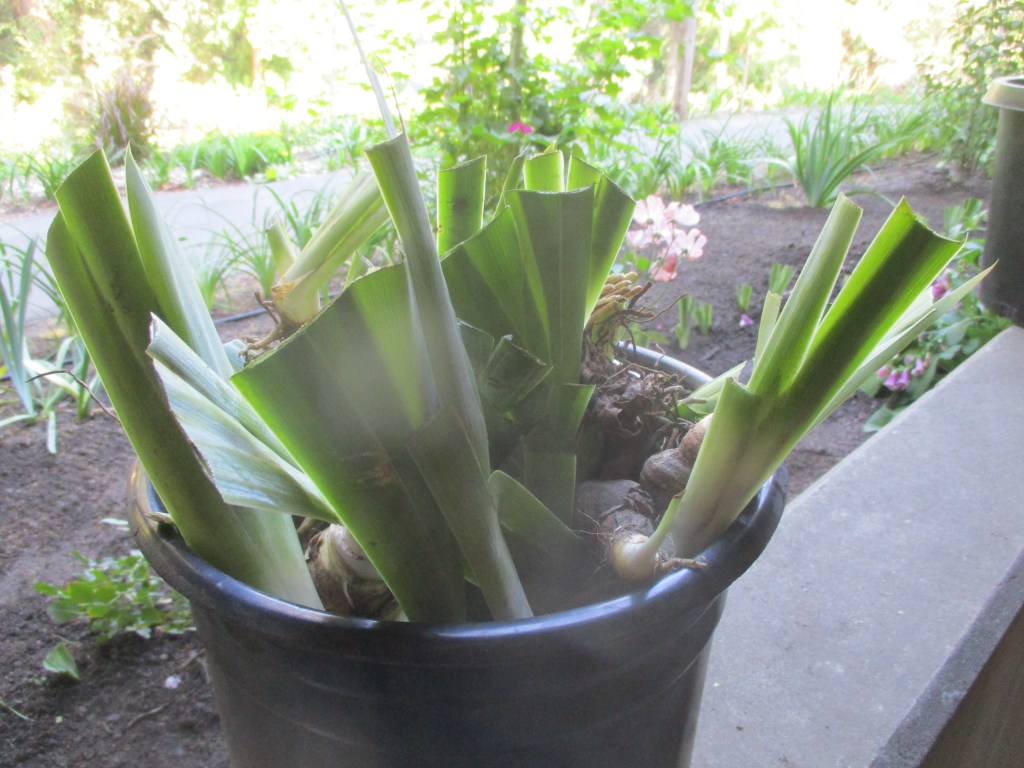
6. They might not look like much yet, but after settling in through winter, should bloom well for spring, grow through summer, and bloom spectacularly for the following spring.

This is the link for Six on Saturday, for anyone else who would like to participate: https://thepropagatorblog.wordpress.com/2017/09/18/six-on-saturday-a-participant-guide/
Six on Saturday: Lily Of Denial

‘Lily’ is such a vague designation. So many of the popular flowers that are known as ‘lily’ are not even remotely related to real lilies, which are of the genus Lilium. It is no wonder that many of them are confused about their obligations to the gardens that they inhabit. Some bloom unseasonably. Some develop unusual floral or foliar color. Their confusion can be contagious to flowers that are not even classified as lilies, such as #3 of these Six. Fortunately, the weird behavior of these flowers that live in denial of their true identities has been harmlessly and undeniably delightful. Such aberration is how new cultivars are sometimes discovered.

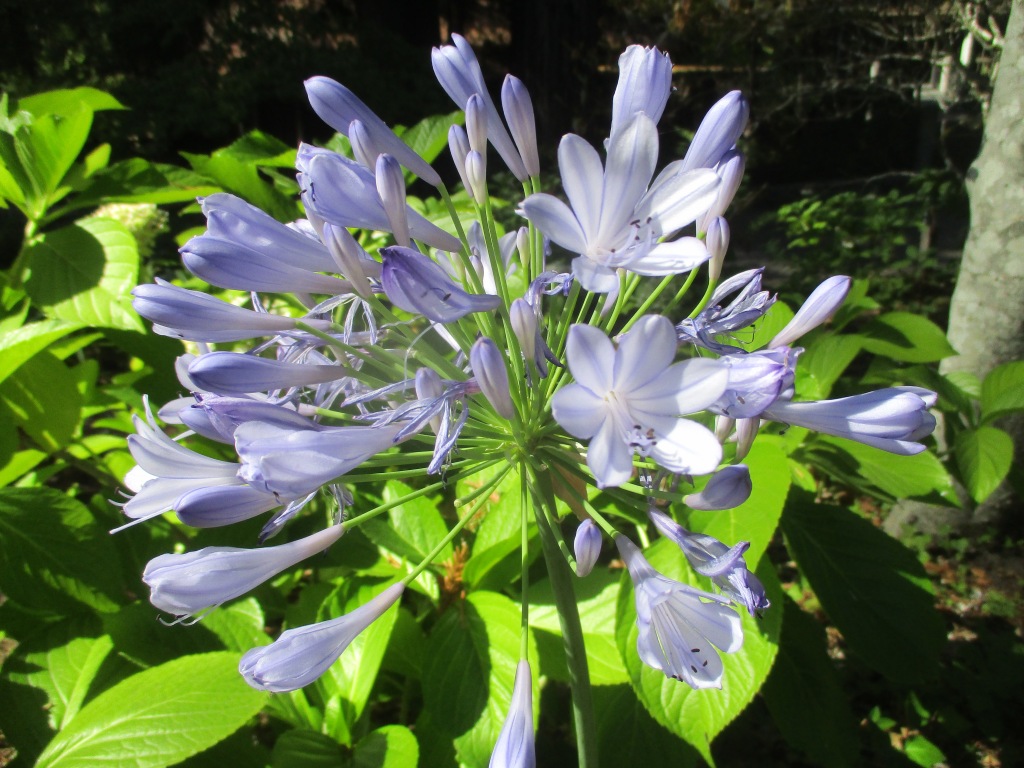
1. Lily of the Nile is in denial of its bloom season. After all others have been deadheaded, this one continues to bloom. It should be copied if its delayed bloom schedule is genetic.

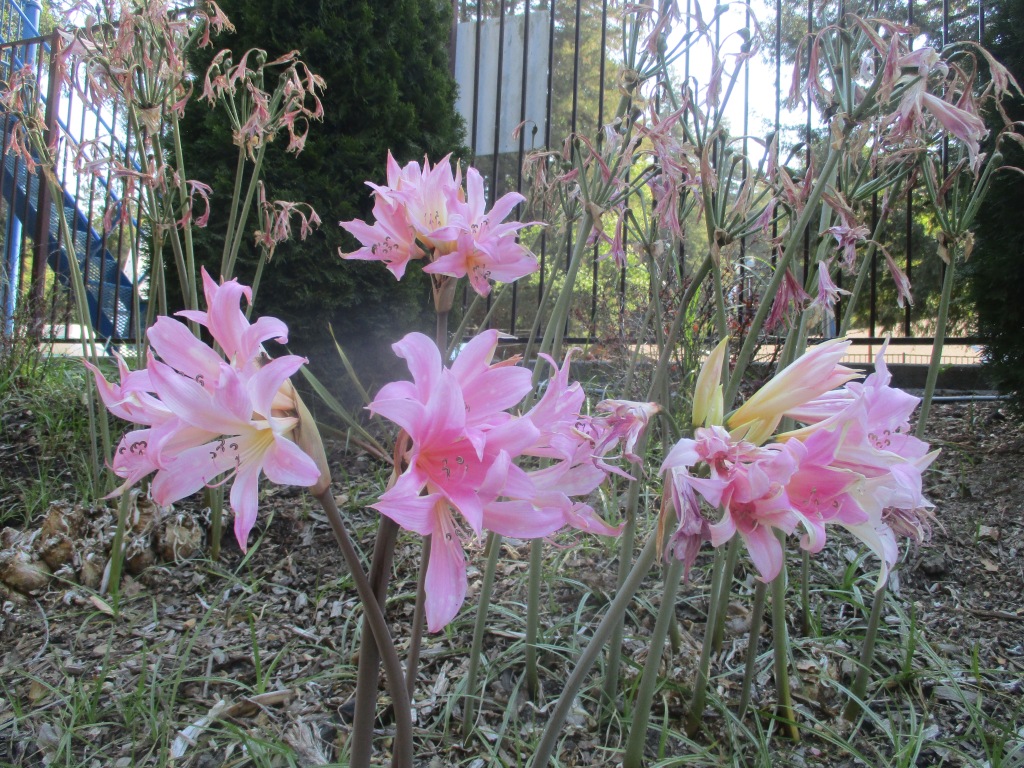
2. Belladonna lily, or naked lady, followed its lead. Mr. Stephens of Garden Ruminations explained that it may be another variety or species. Other naked ladies have gone seedy.

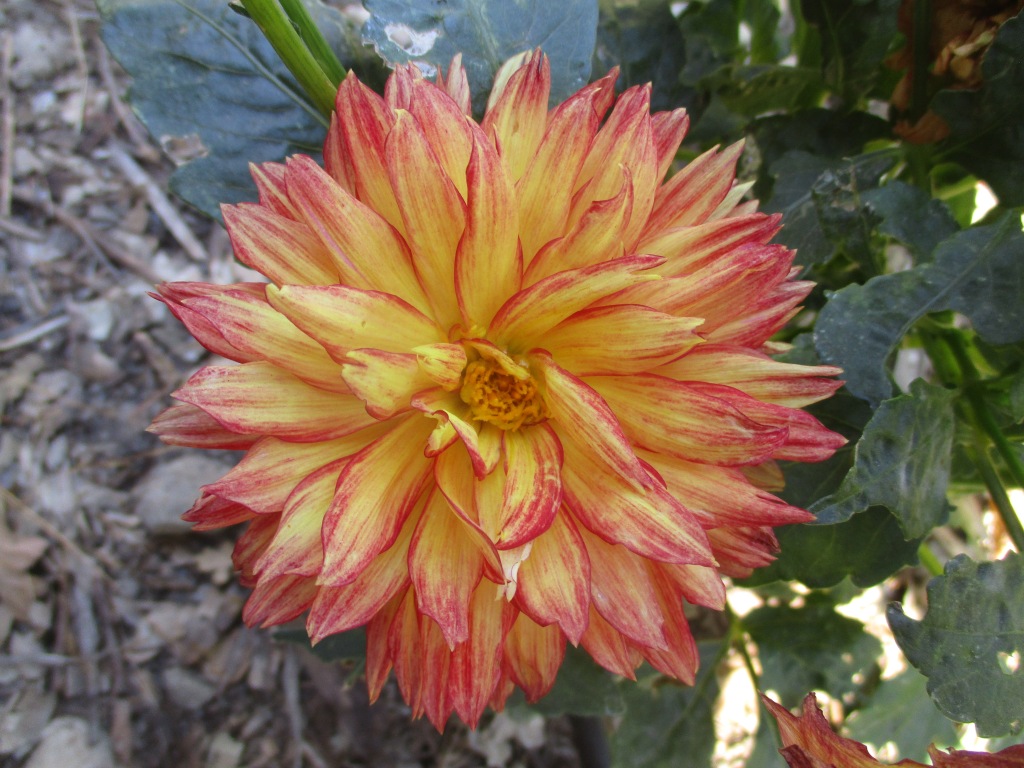
3. Dahlia is the one of these Six that does not try to be a lily. However, it is trying to be a new color. It was simply yellow last year. Perhaps it got this idea from ‘Cleopatra’ canna.

4. Canna lily, or canna, is trying an unexpected foliar color. Its parent is a bronze Canna musifolia, like the other seedling at the top of the picture. I anticipated genetic stability.

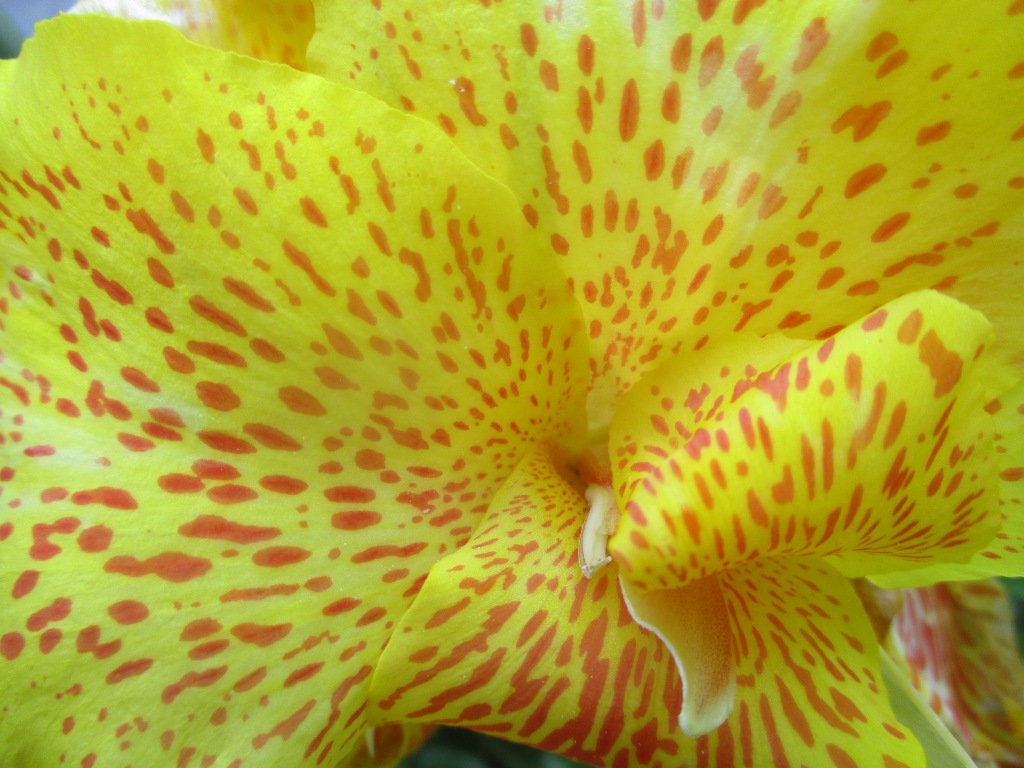
5. ‘Cleopatra’ canna generally, although not always, displays weirdly random red stripes on spotty yellow blooms. It seems to have shared much of its red with the yellow dahlia.

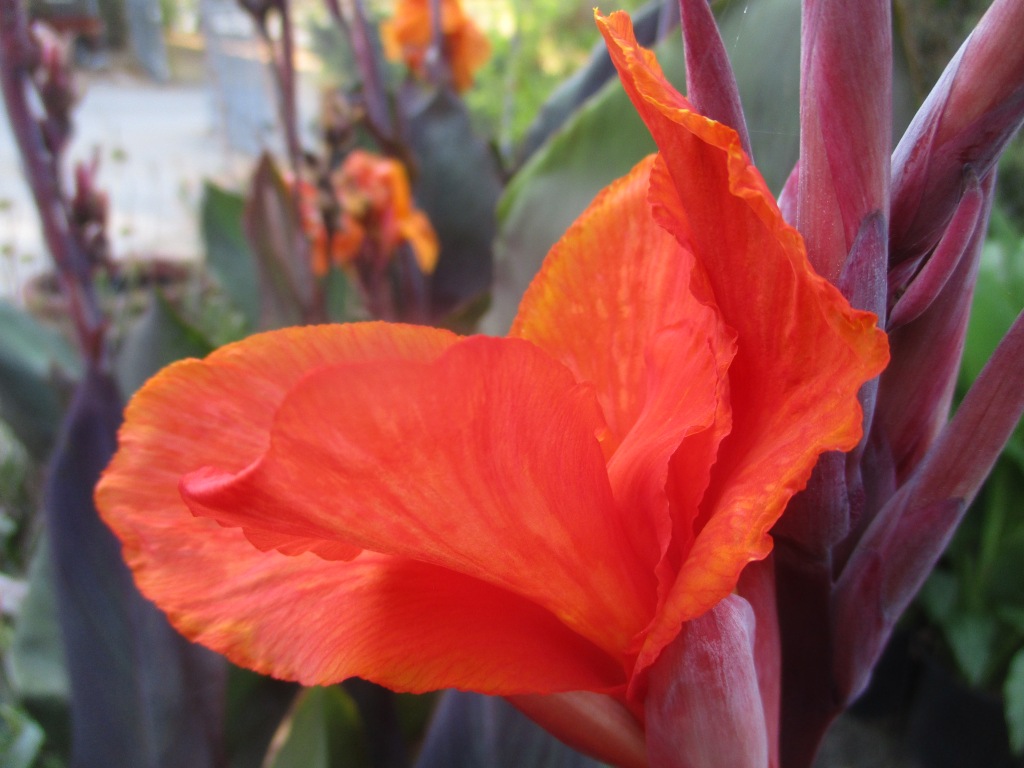
6. ‘Wyoming’ canna bloomed exclusively orange until this richly orangish red appeared. Perhaps ‘Cleopatra’ of the Nile was seedier than naked ladies with more than the dahlia.

This is the link for Six on Saturday, for anyone else who would like to participate: https://thepropagatorblog.wordpress.com/2017/09/18/six-on-saturday-a-participant-guide/
Six on Saturday: White Trash III+

White is my favorite color, which is why I have featured exclusively white flowers for Six on Saturday at least twice already. I recycled the title of the older posts for this new post because it is less objectionable than the title of another post that expresses my proclivity for white. The first three of these six are from the exclusively white garden of El Catedral De Santa Clara De Los Gatos, which is actually the Mount Hermon Memorial Chapel, or simply the Chapel. For these first three, the direct sunlight was not conducive to pictures of good quality. The other three are from a small garden of mixed colors across the road. Incidentally, the garden adjacent to the exclusively white garden includes various colors, including various Pacific Coast iris, but any new plants there will bloom exclusively blue.

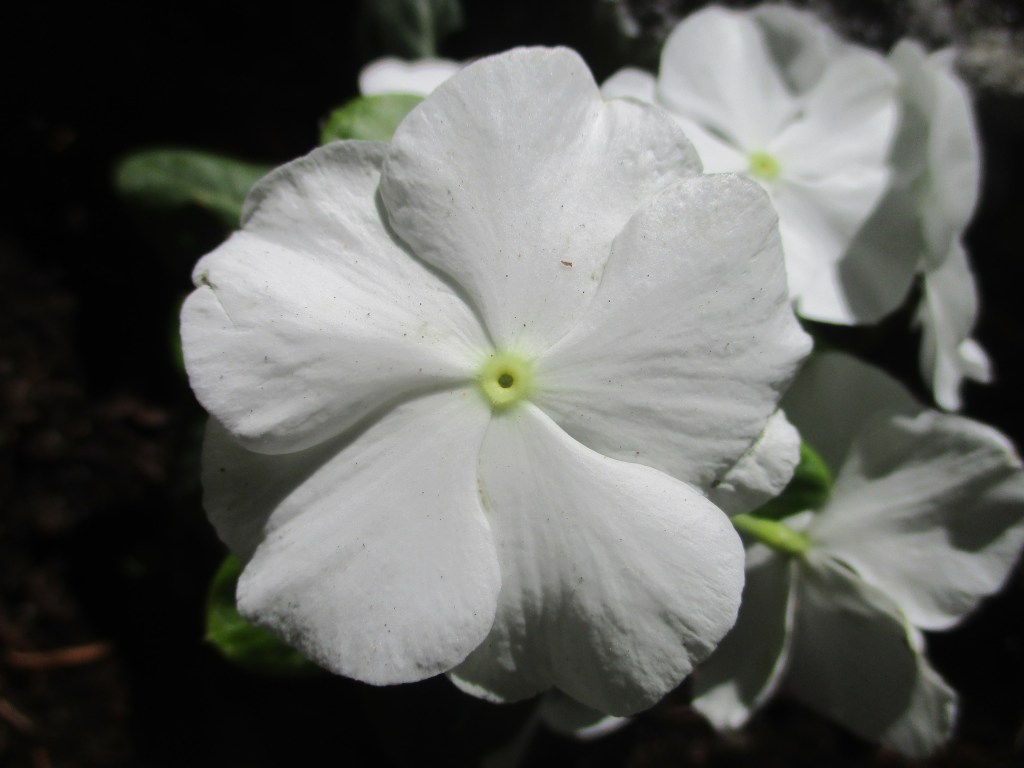
1. Catharanthus roseus, Madagascar periwinkle, was hastily installed to replace petunia that desiccated as redwood roots sneaked in from below to abscond with their moisture.

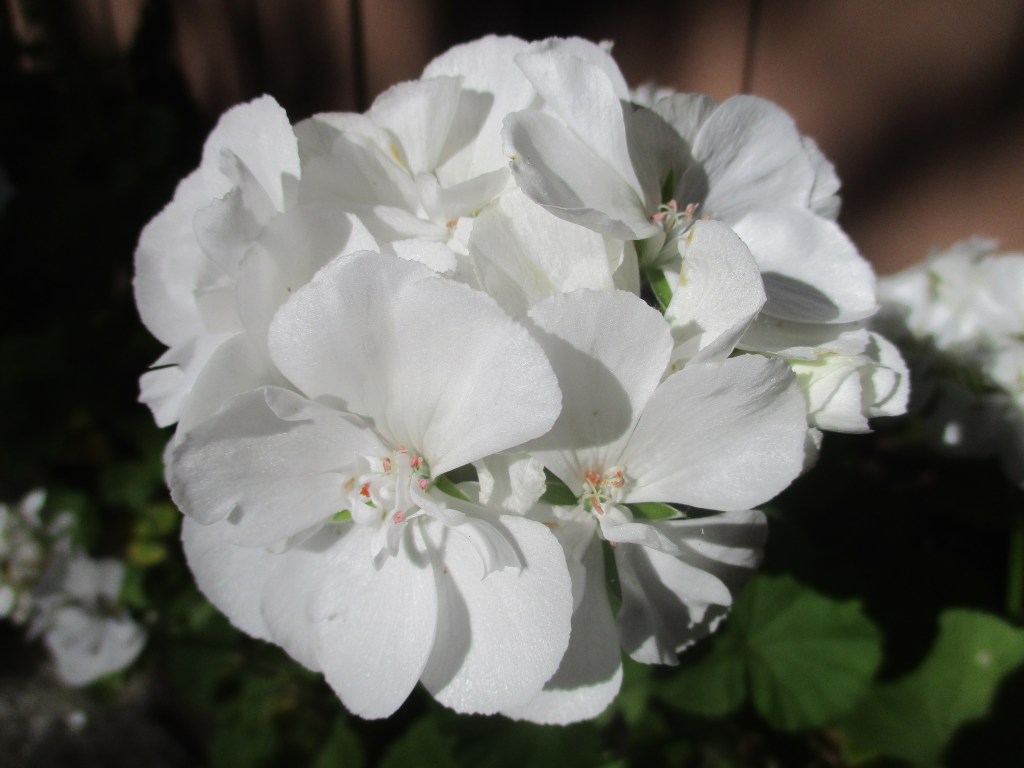
2. Pelargonium X hortorum, zonal geranium, was likewise hastily installed for its quick white bloom, but a few years earlier, and performed well enough to propagate and share.

3. Brugmansia candida, angel’s trumpet, is a copy of an old specimen at the Santa Cruz Civic Auditorium, which inhabited my mother’s garden, but then needed to be removed

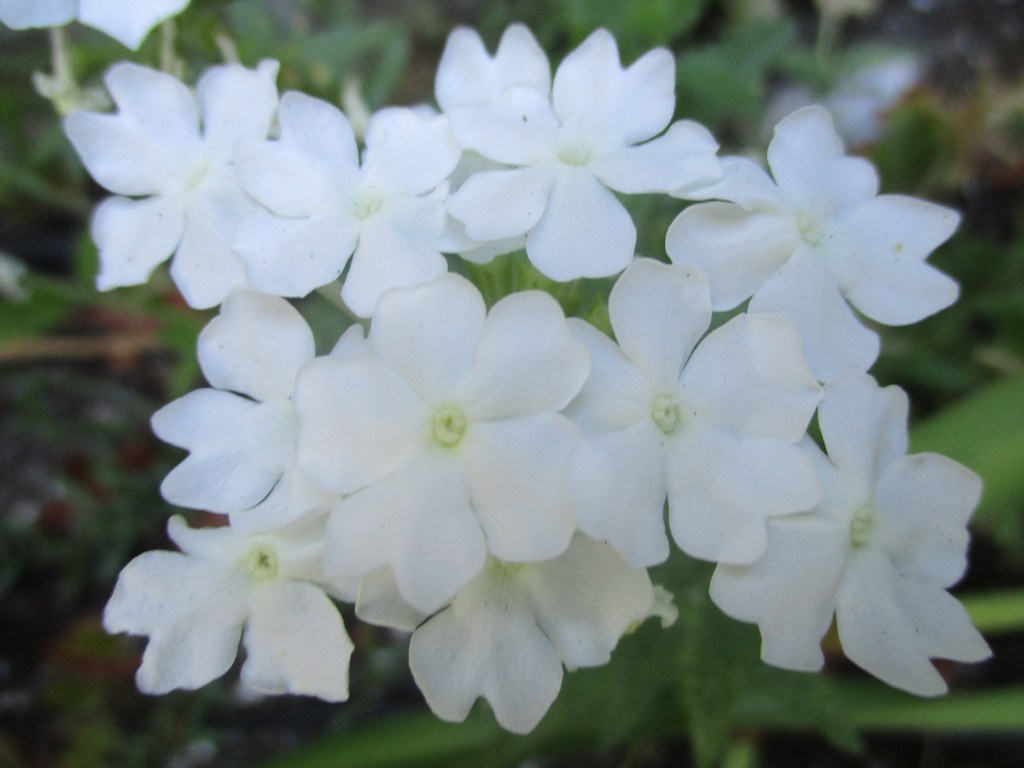
4. Verbena X hybrida (or Glandularia X hybrida), garden verbena, was installed with a mix of color in a garden across the road from the exclusively white garden of the Chapel.

5. Lobularia maritima, sweet alyssum, inhabits the same garden, where it should ideally cascade over the low stone retaining wall, but never grows big enough through summer.

6. Phlox paniculata, garden phlox, mysteriously appeared in the background within this same garden, and was appealing enough to stay, and even got divided for other gardens.

This is the link for Six on Saturday, for anyone else who would like to participate: https://thepropagatorblog.wordpress.com/2017/09/18/six-on-saturday-a-participant-guide/
Six on Saturday: Canna Diss

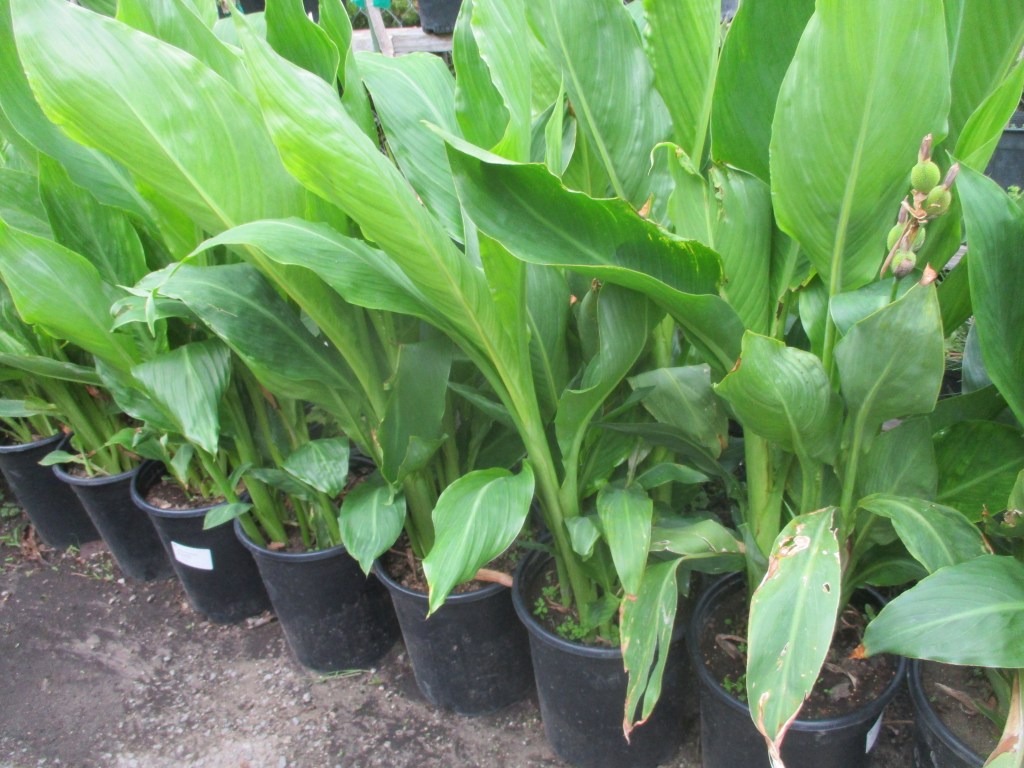
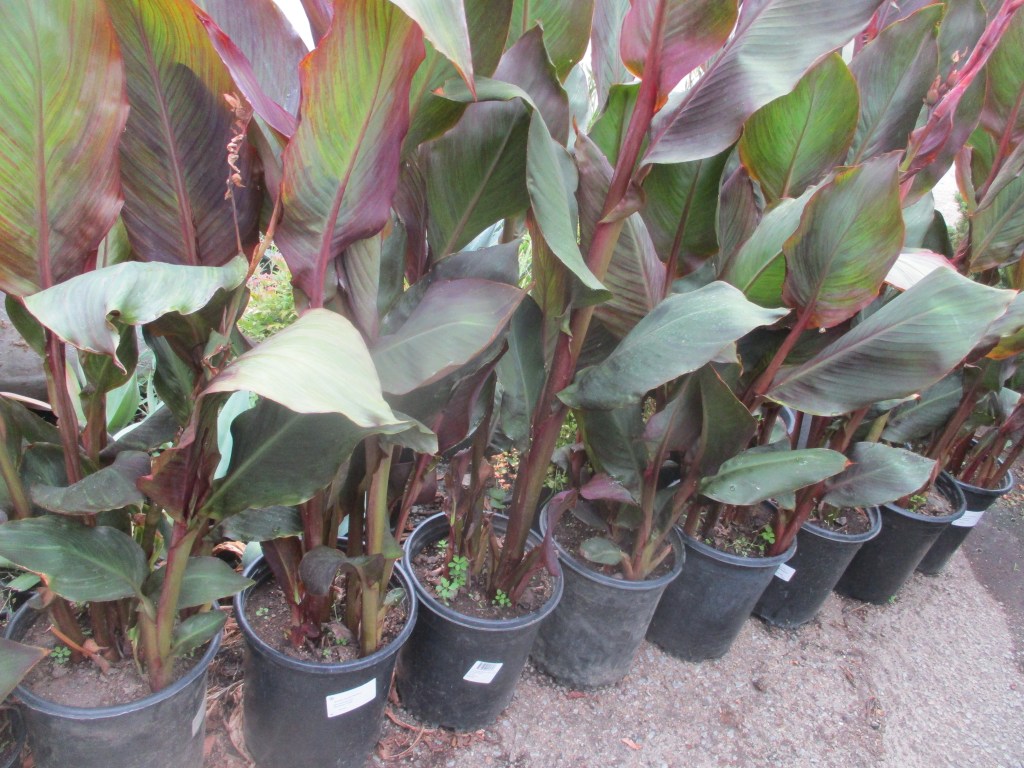
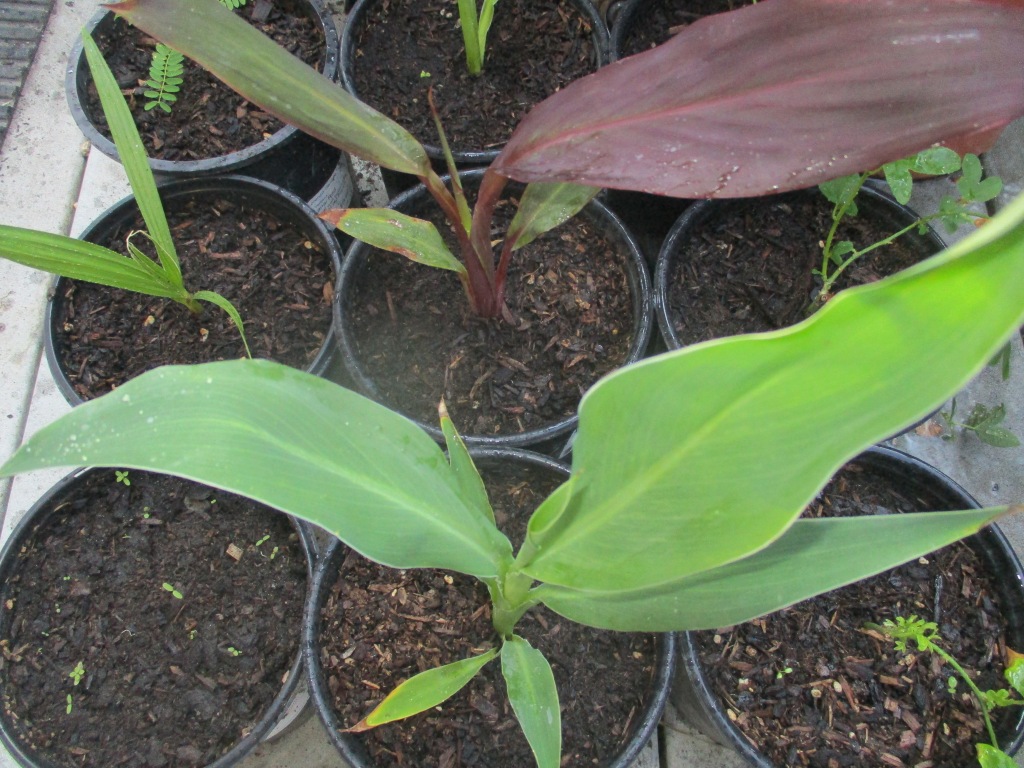
Searching online for information regarding Canna can get discouraging for anyone who objects to the idolatry of Cannabis. It does not help that Canna indica is one of the more common species of Canna. Search engines seem to believe that they know more of what I want information about than I do. Well, I happen to enjoy my ten or so Canna. In fact, I grow way too many of them.  Three cultivars are particularly numerous here, even after giving most of them away to friends and neighbors. If installed directly into a landscape, rather than canned, there would be enough for a row almost exactly a hundred feet long! That would be with one foot spacing!

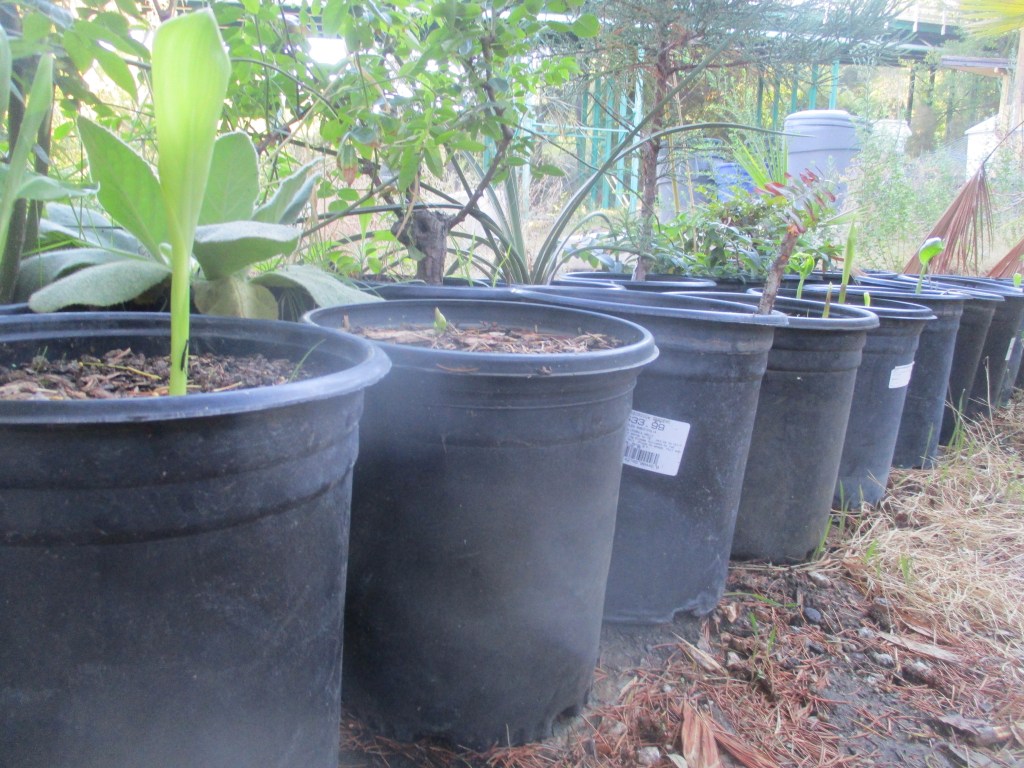
1. Gophers ate almost all of three of the four original Canna here. I canned the surviving rhizomes within only ten #1 cans. All three cultivars are now generating vigorous shoots.

2. Canna rhizomes are so extremely discounted at the end of their season that I violated my rule that forbids the purchase of new plants. It is very late, but they are growing well.

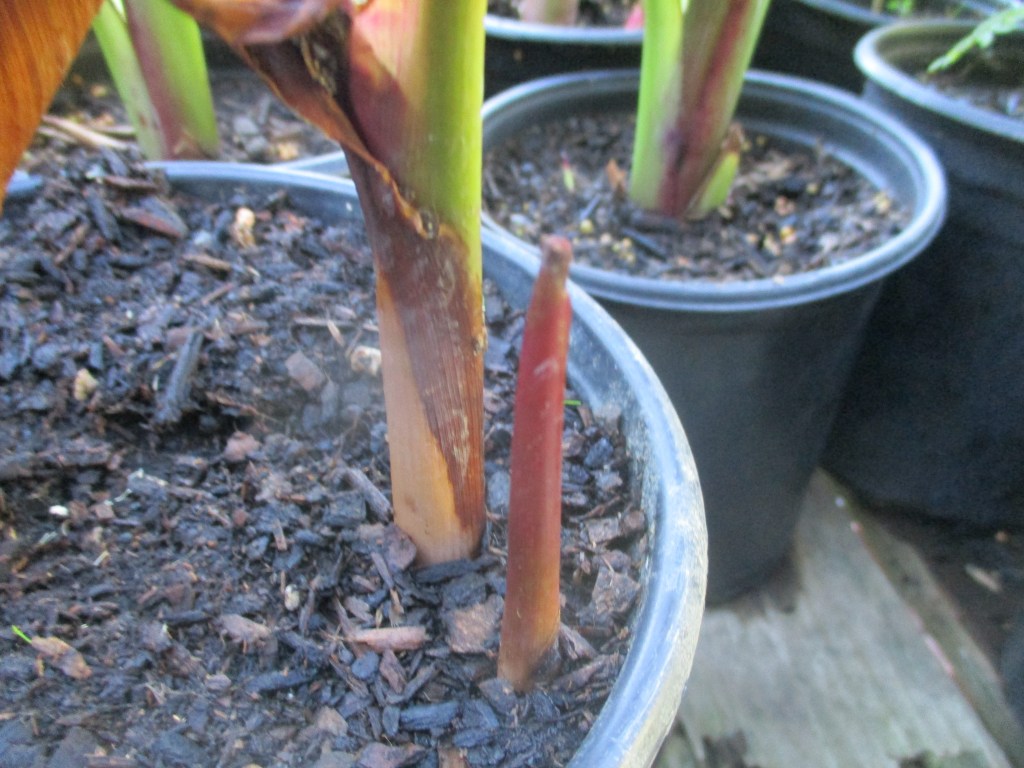
3. ‘Red King Humbert’ rhizomes cost less than a dollar each. Three got canned into each of ten #5 cans. They only need to grow enough before autumn to survive through winter.

4. Canna flaccida, or what I hope might be Canna flaccida, was dug and recycled after it had started growing last spring. New foliage emerged through its damaged older foliage.

5. ‘Wyoming’ was recycled from the same landscape, and at the same inconvenient time. Like the others, it will recover prior to winter dormancy, and then be ready for next year.

6. Canna bloom is about as appealing as the foliage is. Ours bloom bright yellow, orange or red. Others bloom with pastel yellow, pastel orange, pink or very pale yellowish white.

This is the link for Six on Saturday, for anyone else who would like to participate: https://thepropagatorblog.wordpress.com/2017/09/18/six-on-saturday-a-participant-guide/
Six on Saturday: No Rhody

Rhody is again absent from my Six on Saturday for this week. Within such an odd mix of six unrelated pictures, I suppose that I should have added at least one picture of Rhody. After all, Rhody is who you are here to see. Well, I thought that some of these, especially #5, are interesting. Both #1 and #2 are Canna, so they are actually not totally unrelated. There might be more of Brent’s pointless pictures for next week; but perhaps one picture will be of Rhody.

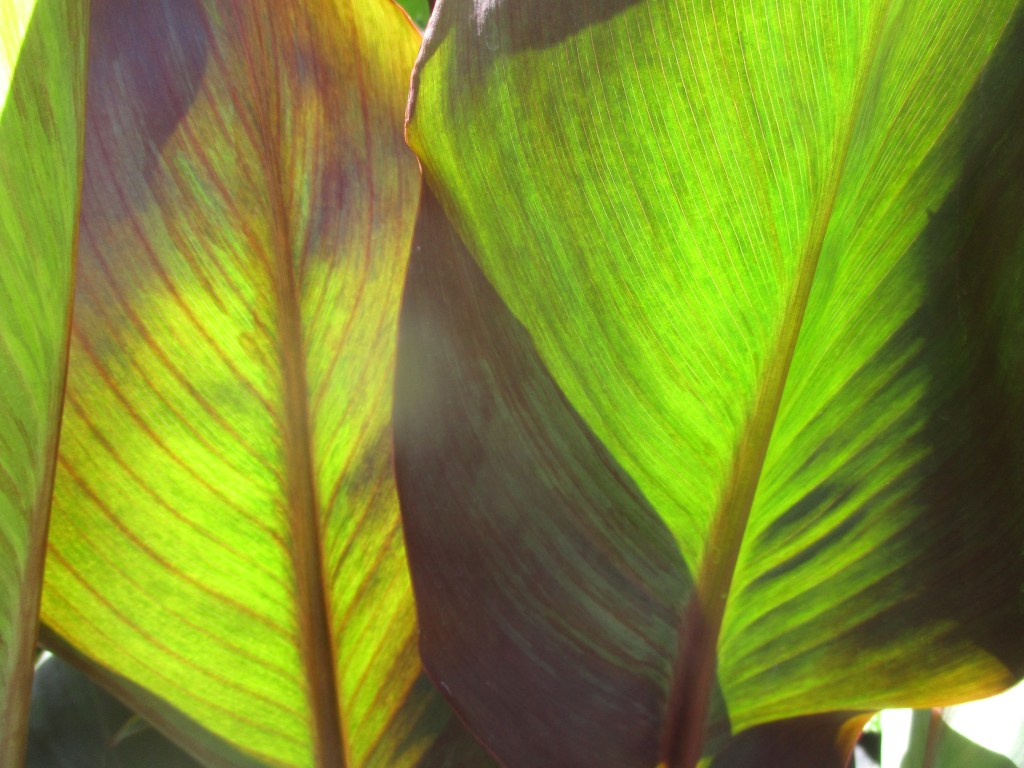
1. ‘Wyoming’ canna provided this foliar picture that was too artsy to discard unused, but not compliant enough for my Six on Saturday of last week. All of those six were closeups.

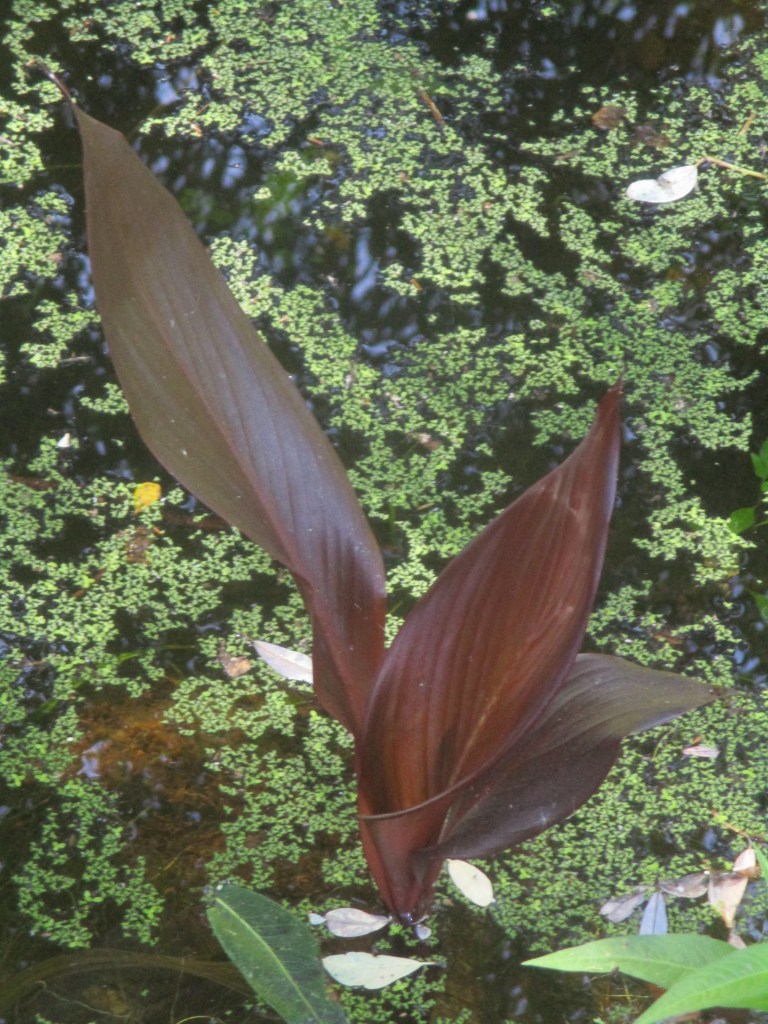
2. ‘Australia’ canna likewise provided this picture that is interesting, but not compatible with the earlier Six on Saturday. It lives in a pond. That is duckweed in the background.

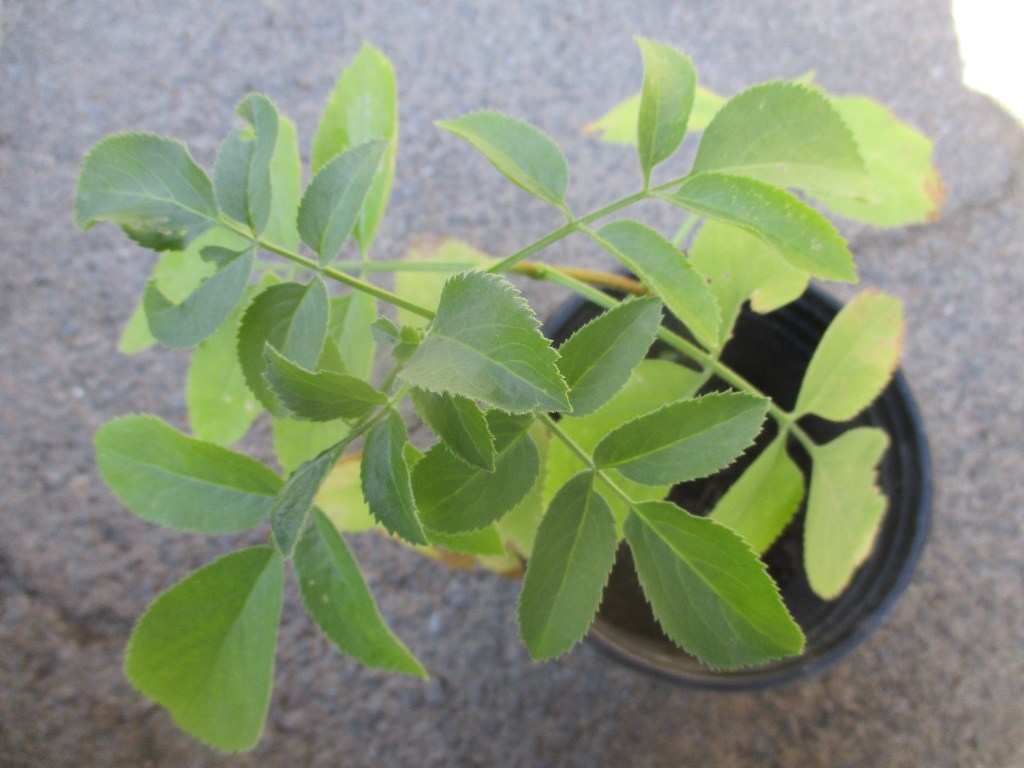
3. Blue elderberry is native here. Unfortunately, some of the most productive specimens are in awkward situations. I canned a few wild seedlings to install into better situations.

4. Poinciana has a complicated explanation. I told Brent that ‘Crazy Green Thumbs’ sent me seed of poinciana and esperanza. What I consider to be poinciana is actually pride of Barbados. After remembering the difference from what Brent considers to be poinciana, I still felt obligated to grow a poinciana tree for Brent, so actually purchased seed online!

5. Esperanza is real! It is not easy to grow though. Only a few seed germinated, and only a few seedlings survive. At this rate, they will still be dinky and need shelter for autumn.

6. Memorial Tree in Felton Covered Bridge Park seems to be happy, but has grown a bit slower than it did by July 12 last year. I have not posted an update for it since December.

This is the link for Six on Saturday, for anyone else who would like to participate: https://thepropagatorblog.wordpress.com/2017/09/18/six-on-saturday-a-participant-guide/
Six on Saturday: Canna flaccida?!

Canna have been so extensively hybridized that very few modern cultivars are identified by species. They are known merely by their generic designation of Canna with a cultivar name. Canna flaccida is an ancestor of many hybrids, and the only species that is native north of the Rio Grande, but seems to be rare here. I want it! NOW! I should be satisfied with flashier modern cultivars, but I prefer simpler species, especially one from Florida.

Well, it may be here already. Late last spring, at the worst time to dig Canna, I dug a big colony of it from a site that was about to be landscaped. Even after most were recycled to other gardens, the remnants were canned into two dozen #5 cans. One dozen contained three rhizomes each of ‘Wyoming’. The other dozen cans contained five rhizomes each of an unidentified cultivar with narrower green leaves and yellow bloom. That is enough to plant thirty-six linear feet of ‘Wyoming’ and sixty linear feet of the yellow sort! Now that they are blooming, the unidentified yellow sort seems to be the rare Canna flaccida. I do not know for certain, but it keys out accordingly. If so, it is much more than I hoped for!

Two other Canna that live here were omitted from these pictures because there are only Six on Saturday rather than eight. Without its billowy red bloom, the foliage of a cultivar that remains unidentified is indistinguishable from #1 anyway. ‘Cleopatra’ is normally a hot mess of color, but is sharing only green foliage at the moment. Its foliage is typically randomly striped with broad and narrow bands of green like #1 and dark bronze like #2. Its weird bloom is randomly blotched with bright red and bright yellow, like condiments that squirt out the far side of a hamburger, or Pikachu on the grill of a Buick.

1. ‘Edulis’ was a gift from a neighbor. I wanted it for its fat rhizomes, which are like small potatoes. The slender flowers are red. (‘Edulis’ is a group of many cultivars and hybrids.)

2. ‘Australia’ is one of very few plants that I actually purchased. It cost nearly six dollars! A neighbor of my downtown planter box requested bronzed foliage; but I still feel guilty.

3. ‘Musifolia’ may have inhabited one of our landscapes since its construction in 1968. It gets so tall that I bend it down for deadheading. It and ‘Edulis’ produce viable seed. The slender flowers are peachy orange. (‘Musifolia’ is a group of many cultivars and hybrids.)

4. ‘Pretoria’ lived with ‘Musifolia’, but in spring, was dug and canned for protection from gophers. Only four #1 cans of its rhizomes survive. The billowy flowers are vivid orange.

5. ‘Wyoming’ is recovering from relocation while actively growing last spring. Most went directly to new homes. The billowy and vivid orange flowers resemble those of ‘Pretoria’.

6. Canna flaccida remains unidentified. It arrived with ‘Wyoming’, so is also recovering from untimely relocation. The elongated foliage is simple light green. Flowers are mildly fragrant at night. Apparently, only one other extremely rare species of Canna is fragrant.

This is the link for Six on Saturday, for anyone else who would like to participate:

Six on Saturday: Bad Habit

Growing horticultural commodities can be a very rewarding occupation, even if not very lucrative. Growing random plants merely because they are available may be a bad habit. Sometimes, I procure propagation stock intentionally because I want to grow copies of a particular plant. Perhaps more often, I grow something merely because I can not bear to discard good propagation stock or actual plants. That is why there are so many homeless cannas here now! After I prune zonal geraniums, I feel obligated to process all the scraps into cuttings rather than simply discard them into the compost.

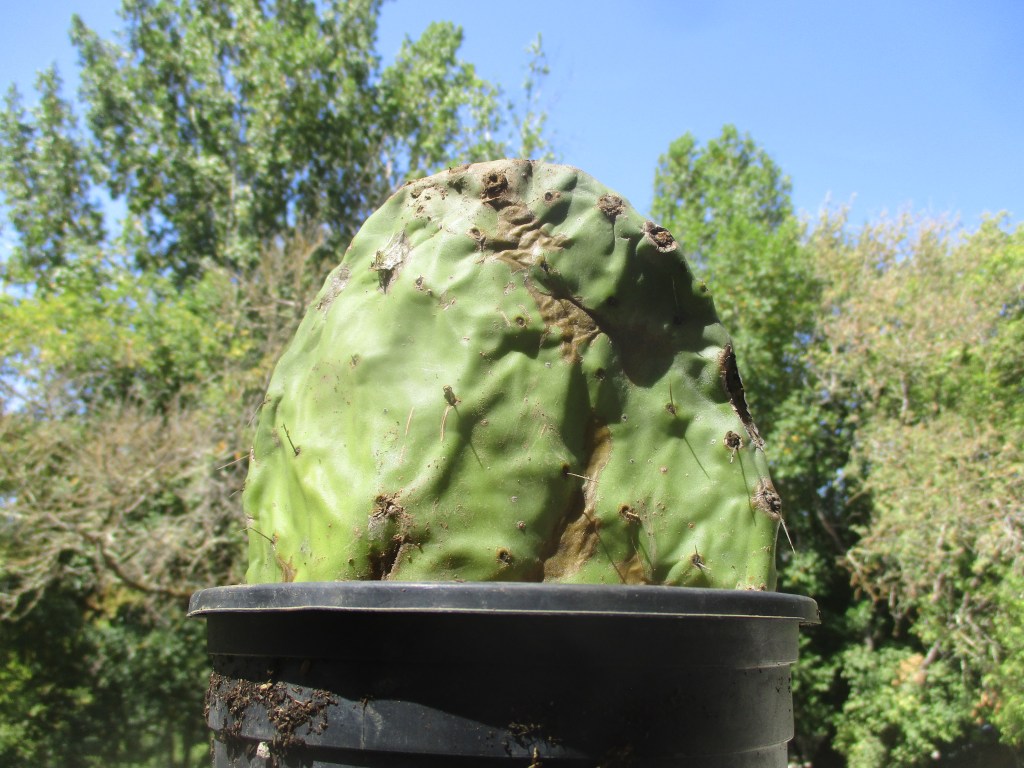
1. Opuntia (of unidentified species or hybrid), prickly pear lives at a clinic in Santa Cruz. Someone with a weed whacker busted off a few pads. It is good for both nopal and tuna. It is shabby and canned because someone with a weed whacker here kept cutting it also.

2. Clivia miniata, Natal lily was pulled from a trailside prior to weed whacking. I do not know if it is feral from seed or a cultivar from landscape debris. They have not bloomed.

3. Iris pseudacorus, yellow flag is naturalized in a roadside ditch in Ben Lomond. It is an invasive species in some regions. Therefore, it must be contained and deadheaded here.

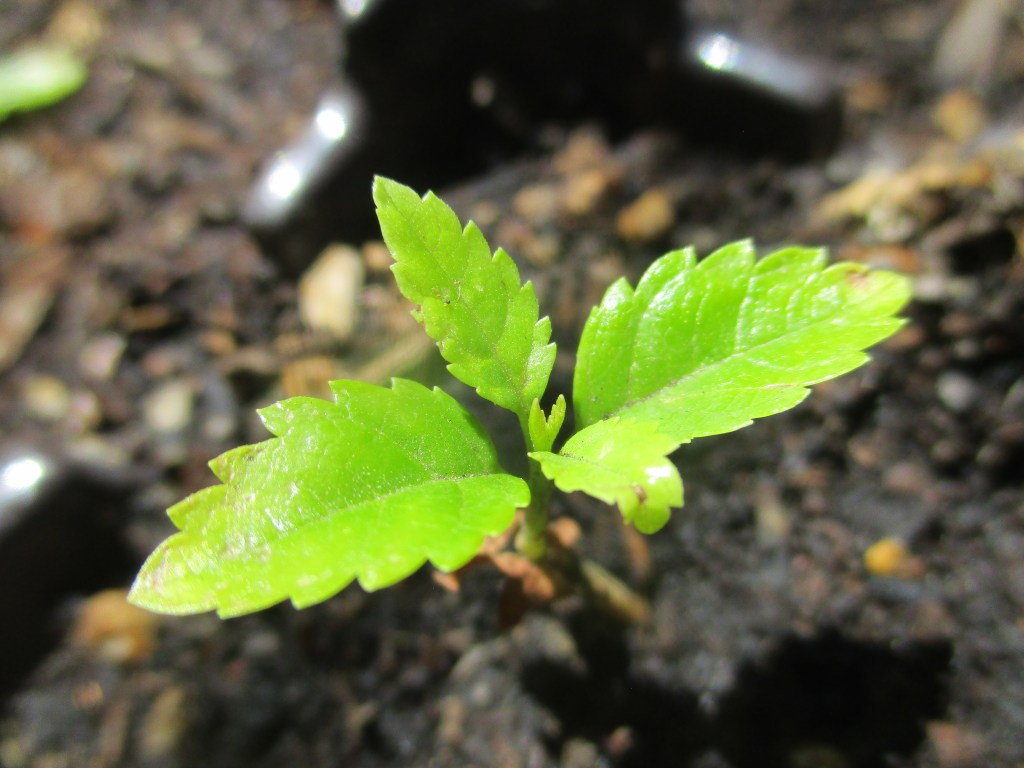
4. Platanus racemosa, California sycamore was a sucker on one of the big trees at work. It pulled off with roots attached, so got canned. Its trunk died, so is now replacing itself.

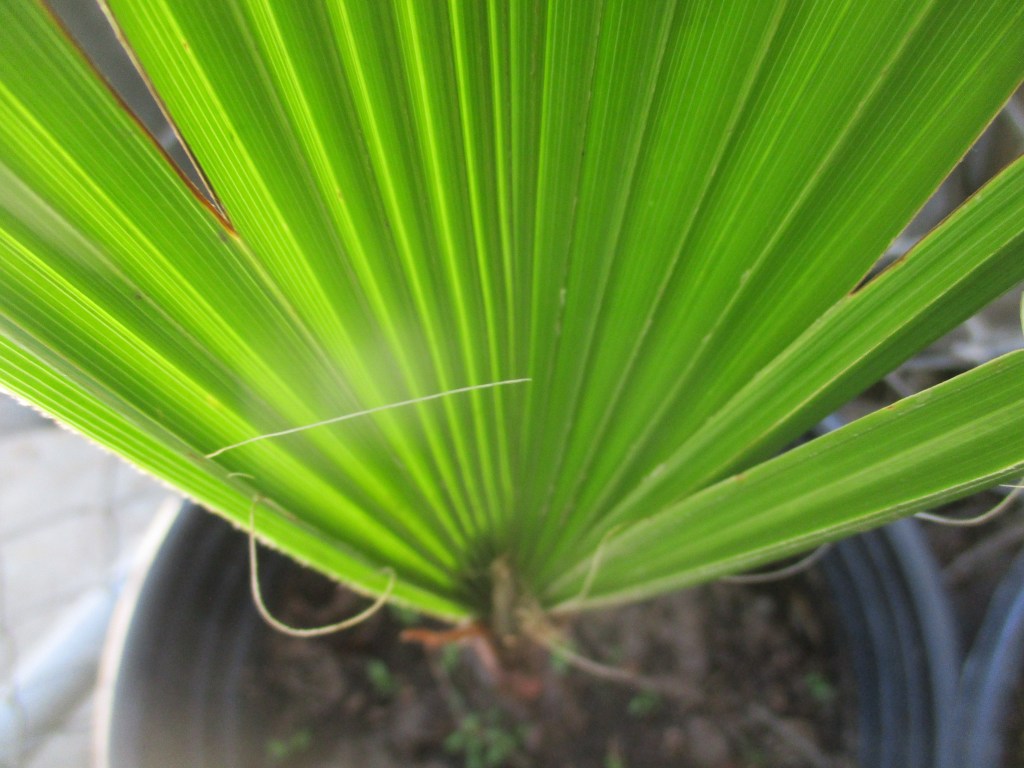
5. Washingtonia robusta, Mexican fan palm needed to be removed from a yard in Santa Clara. Many were in pavement. Someone else got most that were salvageable. I got eight.

6. Cinnamomum camphora, camphor tree seedlings grew out sidewalk expansion joints at a job in San Jose. I pulled some out. A few came out with roots, and grew up like this.

This is the link for Six on Saturday, for anyone else who would like to participate: https://thepropagatorblog.wordpress.com/2017/09/18/six-on-saturday-a-participant-guide/
Six on Saturday: BIG News!

The BIG NEWS for this ‘Six on Saturday’ was only discovered yesterday morning. It does not look like much yet. I suppose that anyone who witnessed my exuberant reaction to it likely wondered what all the fuss was about. I suppose that I should be embarrassed. Oh well, I am not. I know how totally awesomely excellent it is! Furthermore, it is approved by both Skooter and Rhody! (That is ‘the’ famous Skooter of Tangly Cottage Gardening.) The fifth of these Six is also important news, although the first four are rather mundane.

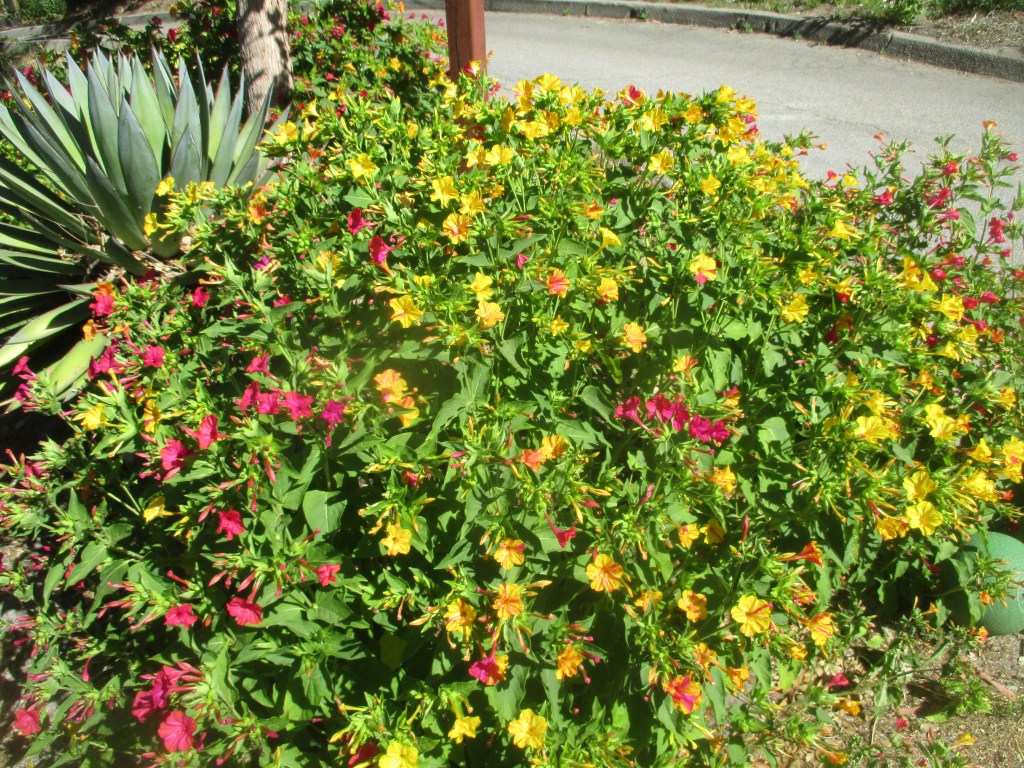
1. Four O’ clock with a five O’ clock shadow is not big news. It is actually rather mundane folly that is included here merely because I like bragging about shabby but pretty weeds.

2. Lily of the Nile fasciation does not classify as big news either, although it is intriguing. This entire colony blooms like this or worse, and after all the other lily of the Nile finish.

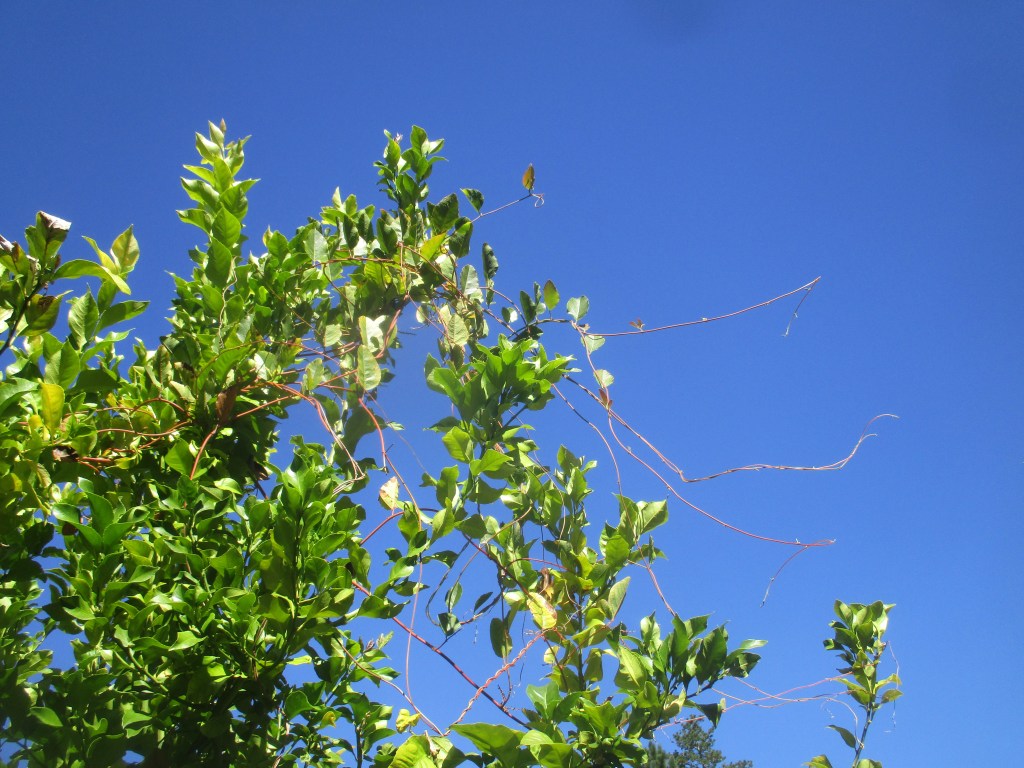
3. Black coral pea climbing over the Eureka lemon tree is more of an annoyance than big news. I should have known this would happen while I was not looking. Vines are sneaky.

4. Grapevines, although sneaky, are at least productive. These are suspended more than ten feet above the courtyard below. Unfortunately, opossums typically get the fruit first.

5. Koi are rather big news, but are not the big news. Seven moved into the drainage pond last Saturday just after Six on Saturday. Cheeto is below the middle. Shiro is to the right.

6. Gladiolus papilio from Tangly Cottage Gardening is finally THE BIG NEWS this week! It has been here for a few years, but bloomed only once last year, after major tribulation. I noticed this floral stalk today. I do not know how long it will take to mature and bloom.

This is the link for Six on Saturday, for anyone else who would like to participate: https://thepropagatorblog.wordpress.com/2017/09/18/six-on-saturday-a-participant-guide/
Six on Saturday: Mostly Summer

Seasons here are rather mild. People from more interesting climates may not realize that there are any seasons here. Some may believe that it is almost always summer, with only a few days of some other season that is not summer. In reality, climates here experience the same four seasons that occur throughout the rest of North America. The seasons are merely less distinct here. That confuses some plants. Many plants that do not mind mild climates set their own schedules. Some simply have extensive bloom seasons. Of course, many flowers, such as petunias, are totally aware of winter, but know how to thoroughly exploit summer.

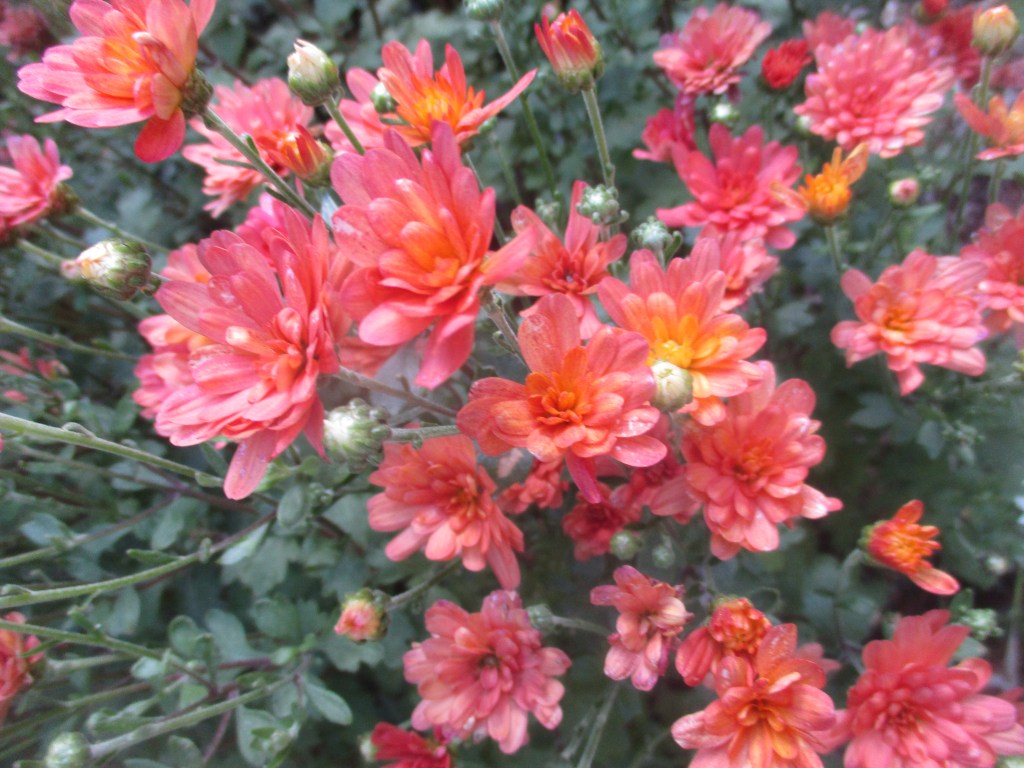
1. Chrysanthemum does not seem to be aware that it should bloom for autumn. Actually, it blooms whenever it wants to, and after this bloom phase, may also bloom for autumn.

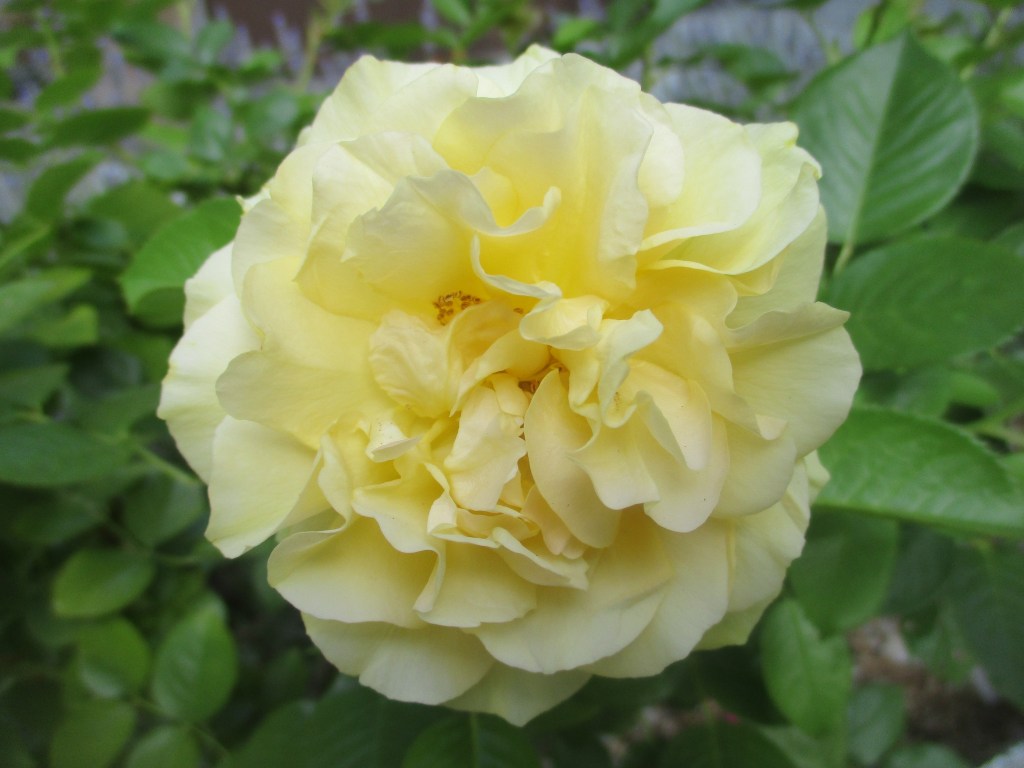
2. Roses should bloom from spring until autumn, but because of partial shade, generally finish with the best bloom by now. This year, their bloom continues as if it is still spring.

3. Lilies that grow from bulbs bloom only for spring, although many were still blooming recently. This one is a daylily. Like the chrysanthemum, it blooms whenever it wants to.

4. Petunia is a classic warm season annual for summer. This one is dressed up as Santa Claus for Christmas time though. Maybe it is actually dressed up like the flag of Austria.

5. This color is rad, even if I can not describe it. Is it purple? Is it burgundy? Perhaps it is irrelevant. I would not have selected it anyway. Such tasks require specialized expertise.

6. Ah, this is more my style. Even I can see that this is plain white. It is my favorite color, and is one of the two simplest. Only black is as simple; but it is very rare among flowers.

This is the link for Six on Saturday, for anyone else who would like to participate: https://thepropagatorblog.wordpress.com/2017/09/18/six-on-saturday-a-participant-guide/

Six on Saturday: Glad

Gladiolus hybrids are not reliably perennial locally. They might not be reliably perennial anywhere. I had believed that they could be so where they get more winter chill, but chill does not seem to help. I have been told that they are no more perennial in Pennsylvania, Oregon or Oklahoma. When I grew them many years ago, only about a third survived to bloom for a second season. Of that third, only about a third survived to bloom for a third season. This is one of many reasons why I am so ‘glad’ about perennial Gladiolus papilio , as well as Watsonia species, from Tangley Cottage Gardening. Although, strangely, a few hybrid Gladiolus survive.

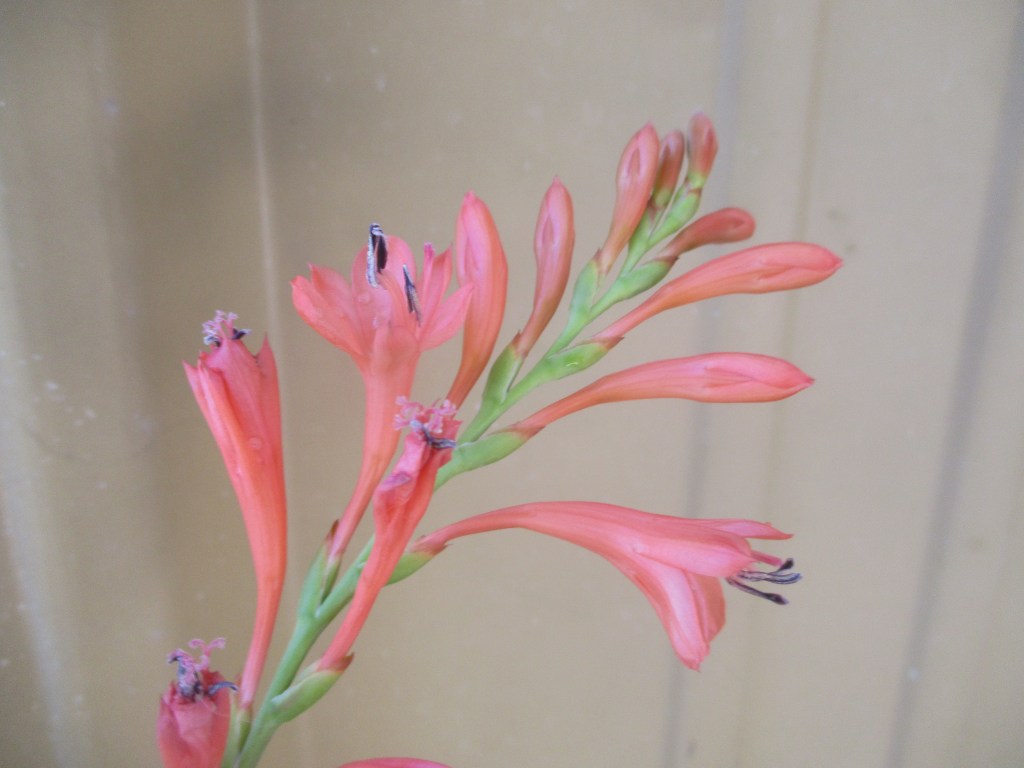
1. Watsonia X pillansii ‘Coral and Hardy’, just like the Gladiolus papilio, was a gift from Tangly Cottage Gardening of Ilwaco in Washington. I learned that it blooms in summer.

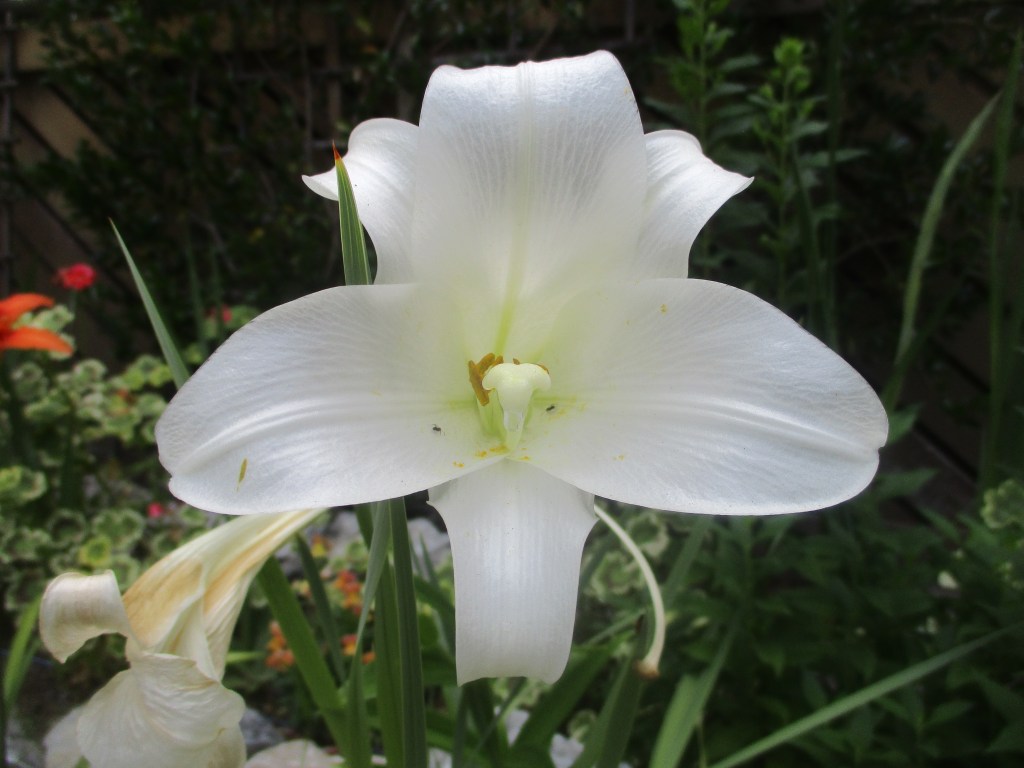
2. Lilium of an unidentified cultivar is finally finishing bloom. Obviously, it is irrelevant to Gladiolus. It just happened to be so pretty precisely as I was in need of a sixth picture.

3. Gladiolus is mostly finishing bloom now. These few are blooming a bit late. These are merely the common hybrid sort that someone purchased from a retail nursery years ago.

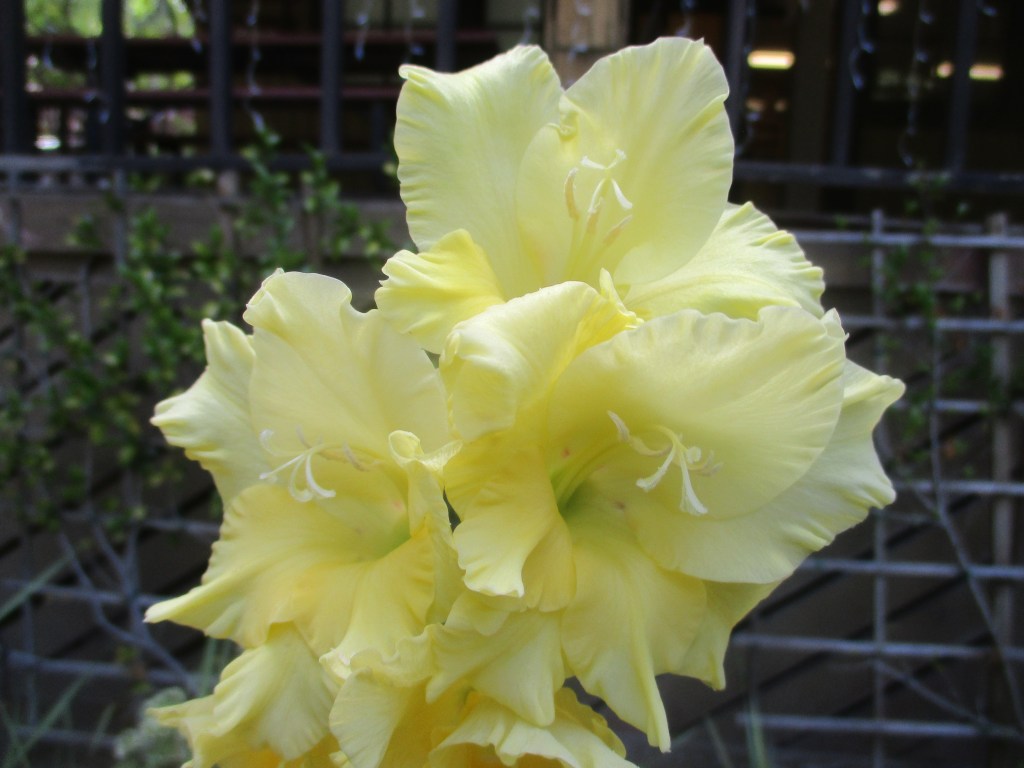
4. Not only have a few of the Gladiolus hybrids been surprisingly reliably perennial for a few years, but this pastel yellow cultivar has actually multiplied, from one bulb to a few.

5. This Gladiolus hybrid blooms annually also, but unlike the pastel yellow cultivar, does not multiply. This and one other just like it are the only two, with neither more nor less.

6. This purple Gladiolus hybrid does the same. It would be nice if it could generate a few copies. Since it is the only specimen here, and might be fragile, I will not tamper with it.

This is the link for Six on Saturday, for anyone else who would like to participate: https://thepropagatorblog.wordpress.com/2017/09/18/six-on-saturday-a-participant-guide/