Both have been very active all spring. Some of the sneakiest have been getting away with their activity unobserved.
1. This is a fifteen foot tall camellia, or what remains of it. For comparison, that is a six foot long bench it is laying on. It still looks green and healthy, but started leaning. Upon closer examination, I found that it was not rooted to the ground. It pulled right out! The roots were almost completely gone! There was no indication that there was a problem.
2. This is what remained of the root system. Gophers ate through just about everything that was sustaining and supporting the big camellia above. No excavation or gopher mounds were observed. The area around the camellia was obscured by Algerian ivy. This all happened faster than the camellia could express symptoms associated with such damage.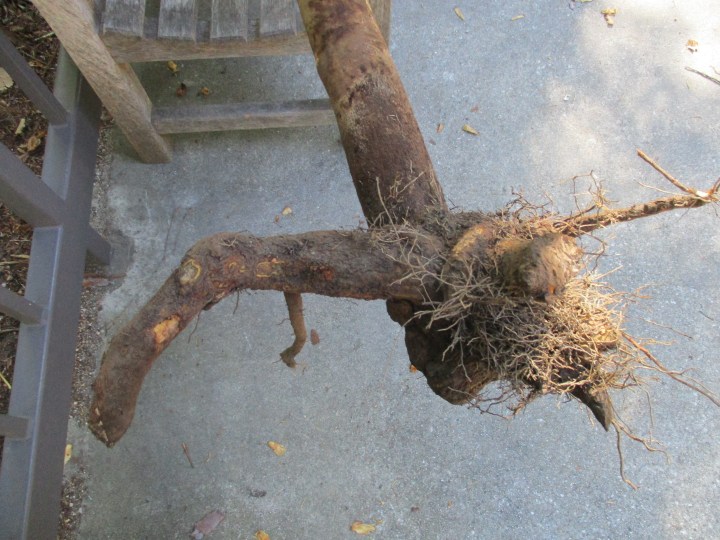
3. ‘Kramer’s Supreme’. More specifically, “Award Winning – ‘Kramer’s Supreme’ – Camellia japonica – Trade Mark Registered”. Someone should have removed the label before it damaged the stem it was attached to. Actually, the long dead stem was stubbed just a few inches above the upper margin of this picture. It doesn’t matter now anyway.
4. This big mound of greenery is all a single big weed, perennial pea. I put it next to the wheel for comparison of size. It grew in a newly landscaped area where we did not expect such big weeds to grow so quickly. It did not seem to be as big as it is, so was easily ignored. Why didn’t gophers eat this instead of the now dead camellia above?!
5. As you can almost see in the bad picture, perennial pea is not an unsightly weed. It also lays low and fits into the landscape in such a manner that it is easy to ignore while targeting more obtrusive weeds elsewhere. That is how the specimen in the picture above got so big. This one is not nearly as big, but overwhelmed a few smaller perennials.
6. Perennial pea flowers are quite pretty. If possible, I like to let them bloom before pulling them up. Most look like these. Some bloom with fluffier double flowers. Some are lighter pink. A few are darker purplish. White is quite rare. As prolific as they are where they are not wanted, they are surprisingly unreliable from seed sown where actually desired.
This is the link for Six on Saturday, for anyone else who would like to participate:
https://thepropagatorblog.wordpress.com/2017/09/18/six-on-saturday-a-participant-guide/
 ‘Cide’ as a suffix that designates something to be killed. ‘Insecticide’ kills insects. ‘Miticide’ kills mites. ‘Molluscicide’ kills molluscs such as snails and slugs. ‘Herbicide’ kills herbaceous plants, which are presumably weeds. These examples and other chemicals that kill things that are considered to be pests are collectively known as ‘pesticides’. Many are potentially useful in the garden, since that is where so many familiar pests are problematic.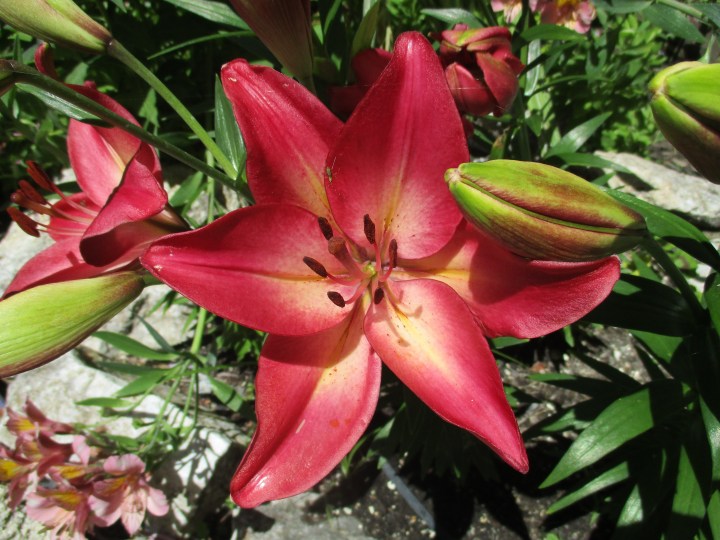


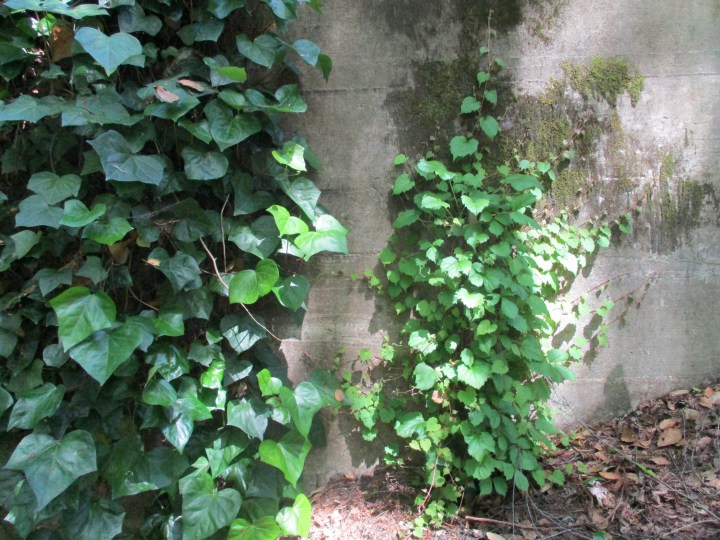

 Pluots, plumcots, apriums and peacharines! Who comes up with this stuff?! Aren’t good old fashioned plums, apricots, peaches and nectarines good enough? Who decides that these weird hybrids are somehow better than their parents? Some of them are actually quite weird, or downright ugly. Several do not even look like they would taste good. It may be an acquired taste; but I have all the good taste that I need without acquiring any more.




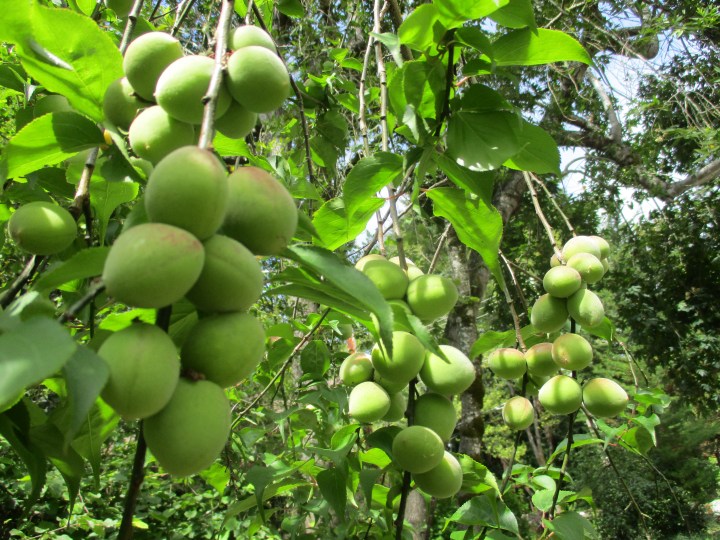 They do not come with instructions for their maintenance. Deciduous fruit trees, particularly the stone fruit trees (such as cherry, plum, prune, apricot nectarine and peach) and pomme fruit trees (such as apple and pear), can be procured as easily as nasturtium seed or petunias. Whether bare-root in winter or canned (potted), they very often get planted into gardens where they are expected to produce their fruit as easily as daisies bloom.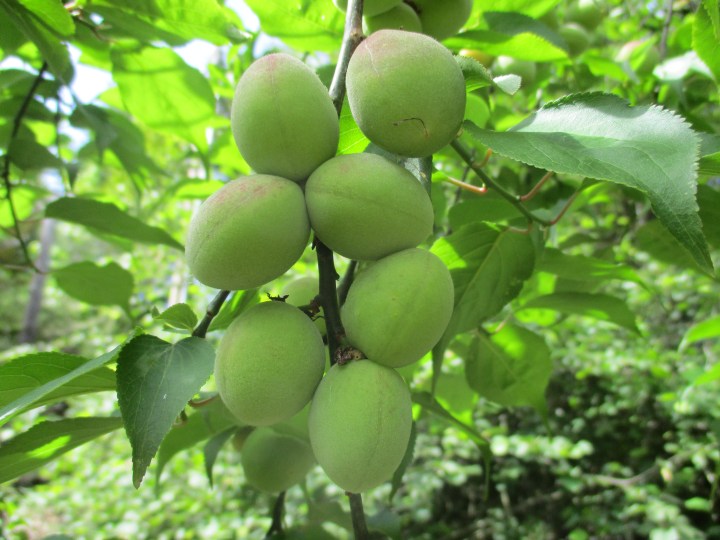


 There is no doubt that fences are useful for a variety of functions. They exclude deer from the garden. They confine livestock. For suburban homes, they enclose a relatively safe space for children and pets. Fences should be designed according to their intended functions. Those designed to exclude deer might be as simple as coarse mesh on posts. Those enclosing backyards might be more refined and compatible with the landscape.



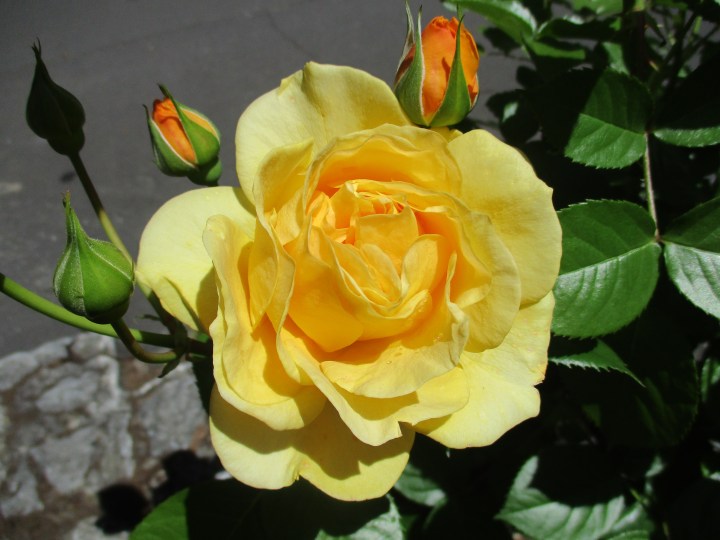
 This is the one that got away; or actually, the one that was never caught. It bloomed after I got the pictures for the ‘Six on Saturday’ post for this morning. It could be the same unopened bud in picture #3 of the Six on Saturday post, as it is now blooming. If not the same bud, it is on the same plant, and now looks even more like the common ‘Simplicity’ rose. It is not my favorite, but I did not select it.
