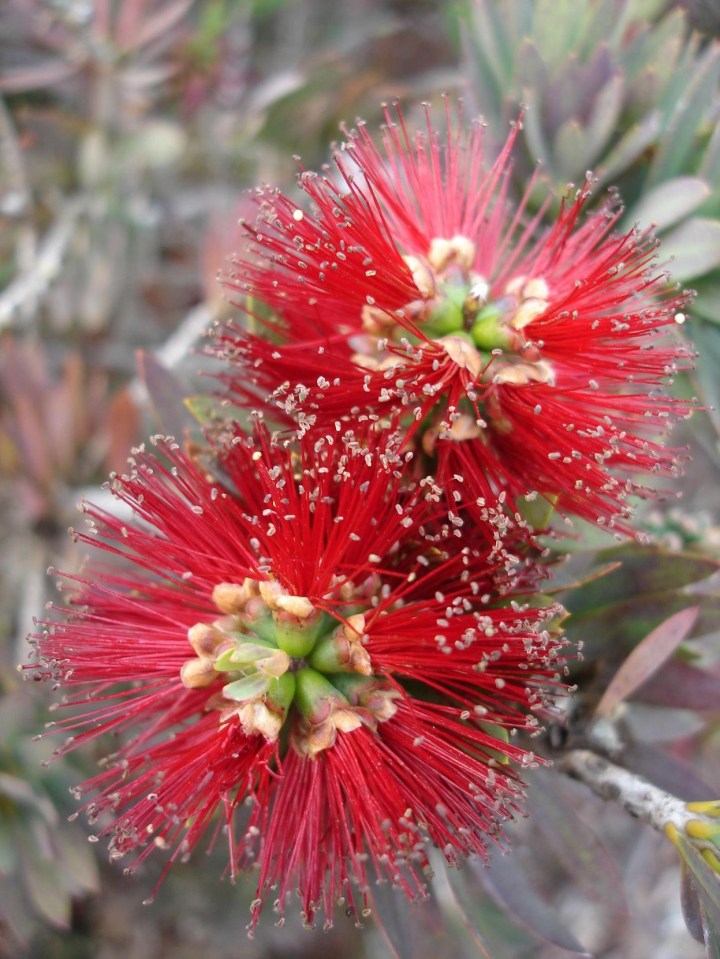
 There is nothing like growing our own; whether vegetables, fruit or cut flowers. Most fruit and vegetables are grown to be eaten, so are not missed too much when harvested. Even colorful citrus fruit is better harvested than left out in the garden. No one wants to waste it. Flowers are not so simple. They are so colorful and fragrant in the garden, that it is tempting to leave them all out there.
Cosmos and many kinds of daisies are so abundant that there are plenty for both the home and garden. Gladiolus are not so fortunate. They bloom only once. Cutting the flowers to bring into the home deprives the garden of their color. What is worse is that cut gladiolus, although excellent cut flowers, do not last quite as long as they would in the garden. Roses at least continue to bloom.
Daylily can be a good cut flower, but individual flowers last only a day (obviously). This is not a problem in the garden because new flowers bloom daily to replace those that that have finished. Cutting stems not only takes flowers in bloom, but also takes the flower buds behind them that are waiting for their turn to bloom. However, not many, if any, of the unbloomed buds bloom once cut.
Many types of iris, except for Dutch iris, have the same problem. Attentive garden enthusiasts might leave iris to bloom in the garden, and might even groom fading blooms from fresh blooms on the same stems, and then cut stems to bring into the home when the last bud on each stem is just beginning to bloom. The last flowers are not as excellent as the first, but it is a fair compromise.
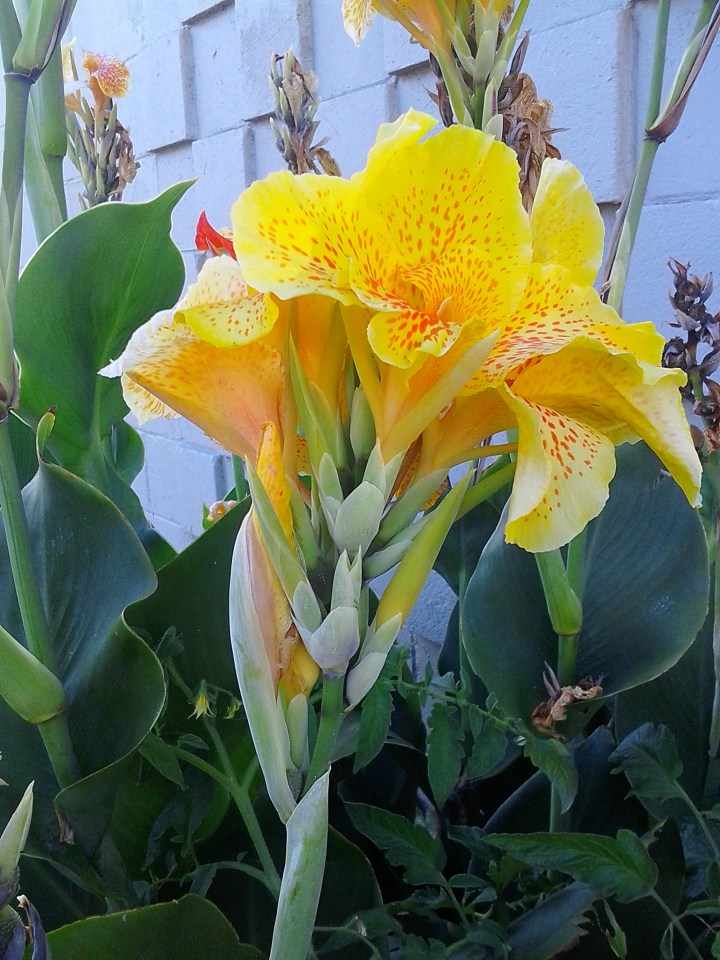
Cannas are not so functional. They are great in the garden for both flowers and foliage, but fade too soon in the home. Bougainvillea and crape myrtle stems likewise start to wilt and drop flowers immediately after getting cut, but for those who do not mind cleaning up after them, there are plenty of papery flowers to last a few days. The wilted tips of bougainvillea stems can be pruned out.
There are no rules to cut flowers. Lily-of-the-nile might seem like a silly choice, but works quite nicely for those who dare to try it. New Zealand flax flowers are not very colorful, but provide striking form. Zonal geranium and nasturtium work well with or without foliage attached. Lemon bottlebrush, photinia, New Zealand tea tree, bugle lily, various hebes, and all sorts of salvias are worth a try.
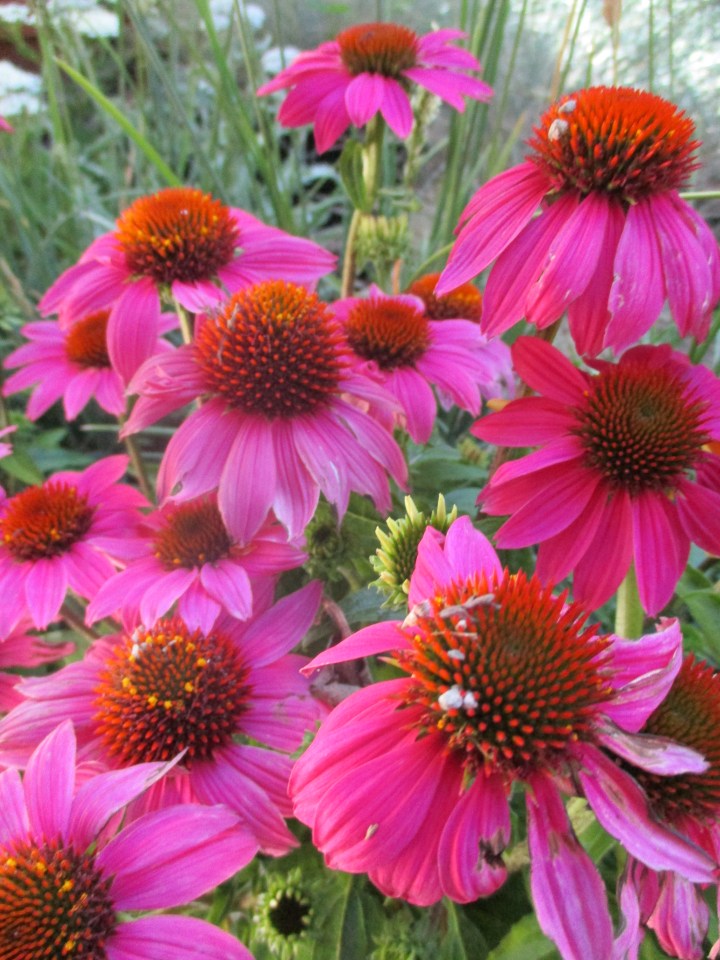 Annuals are plants that complete their entire life cycle from germination to death within a single year. Biennials complete their entire life cycle in two years, mostly by developing vegetative growth during their first year, and then blooming, producing seed and then dying after their second year. Perennials are the many herbaceous plants that survive longer than just a few years or indefinitely.
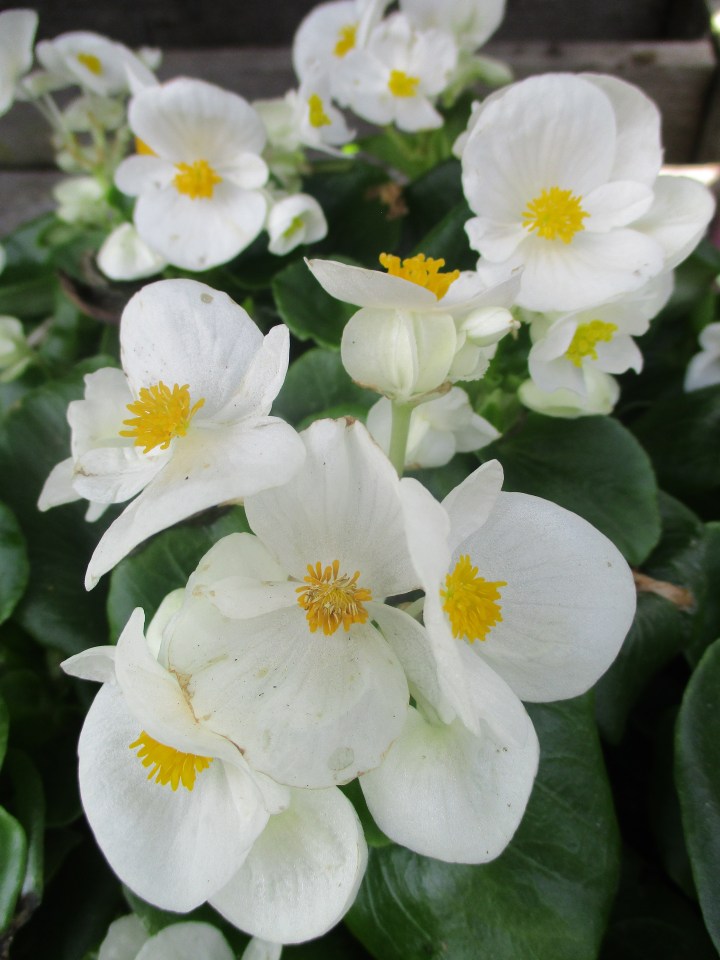 Oh, how breeding complicates things. Many years ago, there were only six basic types of wax begonia, Begonia semperflorens-cultorum, with three choices for floral color, and two choices for foliar color. Bloom was white, pink or red. Foliage was either green or dark bronze. Although these choices have not changed, some modern hybrids are difficult to distinguish from other species.
 Do they seem to be early this year? Clustered bellflower, Campanula glomerata, typically waits until the end of spring to bloom. Once the initial and most prolific bloom phase finishes, sporadic bloom should continue almost through summer. Blue is their most popular and traditional color. White is their second most popular option. Bluish purple and purplish pink are still somewhat rare.
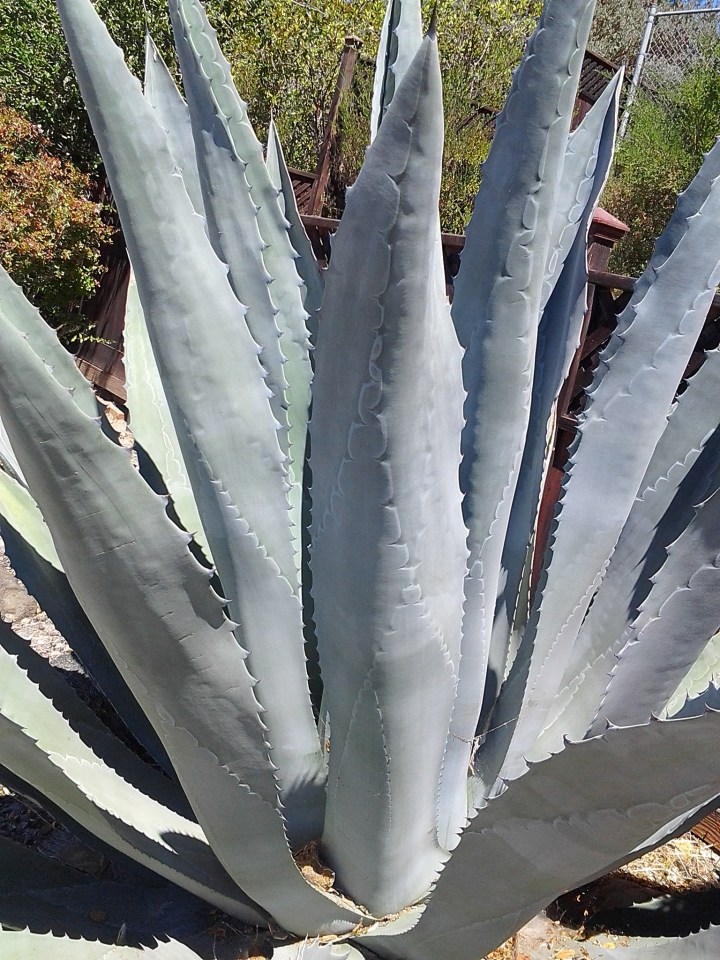 After providing remarkably striking foliage for many years, the biggest and boldest agaves bolt with spectacularly tall floral stalks that support horizontal pads of flowers. These stalks can bloom for months, and stand for months after bloom is finished. Then things get ugly. The foliage around each bloom folds back, desiccates and dies. There is no nice way to describe it. Bloom is death.
 There is something about the delicately intricate bloom and foliage of bleeding heart, Lamprocapnos spectabilis (formerly Dicentra spectabilis) that suits informal woodland gardens splendidly. Not only to they look like natural companions to small coniferous evergreens, but they are also quite tolerant of the acidic foliar debris, and to some extent, the shade that most conifers generate.
 Other species must be more interesting than what is native here. There are supposedly as many species of Trillium as there are of Yucca; forty-nine. All but ten are native to North America. The others are in eastern Asia. They are desirable and respected perennials to those who are familiar with them. White trillium is the official wildflower of Ohio, as well as the official floral emblem of Ontario. Ours would not likely qualify for such status.
 Narcissus, daffodil, freesia, snowdrop, snowflake, grape hyacinth, various iris and most other early spring blooming bulbs and bulb like plants should be perennials. We plant them with the hope that the will survive after bloom to bloom for another season, and perhaps for many seasons. Some should multiply to provide more bloom over the years. Bloom is just part of their annual cycle.
 The dark bronze and variegated varieties of tree houseleek, Aeonium arboreum, are so much more popular than the simple species, that the simple species with plain green foliage is now rather rare. The succulent stems do not stand much more than three feet tall. They get about as broad, and can get even broader as lower stems develop roots and grow into new plants. The succulent rosettes of foliage of well watered plants can be fragile to handle. Mature plants can bloom in spring with unusual conical trusses of yellowish or chartreuse flowers.
 It was easy to forget about spring bulbs after they went into the ground so unceremoniously last autumn. They got buried without so much as proper funerals. Cool season annuals got planted over the grave sites of some, just because bare soil is not much to look at. They stayed silent out in the garden through the cool and rainy winter weather. It might have seemed like the perfect crime.
